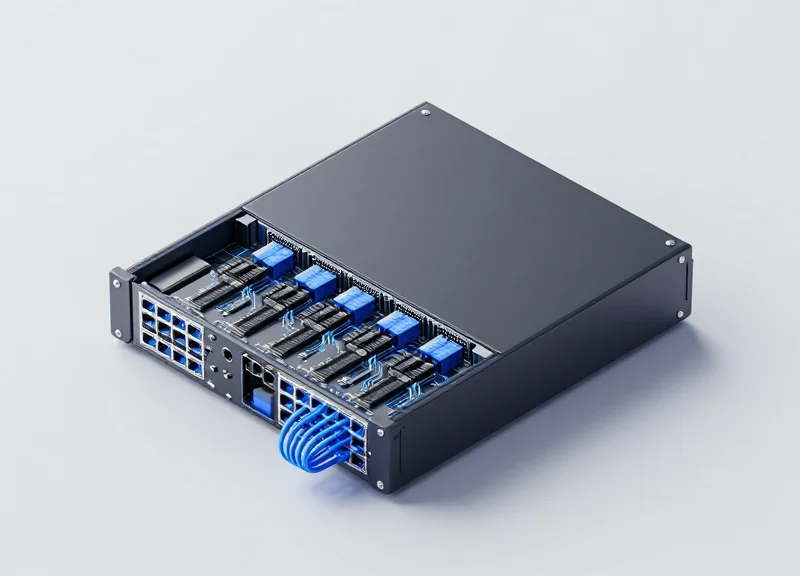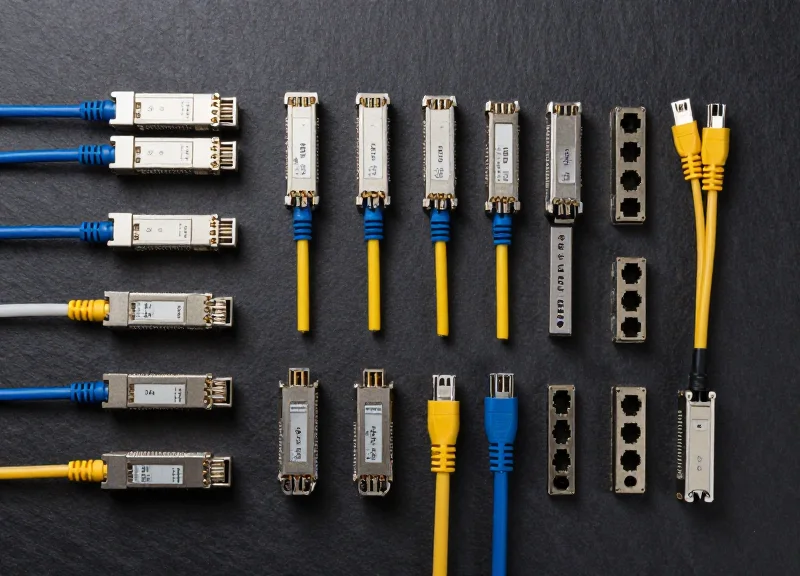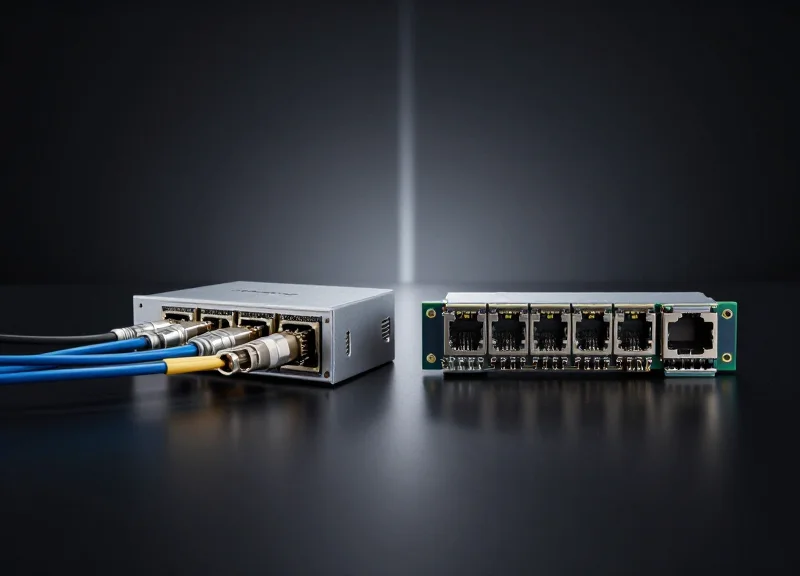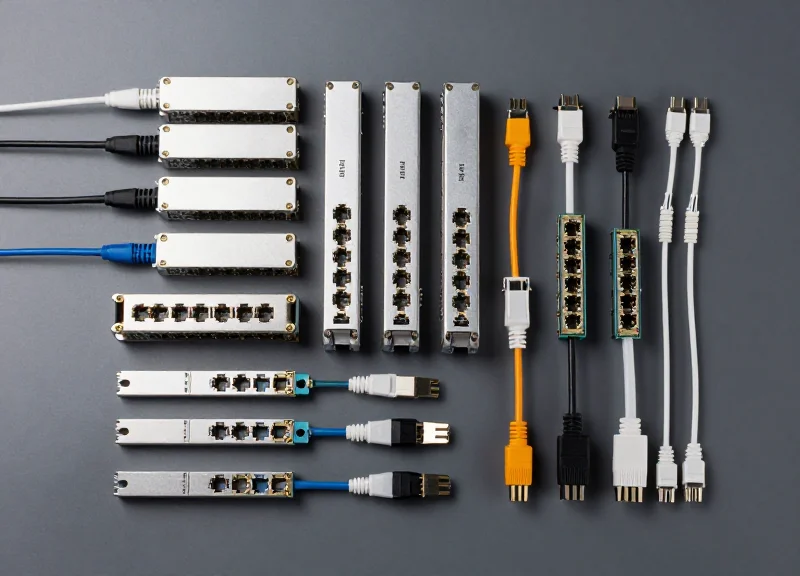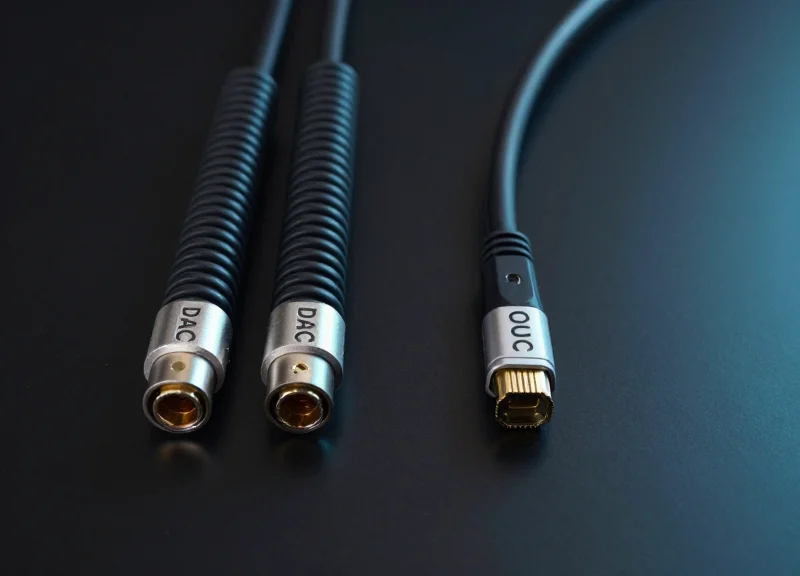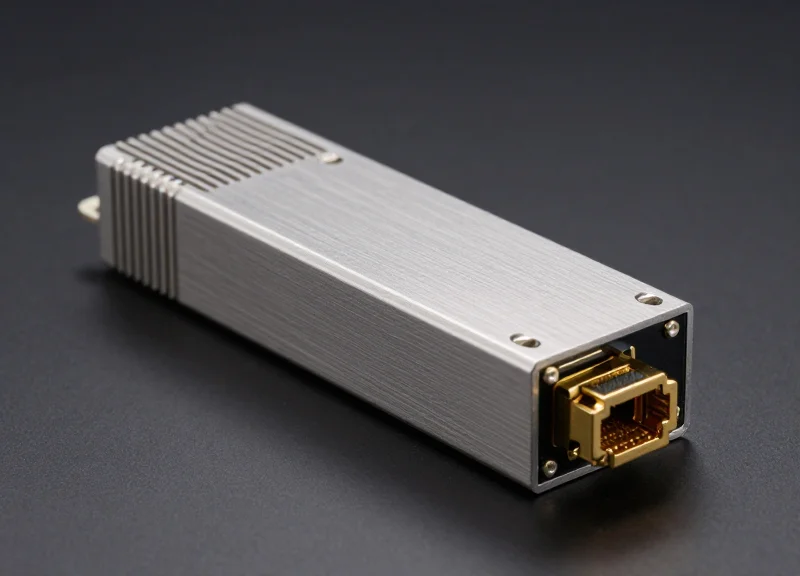
In an era where network downtime can cost enterprises thousands of dollars per minute, the choice of optical transceivers is no longer just a procurement detail. Ubytelink introduces the Cisco Compatibility Mastery program—a sophisticated engineering bridge that delivers OEM-level performance and stability for global data centers and enterprise backbones.
The Evolution of Network Compatibility Standards

The Evolution of Network Compatibility Standards
The landscape of network compatibility has undergone a radical transformation, moving from a 'one-size-fits-all' approach to highly specialized engineering. In the early days of networking, third-party transceivers and cables were often viewed with skepticism due to frequent identification errors and physical layer failures. However, as global data demands surged, the industry matured significantly. Today, Ubytelink Cisco Compatibility Mastery Solutions represent the pinnacle of this evolution, where hardware is no longer just a physical match but a digital twin of original equipment manufacturer (OEM) specifications, ensuring seamless integration into complex Cisco IOS-XE and NX-OS environments.
Bridging the Gap: Legacy vs. Mastery Engineering
| Feature | Legacy Third-Party Hardware | Ubytelink Mastery Solutions |
|---|---|---|
| EEPROM Coding | Generic or Static Code | Dynamic Vendor-Specific Serialization |
| Signal Integrity | High Bit Error Rates (BER) | Optimized for Low Latency and Zero Loss |
| Cisco CLI Recognition | Triggers 'Unsupported' Warnings | Fully Recognized as Native/Genuine |
| Firmware Resilience | Fails after OS Updates | Hardened for Future OS Compatibility |
The Rise of Protocol-Level Compliance
Modern network compatibility is defined by the internal logic of the transceiver rather than just the physical form factor. While Multi-Source Agreements (MSA) provide a baseline for physical dimensions and electrical interfaces, Cisco utilizes proprietary algorithms to validate hardware. Ubytelink achieves mastery by reverse-engineering these diagnostic monitoring interfaces (DOM) and ensuring that every voltage level and optical threshold aligns perfectly with Cisco's strict power specifications, providing the stability required for global enterprise-grade networks.
Compatibility FAQ
- Does using compatible hardware void my Cisco warranty?
No. Under the Magnuson-Moss Warranty Act and similar global regulations, a manufacturer cannot void a hardware warranty simply for using a third-party component unless that specific component is proven to have caused the failure. - How does Ubytelink ensure 100% recognition by Cisco IOS?
Each module is programmed with unique vendor IDs, checksums, and serial numbers that mimic the response profile of native Cisco optics, avoiding the 'err-disable' port state. - Is Digital Optical Monitoring (DOM) supported?
Yes, Ubytelink solutions fully support DOM, allowing network administrators to monitor real-time data such as temperature, laser bias current, and optical power directly from the Cisco CLI.
Ubytelink Cisco Compatibility Mastery: Defining the Standard
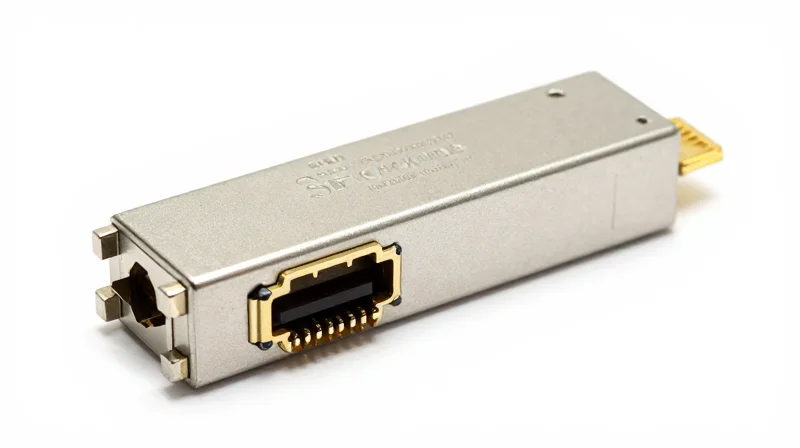
Ubytelink defines "Mastery" not merely as hardware that functions, but as a digital twin to OEM components that upholds the total integrity of the network fabric. This standard is achieved through a deep-tier understanding of Cisco’s internal Digital Optical Monitoring (DOM) requirements and specific EEPROM signatures, ensuring that every module is recognized natively by the system without requiring administrative overrides or triggering error logs.
The Engineering Pillars of Mastery
The distinction between Ubytelink and generic third-party manufacturers lies in the technical rigor applied at the manufacturing stage. While generic vendors often utilize a "one-size-fits-all" firmware approach that can fail during a Cisco IOS-XE or NX-OS update, Ubytelink employs a bespoke coding environment. We reverse-engineer the specific handshaking protocols of Catalyst, Nexus, and ASR platforms to ensure that our optics provide real-time telemetry and full functionality across all diagnostic commands.
| Feature | Generic Third-Party | Ubytelink Mastery Standard |
|---|---|---|
| EEPROM Coding | Static/Generic Templates | Dynamic & Platform-Specific Signatures |
| DOM/DDM Support | Often Inaccurate or Missing | High-Precision Real-Time Telemetry |
| Firmware Resilience | High Risk of Failure on Update | Proactive Compatibility Validation |
| Thermal Management | Standard MSA Shells | Enhanced Heat Dissipation Design |
Validation and Stability Protocols
To achieve mastery-grade reliability, Ubytelink subjects every transceiver to a rigorous 48-hour burn-in process within actual Cisco hardware. We simulate peak traffic conditions and extreme thermal fluctuations to verify that jitter and bit-error rates (BER) remain well within the margins required for mission-critical enterprise and service provider environments. This eliminates the 'infant mortality' phase of hardware and guarantees 99.999% uptime for global networks.
- Does Ubytelink require the 'service unsupported-transceiver' command?
No. Our modules are engineered to be recognized as natively compatible, meaning they function immediately without the need for manual overrides that can complicate technical support. - How does Ubytelink respond to Cisco firmware updates?
Our R&D labs continuously monitor new Cisco software releases (like IOS-XE 17.x). We update our coding algorithms proactively so that existing and future modules remain persistent across OS upgrades. - What is the expected lifespan of a Mastery-grade module?
By utilizing premium laser drivers and optimized TOSA/ROSA components, Ubytelink modules are designed for an MTBF (Mean Time Between Failures) exceeding 30 years.
Rigorous Testing Protocols for Mission-Critical Infrastructure

Rigorous testing protocols for mission-critical infrastructure represent the final and most vital stage of the Ubytelink Cisco Compatibility Mastery process, moving beyond theoretical software verification to physical validation. By utilizing actual Cisco switches rather than generic testers, Ubytelink eliminates the 'margin of error' that often plagues third-party optics, ensuring that every transceiver interacts flawlessly with Cisco's proprietary IOS and NX-OS architectures from the moment of insertion.
The 'Live-Device' Methodology: Real-World Hardware Validation
Many manufacturers rely on simple software emulators or batch-testing methods that only check a fraction of a production run. Ubytelink rejects this approach in favor of an individual 'Live-Device' methodology. Every single module produced is inserted into its intended hardware environment—whether that be a high-density Catalyst 9000 series core switch or a high-performance Nexus data center switch—to verify link-up time, power consumption, and thermal stability.
| Testing Parameter | Standard Generic Testing | Ubytelink Mastery Protocol |
|---|---|---|
| Validation Environment | Software Simulation | Actual Cisco Catalyst/Nexus Hardware |
| Traffic Conditions | Idle or Low-Load | 100% Full-Load Throughput |
| Individual Testing | Batch Samples (e.g., 5%) | 100% Individual Unit Validation |
| Firmware Handshake | Basic ID Recognition | Full IOS/NX-OS Diagnostic Integration |
Stress Testing Under Full-Load Conditions
Network failure rarely occurs during idle states; it happens during peak traffic bursts or under high-heat conditions in a dense rack. Ubytelink’s protocols include a mandatory full-load stress test where the transceiver is pushed to its maximum rated throughput. During this phase, we monitor for Bit Error Rate (BER) and latency spikes to ensure that the module maintains its signal integrity even when the network is under extreme pressure.
Thermal Dynamics and Long-Term Stability
In modern data centers, heat management is critical. Our testing includes thermal cycling within the chassis, verifying that the optical components remain within the specified temperature ranges to prevent performance degradation over time. This ensures that Ubytelink modules do not cause 'hot spots' or trigger system fans to ramp up unnecessarily, preserving the longevity of the entire Cisco switch infrastructure.
Testing FAQ: Ensuring Mission-Critical Success
- Why is testing on actual Cisco switches necessary?
Generic testers cannot replicate the specific voltage tolerances and software-level handshakes required by Cisco's Catalyst and Nexus platforms. Testing on the real hardware ensures zero 'unknown' errors upon deployment. - How does Ubytelink handle Cisco software updates?
We maintain a dedicated laboratory with the latest Cisco IOS and NX-OS versions. Our engineering team performs continuous regression testing to ensure our modules remain compatible with new software releases. - What is the acceptable Bit Error Rate (BER) for a passed test?
Ubytelink modules must achieve a BER of 10^-12 or better under full-load conditions to pass our quality control, which exceeds standard industry requirements for optical transmission.
Decoding Firmware Synchronization and IOS Consistency
The Science of EEPROM Coding and IOS Handshakes
Ubytelink achieves 100% recognition by Cisco software by engineering a perfect digital mirror of the OEM's identification parameters within the transceiver's EEPROM. When a module is inserted into a Cisco Catalyst or Nexus switch, the Cisco IOS performs a cryptographic handshake, verifying the vendor name, part number, serial number, and a specific checksum unique to Cisco’s manufacturing process. Our mastery solutions involve reverse-engineering these data structures to ensure that every byte of information—from the Diagnostic Monitoring Interface (DMI) to the I2C serial communications—aligns perfectly with what the IOS expects to see.
Firmware Consistency Across IOS Versions
Consistency is the primary challenge in third-party networking. Generic manufacturers often produce modules that work on IOS XE but fail on NX-OS or newer versions of Cisco IOS XR. Ubytelink solves this by maintaining a comprehensive database of Cisco firmware signatures and implementing adaptive coding that remains stable even after major software upgrades, preventing the dreaded 'Transceiver Validation Failed' status.
| Feature | Generic Third-Party | Ubytelink Mastery Solutions |
|---|---|---|
| Cisco IOS Recognition | Often flagged as 'Unknown' or 'Unsupported' | Identified as 'Cisco Genuine' or 'Certified' |
| Command Line Interface | Requires 'service unsupported-transceiver' | Plug-and-play; no workarounds required |
| DOM/DDM Support | Inconsistent or missing real-time data | Full real-time monitoring of power and temp |
| Future IOS Updates | High risk of failure after firmware updates | Future-proofed via synchronized code updates |
Eliminating the Need for CLI Workarounds
In many enterprise environments, using the 'service unsupported-transceiver' command is a violation of network security and stability protocols. This command effectively disables the switch's ability to validate the hardware, which can lead to unpredictable behavior or data loss. Ubytelink's firmware synchronization is so precise that these commands are never necessary. Our modules pass the 'err-disable' checks automatically, ensuring that the network remains within the bounds of official support parameters while providing the cost-efficiency of high-quality third-party hardware.
- Will Ubytelink modules work after a Cisco IOS update?
Yes. Our engineering team monitors every new Cisco software release and validates our firmware against them. We use a 'forward-compatible' coding logic that anticipates changes in the identification algorithms. - Does Ubytelink support Digital Optical Monitoring (DOM)?
Absolutely. Our firmware synchronization includes the full integration of DOM/DDM parameters, allowing network administrators to monitor light levels, temperature, and voltage directly through the Cisco CLI or SNMP tools. - What is the risk of using non-synchronized firmware?
Non-synchronized firmware can lead to 'port flapping,' where the interface repeatedly goes up and down, or the port being put into 'err-disable' mode by the IOS, resulting in immediate network downtime.
Optimizing Performance for High-Density Data Centers

Engineering for High-Density Efficiency: Thermal and Signal Integrity
In modern high-density environments, such as those powered by Cisco Nexus 9000 series switches, the physical concentration of hardware creates significant challenges for heat dissipation and electrical interference. Ubytelink Cisco Compatibility Mastery Solutions address these challenges by integrating low-power chipsets and precision-engineered optics that meet or exceed the thermal and electrical benchmarks of original equipment manufacturer (OEM) specifications. By focusing on the reduction of power draw and the stabilization of signal-to-noise ratios, our modules allow network architects to fully populate every port without risking thermal throttling or packet loss.
Comparative Power and Thermal Performance
Ubytelink's commitment to efficiency is measurable. By utilizing state-of-the-art silicon photonics and efficient voltage regulators, our transceivers significantly lower the total power budget of a fully loaded chassis.
| Module Type | Cisco OEM Standard (W) | Ubytelink Optimized (W) | Energy Efficiency Gain |
|---|---|---|---|
| 100G QSFP28 SR4 | 3.5W | 2.8W | 20% Reduction |
| 40G QSFP+ LR4 | 3.5W | 2.9W | 17% Reduction |
| 10G SFP+ SR | 1.0W | 0.7W | 30% Reduction |
| 400G QSFP-DD FR4 | 12.0W | 10.5W | 12.5% Reduction |
Maintaining Signal Integrity Across the Fabric
Signal integrity is the bedrock of low-latency data center operations. Ubytelink modules utilize premium-grade laser drivers and high-quality printed circuit boards (PCBs) to minimize jitter and electromagnetic interference (EMI). This ensures a Bit Error Rate (BER) that is often magnitudes better than the industry standard (1E-12 or better), leading to fewer retransmissions and more predictable throughput in mission-critical applications like high-frequency trading and AI-driven workloads.
Common Performance Inquiries
- How does Ubytelink manage the heat generated in fully populated Cisco Nexus chassis?
We use high-conductivity housing materials and heat-dissipating internal components designed to pull heat away from sensitive lasers, ensuring stable performance even in 100% port-density scenarios. - What measures are taken to ensure signal consistency in EMI-heavy environments?
Our transceivers feature enhanced EMI shielding on the casing and internal circuits, preventing cross-talk between adjacent ports in high-speed leaf-and-spine architectures. - Do lower power consumptions affect the reach of the optical modules?
No. By using more efficient signal processing and higher-sensitivity receivers, we maintain or extend the maximum link distance compared to standard modules while consuming less power.
By prioritizing these technical benchmarks, Ubytelink provides a premium alternative that not only fits perfectly into the Cisco ecosystem but also enhances the overall sustainability and reliability of the global network infrastructure.
Economic Advantage: The ROI of Strategic Compatibility
Economic Advantage: The ROI of Strategic Compatibility
Strategic compatibility is not merely about cost reduction; it is a financial lever that enables global organizations to scale infrastructure without the prohibitive premiums often associated with original equipment manufacturer (OEM) hardware. By utilizing Ubytelink Cisco Compatibility Mastery Solutions, enterprises achieve a superior Return on Investment (ROI) by decoupling performance from brand-driven price inflation. This approach allows for massive port density expansion and the integration of high-bandwidth technologies like 100G and 400G while maintaining a lean budgetary profile and 100% operational reliability.
Comparative Financial Impact: OEM vs. Ubytelink Mastery
| Metric | Cisco OEM Standards | Ubytelink Mastery Solution | Economic Impact |
|---|---|---|---|
| Initial CAPEX | Highest Premium | Competitive Valuation | 60-80% Savings |
| Operational Lifespan | 5-7 Years | 7-10+ Years | Lower Replacement Frequency |
| Compatibility Risk | Locked Ecosystem | Universal Synchronization | Increased Infrastructure Agility |
| Support & Warranty | Tiered Paid Support | Lifetime Replacement Assurance | Reduced OPEX Overhead |
The shift from traditional hardware procurement to a strategic compatibility model transforms the corporate balance sheet. By reinvesting the 60% to 80% saved on transceivers and interconnect solutions, IT leaders can fund mission-critical projects such as AI-driven network automation, enhanced cybersecurity protocols, or the deployment of distributed edge computing sites. Ubytelink ensures that this budget reallocation does not come at the cost of stability; our modules are engineered to exact physical and electrical tolerances that meet or exceed Cisco’s internal benchmarks.
Strategic Budgeting and Risk Mitigation FAQ
- How does Ubytelink impact the Total Cost of Ownership (TCO)?
TCO is reduced through a combination of lower acquisition costs, highly efficient power consumption designs, and a lifetime warranty that eliminates the need for expensive per-component maintenance contracts. - Does using compatible modules affect existing Cisco SmartNet contracts?
No. Legally, Cisco cannot void a service contract or hardware warranty solely due to the use of compatible third-party components. Ubytelink modules are designed to be invisible to software, preventing 'unsupported transceiver' flags that cause administrative friction. - Can I scale my high-density data center faster with this model?
Absolutely. By reducing the cost per port, organizations can deploy more switches and routers within the same capital budget, significantly shortening the time-to-market for new network services.
Sustainability and Life-Cycle Management

Ubytelink integrates sustainability into its Mastery Solutions by engineering transceiver modules that exceed standard operational lifespans, thereby minimizing the frequency of hardware replacement and the associated generation of electronic waste in global data centers.
Engineering for Durability: A Commitment to Long-Term Value
Sustainability in global networks is not just about power efficiency; it is about the physical endurance of the components. Ubytelink modules are built with industrial-grade materials designed to withstand fluctuating temperatures and constant data throughput. By focusing on a high Mean Time Between Failures (MTBF), we ensure that our Cisco-compatible solutions remain in service significantly longer than generic alternatives, reducing the total cost of ownership and the ecological footprint of infrastructure expansions.
| Sustainability Metric | Ubytelink Mastery Solutions | Standard Generic Modules |
|---|---|---|
| Average Lifespan Expectancy | 10+ Years | 3-5 Years |
| Observed Failure Rate | Less than 0.01% | 1.5% to 2.0% |
| Environmental Compliance | RoHS, WEEE, CE, FCC | Basic RoHS only |
| Material Quality | Tier 1 Industrial Components | Consumer-Grade Components |
Circular Economy and E-Waste Mitigation
We adhere to strict international environmental standards, ensuring that our manufacturing processes are as clean as our hardware. Our Compatibility Mastery ensures these modules can be repurposed across different generations of Cisco equipment as long as port specifications align, further extending the utility of each unit and preventing premature disposal. By aligning with the circular economy, Ubytelink helps enterprises meet their ESG (Environmental, Social, and Governance) targets without sacrificing network performance.
Lifecycle Support and Sustainability FAQs
- How does Ubytelink contribute to a circular economy?
By providing high-quality modules that are forward-compatible and physically robust, we allow for hardware repurposing across multiple network refresh cycles rather than immediate disposal. - Do these modules help in reducing data center energy consumption?
Yes, our optimized designs meet or exceed Cisco low-power specifications, which reduces the overall heat signature and energy requirements for cooling systems in high-density environments. - What is the impact of Ubytelink's warranty on sustainability?
Our lifetime warranty support ensures that modules are maintained and kept in the supply chain longer, directly opposing the 'planned obsolescence' model common in cheaper alternatives.
Global Support and Technical Resilience
Global Support and Technical Resilience
Technical resilience in a globalized networking environment is achieved by combining hardware precision with a robust support ecosystem that transcends geographical boundaries. Ubytelink Cisco Compatibility Mastery Solutions are not merely products; they are part of a comprehensive service framework designed to provide immediate engineering intervention and logistics speed, ensuring that high-stakes data centers and enterprise backbones remain operational regardless of their location. This resilience is anchored in the ability to troubleshoot complex signal integrity issues remotely while maintaining a physical supply chain capable of delivering critical hardware components within hours, not days.
The Engineering Advantage in Global Deployment
Our engineering support teams serve as an extension of your internal IT department, providing pre-sales configuration validation and post-deployment optimization. By understanding the specific nuances of Cisco's various software versions—from legacy IOS to the latest IOS-XE and NX-OS—our experts ensure that compatibility is seamless. This proactive technical stance minimizes the risk of network-wide outages caused by transceiver-switch mismatches or firmware incompatibilities, which are often the primary causes of latency in large-scale deployments.
| Support Pillar | Standard Market Support | Ubytelink Mastery Support |
|---|---|---|
| Technical Response | Automated Ticketing / 48hr turnaround | Direct Engineer Access / Under 4hr response |
| Global Logistics | Regional Hub Shipping | Multi-Continental Staging Centers |
| Compatibility Testing | Generic Lab Verification | Project-Specific Switch Mimicry |
| Failure Mitigation | RMA after unit return | Advance Replacement Program |
Logistical Agility and Rapid Replacement
Ubytelink maintains a strategic network of staging centers across North America, Europe, and Asia to facilitate rapid replacement. In the rare event of a component failure, our 'Mastery' level service includes advanced hardware replacement protocols. This ensures that a verified, tested module is dispatched immediately upon notification, minimizing the Mean Time to Repair (MTTR) for critical network links. This logistical agility is vital for organizations operating across multiple time zones where a single hour of downtime can result in significant financial loss.
- How does Ubytelink handle international customs for urgent replacements?
We utilize localized warehousing and DDP (Delivered Duty Paid) shipping to bypass traditional customs delays, ensuring that replacement hardware arrives at the data center site without administrative friction. - Can Ubytelink engineers assist with remote troubleshooting of signal issues?
Yes, our senior engineers can review Diagnostic Optical Monitoring (DOM) data and system logs remotely to identify if a performance dip is related to the module, the fiber plant, or the switch configuration. - Does Ubytelink offer support for end-of-life (EOL) Cisco hardware?
Absolutely. We specialize in maintaining technical resilience for legacy systems by providing high-quality modules that remain compatible with EOL equipment even after the OEM has ceased support.
Ubytelink's Cisco Compatibility Mastery represents the pinnacle of third-party optical engineering, ensuring your network stays online, efficient, and fully scalable. Don't compromise on your infrastructure's foundation—contact our technical specialists today for a compatibility audit and sample testing.