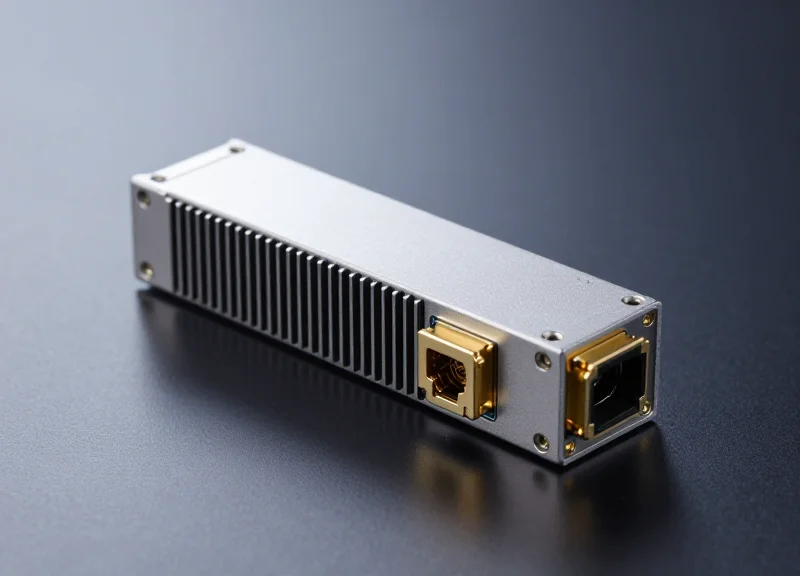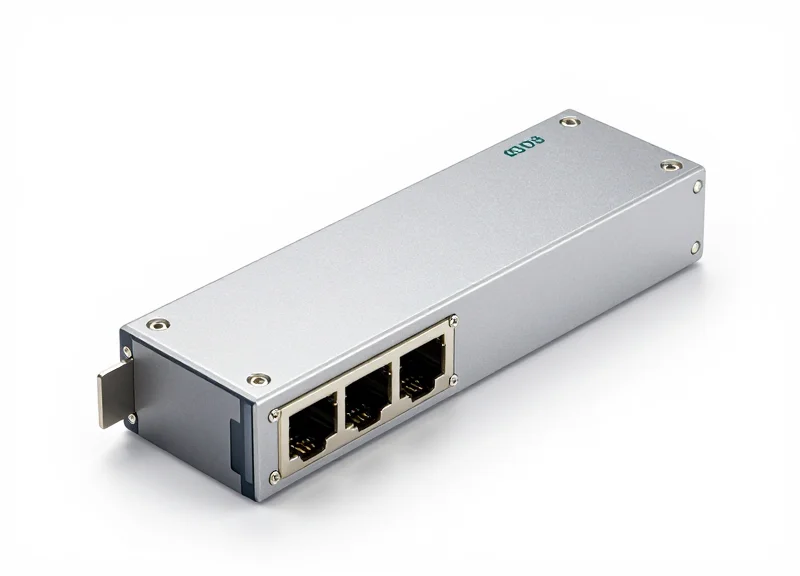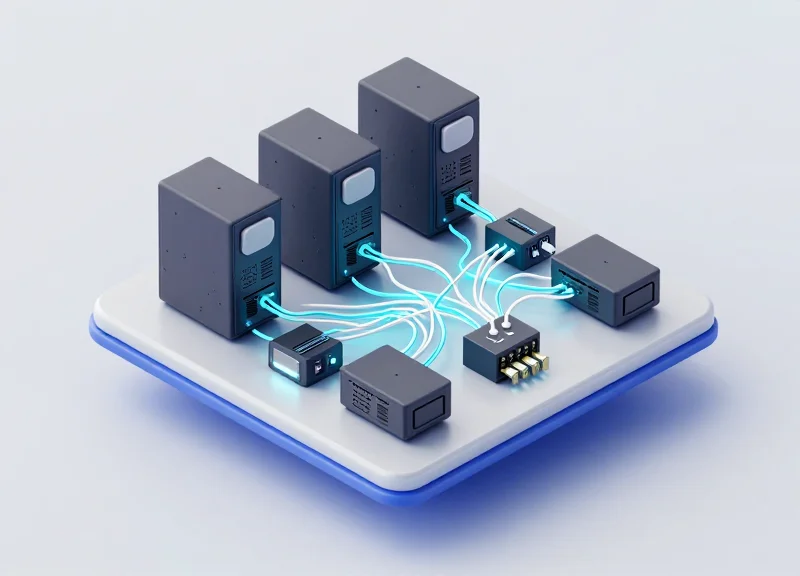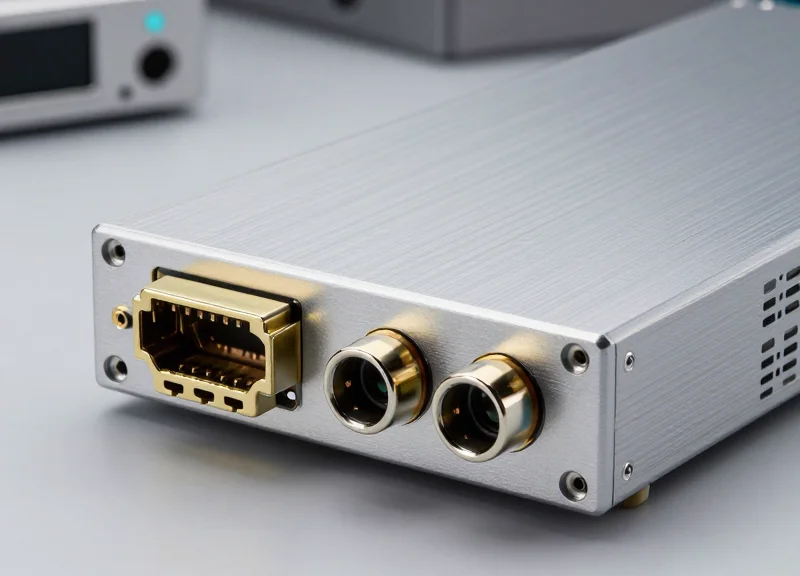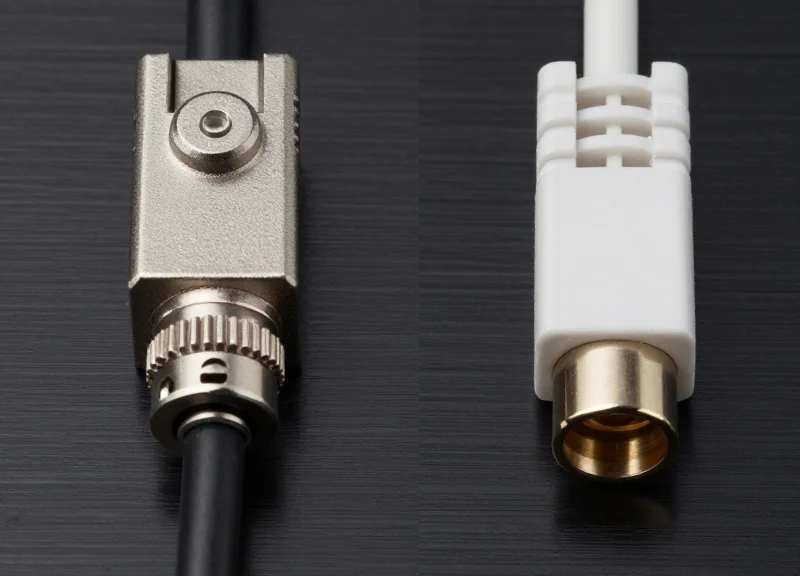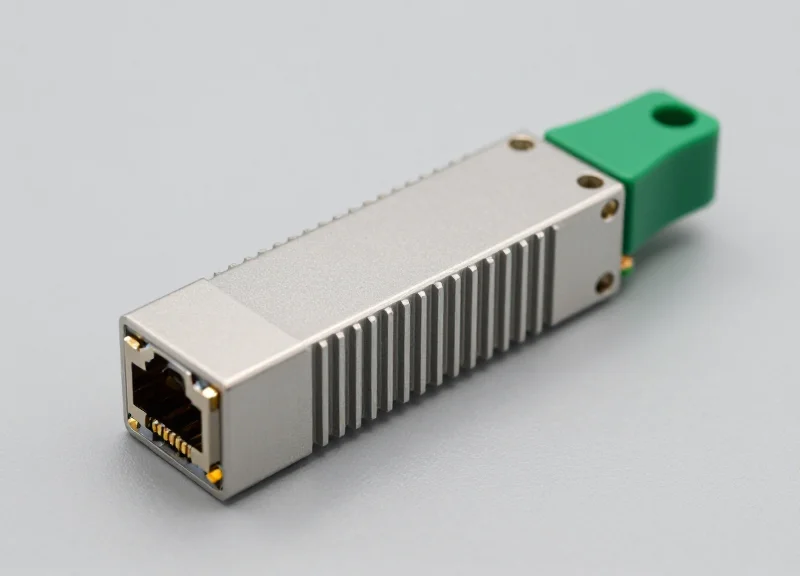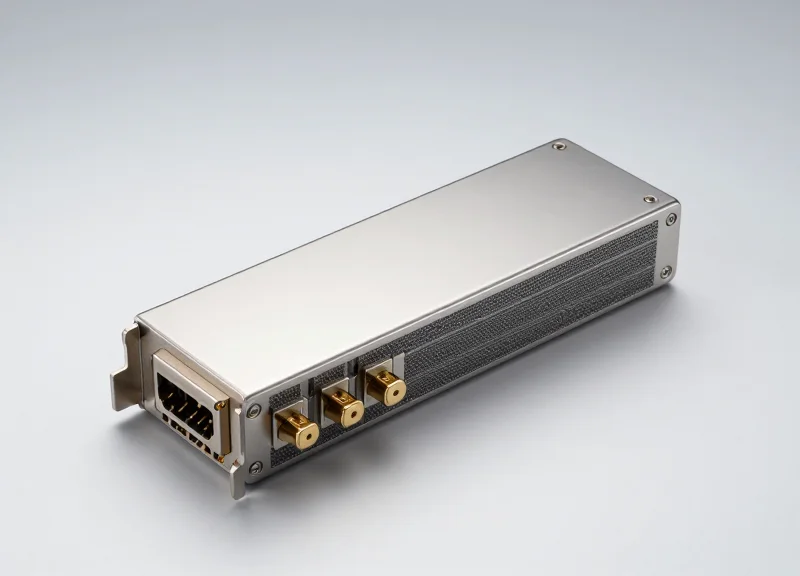
As the industry pivots toward 800G to meet the insatiable demands of AI and machine learning, network architects face a critical decision: how to balance extreme bandwidth with power efficiency and cost. While Direct Attach Copper (DAC) has long been the backbone of short-reach connections, new challenges at 800G speeds—such as signal attenuation and cable bulk—have brought Active Electrical Cables (AEC) and Active Optical Cables (AOC) into the spotlight. This guide provides a veteran's perspective on selecting the optimal 800G interconnect strategy.
The Evolution of 800G Interconnects: Why Choice Matters
The evolution to 800G Ethernet represents a critical juncture in data center architecture, where the selection of interconnect technology is no longer a mere matter of distance but a complex trade-off between power consumption, signal latency, and capital expenditure. As bandwidth demands double from the previous 400G standard, the physical limitations of copper and the precision required for optical components mean that 'one size fits all' solutions have effectively vanished, making the choice between Direct Attach Copper (DAC), Active Copper Cables (ACC), and optical alternatives a foundational design decision.
The Shift to 112G SerDes and PAM4 Signaling
At the heart of the 800G revolution is the implementation of 112G SerDes (Serializer/Deserializer) technology. Unlike previous generations that relied on simpler modulation, 800G utilizes 4-level Pulse Amplitude Modulation (PAM4) at higher baud rates to pack more data into the same frequency spectrum. This increased density comes at the cost of significantly reduced Signal-to-Noise Ratio (SNR) and higher susceptibility to electromagnetic interference. Consequently, the reach of traditional passive 800G DAC cables has shrunk to approximately 2 meters, forcing network architects to evaluate more expensive active or optical alternatives for any connection exceeding short-reach rack distances.
Technical Comparison: 400G vs. 800G Interconnects
| Feature | 400G (QSFP-DD) | 800G (QSFP-DD/OSFP) |
|---|---|---|
| Per-Lane Rate | 56Gbps PAM4 | 112Gbps PAM4 |
| Max DAC Reach | 3 Meters | 2 Meters (Passive) |
| Signal Loss (Nyquist) | ~28 dB | ~36-40 dB |
| Power Complexity | Moderate | High (Requires advanced DSP) |
Common Questions on 800G Strategy
- Why is the reach of 800G DAC cables so limited?
As frequency increases to support 112G SerDes, the insertion loss in copper increases exponentially. At 800G, signal degradation occurs so rapidly that passive copper can only maintain integrity over very short distances, typically under 2 meters. - How does PAM4 impact the cost of interconnects?
PAM4 requires more sophisticated digital signal processing (DSP) or Retimers to interpret the four distinct voltage levels accurately. These components increase the bill of materials for active cables and optical transceivers compared to older NRZ-based technologies. - Can I still use 400G cabling in an 800G environment?
While some backward compatibility exists via breakout cables (e.g., 800G to 2x400G), the physical layer must support the 112G lane rate. Most legacy 400G cables are not rated for the signal integrity requirements of 800G speeds.
800G Passive DAC: The Efficiency Leader for Short Reach
800G Passive DAC: The Efficiency Leader for Short Reach
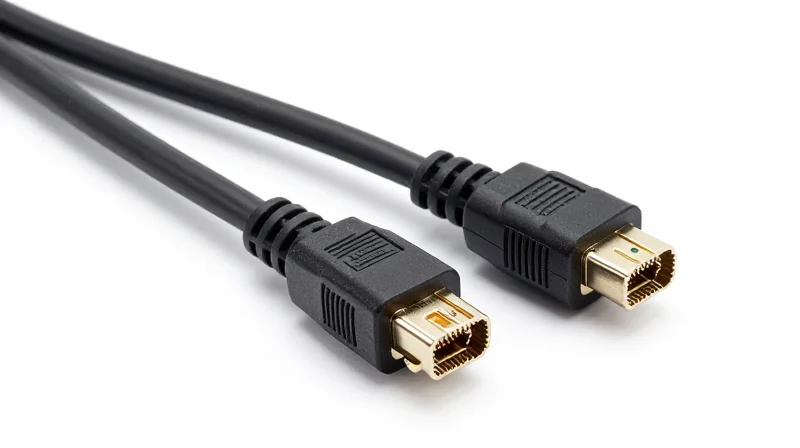
For high-density data centers, 800G Passive Direct Attach Copper (DAC) cables serve as the definitive benchmark for efficiency, providing an unpowered, sub-nanosecond latency path for 800Gb/s traffic over distances typically up to two meters. By eliminating the need for optical conversion or active signal processing, these cables offer a pure electrical bridge that is unmatched in cost-effectiveness and operational reliability for rack-level interconnects.
The Architecture of Passive Copper at 800G
The architecture of an 800G DAC revolves around high-speed twinaxial copper cabling terminated with QSFP-DD800 or OSFP connectors. Unlike active alternatives, a passive DAC contains no active electronic components such as Digital Signal Processors (DSPs) or laser drivers. Instead, it relies on the host's SerDes (Serializer/Deserializer) to manage the 112G-PAM4 signaling. This simplicity is its strength, though it necessitates high-precision engineering of the physical copper medium to manage electromagnetic interference (EMI) and insertion loss at such extreme frequencies.
| Feature | 800G Passive DAC | 800G Active Solutions (AOC/Transceivers) |
|---|---|---|
| Power Consumption | 0 Watts (Passive) | 14W - 30W per link |
| Latency | < 1 Nanosecond | 100 - 500+ Nanoseconds |
| Maximum Reach | 0.5m - 2.0m | 3m to 2km (Multimode/Single Mode) |
| Reliability (MTBF) | Extremely High (No electronics) | Moderate (Dependent on active components) |
| Relative Cost | Lowest ($) | High ($$$$) |
Unpacking the Zero-Power Advantage
In a modern AI cluster or hyperscale data center, power density is the primary limiting factor for growth. An 800G switch with 32 ports populated with active optical transceivers can consume upwards of 500 Watts just for the interconnects. By utilizing 800G Passive DACs for Top-of-Rack (ToR) server-to-switch links, operators can reduce that specific power draw to zero. This not only lowers the electricity bill but also reduces the thermal load on the cooling system, leading to a significantly lower Total Cost of Ownership (TCO).
- Why is the reach limited to 2 meters for 800G DACs?
As signaling speeds increase to 112G per lane, electrical signals degrade much faster in copper. To maintain signal integrity without active amplification, the physical length must be kept short to prevent excessive insertion loss. - Are 800G DAC cables backwards compatible?
While the physical connectors (QSFP-DD/OSFP) are often backwards compatible, the specific 800G DAC must be validated against the host's SerDes capabilities to ensure the passive link can be trained at lower speeds like 400G or 200G. - When should I choose DAC over ACC (Active Copper)?
Choose DAC for any connection under 2 meters where the host equipment has robust equalization capabilities. If the distance exceeds 2 meters but remains within the same rack, an Active Copper Cable (ACC) may be required to boost the signal.
Active Electrical Cables (AEC): Overcoming Copper Limitations
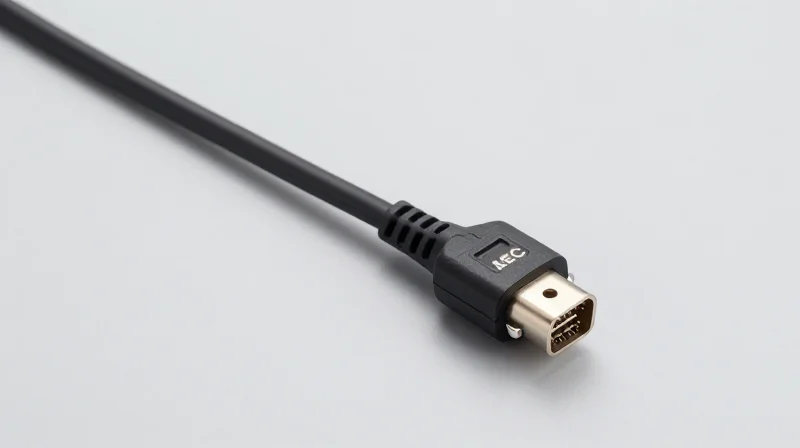
As data rates climb to 800G, passive Direct Attach Copper (DAC) cables encounter a 'copper wall' where signal attenuation and physical stiffness make them impractical for distances beyond two meters. Active Electrical Cables (AEC) solve this by integrating sophisticated CMOS retimer chips into the connector shells. These chips perform clock and data recovery (CDR), effectively regenerating the signal at both ends of the link. This active compensation allows AECs to maintain the low-cost profile of copper while delivering the signal integrity and cable flexibility required for modern high-density leaf-and-spine architectures.
The Retimer Advantage: Signal Integrity at 112G SerDes
At 800G, the underlying 112G PAM4 signaling is extremely sensitive to electromagnetic interference (EMI) and insertion loss. While a passive DAC simply passes the signal through raw copper, an AEC actively 'cleans' the signal. The embedded retimers compensate for the channel loss of the twinaxial cable, allowing for a thinner gauge of copper to be used. This results in a cable diameter that is significantly smaller than a DAC of equivalent length, which is critical for maintaining airflow and managing cable weight in crowded server racks.
AEC vs. Passive DAC: Technical Comparison
| Feature | 800G Passive DAC | 800G AEC |
|---|---|---|
| Maximum Reach | Up to 2.0 Meters | Up to 7.0 Meters |
| Power Consumption | Near 0W | ~3W - 5W per end |
| Cable Thickness | Heavy / Thick (26-28 AWG) | Thin / Flexible (32-34 AWG) |
| Signal Processing | None (Passive) | Retiming / Equalization |
| Latency | Lowest (Nanoseconds) | Very Low (Microseconds) |
Breaking the Physical Constraints of the Rack
Beyond signal integrity, the primary driver for AEC adoption is rack hygiene and airflow. An 800G passive DAC reaching 2 meters requires a thick gauge (AWG) that makes the cable stiff and difficult to route. AECs can achieve 5 to 7 meters using much thinner 32AWG or 34AWG wires. This flexibility enables cross-rack connections that were previously only possible with Active Optical Cables (AOC), but at a lower price point and without the fragility of optical fibers.
Frequently Asked Questions about 800G AEC
- Does AEC consume more power than DAC?
Yes. While DACs are passive and consume no power, AECs require electricity to power the retimer chips, typically drawing between 3W and 5W per cable end depending on the manufacturer and length. - Is AEC compatible with standard QSFP-DD or OSFP ports?
Absolutely. AECs are designed to be plug-and-play with standard 800G MSA-compliant ports, appearing to the switch as a standard copper interconnect but with improved bit-error rate (BER) performance. - When should I choose AEC over AOC?
AEC is preferred for top-of-rack or middle-of-row deployments (up to 7m) where cost-efficiency and durability are priorities. AOC is better suited for distances exceeding 7-10 meters where electrical signals over copper are no longer viable.
Active Optical Cables (AOC): Maximum Distance and Flexibility
Active Optical Cables (AOC): Maximum Distance and Flexibility
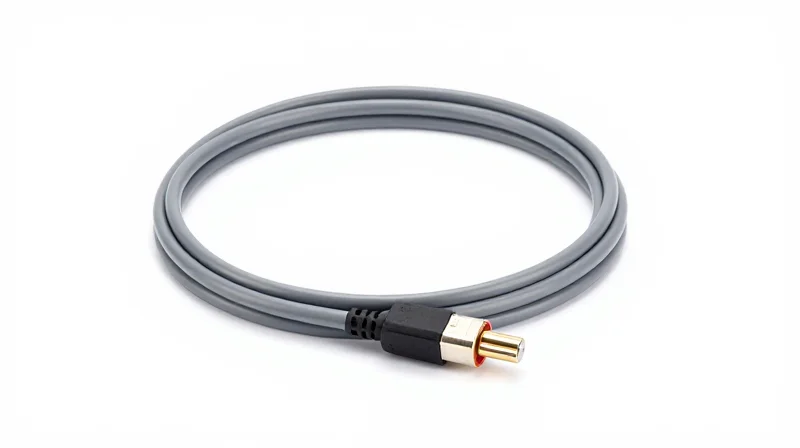
For 800G architectures where passive copper (DAC) and Active Electrical Cables (AEC) fall short due to physical weight and distance limitations, Active Optical Cables (AOC) serve as the primary solution for reaches up to 100 meters. By integrating optical transceivers directly with multimode fiber into a single assembly, AOCs eliminate the complexities of separate fiber cleaning and connector matching while providing the necessary bandwidth for high-density leaf-spine and spine-super-spine connections.
The Lightweight Advantage: Enhancing Airflow and Cable Management
One of the most critical advantages of 800G AOCs is their physical profile. Unlike 800G DACs, which require thick 26AWG to 30AWG copper wires that are bulky and difficult to bend, AOCs utilize thin multimode fiber. This significantly smaller diameter improves the bend radius, allowing for tighter routing in congested racks. Furthermore, the reduced weight and volume of AOCs minimize the load on cable trays and prevent the 'cable dam' effect, which can otherwise impede airflow and lead to higher cooling costs in the data center.
EMI Immunity and Superior Signal Integrity
As signaling speeds transition to 112G SerDes per lane for 800G networking, Electromagnetic Interference (EMI) becomes a major hurdle for metallic cables. Because AOCs convert electrical signals into light pulses for transmission, they are inherently immune to electromagnetic interference. This makes them ideal for high-density environments where numerous cables are bundled together, ensuring that signal integrity remains consistent across the entire length of the cable without the crosstalk issues often associated with copper mediums.
| Feature | 800G DAC | 800G AEC | 800G AOC |
|---|---|---|---|
| Maximum Reach | < 2 Meters | < 7 Meters | Up to 100 Meters |
| Cable Diameter | Thick / Rigid | Medium / Flexible | Thin / Highly Flexible |
| EMI Sensitivity | High | Moderate | Immune |
| Power Consumption | 0W | ~5W - 8W | ~12W - 14W per link |
| Weight | Heavy | Moderate | Very Light |
Deployment Considerations and FAQ
- When should I choose AOC over AEC for 800G?
AOC is the preferred choice when the required distance exceeds 7 meters or when rack density is so high that the thickness of copper cabling would impede airflow and maintenance access. - Do 800G AOCs consume more power than DACs?
Yes, while DACs consume zero power, AOCs require active electrical-to-optical conversion, typically consuming between 12W and 14W per link, which must be factored into the overall thermal budget. - Can 800G AOCs be repaired if the fiber breaks?
No, AOCs are factory-sealed units. If the internal fiber or the transceiver components are damaged, the entire cable assembly must be replaced, unlike discrete transceivers where the fiber patch cord can be swapped.
Latency Benchmarks: DAC vs. AEC vs. AOC
The Latency Hierarchy: Why Every Nanosecond Counts
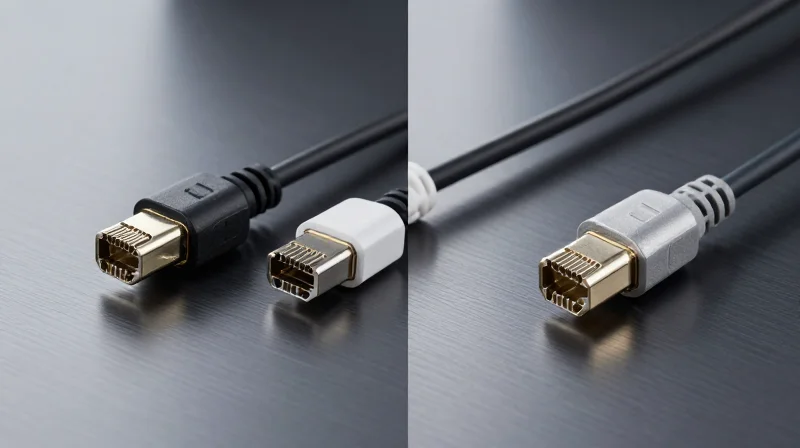
In 800G environments, latency is not merely a performance metric but a critical constraint for distributed workloads like AI model training and High-Frequency Trading (HFT). Direct Attach Copper (DAC) cables provide the lowest possible latency—essentially limited only by the speed of electrons through copper—because they are passive and require no signal processing. As we move to Active Electrical Cables (AEC) and Active Optical Cables (AOC), latency increases due to the integration of Digital Signal Processors (DSP) and, in the case of optics, electrical-to-optical conversion. For a 2-meter reach, a DAC cable operates with sub-5 nanosecond latency, while an AEC or AOC can introduce a delay of 100 to 500 nanoseconds.
| Interconnect Type | Typical Latency | Source of Delay | Performance Impact |
|---|---|---|---|
| 800G DAC | < 5 ns | Propagation delay only | Negligible; ideal for HFT/AI Backend |
| 800G AEC | 100 - 150 ns | DSP Retiming & FEC | Low; acceptable for most Top-of-Rack |
| 800G AOC | 150 - 500 ns | E-O/O-E Conversion + DSP | Moderate; impacts ultra-low latency apps |
Impact on AI Training and RDMA
Modern AI training relies on Remote Direct Memory Access (RDMA) and protocols like RoCEv2 or InfiniBand, where low 'tail latency' is vital. When thousands of GPUs are synchronized via All-Reduce or All-to-All operations, the slowest link determines the speed of the entire cluster. Using 800G DACs for the immediate Top-of-Rack connections minimizes the communication overhead between GPU nodes, preventing the 'straggler' effect that occurs when signal processing delays in active cables accumulate across multiple switches.
Frequently Asked Questions: 800G Interconnect Latency
- Why does 800G AEC have higher latency than DAC?
AECs contain active chips (DSPs) that re-time and amplify the signal to extend reach and use thinner cables. The time required for the DSP to process the electrical signal and correct errors adds roughly 100+ nanoseconds of latency. - Is the latency in 800G AOCs noticeable in standard data centers?
For standard cloud applications and enterprise storage, the 150-500ns delay is virtually imperceptible. It only becomes a significant factor in HPC, AI training, and algorithmic trading environments. - Does cable length significantly impact 800G latency?
For DACs, length adds about 5ns per meter. For AECs and AOCs, the signal processing delay in the transceivers is the dominant factor, often far exceeding the time it takes for the signal to travel the length of the cable itself.
Power Consumption and Thermal Management in 800G Clusters
The Critical Impact of Power Consumption in 800G Architectures
Energy consumption at 800G is a critical constraint because as port density increases, the thermal envelope of a standard 1U switch becomes a limiting factor for performance and reliability. Passive DACs offer a significant advantage by consuming nearly zero power per port, whereas active alternatives like AECs and AOCs introduce active components—DSPs and laser drivers—that contribute directly to the cluster's heat load and electricity bill. In high-density AI clusters, shifting just 30% of connections to passive DACs can result in a measurable reduction in the required cooling capacity for the entire facility.
Energy Profile Comparison: DAC vs. Active Interconnects
| Technology | Typical Power (Watts) | Heat Dissipation | Active Components |
|---|---|---|---|
| 800G Passive DAC | < 0.1W | Negligible | None |
| 800G AEC | 5W - 8W | Moderate | DSP / Retimer |
| 800G AOC | 10W - 14W | High | VCSEL / Drivers / DSP |
| 800G Transceiver (DR8) | 14W - 18W | Very High | EML / SiPh / DSP |
The Cooling ROI and Thermal Management
In massive AI fabrics, the 'cooling multiplier' is a vital metric for TCO. For every watt consumed by an interconnect, an additional 0.5 to 1.0 watt of energy is often required by Computer Room Air Conditioning (CRAC) units to remove that heat. Passive DACs eliminate this 'cooling tax' entirely. Furthermore, because DACs do not generate heat at the transceiver cage, they reduce the risk of thermal throttling in the switch ASIC, ensuring consistent low-latency performance during peak AI training workloads. This allows data center architects to push for higher rack densities (e.g., 50kW+ per rack) without exceeding the thermal limits of air-cooled environments.
Power and Thermal FAQs
- Does the power consumption of AECs vary by cable length?
No, AEC power consumption is largely fixed by the DSP and retimer chips required to process the 112G SerDes signals, regardless of whether the cable is 3 meters or 7 meters. - How does heat impact the lifespan of 800G optics?
Higher operating temperatures accelerate the degradation of laser diodes in AOCs and transceivers. Passive DACs, having no optical components, are immune to this thermal wear-and-tear. - Can switching to DACs significantly lower PUE?
Yes. Power Usage Effectiveness (PUE) improves when the non-compute power (like cooling for interconnects) is minimized. In a cluster with 10,000 ports, using DACs instead of AOCs can save over 100kW of power.
Total Cost of Ownership (TCO) Comparison
Analyzing the Total Cost of Ownership (TCO) for 800G Interconnects
Evaluating the TCO of 800G interconnects requires a holistic view that balances initial purchase prices (CapEx) against the ongoing costs of electricity, cooling, and hardware replacement (OpEx) over a typical 3-to-5-year lifecycle. While DAC cables offer a nearly unbeatable price-to-performance ratio for short-reach applications under 3 meters, AECs and AOCs become necessary as distance requirements increase, introducing incremental power costs that can scale significantly in massive AI and high-performance computing clusters.
Capital Expenditure (CapEx) Advantage of Passive Infrastructure
800G passive DACs are significantly more affordable than active alternatives because they lack complex internal components like re-timers, DSPs, or optical engines. AECs integrate silicon chips for signal conditioning, and AOCs utilize vertical-cavity surface-emitting lasers (VCSELs) and photodetectors, both of which command a premium. For a standard 800G deployment, a single AOC can cost 3 to 6 times more than a comparable DAC, a price gap that becomes exponential when accounting for the bulk quantities required in leaf-spine architectures.
| Metric (per 1m-3m link) | 800G Passive DAC | 800G AEC | 800G AOC |
|---|---|---|---|
| Average Unit Price (Relative) | 1.0x (Baseline) | 2.5x - 4.0x | 4.5x - 7.0x |
| Power Consumption | 0 Watts | 3.5W - 5.5W | 2.0W - 4.5W |
| Cooling Requirements | None (Ambient) | Moderate (Active Cooling) | Moderate (Active Cooling) |
| Estimated 5-Year TCO | Lowest | Moderate to High | Highest |
Operational Expenditure (OpEx): Power and Thermal Impact
OpEx in 800G environments is primarily driven by the 'hidden' cost of power. Since passive DACs consume zero power, they contribute no heat to the rack, effectively reducing the cooling load on the data center's HVAC system. In contrast, 800G AECs can consume up to 5.5W per port. In a cluster with 2,000 links, this translates to 11kW of continuous load, plus the additional energy required to cool that heat—often calculated via a Power Usage Effectiveness (PUE) multiplier. Over a 5-year period, the cumulative electricity and cooling costs for active cabling can match or even exceed the initial hardware purchase price.
- When does the TCO of an AEC justify its higher cost?
AECs are financially justifiable when rack density or cable management constraints make thick copper DACs impractical, or when distances exceed 3 meters but optical transceivers remain cost-prohibitive for the budget. - How does reliability impact long-term TCO?
Passive DACs have the highest Mean Time Between Failures (MTBF) because they lack active electronic components. Lower failure rates lead to lower maintenance OpEx and fewer costly emergency replacements compared to AOCs or AECs. - Does 800G cable weight affect TCO?
Indirectly, yes. Heavier DAC cables may require more robust (and expensive) cable management systems or floor reinforcement in large-scale deployments, whereas lightweight AOCs reduce the structural load on rack infrastructure.
Signal Integrity and Reliability at 112G SerDes
Signal Integrity and Reliability at 112G SerDes
The transition to 112G SerDes per lane is the foundational technology enabling 800G throughput, but it introduces significant physical layer challenges. At these frequencies, the Nyquist frequency reaches 28.125 GHz for PAM4 signaling, where copper traces and cables exhibit massive insertion loss and electromagnetic interference. Unlike previous generations, 800G systems cannot operate on 'error-free' raw data; they rely entirely on the synergy between the host's digital signal processing (DSP) and robust Forward Error Correction (FEC) to reconstruct signals that would otherwise be lost to noise.
BER Thresholds and FEC Dependency
In 800G architectures, the Bit Error Rate (BER) is the primary metric for reliability. Passive DACs, while cost-effective, suffer from rapid signal degradation as length increases. To achieve a post-FEC BER of <1E-15 (the standard for carrier-grade reliability), the pre-FEC BER must remain within the correction capabilities of the KP4 or Reed-Solomon (RS) algorithms. As the distance extends, the Signal-to-Noise Ratio (SNR) drops, making the choice between passive and active media a matter of maintaining the 'link budget'.
| Media Type | Typical Pre-FEC BER | FEC Requirement | Reliability Factor |
|---|---|---|---|
| Passive DAC (2m) | 1E-5 to 1E-6 | KP4 / RS-FEC | High (No active components) |
| Active Copper (ACC) | 1E-7 to 1E-8 | KP4 / RS-FEC | Medium (Reduces host DSP load) |
| Active Optical (AOC) | 1E-9 to 1E-12 | Simplified FEC | Medium (Optical laser lifespan) |
Mitigating ISI and Crosstalk at 112G
Inter-Symbol Interference (ISI) and crosstalk become the primary enemies of reliability at 112G. At these speeds, even minute imperfections in the cable manufacturing process or the PCB-to-connector interface can cause reflections that destroy the PAM4 eye diagram. Passive DACs require exceptionally thick gauges (26AWG to 30AWG) to maintain integrity over just 2 meters, whereas Active Copper Cables (ACC) utilize linear equalization to 'open' the eye at the receiver, providing a more reliable link over slightly longer distances without the power penalty of full optical conversion.
- How does PAM4 impact 112G reliability compared to NRZ?
PAM4 packs two bits per symbol by using four voltage levels, which reduces the required bandwidth but cuts the Signal-to-Noise Ratio (SNR) by 9.5dB compared to NRZ. This makes 112G links far more sensitive to noise and requires mandatory FEC. - What is the 'Link Budget' in 800G DAC deployments?
The link budget is the total allowable signal loss (usually around 30-35dB for 112G SerDes) between the transmitter and receiver. Passive DACs consume most of this budget within 2 meters, leaving little margin for board traces. - Does the use of FEC increase 800G latency?
Yes, RS-FEC and KP4 FEC introduce processing latency, typically in the range of 100ns to 150ns. While negligible for most AI workloads, it is a critical consideration for ultra-low latency financial trading environments.
Deployment Scenarios: Matching the Cable to the Architecture
The deployment of 800G infrastructure marks a shift toward architecture-specific cabling where 'one size fits all' no longer applies. The decision between DAC, AEC, and AOC is primarily driven by the physical distance between ports and the power density of the server environment. While passive DACs remain the gold standard for intra-rack connections under 2 meters due to their zero-power consumption, longer reaches or more complex topographies require the active signal conditioning found in AECs and AOCs to maintain 112G SerDes stability.
Architecture-Based Selection Matrix
| Reach | Recommended Cable | Typical Architecture | Key Advantage |
|---|---|---|---|
| 0m - 2m | Passive DAC | Top-of-Rack (ToR) | Lowest TCO and zero power consumption. |
| 2m - 7m | Active Electrical Cable (AEC) | Middle-of-Row (MoR) | Thinner gauge and signal retiming. |
| 7m - 30m+ | Active Optical Cable (AOC) | End-of-Row (EoR) / Leaf-Spine | Lightweight, EMI immune, and maximum reach. |
Deployment Use Cases: AI Clusters vs. General Compute
In massive AI training fabrics, the density of GPUs within a single rack often pushes thermal limits. Here, the use of Passive DACs is prioritized for switch-to-GPU connections to avoid adding the ~15W to 20W per port heat load associated with optical transceivers. Conversely, in High-Frequency Trading (HFT) or low-latency general compute environments where the switch might be located in a Middle-of-Row (MoR) position to service multiple racks, 800G AECs are deployed. AECs allow for longer, thinner cables that do not obstruct airflow, which is critical for maintaining equipment longevity in dense configurations.
Strategic Deployment FAQs
- When should I choose AEC over DAC for 800G?
Choose AEC when the distance exceeds 2 meters or when cable management becomes difficult; AECs use thinner wire gauges (30-32AWG) compared to the bulky 26AWG required for 800G DACs. - Is AOC ever preferred over AEC for short distances?
Only if Electromagnetic Interference (EMI) is a severe concern or if the facility standardizes on fiber to simplify long-term upgrades to pluggable optics. - How does 800G impact Top-of-Rack switch placement?
To maximize DAC usage, switches are increasingly placed in the 'Middle-of-Rack' position to ensure all servers stay within the 2-meter limit of passive copper.
Future-Proofing for 1.6T: Lessons from 800G Implementations
Implementing 800G infrastructure today is a strategic dress rehearsal for 1.6T, as it forces data center architects to master 112G SerDes signaling, advanced Forward Error Correction (FEC), and high-density form factors that provide the thermal headroom necessary for the 1.6T leap. The lessons learned from deploying 800G DACs and AECs—specifically regarding signal attenuation and power density—directly inform the hardware choices for the upcoming 224G SerDes era.
Scaling SerDes: From 112G to 224G
The most significant lesson from 800G is the increased complexity of signal integrity at 112G PAM4. As we look toward 1.6T, which will utilize 224G SerDes, the insertion loss budget becomes even tighter. 800G implementations have proven that while passive DACs are viable for very short distances, the industry must prepare for a shift where Active Electrical Cables (AEC) or optical solutions become the default for anything beyond the immediate rack vicinity.
OSFP vs. QSFP-DD: The Thermal Readiness Gap
The 800G cycle has highlighted a diverging path between OSFP and QSFP-DD form factors. While both support 800G, the OSFP (Octal Small Form-factor Pluggable) has emerged as the preferred path for 1.6T due to its superior thermal management capabilities. The integrated heat sink design of OSFP modules allows them to dissipate the 25W-30W+ expected from 1.6T optics and AECs, a feat that is significantly more challenging for the traditional QSFP-DD footprint.
| Parameter | 800G Implementation | 1.6T Expectation (Projected) |
|---|---|---|
| SerDes Lane Speed | 112G PAM4 | 224G PAM4 |
| Primary Form Factor | OSFP800 / QSFP-DD800 | OSFP1600 / QSFP-XD |
| Max Passive DAC Reach | 2.0 - 2.5 Meters | 0.5 - 1.0 Meters |
| Power Per Port | 12W - 18W | 25W - 32W |
Operational Readiness and Cable Management
800G deployments have taught operators that cable bulk is a major operational hurdle. 800G DACs are noticeably thicker and stiffer than their 400G predecessors. For 1.6T, the gauge of copper required for passive transmission would make cables virtually unmanageable. This has led to the 'AEC-first' mentality for future-proofing, where active retiming within the cable allows for thinner, more flexible high-speed interconnects that do not compromise airflow or rack space.
- Will 800G OSFP ports be compatible with 1.6T modules?
Generally, OSFP connectors are designed for backwards compatibility, meaning an 800G module will work in a 1.6T port, though it will only operate at 800G speeds. - Why is 224G SerDes a challenge for DACs?
At 224G, the signal degrades so rapidly in copper that the effective reach of a passive cable drops below one meter, making AECs or AOCs necessary for most switch-to-server links. - Should I invest in OSFP or QSFP-DD for 800G today?
If your roadmap includes a rapid transition to 1.6T, OSFP is widely considered the more future-proof choice due to its thermal overhead and adoption by major AI hardware providers.
Navigating the 800G landscape requires balancing the uncompromising physics of copper with the versatility of optical and active electronic solutions. While DAC remains the champion of latency and cost-efficiency for short runs, AEC and AOC are indispensable for longer reaches and complex routing. To find the perfect fit for your high-performance computing environment, download our full 800G Interconnect Specification Sheet or contact our technical sales team for a custom TCO analysis today.