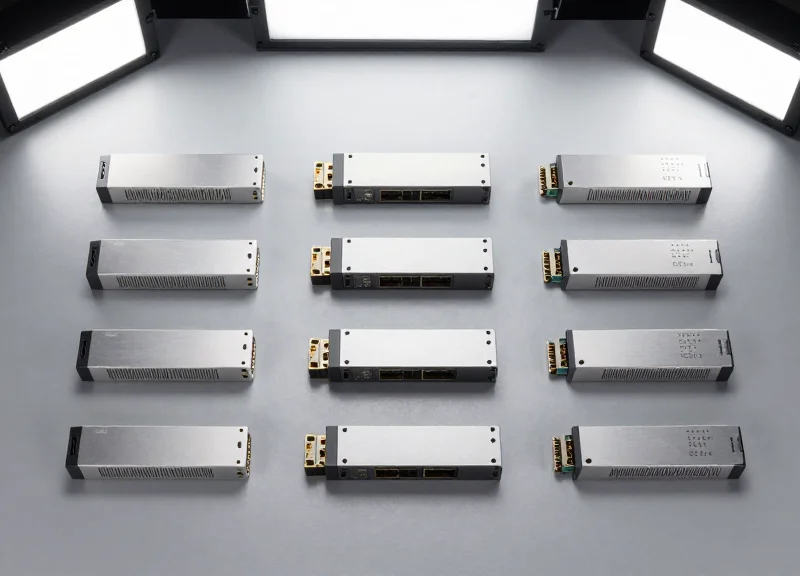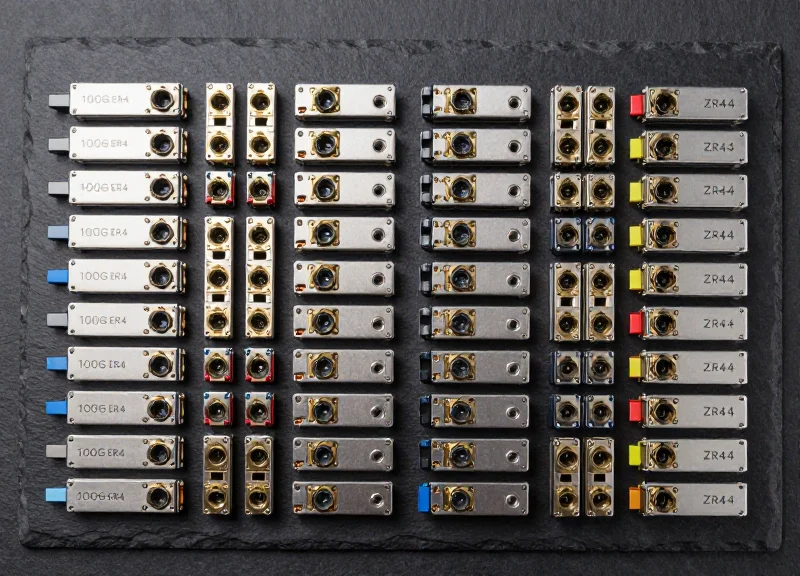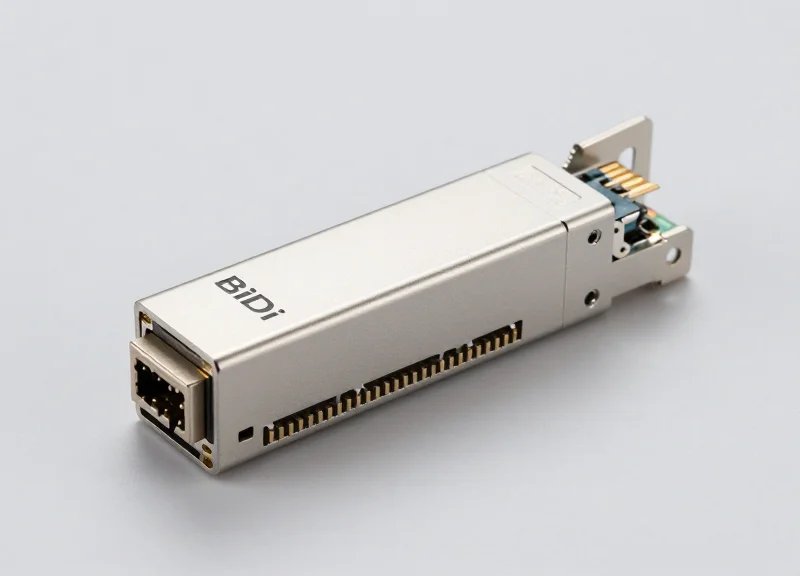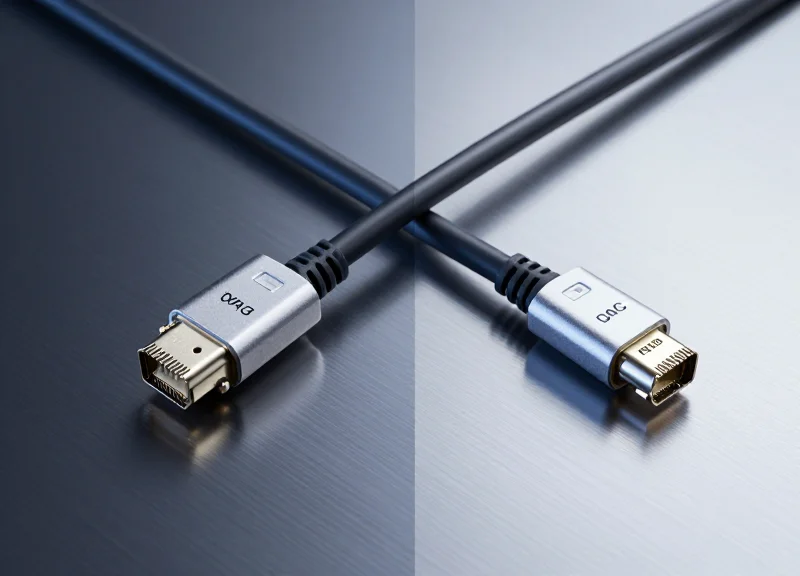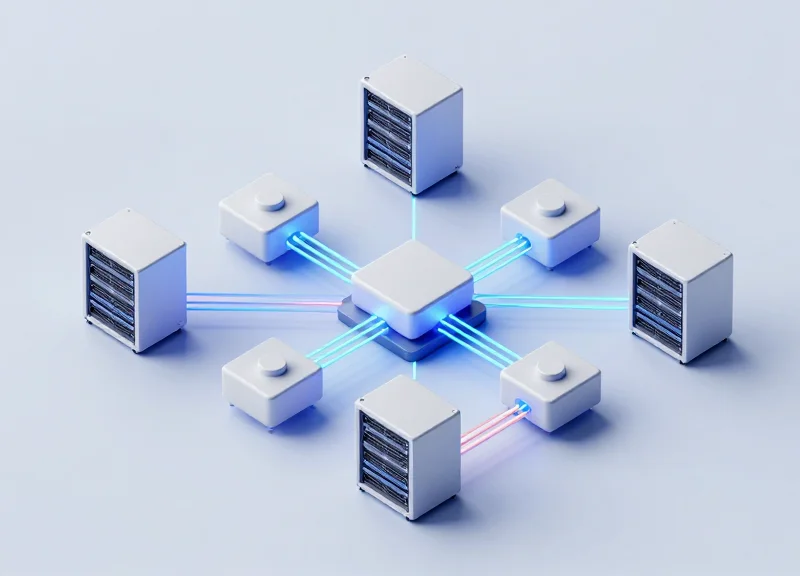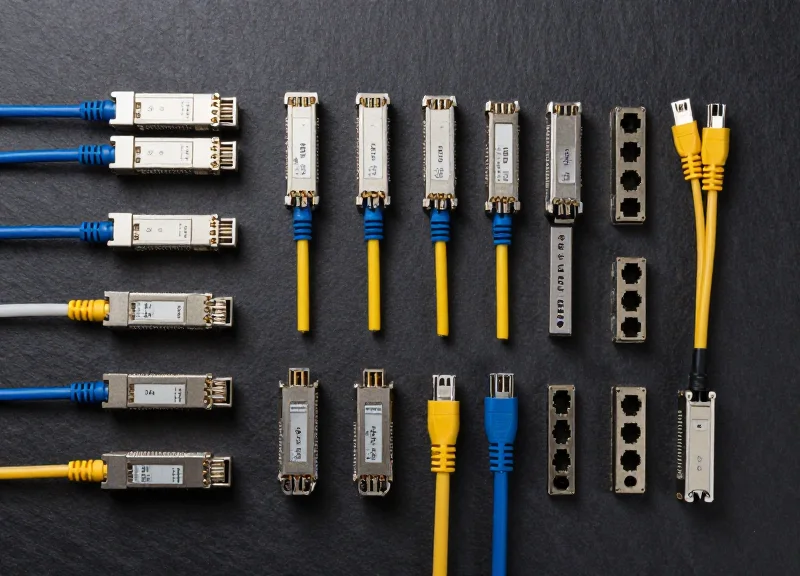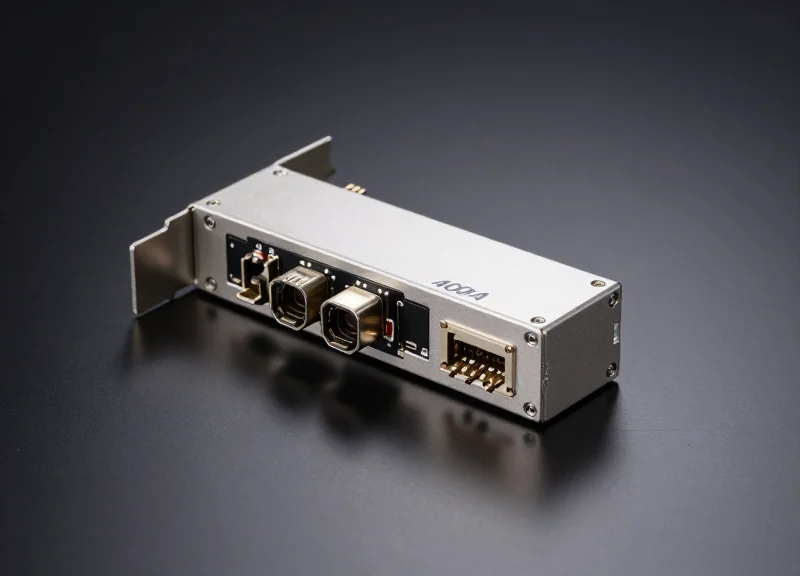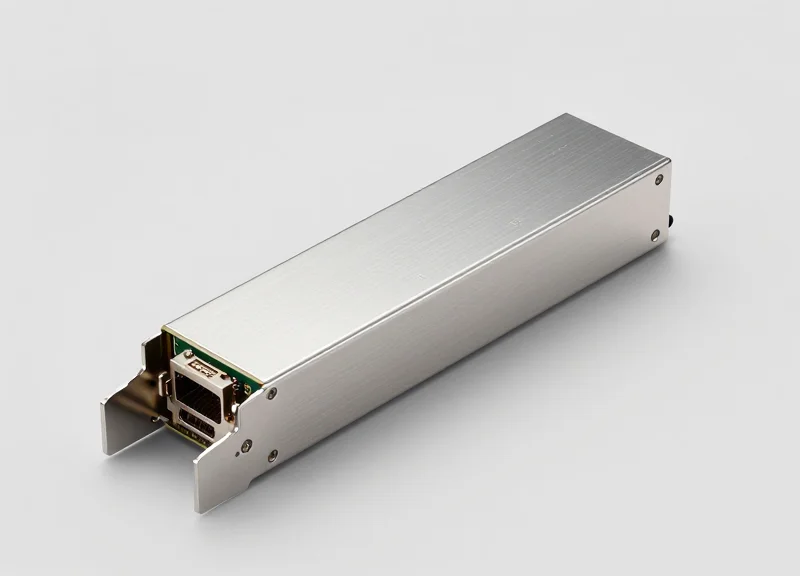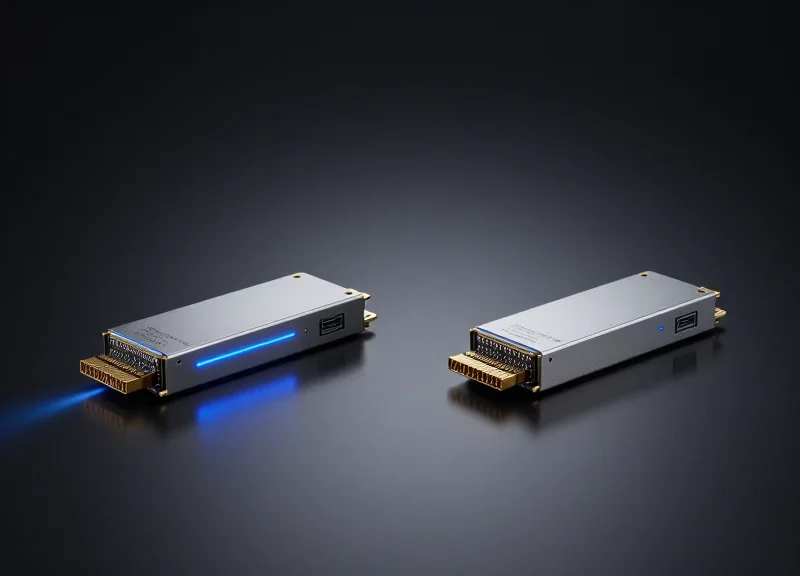
In the race to satisfy global bandwidth demands, the underlying architecture of data center optics has reached a critical inflection point. As we transition from multi-lane configurations to Single Lambda technology, understanding the trade-offs in latency, power, and cost is essential for any forward-thinking network architect.
The Evolution of Optical Lanes: Understanding Single Lambda Technology

Defining the Shift to Single Lambda 100G
Single Lambda 100G technology represents a fundamental evolution in optical networking by compressing the throughput previously achieved via four parallel 25G channels into a single optical wavelength (100G per lambda). By leveraging advanced PAM4 modulation, this architecture eliminates the need for complex optical multiplexing and significantly reduces the total component count, providing a streamlined path for 400G and 800G scaling in modern hyper-scale data centers.
The Technical Catalyst: From NRZ to PAM4
The transition from NRZ (Non-Return to Zero) to PAM4 (Pulse Amplitude Modulation 4-level) is the critical enabler for Single Lambda 100G. While NRZ transmits only one bit per signal level, PAM4 transmits two bits per level, effectively doubling the bandwidth capacity without necessitating a proportional increase in the optical baud rate. This allows a single 53 Gbaud laser to achieve 106.25 Gbps, whereas legacy systems required four separate 25G lasers (4x25G) to reach the same aggregate capacity.
| Architectural Feature | Legacy 4x25G (NRZ) | Single Lambda 1x100G (PAM4) |
|---|---|---|
| Modulation Type | NRZ (2-level) | PAM4 (4-level) |
| Optical Components | 4 Lasers, 4 Detectors | 1 Laser, 1 Detector |
| Mux/Demux Optics | Internal WDM required | Not required |
| Packaging Complexity | High (Multiple TOSA/ROSA) | Low (Simplified TOSA/ROSA) |
| Standard Reach | SR4, LR4 | DR, FR, LR |
Simplification as a Driver for Scale and Reliability
By reducing the laser count from four to one, Single Lambda 100G-DR and 100G-FR transceivers significantly lower the Mean Time Between Failures (MTBF) and improve overall system reliability. This reduction in physical components translates directly to lower manufacturing costs and higher production yields. Furthermore, because there is no need for complex internal optical multiplexing (WDM) within the transceiver, the power consumption per bit is optimized, allowing for higher port density in switches and routers.
- What are the primary standards for Single Lambda 100G?
The most common standards include 100G-DR (500m), 100G-FR (2km), and 100G-LR (10km), all defined under the IEEE 802.3cu task force to support different link lengths. - How does Single Lambda 100G facilitate 400G networking?
Single Lambda 100G is the building block for 400G-DR4 transceivers, which use four parallel Single Lambda 100G lanes. This alignment simplifies breakout configurations where one 400G port connects to four 100G ports. - Is there a performance trade-off with PAM4?
While PAM4 is more sensitive to noise than NRZ, the integration of advanced Forward Error Correction (FEC) within the DSP (Digital Signal Processor) effectively manages signal integrity, maintaining high performance across the intended reach.
Architectural Comparison: Single Lambda vs. Multi-Lane Legacy (SR4/LR4)
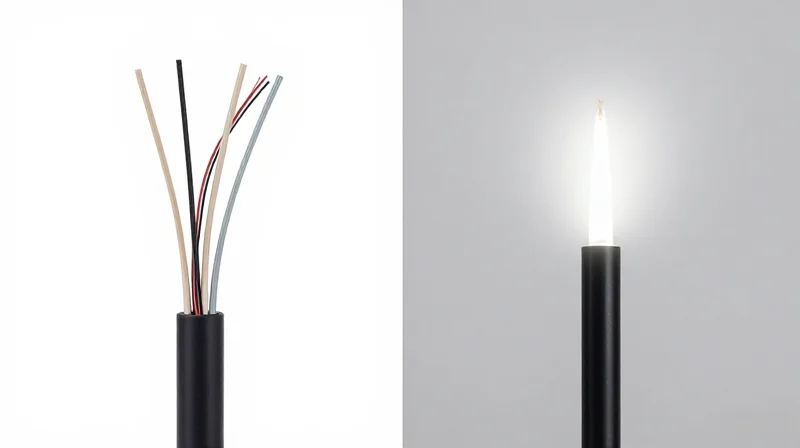
The fundamental difference between Single Lambda 100G/400G and legacy architectures like SR4 or LR4 lies in the reduction of physical complexity. While legacy systems rely on spatial or wavelength division multiplexing of four 25G NRZ signals to reach 100G, Single Lambda technology utilizes high-order PAM4 (Pulse Amplitude Modulation) to transmit the full 100G payload over a single optical carrier, effectively eliminating the need for multi-channel optical alignment and reducing the component count by 75%.
Hardware Consolidation: 4x25G NRZ vs. 1x100G PAM4
In a traditional 100G-LR4 or SR4 transceiver, the optical engine must accommodate four separate Transmit Optical Sub-Assemblies (TOSA) and four Receive Optical Sub-Assemblies (ROSA). For LR4, this also necessitates internal optical multiplexers and de-multiplexers to combine these four wavelengths onto a single fiber pair. Single Lambda architectures replace this array-based approach with a single high-bandwidth TOSA/ROSA pair. This consolidation minimizes the points of failure and significantly reduces the internal footprint required within the QSFP28 or QSFP-DD module.
| Feature | Legacy Multi-Lane (SR4/LR4) | Single Lambda (DR1/FR1) |
|---|---|---|
| Optical Lanes | 4 Lanes (Discrete) | 1 Lane (Consolidated) |
| Modulation Scheme | NRZ (Non-Return to Zero) | PAM4 (Pulse Amplitude Modulation) |
| Laser Count | 4 (VCSEL or DFB) | 1 (EML or SiPh) |
| Optical Mux/Demux | Required (for LR4/CWDM4) | Not Required |
| Relative Optical Complexity | High (Alignment Critical) | Low (Simplified Path) |
Thermal and Signal Integrity Considerations
The shift to Single Lambda requires a sophisticated Digital Signal Processor (DSP) to manage PAM4 modulation and Forward Error Correction (FEC). While the DSP consumes more power than simple NRZ clock-and-data recovery (CDR) chips, the overall system power budget is often more favorable in Single Lambda designs due to the removal of three additional laser drivers and receivers. Furthermore, Single Lambda avoids the 'skew' issues inherent in multi-lane systems, where signal propagation delays must be perfectly synchronized across four distinct fibers or wavelengths.
Architectural Frequently Asked Questions
- Can Single Lambda modules interoperate with legacy 4x25G modules?
No, they are not optically compatible. A 1x100G PAM4 signal cannot be decoded by a 4x25G NRZ receiver without a specialized gearbox/media converter to bridge the modulation and lane-count gap. - How does Single Lambda impact breakout configurations?
Single Lambda is highly efficient for breakout scenarios (e.g., 400G-DR4 breaking out into 4x100G-DR1). Because the lane rates match (100G PAM4 on both ends), the complexity of managing fractional lanes is eliminated. - Does Single Lambda require different fiber types?
Single Lambda 100G (DR1/FR1) typically uses Standard Single-Mode Fiber (G.652), similar to LR4, but is optimized for shorter reaches (500m to 2km) where dispersion is less of a factor for PAM4 signals.
Latency Analysis: DSP and Forward Error Correction (FEC) Impact
While Single Lambda technology revolutionizes data density and cost efficiency, it fundamentally alters the latency profile of the optical link. Legacy architectures using Non-Return to Zero (NRZ) modulation often operated as 'direct-drive' or simple retimed links with minimal processing overhead. In contrast, the 4-level Pulse Amplitude Modulation (PAM4) used in Single Lambda 100G-DR/FR/LR modules requires sophisticated electronic intervention. The necessity of Digital Signal Processing (DSP) to mitigate signal degradation and Forward Error Correction (FEC) to ensure data integrity means that latency is no longer just a factor of physical distance, but a calculation of computational time.
DSP: The Processing Engine and its Delay
The DSP serves as the core of any Single Lambda transceiver, performing tasks such as adaptive equalization, chromatic dispersion compensation, and clock recovery. Because PAM4 signals have a much smaller Signal-to-Noise Ratio (SNR) than NRZ, the DSP must use complex algorithms to distinguish between the four voltage levels of the signal. This mathematical processing typically adds between 50ns and 100ns of latency per module. While hardware iterations continue to improve efficiency, the requirement for signal reshaping ensures that Single Lambda designs will always carry more inherent latency than simpler NRZ-based predecessors like 100G-SR4.
The FEC Latency Penalty
Forward Error Correction (FEC) is the most significant contributor to latency in modern optical networks. Most Single Lambda 100G and 400G standards utilize KP4 FEC (Reed-Solomon RS(544, 514)). FEC works by organizing data into blocks; the receiver must wait for the entire block to arrive before it can perform the error-correction calculations. This 'block-and-wait' mechanism, combined with the decoding time, adds a fixed delay to the transmission path that cannot be eliminated by better fiber quality.
| Technology | Modulation | FEC Type | Estimated Latency |
|---|---|---|---|
| 100G-LR4 (Legacy) | NRZ | None/Optional | < 10 ns |
| 100G-DR (Single Lambda) | PAM4 | KP4 FEC | 150 ns - 250 ns |
| 400G-DR4 (Single Lambda x4) | PAM4 | KP4 FEC | 200 ns - 300 ns |
Operational Impact on Latency-Sensitive Applications
For standard cloud data centers or video streaming, a latency increase of 200 nanoseconds is inconsequential. However, for specific high-performance environments, this shift is critical. High-Frequency Trading (HFT) platforms, where microseconds equate to millions of dollars, and tightly coupled AI/ML clusters using InfiniBand or RoCE v2, must account for these delays. In these scenarios, system architects may choose to use shorter Direct Attach Copper (DAC) cables for top-of-rack switching to bypass the DSP/FEC latency of optical transceivers where possible.
- Can FEC be disabled to reduce latency?
In Single Lambda PAM4 systems, FEC is generally mandatory. The signal is too susceptible to errors to maintain a stable link without it, meaning latency cannot be traded for speed in this manner. - Does 400G always have more latency than 100G?
Generally, yes. 400G requires more complex error correction and higher-order signal processing to manage 100G-per-lane speeds across four channels, leading to slightly higher cumulative delays. - Will future DSPs eliminate this latency?
Future DSPs will be faster, but the latency caused by FEC block sizes is a mathematical constraint of the standard (IEEE 802.3), making it a permanent fixture of Single Lambda technology.
Power Consumption: Achieving Green Data Center Goals
Single Lambda 100G and 400G technologies represent a fundamental shift in energy efficiency by drastically reducing the number of active optical components, achieving up to a 25-30% reduction in power consumption per gigabit compared to traditional multi-lane legacy solutions like 100G-LR4 or SR4.
The Efficiency of Component Consolidation
Legacy 100G-LR4 designs rely on four separate lasers and complex optical multiplexing components to achieve high bandwidth. Each additional laser adds a constant power draw and generates significant heat. By consolidating the data stream onto a single wavelength using PAM4 modulation, Single Lambda designs eliminate three out of every four lasers required in 100G configurations. This reduction directly correlates with lower thermal output and reduced electrical overhead for laser drivers, which are among the most power-hungry elements in a transceiver.
| Module Type | Wavelength Count | Typical Power Consumption (W) | Efficiency (W per 100G) |
|---|---|---|---|
| 100G-LR4 (Legacy NRZ) | 4 | 3.5W - 4.5W | ~4.0W |
| 100G-DR1 (Single Lambda) | 1 | 2.5W - 3.2W | ~2.8W |
| 400G-DR4 (4x Single Lambda) | 4 | 10W - 12W | ~2.75W |
| 400G-SR16 (Legacy NRZ) | 16 | 14W - 16W | ~3.75W |
Thermal Management and PUE Optimization
Heat dissipation is a critical factor in determining a facility's Power Usage Effectiveness (PUE). In high-density data centers, the heat generated by thousands of transceivers creates a cumulative burden on cooling infrastructure. Single Lambda modules operate with higher thermal efficiency, requiring less aggressive airflow for cooling. This allows network operators to increase port densities without exceeding the thermal envelope of the switch chassis, while simultaneously reducing the energy required by facility-wide cooling units (CRACs) and exhaust fans.
Sustainability and Efficiency FAQ
- Does the use of DSP in Single Lambda negate the power savings?
While DSPs for PAM4 processing consume power, advancements in 7nm and 5nm CMOS manufacturing have made them highly efficient. The power saved by removing multiple lasers and drivers far outweighs the incremental power used by the DSP. - How does this impact the total cost of ownership (TCO)?
Lower power consumption translates directly to lower utility costs. Over a five-year lifecycle, the reduction in electricity and cooling requirements can save data center operators thousands of dollars per rack. - Can Single Lambda help meet corporate ESG targets?
Yes. By reducing energy waste and the physical raw materials required for manufacturing (fewer lasers and optical components), Single Lambda technology aligns with Environmental, Social, and Governance goals.
Reliability and MTBF: The Advantage of Reduced Component Counts
The Direct Correlation Between Component Count and Reliability
The shift to Single Lambda 100G and 400G architectures is fundamentally a reliability play; by consolidating the optical path from four lasers down to one, the Mean Time Between Failures (MTBF) is statistically extended because there are fewer discrete points of failure within the transceiver signal chain.
In traditional 4-lane designs (such as 100G-CWDM4 or 400G-LR8), the system relies on multiple lasers, drivers, and a complex optical multiplexer to combine signals into a single fiber. In a serial reliability model, the failure of any single component—be it one of the four lasers or a part of the multiplexing alignment—results in the failure of the entire module. Single Lambda solutions eliminate 75% of the laser-related failure risk by utilizing a single high-performance EML or Silicon Photonics-based laser source. This reduction in the 'bill of materials' (BOM) complexity correlates directly to a lower Failures In Time (FIT) rate and a significantly longer MTBF, providing a more stable foundation for high-density data center fabrics.
Comparative Reliability Metrics
| Reliability Factor | Multi-Lane (4-Laser) System | Single Lambda (1-Laser) System |
|---|---|---|
| Active Optical Components | 4 Lasers / 4 Drivers | 1 Laser / 1 Driver |
| Optical Packaging | Complex (Mux/Demux required) | Simplified (No Mux/Demux) |
| Potential Failure Points | High (Multi-channel risk) | Low (Single-channel focus) |
| Projected MTBF | Standard Baseline | ~25% to 40% Improvement |
Thermal Stability and Long-term Durability
Thermal management is a critical determinant of optical longevity. While Single Lambda modules require a more powerful Digital Signal Processor (DSP) and higher baud-rate lasers that generate concentrated heat, the overall reduction in active components simplifies the module's thermal profile. By removing three additional heat-generating lasers and their associated circuitry, the thermal density is easier to manage at the package level. This prevents the accelerated aging of epoxy seals and optical adhesives, which are common culprits in long-term performance degradation in multi-lane optics.
- Does the higher baud rate of Single Lambda lasers decrease their lifespan?
No. While the laser operates at higher speeds (53 Gbd or 106 Gbd), modern Electro-absorption Modulated Lasers (EML) are specifically engineered for these rates. Their reliability and FIT rates are comparable to lower-speed versions, meaning the reduction in laser count provides a net gain in reliability. - How does improved MTBF impact data center OpEx?
Higher MTBF translates directly to lower Operational Expenditure by reducing the frequency of technician 'truck rolls' for module replacement, lowering the required stock of emergency spares, and increasing overall network uptime. - Is the complexity shifted to the DSP a reliability concern?
While the DSP is more complex, silicon reliability is exceptionally high compared to optical component reliability. The trade-off—moving complexity from the optical domain to the electronic domain—is a standard industry strategy to improve total system yield and lifespan.
Total Cost of Ownership (TCO): CAPEX vs. OPEX Breakdown

Evaluating the Total Cost of Ownership (TCO) for Single Lambda 100G/400G reveals a decisive financial advantage over multi-wavelength alternatives, primarily driven by a simplified bill of materials and significantly lower energy consumption. While initial adoption costs for newer technology can sometimes carry a premium, the consolidation of four lasers into one drastically reduces the potential failure points and power overhead, leading to a rapid Return on Investment (ROI) for hyper-scale data centers and enterprise networks alike.
CAPEX: Simplification of the Bill of Materials
The Capital Expenditure (CAPEX) for optical transceivers is largely dictated by component count. Legacy 100G solutions like the 100G-SR4 or CWDM4 rely on four distinct 25Gbps optical lanes. In contrast, Single Lambda 100G (100G-DR/FR/LR) utilizes a single high-speed laser and advanced DSP-based PAM4 modulation. This architecture eliminates the need for complex optical multiplexers and reduces the number of Transmitter Optical Sub-Assembly (TOSA) and Receiver Optical Sub-Assembly (ROSA) components, which typically represent the most expensive parts of a module.
| Component Category | Multi-Lane (4x25G) | Single Lambda (1x100G) |
|---|---|---|
| Laser Count | 4 Lasers | 1 Laser |
| Optical Complexity | High (Mux/Demux required) | Low (Direct coupling) |
| Manufacturing Yield | Lower (Multiple failure points) | Higher (Simplified assembly) |
OPEX: Long-term Operational Efficiency
Operational Expenditure (OPEX) is where Single Lambda technologies excel, particularly as data centers strive for lower Power Usage Effectiveness (PUE) scores. By reducing the laser count, these modules consume roughly 25% to 40% less power per gigabit than their four-lane counterparts. This reduction scales linearly across thousands of ports, translating into massive savings in both electricity costs and the cooling capacity required to manage thermal loads in high-density racks.
| Metric | 4x25G Legacy (100G) | Single Lambda (100G PAM4) |
|---|---|---|
| Power Consumption (Typical) | 3.5W - 5.0W | 2.5W - 3.5W |
| Thermal Footprint | High | Low to Moderate |
| Cabling Complexity | High (MPO/Ribbon often req) | Low (Standard LC Duplex SMF) |
Strategic Financial Implications and ROI
Beyond immediate power savings, Single Lambda solutions offer better long-term value through architectural future-proofing. The industry roadmap is centered on 100G/lane and 200G/lane serialization. Organizations investing in Single Lambda 100G today find it easier to transition to 400G (4x100G) and 800G (8x100G) because the underlying modulation and testing protocols remain consistent, significantly reducing the retraining and validation costs associated with next-generation upgrades.
- Does Single Lambda require new cabling infrastructure?
No, Single Lambda 100G (like 100G-FR) uses standard LC duplex single-mode fiber, allowing for the reuse of existing 10G/25G fiber paths, whereas many legacy 100G standards require expensive MPO-12 ribbon cables. - How much can I save on electricity per year?
Depending on regional energy costs, shifting to Single Lambda can reduce transceiver power costs by approximately $5 to $12 per port annually, which represents a significant aggregate saving in large-scale deployments. - Is the DSP cost a major CAPEX inhibitor?
While PAM4 DSPs are more complex than older Clock and Data Recovery (CDR) chips, the mass production of these chips and the reduction in optical sub-components result in a lower net cost per bit.
Interoperability and the Migration Path to 400G/800G

The migration to 400G and 800G is significantly streamlined by Single Lambda 100G technology because it aligns the signaling rate and modulation format (PAM4) of individual 100G channels with the constituent lanes of higher-speed aggregates. Unlike legacy 4x25G NRZ architectures that require complex gearboxes to interface with 400G ports, Single Lambda modules allow for simple optical breakouts using passive cables. This alignment reduces hardware complexity, minimizes latency, and ensures that the investment in 100G infrastructure remains relevant as the network core scales to 400G and 800G.
The Role of Breakout Cables in Seamless Scaling
One of the primary advantages of the Single Lambda design is its native interoperability with high-density switches. A single 400G-DR4 or 400G-XDR4 port can be broken out into four 100G-DR or 100G-FR optical interfaces respectively. This enables data center operators to deploy high-radix 400G switches at the spine or leaf layer while maintaining 100G connections to existing servers or legacy switches. This 'pay-as-you-grow' model avoids the need for massive 'forklift' upgrades, allowing for incremental bandwidth expansion.
| Metric | Legacy 4x25G NRZ Path | Single Lambda 100G PAM4 Path |
|---|---|---|
| Migration Logic | Requires gearbox for 400G transition | Native 100G lanes align with 400G/800G |
| Interoperability | Limited to NRZ-based legacy systems | Cross-generation compatibility via breakouts |
| Hardware Complexity | High (Requires lane-rate conversion) | Low (Direct optical pass-through) |
| Cabling Efficiency | Complex parallel fiber requirements | Simplified duplex or parallel SMF options |
Standardization and Form Factor Longevity
The transition path is further solidified by the standardization of form factors like QSFP-DD and OSFP. Because Single Lambda 100G (specifically 100G-DR/FR/LR) is defined by the IEEE 802.3cu and 802.3ck standards, it shares the same underlying PAM4 electrical interface used in 400G (400G-DR4) and upcoming 800G (800G-DR8) designs. This consistency ensures that the physical layer remains stable, allowing for the reuse of existing patch panels and fiber infrastructure as the transceivers themselves evolve to higher densities.
- Can Single Lambda 100G modules interoperate with legacy 100G-LR4?
No. Legacy 100G-LR4 uses four wavelengths at 25G NRZ, whereas Single Lambda 100G uses one wavelength at 100G PAM4. An active conversion or gearbox is required to bridge these two technologies. - How does Single Lambda 100G simplify the move to 800G?
800G architectures, such as 800G-DR8, utilize eight 100G PAM4 lanes. By standardizing on Single Lambda 100G now, operators ensure that their 100G endpoints are natively compatible with the individual lanes of an 800G breakout cable. - What is the maximum distance for Single Lambda breakouts?
Standard 100G-DR supports up to 500m, while 100G-FR supports up to 2km and 100G-LR supports up to 10km, providing flexible reach options for both intra-rack and inter-building connections.
Industry Standard Compliance: IEEE and MSA Benchmarking
Industry Standard Compliance: IEEE and MSA Benchmarking
Industry standards are the bedrock of optical networking, transforming proprietary innovations into interchangeable, cost-effective components. For Single Lambda 100G and 400G, adherence to IEEE 802.3 and Multi-Source Agreement (MSA) specifications ensures that hardware from disparate vendors can interoperate seamlessly. This standardization is critical for hyperscale data centers and service providers to mitigate supply chain risks and prevent vendor lock-in, ultimately driving down the cost per bit through healthy market competition.
The IEEE 802.3 Framework
The IEEE 802.3bs and 802.3cd amendments provided the formal technical foundation for Single Lambda technology. By defining the Physical Medium Dependent (PMD) sublayers for 100Gbps per lane using PAM4 modulation, the IEEE established the rigorous electrical and optical parameters required for reliable data transmission. These standards specify everything from bit-error rate (BER) thresholds to receiver sensitivity, ensuring that a 100GBASE-DR transceiver from one manufacturer performs identically to one from another.
The Role of the 100G Lambda MSA
While IEEE provides the primary regulatory framework, the 100G Lambda MSA was established to bridge the gap between theoretical standards and commercial implementation. This consortium focuses on accelerating the ecosystem for 100G and 400G optical modules optimized for 100G-per-lane technology. The MSA specifically addresses reach requirements—such as 2km (FR) and 10km (LR) variants—that are vital for modern leaf-spine architectures but may lag in the formal IEEE ballot process.
| Organization | Key Standard/Agreement | Primary Focus | Value to Ecosystem |
|---|---|---|---|
| IEEE | 802.3cd / 802.3cu | 100GBASE-DR, FR, LR | Defines the fundamental physical layer and PAM4 signaling. |
| 100G Lambda MSA | 100G-FR / 400G-FR4 | Reach & Interoperability | Accelerates time-to-market and expands reach specifications. |
| QSFP-DD MSA | Common Management Interface | Form Factor & Software | Ensures physical and software compatibility across host platforms. |
Benchmarking Compliance and Interoperability
- Why does IEEE compliance matter for 400G upgrades?
IEEE compliance ensures that as data centers transition from 100G to 400G, the 100G-per-lane signaling remains consistent. This allows 400G ports to be broken out into four 100G ports using standard-compliant cabling without signaling mismatches. - How do MSAs impact transceiver pricing?
By creating a common specification that multiple vendors can follow, MSAs prevent proprietary monopolies. This commoditization leads to increased manufacturing volume and lower unit prices for end-users. - Are Single Lambda modules compatible with older 4x25G standards?
No, they are not optically compatible because the modulation (PAM4 vs NRZ) and the number of wavelengths differ. However, standards-compliant gear uses Gearbox technology in the host to bridge these electrical differences.
Ultimately, the synergy between IEEE and various MSAs creates a robust benchmarking environment. This allows network engineers to select transceivers based on performance metrics and cost-efficiency rather than proprietary constraints, ensuring that Single Lambda 100G/400G remains the most scalable path for future-proofing high-speed networks.
Navigating the complexities of high-speed optical networking requires a balance of immediate performance and long-term financial sustainability. Single Lambda 100G and 400G solutions represent the most efficient path forward for modern hyperscale and enterprise environments. Contact our expert consulting team today to design a scalable, cost-effective infrastructure tailored to your specific traffic needs.