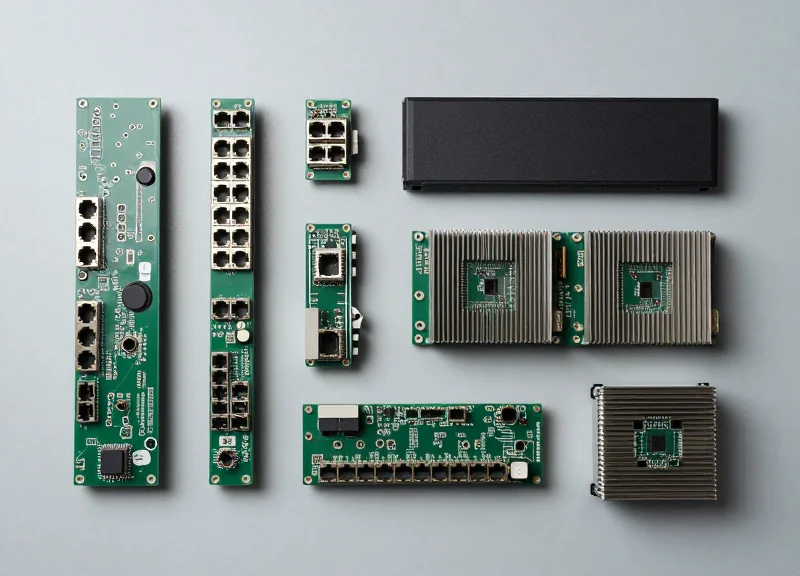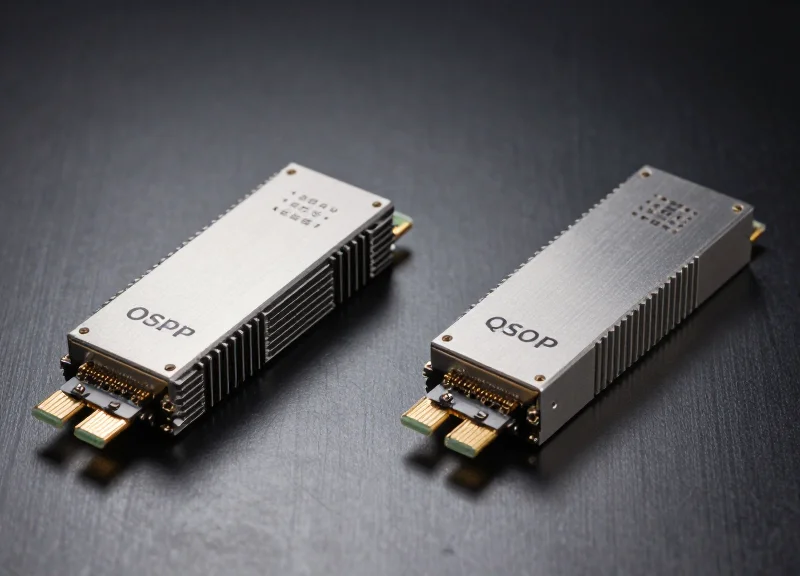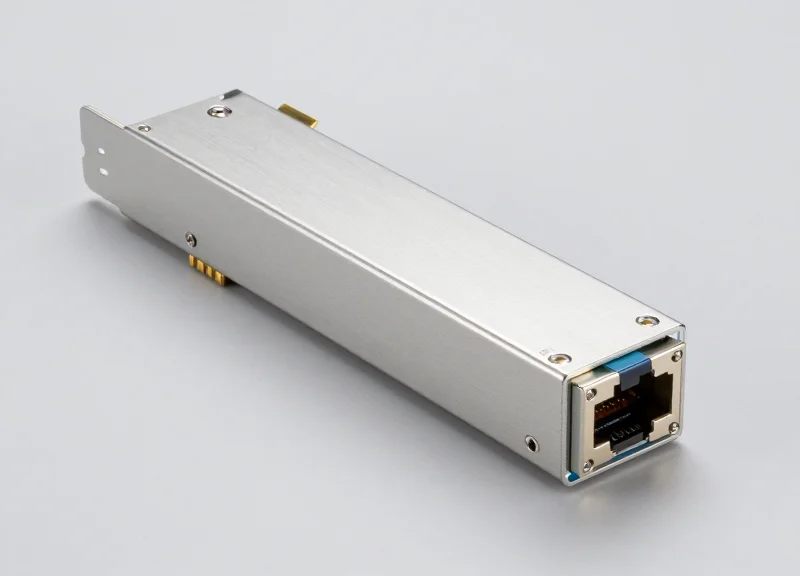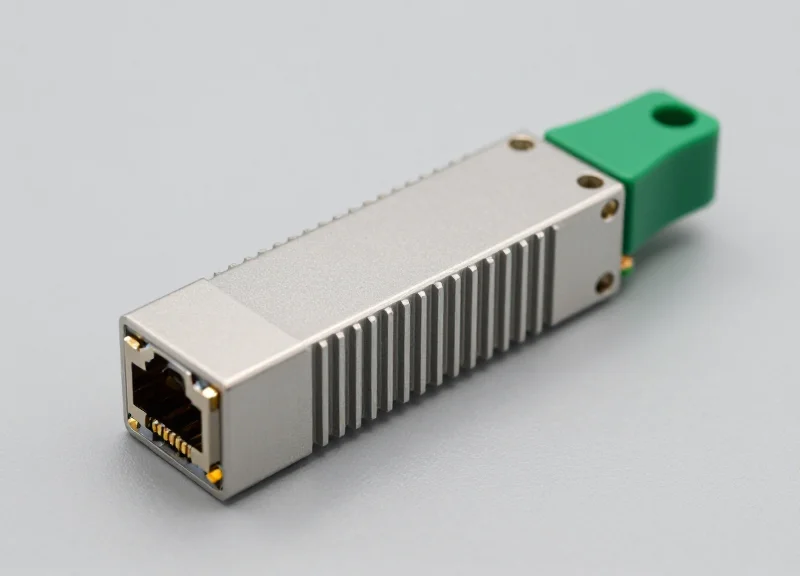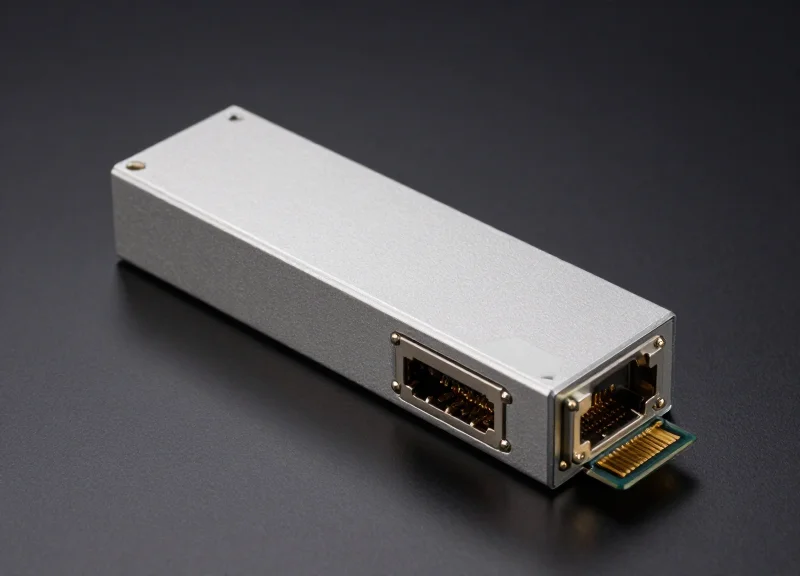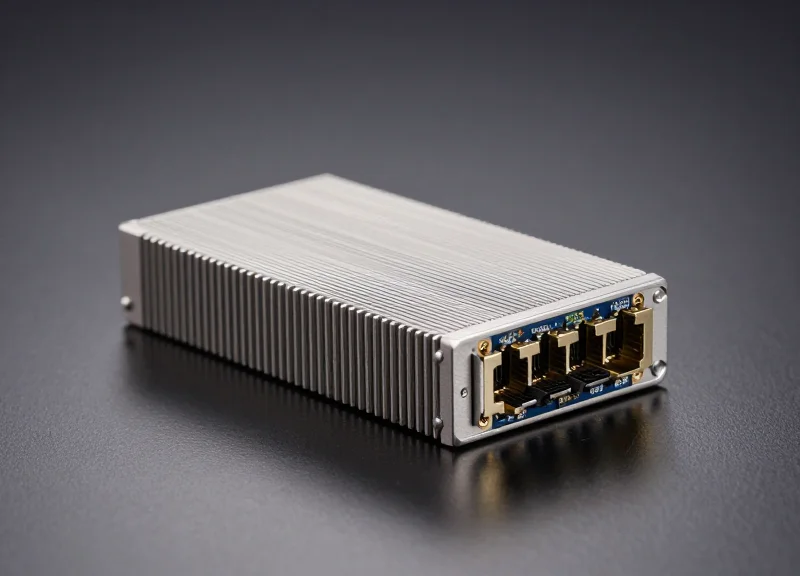
In the era of AI and massive data growth, the demand for high-bandwidth, low-power interconnects is skyrocketing. Conventional DSP-based modules face heat and latency challenges. Ubytelink’s 800G LPO (Linear-drive Pluggable Optics) technology emerges as the solution, offering a streamlined approach to high-speed networking that prioritizes performance and energy efficiency for mission-critical infrastructure.
The Rise of 800G LPO in Modern Data Centers

The Rise of 800G LPO in Modern Data Centers
As AI clusters and high-performance computing (HPC) environments scale, the demand for 800G bandwidth has collided with the physical limits of power consumption and thermal management in traditional DSP-based optics. Linear-drive Pluggable Optics (LPO) represents a paradigm shift, removing the Digital Signal Processor (DSP) from the pluggable module and leveraging the high-performance SerDes of the host ASIC to drive signals directly. This architecture significantly reduces power consumption by up to 50%, lowers latency to near-zero processing levels, and decreases overall system costs, making it the preferred choice for the next generation of global network infrastructure.
The Shift from DSP-Centric to Linear Architectures
For years, the industry relied on DSPs within the optical module to compensate for signal degradation. However, as link speeds reached 800G, the heat generated by these DSPs became a bottleneck for port density. Ubytelink’s 800G LPO technology eliminates these components, relying instead on the robust equalization capabilities of modern switch silicon. This transition is not merely a component swap; it is a fundamental redesign that prioritizes energy efficiency and signal speed.
| Feature | Traditional 800G (DSP) | Ubytelink 800G LPO |
|---|---|---|
| Power Consumption | 16W - 20W per module | 8W - 10W per module |
| Latency | ~100ns (DSP Processing) | <1ns (Linear Path) |
| Thermal Impact | High Heat Generation | Low Heat Generation |
| Cost Efficiency | High BoM (DSP intensive) | Low BoM (Simplified Design) |
| Primary Use Case | Long-reach/Core Interconnects | AI Clusters / Intra-DC Links |
Key Considerations for 800G LPO Adoption
- Why is latency critical for 800G LPO?
In AI training environments, every nanosecond counts. By removing the DSP, LPO modules eliminate the re-timing delay, ensuring synchronized data delivery across thousands of GPU nodes. - Does LPO affect signal integrity?
LPO requires a high-quality host SerDes. Ubytelink solutions are engineered to work with industry-leading switch silicon to maintain a clean linear signal path without the need for active regeneration. - How does LPO improve data center sustainability?
By halving the power consumption of every optical link, LPO significantly reduces the Carbon Footprint and cooling requirements of the data center, leading to lower Total Cost of Ownership (TCO).
The rise of 800G LPO marks the end of the 'one-size-fits-all' approach to optical networking. By specializing in linear-drive technology, Ubytelink provides a high-performance, low-power alternative that directly addresses the scaling challenges of the AI era.
Technical Deep Dive: How LPO Technology Works
Redefining Signal Paths: The Shift to All-Analog Links
At the heart of Ubytelink's 800G LPO solutions is the strategic elimination of the Digital Signal Processor (DSP), a component that has historically been the primary consumer of power and generator of heat within optical modules. By removing the DSP, LPO modules create a transparent, linear electrical-to-optical path. In this architecture, the complex signal equalization and error correction tasks are offloaded to the host ASIC's SerDes. This shift transforms the transceiver from an active processing unit into a high-performance analog bridge, drastically reducing the total power envelope of the network interface.
Preserving Fidelity with High-Linearity Drivers and TIAs
Because the LPO module lacks the regenerative capabilities of a DSP (which typically 'cleans' and retimes the signal), the burden of maintaining signal integrity falls entirely on the analog front-end. Ubytelink utilizes premium, high-linearity Drivers and Trans-Impedance Amplifiers (TIAs) designed to handle 112G-per-lane PAM4 signals. These components are engineered to provide massive bandwidth while minimizing non-linear distortion. The high-linearity driver ensures that the electrical pulse from the host switch is converted into an optical signal with an ultra-clean eye diagram, while the TIA at the receiving end amplifies weak optical signals without introducing significant noise or jitter.
| Feature | Traditional DSP-based 800G | Ubytelink 800G LPO |
|---|---|---|
| Power Consumption | 16W - 20W per module | Under 10W per module |
| Latency | ~100ns (Processing overhead) | <1ns (Direct analog path) |
| Signal Path | Retimed / Re-amplified | Linear / Transparent |
| Thermal Impact | High heat dissipation | Low thermal footprint |
Technical FAQs: Understanding the LPO Mechanics
- How does LPO compensate for signal loss without a DSP?
LPO relies on the powerful equalization capabilities (FFE, CTLE, and DFE) of the host switch ASIC's SerDes. The host compensates for the channel impairments, while the LPO module maintains a high-fidelity linear transmission. - What are the requirements for host interoperability?
LPO technology requires switches and NICs with robust SerDes that support 'linear-drive' modes. This ensures the host can provide the necessary pre-emphasis and equalization required for the module to function correctly. - Does the lack of a DSP affect transmission distance?
While LPO is primarily optimized for short-reach intra-rack and inter-rack connections (up to 500m/2km), the high-linearity components in Ubytelink modules ensure that PAM4 signal quality remains within IEEE specification limits for these distances.
Ubytelink's Engineering Excellence and Reliability
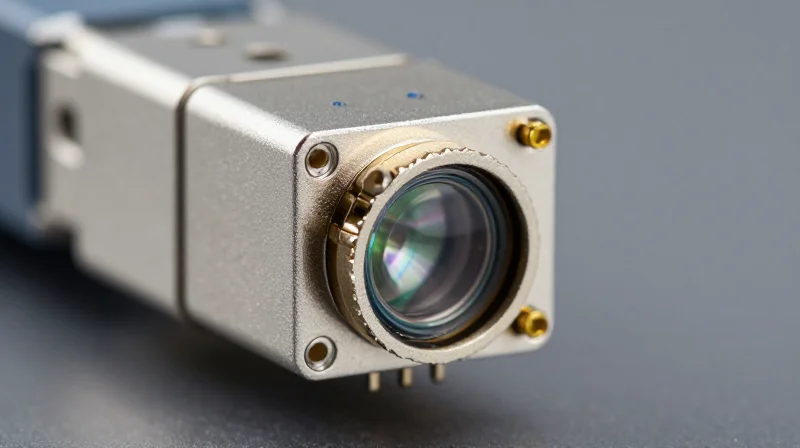
Ubytelink Engineering Excellence and Reliability
Ubytelink’s commitment to engineering excellence is defined by a 'quality-first' approach that addresses the unique challenges of Linear-drive Pluggable Optics (LPO), where the absence of a DSP places a higher premium on the analog performance of drivers and TIAs. By adhering to strict carrier-grade standards, Ubytelink ensures that every 800G LPO module provides the signal clarity and low-latency performance required for mission-critical AI clusters and high-frequency trading environments.
Comprehensive Testing and Validation Protocols
To achieve high yield and long-term stability, Ubytelink employs a multi-stage testing regimen that exceeds industry norms. This includes automated optical inspection (AOI), real-time signal monitoring, and environmental stress screening (ESS) to identify potential failures before they reach the data center floor.
| Test Category | Parameters Evaluated | Purpose |
|---|---|---|
| Signal Integrity | BER (Bit Error Rate), Eye Diagram Analysis | Ensuring margin safety in the absence of DSP-based equalization. |
| Environmental Stress | Temperature cycling from -40°C to +85°C | Validating thermal stability and material integrity under load. |
| Interoperability | Cross-platform compatibility with major switch vendors | Guaranteeing seamless integration with NVIDIA, Arista, and Cisco hardware. |
| Mechanical Reliability | Vibration and shock resistance | Ensuring durability during shipping and long-term rack deployment. |
Advanced Manufacturing and Quality Control
Ubytelink utilizes state-of-the-art automated assembly lines that minimize human error and ensure consistency across large-volume production runs. Each 800G LPO module undergoes a burn-in process at elevated temperatures to eliminate early-life failures, ensuring a Mean Time Between Failures (MTBF) that meets the rigorous demands of global hyperscale networks.
- How does Ubytelink manage thermal consistency without a DSP?
By utilizing high-efficiency analog components and optimized heat-dissipation housings, Ubytelink 800G LPO modules maintain a stable thermal profile, significantly reducing the risk of frequency drift or signal degradation. - What is the impact of Ubytelink's QA on TCO?
Rigorous testing leads to lower failure rates and reduced maintenance overhead, which directly translates to a lower Total Cost of Ownership (TCO) compared to lower-tier LPO alternatives. - Are these solutions compatible with legacy infrastructure?
While 800G LPO is designed for modern 112G SerDes interfaces, Ubytelink performs extensive interoperability testing to ensure compatibility with existing high-performance networking ecosystems.
Slashing Power Consumption for Greener Networks

The Power Efficiency Revolution in 800G Interconnects
The most significant barrier to scaling next-generation data centers is the exponential rise in power consumption and the resulting heat density. Ubytelink 800G LPO Technology Solutions address this challenge directly by eliminating the Digital Signal Processor (DSP)—traditionally the most power-hungry component in an optical module. By utilizing a linear-drive architecture, these modules reduce power draw from the standard 16-18W range found in DSP-based modules to approximately 8-9W. This 50% reduction is not merely a technical milestone; it is a critical shift that enables network operators to maximize port density without exceeding the thermal limits of their existing infrastructure.
Comparative Analysis: DSP-Based vs. Ubytelink LPO
| Metric | Traditional 800G DSP Module | Ubytelink 800G LPO Module |
|---|---|---|
| Typical Power Consumption | 15W - 18W | 8W - 9W |
| Heat Dissipation | Significant (Requires robust cooling) | Minimal (Reduces fan load) |
| Energy Efficiency | Standard | Up to 50% Improvement |
| Latency | Higher (Buffer processing) | Ultra-Low (Nanosecond range) |
Lowering OPEX through Advanced Thermal Management
Reducing power consumption has a cascading effect on the Total Cost of Ownership (TCO). Lower wattage per module translates to reduced heat dissipation, which in turn lowers the energy required for data center cooling systems—often one of the highest expenses for large-scale facilities. By integrating Ubytelink's LPO solutions, carriers can achieve significant savings in Operational Expenditure (OPEX). Furthermore, lower operating temperatures enhance the long-term reliability and lifespan of both the optical modules and the surrounding switch hardware, ensuring a more stable and sustainable network environment.
- How does the removal of the DSP affect overall data center energy goals?
The DSP typically accounts for nearly half of a module's power budget. By removing it, Ubytelink LPO modules allow data centers to meet aggressive ESG (Environmental, Social, and Governance) targets while maintaining 800G performance. - Does lower power consumption compromise signal distance?
LPO technology is specifically optimized for short-reach and medium-reach applications, such as intra-rack and inter-rack connections, where the power savings provide the greatest benefit without sacrificing link stability. - What are the specific thermal benefits for high-density switches?
In a fully populated 32-port or 64-port switch, the aggregate heat reduction from using LPO modules can prevent thermal throttling and reduce the need for high-RPM fan speeds, further decreasing noise and secondary power usage.
Ultra-Low Latency for AI and ML Workloads
In the era of Generative AI and Large Language Models (LLMs), network latency has become a critical bottleneck for data center efficiency. Ubytelink 800G LPO technology addresses this by removing the Digital Signal Processor (DSP) from the optical transceiver, facilitating a linear drive architecture that achieves nanosecond-level transmission speeds. This reduction in signal processing overhead is essential for massive-scale GPU clusters where every microsecond saved in data exchange translates to improved training performance and higher hardware utilization.
The Architecture of Instantaneous Data Flow
Traditional optical modules rely on DSPs to perform clock and data recovery (CDR) and electronic dispersion compensation. While effective for signal integrity, this adds significant latency—often several hundred nanoseconds per hop. Ubytelink’s LPO modules utilize high-linearity TIAs and drivers to maintain signal quality without the computational overhead of a DSP. For AI workloads utilizing Remote Direct Memory Access (RDMA) over Converged Ethernet (RoCE), this reduction in the tail latency ensures that synchronized GPU computations are not stalled by delayed data packets, maintaining a constant flow of information across the fabric.
Optimizing Collective Communications
AI training involves frequent All-Reduce and All-to-All communication patterns where thousands of GPUs must synchronize their gradients. A single delayed link can slow down the entire training epoch. By utilizing Ubytelink 800G LPO solutions, data centers can achieve a more deterministic network environment. This minimizes the performance degradation caused by network jitter and allows for tighter synchronization between compute nodes, maximizing the return on investment for expensive H100 or B200 GPU deployments.
| Metric | Standard 800G (with DSP) | Ubytelink 800G LPO |
|---|---|---|
| Processing Latency | 100ns - 200ns | < 1ns |
| Synchronization Efficiency | Moderate | Maximum |
| Jitter Profile | Variable | Highly Stable |
| AI Cluster Scalability | Limited by Tail Latency | High Scalability |
Enhancing Inference and Real-Time Responsiveness
For inference tasks, particularly those involving real-time interaction, computer vision, or high-frequency financial modeling, every microsecond of delay impacts the user experience. Ubytelink’s 800G LPO technology ensures that the path from the request to the processing unit and back is as direct as possible. By stripping away the latency-heavy DSP layer, LPO modules enable AI applications to respond with the near-instantaneous speed required for mission-critical and consumer-facing services.
- How does LPO improve GPU cluster efficiency?
By removing the DSP, LPO reduces the time data spends in the interconnect, minimizing GPU idle time during synchronization phases and improving total TFLOPS delivery. - Is the latency reduction significant for small clusters?
While beneficial in all sizes, the advantages of LPO latency reduction scale exponentially with the size of the cluster and the number of network hops between nodes. - Does removing the DSP affect signal reliability in AI networks?
Ubytelink uses premium, high-linearity analog components to ensure that while the DSP is absent, signal integrity remains carrier-grade for the short-reach links typical of AI fabrics.
Ensuring Seamless Interoperability and Signal Integrity
The primary challenge in adopting Linear-drive Pluggable Optics (LPO) is the removal of the Digital Signal Processor (DSP), which traditionally compensates for signal degradation. Ubytelink addresses this by ensuring its 800G LPO modules act as transparent, high-fidelity conduits that rely on the host switch's SerDes for equalization, requiring precise alignment between the host and the optical interface to maintain signal integrity.
The Shift in Signal Equalization Responsibility
In standard 800G modules, the DSP retimes and reshapes the signal, masking imperfections in the host-side PCB. With Ubytelink's LPO technology, the 'linear' nature of the drive means the host ASIC must handle the heavy lifting of signal processing. To ensure this works seamlessly, Ubytelink optimizes the transmitter and receiver paths to support the Continuous Time Linear Equalization (CTLE) and Decision Feedback Equalization (DFE) capabilities of modern high-end switches.
| Feature | Traditional 800G DSP Module | Ubytelink 800G LPO Solution |
|---|---|---|
| Signal Path | Re-timed (Non-linear) | Direct-drive (Linear) |
| Equalization Location | Inside the Module (DSP) | On the Host Switch (SerDes) |
| Interoperability Constraint | Module-specific Firmware | Host-to-Module SI Matching |
| Bit Error Rate (BER) Control | Managed by DSP FEC | Dependent on Host SerDes Quality |
Optimizing the Host-Side Interface
Ubytelink’s 800G LPO solutions are engineered to meet the stringent requirements of the OIF-LPO-01.0 specification. By minimizing the insertion loss and cross-talk within the module's internal circuitry, Ubytelink provides a wider margin for the host switch's signals. This 'clean' electrical-to-optical conversion is critical for plug-and-play reliability across various network hardware from global vendors like Cisco, Arista, and NVIDIA.
Ensuring Plug-and-Play Stability
- How does Ubytelink ensure compatibility with different switch ASICs?
Ubytelink performs extensive validation across multiple SerDes architectures (e.g., 112G PAM4) to ensure the linear driver's gain and linearity match the output characteristics of leading switch silicon. - What happens if the host signal is weak?
The LPO modules feature high-performance linear Trans-Impedance Amplifiers (TIA) that provide sufficient gain without introducing excessive noise, effectively extending the reach of the host's native signal. - Is special software required for Ubytelink LPO modules?
No. By adhering to industry-standard MSAs and OIF specifications, Ubytelink ensures that the modules are recognized as standard 800G interfaces, requiring only standard port configuration on the switch.
Ultimately, the success of an LPO deployment hinges on the synergy between the optical module and the network switch. Ubytelink bridges this gap through rigorous signal integrity simulations and physical layer testing, ensuring that every 800G LPO module delivers carrier-grade performance in the most demanding data center environments.
Optimizing Total Cost of Ownership (TCO)
The Economic Advantage: Why LPO Redefines Data Center TCO
Adopting Ubytelink 800G LPO technology solutions provides a dual-advantage for global network operators: a significant reduction in initial capital expenditure (CAPEX) due to simplified hardware architecture and a drastic decrease in ongoing operational expenditure (OPEX) driven by improved energy efficiency and reduced cooling demands. By removing the Digital Signal Processor (DSP), Ubytelink reduces the bill of materials and the thermal profile of each interconnect, allowing for higher density deployments without the traditional cost penalties associated with high-speed 800G networking.
CAPEX vs. OPEX: A Comparative Analysis
| Cost Metric | Traditional 800G (DSP-based) | Ubytelink 800G LPO |
|---|---|---|
| Module Unit Cost | Premium (High DSP Licensing/Silicon) | Cost-Effective (Simplified BOM) |
| Power Consumption | 16W - 18W per module | 8W - 10W per module |
| Cooling Requirements | High (Significant Thermal Load) | Low (Minimal Heat Dissipation) |
| Infrastructure Lifespan | Standard | Extended (Lower Thermal Stress) |
Reducing Cooling and Power Infrastructure Overhead
The most profound impact of Ubytelink 800G LPO on TCO is found in the auxiliary infrastructure. Traditional DSP-based modules generate substantial heat, necessitating advanced liquid cooling or high-velocity airflow systems. Because LPO modules dissipate roughly half the heat, data centers can achieve better Power Usage Effectiveness (PUE) scores. This efficiency translates to lower investments in HVAC systems and the ability to run more transceivers per rack without reaching thermal limits, effectively maximizing the ROI of existing rack space.
Frequently Asked Questions: LPO Economics
- How does LPO reduce initial capital expenditure?
The DSP chip is the most expensive component in a standard 800G module. By eliminating this chip, Ubytelink passes the manufacturing savings directly to the operator, reducing the price per gigabit significantly. - Does the reduction in power usage impact long-term reliability?
Yes, positively. Lower power consumption leads to lower operating temperatures. Since heat is a primary driver of electronic failure, LPO modules typically experience less thermal stress, potentially increasing the Mean Time Between Failures (MTBF). - Can LPO technology lower secondary infrastructure costs?
Absolutely. By lowering the power draw per port, operators can reduce the size and cost of Uninterruptible Power Supplies (UPS) and Power Distribution Units (PDUs) required for the network core.
Strategic Applications for Global Infrastructure

Strategic Use Cases for 800G LPO in Global Infrastructure
Ubytelink 800G LPO technology transforms global infrastructure by providing a specialized alternative to traditional Retimed optics, specifically targeting environments where the power-latency product is the primary metric of success. By removing the DSP from the optical module and shifting equalization to the host-side silicon, LPO solutions enable a streamlined data path that is indispensable for massive-scale distributed computing and time-sensitive networking applications.
Hyperscale AI Training Clusters
In large-scale AI training environments, thousands of GPUs must communicate with minimal delay to synchronize gradients. Ubytelink 800G LPO modules reduce the 'per-hop' latency by eliminating the DSP's signal processing cycles. This allows for faster East-West traffic between compute nodes, directly translating into shorter training times for Large Language Models (LLMs) and lower overall cluster power consumption.
High-Frequency Trading (HFT) Networks
For the financial sector, where nanoseconds equate to significant competitive advantages, LPO technology is a disruptive force. Traditional 800G modules introduce latency through digital signal reconstruction; however, Ubytelink's LPO solutions provide a linear path that minimizes signal delay. This ensures that market data and trade executions move at the physical limit of the medium, providing HFT firms with the edge required in volatile global markets.
| Infrastructure Segment | Primary Requirement | LPO Strategic Advantage |
|---|---|---|
| Hyperscale Cloud | Power Density/Cooling | ~50% reduction in transceiver power dissipation |
| AI/ML Clusters | Inter-node Latency | Removal of DSP-induced processing delay |
| Financial Services | Execution Speed | Deterministic, ultra-low latency signal path |
| Edge Computing | Thermal Management | Passive cooling efficiency in compact enclosures |
Implementation Considerations
- How does LPO support environmental sustainability goals?
By lowering the power consumption per 800G port, LPO modules significantly reduce the carbon footprint of data centers and decrease the energy required for secondary cooling systems. - Is LPO suitable for long-haul global links?
LPO is primarily optimized for short-reach intra-data center links (up to 100m over multimode or 2km over single-mode) where signal integrity can be managed by the host switch without a dedicated DSP. - What is the role of Ubytelink in these applications?
Ubytelink provides the rigorous testing and high-quality manufacturing standards needed to ensure that linear drive optics maintain signal integrity across diverse switch platforms.
Future-Proofing Your Network with Ubytelink
Adopting Ubytelink 800G LPO technology today ensures that organizations are not just meeting current bandwidth demands but are strategically positioned for the inevitable transition to 1.6T and the growing mandate for sustainable green computing. By removing the power-hungry Digital Signal Processor (DSP) from the module, Ubytelink provides a blueprint for high-density networking that is both scalable and operationally efficient.
Bridging the Path to 1.6T Connectivity
As the industry moves toward 1.6T, the primary bottleneck remains power density and thermal management. Ubytelink's LPO solutions mitigate these challenges by offloading signal processing to the switch silicon. This shift simplifies the physical layer, allowing for higher port densities and smoother upgrades as switch ASICs evolve to support 224G per lane SerDes. The linear architecture ensures that the signal path remains clean, which is a prerequisite for the high-frequency demands of 1.6T environments.
Environmental Sustainability and Operational Resilience
Future-proofing is as much about sustainability as it is about speed. The reduced power profile of Ubytelink LPO modules—often saving up to 50% in energy per port compared to traditional DSP modules—translates directly to a lower carbon footprint and significantly reduced operational expenses (OPEX) over a multi-year lifecycle. This energy efficiency reduces the strain on cooling infrastructure, extending the life of existing hardware and delaying the need for costly data center retrofits.
| Strategic Metric | Legacy DSP 800G Modules | Ubytelink LPO 800G | Future 1.6T Readiness |
|---|---|---|---|
| Power Consumption | ~16W - 18W per port | ~10W - 12W per port | LPO enables 1.6T density without exceeding thermal limits |
| Signal Latency | Standard (DSP Processing) | Ultra-Low (Linear Drive) | Critical for future AI and HFT clusters |
| Cooling Complexity | High (requires active cooling) | Reduced (lower thermal load) | Simplifies high-density 1.6T chassis design |
| Cost Scalability | Linear cost increase | Lower TCO over time | High-density scalability via simpler architecture |
Frequently Asked Questions: Future-Proofing with LPO
- Will LPO modules be compatible with future 1.6T switch silicon?
Yes. Because LPO relies on the host ASIC's SerDes capability, as switch silicon evolves to support 1.6T and higher speeds, the LPO architecture remains inherently compatible, provided the host-side signal integrity is maintained. - How does LPO technology contribute to long-term network reliability?
By eliminating the DSP, the module contains fewer active components. This reduction in complexity lowers the failure rate (FIT) and reduces the thermal stress on the optical components, leading to a longer overall lifespan for the network infrastructure. - Is LPO a viable solution for the transition to green data centers?
Absolutely. LPO is currently one of the most effective technologies for reducing power-per-bit. This makes it a cornerstone for organizations aiming to meet strict ESG (Environmental, Social, and Governance) targets while expanding their capacity.
Ubytelink’s 800G LPO solutions bridge the gap between extreme bandwidth needs and sustainable power management. By eliminating the DSP and focusing on linear signal paths, we provide the stability and speed required for the next generation of global networks. Contact Ubytelink today to consult with our experts and upgrade your infrastructure with premium-grade 800G LPO modules.