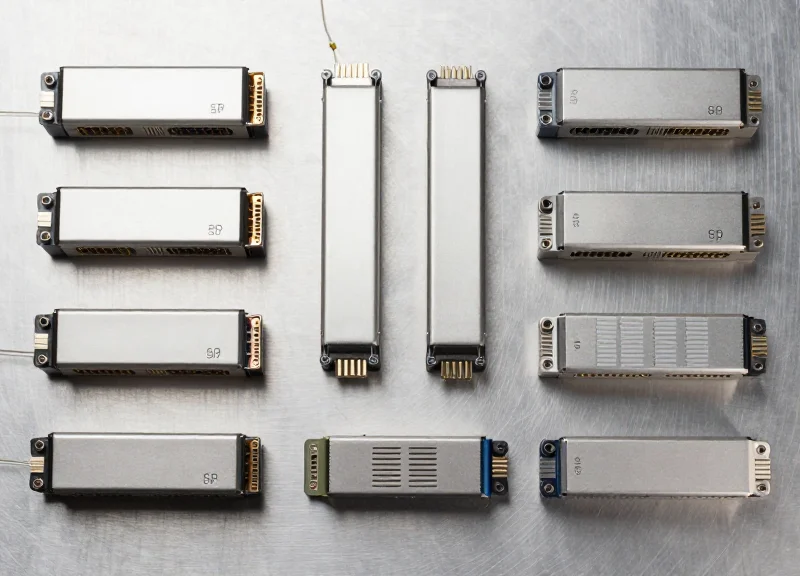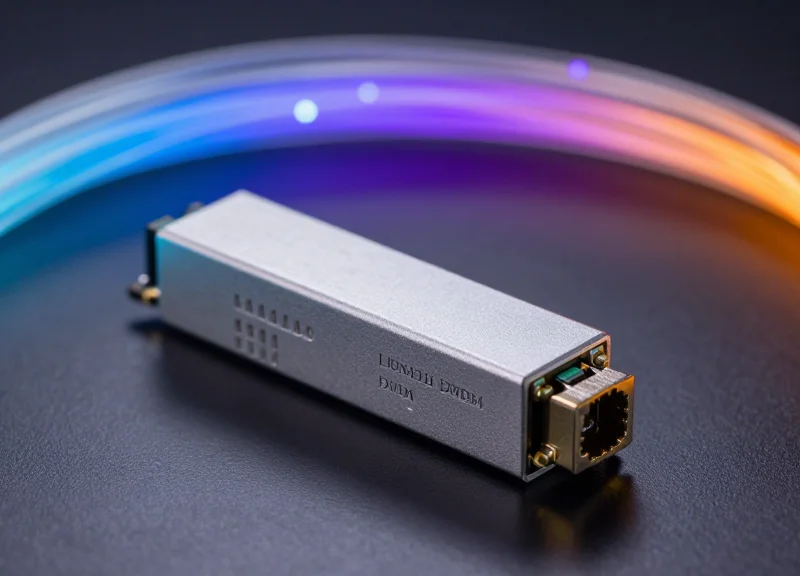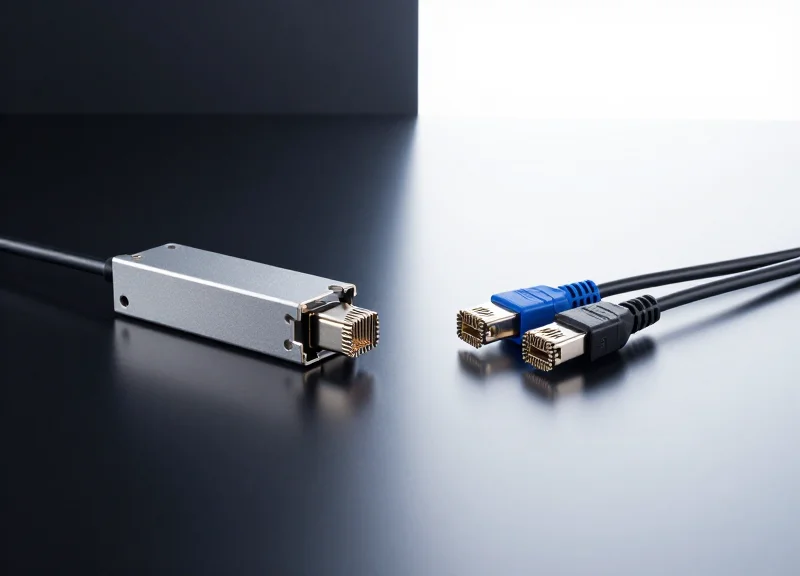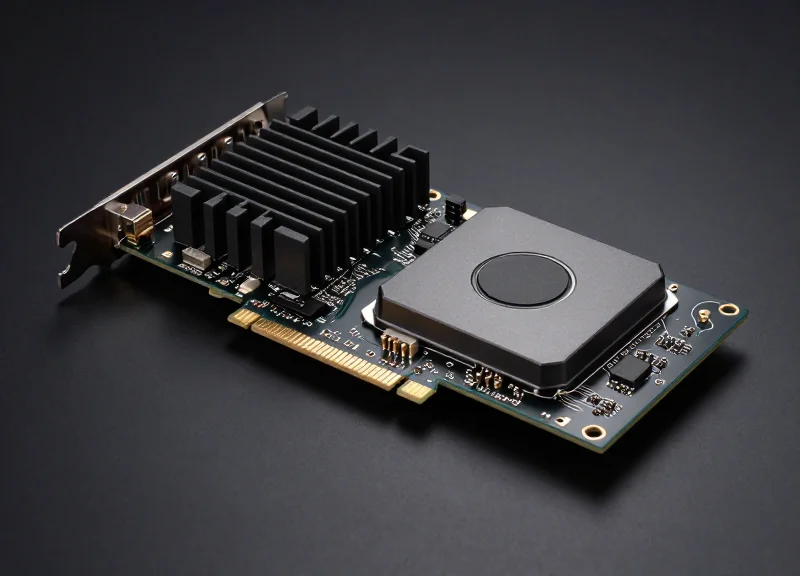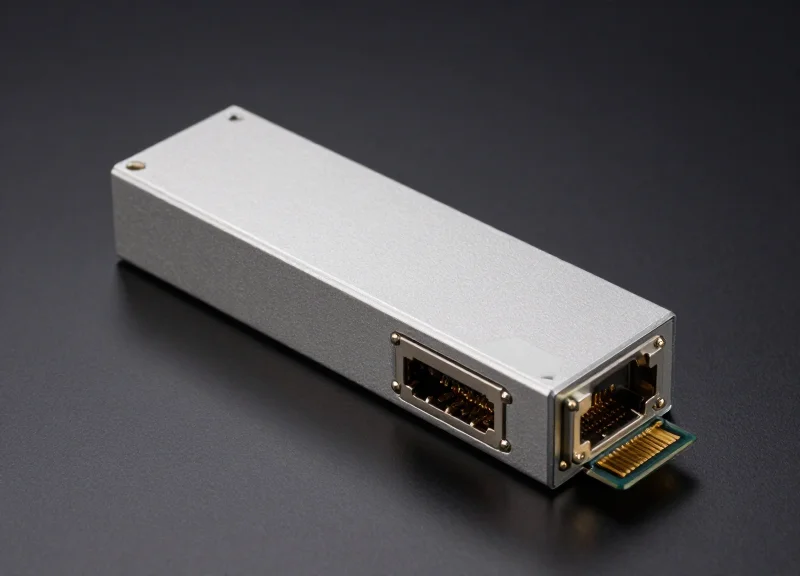
As data centers transition from 10G and 40G to 100G and beyond, the demand for cost-effective optical solutions has reached an all-time high. Enter the 100G CWDM4 Economy—a strategic variation of the standard CWDM4 MSA designed to lower the barrier to entry for high-density networking. This article provides a deep dive into its architecture, technical nuances, and why it is becoming a staple in modern fiber-optic infrastructures.
Defining the 100G CWDM4 Economy Standard
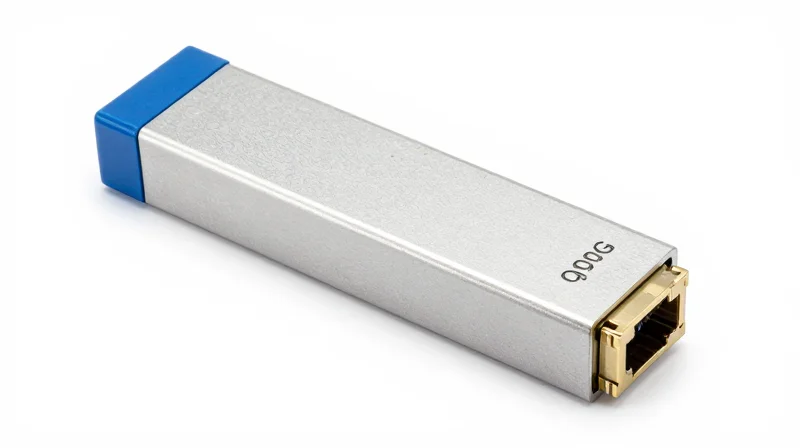
Defining the 100G CWDM4 Economy Standard
The 100G CWDM4 Economy standard represents a strategic optimization of the original CWDM4 Multi-Source Agreement (MSA), designed to provide a more affordable entry point for 100Gbps connectivity within high-density data centers. While the standard CWDM4 specification supports transmission up to 2km over Single-Mode Fiber (SMF), the 'Economy' version is engineered for shorter distances, typically capped at 400m to 500m. By focusing on these reduced reach requirements, manufacturers can utilize lower-cost components and less stringent optical tolerances, resulting in a transceiver that maintains 100G performance while significantly lowering the Total Cost of Ownership (TCO) for leaf-spine architectures.
Technical Foundations and MSA Compliance
Unlike proprietary solutions, CWDM4 Economy remains rooted in the CWDM4 MSA framework, using four lanes of 25Gbps optical signals multiplexed onto a single fiber pair. It employs Coarse Wavelength Division Multiplexing at 1271, 1291, 1311, and 1331nm. The 'Economy' designation essentially highlights a performance tier that prioritizes data center efficiency over long-haul capability, making it a middle ground between the 100m reach of 100G SR4 (multimode) and the full 2km reach of standard CWDM4 (singlemode).
| Feature | Standard 100G CWDM4 | 100G CWDM4 Economy |
|---|---|---|
| Maximum Reach | 2km | 400m - 500m |
| Fiber Type | Single-Mode (OS2) | Single-Mode (OS2) |
| Optical Wavelengths | 1271, 1291, 1311, 1331nm | 1271, 1291, 1311, 1331nm |
| Typical Application | Inter-building / Campus | Intra-rack / Leaf-Spine |
| Cost Efficiency | Moderate | High |
Clarifying the Economy Implementation
- Is 100G CWDM4 Economy interoperable with standard CWDM4?
Generally, yes. Because they share the same wavelength grid and modulation (NRZ), CWDM4 Economy modules can communicate with standard CWDM4 modules, provided the link distance does not exceed the maximum reach of the Economy transceiver. - Why use CWDM4 Economy over SR4?
While SR4 is cheaper, it requires parallel multimode fiber (MPO-12). CWDM4 Economy uses duplex single-mode fiber, which is significantly cheaper to deploy at scale and avoids the distance limitations and cable bulk associated with multimode infrastructure. - Does 'Economy' imply lower quality?
No. The term refers to cost-optimization via reduced optical power budget and shorter reach specifications, not a reduction in manufacturing quality or reliability standards.
Core Technical Specifications: Under the Hood

Core Technical Specifications: Under the Hood
The 100G CWDM4 Economy module is engineered as a cost-optimized solution that bridges the gap between short-reach VCSEL-based transceivers and long-haul LR4 optics. At its core, the module utilizes the QSFP28 (Quad Small Form-factor Pluggable) form factor, delivering a high-density 100Gbps interface. Unlike parallel fiber solutions, CWDM4 leverages Coarse Wavelength Division Multiplexing (CWDM) to aggregate four independent 25.78125 Gbps optical lanes onto a single pair of single-mode fibers (SMF), significantly reducing the required cabling infrastructure.
Optical Spectral Management and Wavelength Grid
The 'Economy' designation stems from the use of a 20nm wavelength grid, which allows for the use of uncooled DML (Distributed Feedback) lasers. By avoiding the power-hungry and expensive Thermo-Electric Coolers (TEC) required by narrower LAN-WDM spacings, the CWDM4 design achieves lower power consumption and reduced manufacturing complexity.
| Parameter | Specification Details |
|---|---|
| Wavelengths | 1271nm, 1291nm, 1311nm, 1331nm |
| Modulation Format | NRZ (Non-Return-to-Zero) |
| Transmission Distance | Up to 2km over G.652 SMF |
| Optical Connector | Duplex LC Connector |
| Power Consumption | Typically < 3.5W |
| Forward Error Correction | Host-side RS-FEC (528, 514) Required |
The Role of Host-Side RS-FEC
To achieve the 2km reach while maintaining an acceptable Bit Error Rate (BER), the 100G CWDM4 Economy standard relies heavily on Forward Error Correction. The specification is designed to work with RS(528, 514) FEC, which is typically processed on the host switch or router. This digital signal processing compensates for optical impairments and link loss, allowing the transceiver to operate with lower optical margins than 10km LR4 alternatives, thus driving down the price per gigabit.
- Is CWDM4 Economy compatible with standard CWDM4?
Yes, the Economy version adheres to the same 2km MSA specifications, ensuring interoperability with standard CWDM4 modules from other vendors provided they follow the same RS-FEC requirements. - Why is the reach limited to 2km?
The 2km limit is a strategic compromise. It covers over 95% of data center intra-building spans while allowing for lower-cost laser components and simplified optical assembly compared to the 10km LR4 standard. - What fiber type is required?
CWDM4 is designed strictly for Single-Mode Fiber (SMF). Using Multi-Mode Fiber (MMF) will result in immediate signal failure due to the laser source and core diameter mismatch.
Economy vs. Standard CWDM4: The Critical Differences
The primary difference between Standard and Economy 100G CWDM4 modules lies not in their fundamental protocol support, but in the optimization of the manufacturing yield and the relaxation of environmental operating ranges. While both adhere to the 100G Ethernet standard and the CWDM4 MSA, the Economy version is specifically engineered for high-density, climate-controlled data center environments where the extreme thermal tolerances of standard commercial-grade optics are often unnecessary.
Manufacturing Optimization and Yield Improvement
In standard CWDM4 production, a significant portion of the cost is attributed to 'binning'—the process of sorting optical engines based on their performance across a wide temperature spectrum. Economy modules improve production yield by utilizing components that perform exceptionally well within a targeted 'sweet spot.' By narrowing the required performance window, manufacturers can reduce waste and lower the price point without compromising the signal integrity required for 2km reaches over single-mode fiber (SMF).
Comparing Critical Specifications
| Feature | Standard CWDM4 | Economy CWDM4 |
|---|---|---|
| Operating Temperature | 0°C to 70°C (C-Temp) | 15°C to 60°C (Optimized) |
| Testing Rigor | Multi-point thermal cycling | Single-point or narrow-band testing |
| Cooling Requirement | High-performance heatsinks | Standard data center airflow |
| Typical Application | General Enterprise/Telco | Hyperscale Data Center/Internal Leaf-Spin |
| Cost Structure | Baseline Market Price | 15-25% Cost Reduction |
Thermal Management and Stability
Standard CWDM4 modules are designed to maintain wavelength stability (1271nm to 1331nm) even as the internal temperature fluctuates from freezing to 70°C. This requires sophisticated TOSA/ROSA (Transmitter/Receiver Optical Sub-Assembly) designs. Economy modules assume a stable ambient environment, typically 20°C to 25°C. Consequently, they use slightly less complex thermal compensation circuitry, which reduces power consumption and heat dissipation, contributing to a more efficient overall rack profile.
Common Implementation Questions
- Is the bit error rate (BER) higher in Economy modules?
No. Economy modules must still meet the pre-FEC (Forward Error Correction) BER requirement of 5e-5 to ensure link stability. The 'economy' refers to the environmental envelope, not the data integrity. - Can Economy and Standard modules be mixed on the same link?
Yes. Since they share the same wavelength grid and 100G signaling, they are interoperable. However, the link's overall thermal tolerance will be limited by the Economy module's narrower range. - Why choose Standard over Economy?
Standard modules are essential for environments with poor airflow, outdoor enclosures, or networking closets that lack precision cooling systems.
Wavelength Multiplexing and Signal Integrity

Wavelength Multiplexing and Signal Integrity
At the heart of 100G CWDM4 Economy technology is Coarse Wavelength Division Multiplexing (CWDM), a method that enables the simultaneous transmission of four distinct 25Gbps data channels over a single pair of single-mode fibers (SMF). By utilizing a duplex LC connector, the module transmits and receives four wavelengths—1271nm, 1291nm, 1311nm, and 1331nm—spaced 20nm apart. This approach effectively quadruples the bandwidth of a single fiber link without requiring high-cost coherent technology, making it the bedrock of cost-effective 100G networking.
The Optical Channel Map
| Channel | Center Wavelength | Data Rate | Fiber Type |
|---|---|---|---|
| L0 | 1271 nm | 25.78 Gbps | Single-Mode (SMF) |
| L1 | 1291 nm | 25.78 Gbps | Single-Mode (SMF) |
| L2 | 1311 nm | 25.78 Gbps | Single-Mode (SMF) |
| L3 | 1331 nm | 25.78 Gbps | Single-Mode (SMF) |
Signal Aggregation and Dispersion Management
Signal integrity in the CWDM4 Economy variant is managed through an integrated Optical Multiplexer (Mux) and De-multiplexer (DeMux). The transmitter side combines four 25G electrical lanes into a single optical stream. Because these wavelengths are situated in the O-band, they benefit from near-zero chromatic dispersion. This is critical for maintaining pulse shape over the 2km distance specification. In the 'Economy' version, manufacturing focus is placed on optimizing the TOSA (Transmitter Optical Sub-Assembly) to maintain wavelength stability within a +/- 6.5nm window, ensuring that even with slightly wider tolerances, the signal remains clear of adjacent channel interference.
The Role of RS-FEC in Signal Integrity
To achieve the necessary Bit Error Rate (BER) performance, 100G CWDM4 Economy transceivers rely on Reed-Solomon Forward Error Correction (RS-FEC) provided by the host equipment. This digital error correction allows the optical link to operate reliably even if the raw optical signal experiences minor degradation from connector loss or multi-path interference. By leveraging host-side FEC, the 'Economy' module can utilize more cost-effective optical components without sacrificing the 100G throughput required for high-density data center environments.
- Does CWDM4 Economy use different connectors than standard CWDM4?
No, both use standard duplex LC connectors, allowing for seamless integration into existing single-mode fiber patch panels. - Why is the 20nm spacing important?
The 20nm spacing is wide enough to allow for uncooled laser operation, which reduces power consumption and component cost compared to the tighter 0.8nm spacing used in DWDM. - Can CWDM4 Economy modules handle signal crosstalk?
Yes, the integrated DeMux components are designed with high isolation to ensure that the four discrete 25G signals do not bleed into one another during the separation process at the receiver.
Energy Efficiency and Power Consumption
Optimizing the Power Profile of 100G CWDM4 Economy
The 100G CWDM4 Economy variant is meticulously designed to operate within a strict power budget, typically peaking at 3.5W, which is critical for maintaining the stability of high-density QSFP28 switch ports. By streamlining internal circuitry and optimizing the Integrated Circuit (IC) components for specific 2km reaches, these modules achieve a balance between signal integrity and energy conservation, effectively lowering the thermal footprint of the network fabric.
Comparative Power Analysis
| Metric | Standard 100G CWDM4 | Economy 100G CWDM4 |
|---|---|---|
| Max Power Consumption | 3.5W - 4.5W | 2.5W - 3.5W |
| Heat Dissipation | High Thermal Load | Optimized Low-Thermal Load |
| Component Grade | Industrial/Extended | Commercial (Optimized) |
| Cooling Requirement | Standard Forced Air | Reduced Airflow Demand |
Driving TCO Through Energy Savings
In hyperscale data centers where tens of thousands of transceivers are deployed, a saving of even 0.5W to 1.0W per module scales into megawatts of reduced energy demand across the entire facility. This reduction directly impacts the Total Cost of Ownership (TCO) not just through lower utility bills, but by easing the burden on cooling systems and Uninterruptible Power Supply (UPS) infrastructures. Reduced heat output also translates to a lower failure rate for adjacent components, as the overall ambient temperature within the switch chassis remains more consistent.
Power Efficiency and Thermal Management FAQ
- Does lower power consumption affect the transmission distance?
No, the Economy CWDM4 maintains the standard 2km reach over single-mode fiber. Efficiency gains are achieved through optimized Digital Signal Processing (DSP) and laser driver efficiency rather than reducing optical launch power below the necessary link budget. - How does the 'Economy' thermal range affect reliability?
While Economy modules are typically rated for commercial temperature ranges (0°C to 70°C), their lower power draw means they generate less internal heat. This often results in more stable operation within temperature-controlled data center aisles compared to standard modules running at higher wattages. - Are these modules compliant with green data center initiatives?
Yes, by reducing the 'Watts per Gigabit' metric, Economy CWDM4 modules help operators meet Power Usage Effectiveness (PUE) targets and sustainability goals by minimizing wasted energy during high-speed data transmission.
Strategic Use Cases in Modern Data Centers

Strategic Use Cases for 100G CWDM4 Economy
The 100G CWDM4 Economy module is strategically positioned for data center environments that demand high-density 100G connectivity over distances up to 2km without the premium price tag of extended-temperature optics. By leveraging four 25Gbps lanes across a duplex LC interface, these modules provide the ideal balance between performance and capital expenditure, particularly in facilities where ambient temperatures are strictly regulated via hot/cold aisle containment.
Leaf-to-Spine Fabric Interconnects
In modern Clos architectures, the leaf-to-spine layer represents the highest volume of optical interconnects. 100G CWDM4 Economy optics are the 'sweet spot' for these links because most intra-data center cable runs fall well within the 500m to 2km range. Unlike SR4 modules which require expensive MPO cabling, the CWDM4 Economy uses standard single-mode fiber (SMF), significantly reducing the long-term cost of the physical layer infrastructure while maintaining the low-latency characteristics required for East-West traffic.
Enterprise Campus Core and Aggregation
For large-scale enterprise environments transitioning from 10G or 40G to 100G, the Economy CWDM4 variant offers a pragmatic path to bandwidth expansion. It is particularly effective in connecting distribution switches to the core in high-bandwidth settings like university campuses or corporate headquarters. Since these environments typically feature climate-controlled MDFs and IDFs, the tighter thermal operating range of Economy modules does not present a technical risk, allowing IT departments to allocate budget toward higher-layer security and management software.
| Deployment Scenario | Recommended Reach | Primary Advantage |
|---|---|---|
| Intra-Rack (Top-of-Rack) | 1m - 5m | DAC/AOC preferred over CWDM4 for cost |
| Leaf-to-Spine Interconnect | 100m - 2km | Lowest TCO per gigabit over SMF |
| Enterprise Backbone | 500m - 2km | Simplifies LC cabling migration |
| Edge Data Centers | Up to 2km | Efficient 100G density in compact spaces |
Implementation Considerations
- Can I use Economy CWDM4 in non-chilled environments?
It is not recommended. Economy variants are tested for standard commercial temperature ranges (typically 0-70°C); using them in outdoor enclosures or uncooled sheds can lead to signal drift and link instability. - Is FEC (Forward Error Correction) required?
Yes, like all CWDM4 modules, the Economy version requires the host system to enable RS-FEC to ensure a Bit Error Rate (BER) of better than 5x10^-5. - How does it compare to 100G PSM4?
While PSM4 is often cheaper at the module level, it requires 8 fibers per link. CWDM4 Economy uses only 2 fibers (duplex), making it far more economical when fiber availability is limited or cable duct space is at a premium.
Interoperability and Vendor Compatibility
Interoperability in 100G CWDM4 Economy optics is fundamentally rooted in strict adherence to the CWDM4 Multi-Source Agreement (MSA), which defines the optical and electrical parameters necessary for cross-brand hardware compatibility. By utilizing the standardized 1271nm to 1331nm wavelength grid, these modules ensure that the physical layer remains consistent, allowing network operators to mix and match transceivers across different switch platforms without risking signal degradation or link failure.
MSA Standards as the Foundation of Compatibility
The 100G CWDM4 MSA was established to provide a lower-cost alternative to PSM4 and LR4 optics by using four coarse wavelengths over duplex single-mode fiber (SMF). Because Economy CWDM4 modules follow these exact specifications, they are electrically and optically identical to 'premium' branded versions. This means a 100G CWDM4 Economy module can be paired with an OEM module from Cisco or Arista at the opposite end of a link, provided the forward error correction (FEC) settings are matched on both host devices.
Vendor-Specific Coding and Firmware
The primary challenge in vendor compatibility is not the optical signal, but the host device's software recognition. Many top-tier vendors implement 'vendor lock-in' by checking the EEPROM of the transceiver for a specific signature. To ensure Economy CWDM4 modules function in these environments, the module's firmware must be correctly programmed with the appropriate vendor ID, serial numbers, and checksums.
| Vendor | Recognition Strategy | Common Command for Integration | Compatibility Level |
|---|---|---|---|
| Cisco | Checks for Cisco-specific P/N and S/N | service unsupported-transceiver | High (with correct coding) |
| Arista | Open platform but logs third-party use | No command usually required | Excellent |
| Juniper | Generally permissive with MSA optics | None (Plug-and-Play) | Excellent |
| HPE/Aruba | Strict signature verification | allow-unsupported-transceiver | Moderate (requires exact coding) |
Key Steps for Ensuring Smooth Integration
- Verify FEC Mode
100G CWDM4 requires RS-FEC (Clause 91). Ensure both the switch port and the module are configured for RS-FEC to avoid link-up issues. - Check EEPROM Compatibility
Confirm that the Economy CWDM4 module is coded specifically for the target host device (e.g., Cisco Nexus vs. Juniper QFX). - Monitor DOM/DDM Data
Use Digital Optical Monitoring to verify that the host device can read power levels and temperature from the third-party module.
Interoperability FAQ
- Can I use an Economy CWDM4 module with a standard CWDM4 module?
Yes. Since both adhere to the same MSA optical specifications (wavelengths and power levels), they are fully interoperable on the same fiber link. - Will using these modules void my switch warranty?
No. In the US, the Magnuson-Moss Warranty Act protects consumers from warranties being voided simply for using third-party components, though vendors may not support the module itself. - What should I do if the switch shows a 'Transceiver Error'?
Ensure the port is not admin-down, check that FEC is enabled, and verify that the module firmware matches the vendor's required syntax.
Comparing CWDM4 with PSM4 and SR4
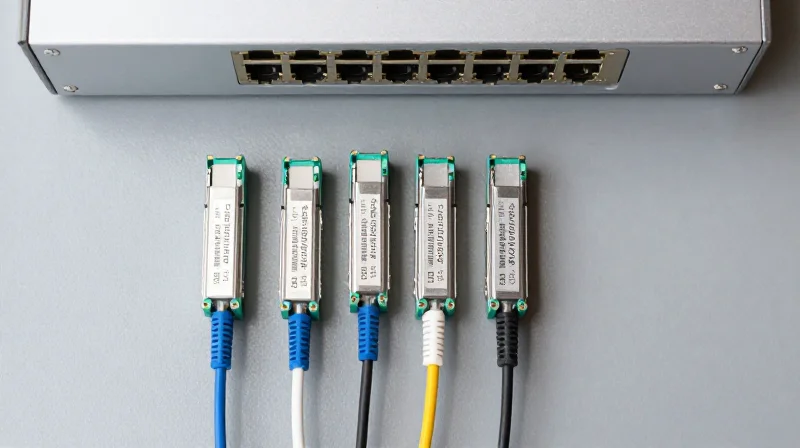
Choosing the right 100G standard involves balancing the upfront cost of optical transceivers against the long-term expense and complexity of fiber cabling. While 100G CWDM4 is optimized for medium-reach Single Mode Fiber (SMF) applications up to 2km using duplex cabling, PSM4 and SR4 serve distinct roles in parallel fiber environments for shorter distances, making the choice dependent on existing infrastructure and required link spans.
Technical Specification Comparison
| Standard | Fiber Type | Max Reach | Connector | Fiber Strands |
|---|---|---|---|---|
| 100G SR4 | Multi-mode (OM4) | 100m | MPO-12 | 8 |
| 100G PSM4 | Single-mode (OS2) | 500m | MPO-12 | 8 |
| 100G CWDM4 | Single-mode (OS2) | 2km | LC Duplex | 2 |
Fiber Efficiency and Cabling Infrastructure
The most significant differentiator between these standards is the cabling architecture. 100G SR4 and PSM4 utilize parallel optics, requiring MPO/MTP connectors and eight strands of fiber per link (four for transmit, four for receive). This is cost-effective for short distances but becomes expensive as the distance increases due to the cost of high-fiber-count cables. 100G CWDM4 uses Coarse Wavelength Division Multiplexing to combine four wavelengths onto a single pair of fibers, utilizing standard LC duplex connectors. This makes CWDM4 significantly more efficient for structured cabling and long-distance runs within the data center.
Application Strategy: When to Deploy
Network engineers should deploy SR4 for intra-rack connections where reach is under 100 meters. PSM4 is best suited for 500-meter reaches where breakout capabilities (100G to 4x25G) are required. However, for leaf-to-spine interconnects that span across large data center halls (up to 2km), CWDM4 Economy modules provide the most scalable solution by minimizing fiber consumption and simplifying cable management.
- Is CWDM4 more expensive than PSM4?
Initially, yes. CWDM4 transceivers require more complex internal components like optical multiplexers. However, at distances over 500m, the savings on fiber cabling usually make CWDM4 the lower-cost total solution. - Can I use CWDM4 for breakout configurations?
Generally no. Because CWDM4 multiplexes wavelengths on a single fiber pair, it cannot be easily broken out into four physical 25G ports like PSM4 or SR4 can. - Does CWDM4 work with older OM3 fiber?
No, CWDM4 is designed exclusively for Single-Mode Fiber (SMF). For OM3 or OM4 Multi-Mode Fiber, you must use the SR4 standard.
Future-Proofing Your Network with 100G Optics
The transition to 100G CWDM4 Economy is not merely a tactical upgrade for current bandwidth needs; it is a strategic investment in the longevity of the physical fiber plant. By utilizing four wavelengths over a single pair of single-mode fibers (SMF), CWDM4 Economy mirrors the architecture used in emerging 400G FR4 and 800G 2xFR4 standards. This alignment ensures that network engineers can increase capacity fourfold or eightfold in the future by simply swapping transceivers, without the massive capital expenditure required to re-pull fiber or transition to complex parallel ribbon cabling.
Infrastructure Continuity: Duplex SMF as the Long-Term Standard
One of the most significant risks in data center planning is 'infrastructure lock-in'—where choosing a specific optical technology forces a specific cabling topology. While multi-mode fiber (MMF) or parallel single-mode (PSM4) options require high-density MPO/MTP connectors, CWDM4 Economy uses standard LC duplex connectors. This matches the roadmap for higher-speed optics, which are increasingly moving toward Wavelength Division Multiplexing (WDM) to keep fiber counts low and manageable.
| Feature | 100G CWDM4 Economy | 400G FR4 (Next Gen) | 800G 2xFR4 (Future) |
|---|---|---|---|
| Fiber Type | Duplex SMF | Duplex SMF | Duplex SMF |
| Connector Type | LC Duplex | LC Duplex | LC Duplex (or SN/CS) |
| Reach | Up to 2km | Up to 2km | Up to 2km |
| Infrastructure Reuse | 100% | 100% | 100% |
Maximizing ROI Through Logical Evolution
Deploying 100G CWDM4 Economy today allows organizations to amortize the cost of their single-mode fiber plant over several technology generations. As 400G components become more commoditized, the shift from 100G to 400G becomes a 'plug-and-play' operation at the switch level. This avoids the operational downtime associated with replacing patch panels or trunk cables, providing a seamless path for scaling leaf-to-spine interconnects in hyperscale and enterprise environments alike.
Future-Proofing FAQ
- Will I need to replace my LC patch cords when moving to 400G?
No. Because 100G CWDM4 and 400G FR4 both utilize standard duplex single-mode fiber, your existing LC-to-LC patch cords and infrastructure remain fully compatible. - Why choose CWDM4 over SR4 for future-proofing?
SR4 relies on multi-mode fiber, which has strict distance limitations and requires expensive MPO cabling. As speeds increase to 400G and 800G, multi-mode reach shortens significantly, making single-mode CWDM4 the more sustainable long-term choice. - Does 100G CWDM4 Economy support breakout configurations?
While CWDM4 is primarily designed for point-to-point 2km links, it provides the fiber density required to support high-radix switch architectures that will eventually migrate to 400G/800G breakout designs.
The 100G CWDM4 Economy transceiver represents a perfect bridge between high-performance optical requirements and the budget constraints of growing infrastructures. By understanding its technical boundaries and application strengths, IT leaders can build more resilient, cost-effective networks. Ready to optimize your data center? Contact our engineering team today for a compatibility assessment or to request a quote for high-quality 100G optics.