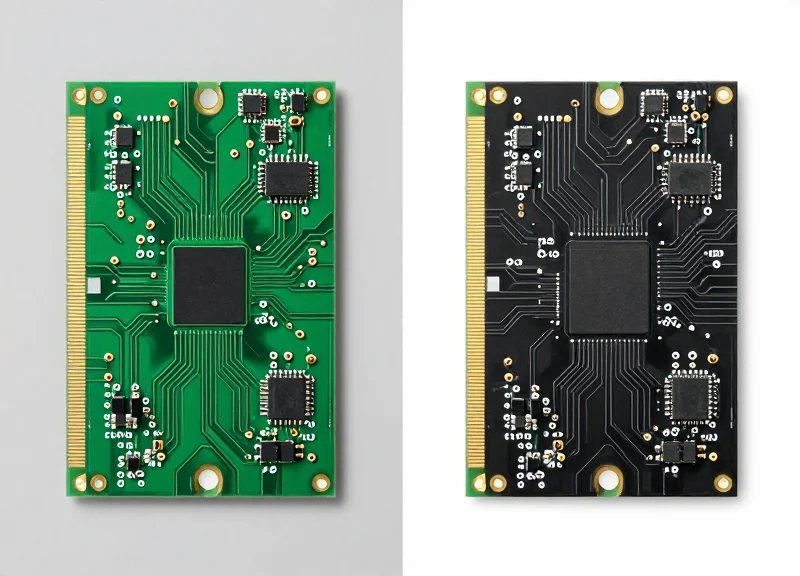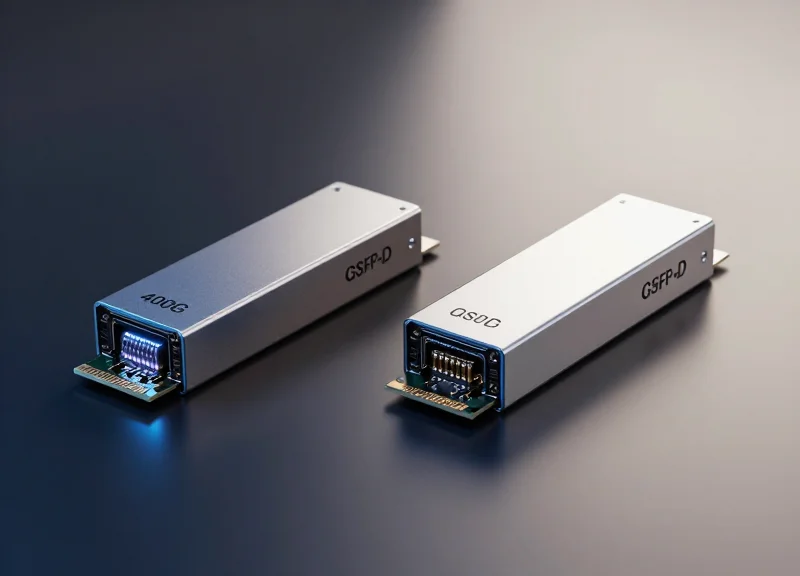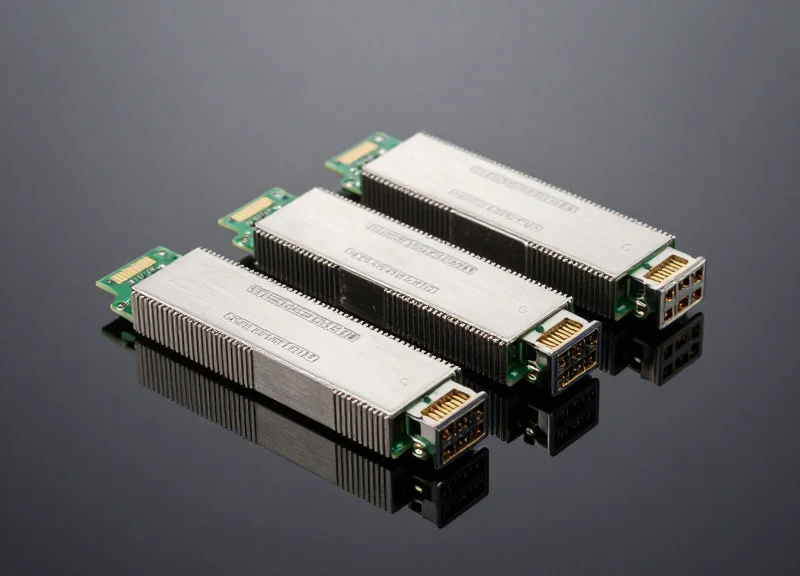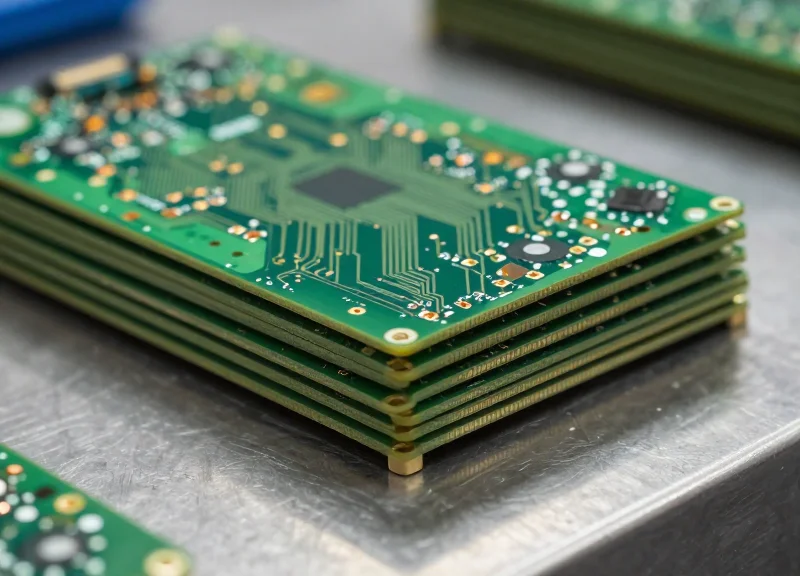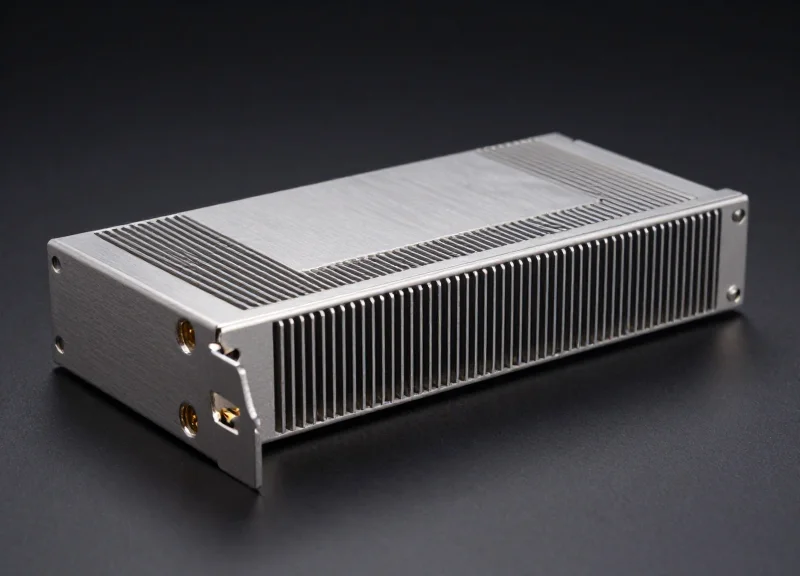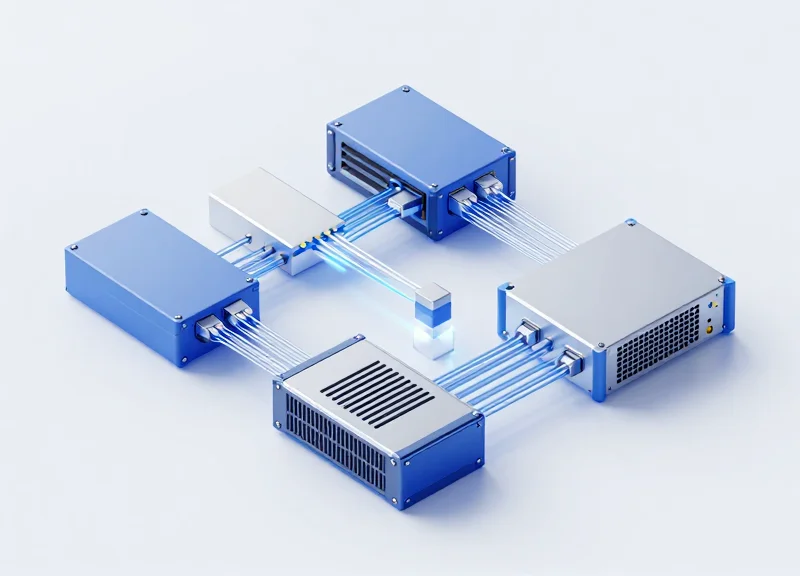
In the fast-evolving landscape of global connectivity, the network core is the heart of every enterprise. Ubytelink Enterprise Core Switch Modules are engineered to solve the critical challenges of latency, downtime, and scalability, providing a robust foundation for the world's most demanding digital environments.
The Strategic Importance of Core Switch Modules in Enterprise Networks

The Strategic Importance of Core Switch Modules in Enterprise Networks
Core switch modules serve as the high-capacity backbone of a tiered network architecture, acting as the primary engine for data aggregation and packet routing. In an enterprise environment, the core layer is responsible for handling the most intense traffic loads, requiring modules that prioritize switching speed over complex packet manipulation. By centralizing the interconnection of distribution layer switches, these modules ensure that data moves across the network with minimal latency, providing the necessary throughput to support thousands of concurrent users and data-intensive applications.
Key Differences in Network Layers
| Feature | Access Layer Modules | Core Layer Modules |
|---|---|---|
| Primary Purpose | End-user connectivity and PoE | High-speed transport and aggregation |
| Throughput Demand | Low to Moderate | Ultra-High (Terabit-scale) |
| Typical Interfaces | 1G / 10G Copper & Fiber | 40G / 100G / 400G Fiber |
| Redundancy | Optional / Basic | Critical / Multi-chassis Bonded |
Ensuring Scalability and Mission-Critical Uptime
Beyond simple connectivity, core switch modules are the foundation of network scalability. As enterprises expand, the modular nature of Ubytelink solutions allows for the incremental addition of port density and processing power without requiring a complete forklift upgrade of the network infrastructure. Furthermore, because a failure at the core level can lead to a total network blackout, these modules are engineered with carrier-grade reliability. Features such as Non-Stop Forwarding (NSF) and Graceful Restart ensure that the control plane remains stable even during hardware maintenance or software updates.
- Why is the core module considered the 'brain' of the network?
It manages the routing policies and high-speed switching paths that dictate how data flows between different subnets and VLANs across the entire organization. - How do core modules facilitate data aggregation?
They consolidate traffic from multiple distribution switches into high-bandwidth uplinks, preventing bottlenecks that would otherwise occur at the edge of the network. - What role does modularity play in global networks?
Modularity allows IT teams to swap or upgrade specific interface cards to support new standards (like moving from 100G to 400G) while retaining the same chassis and management framework.
Ubytelink's Engineering Excellence: Hardware Specifications
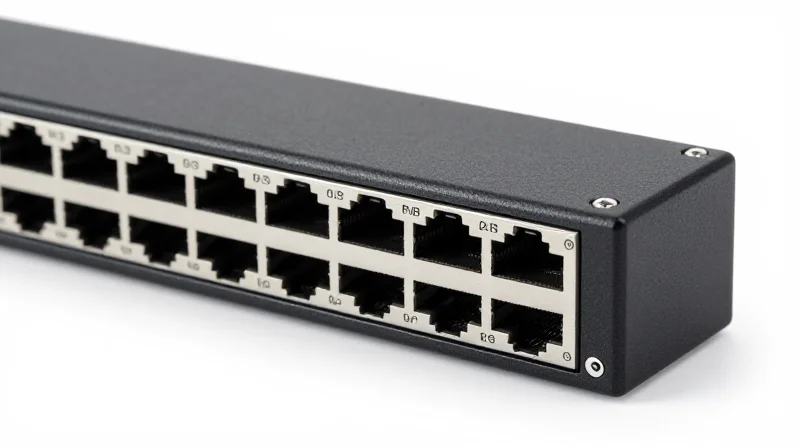
Ubytelink Enterprise Core Switch Modules represent the pinnacle of networking hardware, engineered specifically to handle the massive throughput requirements of modern data centers and global enterprise backbones through custom silicon and optimized port densities. By focusing on hardware-level acceleration and deep packet buffering, these modules provide a reliable, wire-speed foundation that eliminates common bottlenecks associated with legacy hardware. The engineering philosophy centers on 'Performance without Compromise,' ensuring that every port operates at full capacity regardless of the complexity of the traffic or the number of active protocols.
Next-Generation ASIC Performance and Throughput
The heart of Ubytelink's engineering excellence lies in its proprietary ASIC (Application-Specific Integrated Circuit) designs. Unlike generic off-the-shelf chipsets, Ubytelink ASICs are optimized for high-radix switching and ultra-low latency. These chips facilitate a non-blocking fabric architecture, allowing for deterministic performance where the path of the data through the switch is optimized for the shortest possible transit time. This is critical for high-frequency trading, real-time data replication, and high-performance computing (HPC) environments where every nanosecond counts.
| Module Model | Port Configuration | Switching Capacity | Packet Buffer | Latency |
|---|---|---|---|---|
| Ubytelink C100-32Q | 32 x 100G QSFP28 | 6.4 Tbps | 32 MB | < 450 ns |
| Ubytelink C40-48Q | 48 x 40G QSFPPlus | 3.84 Tbps | 16 MB | < 600 ns |
| Ubytelink C10-96S | 96 x 10G SFPPlus | 1.92 Tbps | 12 MB | < 850 ns |
Intelligent Buffering and Traffic Management
To mitigate the impact of 'micro-bursts'—sudden, intense spikes in data traffic—Ubytelink modules utilize an advanced Virtual Output Queuing (VoQ) architecture combined with deep packet buffers. This system ensures that congestion on one egress port does not block traffic destined for other ports, a common issue known as Head-of-Line (HoL) blocking. By dynamically allocating buffer memory based on real-time traffic demands, Ubytelink hardware maintains high quality of service (QoS) even under heavy congestion, which is vital for maintaining the integrity of voice-over-IP (VoIP) and high-definition video streams.
Hardware Reliability and Thermal Design
Engineering excellence extends to the physical durability and thermal efficiency of the modules. Ubytelink uses high-grade thermal interface materials and custom-milled heat sinks that maximize surface area for heat dissipation. The modules are designed with front-to-back or back-to-front airflow options to match existing data center cooling strategies, preventing hotspots and extending the mean time between failures (MTBF). Additionally, the use of industrial-grade capacitors and gold-plated connectors ensures signal integrity over the life of the hardware.
Hardware Specifications FAQ
- What makes Ubytelink ASIC technology different from competitors?
Ubytelink utilizes a programmable pipeline that allows for hardware-level updates to support new protocols without sacrificing throughput, providing a longer lifecycle than fixed-function chips. - Are these modules compatible with third-party transceivers?
Yes, Ubytelink hardware is engineered for broad compatibility, supporting both Ubytelink-branded and industry-standard MSA-compliant transceivers for maximum flexibility. - How does deep buffering assist in 100G to 10G speed transitions?
The deep buffers act as a shock absorber during speed step-downs, holding packets temporarily to prevent drops when a high-speed sender overwhelms a lower-speed receiver. - Is hot-swapping supported for all core modules?
All Ubytelink Enterprise Core Switch Modules are fully hot-swappable, allowing for hardware expansion or maintenance without interrupting the wider network fabric.
Achieving Zero-Downtime: High Availability and Redundancy
Achieving Zero-Downtime: High Availability and Redundancy
In the landscape of global enterprise networking, high availability is the primary metric of success. Ubytelink Enterprise Core Switch Modules are engineered to provide non-stop communication through a combination of physical redundancy, stateful switchover (SSO) capabilities, and hot-swappable components. By ensuring that the control plane and data plane remain synchronized across redundant supervisor engines, Ubytelink modules allow for instantaneous failover without the loss of active sessions or traffic interruptions, effectively insulating the core network from hardware-induced outages.
Modular Resilience: Hot-Swappable Components
The Ubytelink architecture prioritizes modularity, allowing IT administrators to replace or upgrade critical hardware components without powering down the entire chassis. This 'Hot-Swap' capability extends beyond the core switching fabrics to include fan trays and line cards. This design philosophy ensures that maintenance cycles do not translate into service windows, providing global enterprises the flexibility to scale their hardware footprint or address component wear-and-tear in real-time.
Redundant Power Systems and Thermal Management
Power stability is often the weakest link in network uptime. Ubytelink addresses this through N+1 and N+N power redundancy configurations. Each core switch module is designed to draw power from multiple independent sources, ensuring that the failure of a single power supply unit (PSU) or even an entire power circuit does not result in a system crash. Coupled with intelligent thermal management that features independent fan modules, the system can maintain optimal operating temperatures even if a cooling unit requires replacement.
| Feature | Technical Implementation | Business Impact |
|---|---|---|
| Dual Supervisor Engines | Active/Standby with SSO and NSF | Zero-packet loss during control plane failover |
| Hot-Swappable PSUs | Load-sharing N+N redundancy | Continuous operation during power grid fluctuations |
| Modular Fan Trays | Independent, variable-speed units | Preventive maintenance without thermal risk |
| Distributed Forwarding | Independent ASIC on each line card | Local switching remains active if central fabric is strained |
High Availability FAQ
- What is Non-Stop Forwarding (NSF) in Ubytelink modules?
NSF works alongside Stateful Switchover (SSO) to keep the data plane forwarding traffic based on the last known routing table while the control plane recovers or switches over to a standby supervisor. - Can I mix different power supply capacities in a redundant setup?
While Ubytelink supports various PSU modules, it is recommended to use identical capacities to ensure balanced load sharing and predictable redundancy behavior. - How does the system handle a fan failure?
The system automatically increases the RPM of the remaining functional fans to compensate for the lost airflow, providing a safe window for the hot-swap replacement of the failed tray.
Optimizing Throughput for High-Traffic Global Data Centers

Optimizing Throughput for High-Traffic Global Data Centers
In the modern hyperscale environment, throughput optimization is achieved by a combination of high-density non-blocking switching fabrics and intelligent traffic management algorithms that eliminate internal bottlenecks. Ubytelink Enterprise Core Switch Modules are engineered to handle massive packet loads by utilizing advanced ASIC technology that ensures wire-speed performance across all ports simultaneously, providing the deterministic latency required for mission-critical global operations.
Navigating the Demands of AI and Big Data Workloads
Artificial Intelligence (AI) and Machine Learning (ML) clusters generate unique traffic patterns characterized by 'elephant flows'—massive, sustained data transfers that can easily overwhelm standard switches. Ubytelink modules address this through deep packet buffering and support for RDMA over Converged Ethernet (RoCE v2). By offloading transport layer processing and enabling direct memory access between servers, our modules significantly reduce CPU overhead and drop-tail congestion, which is vital for maintaining the high-speed synchronization required in distributed computing.
| Feature | Standard Core Modules | Ubytelink Optimized Modules |
|---|---|---|
| Switching Architecture | Store-and-Forward (Variable Latency) | Cut-Through Switching (Ultra-Low Latency) |
| Buffer Strategy | Static Partitioning | Dynamic Shared Smart Buffering |
| Traffic Handling | Best Effort | Advanced Congestion Notification (ECN) |
| Throughput Efficiency | 85-90% under peak load | 99.9% wire-speed performance |
Congestion Control and Latency Mitigation
Latency is the enemy of throughput in global data centers. Ubytelink employs sophisticated Priority-based Flow Control (PFC) to ensure that high-priority traffic is never dropped during periods of congestion. By implementing a multi-stage Clos fabric architecture within the module design, we ensure that the path between any two ports is as short as possible, reducing the time-to-first-bit and ensuring that cloud-native applications remain responsive regardless of the physical distance between data nodes.
- How do Ubytelink modules handle micro-bursts in traffic?
Our modules utilize dynamic thresholding and large integrated buffers to absorb sudden bursts of traffic without dropping packets, which is essential for financial trading and real-time analytics. - Do these modules support multi-tenant cloud environments?
Yes, through hardware-accelerated VXLAN and EVPN support, Ubytelink modules provide massive throughput for virtualized environments while maintaining strict isolation between tenants. - What is the benefit of the non-blocking architecture?
A non-blocking architecture ensures that the total switching capacity of the module is equal to or greater than the sum of the speeds of all ports, preventing the module itself from becoming a bottleneck.
Future-Proofing Your Infrastructure with Scalable Modules
Future-Proofing Your Infrastructure with Scalable Modules
Ubytelink Enterprise Core Switch Modules are engineered to solve the 'growth paradox' by decoupling physical chassis longevity from specific port technologies, allowing organizations to expand throughput and density without decommissioning their underlying infrastructure. This modular design philosophy enables a 'pay-as-you-grow' investment model where enterprises can upgrade specific line cards or fabric modules to meet evolving traffic demands while maintaining the same management interface and power environment.
Modular vs. Fixed: Evaluating Long-Term Strategic Value
In a rapidly evolving digital landscape, fixed-configuration hardware often becomes a bottleneck within 36 months of deployment. Ubytelink's modular approach mitigates this risk by providing a chassis architecture that supports multiple generations of ASIC technology and interface standards. This flexibility is critical for global networks that must balance high-performance requirements with strict budgetary constraints over a five-to-ten-year lifecycle.
| Infrastructure Factor | Fixed-Configuration Switches | Ubytelink Modular Solutions |
|---|---|---|
| Expansion Capability | Hard ceiling on port density | Elastic growth via line card slots |
| Upgrade Path | Full 'Rip-and-Replace' required | Component-level hot-swaps |
| TCO (5+ Years) | Higher due to redundant hardware purchases | Lower through infrastructure reuse |
| Environmental Impact | Significant electronic waste per cycle | Sustainable, incremental upgrades |
Operational Continuity and Investment Protection
True future-proofing extends beyond just port speeds; it involves the ability to integrate new software capabilities and protocols. Ubytelink’s modular chassis supports high-performance supervisor modules that can be upgraded independently of the data plane. This ensures that as network security requirements or automation protocols (such as EVPN-VXLAN or advanced telemetry) evolve, the 'brain' of the switch can be modernized without disturbing the physical cabling of the global network backbone.
- Can Ubytelink modules support mixed speeds in the same chassis?
Yes. Our modular architecture is designed for multi-generational coexistence, allowing 10G, 40G, 100G, and 400G line cards to operate simultaneously within the same backplane to facilitate phased migrations. - How does modularity affect power and cooling efficiency?
Ubytelink chassis feature intelligent power management that allocates electricity only to active slots, combined with hot-swappable fan trays that adjust airflow based on the specific thermal load of installed modules. - What is the primary benefit of modularity for disaster recovery?
Modularity allows for rapid component replacement. In the event of a port failure, only the affected line card needs to be serviced, preserving the uptime of all other connections in the network core.
Advanced Security Features at the Core Level
Advanced Security Features at the Core Level
Ubytelink Enterprise Core Switch Modules redefine network defense by moving security from the software perimeter directly into the hardware architecture. By integrating security logic into the Application-Specific Integrated Circuits (ASICs), these modules provide a 'Zero Trust' foundation that inspects and filters traffic at wire speed. This hardware-centric approach ensures that security processing never becomes a bottleneck, even when defending against high-volume volumetric attacks or complex internal threats in a global enterprise environment.
Hardware-Based DDoS Mitigation and Traffic Policing
To maintain uptime during Distributed Denial of Service (DDoS) events, Ubytelink modules utilize Control Plane Policing (CoPP). This mechanism protects the switch's CPU from being overwhelmed by malicious or malformed traffic, ensuring that the management plane remains responsive. Furthermore, hardware-level rate limiting and storm control prevent broadcast, multicast, and unknown unicast packets from saturating available bandwidth, effectively isolating segments under attack without impacting the rest of the network fabric.
Comparison of Integrated Security Mechanisms
| Security Feature | Protection Level | Primary Defense Goal |
|---|---|---|
| Control Plane Policing (CoPP) | Hardware/CPU | Protects switch management from resource exhaustion attacks. |
| Dynamic ARP Inspection (DAI) | Data Link Layer | Prevents Man-in-the-Middle attacks by validating ARP packets. |
| IP Source Guard | Network Layer | Mitigates IP spoofing by filtering traffic from non-assigned IPs. |
| 802.1X Port Authentication | Access Control | Ensures only authorized devices can access the network core. |
| ACLs (Access Control Lists) | Multi-Layer | Hardware-accelerated packet filtering based on L2-L4 criteria. |
Secure Management and Unauthorized Access Prevention
Beyond traffic filtering, Ubytelink modules secure the administrative interface through encrypted protocols, including SSHv2, SNMPv3, and HTTPS. Role-Based Access Control (RBAC) allows network administrators to define granular permissions, ensuring that personnel only have access to the specific configuration parameters required for their roles. This prevents accidental misconfigurations or malicious internal changes that could compromise the integrity of the global network backbone.
Network Security Integrity FAQs
- How do Ubytelink modules prevent MAC address flooding?
The modules utilize Port Security and MAC limiters to restrict the number of learned MAC addresses per port, preventing attackers from overflowing the CAM table and forcing the switch into hub-like behavior. - Does the hardware-level security affect latency?
No. Because security checks like ACL filtering and CoPP are executed within the ASIC hardware at the wire level, they do not introduce measurable latency compared to software-based security solutions. - Are these modules compliant with global security standards?
Yes, Ubytelink modules are designed to support compliance with frameworks such as HIPAA, PCI-DSS, and GDPR by providing robust encryption and detailed audit logging of all administrative actions.
Energy Efficiency and Sustainability in Core Networking

The Intersection of High Performance and Environmental Stewardship
Ubytelink redefines the core networking landscape by proving that massive throughput does not require excessive energy consumption. Our Enterprise Core Switch Modules are engineered with a 'Sustainability-First' philosophy, utilizing high-efficiency ASICs (Application-Specific Integrated Circuits) that deliver superior processing power per watt. By minimizing energy waste at the silicon level, Ubytelink helps global enterprises meet their ESG (Environmental, Social, and Governance) targets while maintaining the robust performance required for modern digital transformation.
Energy-Efficient Design Principles
To achieve industry-leading efficiency, our modules incorporate several layers of power management technology. This includes support for IEEE 802.3az Energy Efficient Ethernet (EEE), which automatically scales power consumption based on actual traffic loads. Furthermore, our modular power supplies operate at over 94% efficiency, reducing the conversion losses that typically contribute to high utility bills in large-scale data centers.
| Feature | Standard Core Modules | Ubytelink Premium Modules |
|---|---|---|
| Power Consumption (Idle) | High (Fixed) | Low (Dynamic Scaling) |
| Thermal Dissipation | Passive/High Heat | Active/Intelligent Airflow |
| PSU Efficiency Rating | 80 Plus Gold | 80 Plus Platinum/Titanium |
| ASIC Optimization | General Purpose | Custom Low-Power Silicon |
Advanced Thermal Management and Cooling
Heat is the primary enemy of hardware longevity and energy efficiency. Ubytelink modules utilize a sophisticated thermal architecture featuring optimized airflow paths and precision-engineered heat sinks. By maintaining a lower operating temperature, our modules reduce the strain on external data center cooling systems (HVAC), leading to a significant reduction in the facility's overall Power Usage Effectiveness (PUE) ratio.
Sustainability FAQ
- How do Ubytelink modules contribute to lower TCO?
By reducing electricity consumption and cooling requirements, our modules lower monthly operational expenses, often paying for the hardware premium through energy savings within the first three years of deployment. - Does low power consumption affect network latency?
No. Our intelligent power scaling only affects idle components or optimizes voltage pathways; high-priority data processing remains at peak performance without any latency trade-offs. - Are these modules compliant with global environmental standards?
Yes, all Ubytelink core modules comply with RoHS and REACH standards, ensuring they are free from hazardous substances and are designed for easier end-of-life recycling.
Deployment Scenarios: From Financial Hubs to Research Labs
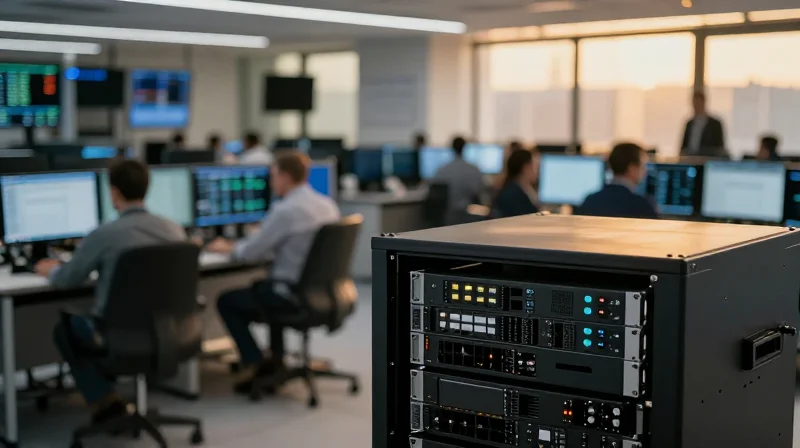
The versatility of Ubytelink Enterprise Core Switch Modules allows them to serve as the backbone for disparate industries, each with unique performance and reliability requirements. By providing a modular architecture that supports massive throughput and ultra-low latency, these solutions ensure that global networks remain resilient whether they are processing micro-transactions or managing cosmic-scale research data.
Tailored Solutions for Vertical Industry Demands
Financial Hubs: Precision and Uptime
In the financial sector, where high-frequency trading (HFT) and real-time clearing systems dominate, even a microsecond of delay can result in significant fiscal loss. Ubytelink modules are deployed in these environments to provide deterministic latency and non-blocking switching fabrics. The redundant power and management modules ensure 99.999% availability, meeting the stringent regulatory and operational standards of global banking.
Scientific Research: Managing Data Deluges
Research laboratories and academic institutions often handle massive datasets originating from particle accelerators, genomic sequencing, or climate modeling. Ubytelink's high-density 100G and 400G modules facilitate the rapid movement of these datasets between storage clusters and compute nodes, preventing the network from becoming a bottleneck in the discovery process.
| Sector | Primary Network Requirement | Key Ubytelink Module Feature |
|---|---|---|
| FinTech | Low Latency & High Reliability | Cut-through switching & N+1 Redundancy |
| Research Labs | High Throughput & Big Data Support | High-density 400G line cards |
| Healthcare | Data Security & Image Transfer | Hardware-based encryption & QoS |
| Global Retail | Scalability for Seasonal Spikes | Hot-swappable expansion modules |
Operational Implementation FAQ
- How do Ubytelink modules handle multi-site synchronization for global enterprises?
Ubytelink modules support advanced EVPN-VXLAN protocols, allowing for seamless Layer 2 connectivity over Layer 3 networks, which is essential for data center interconnects and synchronized global operations. - Can these modules be integrated into existing multi-vendor environments?
Yes, Ubytelink adheres to open networking standards and IEEE protocols, ensuring full interoperability with other major enterprise hardware providers while maintaining premium performance. - What features support the intensive cooling needs of dense research labs?
The modules utilize front-to-back airflow designs and smart thermal sensors that adjust fan speeds in real-time, optimizing cooling for high-density deployments without wasting energy.
Comparing Ubytelink Core Modules with Industry Standards
When evaluated against legacy industry giants, Ubytelink Enterprise Core Switch Modules redefine the value proposition for global networks by offering high-density performance and carrier-grade reliability at a significantly lower total cost of ownership (TCO). While traditional vendors often bundle performance with proprietary lock-ins and high licensing fees, Ubytelink adheres to open standards, ensuring that enterprise-level throughput and hardware-level security are accessible without the premium brand inflation.
Technical Benchmark Comparison
| Feature Metric | Ubytelink Core Modules | Standard Industry Tier | Strategic Advantage |
|---|---|---|---|
| Mean Time Between Failure (MTBF) | >300,000 Hours | ~210,000 Hours | Enhanced Long-term Reliability |
| Switching Capacity Efficiency | Line-rate at all packet sizes | Variable performance below 64B | Predictable Low Latency |
| Power Efficiency (Per Port) | 1.2W - 1.8W (Average) | 2.5W - 3.2W (Average) | Reduced Operational Expenditure |
| Interoperability Protocol | Full IEEE / Multi-Source Agreement | Often Proprietary Restricted | Zero Vendor Lock-in |
Cost-to-Performance Ratio Analysis
Ubytelink's market position is built on the 'Quality-First' manufacturing philosophy that prioritizes hardware longevity. By utilizing high-grade silicon and advanced thermal management components typically reserved for boutique high-frequency trading networks, Ubytelink provides a performance floor that exceeds the industry average. This ensures that global networks can scale their bandwidth—moving from 10G to 100G or 400G architectures—with a 40% more efficient capital expenditure (CAPEX) compared to traditional enterprise solutions.
Frequently Asked Questions
- How does Ubytelink ensure compatibility with existing legacy infrastructure?
All Ubytelink modules undergo rigorous Multi-Source Agreement (MSA) compliance testing, ensuring they are plug-and-play compatible with hardware from major vendors like Cisco, Arista, and Juniper. - Does the lower price point impact the durability of the switch modules?
No. The cost savings are derived from optimized supply chain logistics and the elimination of 'brand taxes,' not by compromising on component quality. Ubytelink uses gold-plated connectors and heat-resistant alloys to exceed standard durability metrics. - What support is provided for global network deployments?
Ubytelink offers comprehensive technical documentation, global shipping compliance certifications, and dedicated engineering support to assist with complex cross-border network integrations.
Summary of Ubytelink's commitment to quality and technical superiority in the enterprise switching market. Take the next step in securing your network's future—contact our technical consultants for a customized Ubytelink Core Switch Module solution.