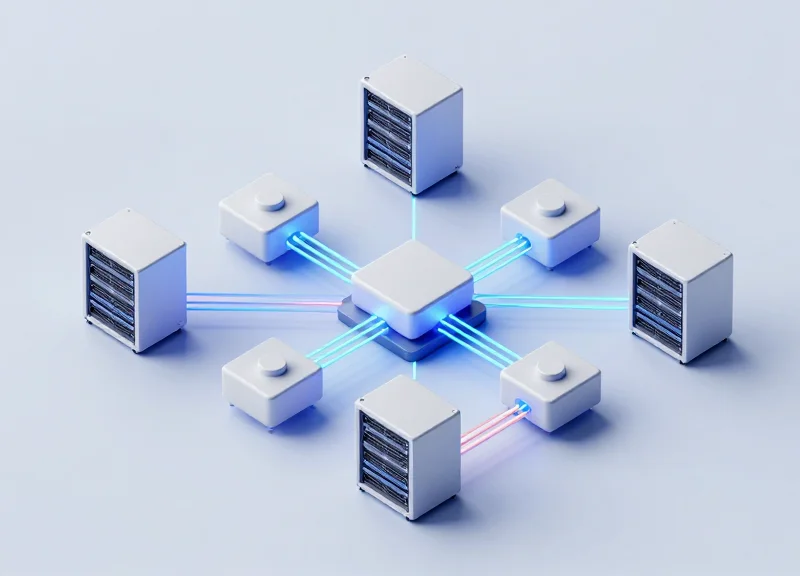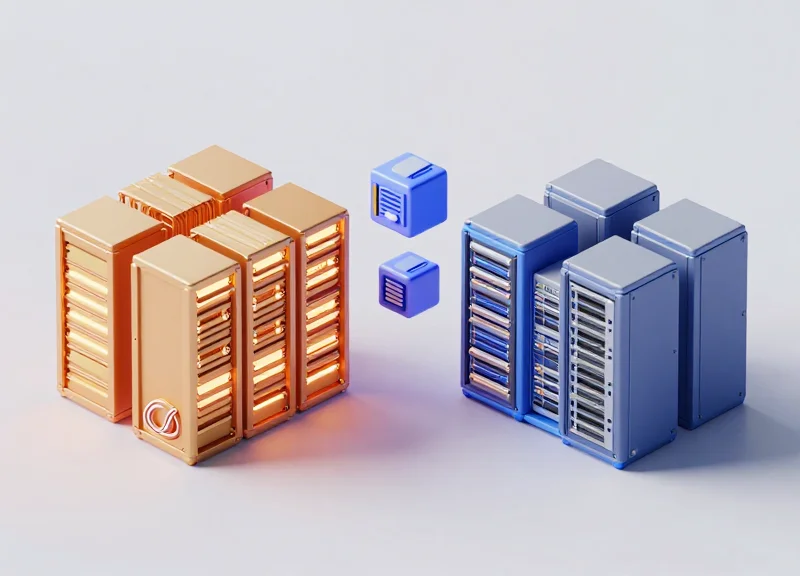
As global data consumption reaches unprecedented heights, the pressure on network infrastructure to deliver high speeds while maintaining energy efficiency has never been greater. Ubytelink addresses this challenge head-on with 400G solutions that combine industry-leading throughput with sophisticated power management for mission-critical environments.
The Rise of 400G: Navigating the New Era of Data Demands

The Inevitable Shift to 400G Architecture
The transition to 400G Ethernet is a direct response to the massive data explosion driven by Artificial Intelligence (AI), machine learning, 5G expansion, and hyperscale cloud computing. As global networks struggle under the weight of traditional 100G limitations, 400G has emerged as the fundamental architecture for modern data centers, offering four times the bandwidth per rack unit while significantly reducing the cost-per-bit. Ubytelink provides the essential infrastructure to navigate this shift, ensuring that global networks can scale effectively without succumbing to the escalating energy and thermal demands of high-density environments.
Primary Drivers of High-Bandwidth Scalability
- Why is the industry moving from 100G to 400G now?
The move is driven by the need for higher port density and the reduction of cabling complexity. 400G allows operators to deliver more capacity in the same physical footprint, which is critical for urban data centers where space is at a premium. - How does 400G impact operational efficiency?
By consolidating traffic onto fewer, higher-capacity links, 400G reduces the number of optical interfaces required, leading to lower management overhead and more streamlined network monitoring. - What role does AI play in 400G adoption?
AI training clusters require ultra-low latency and massive throughput to process large datasets across distributed nodes; 400G provides the necessary headroom to prevent network bottlenecks during intensive compute cycles.
Technical Comparison: 100G vs. 400G Performance
| Feature | 100G Standard (QSFP28) | 400G Standard (QSFP-DD/OSFP) |
|---|---|---|
| Max Throughput | 100 Gbps | 400 Gbps |
| Power Efficiency | Higher Watts per Gbps | Optimized Watts per Gbps |
| Fiber Utilization | High (More cables needed) | Low (High-density multiplexing) |
| Typical Latency | Standard | Ultra-Low (optimized for AI) |
While the performance gains of 400G are undeniable, they introduce a significant challenge: power consumption. High-speed transceivers and switches generate substantial heat, making thermal management and energy efficiency the primary benchmarks for premium network components. Ubytelink 400G Network Power Efficiency Solutions are specifically engineered to address these thermal hurdles, providing high-quality optics and cabling that minimize energy loss and ensure stable performance for global, mission-critical networks.
Power Efficiency: The Critical Metric for Modern Data Centers

In the era of 400G networking, raw throughput is no longer the sole benchmark of success; instead, the focus has shifted to power efficiency as data centers grapple with skyrocketing energy costs and stringent sustainability mandates. High-speed interconnects consume significant amounts of electricity, which translates directly into increased thermal load and cooling requirements. By prioritizing the 'Power per Gigabit' ratio, operators can ensure that scaling their network capacity does not lead to an exponential rise in operational expenses (OPEX) or thermal bottlenecks that threaten hardware longevity and reliability.
The Shift from Raw Speed to Sustainable Density
As bandwidth requirements migrate from 100G to 400G, the power density of optical transceivers and switch ASICs has reached a critical threshold. Traditional metrics focused on port speed are insufficient when the power draw per rack exceeds the cooling capacity of the facility. Efficient 400G solutions enable higher port density by reducing the heat signature of each link, allowing for more compact hardware configurations without the risk of thermal throttling.
| Metric | 100G Legacy | Standard 400G | Ubytelink Optimized 400G |
|---|---|---|---|
| Avg. Power Consumption | 3.5W - 4.5W | 12W - 14W | 8W - 10W |
| Power per Gigabit | 0.035 W/G | 0.030 W/G | 0.021 W/G |
| Thermal Efficiency | Moderate | Low (High Heat) | Superior (Low Heat) |
Economic Impact: Reducing TCO through Wattage Optimization
Reducing power consumption at the transceiver level creates a 'multiplier effect' on energy savings. For every watt saved at the optical module, additional savings are realized in the cooling infrastructure and power conversion systems. Ubytelink's premium 400G optics utilize advanced Digital Signal Processors (DSPs) and silicon photonics to achieve industry-leading efficiency, directly lowering the Total Cost of Ownership (TCO) for global network operators.
Frequently Asked Questions
- Why is 'Power per Gigabit' more important than total wattage?
Total wattage only measures consumption, while Power per Gigabit measures efficiency. A module that uses more total power but delivers 4x the bandwidth may actually be more sustainable if its ratio is lower than previous generations. - How does heat impact the lifespan of 400G hardware?
Excessive heat accelerates the degradation of laser components and sensitive electronics. Lowering power consumption reduces thermal stress, extending the Mean Time Between Failures (MTBF) for the entire switch fabric. - Can power-efficient optics help meet ESG goals?
Yes. By reducing the energy footprint of the network layer, data centers can significantly lower their carbon emissions, helping organizations meet Environmental, Social, and Governance (ESG) targets.
Ubytelink’s Engineering Philosophy: Reliability by Design
Ubytelink’s Engineering Philosophy: Reliability by Design
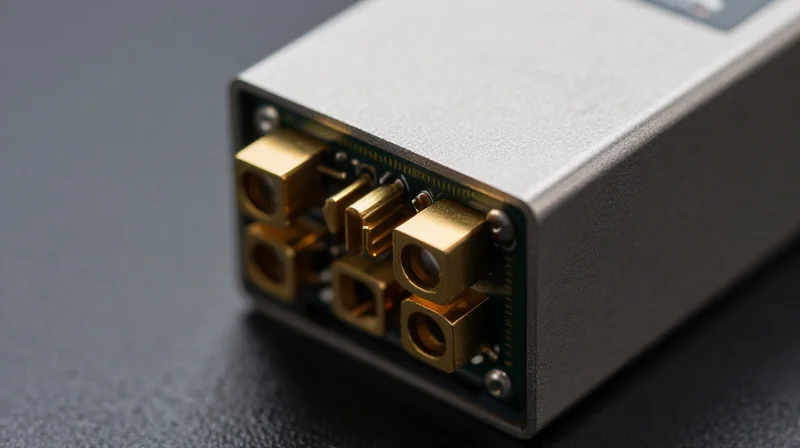
At Ubytelink, reliability is not an after-the-fact validation process; it is a foundational principle embedded into the earliest stages of architectural design. Our engineering philosophy centers on the premise that 400G infrastructure must maintain 24/7 uptime under fluctuating thermal loads and high-density signal environments. By prioritizing 'Reliability by Design,' we bridge the gap between theoretical laboratory performance and the unpredictable realities of global data center operations, ensuring that every module exceeds industry-standard MTBF (Mean Time Between Failures) metrics.
Comparing Engineering Standards: Industry vs. Ubytelink
| Metric | Standard Industry Practices | Ubytelink Reliability Standards |
|---|---|---|
| Burn-in Process | Sample-based batch testing | 100% individual module stress testing |
| Thermal Modeling | Standard CFD simulations | Extreme-case dynamic thermal oscillation modeling |
| Component Sourcing | Multi-vendor generic Grade-C | Premium Grade-A silicon and laser chips only |
| Signal Integrity | Standard MSA compliance | Enhanced margin tuning for low BER |
Holistic R&D: From Silicon to Shielding
To achieve superior power efficiency without sacrificing durability, our R&D teams utilize a multi-layered approach. This includes the deployment of low-power Digital Signal Processors (DSPs) that reduce heat generation at the source, coupled with innovative heat sink designs within the transceiver housing. We focus heavily on signal integrity, utilizing high-precision manufacturing to minimize Bit Error Rates (BER), which in turn reduces the need for aggressive error correction that can consume additional power and generate excess heat. This focus ensures that our 400G solutions remain stable even in high-humidity or poorly ventilated edge environments.
Reliability and Manufacturing FAQ
- How does Ubytelink ensure the longevity of high-speed 400G optics?
We implement accelerated life testing (ALT) and 100% burn-in at elevated temperatures to identify and eliminate early-life failures, ensuring only the most robust units reach the customer. - Does reliability-focused design impact power efficiency?
Actually, it improves it. By optimizing signal paths and reducing heat dissipation through better material thermal conductivity, we lower the cooling requirements for the overall network rack. - What certifications do Ubytelink 400G modules meet?
Our modules are fully compliant with MSA standards, IEEE 802.3ck, and undergo rigorous RoHS and CE certification processes to ensure global interoperability and safety.
Advanced Thermal Management in 400G Modules
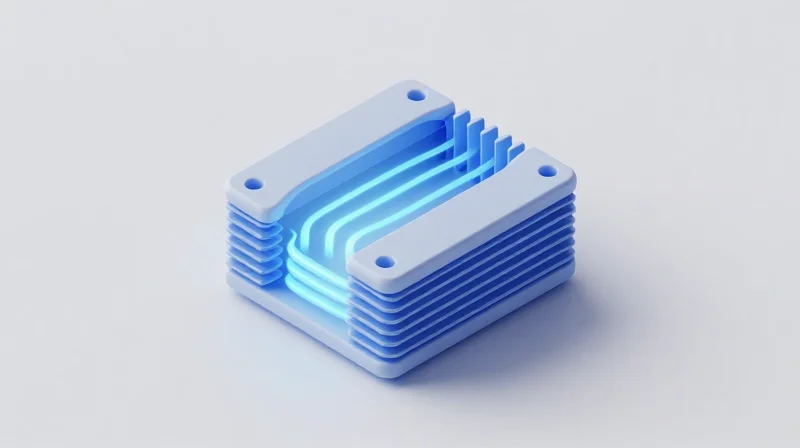
Engineering Thermal Stability for High-Density 400G Deployments
As 400G transceivers consume significantly more power than their 100G predecessors, heat dissipation becomes the primary bottleneck for network reliability. Ubytelink’s thermal management strategy utilizes advanced internal heat spreaders and low-power silicon photonics to reduce the thermal footprint at the source, ensuring that modules remain within optimal temperature ranges even under peak traffic loads.
The Mechanics of Heat Dissipation in Ubytelink Modules
By integrating high-thermal-conductivity materials and a precision-engineered casing, Ubytelink facilitates rapid heat transfer from the internal Digital Signal Processor (DSP) to the module's external surfaces. This design minimizes internal temperature gradients, which is critical for maintaining the structural integrity of sensitive laser diodes and optical components over a multi-year service life.
| Feature | Standard 400G Modules | Ubytelink 400G Solutions |
|---|---|---|
| Housing Material | Basic Die-cast Zinc | High-K Thermal Conductivity Alloys |
| Internal TIM | Standard Thermal Pads | Advanced Phase-Change Materials (PCM) |
| Typical Power Consumption | 12W - 14W | < 10W (Optimized Efficiency Models) |
| Operational Thermal Margin | Narrow | Wide (Stable at higher ambient temps) |
Preventing Throughput Degradation and Physical Wear
Thermal throttling occurs when a module reduces its clock speed or power intake to prevent catastrophic failure, resulting in dropped packets and latency spikes. Ubytelink’s superior cooling efficiency allows for consistent, full-speed performance, effectively eliminating the risk of thermal-induced throughput degradation while simultaneously slowing the rate of semiconductor aging.
- How does heat affect 400G module lifespan?
Excessive heat accelerates the degradation of laser components like EMLs and VCSELs. Ubytelink’s cooling technology maintains lower junction temperatures, effectively extending the Mean Time Between Failures (MTBF). - Is specialized cooling required for Ubytelink modules?
No. While they are compatible with standard rack airflow, their high efficiency reduces the overall cooling load on data center HVAC systems, leading to secondary power savings. - Does Ubytelink support real-time thermal monitoring?
Yes, all modules feature integrated Digital Optical Monitoring (DOM) that provides real-time temperature telemetry to network management software for proactive maintenance.
Optimizing OPEX with Low-Power 400G Transceivers
Optimizing OPEX with Low-Power 400G Transceivers
In high-density 400G environments, power efficiency has evolved from a technical specification into a critical financial lever, where marginal reductions in wattage per module translate into exponential savings in utility costs and facility management. By prioritizing low-power silicon and optimized circuitry, Ubytelink enables operators to maximize port density within existing power envelopes, effectively deferring capital-intensive facility upgrades while slashing monthly energy bills.
The Financial Impact of Incremental Efficiency
For hyperscale data centers and Tier-1 service providers, the cumulative effect of transceiver power draw is staggering. A single switch loaded with 32 or 64 ports of 400G can see a variance of hundreds of watts depending on the efficiency of the modules used. Ubytelink’s 400G solutions utilize advanced 7nm DSP technology to drive power consumption significantly below industry averages, providing a direct path to a lower Total Cost of Ownership (TCO).
| Metric | Standard 400G Transceiver | Ubytelink Low-Power 400G | Estimated Annual Savings (per 1,000 units) |
|---|---|---|---|
| Typical Power Consumption | 12.0W - 14.0W | 8.5W - 10.0W | ~26,000 kWh Reduction |
| Direct Energy Cost (at $0.12/kWh) | $12.61 per unit | $8.93 per unit | $3,680.00 Savings |
| Cooling Overhead (PUE 1.5) | 6.0W - 7.0W | 4.2W - 5.0W | ~15,000 kWh Reduction |
| Total OPEX Impact | High | Optimized | Up to 30% Lower OPEX |
The Cooling Multiplier and Infrastructure Longevity
The financial benefits of low-power optics extend far beyond the electricity meter. Every watt of heat generated by a transceiver requires additional energy for removal via Computer Room Air Conditioning (CRAC) units. By reducing the thermal load at the port level, Ubytelink modules decrease the 'cooling multiplier' effect, allowing fans to run at lower RPMs and reducing vibration and mechanical wear. This leads to longer lifecycles for both the transceivers and the expensive switching hardware they inhabit, further optimizing the replacement cycle and long-term CAPEX/OPEX balance.
Operational Efficiency FAQ
- How does lower power consumption impact return on investment (ROI)?
Lower power consumption reduces recurring monthly utility and cooling costs. These savings compound over the 5-7 year lifecycle of the network, often resulting in an OPEX saving that exceeds the initial purchase price difference of the hardware. - Does reducing power consumption affect signal reach or quality?
No. Ubytelink leverages high-efficiency DSPs and optimized laser drivers that maintain full compliance with IEEE and MSA standards, ensuring that power savings do not come at the expense of Bit Error Rate (BER) or link distance. - Why is 'Watts per Gigabit' a critical metric for modern networks?
As bandwidth requirements scale, power availability becomes the primary bottleneck for data center growth. Measuring Watts per Gigabit allows operators to benchmark their efficiency and plan capacity expansions within fixed power and cooling constraints.
Interoperability and Seamless Global Integration
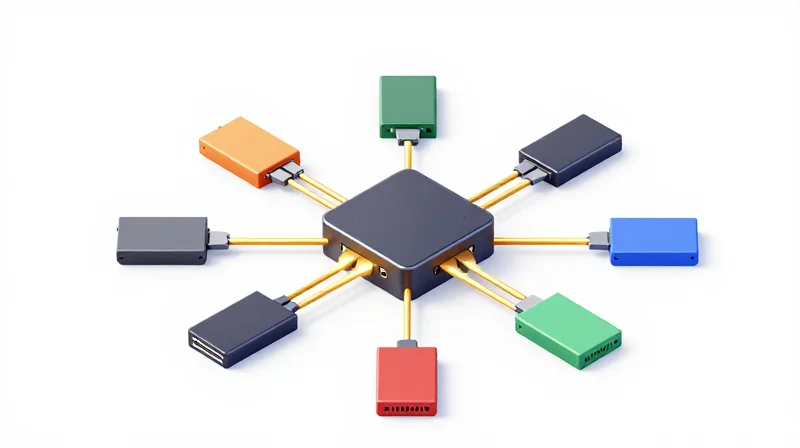
Interoperability is the linchpin of modern high-scale networking, and Ubytelink 400G modules are engineered to serve as universal components within any diverse vendor ecosystem. By strictly following Multi-Source Agreement (MSA) standards and IEEE protocols, Ubytelink ensures that its power-efficient transceivers integrate flawlessly into existing infrastructures, eliminating the performance bottlenecks and financial risks associated with proprietary vendor lock-in.
Universal Standards Compliance for Global Scalability
For global networks to function at peak efficiency, every component must speak the same language. Ubytelink invests heavily in R&D to ensure compliance with the latest physical layer specifications, such as IEEE 802.3ck. This commitment guarantees that signal integrity and power consumption remain within strict tolerances, regardless of the geographic location or the specific hardware brand being used. This universal compatibility is essential for service providers who manage distributed architectures across multiple continents.
| Standard / Vendor | Ubytelink Compliance Status | Operational Advantage |
|---|---|---|
| IEEE 802.3bs/ck | Full Compliance | Ensures 400Gb/s physical layer consistency and reliability. |
| QSFP-DD / OSFP MSA | Certified Adherence | Guarantees mechanical and electrical fit in multi-vendor slots. |
| Cisco / Arista / Juniper | Verified Interoperability | Allows for seamless mix-and-match in heterogeneous data centers. |
| RoHS / CE / FCC | Certified | Meets global environmental and safety regulatory requirements. |
Rigorous Multi-Platform Verification
Ubytelink’s interoperability is not theoretical; it is validated through intensive testing in real-world scenarios. Each 400G module undergoes Bit Error Rate (BER) testing and link budget verification across a spectrum of host platforms. This proactive approach ensures that when a Ubytelink module is plugged into a third-party switch, it is recognized immediately, maintaining the low-latency and high-throughput characteristics required for mission-critical applications like AI training and cloud computing.
Seamless Global Integration FAQ
- Does Ubytelink support backward compatibility with 100G ports?
Yes, through high-density QSFP-DD form factors and breakout configurations, Ubytelink modules allow for a smooth transition from legacy 100G to 400G infrastructures. - Is custom firmware required for different switch vendors?
No. Ubytelink modules are pre-coded and tested for specific OEM environments, providing a true plug-and-play experience without manual configuration. - How does interoperability affect power efficiency?
By adhering to MSA standards, Ubytelink ensures that the transceiver and the host port communicate with optimal electrical signaling, preventing energy waste from signal re-transmission or high FEC error rates.
Future-Proofing Your Network with Ubytelink’s Roadmap
Deploying Ubytelink’s 400G network power efficiency solutions provides more than just immediate operational savings; it establishes a sustainable architectural baseline for the next decade of data center evolution. As global networks pivot toward 800G and 1.6T, the limiting factor is no longer just the speed of light, but the 'power wall'—the physical limit of how much heat can be dissipated in a standard rack. Ubytelink’s roadmap prioritizes early adoption of Silicon Photonics (SiPh) and advanced Digital Signal Processing (DSP) to ensure that the transition to higher bandwidths does not require a proportional increase in power or a total redesign of existing cooling systems.
Engineering the Transition to Next-Generation Bandwidth
The roadmap for Ubytelink focuses on maintaining interoperability while pushing the boundaries of density. By perfecting 7nm and 5nm DSP integrations in current 400G modules, Ubytelink is refining the power-per-bit efficiency necessary for 800G. This continuity allows network architects to scale their infrastructure incrementally, leveraging existing fiber plants while preparing for the higher modulation rates required by future standards like 112G and 224G SerDes. The focus remains on reducing the electrical overhead, which remains the primary source of heat in high-density environments.
| Metric | 400G Current Standard | 800G Roadmap Projection |
|---|---|---|
| Power Per Bit | ~25mW/Gbps | <18mW/Gbps |
| Common Form Factor | QSFP-DD / OSFP | OSFP800 / QSFP-DD800 |
| DSP Technology | 7nm / 12nm CMOS | 5nm / 3nm CMOS |
| Typical Cooling Requirement | Air-Cooled (Standard) | Air-Cooled (Optimized) / Immersion Ready |
Strategic Future-Proofing: Silicon Photonics and Beyond
A key component of Ubytelink's roadmap is the deeper integration of Silicon Photonics. This technology reduces the number of discrete components, lowers power consumption per bit, and provides a clear pathway to co-packaged optics (CPO). As enterprises adopt Ubytelink's SiPh-based 400G modules today, they are effectively testing and validating the same technology that will be essential for managing the thermal loads of future 1.6T networks. This forward-thinking design philosophy ensures that the premium quality invested in today remains relevant for years to come.
- How does 400G power efficiency impact 800G migration?
Lowering the thermal baseline of 400G deployments preserves the 'thermal margin' of existing chassis, allowing for the eventual insertion of higher-power 800G modules without requiring a total overhaul of the data center's cooling plant. - What role does Silicon Photonics play in the Ubytelink roadmap?
Silicon Photonics is central to the strategy, offering a more scalable manufacturing process and lower power consumption compared to traditional EML-based designs, which becomes critical at the 800G and 1.6T tiers. - Are Ubytelink 400G modules compatible with future 800G hardware?
Yes, Ubytelink adheres to MSA standards, ensuring that 400G modules can operate seamlessly in 800G ports through backward-compatible form factors like OSFP and QSFP-DD.
The Environmental Impact of Green Networking Infrastructure

Integrating Ubytelink 400G green networking infrastructure is a decisive move toward environmental sustainability, as it drastically lowers the energy required per bit of data processed. By utilizing high-density, low-power optical components, organizations can reduce their total facility power consumption, directly contributing to a lower carbon footprint and alignment with global climate accords.
Empowering Corporate ESG through Silicon Innovation
Environmental, Social, and Governance (ESG) criteria have become central to the operational strategies of modern enterprises. Ubytelink’s 400G modules address the 'Environmental' pillar by leveraging advanced silicon photonics and ultra-low-power Digital Signal Processors (DSPs). These innovations minimize heat dissipation, which in turn reduces the energy demand on data center cooling systems. For large-scale service providers, the cumulative effect of saving just a few watts per module across thousands of ports results in a massive reduction in Scope 2 emissions—the indirect emissions from purchased electricity.
Comparative Efficiency: Standard vs. Ubytelink 400G
| Metric | Legacy 100G (Per 400G equiv.) | Standard 400G Transceiver | Ubytelink Energy-Optimized 400G |
|---|---|---|---|
| Power Consumption (Watts) | 18W - 24W | 12W - 14W | 8W - 10W |
| Heat Dissipation (BTU/hr) | 61 - 82 | 41 - 48 | 27 - 34 |
| Energy Efficiency Index | Low | Moderate | High (Optimized) |
Sustainability and Life-Cycle Management
A 'green' network isn't just about active power consumption; it is also about longevity and waste reduction. Ubytelink’s premium 400G solutions are engineered for high MTBF (Mean Time Between Failures), ensuring that components remain in service longer and reducing the frequency of hardware replacement cycles. This durability lessens the environmental impact of manufacturing and electronic waste (e-waste) disposal, supporting a circular economy within the technology sector.
- How does 400G infrastructure reduce operational CO2 emissions?
By increasing data throughput while decreasing the power-per-gigabit ratio, 400G systems allow data centers to handle more traffic with less electricity, directly reducing the CO2 emissions generated by power plants serving the facility. - Can upgrading to Ubytelink 400G lower cooling costs?
Yes. Lower power consumption in optical modules results in less heat dissipation. This reduces the load on Precision Air Conditioning (CRAC) units, leading to secondary energy savings that can be as high as 40% of the initial power savings. - Does 'green networking' compromise signal integrity or reach?
Not with Ubytelink. Our solutions maintain premium signal integrity and support standard reaches (SR8, DR4, FR4, LR4) while using next-generation DSPs that require less voltage to achieve high-performance results.
By choosing Ubytelink 400G solutions, organizations secure a balance of elite performance and exceptional energy management. Ensure your network is ready for the future of global data—contact Ubytelink today for a customized infrastructure assessment.