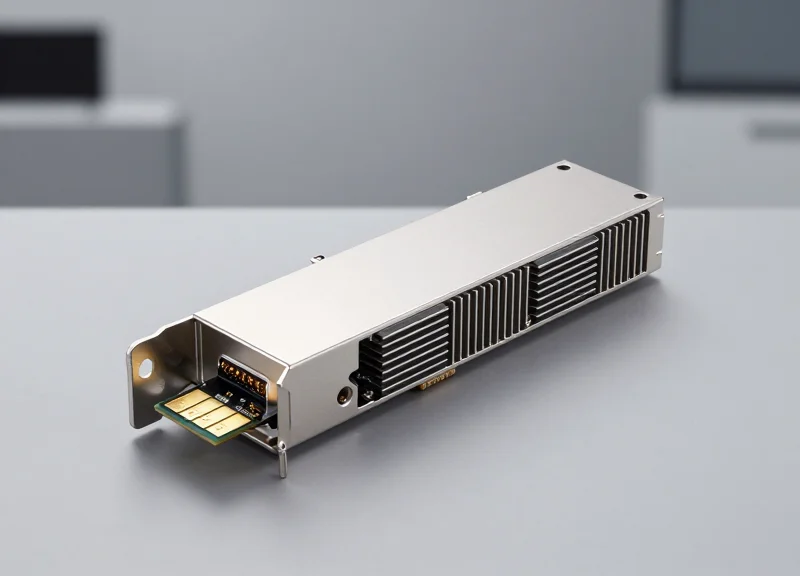
The demand for hyper-scale bandwidth is surging, making the transition to 1.6T connectivity a critical priority for modern data centers. As the networking industry evolves, finding a partner that offers both technical superiority and cost-effective wholesale pricing is essential for sustainable growth. This article explores the 1.6T Evolution landscape and how Ubytelink empowers enterprises to scale efficiently.
The Rise of 1.6T: Why the Industry is Moving Beyond 800G

The Inflection Point: Scaling Beyond 800G
The industry is pivoting to 1.6T optical standards because 800G architectures are no longer sufficient to support the synchronization requirements of multi-trillion parameter Large Language Models (LLMs). As training clusters scale to tens of thousands of GPUs, the backend fabric—traditionally served by 400G and 800G—requires a doubling of density to prevent 'tail latency' and bandwidth bottlenecks that stall expensive compute cycles. The move to 1.6T, specifically utilizing 200G-per-lane signaling, provides the necessary throughput to match the IO capabilities of next-generation NPUs and GPUs entering the market in 2026 and 2025.
AI/ML Workloads: The Primary Catalyst
Artificial Intelligence and Machine Learning workloads differ from standard cloud traffic due to their 'all-to-all' communication patterns. During distributed training, GPUs must constantly exchange weight gradients. When using 800G modules, the sheer volume of cabling and the power overhead of managing multiple parallel links become prohibitive. 1.6T OSFP and QSFP-DD800/1600 modules allow data center operators to double their radix per rack unit, effectively halving the physical footprint required for the same aggregate bandwidth.
| Feature | 800G Standard | 1.6T Evolution |
|---|---|---|
| Aggregate Throughput | 800 Gbps | 1.6 Tbps |
| Electrical Lane Speed | 100G per lane (SerDes) | 200G per lane (SerDes) |
| Standard Form Factor | OSFP / QSFP-DD | OSFP1600 / QSFP-DD1600 |
| Power Efficiency | ~18-20W per module | ~25-30W (Lower pJ/bit) |
| Primary Use Case | General Cloud/HPC | Generative AI Training |
Total Cost of Ownership (TCO) and Efficiency
While the per-unit cost of a 1.6T transceiver is higher than its 800G predecessor, the total cost of ownership (TCO) shifts in favor of 1.6T at scale. By moving to 200G-per-lane signaling, the number of optical components required to achieve a specific bandwidth target is reduced. This results in a lower power-per-bit ratio (picojoules per bit), which is a critical metric for hyperscalers operating under strict power caps. Wholesale procurement of 1.6T technology in 2026 allows early adopters to future-proof their infrastructure against the 51.2T and 102.4T switching silicon waves.
- Why is 200G SerDes important for 1.6T?
200G SerDes allows for 8 lanes to reach 1.6T, maintaining the same physical connector density as 800G while doubling capacity, which is essential for matching the high-speed IO of the latest AI chips. - Will 800G become obsolete immediately?
No. 800G will remain the workhorse for standard enterprise cloud and edge applications, while 1.6T will dominate the 'AI Back-End' fabric and core hyperscale interconnects. - What are the common 1.6T reach distances?
Initial deployments focus on DR8 (500m) and 2xFR4 (2km) for intra-data center connectivity, utilizing both Singlemode and Multi-mode fiber options.
Technical Specifications of 1.6T Evolution Modules
Technical Architecture and Signal Integrity at 1.6T
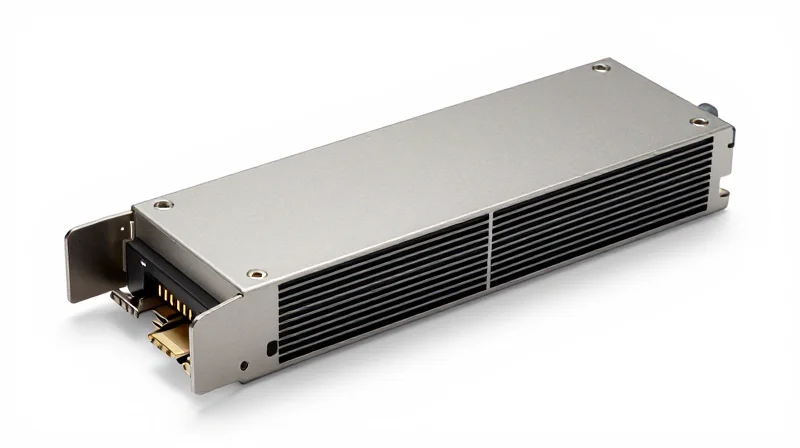
The transition to 1.6T Evolution is fundamentally defined by the adoption of 224G per-lane signaling, which doubles the lane speed of previous 800G solutions to meet the intense bandwidth requirements of next-generation AI and Machine Learning (ML) clusters. This leap in speed requires a shift from standard 112G SerDes to 224G architectures, necessitating advanced Digital Signal Processing (DSP) and sophisticated Forward Error Correction (FEC) algorithms to maintain signal integrity across both electrical and optical interfaces.
Form Factor Comparison: OSFP-XD vs. QSFP-DD800/1600
| Specification | OSFP-XD (Extra Density) | QSFP-DD (1.6T) |
|---|---|---|
| Electrical Interface | 16 x 112G or 8 x 224G | 8 x 224G |
| Max Power Envelope | Up to 40W | Up to 30W |
| Thermal Management | Integrated Heatsink / High Surface Area | Riding Heatsink / Dense Cooling |
| Connector Density | Highest (51.2T per RU) | High (Standard Compatibility) |
| Ideal Application | AI Back-end / HPC | Hyperscale Cloud Core |
Power Efficiency and Next-Gen DSP Innovations
As power density becomes the primary bottleneck in data center scaling, 1.6T Evolution modules leverage 5nm or 3nm DSP technology to minimize thermal output while maximizing throughput. These advanced nodes enable significantly lower picojoules per bit (pJ/bit), allowing operators to deploy high-density 1.6T switching fabrics without exceeding existing facility power budgets.
- What is the impact of 224G SerDes on 1.6T modules?
The 224G SerDes enables a 1.6T throughput using just 8 electrical lanes, reducing the complexity of the host-to-module interface but requiring significantly higher precision in PCB routing and signal equalization. - Are 1.6T Evolution modules compatible with existing 800G infrastructure?
While OSFP-XD and QSFP-DD 1.6T connectors share physical similarities with 800G versions, they require 224G-capable host ports to achieve full 1.6T speeds, though many switches offer backward compatibility for legacy 400G/800G modules via lane negotiation. - How is thermal management addressed in high-density 1.6T deployments?
1.6T modules utilize optimized fin designs on OSFP-XD shells and advanced liquid cooling or high-airflow chassis designs to dissipate the 25W to 40W generated per transceiver during peak AI workloads.
For wholesale buyers, understanding these specifications is critical for ensuring that selected 1.6T optics align with the thermal and electrical profiles of their specific network hardware, particularly when moving toward 51.2T and 102.4T switching platforms.
The Economics of Wholesale Procurement for Data Centers

The Economics of Wholesale Procurement for Data Centers
Procuring 1.6T optical modules through wholesale channels is a strategic financial imperative for modern data centers, offering a significant reduction in Total Cost of Ownership (TCO) by leveraging economies of scale to lower the cost-per-bit. As AI and machine learning workloads demand unprecedented bandwidth, the transition to 1.6T via bulk purchasing allows operators to maximize infrastructure ROI while simultaneously reducing the physical complexity and power overhead of their networking fabric.
Driving Down Cost-per-Bit with 1.6T Evolution
The primary economic driver for the adoption of 1.6T technology is its superior efficiency compared to legacy 400G and 800G standards. By consolidating bandwidth, 1.6T modules reduce the total number of optical interfaces required to achieve the same throughput. This consolidation translates directly into fewer switch ports, fewer cables, and a lower overall power envelope per gigabit of data transmitted.
| Economic Metric | 800G Standard | 1.6T Evolution (Wholesale) |
|---|---|---|
| Cost-per-Bit Efficiency | Baseline | Estimated 20-30% Reduction |
| Power Consumption (W/Gbps) | Higher | ~15-20% Lower per bit |
| Port Density Utilization | Standard | 2x Capacity per Rack Unit |
| Cabling Complexity | High | Significant Reduction (50% less fiber) |
The Value of Custom Quotes and Bulk Pricing in 2026
In the current market, off-the-shelf pricing rarely reflects the actual cost of large-scale deployments. Custom quotes for 1.6T modules allow procurement teams to negotiate based on specific architectural needs, such as transmission distances (DR8 vs 2xFR4) and power consumption profiles. Furthermore, bulk pricing models provide a hedge against the volatility of the semiconductor supply chain, ensuring predictable CAPEX for long-term data center expansion projects scheduled throughout 2026 and beyond.
Wholesale Procurement FAQ
- How does 1.6T bulk pricing impact long-term operational costs?
Wholesale acquisition of 1.6T modules lowers OPEX by reducing the number of active components to cool and maintain, leading to lower utility bills and less frequent hardware failure points across the network. - What are the typical lead times for wholesale 1.6T orders?
Lead times vary by manufacturer and volume, but custom wholesale quotes usually include prioritized manufacturing slots, often ranging from 4 to 12 weeks depending on the specific optical configuration. - Can custom quotes include mixed form factors?
Yes, most wholesale agreements allow for a mix of OSFP and QSFP-DD800 modules within a single bulk order to accommodate heterogeneous hardware environments.
Leveraging OEM and ODM Services for Custom Connectivity
Leveraging OEM and ODM Services for Custom Connectivity
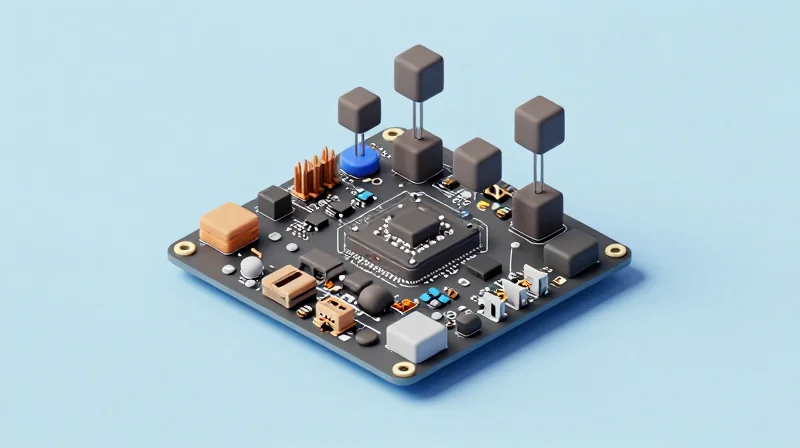
Leveraging OEM (Original Equipment Manufacturer) and ODM (Original Design Manufacturer) services for 1.6T connectivity allows data center operators to move beyond off-the-shelf limitations by tailoring hardware performance and firmware logic to specific infrastructure needs. Through these services, wholesale buyers can optimize signal integrity for specialized AI clusters, ensuring that 1.6T OSFP and QSFP-DD modules perform with maximum efficiency across proprietary switch environments and unique thermal profiles.
Firmware Tailoring and Protocol Optimization
The 1.6T evolution introduces significant complexity in Digital Signal Processing (DSP) and error correction. Custom firmware services allow engineers to fine-tune Forward Error Correction (FEC) parameters and power management thresholds. This level of customization ensures that the modules are not only compliant with IEEE 802.3dj standards but are also specifically tuned to minimize latency and bit-error rates (BER) within a buyer’s specific network operating system (NOS) and ASIC combination.
| Feature | Standard 1.6T Wholesale | Custom ODM/OEM Services |
|---|---|---|
| Firmware Logic | Generic Multi-vendor Compatibility | Optimized for Specific NOS/ASIC |
| Branding & Labeling | Manufacturer Standard | White-label / Private Branding |
| Thermal Management | Standard Factory Heat Sinks | Customized Fin Designs & Materials |
| EEPROM Coding | Locked / Standard | Custom Serial Mapping & Tracking |
| Validation | Batch Sampling | Rigorous Environment-Specific Testing |
Hardware Customization and White-Labeling
For large-scale data centers and cloud service providers, hardware optimization is critical for maintaining uptime. ODM services provide the flexibility to modify the physical housing and heat sink geometry of 1.6T modules to enhance airflow in hyper-dense rack configurations. Furthermore, white-labeling allows enterprises to integrate these high-performance components into their own product ecosystems, utilizing custom silk-screening and specialized packaging that aligns with their corporate branding and internal inventory management systems.
- Why is custom firmware important for 1.6T modules?
Custom firmware ensures the DSP is tuned for specific link lengths and switch architectures, which is vital for maintaining signal integrity at 200G-per-lane speeds. - Can ODM services reduce the total cost of ownership?
Yes, by optimizing power consumption and thermal performance for specific environments, custom modules reduce long-term cooling costs and hardware failure rates. - What branding options are available for bulk 1.6T orders?
Wholesale buyers can request custom exterior labeling, unique internal EEPROM identifiers, and personalized packaging to streamline logistics and asset tracking.
Interoperability and Multi-Vendor Compatibility
Interoperability and Multi-Vendor Compatibility
Achieving 1.6 Terabit speeds requires absolute adherence to industry standards to ensure that modules purchased wholesale function perfectly within complex, multi-vendor environments. Successful deployment hinges on plug-and-play reliability across heterogeneous fabrics containing switches and routers from various Tier-1 manufacturers. By strictly adhering to IEEE 802.3dj and the Common Management Interface Specification (CMIS) 5.0 or higher, 1.6T Evolution modules eliminate vendor lock-in, allowing data center operators to mix and match hardware based on performance and budget rather than proprietary constraints.
Standardized Compliance and MSA Agreements
Wholesale 1.6T modules are engineered according to OSFP-MSA and QSFP-DD800/1600 specifications. These agreements define the physical dimensions, electrical interfaces, and management protocols required for global compatibility. For bulk purchasers, ensuring that wholesale inventory meets these specifications is the primary safeguard against deployment failures in multi-vendor fabrics. This standardization ensures that electrical signaling and thermal management remain consistent, regardless of the host chassis.
| Interoperability Factor | OEM-Branded Modules | Wholesale 1.6T Evolution |
|---|---|---|
| Hardware Flexibility | Limited to brand-specific gear | Universal (Multi-vendor support) |
| Cost per Port | High (Vendor premium applied) | Optimized (Bulk pricing) |
| Firmware Customization | Locked/Proprietary | Customizable for specific hosts |
| Compliance | Standard IEEE | IEEE + CMIS 5.0+ Extended compatibility |
Firmware Tuning and EEPROM Customization
While physical standards are universal, many network equipment manufacturers implement software white-listing that can reject non-branded optics. To bypass these hurdles, premium 1.6T wholesale providers offer customized EEPROM coding and firmware tuning. This allows a single batch of 1.6T modules to be recognized as native components by Cisco, Arista, NVIDIA, or Juniper systems, significantly simplifying spare parts management and reducing the risk of port-down events during initial configuration.
- Will 1.6T OSFP modules work in older 800G slots?
Many 1.6T OSFP modules are designed with backward compatibility in mind, provided the host switch supports the physical interface and the management software can down-clock the signaling rate to 800G. - What is the role of CMIS in 1.6T interoperability?
The Common Management Interface Specification (CMIS) provides a unified way for the host switch to communicate with the module's DSP, ensuring consistent diagnostics and control across different vendor platforms. - How do custom quotes handle multi-vendor testing?
Bulk procurement quotes often include testing verification reports, confirming the modules have been validated against specific switch models (e.g., NVIDIA Quantum-3 or Cisco Nexus) to ensure 100% compatibility.
Supply Chain Stability: Avoiding Bottlenecks in 1.6T Deployment

Achieving a seamless 1.6T network deployment depends entirely on the resilience of the underlying supply chain. As the industry shifts toward 1.6T Evolution standards, demand for critical components like high-performance DSPs and advanced EML lasers often outpaces supply. Ubytelink addresses these bottlenecks by integrating vertical manufacturing insights with a global logistics network, ensuring that wholesale purchasers receive consistent lead times and price protection even during periods of extreme market volatility.
Strategic Component Buffering and Forecasting
To mitigate the risk of semiconductor shortages, Ubytelink employs a 'buffer stock' strategy for long-lead-time components. By analyzing global data center expansion trends and working closely with foundry partners, we secure production slots up to 18 months in advance. This proactive approach allows us to maintain a steady flow of 1.6T modules, shielding our clients from the 30-plus week lead times often seen in the broader market.
| Supply Chain Metric | Market Standard Lead Time | Ubytelink Wholesale Timeline |
|---|---|---|
| DSP & Optical Engine Sourcing | 24-40 Weeks | 12-16 Weeks (Pre-allocated) |
| Custom Firmware & Labeling | 4-8 Weeks | 1-2 Weeks (Parallel Processing) |
| Global Logistics & Delivery | 14-21 Days | 3-7 Days (Regional Hubs) |
| Ramp-up Capacity (Bulk) | Limited by Spot Availability | Scalable via Rolling Forecasts |
Global Logistics Hubs and Customs Optimization
Bottlenecks frequently occur at the final mile of delivery, particularly with high-value technology like 1.6T transceivers. Ubytelink utilizes a network of regional distribution centers in key tech hubs. By utilizing bonded warehouses and pre-clearing customs documentation, we minimize the 'transit friction' that typically plagues international wholesale shipments. This ensures that 'Buy Next-Gen 1.6T Evolution' orders arrive exactly when your network infrastructure is ready for installation.
Supply Chain & Lead Time FAQs
- How does Ubytelink ensure pricing stability for 1.6T bulk orders?
We offer long-term price lock agreements for wholesale customers, utilizing our large-scale component procurement to hedge against raw material price spikes. - What happens if there is a sudden surge in my deployment requirements?
Through our 'Rolling Forecast' program, we maintain elastic manufacturing capacity, allowing wholesale partners to scale their orders by up to 30% without resetting the lead time clock. - Can Ubytelink manage multi-destination global shipping for a single bulk order?
Yes, we provide consolidated billing with split-shipment logistics, allowing you to buy wholesale while distributing inventory to various data center sites globally.
By combining forward-looking inventory strategies with agile logistics, Ubytelink provides the reliability required for large-scale AI and hyperscale 1.6T deployments, turning supply chain management into a competitive advantage for our clients.
Thermal Management and Power Density Challenges

The transition to 1.6T networking introduces unprecedented thermal challenges, as individual modules now consume between 25W and 32W of power, necessitating a paradigm shift in how data centers manage heat dissipation at the rack level. Effectively deploying these modules requires a combination of advanced heatsink geometries, optimized airflow management, and, in some cases, a transition toward liquid cooling to maintain signal integrity and hardware longevity.
The Power Consumption Leap: 800G vs. 1.6T
As the industry moves from 800G to 1.6T, the power density within a standard 1U switch chassis increases significantly. While 800G modules typically hover around 16W to 18W, the 1.6T Evolution modules utilize more complex Digital Signal Processors (DSPs) and silicon photonics that push the thermal envelope. This increased wattage per port means that a fully loaded 32-port 1.6T switch can generate over 1kW of heat from optics alone.
| Module Standard | Typical Power Consumption | Thermal Management Requirement | Cooling Compatibility |
|---|---|---|---|
| 800G QSFP-DD/OSFP | 16W - 18W | Standard Heatsink / High Airflow | Forced Air Cooling |
| 1.6T OSFP | 25W - 30W | Integrated Riding Heatsinks | Enhanced Airflow / Liquid Cooling |
| 1.6T OSFP-XD | 30W - 35W | Direct-to-Chip / Extreme Thermal Path | Liquid Cooling / Immersion |
Strategies for Mitigating Thermal Throttling
Thermal throttling is the primary risk in bulk 1.6T deployments; when internal module temperatures exceed 70-80°C, the DSP automatically reduces performance to prevent physical damage, leading to dropped packets and increased latency. Wholesale buyers must prioritize modules with high-efficiency thermal pads and specialized housing finishes that maximize heat transfer to the switch's cooling environment.
The Role of Form Factor: OSFP vs. QSFP-DD800
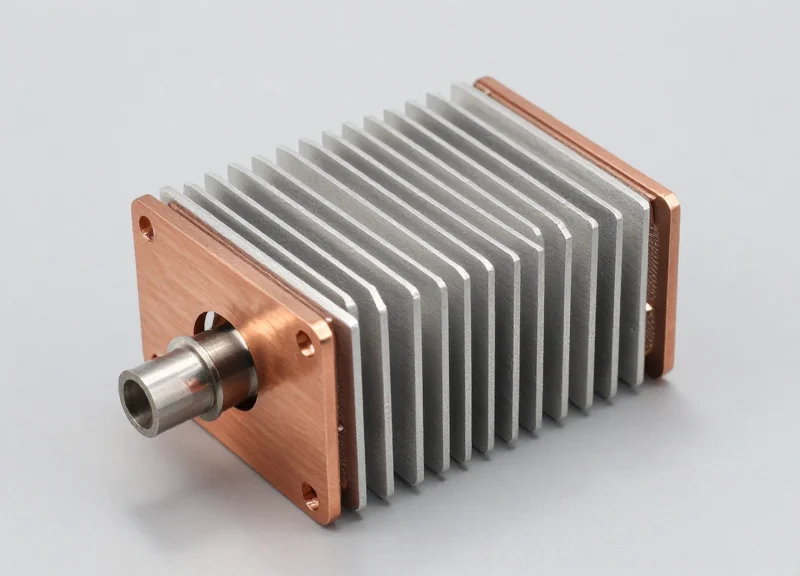
The OSFP (Octal Small Form-factor Pluggable) design has become the preferred choice for 1.6T Evolution due to its superior thermal real estate. Unlike QSFP-DD, OSFP includes an integrated heatsink on the module itself, providing a larger surface area for heat exchange. This design allows for higher power limits without requiring exotic cooling solutions in standard data center environments.
- Can I use 1.6T modules in existing air-cooled racks?
Yes, provided the switch chassis is designed with high-RPM fans and optimized 'riding heatsinks' that create a tight thermal seal with the OSFP module. However, airflow direction (Front-to-Back vs. Back-to-Front) must be strictly managed. - How does power density affect wholesale pricing?
Modules with lower power consumption (higher efficiency DSPs) often command a premium price because they reduce the Total Cost of Ownership (TCO) by lowering utility costs and extending the lifespan of the network hardware. - Is liquid cooling mandatory for 1.6T?
It is not mandatory for standard 1.6T OSFP modules, but for the upcoming 1.6T OSFP-XD (Extra Density) and high-radix switches, liquid cooling is becoming the industry standard to handle the 35W+ thermal load per port.
When requesting custom quotes for bulk 1.6T Evolution orders, it is essential to specify the thermal environment of your target infrastructure. Manufacturers like Ubytelink can provide specific hardware optimizations, such as specialized fin designs on the module casing, to ensure that your 1.6T upgrade remains stable even under peak traffic loads.
Future-Proofing Your Infrastructure with 1.6T Evolution

Future-Proofing Your Infrastructure with 1.6T Evolution
Adopting 1.6T Evolution technology today is a strategic imperative for organizations looking to bypass the 'bandwidth wall' predicted for the mid-2020s. By integrating 1.6T modules now, enterprises and service providers effectively reset their infrastructure lifecycle, ensuring that the physical layer of the network can support multiple generations of software and AI model iterations without requiring a forklift upgrade of the switching fabric.
The 1.6T Roadmap: Bridging the Gap to Terabit Ethernet
While 800G remains the current high-water mark for many, 1.6T represents the first true step into the Terabit Era. It utilizes advanced 224G SerDes technology, which provides a more sustainable path for future 3.2T and 6.4T evolutions. Investing in 1.6T wholesale today allows for a phased deployment that matches the scaling needs of next-generation GPU clusters and high-performance computing (HPC) environments.
| Network Generation | Typical Lifecycle | Primary Bottleneck | Future-Proof Rating |
|---|---|---|---|
| 400G / 800G | 3-5 Years | I/O Density & Power | Moderate |
| 1.6T Evolution | 7-10 Years | Thermal Management | High / Critical |
| 3.2T (Future) | Planned | Signal Integrity | Visionary |
Mitigating Technical Debt through Bulk Acquisition
Acquiring 1.6T optics through custom wholesale quotes in 2026 mitigates the risk of technical debt—the cost of maintaining obsolete 400G or 800G systems as they reach their performance ceilings. Bulk pricing allows operators to standardize their transceivers across the entire data center fabric, reducing the complexity of spare parts management and ensuring consistent performance across all nodes.
- Is 1.6T too early for standard enterprise data centers?
No. While 1.6T is currently led by hyperscalers, the rapid adoption of private AI clouds means standard enterprises will face 800G limits within 24 months. Early adoption ensures capacity is ready before the demand peaks. - How does 1.6T Evolution impact long-term OpEx?
By consolidating bandwidth into fewer, higher-capacity ports, 1.6T reduces the total number of modules and cables required, lowering energy consumption per gigabit and simplifying physical layer maintenance. - Will 1.6T modules be compatible with future 224G SerDes switches?
Yes. 1.6T Evolution is designed specifically to align with the 224G SerDes ecosystem, ensuring that these modules will remain compatible with the next two generations of high-radix switch silicon.
Ultimately, the transition to 1.6T is less about speed and more about economic sustainability. By securing bulk pricing for 1.6T Evolution components now, organizations lock in their infrastructure costs and protect themselves against the inevitable supply shortages that occur as the rest of the market rushes to upgrade.
Navigating the complexities of high-speed networking requires more than just hardware; it requires a strategic alliance. Ubytelink provides the expert engineering, custom OEM/ODM options, and competitive wholesale pricing necessary to bring your network into the 1.6T era. Contact us today for a personalized quote and start your 1.6T Evolution.