As the demand for bandwidth explodes, the transition from 200G to 400G and beyond has introduced complex hardware standards. Understanding the core differences between QSFP56 and its 'Double Density' counterpart, QSFP56-DD, is essential for network architects looking to optimize performance and future-proof their infrastructure.
The Evolution of the QSFP Form Factor
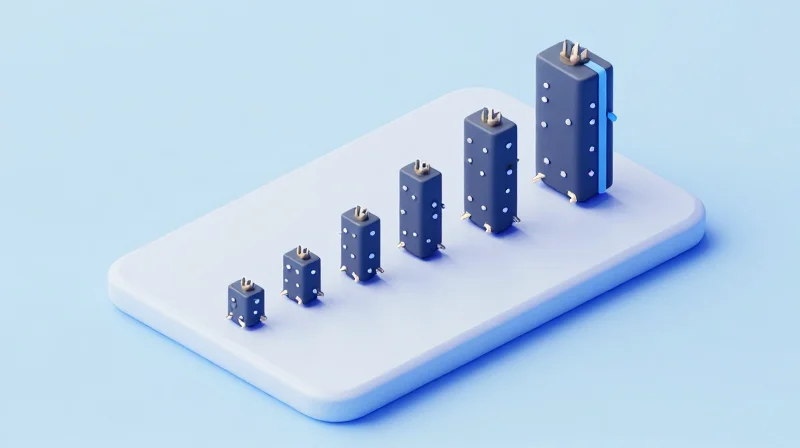
The evolution of the QSFP form factor is a chronicle of rapid scaling, moving from simple four-lane configurations to high-density interfaces that utilize advanced modulation techniques like PAM4 to meet the bandwidth demands of hyperscale data centers.
The Foundation: QSFP+ and QSFP28
The QSFP lineage gained prominence with the QSFP+ (Quad Small Form-factor Pluggable Plus) standard, designed to support 40G Ethernet by aggregating four 10Gbps lanes. This was followed by QSFP28, which revolutionized 100G networking by utilizing four 25Gbps lanes. Both of these standards relied on Non-Return-to-Zero (NRZ) modulation, which eventually hit a physical ceiling regarding signal integrity and power efficiency as speeds increased beyond 25G per lane.
| Form Factor | Typical Bandwidth | Lanes x Lane Speed | Modulation |
|---|---|---|---|
| QSFP+ | 40G | 4 x 10G | NRZ |
| QSFP28 | 100G | 4 x 25G | NRZ |
| QSFP56 | 200G | 4 x 50G | PAM4 |
| QSFP-DD | 400G / 800G | 8 x 50G / 8 x 100G | PAM4 |
The Transition to PAM4 and QSFP56
To double the throughput without doubling the required fiber or physical space, the industry shifted from NRZ to Pulse Amplitude Modulation 4-level (PAM4). QSFP56 emerged as the direct successor to QSFP28, maintaining the same four-lane architecture but doubling the bit rate per lane to 50Gbps. This allowed for 200G total throughput within the same physical footprint, providing an incremental but critical upgrade path for leaf-spine architectures.
Defining Double Density: The Advent of QSFP-DD
As the industry looked toward 400G and beyond, the 'Double Density' (DD) concept was introduced. Unlike standard QSFP modules that utilize a single row of electrical contacts, QSFP-DD incorporates a second row of contacts to double the number of high-speed electrical lanes from four to eight. By combining eight lanes with 50G or 100G PAM4 technology, QSFP-DD enables 400G and 800G speeds while remaining backward compatible with legacy QSFP modules through its mechanical design.
- Why was the transition to PAM4 necessary for QSFP56?
NRZ modulation becomes increasingly susceptible to signal loss and electromagnetic interference at higher frequencies; PAM4 carries twice as many bits per symbol, allowing higher data rates at lower baud rates. - Is QSFP-DD backward compatible with QSFP28?
Yes, QSFP-DD ports are designed to be mechanically compatible, allowing a standard QSFP28 or QSFP56 module to be plugged into a QSFP-DD port, though only four lanes will be active. - What is the primary physical difference between QSFP56 and QSFP-DD?
QSFP56 uses a 4-lane electrical interface, whereas QSFP-DD uses an 8-lane electrical interface with a deeper module body to accommodate the extra contacts.
Defining QSFP56: The 200G Powerhouse
Defining QSFP56: The 200G Powerhouse
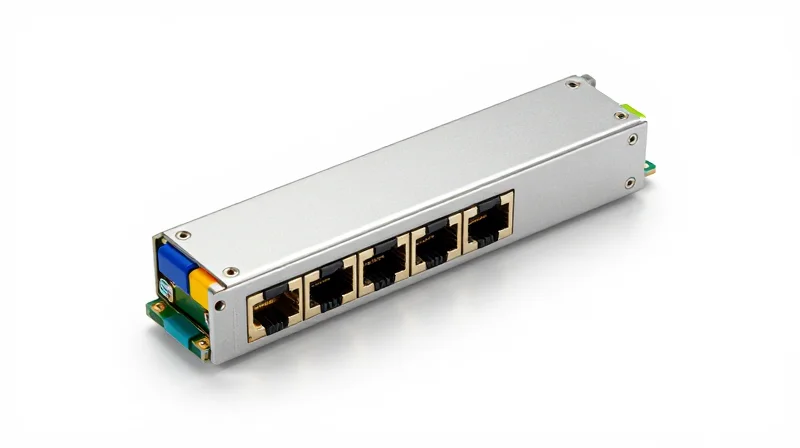
QSFP56 is a high-speed transceiver form factor designed to support 200 Gigabit Ethernet (200GbE) by leveraging four independent transmit and receive channels, each operating at 50 Gbps. It represents a significant technological leap from the 100G QSFP28 standard, primarily through the adoption of PAM4 signaling, which allows for double the data density within the same physical footprint. By maintaining the same physical dimensions as previous QSFP modules, it offers a scalable path for data centers to increase bandwidth without requiring a total redesign of their rack infrastructure.
The Shift to 50G PAM4 Modulation
The defining characteristic of QSFP56 is its transition from Non-Return to Zero (NRZ) signaling to Pulse Amplitude Modulation 4-level (PAM4). While NRZ uses two signal levels to represent a 0 or a 1 (one bit per symbol), PAM4 utilizes four distinct signal levels to represent two bits per symbol. This effectively doubles the bitrate for the same baud rate, allowing a 26.56 GBaud signal to deliver a 53.125 Gbps data rate. This efficiency is what enables the four lanes of a QSFP56 module to reach an aggregate throughput of 200 Gbps.
| Feature | QSFP28 | QSFP56 |
|---|---|---|
| Aggregate Bandwidth | 100 Gbps | 200 Gbps |
| Lane Configuration | 4 x 25 Gbps | 4 x 50 Gbps |
| Modulation Type | NRZ | PAM4 |
| Symbol Rate | 25.78 GBaud | 26.56 GBaud |
| Backward Compatibility | QSFP+, QSFP28 | QSFP+, QSFP28 |
Technical Considerations and Applications
- Why is FEC mandatory for QSFP56?
Because PAM4 signaling uses four voltage levels, the signal-to-noise ratio (SNR) is significantly lower than NRZ. To compensate for the higher bit error rate (BER), Forward Error Correction (FEC) is a mandatory requirement for QSFP56 links to ensure data integrity. - What are the primary use cases for 200G QSFP56?
It is widely deployed in High-Performance Computing (HPC), AI clusters, and mid-tier data center interconnects where 400G might be overkill but 100G is no longer sufficient to handle traffic loads. - Is QSFP56 compatible with QSFP-DD?
Physically, a QSFP56 module can be plugged into a QSFP-DD port, as the DD (Double Density) standard was designed for backward compatibility with the legacy QSFP footprint.
QSFP56-DD: Double Density for 400G Networks
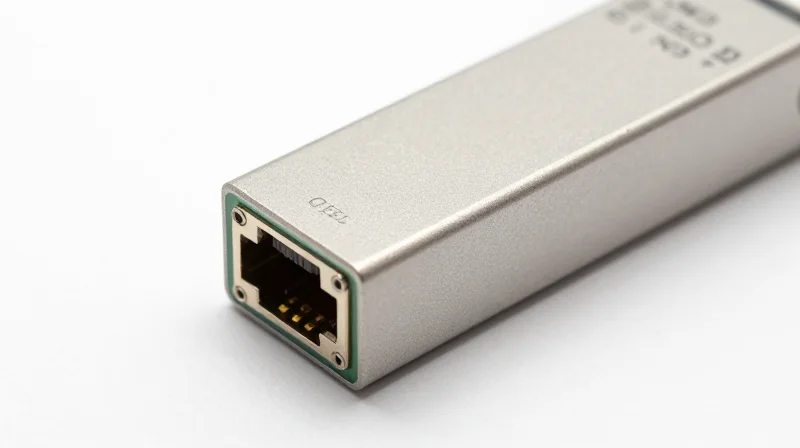
The 'DD' in QSFP56-DD stands for Double Density, a design evolution that doubles the electrical interfaces of the module from four to eight. While the standard QSFP56 uses four 50G PAM4 lanes to achieve 200G, the QSFP56-DD leverages eight 50G PAM4 lanes to reach an aggregate bandwidth of 400G, effectively providing a high-density solution for hyperscale data centers without expanding the port size on the faceplate.
The 8-Lane Architecture: Doubling the Throughput
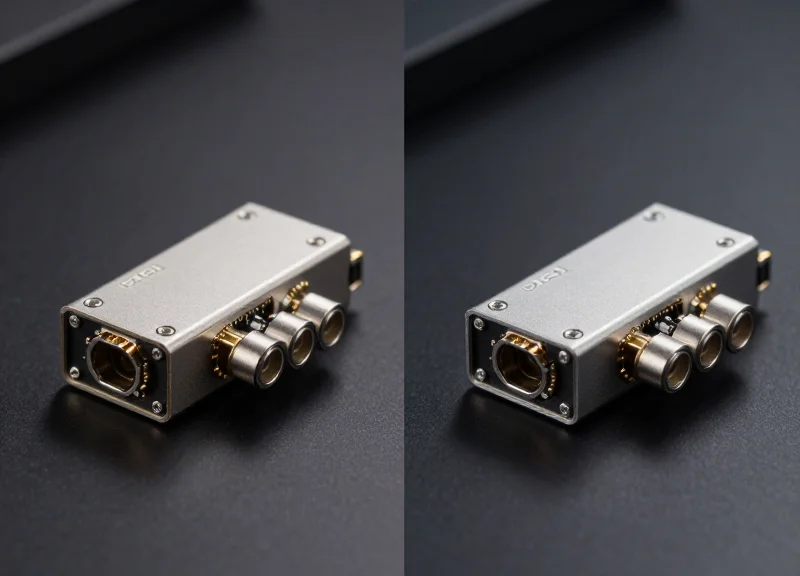
The technical core of the QSFP56-DD is its 8-lane electrical interface. To accommodate these extra lanes within the same width as a standard QSFP module, engineers added a second row of contacts to the PCB. This 'Double Density' arrangement allows the module to handle significantly more data. When each of these eight lanes runs at 50Gbps using PAM4 modulation, the result is a massive 400G pipe. This architectural leap is what distinguishes it from the 4-lane QSFP56 and enables massive scaling in network capacity.
| Specification | QSFP56 | QSFP56-DD |
|---|---|---|
| Number of Electrical Lanes | 4 Lanes | 8 Lanes |
| Modulation Type | 50G PAM4 | 50G PAM4 |
| Total Aggregate Bandwidth | 200Gbps | 400Gbps |
| Contact Rows | Single Row | Double Row |
| Backward Compatibility | QSFP28, QSFP+ | QSFP56, QSFP28, QSFP+ |
Backward Compatibility and Mechanical Design
Despite the increase in internal lanes, the external dimensions of the QSFP56-DD are engineered to be compatible with standard QSFP cages. This backward compatibility is a critical advantage for network operators; a 400G switch port designed for QSFP56-DD can typically accept a 200G QSFP56 or a 100G QSFP28 module. However, because 400G operation generates more heat, QSFP56-DD modules often feature enhanced thermal management solutions, including integrated heat sinks or optimized airflow designs to maintain stability at higher power envelopes, which can range from 7W to 12W or more.
Key Highlights of QSFP56-DD Technology
- Can a QSFP56 module work in a QSFP56-DD port?
Yes, QSFP56-DD ports are designed to be backward compatible. Since the first row of pins in a DD port matches the standard QSFP layout, a QSFP56 module will function normally at 200G speeds. - What is the primary benefit of the double row of contacts?
The double row allows the module to support 8 lanes of electrical traffic instead of 4, effectively doubling the bandwidth capacity within the same physical module width. - Is QSFP56-DD suitable for 800G?
While the QSFP-DD form factor is used for 800G, those modules utilize 100G per lane (8x100G PAM4). QSFP56-DD specifically refers to the generation using 50G per lane for a 400G total.
Physical Layer Differences: Pins and Connectors
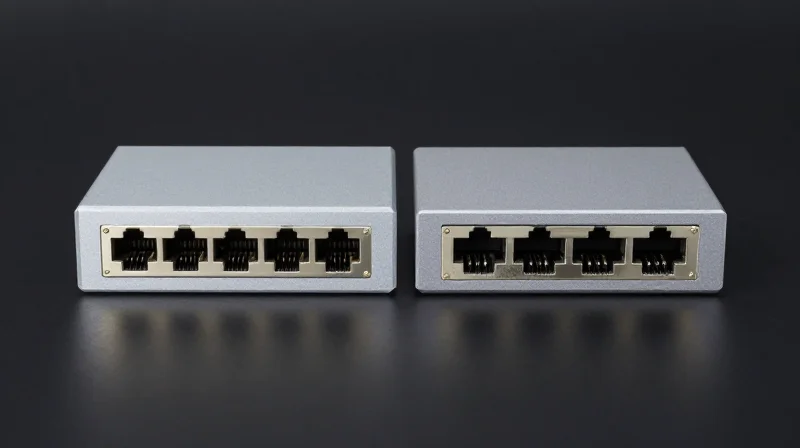
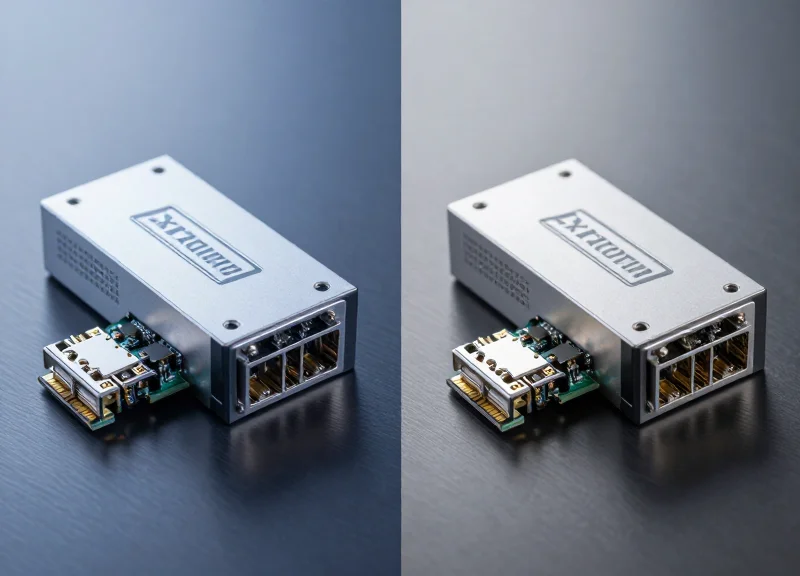
The fundamental physical difference between QSFP56 and QSFP56-DD lies in the density of their electrical interfaces: while QSFP56 utilizes a single row of 38 pins to support four 50G electrical lanes, QSFP56-DD (Double Density) incorporates a second row of contacts to provide a total of 76 pins and eight 50G electrical lanes within a nearly identical module footprint.
QSFP56: The Standard 38-Pin Layout
The QSFP56 form factor follows the traditional Quad Small Form-factor Pluggable design. It features a single row of electrical contacts on the top and bottom of the module's PCB edge, totaling 38 pins. This interface is designed to support four high-speed differential pairs (4x TX and 4x RX). By applying 50G PAM4 modulation to each of these four lanes, the module achieves an aggregate throughput of 200Gbps. This mechanical design is consistent with previous generations like QSFP28, making it a natural evolution for 200G networking without altering the basic connector depth.
QSFP56-DD: Doubling Pins via a Dual-Row Connector
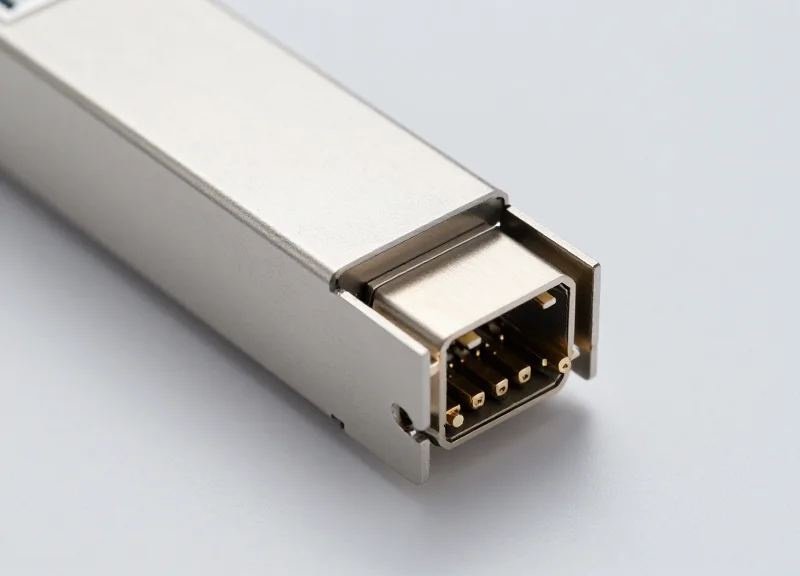
To jump from 200G to 400G while maintaining the 'Quad' form factor width, the QSFP56-DD MSA (Multi-Source Agreement) introduced a 'Double Density' architecture. This design adds a secondary row of recessed electrical contacts behind the primary row. When viewed, the QSFP56-DD module has an elongated PCB edge with two tiers of pads. The host-side connector is similarly upgraded to a deep-cavity design containing two rows of pins. This configuration provides 76 pins in total, allowing for eight electrical lanes (8x TX and 8x RX) instead of four.
| Feature | QSFP56 | QSFP56-DD |
|---|---|---|
| Total Pin Count | 38 Pins | 76 Pins |
| Electrical Lane Count | 4 Lanes (4x50G) | 8 Lanes (8x50G) |
| Connector Rows | Single Row | Dual Row (Stacked) |
| Max Throughput | 200 Gbps | 400 Gbps |
| Mechanical Standard | SFF-8665 | QSFP-DD MSA / SFF-8636 |
Backward Compatibility and Mechanical Alignment
A key advantage of the QSFP56-DD physical layer is its backward compatibility with standard QSFP modules. Because the first row of pins in a QSFP56-DD host port matches the pinout of a standard QSFP56 or QSFP28 module, users can plug a 200G QSFP56 module into a 400G QSFP56-DD port. The module will only engage the first row of pins, and the switch will recognize it as a 4-lane interface. However, the reverse is not possible: a QSFP56-DD module cannot be plugged into a standard QSFP56 port because its extended PCB and dual-row contacts require the deeper specialized connector.
- Does QSFP56-DD require a different cage?
Yes. While the faceplate width is the same, the internal cage and connector for QSFP56-DD are deeper and contain more pins to accommodate the 'Double Density' dual-row PCB. - Are the pin definitions the same for the first row?
Yes, the first row of pins on a QSFP56-DD module is electrically compatible with the standard QSFP definition, which ensures that legacy modules work in newer DD ports. - How does the physical layer handle the extra heat of 76 pins?
QSFP56-DD modules often feature an integrated heat sink or a more robust thermal interface than QSFP56 to manage the increased power consumption of the 8-lane DSP.
Backward Compatibility: Practical Integration
Backward Compatibility: Practical Integration
QSFP56-DD ports are designed with a primary focus on backward compatibility, allowing data center operators to protect their investment in legacy hardware while scaling toward 400G. The dual-row pin architecture of the QSFP56-DD cage is specifically engineered to accommodate the single-row pin layout of legacy QSFP56 and QSFP28 modules, ensuring that older transceivers can be plugged directly into newer 400G-capable switches without the need for physical adapters.
Mechanical and Electrical Synergy
The mechanical design of the QSFP56-DD cage is slightly deeper than the standard QSFP56 cage to accommodate the second row of electrical contacts. When a legacy QSFP56 or QSFP28 module is inserted into a QSFP56-DD port, it only makes contact with the first row of pins. The switch's firmware detects the module type and automatically adjusts the port configuration, disabling the second row of high-speed lanes and matching the signaling protocol—whether it be 25G NRZ for QSFP28 or 50G PAM4 for QSFP56.
| Module Type | Target Port | Compatibility Status | Signaling Mode |
|---|---|---|---|
| QSFP28 (100G) | QSFP56-DD | Supported | 4x25G NRZ |
| QSFP56 (200G) | QSFP56-DD | Supported | 4x50G PAM4 |
| QSFP56-DD (400G) | QSFP56 | Not Supported | N/A (Physical Block) |
Operational Benefits for Infrastructure Maintenance
Backward compatibility significantly reduces the complexity of phased network migrations. Instead of a 'forklift upgrade' where all equipment must be replaced simultaneously, administrators can deploy 400G-capable leaf-and-spine switches while retaining existing 100G server connections. This flexibility allows for better budget management and minimizes downtime during the transition from 200G (QSFP56) to 400G (QSFP56-DD) architectures.
Common Compatibility Inquiries
- Can I use a QSFP56-DD module in a legacy QSFP56 port?
No. The QSFP56-DD module features a longer PCB with a second row of contacts that will physically prevent it from fully seating in a legacy QSFP56 or QSFP28 cage. - Is an adapter needed for 100G modules in a 400G port?
No adapter is required. The QSFP56-DD port is designed to be natively compatible with the physical form factor of all previous QSFP iterations. - Do I need special software to enable backward compatibility?
Most modern Network Operating Systems (NOS) automatically detect the EEPROM of the inserted module and configure the SerDes speed accordingly, though manual port-speed overrides may sometimes be necessary.
Power Consumption and Thermal Management
Power Consumption and Thermal Management
The transition from QSFP56 to QSFP56-DD represents a significant leap in power requirements, moving from a standard 5W envelope to sophisticated 12W to 15W+ profiles. This shift necessitates a paradigm change in data center cooling, as the increased component density within the same physical footprint dramatically raises the heat flux per rack unit, demanding advanced heat sink designs and higher airflow velocities.
Comparison of Power Classes
| QSFP Standard | Max Power Class | Typical Power Draw |
|---|---|---|
| QSFP56 | Power Class 4 | 3.5W to 5.0W |
| QSFP56-DD | Power Class 8 | 12.0W to 15.0W+ |
The substantial increase in power draw for QSFP56-DD is primarily driven by the integration of more complex Digital Signal Processors (DSPs) and the doubling of electrical channels from four to eight. While a standard QSFP56 module can typically operate within a 5W limit, high-performance QSFP56-DD transceivers, particularly coherent ZR/ZR+ versions, may push the boundaries toward 20W, requiring the cooling infrastructure of the host switch to be significantly more robust.
Engineering Challenges in Heat Dissipation
To prevent thermal throttling or hardware failure, QSFP56-DD systems employ specialized cage designs. These cages often incorporate 'riding heat sinks' that maintain direct contact with the module's top surface. This allows heat to be pulled away from the internal components more efficiently than the passive convection used in older QSFP56 layouts. Furthermore, the design of the equipment faceplate must account for tighter port spacing, which can create 'dead zones' in airflow if not properly modeled using Computational Fluid Dynamics (CFD).
- Does QSFP56-DD generate more heat than QSFP56?
Yes, QSFP56-DD generates significantly more heat because it utilizes eight lanes and more powerful DSPs to achieve 400G speeds, compared to the four lanes used in 200G QSFP56. - Are special cooling solutions required for QSFP56-DD ports?
Modern enterprise switches utilize high-CFM (cubic feet per minute) variable-speed fans and enhanced thermal interface materials within the cage to manage the 12W+ heat output. - How does power consumption affect backward compatibility?
Since QSFP56-DD ports are designed for high-wattage modules, they can easily accommodate and cool legacy QSFP56 or QSFP28 modules, which typically operate at much lower power levels.
Signal Integrity and PAM4 Modulation
The Transition to PAM4 Modulation
The transition from QSFP28 to the higher-density QSFP56 and QSFP56-DD standards marks a fundamental departure from traditional Non-Return to Zero (NRZ) signaling to Four-Level Pulse Amplitude Modulation (PAM4). While NRZ utilizes two signal levels to represent a single bit per clock cycle, PAM4 employs four distinct voltage levels to encode two bits of data within the same symbol period. This shift effectively doubles the data throughput without requiring a doubling of the electrical frequency, which is critical for maintaining signal integrity within the physical constraints of the QSFP form factor.
Technical Comparison: NRZ vs. PAM4
| Feature | NRZ (Legacy QSFP28) | PAM4 (QSFP56 / QSFP56-DD) |
|---|---|---|
| Bits per Symbol | 1 bit | 2 bits |
| Signal Levels | 2 (High/Low) | 4 (00, 01, 10, 11) |
| Bandwidth Efficiency | 1x Baseline | 2x Efficiency |
| Signal-to-Noise Ratio | High SNR | Reduced SNR (~9.5dB loss) |
| Error Correction | Optional/Basic | Mandatory (KP4 FEC) |
Signal Integrity and Error Correction
The primary trade-off for the increased density of PAM4 is a significantly reduced signal-to-noise ratio (SNR). Because the vertical eye opening in a PAM4 signal is only one-third the height of an NRZ signal, it is far more susceptible to noise, jitter, and crosstalk. To counteract these effects, both QSFP56 and QSFP56-DD rely on advanced Digital Signal Processing (DSP) and mandatory Forward Error Correction (FEC). The KP4 FEC algorithm is standard for these modules, providing the necessary mathematical overhead to identify and repair bit errors that occur due to signal degradation across the electrical interface.
Signal Modulation FAQs
- Why can't we just increase the clock speed of NRZ?
Increasing NRZ clock speeds beyond 28GBaud leads to massive signal attenuation and electromagnetic interference (EMI) that current PCB materials cannot cost-effectively handle. PAM4 allows us to stay at manageable frequencies while doubling throughput. - Does PAM4 affect the reach of DAC cables?
Yes, because PAM4 is more sensitive to noise, the maximum reach of passive Copper Direct Attach Cables (DAC) is generally reduced to 3 meters for 200G/400G, compared to the 5-7 meters possible with older NRZ-based QSFP28. - Are QSFP56 and QSFP56-DD inter-operable regarding signaling?
Both use 50G PAM4 electrical lanes. A QSFP56-DD port can technically support a QSFP56 module because they share the same modulation scheme, though they differ in the number of lanes utilized (4 lanes vs 8 lanes).
Industry Use Cases: Hyperscale vs. Enterprise
Industry Use Cases: Hyperscale vs. Enterprise
Choosing between QSFP56 and QSFP56-DD is a strategic decision driven by the specific bandwidth density, power budget, and scalability needs of the network environment. While QSFP56 serves as a cost-effective 200G upgrade for traditional enterprise core switches, QSFP56-DD is the foundational engine for 400G and 800G architectures in hyperscale clouds where maximizing throughput per rack unit is the primary objective.
QSFP56 in the Enterprise: Balancing Performance and Budget
In enterprise environments, such as corporate campuses or private data centers, the transition to 200G via QSFP56 is often preferred because it leverages existing LC or MPO cabling infrastructure while providing a 2x performance boost over legacy 100G (QSFP28) links. These environments typically prioritize lower power consumption and heat dissipation over extreme density, making the simpler 4-lane design of QSFP56 an ideal fit for standard core-to-distribution uplinks.
QSFP56-DD for Hyperscale: Driving Massive Horizontal Scale
Hyperscale providers (e.g., AWS, Azure, Google Cloud) require the 'Double Density' of QSFP56-DD to support 400G spine-leaf architectures and AI/ML training clusters. By utilizing 8 lanes of 50G PAM4, QSFP56-DD allows operators to maintain the same front-panel port density as 100G switches while quadrupling the aggregate capacity. This density is critical for reducing the number of switches and cables required to manage exabytes of traffic.
| Deployment Factor | QSFP56 (Enterprise) | QSFP56-DD (Hyperscale) |
|---|---|---|
| Primary Data Rate | 200G | 400G / 800G |
| Typical Reach | 100m (MMF) to 10km (SMF) | 500m (DR4) to 40km (ZR/ER8) |
| Thermal Envelope | 3.5W - 5.5W (Lower Heat) | 12W - 15W+ (High Density Cooling) |
| Cabling Complexity | Moderate (4-lane architecture) | High (8-lane, requires breakout management) |
| Ideal Use Case | Core/Aggregation Uplinks | Spine-Leaf Fabric & AI Clusters |
Deployment Considerations and FAQ
- Can QSFP56 modules be used in QSFP56-DD ports?
Yes, QSFP56-DD ports are backward compatible. You can plug a QSFP56 module into a QSFP56-DD port to achieve a 200G link, which is common in heterogeneous environments migrating from 200G to 400G. - When should I choose DAC vs. AOC for these modules?
Direct Attach Copper (DAC) is preferred for intra-rack connections (up to 3m) due to zero power consumption and lowest cost. Active Optical Cables (AOC) are used for inter-rack links up to 30m-100m where flexibility and weight are concerns. - Is QSFP56-DD necessary for 200G deployments?
No. If your roadmap only requires 200G, standard QSFP56 is more energy-efficient and cost-effective. QSFP56-DD should only be selected if you plan to scale to 400G or require high-density breakout configurations.
The Path to 800G and Future Roadmap
The Evolution from QSFP56-DD to 800G
QSFP56-DD serves as the critical bridge between the 200G/400G era and the emerging 800G landscape by proving the viability of an 8-lane electrical interface within a compact form factor. While QSFP56 was limited by its 4-lane design, the 'Double Density' innovation of the QSFP-DD MSA (Multi-Source Agreement) provided the necessary spatial and electrical headroom to scale bandwidth. The current industry roadmap leverages the mechanical foundations of QSFP56-DD to transition into QSFP-DD800, which upgrades the per-lane speed from 50G PAM4 to 112G PAM4, effectively doubling total throughput while maintaining backward compatibility with legacy QSFP modules.
112G SerDes: The Engine of the Next Generation
The jump to 800G is primarily driven by the shift to 112G SerDes (Serializer/Deserializer) technology. While QSFP56-DD optimized the use of 50G PAM4 signaling, 112G SerDes requires significantly more stringent signal integrity measures and advanced Error Correction (FEC) algorithms. This technological leap is what differentiates the current QSFP56-DD deployments from the next-generation QSFP-DD800 and OSFP modules, as the latter must manage tighter tolerances for return loss and crosstalk at higher frequencies.
| Feature | QSFP56-DD (Current) | QSFP-DD800 (Next Gen) | OSFP (800G/1.6T) |
|---|---|---|---|
| Max Bandwidth | 400G | 800G | 800G to 1.6T |
| Electrical Lanes | 8 Lanes | 8 Lanes | 8 Lanes |
| Per-Lane Rate | 50G PAM4 | 112G PAM4 | 112G / 224G PAM4 |
| Backward Compatibility | QSFP28 / QSFP56 | QSFP56-DD / QSFP56 | Requires Adapter |
| Thermal Envelope | Up to 12W-15W | Up to 18W-20W | Up to 20W+ |
OSFP and the Shift in Thermal Management
As bandwidth reaches 800G and beyond, thermal management becomes the primary constraint. While QSFP-DD800 remains popular due to its backward compatibility, the OSFP (Octal Small Form-factor Pluggable) standard is gaining traction for high-wattage 800G applications. OSFP modules are slightly wider and deeper than the QSFP-DD form factor, featuring integrated heat sinks that allow them to dissipate the heat generated by 112G SerDes and complex DSPs (Digital Signal Processors) more efficiently. For hyperscalers, the choice between continuing with the QSFP-DD roadmap or switching to OSFP depends largely on existing cooling infrastructure and the intended power consumption of the 800G optics.
Future Roadmap FAQ
- Can I use QSFP56-DD cables in an 800G port?
Yes, QSFP-DD800 ports are designed to be backward compatible. You can plug a 400G QSFP56-DD module or cable into an 800G port, though it will only operate at 400G speeds. - When will 1.6T become the standard?
The industry is already developing 224G SerDes technology, which will enable 1.6T throughput in the OSFP and QSFP-DD form factors. Commercial deployment is expected to begin in high-end data centers around 2025-2026. - Does 800G require new fiber cabling?
While standard single-mode fiber (SMF) remains the baseline, 800G often utilizes different breakout configurations (e.g., 2x400G or 8x100G) and may require higher-quality MPO connectors to minimize signal degradation at higher speeds.
Choosing between QSFP56 and QSFP56-DD involves balancing immediate bandwidth needs with long-term scalability. While QSFP56 is ideal for 200G environments, QSFP56-DD offers the density required for true 400G throughput. Contact our engineering team today to find the right optical solution for your high-speed interconnect requirements.