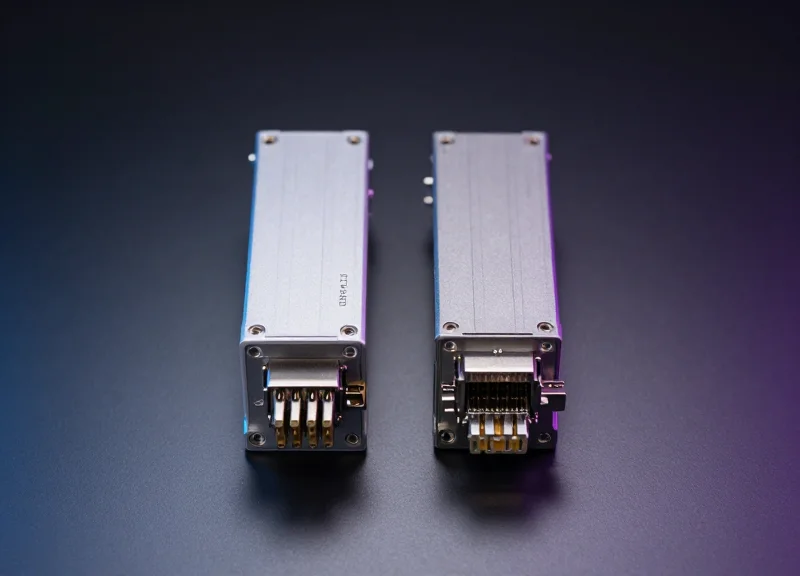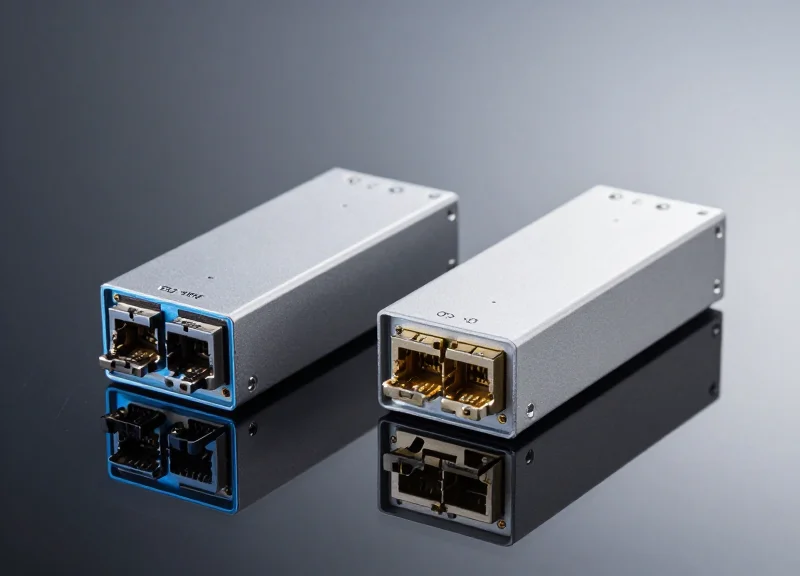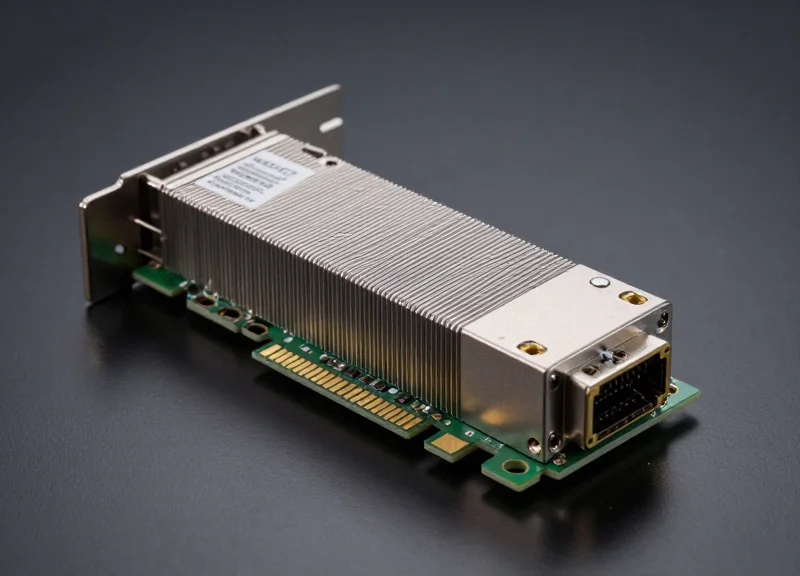
As global data demands surge, the need for stable, long-distance high-bandwidth connectivity has never been more critical. Traditional short-reach optics cannot bridge the gap for metro networks and regional backbones. Ubytelink addresses this challenge with its 100G ER4 and ZR4 Ultra-Long modules, providing the precision engineering required for distances up to 80km without compromising on signal integrity or power efficiency.
The Shift to 100G Long-Haul Networking

The Evolution of 100G Beyond the Data Center
The shift toward 100G long-haul networking marks a fundamental change in how regional and metro infrastructures are designed. Previously confined to the high-density environments of data center interiors, 100G technology has become the requisite benchmark for long-distance connectivity across metropolitan areas. This migration is fueled by the necessity for massive data throughput without the prohibitive costs associated with traditional coherent optics. By utilizing the QSFP28 form factor with ER4 and ZR4 specifications, network operators can now achieve distances of 40km to 80km using efficient intensity modulation and direct detection (IMDD) techniques, effectively bridging the gap between local access and core backbones.
Primary Drivers for Long-Haul Connectivity
- Exponential Bandwidth Demand
The rise of 5G, 4K/8K video streaming, and massive IoT deployments requires a robust backbone capable of transporting high-speed data over dozens of kilometers without signal degradation. - Cost-Per-Bit Optimization
Utilizing 100G ER4 and ZR4 modules allows operators to leverage existing passive infrastructure and the widely adopted QSFP28 ecosystem, significantly lowering the total cost of ownership compared to legacy systems. - Network Simplification
Modern ultra-long solutions eliminate the need for complex and expensive optical amplifiers in many metro-scale deployments, streamlining the network architecture and reducing maintenance overhead.
Technical Comparison: From Short-Reach to Long-Haul
| Interface Type | Wavelength | Max Reach | Typical Fiber Type |
|---|---|---|---|
| 100G SR4 | 850nm | 100m | Multimode (OM4) |
| 100G LR4 | 1310nm (LAN-WDM) | 10km | Single-mode (G.652) |
| 100G ER4 | 1310nm (LWDM) | 40km | Single-mode (G.652) |
| 100G ZR4 | 1310nm (LWDM) | 80km | Single-mode (G.652) |
Frequently Asked Questions
- Why is the QSFP28 form factor preferred for long-haul?
QSFP28 offers the best balance of port density, power consumption, and thermal management, making it the industry standard for 100G deployments. - What is the main difference between ER4 and ZR4?
The primary difference is the reach capability; ER4 is designed for up to 40km, whereas ZR4 uses more sensitive receivers and advanced TOSA/ROSA components to reach up to 80km over standard single-mode fiber. - Does 100G ZR4 require optical amplification?
In most point-to-point configurations up to 80km, 100G ZR4 can operate without external amplification (SOA or EDFA), provided the link budget is strictly managed.
Decoding ER4 and ZR4: Reach and Technical Differences
Decoding ER4 and ZR4: Reach and Technical Differences
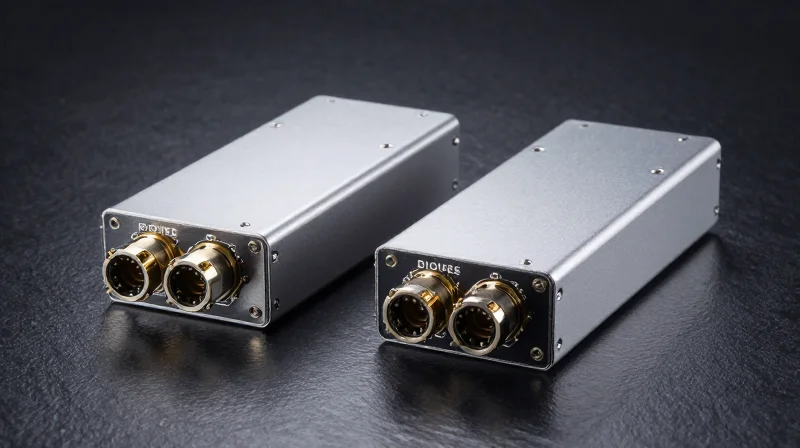
The primary distinction between 100G ER4 and ZR4 optics lies in their optical reach and the underlying hardware architecture designed to mitigate signal attenuation over extended distances. While both standards utilize the LAN-WDM wavelength grid (approximately 1295nm to 1309nm) to multiplex four 25Gbps lanes, the ER4 standard is optimized for a 40km range, whereas ZR4 is engineered for ultra-long hauls up to 80km, often necessitating integrated amplification to maintain signal integrity.
Hardware Architecture and Laser Technology
Both ER4 and ZR4 modules leverage Electro-absorption Modulated Lasers (EML) for their superior chirp characteristics and high extinction ratios, which are critical for long-distance transmission. However, the ZR4 variant distinguishes itself by frequently incorporating a Semiconductor Optical Amplifier (SOA) at the receiver side. This integrated SOA boosts the incoming attenuated signal before it hits the Avalanche Photodiode (APD), allowing the module to achieve the high sensitivity required for 80km spans without external optical amplifiers.
| Specification | 100G QSFP28 ER4 | 100G QSFP28 ZR4 |
|---|---|---|
| Maximum Reach | 40km (30km without FEC) | 80km |
| Laser Type | 4x EML (LAN-WDM) | 4x EML (LAN-WDM) |
| Receiver Type | APD (High Sensitivity) | APD + Integrated SOA |
| Optical Power Budget | Approx. 18.5dB | Approx. 27dB to 30dB |
| Typical Power Consumption | 3.5W - 4.5W | 5.5W - 6W |
FEC and Link Budget Considerations
Network engineers must distinguish between 'True ER4' and 'ER4-Lite' when calculating link budgets. True ER4 modules are designed to hit 40km without mandatory host-side Forward Error Correction (FEC), whereas ER4-Lite solutions often require FEC to be enabled to reach the same distance. For ZR4, the use of FEC is non-negotiable; the 80km reach is statistically dependent on the host equipment's ability to correct bit errors generated by the signal's long transit through high-loss fiber.
- Can a 100G ZR4 be used for short distances?
Yes, but it requires significant attenuation (typically 10-15dB) to avoid damaging the high-sensitivity receiver or causing saturation, as the output power is significantly higher than SR or LR optics. - What is the impact of chromatic dispersion on ZR4?
At 80km, chromatic dispersion in the O-band is relatively low compared to the C-band, but it still requires high-quality EML lasers to ensure the signal remains readable at the 25Gbps per-lane rate. - Are ER4 and ZR4 interoperable?
No. While they use the same wavelength grid, their power budgets and receiver sensitivities are vastly different, and the ZR4's higher transmit power could potentially damage an ER4 receiver without extreme attenuation.
Ubytelink Engineering: Built for Mission-Critical Stability
Ubytelink Engineering: Built for Mission-Critical Stability
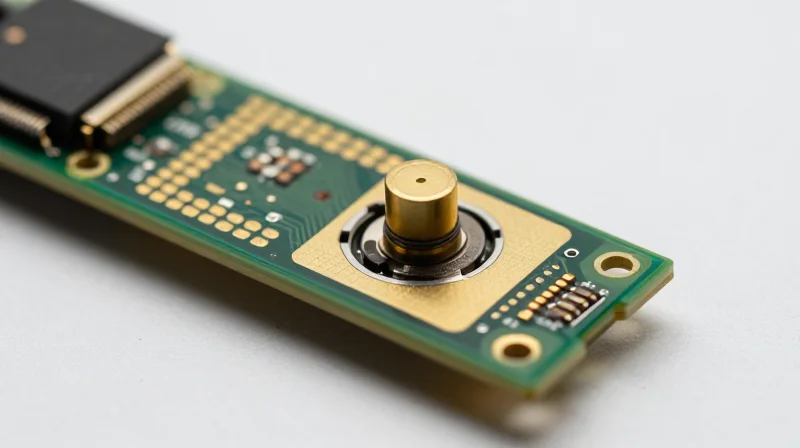
Ubytelink’s 100G ER4 and ZR4 modules achieve zero-downtime performance by integrating high-specification optoelectronics with a manufacturing process that eliminates manual variability and environmental vulnerability. In long-haul networking, where physical access to remote sites is costly and time-consuming, the reliability of the transceiver is the single most critical factor in maintaining service level agreements (SLAs).
Premium Hardware Integration
The core of Ubytelink's reliability is the integration of specialized EML (Electro-absorption Modulated Laser) and high-sensitivity APD (Avalanche Photodiode) technology. By utilizing premium-grade lasers with internal TEC (Thermo-Electric Cooling), our modules maintain a stable center wavelength across a wide range of operational temperatures, preventing signal drift. This is particularly vital for 100G ZR4 links, where maintaining a clean signal over 80km requires precise power management and low jitter.
| Engineering Feature | Ubytelink Standard | Industry Generic |
|---|---|---|
| Laser Source | Tier-1 EML with TEC Thermal Control | Uncooled or Tier-2 EML |
| Receiver Sensitivity | High-Gain APD (Lower than -18.5 dBm) | Standard APD (-16 dBm to -17 dBm) |
| Internal Monitoring | Real-time DDM with High-Precision MCU | Basic DDM with limited calibration |
| Manufacturing | Fully Automated Optical Alignment | Manual or Semi-Automated Alignment |
Automated Production and Validation
To guarantee consistency, Ubytelink employs automated optical coupling and alignment systems. This process ensures that insertion loss is kept to a minimum and that the power budget for long-span links is strictly adhered to, providing a robust safety margin for network operators. Furthermore, every module is subjected to a rigorous 'Burn-in' cycle at peak thermal loads to identify and eliminate potential early-life component failures before they ever reach the customer's rack.
- How does Ubytelink ensure compatibility across different switch brands?
Each module is programmed and verified in our state-of-the-art Compatibility Lab, utilizing actual hardware from vendors like Cisco, Arista, Juniper, and Huawei to ensure seamless plug-and-play operation. - What is the impact of Ubytelink's TEC control on module lifespan?
Thermo-Electric Cooling (TEC) keeps the laser operating at an optimal, constant temperature, which significantly reduces thermal wear and extends the Mean Time Between Failures (MTBF) compared to uncooled alternatives. - Why is automated alignment important for 100G long-haul optics?
Manual alignment can lead to variances in signal output power; automated alignment ensures every module delivers the exact decibel output required to bridge 40km or 80km spans without signal degradation.
Optimizing Optical Power Budgets for 80km Transmission
The Physics of 80km Connectivity: Balancing Loss and Gain
To achieve 100G transmission over an 80km span without intermediate amplification, network engineers must meticulously calculate the optical power budget, which represents the maximum allowable loss between the transmitter and the receiver. For a 100G ZR4 solution, this involves leveraging high-power cooled EML (Electro-absorption Modulated Laser) transmitters and extremely sensitive SOA (Semiconductor Optical Amplifier) integrated receivers. The objective is to maintain a Bit Error Rate (BER) that stays within the threshold of the host equipment's Forward Error Correction (FEC) capabilities, ensuring that signal degradation from fiber attenuation and chromatic dispersion does not lead to packet loss.
Key Components of the Optical Power Budget
A standard G.652 single-mode fiber typically exhibits an attenuation of 0.22 to 0.25 dB/km. Over 80km, this results in a baseline loss of approximately 18-20 dB. However, the total link budget must also account for 'real-world' factors such as splice losses, patch panel connections, and a safety margin for fiber aging or future repairs.
| Parameter | 100G ER4 (40km) | 100G ZR4 (80km) |
|---|---|---|
| Typical Tx Power (per lane) | -2.9 to +2.9 dBm | +2.0 to +6.5 dBm |
| Receiver Sensitivity (Max) | -20.9 dBm | -28.0 dBm (with SOA) |
| Power Budget | ~18 dB | ~27 to 30 dB |
| Dispersion Tolerance | ~800 ps/nm | ~1600 ps/nm |
Mitigating Chromatic Dispersion in Long-Haul Links
As light travels through 80km of glass, different wavelengths arrive at slightly different times—a phenomenon known as chromatic dispersion. For 100G signals using NRZ or PAM4 modulation, excessive dispersion can cause pulse overlapping (inter-symbol interference). Ubytelink 100G ZR4 modules are engineered with specialized dispersion-tolerant components and utilize the O-band (near 1310nm) or specific LAN-WDM grids where dispersion is naturally lower than in the C-band, allowing for cleaner signal recovery at the 80km mark without the need for external dispersion compensation modules (DCMs).
Optimization FAQ
- How does FEC impact the 80km reach?
Forward Error Correction is mandatory for 100G ZR4. It allows the receiver to correct errors caused by a low Signal-to-Noise Ratio (SNR), effectively extending the usable power budget by several decibels. - Why is receiver saturation a concern in shorter spans?
Because ZR4 modules use high-gain SOAs, connecting them over short distances (e.g., <20km) without sufficient attenuation can damage the receiver. Fixed attenuators are required if the total link loss is less than the minimum RX input threshold. - Does Ubytelink support real-time monitoring of these levels?
Yes, all Ubytelink 100G modules support Digital Diagnostics Monitoring (DDM/DOM), allowing operators to monitor TX/RX power, temperature, and voltage in real-time to preemptively identify link degradation.
Reducing Total Cost of Ownership (TCO) through Power Efficiency
Scaling Global Networks with Sustainable Energy Economics
Ubytelink’s 100G ER4 and ZR4 solutions directly address the escalating operational expenditures (OPEX) associated with high-density data centers and long-haul transport. By engineering transceivers that operate at significantly lower power thresholds than industry averages, Ubytelink minimizes the electricity required per bit of data transmitted. This energy efficiency scales across thousands of ports, leading to substantial direct savings on utility bills and a measurable reduction in the carbon footprint of global network infrastructures, aligning technical performance with corporate sustainability goals.
Mitigating Thermal Stress on Core Hardware
Beyond direct energy savings, the low-power architecture of Ubytelink optics reduces heat dissipation within switch and router chassis. Excessive heat is a primary driver of premature component degradation; by maintaining a lower thermal profile, Ubytelink modules alleviate the mechanical load on system fans and precision cooling units (CRACs). This creates a compounding financial benefit: lower cooling costs and an extended mean time between failures (MTBF) for both the optical modules and the high-value networking hardware hosting them.
| Module Type | Industry Standard Power (Max) | Ubytelink Optimized Power (Typ) | Estimated TCO Savings (5-Year) |
|---|---|---|---|
| 100G QSFP28 ER4 | 4.5W - 5.0W | 3.5W | 18-22% |
| 100G QSFP28 ZR4 | 6.0W - 6.5W | 4.8W | 20-25% |
Strategic Financial Advantages of Efficient Optics
- How does lower power consumption impact signal integrity?
Ubytelink utilizes high-efficiency Digital Signal Processors (DSPs) and high-gain laser drivers that maintain superior signal-to-noise ratios while drawing less current, ensuring that energy savings never come at the expense of link stability. - What is the long-term ROI of choosing power-optimized 100G modules?
The Return on Investment (ROI) is realized through reduced cooling overhead, lower replacement rates due to improved thermal reliability, and decreased energy costs, typically resulting in a lower Total Cost of Ownership (TCO) within the first 18 to 24 months of deployment. - Does lower power consumption affect compatibility with older hardware?
No. Ubytelink modules are fully compliant with MSA standards and the QSFP28 form factor; their lower power draw actually makes them safer for older line cards that may have limited thermal headroom.
Multi-Vendor Compatibility and Seamless Integration
Multi-Vendor Compatibility and Seamless Integration
Seamless integration in modern, heterogeneous data centers and service provider networks is achieved by combining strict adherence to Multi-Source Agreement (MSA) standards with a sophisticated vendor-specific coding architecture. Ubytelink 100G ER4 and ZR4 modules are engineered to bypass the common challenges of vendor lock-in, providing a 'plug-and-play' experience that ensures full recognition of Digital Optical Monitoring (DOM) and performance telemetry across diverse hardware ecosystems.
The Foundation: MSA Compliance and Precision Coding
While MSA standards define the mechanical and electrical characteristics of the QSFP28 form factor, the software layer often determines whether a module is accepted or rejected by a host switch. Ubytelink utilizes a rigorous testing environment that replicates the OS environments of major OEM manufacturers, ensuring that every transceiver carries the correct EEPROM signatures required for optimal performance.
- Full OEM Interoperability
Ubytelink modules are tested for 100% compatibility with industry leaders including Cisco, Arista, Juniper, Dell, and Nokia, ensuring they are recognized as 'native' hardware. - Advanced EEPROM Programming
Each module is programmed with vendor-specific identifiers and serialization to support advanced features such as Digital Diagnostics Monitoring (DDM). - Protocol Transparency
Designed to be protocol-independent, these solutions support 100G Ethernet, OTU4, and InfiniBand, facilitating integration into a variety of transport architectures. - Hot-Swappable Design
Support for seamless insertion and removal without system downtime, adhering to standard QSFP28 management interfaces (SFF-8636).
| Feature | Standard Generic Modules | Ubytelink Ultra-Long Solutions |
|---|---|---|
| Vendor Recognition | Often triggers 'Unsupported Transceiver' warnings | Guaranteed recognition as native/compatible hardware |
| DOM/DDM Support | Basic or missing telemetry data | Full real-time monitoring of power, temperature, and voltage |
| OS Compatibility | May fail after software/firmware updates | Continuous validation against latest NOS releases (e.g., Cisco IOS-XR, Arista EOS) |
| Error Rates | Variable due to loose coding tolerances | Zero-bit error rate (BER) verified on target hardware |
Frequently Asked Questions: Integration and Deployment
- Will using Ubytelink modules void my host switch warranty?
No. Per the Magnuson-Moss Warranty Act and similar international fair-competition laws, using third-party peripherals does not void a hardware warranty. Ubytelink modules are designed to meet or exceed OEM specifications. - How does Ubytelink handle firmware updates for new hardware versions?
Ubytelink maintains an extensive library of firmware profiles. If a network OS update introduces new handshake requirements, our modules can be re-coded or updated via specialized field programmers to maintain compatibility. - Are these modules compatible with open-source networking platforms?
Yes. Ubytelink 100G ER4/ZR4 modules are fully compatible with white-box switches and open-source operating systems like SONiC, Cumulus Linux, and OPX.
Industry Applications: From ISP Backbones to Enterprise Links

Bridging the Gap: Real-World Scenarios for Ultra-Long 100G Reach
Ubytelink 100G ER4 and ZR4 solutions provide the essential physical layer for high-bandwidth, long-distance communication, effectively bridging the distance between regional hubs and remote points of presence. These modules are engineered to handle the stringent requirements of high-reliability networks, ensuring that data integrity is maintained over fiber spans reaching up to 80km without the complexity of external amplification.
ISP and Carrier Core Networks
For Internet Service Providers (ISPs), the 100G ZR4 is a cornerstone of metropolitan area network (MAN) design. By enabling 80km links, providers can consolidate their core routing equipment into fewer, more efficient central offices. This reduces the physical footprint of remote equipment sheds and lowers the maintenance burden, all while providing the 100Gbps throughput necessary to support burgeoning 5G backhaul and high-density residential broadband demands.
High-Performance Enterprise Interconnects
Large enterprises and financial institutions rely on the 100G ER4 for robust site-to-site connectivity. In environments where data sovereignty and immediate disaster recovery are paramount, these modules facilitate low-latency synchronous data replication between private data centers. Ubytelink's superior EMI shielding and thermal management ensure these links remain stable even in high-density enterprise switch environments where heat dissipation is a primary concern.
| Application Scenario | Target Distance | Recommended Solution | Key Advantage |
|---|---|---|---|
| Metro Data Center Interconnect | Up to 80km | Ubytelink 100G ZR4 | Eliminates need for optical amplifiers |
| Enterprise Campus Backbone | Up to 40km | Ubytelink 100G ER4 | Low latency and simplified cabling |
| 5G Mobile Backhaul | 20-40km | Ubytelink 100G ER4 | Extreme thermal stability in remote hubs |
| Government/Public Sector | Varies | ER4 / ZR4 | MSA compliance for multi-vendor systems |
Deployment Considerations and Industry FAQ
- Is the 100G ZR4 suitable for dark fiber leases?
Yes, its high link budget and integrated SOA/APD technology make it ideal for dark fiber deployments where the user has no control over intermediate amplification sites. - Can ER4 and ZR4 modules coexist in the same chassis?
Absolutely. Ubytelink modules are designed for standard QSFP28 ports, allowing mixed-reach configurations based on specific port-to-port distance requirements without interference. - How does Ubytelink ensure reliability in carrier-grade environments?
Each module undergoes rigorous bit-error rate (BER) testing and temperature cycling to ensure performance meets or exceeds IEEE 802.3ba and 802.3bm standards for mission-critical uptime.
Quality Assurance: The Ubytelink Testing Protocol
Ubytelink ensures the longevity and performance of its 100G ER4 and ZR4 ultra-long-haul solutions through a proprietary testing protocol that exceeds industry standards. Every module is subjected to end-to-end performance validation, ensuring that the critical optical power levels and receiver sensitivity required for distances up to 80km are consistently met without signal degradation or packet loss.
The Four-Tiered Ubytelink Testing Framework
To maintain link stability over massive spans, Ubytelink employs a comprehensive four-tier testing framework. This system is designed to identify potential failures long before a module reaches the field, focusing on electrical interface characterization, optical signal integrity, environmental stress screening, and multi-vendor interoperability.
Environmental Stress Screening (ESS) Comparison
| Test Category | Industry Standard | Ubytelink Protocol |
|---|---|---|
| Thermal Cycling | 0°C to 70°C (Standard) | -40°C to +85°C (Extended Life Cycle) |
| Burn-in Period | 24 Hours (Random Sampling) | 72 Hours Continuous Load (100% Units) |
| Power Cycling Stress | 100 Cycles | 500+ Rapid Power-On/Off Cycles |
| Vibration & Shock | Basic Functional Check | MIL-STD-810 Military Grade Compliance |
Performance Verification and Optical Integrity
Beyond physical durability, Ubytelink's ER4 and ZR4 modules are tested using high-precision bit-error-rate testers (BERT) and digital sampling oscilloscopes. We measure Eye Diagram quality and Extinction Ratio to ensure the cleanest possible signal transitions, which are vital for maintaining the Forward Error Correction (FEC) thresholds required for ultra-long distances.
- How does Ubytelink verify the 80km reach of ZR4 modules?
Every ZR4 unit is tested against a simulated 80km fiber link with high-attenuation parameters and worst-case dispersion scenarios to ensure the module performs under real-world fiber conditions. - Is each module individually tested or batch sampled?
Ubytelink utilizes 100% individual serialized testing. Unlike manufacturers that rely on batch sampling, we generate a unique performance report for every single module shipped. - What standards are used for optical compliance?
All modules are validated against IEEE 802.3ba and 802.3bm standards, as well as the specific requirements of the Multi-Source Agreement (MSA) for 100G form factors.
By integrating automated testing stations with real-time data logging, Ubytelink provides a transparent quality record for each module. This meticulous approach to quality assurance is why our 100G ER4 and ZR4 solutions remain the preferred choice for the backbone of global communication networks.
In a world where connectivity is the backbone of the economy, choosing the right optical solution is a matter of business continuity. Ubytelink's 100G ER4 and ZR4 modules offer the perfect balance of reach, reliability, and cost-effectiveness for modern infrastructure. Ready to scale your network with industry-leading optics? Contact the Ubytelink technical team today for a custom consultation.