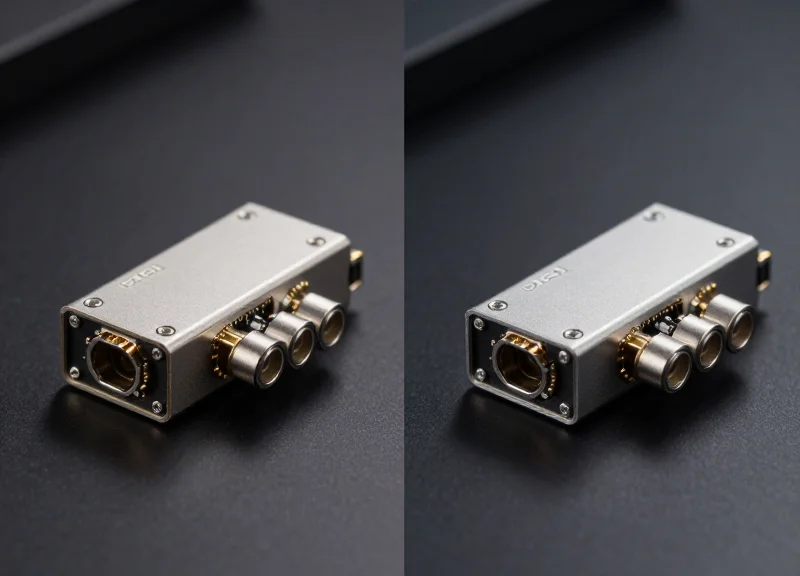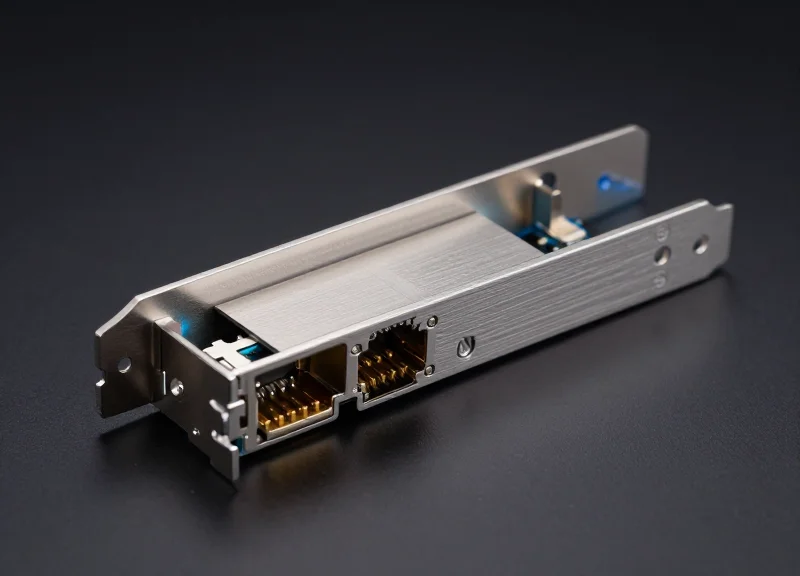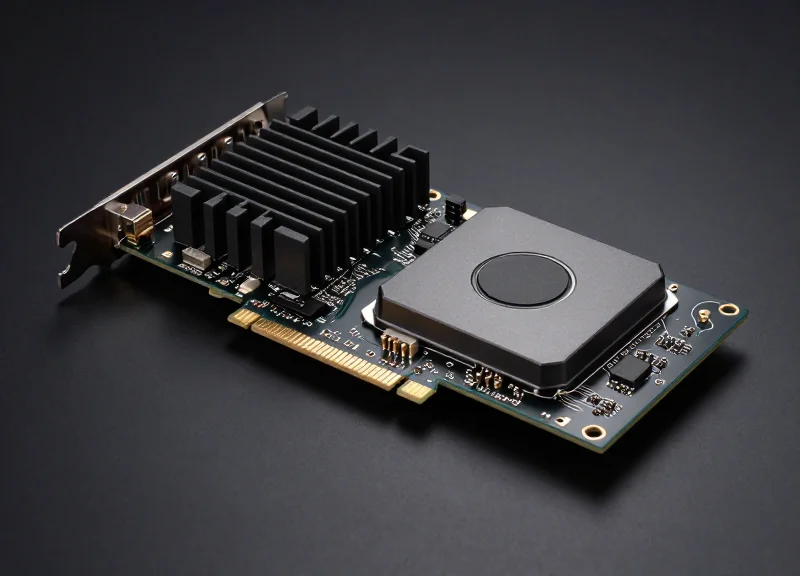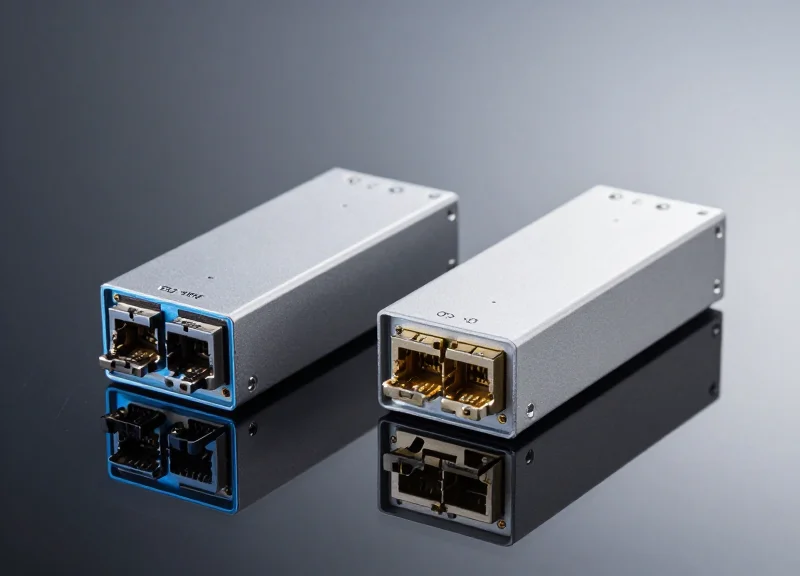
In the rapidly evolving landscape of fiber-optic networking, the choice between Tunable DWDM modules and traditional fixed-wavelength alternatives is no longer just a technical detail—it's a strategic financial decision. As data demands surge, network architects must balance high-performance throughput with the harsh realities of power limits and operational complexity. This guide explores why tunable technology is becoming the gold standard for scalable infrastructure.
The Evolution of Optical Transceivers: From Fixed to Tunable

The Evolution from Static to Dynamic Fiber Connectivity
The transition from fixed-wavelength transceivers to tunable modules represents a fundamental shift from hardware-constrained networking to software-defined agility. In the early days of optical networking, operators were forced to manage an exhaustive inventory of 'fixed' optics, where each module was hard-coded to a specific frequency on the ITU grid. The emergence of Tunable DWDM modules has effectively replaced dozens of discrete part numbers with a single, programmable SKU, streamlining the supply chain and enabling real-time network reconfiguration.
The Legacy Era: Challenges of Fixed-Wavelength Optics
Before tunability became a standard, networks relied on 'Grey' optics (standard 1310nm or 1550nm) or fixed DWDM transceivers. While fixed DWDM allowed for increased capacity over a single fiber pair, it introduced a significant 'sparing nightmare.' If a network utilized 40 channels, the operator needed to keep all 40 unique channel modules in stock to ensure immediate replacement during a failure. This lack of flexibility led to high Capital Expenditure (CAPEX) and complex logistics.
| Feature | Fixed DWDM Transceivers | Tunable DWDM Transceivers |
|---|---|---|
| Wavelength Management | Hard-coded at the factory | Software-adjustable via host |
| Inventory Complexity | High (One SKU per channel) | Low (Single SKU for all channels) |
| Emergency Sparing | Requires 40+ unique spares | Requires only one spare type |
| Operational Agility | Low (Requires physical swap) | High (Remote reconfiguration) |
The Technological Leap to Tunability
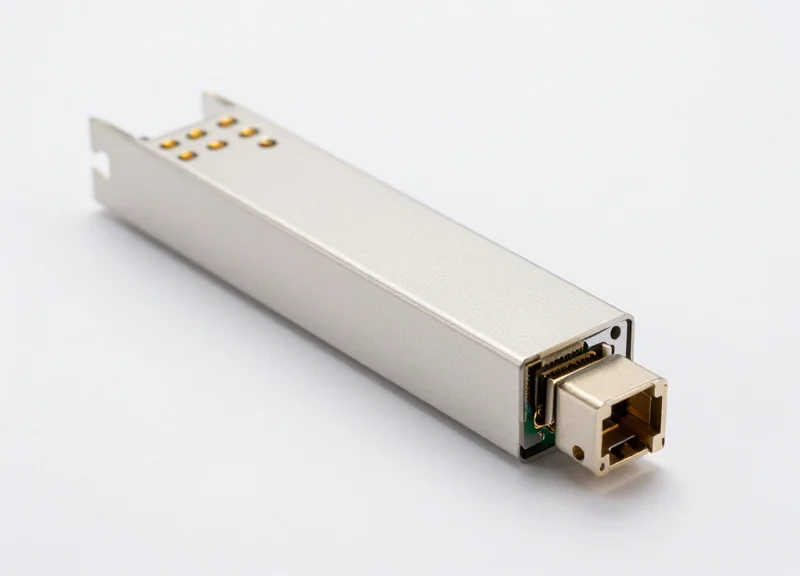
The breakthrough came with the integration of the Micro-Integrated Tunable Laser Assembly (uITLA). This technology allowed the laser to change its emitted frequency across the C-Band (typically 48 to 96 channels) without sacrificing performance. As the industry moved from bulky XFP modules to the compact SFP+ and later QSFP28 form factors, tunability became the cornerstone of modern, high-density optical transport systems, supporting the rise of ROADM-based architectures.
- Why didn't the industry start with tunable optics?
Early tunable lasers were too large, power-hungry, and expensive for standard small-form-factor pluggables; it took years of miniaturization and silicon photonics advancement to make them viable. - Are fixed-wavelength modules still relevant today?
Yes, they remain cost-effective for simple point-to-point links or edge applications where the total channel count is low and static. - How does a switch control a tunable module?
Modern switches and routers use standard protocols via the I2C interface to command the module to lock onto a specific ITU channel or frequency.
Latency Benchmarks: Does Tunability Affect Speed?

Latency Benchmarks: Does Tunability Affect Speed?
For steady-state data transmission, tunable DWDM modules provide performance parity with fixed-wavelength optics; however, the underlying architecture of tunable lasers introduces unique micro-latencies during the initial wavelength-locking phase and signal acquisition. While the photon-flight time remains constant across both technologies, the difference lies in the internal feedback loops and Digital Signal Processor (DSP) overhead required to maintain frequency stability in high-density environments.
The Mechanics of Tuning-Induced Latency
Tunable modules typically employ either Distributed Bragg Reflector (DBR) or External Cavity Lasers (ECL). These designs require an integrated wavelength locker and a thermal controller to ensure the laser does not drift into adjacent channels. In a 'cold start' scenario, a fixed-wavelength laser stabilizes almost instantaneously upon power-up. In contrast, a tunable module must undergo a 'tuning window'—a period ranging from 100 milliseconds to several seconds—where the laser is muted until it reaches the target ITU grid frequency. For 5G fronthaul, this delay is negligible, but for dynamic circuit switching, it represents a critical metric.
| Performance Metric | Fixed-Wavelength SFP+ | Tunable SFP+ (Direct) | Tunable Coherent (400G+) | |
|---|---|---|---|---|
| Internal Processing Latency | < 1 nanosecond | < 1 nanosecond | 50 - 250 nanoseconds | Determined by DSP complexity |
| Wavelength Locking Time | Instantaneous | 100ms - 1s | 5s - 30s | Initialization period only |
| Steady-State Jitter | Negligible | Low | Moderate | Impacted by FEC and DSP |
| Operational Flexibility | Zero | High | Ultra-High | Remote reconfiguration |
Nanosecond Precision in HFT and 5G
In High-Frequency Trading (HFT) environments, the 'tick-to-trade' latency is the primary KPI. Fixed optics are often preferred here not because of transmission speed, but because they eliminate the infinitesimal jitter risks associated with active wavelength-locking circuitry. Conversely, 5G architectures prioritize 'Network Slicing' and agility. In these scenarios, the ability of a Tunable DWDM module to switch paths remotely provides a macro-level efficiency gain that far outweighs the micro-level latency overhead of the initial transceiver boot-up.
- Does the tuning mechanism add latency to every packet?
No. Once the laser is locked to a specific wavelength, the data packets move at the speed of light through the fiber, identical to a fixed-wavelength module. - Why do coherent tunable modules have higher latency?
Coherent modules use advanced Digital Signal Processing (DSP) for Forward Error Correction (FEC) and chromatic dispersion compensation. This processing adds 50-250 nanoseconds of latency, which is a result of the coherent technology, not the tunability itself. - Can wavelength tuning happen without dropping the link?
Generally, no. Standard tunable modules require a 'dark period' where the laser is disabled while it shifts to a new frequency to prevent interference with other channels on the DWDM mux.
Power Consumption and Thermal Management
Power Consumption and Thermal Management
Tunable DWDM modules inherently demand a higher power envelope than fixed-wavelength optics because they require integrated Micro-Integrated Tunable Laser Assemblies (Micro-ITLAs) and sophisticated thermal control loops to stabilize frequency across the C-band. While fixed-frequency modules rely on simpler, pre-calibrated laser diodes, tunable variants must actively manage internal heaters and cooling elements to maintain sub-nanometer precision, leading to a higher Watts-per-Gigabit ratio.
The Watts-per-Gigabit Efficiency Gap
In a modern data center or telco rack, the cumulative power draw of optical transceivers can account for up to 15-20% of the total switch power budget. Tunable modules typically operate at 1.0 to 1.5 Watts higher per port than fixed DWDM optics. In a fully populated 48-port switch, this difference can exceed 70 Watts of additional heat, requiring more aggressive fan speeds and potentially increasing the total cost of ownership through higher utility and cooling expenses.
| Transceiver Type | Typical Power (W) | Heat Dissipation | Watts-per-10G Ratio |
|---|---|---|---|
| Fixed DWDM SFP+ | 1.5W - 1.8W | Moderate | 0.15 - 0.18 |
| Tunable DWDM SFP+ | 2.5W - 3.5W | High | 0.25 - 0.35 |
| Standard Grey Optics | 0.8W - 1.2W | Low | 0.08 - 0.12 |
| Tunable QSFP28 (100G) | 4.5W - 5.5W | Very High | 0.045 - 0.055 |
Thermal Density and Chassis Longevity
The primary challenge with tunable optics is not just the consumption of power, but the management of the resulting thermal output. High-density line cards may experience 'hot spots' where airflow is restricted. If the internal temperature of a tunable module exceeds its rated threshold—usually 70°C for commercial grade—the wavelength may drift, causing signal degradation or total link failure. Network architects must often choose between maximum port density and the thermal headroom required for reliable tunable operation.
- Do tunable modules increase the risk of equipment failure?
Only if the chassis cooling is insufficient. The increased heat output can accelerate the aging of surrounding components if the switch lacks the necessary thermal management features. - Is the power draw constant during wavelength switching?
No, there is typically a power spike during the 'tuning' phase as the internal heater works to lock onto the specific frequency. Once locked, the power stabilizes at a higher baseline than fixed optics. - Can I use tunable modules in every port of a high-density switch?
It depends on the switch's power supply units (PSUs) and cooling capacity. Some legacy switches may require 'checkerboard' spacing of tunable modules to prevent localized overheating.
Operational Complexity: The 'Spare Part' Revolution

The End of SKU Proliferation
The most immediate operational impact of adopting tunable DWDM modules is the near-total elimination of 'SKU sprawl.' In traditional fixed-wavelength architectures, network operators must stock, track, and manage a unique spare for every specific ITU channel used in the network—often resulting in 40 to 80 different part numbers for a single C-band deployment. Tunable modules consolidate this entire inventory into a single universal part that can be software-configured to any channel on-demand. This shift moves the operational burden from physical inventory management to logical software provisioning, allowing for a more agile and responsive network infrastructure.
| Operational Metric | Fixed-Wavelength Optics | Tunable DWDM Optics |
|---|---|---|
| Inventory Management | High Complexity (40-80 SKUs) | Low Complexity (1 SKU) |
| Emergency Sparing | 1 spare per active channel | 1 spare per chassis/site |
| Technician Errors | High (Wavelength mismatch) | Low (Universal compatibility) |
| Warehouse Costs | Significant (Volume & Variety) | Minimized (Low variety) |
| Procurement Speed | Dependent on specific channel stock | High (Generic stock availability) |
Streamlining Field Logistics and MTTR
Operational complexity directly correlates with Mean Time to Repair (MTTR). In a fixed-wavelength environment, a failure requires a technician to identify the specific frequency of the downed link, locate that exact module in a warehouse, and transport it to the site. If the wrong wavelength is pulled—a common human error—the repair window doubles. Tunable modules eliminate this risk. A field technician only needs to carry a handful of identical 'universal' spares. Once installed, the wavelength is assigned via the Network Management System (NMS), ensuring that the correct frequency is locked without manual intervention or hardware swaps.
Operational Complexity FAQs
- How does the 'Spare Part' revolution affect capital expenditure (CapEx)?
While a single tunable module has a higher unit cost than a fixed module, the total CapEx for spares is significantly lower. Instead of buying 40 different fixed modules to ensure 100% coverage, an operator can buy 3-5 tunable modules to achieve the same level of redundancy. - Is the software configuration for tunables difficult for field teams?
No. Modern tunable optics utilize standardized I2C interfaces and are supported by almost all major NOS (Network Operating Systems). Configuration is typically a single command or an automated step in a Zero-Touch Provisioning (ZTP) workflow. - Can tunable spares be used in legacy fixed-wavelength systems?
Yes, as long as the host equipment supports the tunable MSA (Multi-Source Agreement) standards. A tunable module can be set to a specific frequency and then function identically to a fixed-wavelength module in a legacy passive MUX/DEMUX environment.
Total Cost of Ownership (TCO) Breakdown

Total Cost of Ownership (TCO) Breakdown
Determining the true value of tunable DWDM modules versus fixed-wavelength alternatives requires looking beyond the initial invoice to the 5-year lifecycle costs. While fixed optics offer a lower Capital Expenditure (CapEx) per unit, the Operational Expenditure (OpEx) associated with sparing, labor, and inventory management often makes tunable modules the more fiscally responsible choice for high-density networks.
CapEx: Unit Price vs. Inventory Burden
At the point of purchase, a tunable module typically costs 1.5x to 2.5x more than a single fixed-wavelength module. However, this comparison is misleading because it ignores the 'Sparing Ratio.' To ensure 99.999% uptime with fixed optics, an operator must stock one spare for every unique wavelength deployed. With tunable optics, a single spare covers the entire C-Band.
| Financial Metric | Fixed-Wavelength DWDM | Tunable DWDM Module |
|---|---|---|
| Average Unit Cost (Est.) | $300 - $500 | $700 - $1,200 |
| SKUs to Manage (40-Ch) | 40 Unique Parts | 1 Universal Part |
| Emergency Spare Stock | High (One per channel) | Low (2-3 units total) |
| Inventory Carrying Cost | High (Warehouse & Tracking) | Minimal |
OpEx: Efficiency and Maintenance Savings
- Sparing Efficiency
Tunable modules reduce the capital tied up in 'cold' standby hardware by over 80% because one module can replace any failing channel in the field. - Labor and Truck Rolls
Technicians no longer need to verify specific wavelength labels before heading to a site. This eliminates 'incorrect part' errors that lead to secondary truck rolls. - Power and Cooling
Modern tunable lasers have closed the efficiency gap. While they consume slightly more power than early fixed optics, the reduction in rack space and cooling for spare-part storage balances the facility's utility budget.
5-Year Financial Projection
| Cost Category (Over 5 Years) | Fixed Optics (Per Node) | Tunable Optics (Per Node) |
|---|---|---|
| Initial Procurement | $16,000 | $28,000 |
| Sparing & Inventory Storage | $12,000 | $2,400 |
| Maintenance Labor & Logistics | $8,500 | $3,000 |
| Total TCO | $36,500 | $33,400 |
Financial Impact FAQ
- When is the break-even point reached?
Most operators reach a break-even point between 18 and 24 months, after which the OpEx savings of tunable modules provide a net positive return on investment. - Do tunable modules increase insurance costs?
Generally, no. In fact, lower inventory volumes can lead to lower insurance premiums for warehouse stock and transit. - Are there hidden costs in controller software?
While tunable modules require software-defined tuning, most modern network management systems (NMS) include these features as standard, adding negligible costs compared to the hardware savings.
Compatibility and Ecosystem Interoperability
The Cross-Vendor Integration Reality
Tunable DWDM modules are not merely plug-and-play components; their value hinges on the host device's ability to communicate with the integrated laser controller via the I2C interface, a capability that has become standardized across modern Cisco, Juniper, and Arista platforms. While fixed-wavelength alternatives require no software handshake, the interoperability of tunable modules enables a software-defined approach to optical networking, allowing for dynamic wavelength re-assignment without physical site visits. This interoperability is governed by MSA (Multi-Source Agreement) standards like SFF-8690, which ensure that the host-to-module communication protocol remains consistent even when mixing optics and switches from different manufacturers.
Platform Compatibility Matrix
| Vendor Platform | Tuning Mechanism | CLI Integration | Legacy Compatibility |
|---|---|---|---|
| Cisco (IOS-XR/XE) | Native CLI & Autotune | Full Support | High with Firmware 6.x+ |
| Juniper (Junos) | CLI-based Management | Native Integration | Moderate (EX/MX series) |
| Arista (EOS) | CLI & API Control | Fully Transparent | High via Generic Port Config |
| Nokia (SROS) | Centralized Management | Integrated | System-wide Support |
Interoperability with Passive and Active Infrastructure
A common concern is whether tunable optics can operate within existing Passive Mux/Demux (Filter) environments. Because tunable modules adhere to the standard 50GHz or 100GHz ITU grid, they are fully compatible with legacy AWG (Arrayed Waveguide Grating) and OADM components. The primary difference lies in the 'tuning' phase: in an active system, the module may automatically hunt for the correct channel (Autotune), whereas in a passive system, the operator must manually set the wavelength via the host CLI before the link will initialize. This makes them a versatile choice for brownfield deployments where the optical layer is a mix of old and new technology.
Software-Defined Tuning and Standards
- SFF-8690 Standard
The primary protocol defining how a host device reads and writes wavelength data to the module's EEPROM. - Autotune (SFP-TAP)
An automated handshake protocol that allows two modules to find a matching wavelength without manual configuration, reducing human error. - DDM/DOM Transparency
Digital Diagnostic Monitoring allows real-time tracking of laser bias, temperature, and RX power across different vendor OS environments.
FAQ: Integration and Ecosystem Challenges
- Will a tunable module work in a port not specifically labeled for DWDM?
Generally, yes, provided the switch firmware supports the SFF-8690 protocol for wavelength selection and the power budget of the port can handle the slightly higher draw of the tunable laser. - What happens if the host OS does not support tuning?
The module will typically default to a factory-set channel (often Channel 1). To change wavelengths, you would need an external tuning box or a compatible host device to reprogram the module before insertion. - Can I mix tunable and fixed-wavelength modules in the same link?
Yes. As long as both ends are set to the exact same ITU channel and modulation format (e.g., 10G NRZ), the link will establish successfully regardless of whether the laser source is fixed or tunable.
Scalability and Future-Proofing: Preparing for 400G and Beyond

The Strategic Role of Tunability in Network Evolution
As network operators transition toward 400G and beyond, the move from fixed-wavelength architectures to tunable frameworks is a prerequisite for long-term scalability. Tunable technology serves as the bridge to 'elastic' optical networking, where bandwidth can be dynamically provisioned or reassigned without the physical replacement of hardware. By decoupling the transceiver from a single static frequency, organizations build a physical layer capable of supporting the high-density requirements of modern data centers and telecommunications hubs.
Comparing Current Tunable Standards vs. Next-Gen Coherent Optics
| Feature | Current Tunable (10G/25G) | Next-Gen Coherent (400G+) |
|---|---|---|
| Spectral Efficiency | Standard 50GHz/100GHz ITU Grid | High Efficiency (Flex-Grid Ready) |
| Operational Model | Manual or Host-Driven Tuning | Automated SDN-Controlled Provisioning |
| Reach & Distance | 80km to 120km (typical) | 120km to Metro-Regional (ZR/ZR+) |
| Inventory Logic | SKU Consolidation (1 replaces 40) | Unified Coherent Ecosystem |
The leap to 400G ZR and ZR+ modules utilizes the same underlying principles established by current 10G and 25G tunable DWDM optics. Implementing tunability today ensures that the operational workflows—such as remote wavelength management and automated discovery—are already in place when the time comes to deploy coherent pluggable optics. This proactive approach mitigates the risk of 'forklift upgrades' and ensures that the passive infrastructure, such as Flex-Grid ROADMs, is ready to handle the tighter spectral requirements of higher-speed signals.
Future-Proofing FAQ: Scalability and Transition
- Does investing in tunable 10G/25G optics prepare me for 400G?
Yes. It establishes the necessary software-defined networking (SDN) control paths and trains technical teams on wavelength-agile management, which is the standard for 400G systems. - How do tunable modules facilitate 'Pay-as-you-grow' scaling?
Tunable modules allow you to activate new channels on an existing fiber pair remotely, eliminating the need to dispatch technicians for fixed-module swaps as capacity needs increase. - Are current tunable modules compatible with Flex-Grid technology?
Most modern tunable DWDM modules are designed to work within standard grids but are fully compatible with Flex-Grid filters, ensuring they can coexist with 400G channels in a hybrid environment.
Decision Matrix: When to Stick with Fixed Optics
While tunable DWDM modules offer unparalleled flexibility, fixed-wavelength optics are the optimal choice for static, point-to-point architectures where channel assignments are permanent and initial budget constraints are severe. In environments such as short-haul campus links or dedicated enterprise data center interconnects (DCI) involving fewer than eight channels, the price premium of tunable technology often fails to provide a measurable return on investment, as the operational benefits of remote reconfigurability are never utilized.
Comparative Framework: Fixed vs. Tunable Selection
| Selection Criterion | Fixed-Wavelength Optics | Tunable DWDM Modules |
|---|---|---|
| Initial Unit Cost (CapEx) | Low (30-50% less than Tunable) | High (Premium for integrated laser) |
| Sparing Strategy | Complex (Requires 1:1 backup per CH) | Simple (One module fits all channels) |
| Network Topology | Static Point-to-Point | Dynamic Mesh or ROADM-based |
| Management Overhead | Minimal (No tuning software required) | Moderate (Requires CLI/Software tuning) |
| Power Consumption | Lowest (Standard fixed laser) | Slightly Higher (Thermal tuning needs) |
Specific Indicators for Fixed-Optic Deployment
Organizations should consider sticking with fixed optics if their deployment meets the 'Stability Threshold.' This threshold is defined by a network where the cost of managing a diverse spare inventory is lower than the aggregate price premium of moving to tunable modules. For example, if a network only utilizes four specific channels across its entire footprint, stocking four spare fixed optics is more economical than paying a 40% premium on every single port for tunability.
Decision Matrix FAQ
- Does fixed optics offer better performance in short-reach links?
No, performance in terms of Bit Error Rate (BER) and reach is usually identical; however, fixed optics consume less power and generate less heat, which can be critical in uncooled outdoor enclosures or high-density access switches. - Can fixed optics coexist with tunable modules in the same MUX?
Yes. Most passive DWDM multiplexers are agnostic to whether the incoming signal is from a fixed or tunable source, allowing for a hybrid approach where stable channels use fixed optics and expansion ports use tunable modules. - When is the 'Sparing Penalty' too high for fixed optics?
When your network scales beyond 8-10 channels. At this point, the cost and logistical complexity of stocking every specific wavelength spare typically exceed the savings gained from the lower purchase price of fixed units.
Choosing the right optical modules is critical for balancing network agility with fiscal responsibility. While Tunable DWDM modules may require a higher initial investment, the long-term gains in operational efficiency and inventory management are undeniable. Evaluate your current traffic patterns and power constraints today—contact our engineering team for a customized TCO audit of your fiber infrastructure.