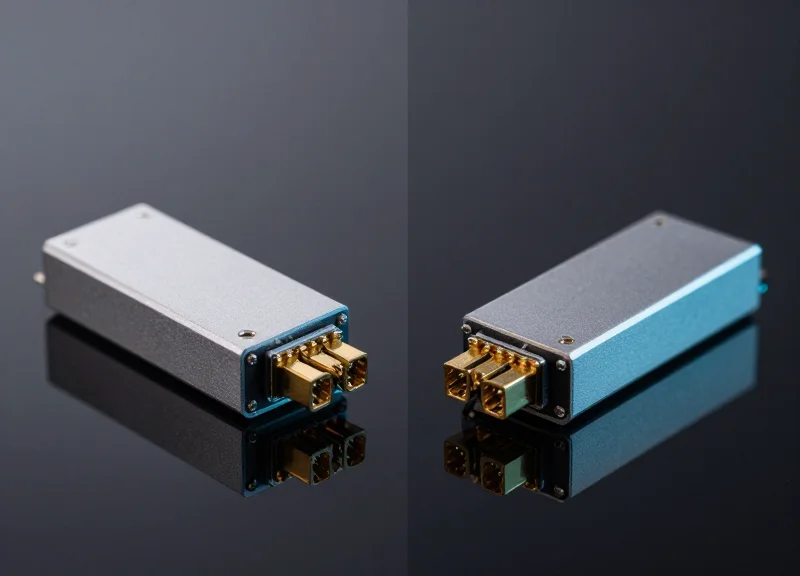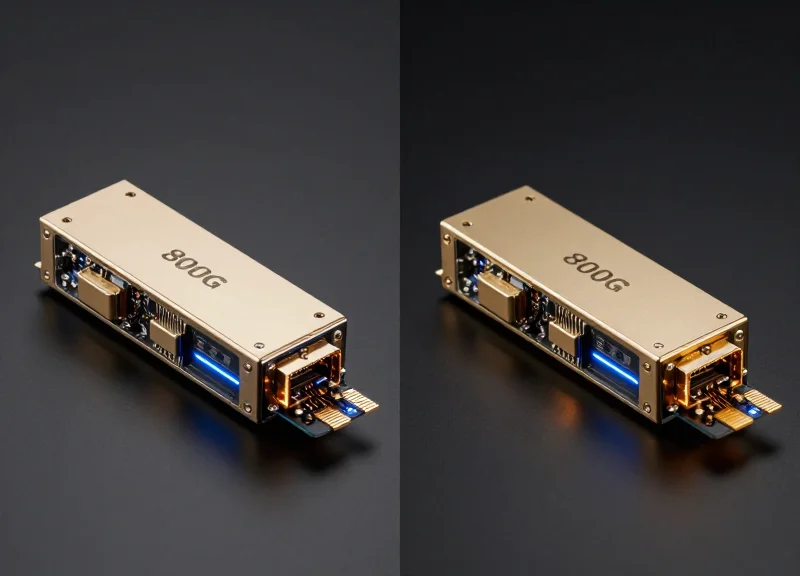
As AI and LLMs push data center bandwidth to the limit, the transition to 800G is no longer optional. However, the high power demand of traditional architectures is forcing a rethink. We examine how 800G Linear-drive Pluggable Optics (LPO) addresses the critical bottlenecks of power, latency, and cost compared to standard DSP-based and emerging CPO alternatives.
The Evolution of 800G Connectivity
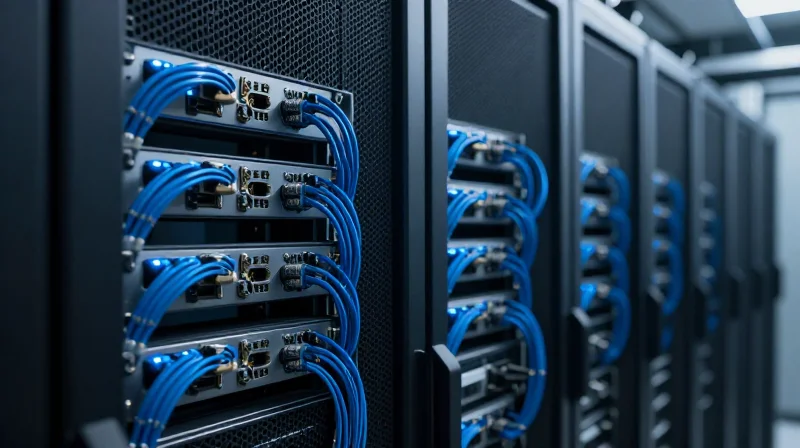
The 800G Paradigm: Scaling Beyond 400G Infrastructure
800G connectivity has emerged as the definitive standard for modern high-performance computing (HPC) and AI fabrics, driven by the requirement to minimize bottlenecks in distributed training environments. Unlike previous generational shifts, the move to 800G is characterized by a fundamental change in the electrical-to-optical interface, where the power envelope of traditional Digital Signal Processing (DSP) components has become a primary constraint on rack-level thermal management. As data centers transition to 51.2T and 102.4T switching silicon, 800G represents the necessary threshold for maintaining non-blocking performance at scale.
Evolutionary Metrics: 400G vs. 800G
| Attribute | 400G Standard | 800G Standard |
|---|---|---|
| Max Data Rate | 400 Gbps | 800 Gbps |
| Electrical Lane Speed | 56G/112G PAM4 | 112G PAM4 |
| Standard Form Factors | QSFP-DD / OSFP | OSFP / QSFP-DD800 |
| Typical Power (Retimed) | 10-12W | 16-24W |
The Rise of AI-Driven Scalability Requirements
The explosive growth of Large Language Models (LLMs) has redefined data center architecture, moving away from traditional leaf-spine topologies toward specialized AI backends. In these environments, latency and power are the most critical KPIs. While 400G was sufficient for general-purpose cloud computing, the massive east-west traffic generated during GPU collective communications (such as All-Reduce operations) demands the 800 Gbps throughput to prevent serialized bottlenecks. This demand has pushed the industry toward Linear Drive Pluggable Optics (LPO) as a means to achieve this speed without the latency penalties inherent in traditional signal regeneration.
- Why is 800G critical for AI clusters?
AI workloads require massive bandwidth and extremely low latency for GPU-to-GPU communication, which 800G provides via high-radix switching and 112G SerDes lanes. - How does 800G affect data center density?
Through the use of OSFP and QSFP-DD800 form factors, 800G allows for higher port density on a single rack unit, enabling more GPUs to be connected within a single non-blocking fabric. - What is the primary challenge of 800G evolution?
The primary challenge is thermal management; as modules reach 16W-24W, traditional cooling methods struggle, making power-efficient technologies like LPO increasingly attractive.
Defining LPO: How Linear-drive Technology Differs
At its core, 800G LPO technology represents a fundamental shift from 'retimed' to 'linear' signal transmission. Unlike traditional optical modules that rely on an internal Digital Signal Processor (DSP) to recover and retransmit signals, LPO modules eliminate this component entirely. Instead, they utilize high-linearity drivers and Trans-Impedance Amplifiers (TIAs) to maintain the integrity of the electrical signal as it passes between the optical engine and the host system. This architectural change directly addresses the primary bottlenecks of 800G scaling: power density and thermal management.
The Architecture Shift: Removing the DSP
In a standard 800G transceiver, the DSP performs clock and data recovery (CDR) and electronic dispersion compensation (EDC). While effective at maintaining signal integrity over distance, the DSP is the single largest consumer of power within the module, often accounting for nearly 50% of its total energy budget. LPO architecture removes this 'retiming' step. By employing a 'linear drive' approach, the module relies on the robust equalization capabilities already present in modern switch ASICs (such as those based on 112G SerDes). This creates a direct, analog path that reduces the processing overhead significantly.
| Feature | Traditional 800G (DSP-based) | 800G LPO (Linear-drive) |
|---|---|---|
| Signal Processing | Internal DSP (Retimed) | Host ASIC (Linear-only) |
| Power Consumption | ~16W - 22W per module | ~8W - 12W per module |
| Latency | Microseconds (due to DSP processing) | Nanoseconds (near-zero processing) |
| Heat Generation | High (requires complex cooling) | Low (simplified thermal design) |
| Main Component | DSP + TIA + Driver | High-Linearity TIA + Driver |
High-Linearity Components and Signal Integrity
To compensate for the lack of a DSP, LPO modules must utilize specialized components that operate within a highly linear range. The Trans-Impedance Amplifier (TIA) on the receiving side and the driver on the transmitting side are engineered to preserve the signal's PAM4 waveform without introducing the non-linear distortions typically cleaned up by a DSP. This requires a tighter integration between the switch ASIC and the optical module, as the host's SerDes must now perform 'pre-emphasis' and 'post-equalization' to account for the entire link's characteristics, including the PCB traces and the optical fiber itself.
- Does LPO support long-reach applications?
Currently, LPO is primarily optimized for short-reach applications, such as intra-rack or rack-to-rack connections (up to 500m or 2km), where signal degradation is manageable without internal retiming. - How does LPO affect interoperability?
Interoperability is more complex with LPO because the performance depends on the synergy between the specific switch ASIC and the module. Unlike DSP modules, which are 'plug-and-play' due to self-contained retiming, LPO requires careful tuning of the host SerDes. - What is the primary cost benefit of LPO?
Beyond the lower power costs, the removal of the expensive DSP chip reduces the Bill of Materials (BOM) for the module, potentially lowering the initial acquisition cost for large-scale data center deployments.
LPO vs. DSP-based Modules: The Power Efficiency Gap
LPO vs. DSP-based Modules: The Power Efficiency Gap
The primary differentiator between 800G LPO technology and traditional retimed alternatives lies in the removal of the Digital Signal Processor (DSP) from the optical module. By offloading signal compensation to the switch ASIC, LPO modules achieve a massive reduction in power consumption—typically 25% to 50% lower than conventional DSP-based solutions. In an 800G environment, where thermal density is a critical bottleneck, this gap represents the difference between sustainable scaling and physical cooling limits.
The Energy Cost of Retimed Optics
Standard 800G modules rely on an internal DSP to perform Clock and Data Recovery (CDR) and complex equalization to maintain signal integrity over long PCB traces. At 112G per-lane speeds, these DSPs are incredibly power-hungry, often consuming 10W to 15W per module. This energy is dissipated as heat within the tight confines of the pluggable form factor, necessitating aggressive cooling infrastructure and limiting the number of modules that can be packed into a single rack unit.
| Feature | 800G DSP-Based (Retimed) | 800G LPO (Linear-Drive) |
|---|---|---|
| Typical Power Consumption | 14W - 18W | 7W - 9W |
| Power Savings | Baseline | Approx. 40% - 50% |
| Latency | ~100ns (DSP Processing) | < 1ns (Analog Bypass) |
| Heat Dissipation | High (Requires active cooling) | Low (Simplified thermal management) |
| Component Count | High (Includes DSP/CDR) | Low (TIA and Driver only) |
Quantifying the Impact on AI Clusters
In massive AI training clusters employing thousands of 800G links, the cumulative power savings of LPO are transformative. If a single 800G switch with 32 ports switches from DSP-based modules to LPO, the power reduction can exceed 200W per switch. Across a data center with hundreds of such switches, this results in kilowatts of saved energy, lower OPEX, and reduced cooling requirements. Furthermore, because LPO modules generate less heat, the reliability of the optical components is inherently improved, as thermal stress is a leading cause of laser degradation.
- Does the switch ASIC consume more power to support LPO?
While the switch ASIC must perform more robust equalization to compensate for the lack of a module DSP, modern high-radix ASICs are already designed with these capabilities. The incremental power increase at the ASIC level is negligible compared to the 5-8W saved per module. - How does lower power consumption affect port density?
Lower heat dissipation allows network engineers to populate all available ports on a high-density 800G switch without exceeding the thermal envelope of the chassis, effectively increasing the total throughput per rack. - Are there power trade-offs for long-reach applications?
LPO is currently optimized for short-reach (intra-rack or adjacent rack) applications. For long-haul links where signal degradation is severe, the power-hungry DSP is still required to maintain bit error rate (BER) standards.
Latency Benchmarks: Why LPO Wins for AI Training

800G Linear-drive Pluggable Optics (LPO) represent a paradigm shift in data center interconnects by removing the Digital Signal Processor (DSP) from the optical module, effectively reducing signal processing latency from approximately 100 nanoseconds to less than one nanosecond. In the context of large-scale AI training, where thousands of GPUs must execute synchronous 'All-Reduce' operations, this reduction in 'tail latency' directly translates to higher GPU utilization and faster model convergence.
The Nanosecond Advantage: Bypassing the DSP
Traditional 800G modules utilize a DSP to perform Clock and Data Recovery (CDR) and electronic dispersion compensation. While effective for maintaining signal integrity over long distances, the DSP introduces a 're-timing' delay. By contrast, LPO adopts a purely analog signal path. The host ASIC handles the heavy lifting of equalization, allowing the optical module to function as a simple, linear driver. This architectural simplification removes the buffering and computational cycles inherent in digital retiming.
| Feature | 800G LPO (Linear) | 800G DSP-based (Retimed) |
|---|---|---|
| Processing Latency | < 1 ns | 100 ns - 150 ns |
| Signal Path | Purely Analog | Analog-to-Digital-to-Analog |
| Data Recovery | Managed by Host ASIC | Managed by Module DSP |
| Suitability | AI Backend / GPU Fabrics | General Cloud / DCI |
Impact on AI Training Efficiency
AI workloads are uniquely sensitive to latency because they rely on collective communication patterns. When a cluster of GPUs performs a gradient update, the entire system must wait for the slowest link to complete its transfer. In a multi-tier fat-tree topology, data may traverse three to five switch hops. If each hop uses a DSP-based module, the cumulative latency can exceed 500 nanoseconds. By implementing LPO, network architects can reclaim nearly a microsecond of round-trip time, significantly reducing the 'idle' cycles of high-cost H100 or B200 GPU clusters.
Performance FAQ: LPO vs. Alternatives
- Does LPO increase Bit Error Rate (BER) due to the lack of a DSP?
While LPO lacks internal error correction, it relies on the robust SerDes capabilities of modern switch ASICs (like Broadcom Tomahawk 5) to maintain a compliant BER. This requires tighter system integration but results in a lower overall latency profile. - Why is 'tail latency' more important than average latency for AI?
AI training is synchronous; a single delayed packet (the 'tail') can stall the entire GPU fabric. LPO's deterministic analog path provides more consistent timing than the variable processing cycles of a DSP. - Can LPO be used for all 800G connections?
LPO is optimized for short-reach applications (within the rack or row) where latency is critical. For long-haul data center interconnects (DCI), the signal regeneration capabilities of a DSP remain necessary.
Total Cost of Ownership (TCO) Breakdown
Analyzing the Total Cost of Ownership (TCO) for 800G LPO technology reveals a dual advantage: lower upfront Capital Expenditure (CAPEX) due to the removal of the expensive Digital Signal Processor (DSP) and drastically reduced Operational Expenditure (OPEX) stemming from a 50% reduction in power consumption. While LPO requires high-performance switch ASICs to handle signal compensation, the consolidated system efficiency results in a lower cost-per-bit over a standard five-year lifecycle compared to retimed optical modules or Active Optical Cables (AOCs).
CAPEX: Comparing Upfront Acquisition Costs
In the 800G ecosystem, the DSP accounts for roughly 25% to 30% of the total bill of materials (BOM) for a standard transceiver. By eliminating this silicon, LPO modules can be manufactured and sold at a significant discount. However, network architects must account for the potential premium on high-spec switch ASICs capable of driving LPO links.
| Cost Component | 800G DSP-based Transceiver | 800G LPO Transceiver | Cost Impact |
|---|---|---|---|
| Module BOM | High (Includes 7nm/5nm DSP) | Low (Simplified Analog Front-end) | 20-30% Savings |
| Switch ASIC Requirement | Standard SERDES | High-Performance/Linear-drive SERDES | Slight Premium |
| Testing & Validation | Standardized/High | System-level/Increasing | Moderate |
OPEX: Power Consumption and Cooling Overhead
Operational costs in AI clusters are dominated by power density. A single 800G DSP-based module typically consumes 16W to 18W, whereas an LPO equivalent operates at 8W to 10W. Over a five-year period, this difference represents thousands of dollars in savings per rack when accounting for both the electricity to run the modules and the energy required for the cooling fans and CRAC units.
| Metric (Per 800G Port) | DSP-based Module | LPO Module | 5-Year Savings (Estimated) |
|---|---|---|---|
| Power Draw (Watts) | 17W | 9W | ~350 kWh Saved |
| Cooling Overhead (PUE 1.5) | 8.5W | 4.5W | ~175 kWh Saved |
| Carbon Footprint | Higher | Lower | Significant Reduction |
Strategic Financial Considerations
- Does LPO increase the cost of the network switch?
While LPO requires a high-quality SERDES on the switch ASIC, most modern 51.2T switches already include these capabilities to support various cable types, meaning there is often no additional hardware tax on the switch itself. - What is the typical Return on Investment (ROI) period?
Due to the lower initial purchase price and immediate reduction in power draw, most organizations see a full ROI on LPO technology within 12 to 18 months of deployment compared to retimed optics. - Are there hidden maintenance costs?
LPO is a 'mated' technology, meaning interoperability testing between specific switches and modules is more rigorous than DSP-based solutions. This can lead to higher initial engineering labor costs but results in a more stable, lower-latency fabric once tuned.
The CPO Alternative: Comparing LPO to Co-Packaged Optics
The CPO Alternative: Comparing LPO to Co-Packaged Optics
Linear Drive Pluggable Optics (LPO) and Co-Packaged Optics (CPO) represent two distinct architectural responses to the escalating power and thermal demands of 800G networking. While CPO is often viewed as the ultimate destination for optical interconnects—bringing the optical engine as close to the switch ASIC as possible—LPO provides a pragmatic, high-performance middle ground. By removing the DSP while retaining the pluggable form factor, LPO bridges the efficiency gap without demanding the radical redesign of data center hardware required by CPO.
Key Performance and Operational Benchmarks
| Feature | Linear Drive (LPO) | Co-Packaged Optics (CPO) |
|---|---|---|
| Form Factor | Pluggable (QSFP-DD/OSFP) | Integrated on-board modules |
| Serviceability | Hot-swappable individual ports | Complex; often requires ASIC/Switch replacement |
| Manufacturing Ecosystem | Mature; leverages existing supply chains | Emerging; requires 2.5D/3D packaging |
| Power Efficiency | High (25-50% savings over retimed) | Maximum (50-70% savings potential) |
| Time-to-Market | Available for 800G/1.6T deployments | Late-stage 1.6T or 3.2T (2026+) |
The Serviceability and Maintenance Gap
The most significant barrier to CPO adoption is the lack of field serviceability. In a CPO environment, the failure of a single optical component can necessitate the decommissioning of the entire switch chassis or a complex repair process involving the switch ASIC. LPO preserves the traditional maintenance model: if a module fails, it is replaced in seconds by a technician. This 'pay-as-you-grow' and easily serviceable model is preferred by hyperscalers who cannot afford the downtime associated with integrated hardware failures.
Manufacturing Maturity and Ecosystem Readiness
LPO relies on the established silicon photonics and EML (Electro-absorption Modulated Laser) manufacturing base. Because it uses standard cage and connector interfaces, it benefits from the massive scale of the pluggable market. CPO, conversely, requires a paradigm shift in how switches are built, involving advanced substrate technologies and specialized cooling for the high-density heat generated near the ASIC. For the 800G cycle, LPO represents a low-risk path to power reduction, whereas CPO remains a high-complexity research and development priority for future generations.
Frequently Asked Questions: LPO vs. CPO
- Will CPO eventually replace LPO?
CPO is expected to dominate once signaling speeds exceed 224G per lane (3.2T and beyond) because the signal loss across even short PCB traces becomes insurmountable for pluggable form factors. - Is LPO less efficient than CPO?
Yes, CPO is theoretically more efficient because it eliminates the longer electrical traces between the ASIC and the module. However, LPO captures the majority of the low-hanging fruit by eliminating the DSP power draw. - Can LPO and CPO coexist in the same data center?
Absolutely. Data center operators may use CPO for high-density core-to-core links while utilizing LPO for front-end AI server connectivity where modularity and low latency are paramount.
Interoperability and Ecosystem Challenges
The Interoperability Paradox: LPO and the Ecosystem Challenge
The primary challenge facing 800G LPO technology is the loss of the 'black box' simplicity provided by traditional DSP-based modules. Because LPO removes the Digital Signal Processor from the transceiver, the responsibility for signal equalization and compensation shifts entirely to the host ASIC (Switch/GPU SerDes). This creates a complex interdependency where the performance of the optical link is no longer guaranteed by the module alone, but by the synergy between a specific host port and a specific linear module.
The 'Walled Garden' vs. Open Interoperability
In the early stages of LPO deployment, there is a significant risk of 'walled garden' ecosystems. Network equipment manufacturers and hyperscalers may find that a specific LPO module only achieves required Bit Error Rates (BER) when paired with a particular switch ASIC. This lack of plug-and-play capability threatens the multi-vendor sourcing strategies that data center operators rely on to manage supply chain risks and costs.
| Feature | 800G Retimed (DSP) | 800G LPO (Linear) | 800G CPO (Co-Packaged) |
|---|---|---|---|
| Interoperability | High (Plug-and-Play) | Complex (Host-Dependent) | Very Low (Proprietary/Integrated) |
| Standardization | IEEE 802.3ck / OIF | OIF CEI-112G-Linear (Ongoing) | Early Stage OIF/COBO |
| Testing Complexity | Module-level testing | System-level (Link) testing | Integrated manufacturing test |
| Vendor Lock-in | Minimal | Moderate to High | High |
Industry Standardization Efforts: OIF and LPO MSA
To mitigate fragmentation, the industry is moving toward rigorous standardization. The Optical Internetworking Forum (OIF) is developing the CEI-112G-Linear specification, which aims to define the electrical requirements for the linear interface. Additionally, the LPO MSA (Multi-Source Agreement) group is working to ensure that different optical components can meet the stringent linearity and noise requirements needed to satisfy host-side equalization algorithms without the safety net of a module-side DSP.
- Can I use LPO modules from different vendors in the same switch?
Currently, this depends on the switch's SerDes capabilities and firmware. Until OIF standards are fully ratified and adopted, users should expect to perform extensive validation for each host-module combination. - Is LPO interoperable with standard DSP-based modules?
Yes, on the optical side (the fiber link), LPO modules can communicate with DSP-based modules, provided they use the same modulation format (e.g., 112G PAM4) and meet the link budget. - Does LPO increase the testing burden?
Significantly. Testing moves from simple module compliance to system-level link validation, requiring sophisticated tools to measure signal integrity across the entire host-to-module path.
Implementation Strategy: When to Deploy 800G LPO
Deciding when to deploy 800G LPO technology over traditional DSP-based optics or emerging Co-Packaged Optics (CPO) depends on a three-way trade-off between power efficiency, link distance, and the signal integrity capabilities of your switch silicon. For network architects, the transition to LPO is most justifiable when the primary goal is to maximize GPU-to-GPU communication speeds while minimizing the thermal load on the rack, provided the underlying hardware supports the required signal compensation.
Defining the Primary Deployment Scenarios
The sweet spot for 800G LPO is within the high-performance computing (HPC) and AI back-end networks. These environments utilize short-reach connections almost exclusively, where the signal degradation inherent in removing the DSP is manageable. If your architecture relies heavily on Rack-to-Rack or Leaf-to-Spine connections within the same row, LPO provides a significant edge.
- Intra-Rack Connections (0-30m)
Ideal for LPO over multi-mode fiber (SR8) or single-mode fiber, replacing active copper cables (ACC) where weight and thickness are concerns. - Inter-Rack/Row (30-500m)
The primary domain for 800G LPO DR8. At these distances, the power savings of 2-3W per module result in massive OPEX reductions across thousands of links. - Latency-Critical Clusters
LPO's removal of the DSP eliminates the nanoseconds of processing time required for forward error correction (FEC) and signal reconstruction, which is critical for synchronous AI training jobs.
The LPO Decision Matrix
| Criteria | 800G LPO Recommendation | 800G DSP-Based (Re-timed) |
|---|---|---|
| Link Distance | Preferred for <500m | Required for >2km / DCI |
| Power Budget | High Priority (save ~40% per port) | Standard Priority |
| Switch Silicon | Requires Advanced SerDes (e.g., Tomahawk 5+) | Agnostic / Standard SerDes |
| Interoperability | Strict (Requires vendor pairing) | High (Standard compliant) |
| Cooling Capacity | Limited (Air-cooled racks) | Standard (Liquid or high-airflow) |
Technical Readiness Checklist
Before committing to an LPO-based fabric, architects must verify that their hardware ecosystem can compensate for the lack of retiming within the module itself. This shifting of complexity from the optic to the switch is the fundamental architectural change of LPO.
- Does the switch silicon support advanced CTLE?
The host switch must have robust Continuous Time Linear Equalization (CTLE) and Feed Forward Equalization (FFE) to clean up signals that the LPO module does not process. - Is the software stack 'LPO Aware'?
The Network Operating System (NOS) must be able to tune the SerDes parameters specifically for linear interfaces rather than standard pluggables. - Is the supply chain validated?
Due to the 'walled garden' nature of current LPO implementations, ensure that the module vendor and the switch vendor have performed cross-validation testing.
Strategic Recommendation
Deploy 800G LPO if you are currently building a greenfield AI cluster with state-of-the-art switches and are hitting a 'power wall' where cooling costs are exceeding your infrastructure's capacity. If you are operating a general-purpose cloud environment with legacy hardware and a mix of fiber types, the flexibility of 800G DSP-based optics remains the safer, albeit more power-hungry, choice.
The Future of Linear Optics: Beyond 800G

As the industry looks toward 1.6T, the lessons learned from 800G LPO deployment serve as the blueprint for solving the 'Power Wall' in hyperscale data centers. While 800G LPO has proven that removing the DSP can yield significant power savings and latency reductions, the jump to 1.6T introduces higher signal integrity requirements and 224G per lane SerDes. The future of linear optics will likely diverge into two paths: pure LPO for ultra-short reach applications and Half-Retimed Linear Optics (LRO) for broader interoperability, both of which challenge the dominance of traditional retimed modules.
Scaling to 1.6T: The 224G SerDes Era
Moving to 1.6T necessitates doubling the per-lane rate from 112G to 224G. At these speeds, channel loss becomes a critical bottleneck. Linear Drive technology must evolve to handle increased jitter and noise floors. Future LPO designs will rely heavily on the next generation of switch silicon (such as Broadcom's Tomahawk 6 or equivalent) to provide the advanced equalization necessary to compensate for the lack of a DSP within the optical module.
| Metric | 800G LPO (112G/lane) | 1.6T LPO/LRO (224G/lane) |
|---|---|---|
| Power Consumption | ~8W - 10W | Estimated 12W - 14W |
| Signal Integrity Complexity | Moderate | Very High (requires advanced FEC) |
| Switch SerDes Dependency | High | Critical (224G integration) |
| Primary Use Case | AI/ML Clusters | Next-Gen Terabit Switching |
The Rise of Half-Retimed Linear Optics (LRO)
One of the most significant developments beyond 800G is Linear Receive Optics (LRO). Unlike LPO, which removes the DSP entirely, LRO includes a small, low-power retimer only on the transmit side (or only on the receive side, depending on the implementation). This hybrid approach aims to solve the interoperability 'walled garden' of LPO while maintaining 20-30% power savings over traditional DSP-heavy modules. LRO is expected to be a dominant bridge technology as data centers transition to 1.6T.
- Will LPO remain viable at 1.6T and 3.2T?
Yes, but its application will likely become more niche, focused on intra-rack AI clusters where the physical distance is minimal and the host silicon can be tuned precisely to the optical path. - What role will Co-Packaged Optics (CPO) play in this future?
CPO is the ultimate competitor to linear pluggables. While LPO extends the life of pluggable form factors (like OSFP1600), CPO will likely gain ground when power densities make even linear pluggables thermally unmanageable, likely at the 3.2T or 6.4T node. - How does 224G SerDes affect the cost comparison?
224G SerDes increases the cost of the host PCB and switch silicon. Linear optics help offset these costs by reducing the bill of materials for the modules themselves, which is crucial as the total volume of interconnects scales.
Industry Consensus and Standardization
Standardization bodies like the OIF and IEEE are now actively incorporating linear interface specifications into their roadmaps. This shift from proprietary 'ecosystems' to industry-wide standards will be the catalyst for mass adoption beyond 800G, ensuring that network architects can mix and match switch silicon and linear modules with the same confidence they currently have in traditional DSP-based optics.
While traditional DSP-based modules remain the safe choice for general networking, 800G LPO offers an irresistible performance-per-watt advantage for specialized AI and HPC workloads. To optimize your data center for the next decade, evaluating LPO today is essential. Contact our engineering consultants for a detailed compatibility assessment of your current switch fabric.