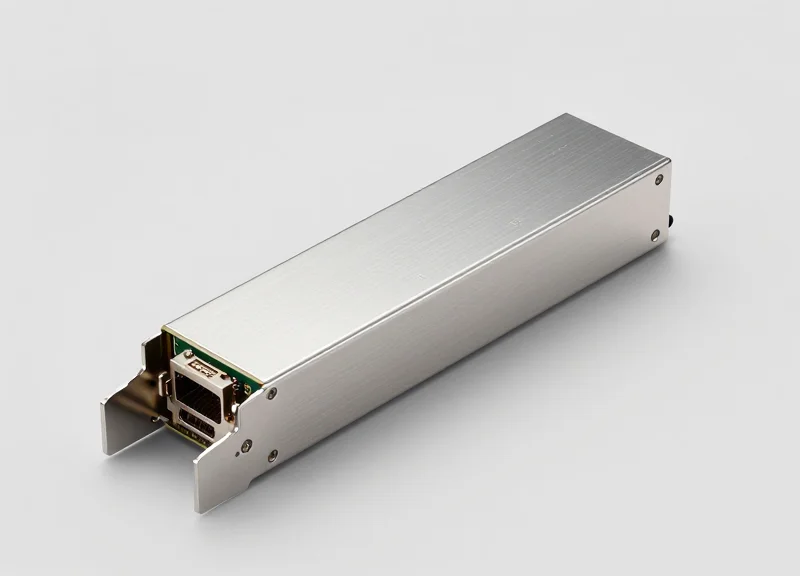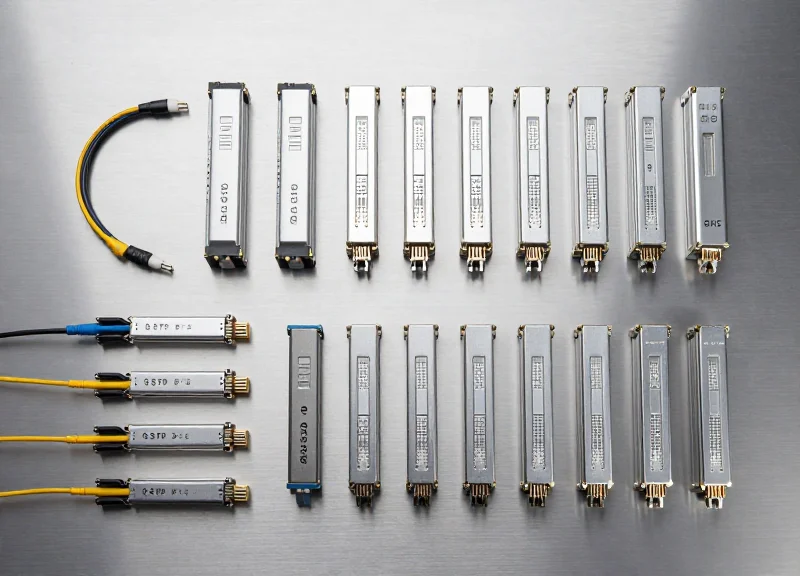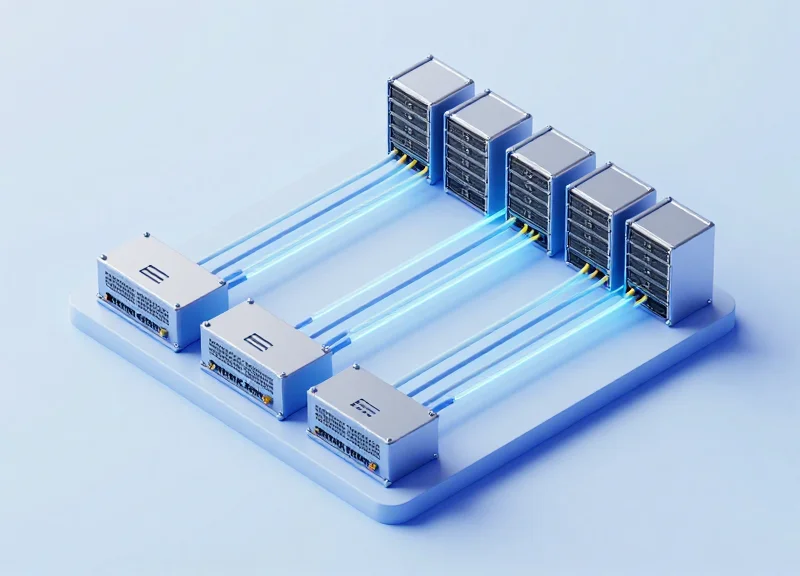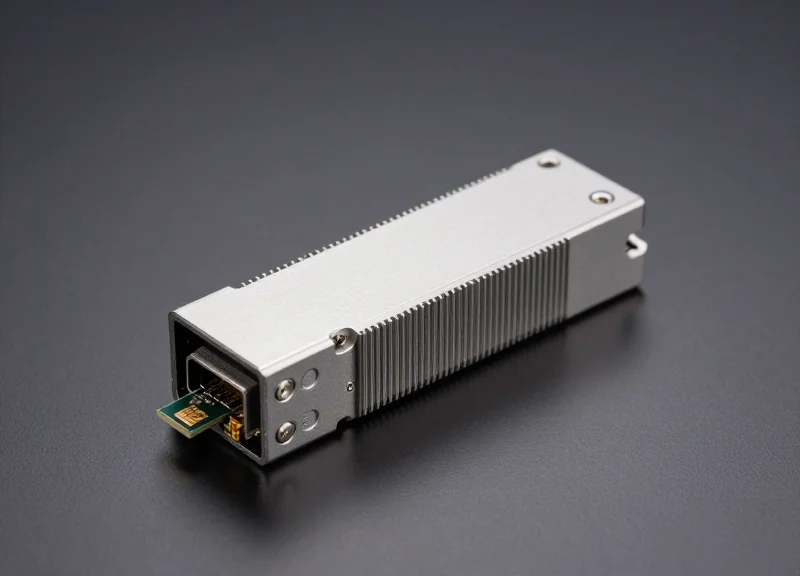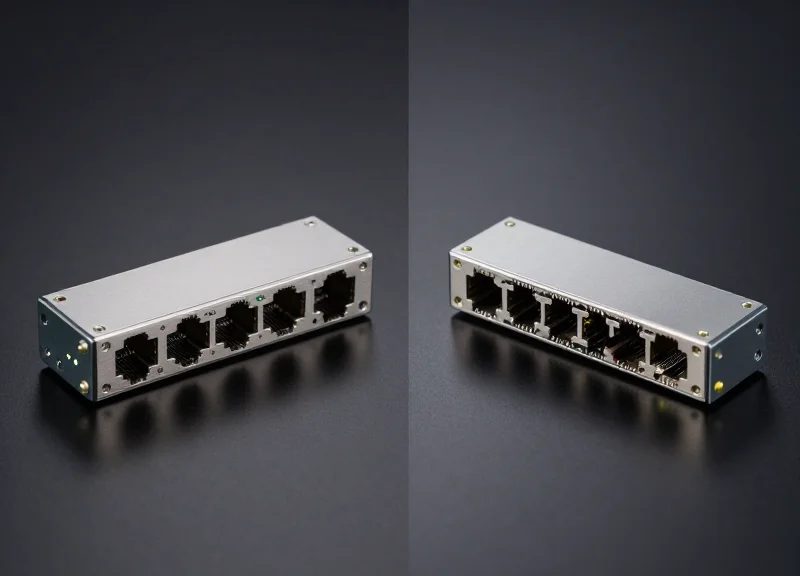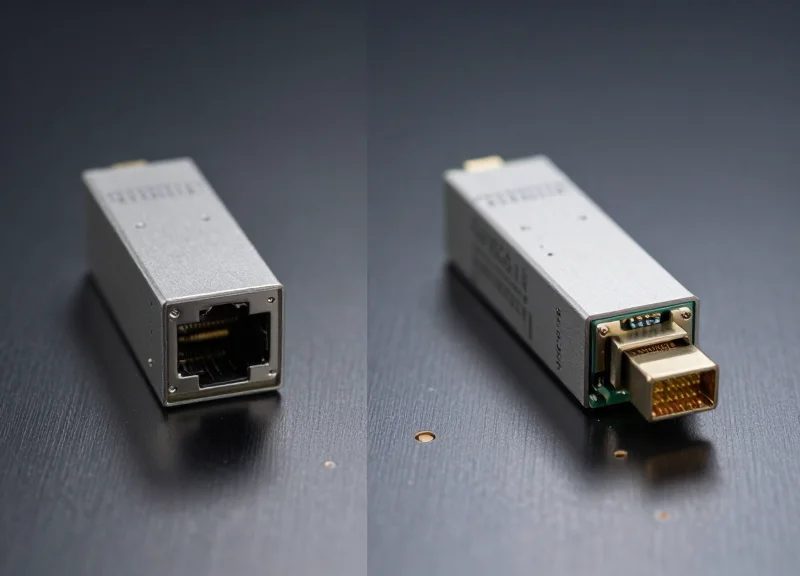
As data centers transition to higher speeds, the choice between 10G copper and fiber becomes critical. While SFP+ to RJ45 transceivers offer convenience for legacy cabling, they often come with hidden costs in latency and power. This article breaks down the performance metrics and financial implications of your 10GbE interconnect choices.
The Evolution of 10GbE Interconnects
The Divergent Paths of 10GbE Standardization
The evolution of 10GbE interconnects was defined by a strategic split: SFP+ emerged to satisfy the high-density, low-latency demands of the data center core, while 10GBASE-T (RJ45) was developed to bring 10Gbps performance to the broader enterprise desktop and access layer using traditional copper cabling. While both standards achieved 10Gbps throughput, their underlying physical layers and power requirements created distinct use cases that continue to influence network design today.
SFP+ and the Move Toward Density
Standardized under SFF-8431, SFP+ (Small Form-factor Pluggable Plus) represented a significant leap in efficiency over its predecessor, XFP. By moving the clock and data recovery (CDR) and electronic dispersion compensation (EDC) functions to the host board, SFP+ modules became smaller, cheaper, and more energy-efficient. This allowed for higher port density on switches, which was critical as cloud computing began to scale.
| Feature | SFP+ (Fiber/DAC) | 10GBASE-T (Copper RJ45) |
|---|---|---|
| Media Type | Optical Fiber or Twinax | Cat6a/Cat7 Twisted Pair |
| Standardization | 2006 (SFF-8431) | 2006 (IEEE 802.3an) |
| Typical Latency | <0.3 Microseconds | 2.0 to 4.0 Microseconds |
| Power Draw | Approx. 0.5W - 1.0W | 2.5W - 5.0W |
The Challenge of 10GBASE-T Adoption
Although the IEEE 802.3an standard for 10GBASE-T was ratified in the same year as SFP+, its adoption lagged in the data center due to the 'power wall.' Early 10GBASE-T PHY chips consumed significantly more power than SFP+ counterparts, leading to heat dissipation challenges. It wasn't until the refinement of 28nm and 10nm manufacturing processes that RJ45-based 10GbE became viable for high-density deployments, primarily appealing to users who required backward compatibility with existing 1GbE copper infrastructure.
- Why did SFP+ gain early dominance in data centers?
SFP+ offered near-instantaneous signal transmission and extremely low power consumption, allowing for hundreds of ports in a single rack without specialized cooling for the interconnects. - Is RJ45 still relevant for 10GbE?
Yes, 10GBASE-T remains the standard for general-purpose office environments and small-to-medium businesses due to its ability to utilize existing Cat6a cabling and its support for auto-negotiation to lower speeds.
Latency Benchmarks: Why SFP+ to RJ45 Trails Behind
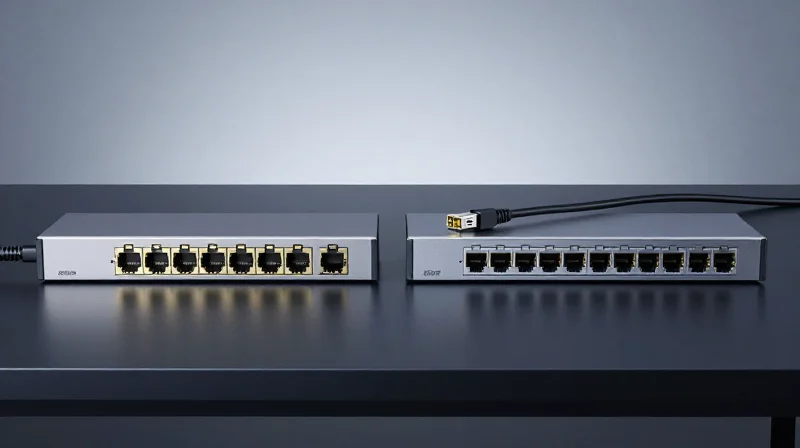
SFP+ to RJ45 copper modules trail behind Direct Attach Copper (DAC) and Fiber alternatives primarily due to the significant processing time required by the 10GBASE-T Physical Layer (PHY) silicon. While DAC and fiber utilize simple Non-Return-to-Zero (NRZ) encoding that allows for sub-microsecond transmission, SFP+ to RJ45 modules must perform complex signal processing and error correction to push 10Gbps over twisted-pair copper, resulting in a latency penalty of approximately 2.5 to 3 microseconds per link.
The Anatomy of PHY Encoding Overhead
In high-speed networking, latency is often a byproduct of the mathematical complexity required to maintain signal integrity. For SFP+ DAC and Fiber, the signal remains largely in its native electrical or optical state with minimal manipulation. In contrast, SFP+ to RJ45 transceivers must translate Small Form-factor Interface (SFI) signals into the 10GBASE-T standard. This involves Pulse Amplitude Modulation (PAM16) and Double Square (DSQ128) encoding. These computational steps, combined with Low-Density Parity-Check (LDPC) for forward error correction, consume precious clock cycles, adding a fixed delay that cannot be bypassed by software optimization.
Latency Comparison Benchmarks
| Interconnect Type | Typical Latency | Encoding Complexity |
|---|---|---|
| SFP+ to RJ45 (10GBASE-T) | 2.6 microseconds | High (PAM16/DSQ128) |
| SFP+ DAC (Twinax) | 0.1 microseconds | Minimal (NRZ) |
| SFP+ Fiber (SR/LR) | 0.1 microseconds | Minimal (NRZ) |
Operational Impact on High-Performance Environments
While a 2.5-microsecond difference may seem negligible in general enterprise networking, it is a critical bottleneck for latency-sensitive applications. In High-Frequency Trading (HFT), where every microsecond correlates to financial outcomes, or in High-Performance Computing (HPC) clusters utilizing Message Passing Interface (MPI), the cumulative latency of multiple copper hops can degrade system-wide synchronization. Furthermore, modern NVMe-over-Fabrics (NVMe-oF) storage arrays rely on ultra-low latency to maintain IOPS performance, making the overhead of RJ45 transceivers a liability in the data center core.
Latency FAQs
- Can newer SFP+ to RJ45 modules reduce this latency?
While modern chips are more power-efficient, the 10GBASE-T standard's requirements for PAM16 encoding and error correction impose a physical floor on latency that remains around 2 microseconds. - Does cable length affect RJ45 latency?
Yes, but minimally compared to the PHY overhead. While signal propagation delay adds about 5 nanoseconds per meter, the encoding process remains the dominant source of lag. - Is this latency noticeable for standard 10GbE internet access?
No. For standard web traffic, file transfers, and video streaming, the millisecond-level delays of the wider internet and software stacks completely mask the microsecond-level overhead of the transceiver.
Power Consumption and Heat Dissipation
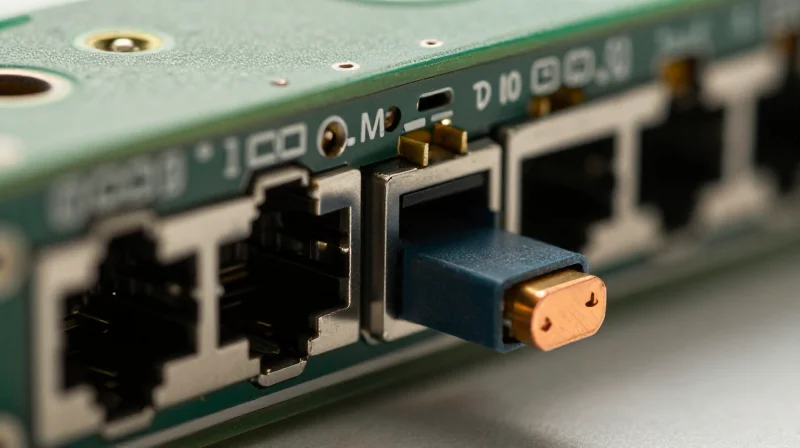
The Energy Tax: Quantifying Power Draw per Port
SFP+ to RJ45 copper transceivers (10GBASE-T) represent the most power-intensive interconnect method in the 10GbE ecosystem, typically drawing between 2.0W and 2.5W per module. In contrast, SFP+ optical transceivers consume approximately 0.6W to 1.0W, while Direct Attach Copper (DAC) cables operate at a negligible 0.1W. This discrepancy arises from the complex Digital Signal Processing (DSP) and PHY encoding required to transmit high-speed data over twisted-pair copper, creating a thermal footprint that can dictate the overall architecture of a network rack and significantly increase operational costs over the equipment's lifecycle.
| Interconnect Type | Typical Power Draw (Watts) | Thermal Profile |
|---|---|---|
| SFP+ to RJ45 (10GBASE-T) | 2.0W - 2.5W | Very High / Hot |
| SFP+ SR (Fiber) | 0.8W - 1.0W | Low / Cool |
| SFP+ DAC (Passive) | < 0.1W | Negligible |
| SFP+ AOC (Active Fiber) | 0.6W - 0.8W | Low |
Thermal Constraints and Switch Stability
The heat generated by 10GBASE-T modules is not merely an efficiency concern; it is a physical limitation for network hardware. Most high-density SFP+ switches are designed with a thermal envelope that assumes a majority of ports will be filled with low-power fiber or DAC connections. When multiple RJ45 modules are placed in adjacent ports, they create 'hot zones' that can trigger thermal throttling, increase fan speeds (leading to higher acoustic noise), and potentially cause premature component failure. Administrators must often leave adjacent ports empty or use staggered port configurations to maintain safe operating temperatures.
Frequently Asked Questions: Power & Heat
- Can I fully populate a 48-port SFP+ switch with RJ45 modules?
Usually no. Most switch manufacturers provide guidelines limiting the number of 10GBASE-T SFP+ modules to avoid exceeding the power supply capacity and thermal limits of the chassis. - Why do RJ45 modules get significantly hotter than fiber modules?
The internal PHY chip in an RJ45 module must use intensive electronic compensation to overcome the high signal attenuation and crosstalk inherent in copper cabling at 10Gbps, which converts a large amount of electricity into heat. - Does the length of the Cat6a cable affect the power consumption?
Yes, some modern 10GBASE-T modules feature 'Short Reach' modes that reduce power consumption if the cable length is under 30 meters, though they still consume more power than fiber alternatives.
Total Cost of Ownership: Beyond the Sticker Price
Total Cost of Ownership: Beyond the Sticker Price
The true cost of SFP+ to RJ45 copper transceivers extends far beyond the initial purchase price, often proving more expensive than Direct Attach Copper (DAC) or Fiber alternatives when accounting for energy consumption, cooling requirements, and hardware longevity. While leveraging existing Cat6a infrastructure saves on immediate cabling costs, the high power draw of copper PHY chips creates an operational expense (OPEX) burden that can exceed the capital expenditure (CAPEX) savings within just 18 to 24 months of continuous operation.
CAPEX Comparison: Modules and Media
| Solution Type | Average Module Cost | Media Cost (per 3m) | Total Initial CAPEX |
|---|---|---|---|
| SFP+ to RJ45 Copper | $45 - $65 | $5 (Cat6a) | $50 - $70 |
| SFP+ SR Optical | $18 - $25 | $12 (OM4 Fiber) | $30 - $37 |
| Direct Attach Copper (DAC) | N/A | $15 - $22 | $15 - $22 |
As shown above, DAC is the clear leader for short-range top-of-rack connections. SFP+ to RJ45 modules are significantly more expensive to manufacture due to the complex electronics required to convert the SFP+ signal to the 10GBASE-T standard, making them the most expensive CAPEX option even before considering power.
OPEX: The Energy and Cooling Multiplier
Operational costs are where the disparity between copper and its alternatives becomes most apparent. A single SFP+ to RJ45 module typically consumes 2.0W to 2.5W of power. In contrast, an SFP+ SR fiber optic module consumes approximately 0.7W, and a DAC cable consumes less than 0.1W. In a high-density environment, such as a 48-port switch, populating every port with RJ45 modules adds over 100W of heat load to the rack. This necessitates increased fan speeds and CRAC (Computer Room Air Conditioning) output, effectively doubling the energy cost per watt of the module itself.
Longevity and Infrastructure Lifespan
- Thermal Stress
The intense heat generated by 10GBASE-T transceivers can degrade the internal components of the switch over time, potentially shortening the mean time between failures (MTBF) for expensive networking hardware. - Future-Proofing
While Cat6a is limited to 10Gbps over 100 meters, OM4 fiber can support 40Gbps and 100Gbps speeds in future upgrades, offering a much longer functional lifespan for the physical cabling investment. - Maintenance Reliability
RJ45 connectors are prone to mechanical wear and electromagnetic interference (EMI) in dense environments, whereas fiber is immune to EMI and DAC offers a robust, integrated design with fewer points of failure.
TCO Frequently Asked Questions
- When is SFP+ to RJ45 the most cost-effective choice?
It is only the most cost-effective choice when connecting to a remote end-device that strictly features a fixed 10GBASE-T copper port, and the cost of replacing that device or installing new fiber exceeds the cumulative power and module costs. - How much can be saved by switching to DAC?
For top-of-rack deployments, switching from RJ45 modules to DAC can reduce per-port costs by up to 70% in CAPEX and over 90% in energy consumption.
Direct Attach Copper (DAC): The Short-Reach King
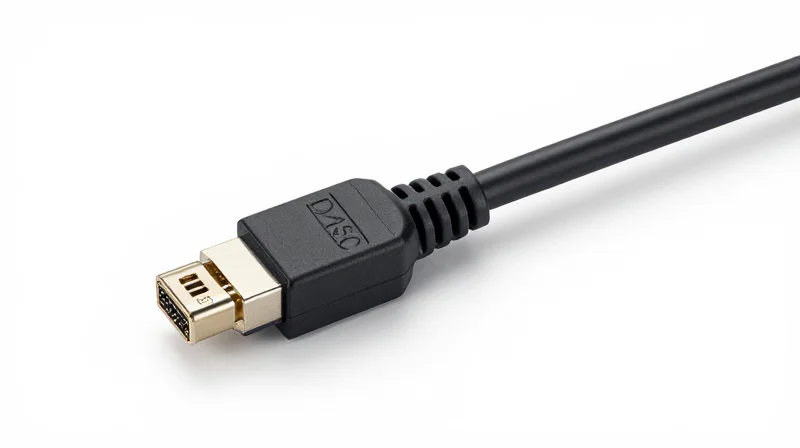
Direct Attach Copper (DAC): The Short-Reach King
Direct Attach Copper (DAC) cables represent the pinnacle of efficiency for intra-rack connectivity, effectively eliminating the overhead associated with signal conversion found in both RJ45 and fiber-optic transceivers. In a data center environment where Top-of-Rack (ToR) switching is standard, DACs provide a twinaxial copper link that terminates directly into SFP+ housings, bypassing the need for the power-hungry PHY chips required by RJ45 copper transceivers to process 10GBASE-T signals.
Unmatched Latency and Power Profiles
The primary advantage of DAC lies in its simplicity. Passive DAC cables do not contain active electronics to regenerate the signal; they facilitate a direct electrical path between the host ASICs. This results in a latency profile of approximately 0.1 microseconds, compared to the 2.6 microseconds often observed in SFP+ to RJ45 copper modules. Furthermore, while an RJ45 module might draw up to 2.5 watts, a passive DAC cable draws virtually zero, significantly reducing the heat load on high-density switches and lowering cooling requirements.
| Feature | Passive DAC Cable | SFP+ to RJ45 Transceiver |
|---|---|---|
| Power Consumption | < 0.15W | 2.0W - 3.5W |
| Latency | ~0.1 µs | ~2.6 µs |
| Reach | Up to 7m | Up to 30m/80m |
| Cooling Load | Minimal | Significant |
| Typical CAPEX | Lowest | Highest |
Strategic Use and Connectivity FAQs
- What is the difference between Passive and Active DAC?
Passive DACs lack signal amplification and are usually limited to 5-7 meters. Active DACs (ACC) include electronics to boost the signal, extending reach to 15 meters while still consuming significantly less power than RJ45 solutions. - Why is DAC preferred for Top-of-Rack (ToR) switching?
DAC cables are the most cost-effective way to connect servers to a switch within the same rack. Their near-zero latency and low heat generation preserve switch longevity and ensure maximum throughput for high-frequency trading or HPC workloads. - Is vendor compatibility an issue for DAC cables?
Yes. Many networking hardware manufacturers require DAC cables to be programmed with specific EEPROM firmware. It is critical to select DACs that are coded for compatibility with the specific brands of your switch and Network Interface Card (NIC).
Fiber Optics: Scalability and Distance Advantage

While SFP+ to RJ45 modules are effective for short-range patching within a rack, they are technically constrained by high power consumption and signal attenuation, making fiber optics the mandatory choice for any link exceeding 30 meters or requiring total immunity to electromagnetic interference (EMI). Fiber-based SFP+ transceivers (SR and LR) utilize light rather than electrical pulses, allowing for significantly higher bandwidth-distance products and lower latency compared to their copper counterparts.
Breaking the 30-Meter Barrier
The most significant limitation of SFP+ to RJ45 transceivers is distance. Due to the high power required to push 10Gbps over copper twisted-pair cabling, most SFP+ RJ45 modules are limited to 30 meters on Cat6a cable. In contrast, fiber optics scale effortlessly from short-reach data center links to campus-wide backbones.
| Standard | Medium | Max Distance | EMI Immunity |
|---|---|---|---|
| 10GBASE-SR | Multimode Fiber (OM3/OM4) | 300m - 400m | Total |
| 10GBASE-LR | Singlemode Fiber (OS2) | 10km | Total |
| 10GBASE-T (SFP+) | Cat6a / Cat7 | 30m - 80m | Low |
| Direct Attach (DAC) | Twinax Copper | 7m - 10m | Moderate |
EMI Immunity and Signal Integrity
In industrial environments, medical facilities with imaging equipment, or high-density server rooms, electromagnetic interference (EMI) can significantly degrade 10G copper performance, leading to packet retransmissions and increased latency. Fiber optics are inherently dielectric; they do not conduct electricity and are completely immune to RFI and EMI. This makes fiber the only viable option for running data alongside power lines or in environments with heavy machinery.
Scalability and Future-Proofing
Investing in fiber infrastructure (specifically OS2 singlemode) offers a vastly superior upgrade path. While Cat6a is effectively capped at 10Gbps for standard distances, the same singlemode fiber used for 10G SFP+ LR can support 25G, 40G, 100G, and even 400G speeds simply by swapping the transceivers at the endpoints. This eliminates the need for expensive and disruptive cable pulls in the future.
- When should I choose SFP+ SR fiber over RJ45 copper?
Choose SR fiber when the distance exceeds 30 meters, or when you need to minimize power consumption and heat within a switch, as SR optics pull significantly less wattage than RJ45 modules. - Is singlemode (LR) overkill for a data center?
Not necessarily. While LR optics are more expensive, singlemode fiber allows for massive distance scalability and is often preferred for 'future-proof' inter-rack or inter-building connections. - Can fiber optics save money in the long run?
Yes. Through lower power consumption (OPEX) and the ability to support future 25G/100G speeds without replacing cables, the Total Cost of Ownership (TCO) for fiber often drops below copper in high-density environments.
Backward Compatibility and Infrastructure Reuse
Backward Compatibility and Infrastructure Reuse
The primary value proposition of SFP+ to RJ45 transceivers is their ability to bridge the gap between high-speed SFP+ switch ports and existing twisted-pair copper infrastructure. For organizations that have spent the last decade deploying Category 6a (Cat6a) cabling, these modules offer a 'plug-and-play' path to 10GbE without the massive CAPEX required for a complete fiber-optic overhaul. By leveraging the familiar RJ45 interface, enterprises can maintain their current patch panels and cable management systems while upgrading active equipment performance.
The Economic Logic of Copper Longevity
Retrofitting a data center or a commercial office with fiber optics involves not just the cost of materials, but significant labor costs for installation, termination, and testing. SFP+ to RJ45 modules mitigate these costs by allowing the reuse of copper runs up to 30 or 80 meters (depending on the transceiver generation). This is particularly beneficial in brownfield deployments where pulling new cable through established conduits is physically or economically unfeasible.
| Infrastructure Factor | SFP+ to RJ45 (Cat6a) | Direct Attach Copper (DAC) | SFP+ Fiber (SR) |
|---|---|---|---|
| Cabling Reuse | High (Uses Existing) | None (Proprietary) | None (Requires Fiber) |
| Interoperability | Universal RJ45 | Fixed Length | Requires Specific Optics |
| Field Termination | Easy/Existing | Impossible | Complex/Specialized |
| Thermal Impact | High (2.0W - 2.5W) | Ultra-Low (<0.1W) | Low (<1.0W) |
Technical Constraints of the RJ45 Bridge
Despite the convenience, infrastructure reuse via RJ45 transceivers is not a 'free lunch.' These modules must perform a complex conversion from the SFP+ host's electrical signals to the 10GBASE-T standard, which generates significant heat. In high-density environments, filling every SFP+ port with an RJ45 transceiver can exceed the switch's thermal design power (TDP), leading to port shutdowns or hardware degradation. Consequently, while it is excellent for 'spot' connectivity, it is rarely the optimal solution for a full top-of-rack (ToR) switch population.
- Can I reuse Cat5e for 10GbE with these modules?
While Cat5e may technically link up at very short distances (under 45 meters), it is not rated for 10GbE. It is highly susceptible to crosstalk and signal errors. Cat6 or Cat6a is the minimum recommended standard for reliable 10G performance. - Does RJ45 reuse affect latency?
Yes. 10GBASE-T (RJ45) requires complex PHY encoding/decoding which adds approximately 2.6 microseconds of latency. While negligible for standard office apps, it is a drawback for high-frequency trading or HPC environments compared to DAC. - What is the maximum length supported on existing copper?
Standard SFP+ to RJ45 modules usually support 30m over Cat6a. Specialized 'long-reach' versions can achieve up to 80m, but they consume more power and may require specific switch compatibility.
Reliability and MTBF Analysis
Reliability and MTBF Analysis
In mission-critical environments, reliability is a primary metric that often dictates the choice between copper and optical interconnects. SFP+ to RJ45 copper transceivers generally possess the lowest reliability ratings among SFP+ variants due to the intensive power requirements and subsequent heat dissipation necessary to convert the SFI (Serial Foreign Interface) of the switch into the 10GBASE-T standard. While passive Direct Attach Copper (DAC) cables are essentially durable wires with no active electronics to fail, SFP+ RJ45 modules contain complex PHY chips that operate at high thermal thresholds, significantly shortening their Mean Time Between Failures (MTBF) compared to fiber or DAC alternatives.
Comparative MTBF and Failure Risk
| Interconnect Type | Component Nature | Typical MTBF (Hours) | Primary Failure Mode |
|---|---|---|---|
| SFP+ Passive DAC | Passive | 50,000,000+ | Physical connector wear |
| SFP+ SR (Fiber) | Active (Optical) | 5,000,000 - 8,000,000 | Laser degradation |
| SFP+ to RJ45 | Active (Copper) | 500,000 - 1,500,000 | Thermal stress/PHY failure |
The disparity in MTBF is largely a function of power consumption. A passive DAC cable consumes virtually zero power (approx. 0.1W for the EEPROM), whereas an SFP+ to RJ45 module can consume up to 2.5W. In a 48-port switch, populating multiple RJ45 modules creates 'hot spots' that can lead to localized hardware throttling or premature component aging. Conversely, SFP+ SR (Short Range) optical modules consume roughly 1.0W and generate far less heat than their copper transceiver counterparts, making fiber a more stable long-term solution for high-density deployments.
Environmental Reliability Factors
- Does heat affect SFP+ RJ45 modules more than DACs?
Yes. SFP+ RJ45 modules generate significant internal heat due to the 10GBASE-T signaling process. If the switch's airflow is insufficient, these modules can exceed 70°C, leading to link drops or permanent hardware failure. DACs are passive and immune to these thermal issues. - Which option is best for mission-critical uptime?
Passive DACs offer the highest uptime for top-of-rack connections due to their simplicity. For longer distances, SFP+ Fiber (SR/LR) is preferred over SFP+ to RJ45 because fiber transceivers operate cooler and are immune to electromagnetic interference (EMI). - How does EMI impact reliability in these cables?
SFP+ to RJ45 and DAC cables are susceptible to EMI because they use copper conductors. In high-interference environments like industrial floors, the reliability of copper drops as Bit Error Rates (BER) increase, whereas fiber optics remain unaffected.
When calculating the Total Cost of Ownership (TCO), administrators must factor in the 'replacement rate' of transceivers. The higher failure rate of SFP+ to RJ45 modules often necessitates keeping a larger stock of on-site spares compared to DACs or fiber optics. For organizations prioritizing five-nines (99.999%) availability, the move away from active copper transceivers toward passive DACs or optical infrastructure is a common architectural decision.
Selection Matrix: Choosing Based on Use Case
Selecting the Right Interconnect for Your Architecture
Selecting the optimal 10GbE interconnect is not a one-size-fits-all decision; it requires a nuanced evaluation of power budgets, existing cable plants, and the physical distance between nodes. While Direct Attach Copper (DAC) remains the gold standard for intra-rack connectivity due to its sub-microsecond latency and negligible power consumption, SFP+ to RJ45 modules provide a bridge to legacy infrastructure, and fiber optics offer the necessary scalability for campus-wide distribution.
Comparative Use Case Matrix
| Use Case | Primary Choice | Key Benefit | Max Distance |
|---|---|---|---|
| Top-of-Rack (ToR) Switching | DAC (Passive) | Lowest Latency & Cost | 7 Meters |
| End-of-Row (EoR) / Middle-of-Row | AOC or Fiber | Weight & Flexibility | 100m+ |
| Legacy Infrastructure Reuse | SFP+ to RJ45 | Avoids Re-cabling | 30m (Cat6a) |
| High EMI Environments | Fiber (SR/LR) | Signal Integrity | Up to 10km |
| Cross-Floor Connectivity | Fiber (SR) | Bandwidth Scalability | 300m - 400m |
Strategic Selection Criteria
When assessing SFP+ to RJ45 copper vs. alternatives, organizations must account for the 'hidden costs' of power and cooling. An RJ45 transceiver can draw up to 2.5W per port, whereas a passive DAC draws virtually zero. In a 48-port switch environment, this difference can lead to over 100W of additional heat per switch, potentially requiring more robust HVAC solutions. Conversely, fiber optics require a higher upfront investment in transceivers and patch cords but offer the lowest long-term TCO for distances exceeding 10 meters.
Implementation FAQ
- Is SFP+ to RJ45 backward compatible with 1G ports?
Many modern SFP+ RJ45 modules support multi-gigabit speeds (10G/5G/2.5G/1G), allowing them to interface with legacy hardware, though this depends on the specific transceiver and switch chipset support. - Why is DAC limited to 7-10 meters?
Passive DAC relies on the host's signal processing. At distances beyond 7 meters, signal attenuation in copper cabling becomes too high to maintain 10Gbps speeds without active amplification, leading to the use of Active Optical Cables (AOC) instead. - Can I mix RJ45 and Fiber in the same switch?
Yes, SFP+ ports are media-independent. You can populate different ports with RJ45 modules, DACs, or Fiber transceivers based on the destination of each specific link, provided the switch firmware supports the modules.
Future-Proofing Your Network

Future-proofing a network requires balancing current 10G requirements with a clear migration path toward 25G (SFP28) and 100G (QSFP28) architectures. While SFP+ to RJ45 copper solutions provide convenience for existing Cat6a layouts, they represent a performance dead-end; conversely, investing in fiber optics and passive DAC cabling offers a seamless transition to higher-speed protocols without replacing the underlying physical media.
The SFP28 Evolution: Why DAC and Fiber Win
The industry is rapidly shifting toward 25G as the new baseline for data center server connectivity. SFP28 is the direct successor to SFP+, utilizing the same physical form factor but supporting higher clock speeds. Passive Direct Attach Copper (DAC) cables used for 10G are often physically compatible with SFP28 ports, though higher-grade twinaxial cabling is required for 25G certification. Organizations using 10G SFP+ fiber modules can frequently leverage existing OM3 or OM4 fiber runs to reach 25G or even 100G (via breakout cables), whereas RJ45 copper infrastructure (10GBASE-T) has no widely adopted 25G standard for long-distance runs, effectively capping the ROI of copper cabling.
Comparative Lifecycle and Scalability
| Interconnect Type | Max Speed Potential | Lifecycle Value | Migration Complexity |
|---|---|---|---|
| RJ45 (Cat6a/7) | 10 Gbps | Low (Legacy focus) | High (Requires new cabling for >10G) |
| Passive DAC | 25G / 100G (SFP28/QSFP28) | Medium (Intra-rack only) | Low (Drop-in replacement) |
| Multimode Fiber (OM4) | 100 Gbps+ | High (Enterprise standard) | Very Low (Swap transceivers only) |
| Single Mode Fiber (OS2) | 400 Gbps+ | Maximum (Future-proof) | Zero (Media is permanent) |
Strategic Recommendations for Infrastructure Managers
To minimize technical debt, network architects should prioritize Single Mode Fiber (SMF) for backbone links and Passive DACs for Top-of-Rack (ToR) server connections. While SFP+ to RJ45 modules are useful for bridging legacy equipment, they should be viewed as a tactical fix rather than a long-term strategic investment. The high power consumption and heat dissipation of 10GBASE-T modules also complicate high-density 25G/40G deployments, making fiber the more sustainable choice for greenfield projects.
Future-Proofing FAQ
- Can I use Cat6a for 25G or 40G speeds?
While Cat8 supports 25G/40G up to 30 meters, Cat6a is strictly limited to 10G. Upgrading beyond 10G on copper usually requires a complete forklift upgrade of the cabling plant. - Why is 25G preferred over 40G for server access?
25G (SFP28) uses a single lane, making it more cost-effective and power-efficient than 40G (QSFP+), which requires four lanes of 10G. SFP28 also offers a more logical path to 100G. - Should I invest in Single Mode or Multimode fiber?
If the budget allows, Single Mode (OS2) is the ultimate future-proof choice as it supports virtually unlimited bandwidth. However, Multimode (OM4) remains the standard for short-reach data center applications due to lower transceiver costs.
Selecting the right 10GbE interface requires balancing immediate convenience with long-term operational efficiency. While SFP+ to RJ45 modules are versatile, fiber and DAC often provide superior performance for high-density environments. Contact our engineering team today for a custom consultation on optimizing your network infrastructure.