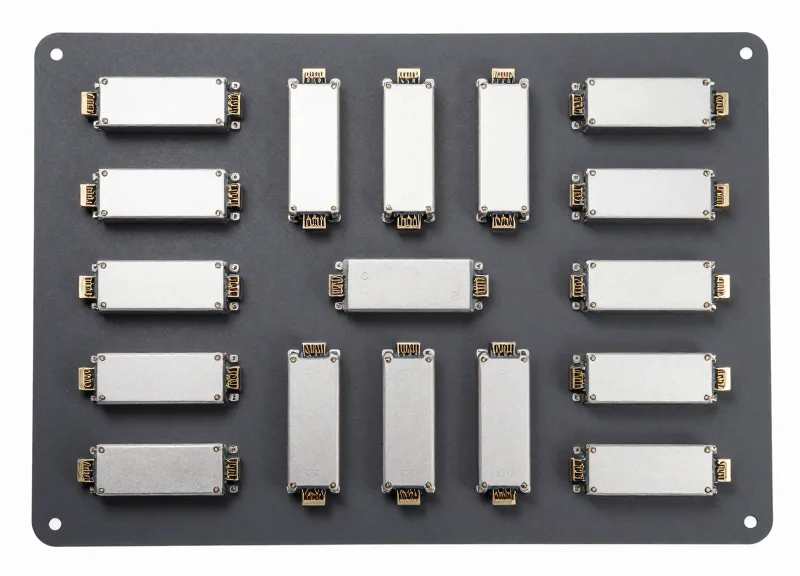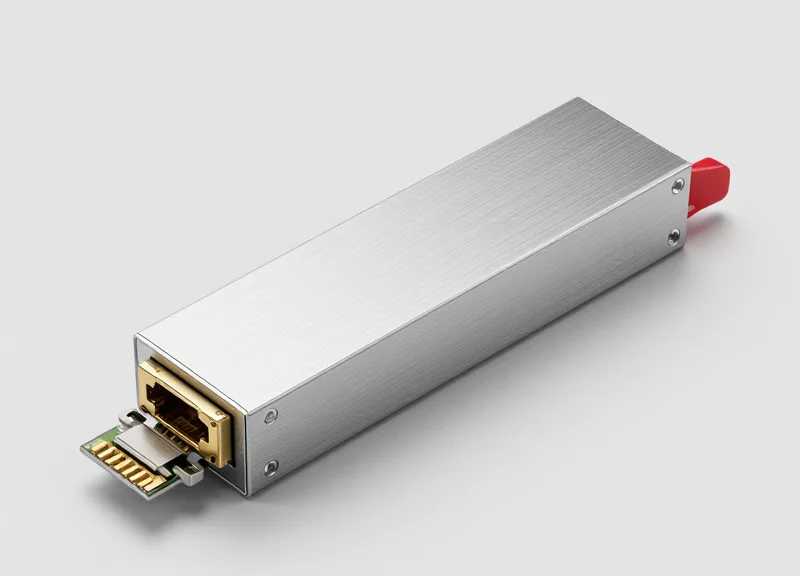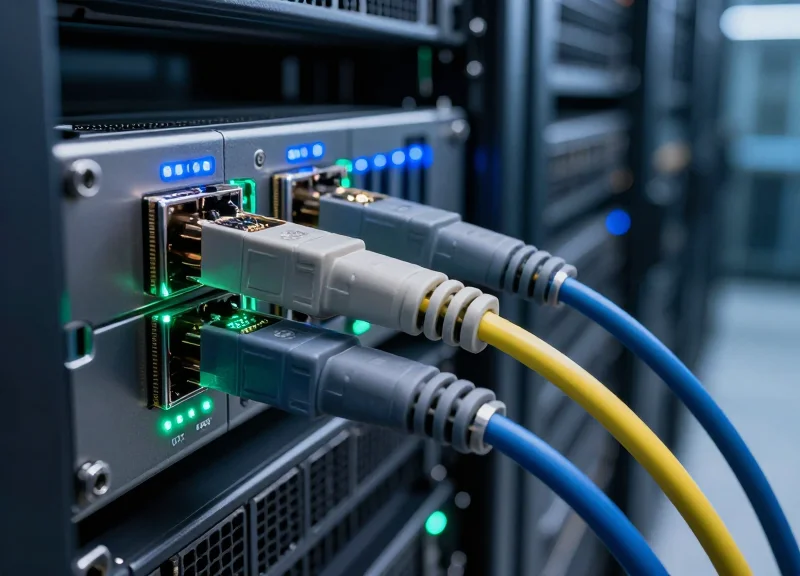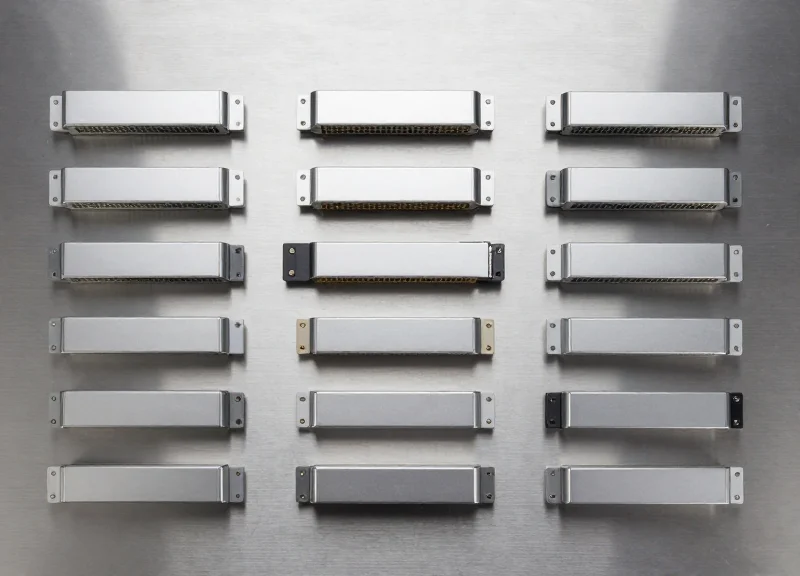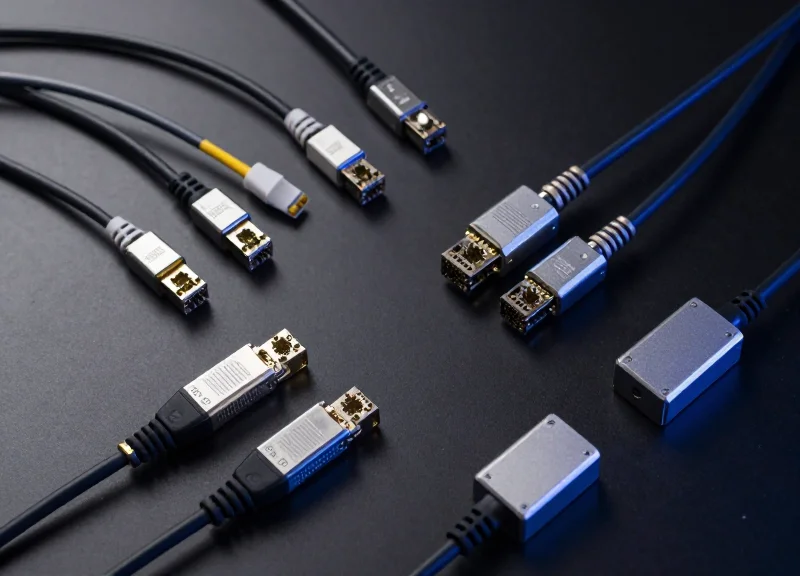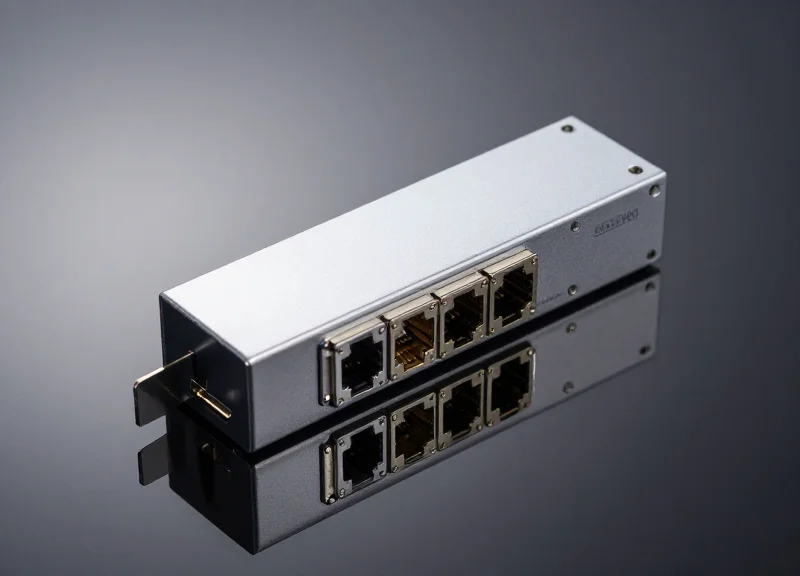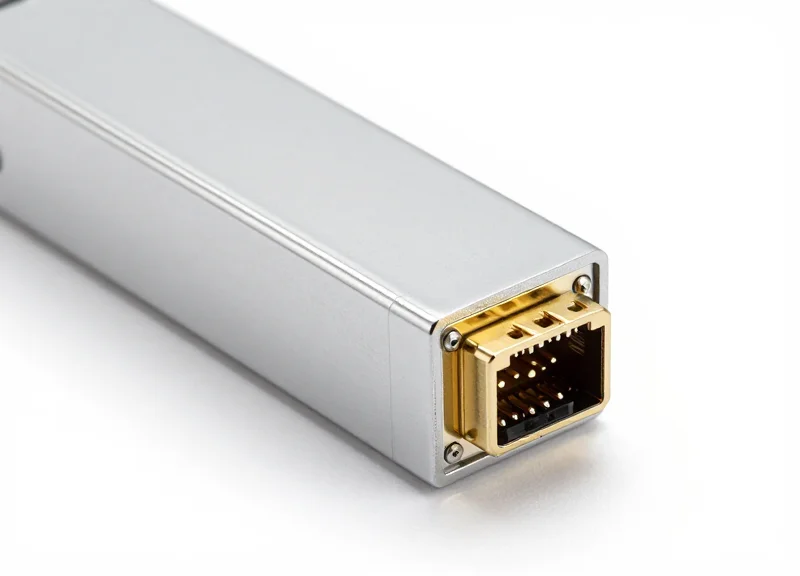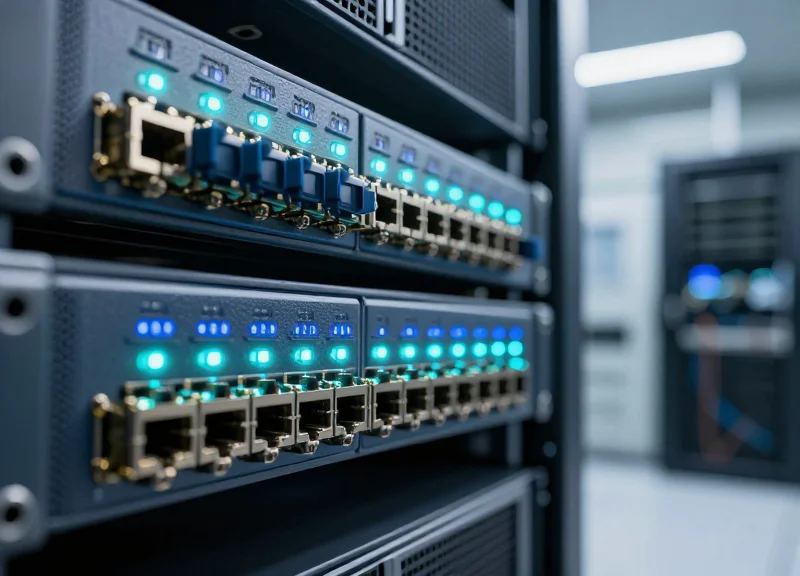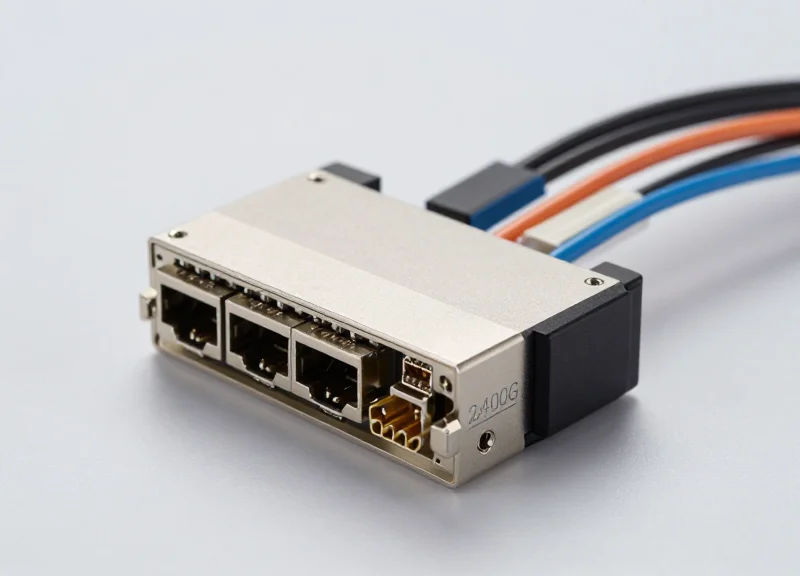
In the era of AI-driven demand and massive data growth, the leap to 800G connectivity requires more than just speed—it demands absolute reliability. Ubytelink’s 2x400G breakout solutions provide the essential bridge for global networks, ensuring mission-critical infrastructure remains robust, efficient, and ready for future demands.
The Evolution of High-Density Networking: From 400G to 800G

The Evolution of High-Density Networking: From 400G to 800G
The industry shift from 400G to 800G networking represents a fundamental change in how data center fabrics are constructed, moving beyond simple speed increments to focus on hyper-scale efficiency and the maximization of per-rack bandwidth. As AI-driven workloads and massive cloud computations push existing 400G infrastructures to their limits, 800G interfaces—specifically those utilizing 2x400G breakout configurations—have emerged as the definitive standard for balancing immediate throughput requirements with long-term architectural scalability.
Drivers of the 800G Migration
The primary catalyst for this evolution is the surge in East-West traffic within the data center, necessitated by distributed computing and large language models (LLMs). Traditional 400G ports, while revolutionary a few years ago, face challenges in power consumption per bit and physical space utilization. By adopting 800G OSFP or QSFP-DD800 modules, operators can effectively double the bandwidth of a single switch port, significantly reducing the complexity of cabling and the number of active components required to manage the network fabric.
| Feature | 400G Infrastructure | 800G (Breakout) Infrastructure |
|---|---|---|
| Standard Interface | QSFP-DD / OSFP | QSFP-DD800 / OSFP800 |
| Max Density (1RU) | 12.8 Tbps (32 ports) | 25.6 Tbps to 51.2 Tbps |
| Power Efficiency | Higher Watts per Gbps | Approx. 20-30% lower Watts per Gbps |
| Connectivity Path | Native 400G | 2x400G or 8x100G Breakout |
Why 2x400G Breakouts are the Strategic Standard
While native 800G-to-800G links are vital for core backbones, the 2x400G breakout configuration serves as the critical bridge for leaf-spine and top-of-rack deployments. This approach allows data centers to utilize the high-capacity 800G ports on next-generation switches while maintaining compatibility with the vast ecosystem of existing 400G NICs and leaf switches. It provides a granular upgrade path that avoids the 'all-or-nothing' hardware replacement cycle, allowing for premium quality signal integrity across a more versatile fiber plant.
- Why skip a direct transition and use 2x400G breakouts?
Breakouts allow for maximum utilization of 112G SerDes technology in 800G switches while interfacing with 400G hardware that still dominates the server-side market, ensuring no bandwidth is left stranded. - How does 800G improve data center cooling?
By consolidating two 400G links into a single 800G port, the reduction in physical transceivers and cables improves airflow and reduces the overall thermal footprint per gigabit of data moved. - Is the Ubytelink solution compatible with legacy OSFP?
Yes, Ubytelink 2x400G solutions are designed to adhere to IEEE and MSA standards, ensuring seamless interoperability between newer 800G ports and legacy 400G infrastructure.
Technical Deep Dive: Understanding 2x400G Breakout Architecture
Technical Deep Dive: Understanding 2x400G Breakout Architecture
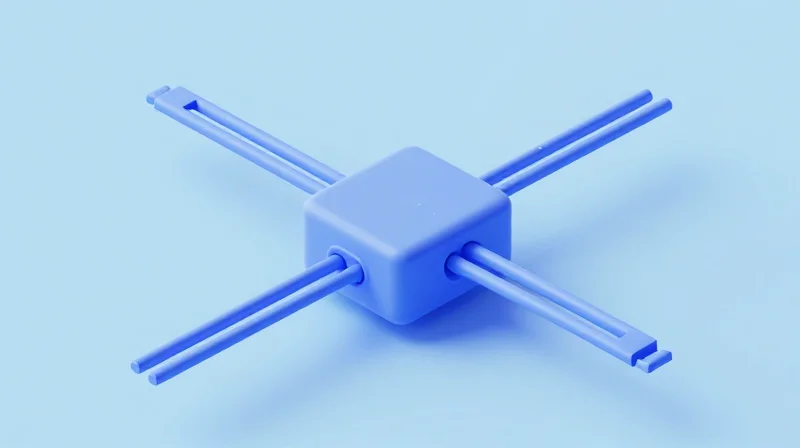
2x400G breakout architecture serves as the critical engineering link between high-radix 800G switches and existing 400G network nodes. By utilizing 800G form factors such as OSFP and QSFP-DD800, these modules employ an 8-lane electrical interface—where each lane operates at 100Gbps PAM4—to bifurcate the signal into two distinct 400G optical outputs. This architectural approach allows data center operators to maximize the bandwidth of a single switch port, effectively doubling the logical port count while reducing the physical space and power overhead typically required for discrete 400G hardware.
The Role of DSP and Optical Modulation
The functional heart of the 2x400G solution is the Digital Signal Processor (DSP), which manages the 800G electrical input and translates it into two independent 4-lane 400G streams. Depending on the specific deployment—such as 2x400G-FR4 using Wavelength Division Multiplexing (WDM) or 2x400G-DR8 using parallel fiber—the optical engine ensures that signal integrity is maintained over distances ranging from 500 meters to 2 kilometers. Ubytelink's premium architecture focuses on minimizing the Bit Error Rate (BER) and latency during this conversion process, ensuring that the breakout does not become a bottleneck for time-sensitive AI or cloud computing workloads.
| Specification | 2x400G DR8 | 2x400G FR4 |
|---|---|---|
| Fiber Infrastructure | Singlemode (Parallel) | Singlemode (Duplex) |
| Optical Interface | MPO-12 or MPO-16 | Dual CS or Dual LC |
| Transmission Reach | Up to 500m | Up to 2km |
| Multiplexing Method | Parallel Transmission | Wavelength Division (WDM) |
Key Considerations for 2x400G Deployments
- How does 2x400G improve rack density?
It allows a single 1U switch with 32 ports of 800G to provide 64 logical ports of 400G, drastically reducing the physical footprint of the leaf-spine layer. - Is there a performance trade-off compared to native 400G?
No, provided the transceiver uses high-quality DSPs like those in Ubytelink solutions, the signal quality and throughput are identical to two separate 400G modules. - What are the thermal implications of 2x400G modules?
Because 800G modules concentrate significant power in a small area, advanced heat-sink designs and thermal interface materials are essential to prevent throttling.
Why Ubytelink? The Core Pillars of Signal Integrity and Reliability
Why Ubytelink? The Core Pillars of Signal Integrity and Reliability
In the realm of 800G networking, the margin for error is non-existent. Ubytelink’s 2x400G breakout solutions are engineered to address the physical layer challenges inherent in high-frequency signal transmission, ensuring that data packets remain intact across complex switch-to-server topologies. By focusing on the fundamentals of signal integrity—minimizing attenuation and maximizing signal-to-noise ratios—Ubytelink provides the stable foundation necessary for hyperscale deployments where even a microsecond of downtime results in significant data loss.
Precision Engineering for Low Bit Error Rates (BER)
As data rates climb toward 800G, the susceptibility to timing jitter and amplitude noise increases exponentially. Ubytelink mitigates these risks by utilizing high-grade internal components and optimized PCB layouts that adhere to strict IEEE 802.3ck standards. This results in a Pre-FEC (Forward Error Correction) Bit Error Rate that consistently outperforms industry averages. By maintaining a clean eye diagram and low BER, our modules reduce the computational workload on network processors, effectively lowering overall system latency and power consumption.
Advanced EMI Shielding and Mechanical Integrity
| Performance Metric | Ubytelink Premium Standard | Industry Generic Components |
|---|---|---|
| Shielding Effectiveness | >40dB @ 20GHz | <25dB @ 20GHz |
| Pre-FEC BER Performance | 1E-7 to 1E-9 | 1E-5 (Minimum Compliance) |
| Signal Integrity Margin | High (Exceeds MSA Specs) | Low (Barely Compliant) |
| Operating Temp Range | 0°C to 70°C (Stable) | 10°C to 60°C (Variable) |
Reliability in High-Density Environments
Data center racks are increasingly crowded, leading to higher ambient temperatures and potential electromagnetic interference (EMI). Ubytelink's 2x400G modules feature die-cast zinc alloy housings that provide superior heat dissipation and EMI containment. This robust mechanical design ensures that high-speed signals are protected from crosstalk, even when the breakout cables are bundled in high-density cable management systems.
- How does Ubytelink ensure compatibility across different hardware vendors?
Our modules undergo rigorous interoperability testing in a multi-vendor environment, ensuring seamless integration with switches from Cisco, Arista, and Juniper without requiring custom firmware workarounds. - What prevents signal degradation in 2x400G breakout configurations?
We utilize active signal conditioning and premium-grade copper or optical fiber cores that maintain waveform integrity over the entire length of the breakout, preventing the packet drops common in lower-quality alternatives. - Is the hardware optimized for thermal efficiency?
Yes, the 2x400G architecture includes thermal interface materials and optimized airflow paths within the transceiver body to prevent thermal throttling during peak traffic loads.
Solving the Bandwidth Bottleneck: Use Cases in Hyperscale Data Centers

In the era of massive cloud computing and AI-driven workloads, hyperscale data centers face a critical bandwidth bottleneck where traditional cabling cannot keep pace with high-speed transceiver capabilities. Ubytelink 2x400G breakout solutions provide a strategic bridge, allowing operators to leverage 800G ports to serve multiple 400G endpoints, effectively doubling the capacity of existing rack space while maintaining the superior signal integrity required for mission-critical operations.
Optimizing Leaf-Spine Network Topologies
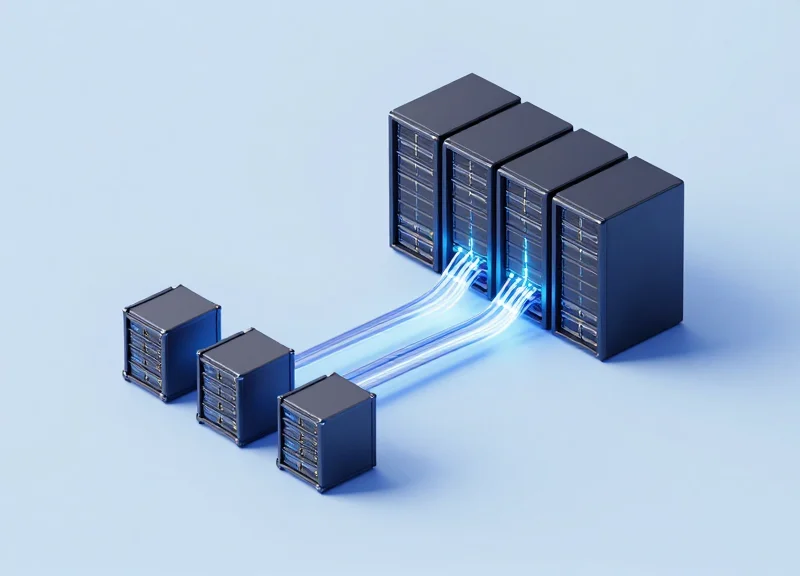
Modern data center designs rely heavily on leaf-spine architectures to ensure low-latency, any-to-any communication. By utilizing 2x400G breakout configurations, network architects can connect a single high-density 800G spine port to two separate 400G leaf switches. This approach drastically reduces the physical footprint of the switching fabric and simplifies cable management. Reduced cable bulk is not merely an aesthetic choice; it is essential for maintaining optimal airflow and cooling efficiency in high-density environments where thermal throttling can degrade performance.
Accelerating AI and Machine Learning Clusters
Artificial Intelligence (AI) and Machine Learning (ML) training models require synchronized, high-speed data transfers across thousands of GPUs and compute nodes. Ubytelink’s breakout solutions facilitate these high-velocity 'East-West' traffic patterns. By breaking down 800G links into 2x400G paths, data centers can distribute massive datasets across clusters with minimal jitter and lower bit error rates (BER). This ensures that expensive GPU hardware remains fully utilized rather than idling while waiting for data bottlenecks to clear.
| Feature | Legacy 400G Infrastructure | Ubytelink 2x400G Breakout |
|---|---|---|
| Port Density | 1:1 Ratio | 1:2 Ratio (Doubled Density) |
| Cabling Volume | High (Individual cable runs) | Low (Aggregated breakout structure) |
| Power Consumption | Standard per port | Lower per 400G channel via 800G efficiency |
| Future Proofing | Limited to 400G hardware | Facilitates 800G hardware transition |
Common Implementation Questions
- How does the use of breakout cables affect cooling efficiency?
By consolidating two 400G paths into a single 800G physical interface at the spine, the total number of cables is reduced, leading to less airflow obstruction and more efficient thermal management within server racks. - Are Ubytelink 2x400G solutions compatible with mixed-vendor environments?
Yes, Ubytelink breakout solutions are engineered to be fully compliant with IEEE 802.3 and MSA standards, ensuring seamless interoperability with hardware from leading global switch and server manufacturers. - What is the primary cost benefit for hyperscalers?
The primary benefit is the reduction in Total Cost of Ownership (TCO) through lower power consumption per bit and the ability to delay expensive physical expansions by maximizing the throughput of existing rack footprints.
Power Efficiency and Thermal Management in 2x400G Modules

Power Efficiency and Thermal Management in 2x400G Modules
In the high-density environment of hyperscale data centers, power efficiency is not merely an environmental concern but a critical operational requirement. Ubytelink 2x400G breakout solutions address this by integrating cutting-edge Digital Signal Processing (DSP) architectures that significantly reduce the wattage required per gigabit of data transferred. By optimizing the power envelope, these modules mitigate the risk of thermal throttling, ensuring consistent throughput even under peak traffic loads while lowering the overall Total Cost of Ownership (TCO).
Innovative Heat Dissipation Architecture
The transition to 800G (2x400G) speeds introduces substantial thermal challenges, as increased component density naturally generates more heat. Ubytelink utilizes high-conductivity casing materials and specialized internal thermal pads that facilitate rapid heat transfer from the optical engine to the module exterior. This passive cooling efficiency is complemented by a streamlined airflow design, which reduces the strain on active cooling systems within the switch chassis, leading to a quieter and more energy-efficient data center floor.
| Metric | Standard 800G Module | Ubytelink 2x400G Optimized |
|---|---|---|
| Typical Power Consumption | 16W - 18W | 14W - 15.5W |
| Operating Case Temp Range | 0°C to 70°C | 0°C to 75°C (Extended Stability) |
| Thermal Dissipation Method | Standard Fin Heatsink | Advanced High-K Thermal Interface |
| Energy Efficiency Ratio | Baseline | ~15% Improvement |
Sustainability and Long-Term Reliability
Lowering the operating temperature of a transceiver has a direct correlation with its Mean Time Between Failures (MTBF). Ubytelink's focus on thermal management ensures that the laser diodes and sensitive CMOS components are protected from the degrading effects of chronic heat exposure. This engineering foresight not only supports global sustainability initiatives by reducing carbon footprints but also protects the physical integrity of the network infrastructure over multi-year lifecycles.
- How does lower power consumption impact OpEx?
Lower power per module reduces direct electricity costs and significantly lowers the demand on cooling infrastructure, which often accounts for nearly 40% of a data center's energy usage. - What happens if a module exceeds its thermal threshold?
Standard modules may trigger a thermal shutdown or increase Bit Error Rates (BER). Ubytelink modules are designed with superior thermal headroom to maintain signal integrity even in high-density port configurations. - Are Ubytelink 2x400G modules compatible with standard cooling paths?
Yes, they are designed to align with industry-standard front-to-back and back-to-front airflow patterns found in modern QSFP-DD and OSFP switch architectures.
Interoperability Standards: Ensuring Seamless Integration
Interoperability is the cornerstone of modern high-speed networking, and Ubytelink 2x400G breakout solutions are engineered to meet this demand by strictly adhering to industry-wide Multi-Source Agreement (MSA) standards. By ensuring that modules, cables, and breakout assemblies function identically regardless of the host platform, Ubytelink provides a pathway for hyperscale operators to integrate next-generation 800G-to-400G transitions into existing multi-vendor infrastructures without the risk of hardware incompatibility or signal degradation.
Adherence to QSFP-DD and OSFP MSA Specifications
To achieve seamless integration, Ubytelink's 2x400G solutions align with the latest QSFP-DD (Quad Small Form-factor Pluggable Double Density) and OSFP (Octal Small Form-factor Pluggable) standards. These specifications define the electrical interfaces, mechanical dimensions, and management protocols required for 800G transceivers to break out into dual 400G links. This standardization guarantees that Ubytelink hardware is physically and electrically compatible with switches and routers from industry leaders like Cisco, Arista, and Juniper, facilitating a true 'plug-and-play' experience.
Legacy Hardware and Protocol Support
Beyond physical fit, interoperability extends to the digital layer. Ubytelink 2x400G breakouts support CMIS (Common Management Interface Specification), ensuring that software diagnostics and monitoring tools can accurately read module data across different network operating systems (NOS). This is particularly critical for legacy 400G infrastructure that must now interface with high-density 800G ports, as it allows for consistent FEC (Forward Error Correction) performance and link-state monitoring across generations of hardware.
| Feature | MSA-Compliant (Ubytelink) | Proprietary Solutions |
|---|---|---|
| Vendor Compatibility | Universal (Cisco, Arista, Mellanox, etc.) | Restricted to single-vendor ecosystems |
| Software Recognition | Standard CMIS / EEPROM Mapping | May require custom driver overrides |
| Upgradability | Simplified across diverse platforms | Expensive hardware replacements required |
| Link Performance | Predictable IEEE 802.3ck compliance | Varied performance in third-party slots |
Interoperability FAQs
- Can Ubytelink 2x400G cables work with switches from different brands on each end?
Yes, Ubytelink modules are designed to bridge disparate hardware, allowing an 800G port on one vendor's core switch to break out into 400G ports on another vendor's leaf switches without communication errors. - How is signal integrity maintained across different vendor ports?
Through strict adherence to IEEE 802.3ck standards and rigorous interoperability testing, Ubytelink ensures that PAM4 modulation and signal levels remain consistent across the entire physical link, regardless of host-side variance. - Do these solutions support third-party monitoring tools?
Yes, by following MSA-defined EEPROM mapping, Ubytelink solutions are fully compatible with standard SNMP and telemetry-based network monitoring systems for real-time health and performance tracking.
Quality Control and EEAT: Testing for Mission-Critical Use
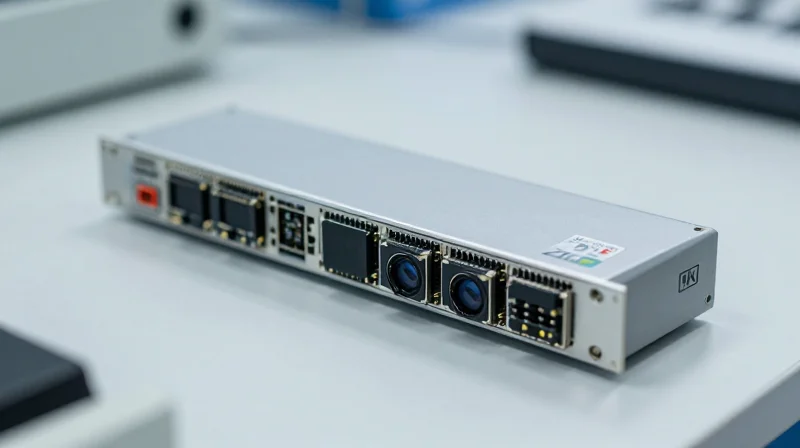
In mission-critical networking, the cost of failure far exceeds the price of the hardware itself. Ubytelink 2x400G breakout solutions are engineered to transcend basic industry standards, utilizing an exhaustive Quality Assurance (QA) lifecycle that validates every module under extreme conditions. By integrating signal integrity benchmarking with accelerated life testing, Ubytelink ensures that high-density interconnects maintain peak performance and structural integrity throughout their entire service life, even under the fluctuating thermal and power loads typical of modern AI and hyperscale clusters.
Rigorous Validation: Beyond Industry Standard Specifications
Standard MSA compliance is merely the baseline for Ubytelink. To ensure carrier-grade reliability, each 2x400G breakout solution is subjected to 100% factory testing rather than simple batch sampling. This includes precise Bit Error Rate (BER) analysis and eye-diagram characterization to ensure signal clarity across all eight channels. By simulating real-world traffic patterns at full 800G throughput, Ubytelink identifies and rectifies potential bottlenecks before the hardware leaves the facility.
| Test Parameter | Industry Standard | Ubytelink Premium Validation |
|---|---|---|
| Bit Error Rate (BER) | 10^-12 | Better than 10^-15 (pre-FEC) |
| Thermal Cycling | Basic functional check | -40°C to +85°C accelerated aging |
| Signal Integrity | Periodic sampling | 100% individual unit eye-diagram validation |
| Burn-in Testing | 4-12 hours | 24-72 hours sustained load testing |
Environmental Stress and Reliability Testing
Ubytelink utilizes specialized environmental chambers to conduct Highly Accelerated Life Testing (HALT) and Highly Accelerated Stress Screening (HASS). These tests expose the 2x400G modules to extreme temperature swings and humidity levels, mimicking years of operational wear in just a few days. This process validates the durability of internal optical alignments and the integrity of the laser components, ensuring that the breakout solutions can withstand the high-heat environments common in densely packed 400G/800G switch racks.
Mission-Critical Performance FAQ
- How does Ubytelink ensure long-term laser stability?
Each module undergoes extended 'burn-in' periods under maximum power draw to weed out early-life failures (infant mortality) and ensure the TOSA/ROSA components maintain stable output power over time. - Is the 2x400G breakout tested for interoperability with different switch vendors?
Yes, Ubytelink maintains a comprehensive compatibility lab where modules are tested against the latest NOS (Network Operating System) releases from major vendors like Cisco, Arista, and NVIDIA/Mellanox. - What certifications back the quality of these solutions?
Our solutions adhere to GR-468-CORE for optoelectronic reliability, as well as RoHS, CE, and FCC standards for safety and electromagnetic interference.
Future-Proofing Your Infrastructure: Scalability Benefits
Future-proofing infrastructure requires a shift from reactive hardware acquisition to proactive modular design. Ubytelink 2x400G breakout solutions allow network architects to maximize existing switch port density today while establishing the physical lane management and signal integrity standards required for next-generation Terabit-scale networking. By decoupling high-speed ports into manageable 400G segments, organizations create a flexible environment that can adapt to changing traffic patterns without requiring a complete 'rip-and-replace' of the physical layer.
The Pathway to 1.6T Connectivity
As data centers prepare for the jump to 1.6T, the management of high-speed lanes becomes the primary bottleneck. Ubytelink's 2x400G solutions utilize advanced OSFP and QSFP-DD form factors that are designed with backward compatibility and forward-looking density in mind. This structured approach allows for a seamless migration path where the underlying fiber infrastructure and rack layouts are already optimized for the multi-lane transmissions that 1.6T standards will demand.
| Metric | Legacy 400G Scaling | Ubytelink 2x400G Breakout |
|---|---|---|
| Port Efficiency | 1:1 mapping (standard density) | 1:2 high-density utilization |
| Cabling Volume | High congestion in high-speed tiers | Optimized structured cabling |
| 1.6T Transition Path | Requires full hardware overhaul | Incremental, modular upgrades |
| Thermal Management | Variable per-port dissipation | Uniform heat distribution for stability |
Economic Longevity and TCO Optimization
The scalability benefits of Ubytelink solutions extend beyond technical specifications into economic sustainability. By investing in premium-quality breakout cables that exceed current MSA standards, operators ensure that their physical layer can withstand the higher thermal loads and tighter signal tolerances of future hardware generations. This reliability extends the lifecycle of the infrastructure, significantly reducing Total Cost of Ownership (TCO) and maximizing Return on Investment (ROI) across several hardware refresh cycles.
- How does 2x400G facilitate the move to 1.6T?
It introduces the high-density lane management and connector precision required for 1.6T interfaces, allowing engineering teams to establish the necessary cable management patterns ahead of the 1.6T adoption curve. - Can these solutions support the thermal demands of future ports?
Yes, Ubytelink focuses on low-power consumption and heat-dissipating materials, ensuring that as port speeds increase, the infrastructure remains thermally stable. - What is the primary advantage for rack space optimization?
Breakout solutions effectively double the available bandwidth per rack unit, preserving valuable physical space for additional power and cooling hardware needed for future high-speed tiers.
Economic Advantages: TCO Optimization with Premium Optics
Economic Advantages: TCO Optimization with Premium Optics
The true value of high-density optical networking is measured not by the initial acquisition cost, but by the Total Cost of Ownership (TCO) over the deployment's lifecycle. Ubytelink 2x400G breakout solutions provide a superior economic model by minimizing the operational expenses (OpEx) that typically plague high-scale data centers, such as frequent hardware replacements, high power draw, and the labor-intensive troubleshooting of link failures.
Analyzing the 5-Year Lifecycle Cost
While budget-grade transceivers may offer lower upfront Capital Expenditure (CapEx), they often suffer from higher Annual Failure Rates (AFR). In a 2x400G environment, a single module failure disrupts twice the bandwidth of a standard 400G link, making reliability paramount. Ubytelink’s rigorous validation ensures a lower AFR, directly translating to fewer 'truck rolls' and reduced technician intervention hours.
| Cost Factor | Generic/Budget Optics | Ubytelink Premium Optics |
|---|---|---|
| Annual Failure Rate (AFR) | 1.5% - 3.0% | < 0.5% |
| Power Consumption (Per 800G) | 16W - 18W | 12W - 14W |
| Maintenance Labor | High (Frequent Replacements) | Minimal (Long-term Stability) |
| 5-Year Projected Savings | Baseline | 20% - 35% TCO Reduction |
Energy Efficiency and Sustainability
Modern 2x400G modules from Ubytelink utilize advanced Silicon Photonics and low-power Digital Signal Processors (DSPs). By reducing the wattage per gigabit transferred, network operators can significantly lower their electricity bills and cooling requirements. In large-scale clusters, these incremental savings on power aggregate into thousands of dollars in annual OpEx reduction, while simultaneously helping organizations meet their ESG (Environmental, Social, and Governance) targets.
- How do Ubytelink optics reduce operational overhead?
By utilizing high-grade lasers and internal components with superior Mean Time Between Failures (MTBF), Ubytelink reduces the frequency of link drops and hardware swaps, allowing IT teams to focus on strategic growth rather than reactive maintenance. - What is the expected ROI for premium breakout solutions?
Most enterprises see a full Return on Investment (ROI) within 18 to 24 months, driven primarily by power savings, reduced downtime, and the elimination of early replacement cycles associated with lower-quality hardware. - Does power efficiency impact long-term hardware health?
Yes. Lower power consumption results in less heat dissipation. Keeping modules and the surrounding switch fabric cooler extends the lifespan of both the optics and the expensive networking hardware they inhabit.
Ultimately, Ubytelink 2x400G solutions enable a 'set and forget' infrastructure. This reliability is the cornerstone of economic optimization in global networks, ensuring that the network remains an asset for growth rather than a recurring maintenance liability.
Modern global networks cannot afford downtime or technical inefficiency. Ubytelink’s 2x400G breakout solutions deliver the performance, reliability, and precision required for tomorrow's digital landscape. Contact our technical team today to learn how we can optimize your infrastructure for the next generation of high-speed connectivity.