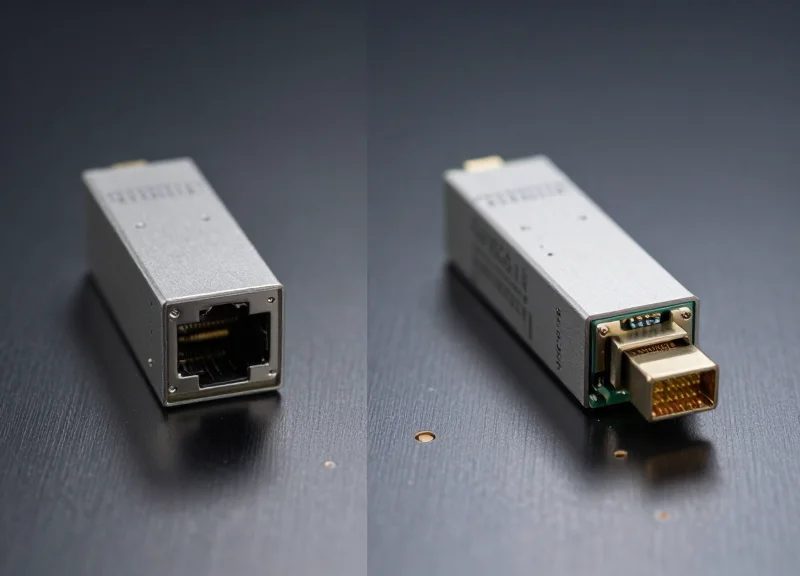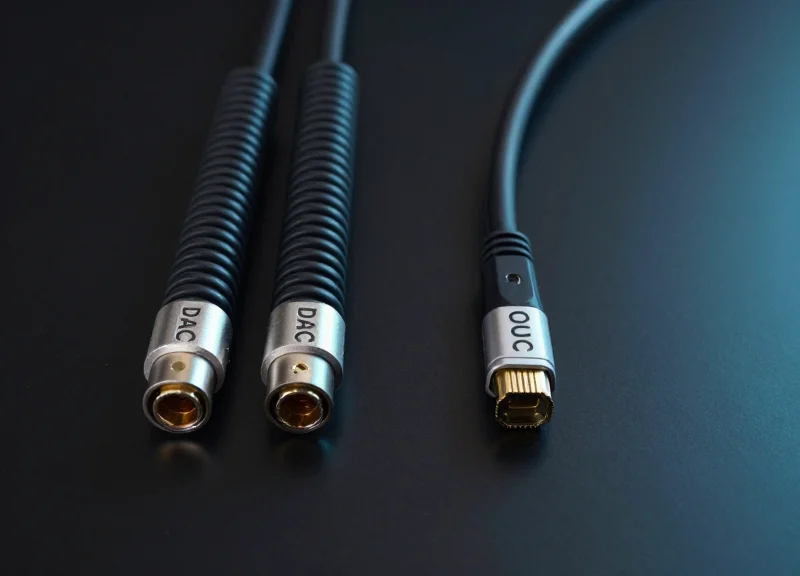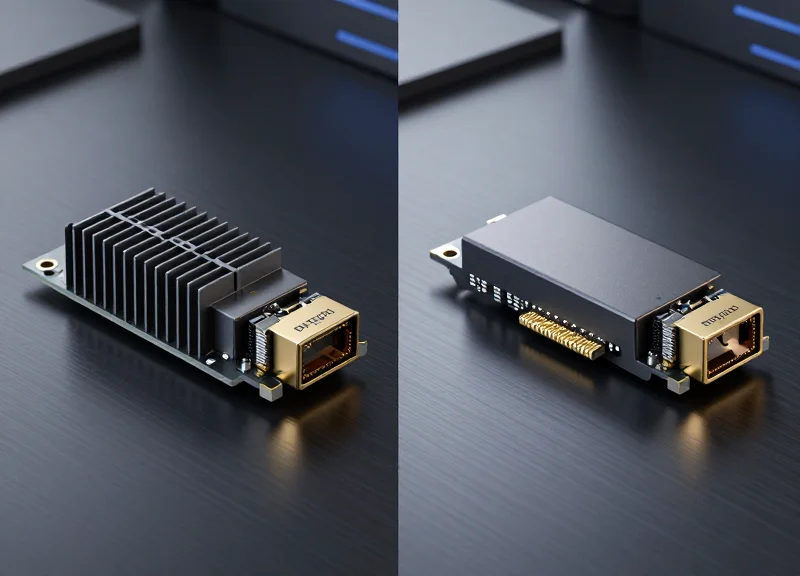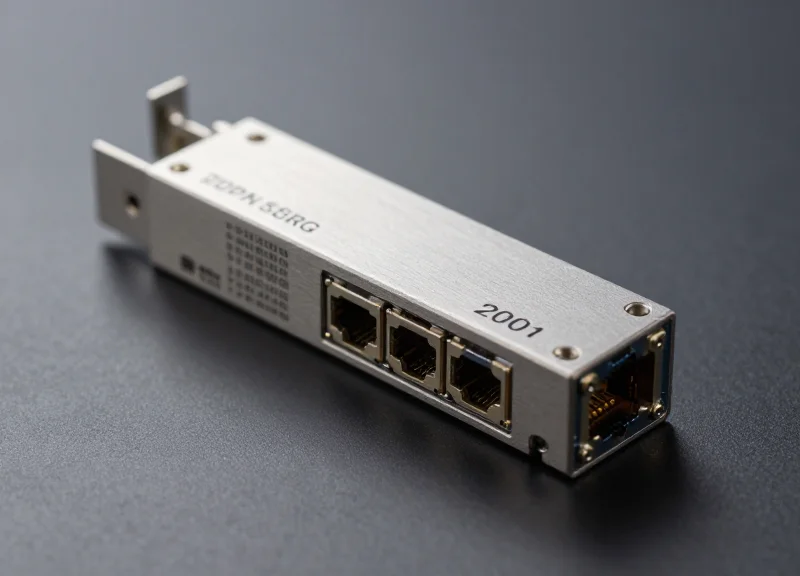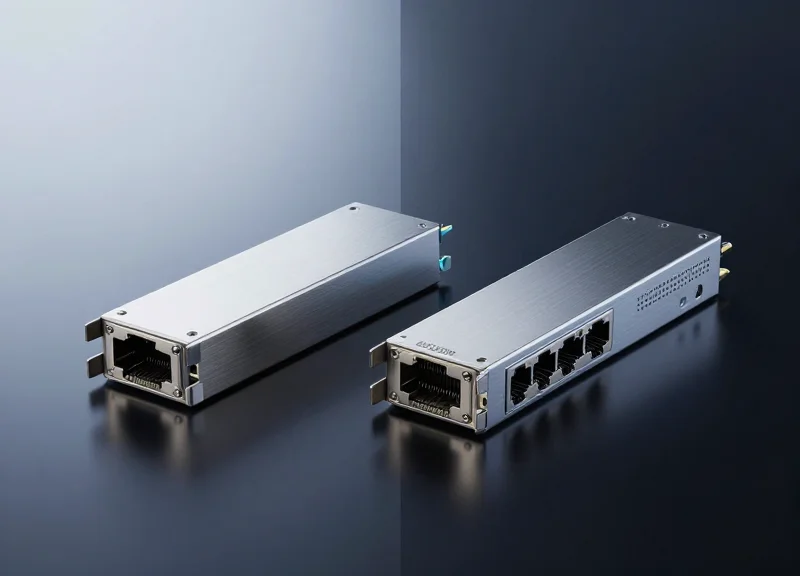
As global data traffic continues to surge, enterprise and cloud providers are rapidly transitioning to 400G architectures. Navigating the cost and complexity of this transition requires more than just high-quality hardware; it requires a strategic sourcing partner. This guide breaks down why 400G FR4 modules are the industry standard for mid-reach applications and how bulk purchasing through Ubytelink can optimize your capital expenditure.
The Rise of 400G FR4 in Modern Data Centers

The Rise of 400G FR4 in Modern Data Centers
The 400G FR4 module has emerged as the linchpin of hyperscale data center architectures, specifically designed to bridge the gap between short-range 100m transceivers and long-haul 10km solutions. By utilizing Four-wavelength Coarse Wavelength Division Multiplexing (CWDM4) over a single pair of single-mode fiber (SMF), the FR4 standard provides a robust 2km reach. This capability significantly reduces cabling complexity and total cost of ownership (TCO) compared to parallel fiber alternatives like DR4, making it the preferred choice for leaf-to-spine and inter-rack connectivity in high-density environments.
Comparing 400G Standards for Bulk Procurement
When sourcing 400G transceivers wholesale, it is critical to understand where FR4 sits within the optical roadmap. Unlike SR8 which relies on expensive multi-mode fiber arrays, or DR4 which is limited to 500 meters, FR4 offers a scalable path for large-campus data centers.
| Standard | Fiber Type | Connector | Max Reach | Ideal Use Case |
|---|---|---|---|---|
| 400G SR8 | Multi-mode (OM4) | MPO-16 | 100m | Intra-rack connectivity |
| 400G DR4 | Single-mode (PSM4) | MPO-12 | 500m | Short-reach leaf-spine |
| 400G FR4 | Single-mode (CWDM4) | Duplex LC | 2km | Campus-scale interconnects |
Economic Advantages of 400G FR4 Deployment
The shift toward 400G FR4 is largely driven by fiber conservation. Because FR4 uses WDM technology to multiplex four 100G signals onto a single fiber pair, data center operators can reuse existing duplex LC cabling infrastructure. For enterprises requesting custom quotes in 2026, the reduction in required patch panels and fiber trunking translates to a 20-30% saving in infrastructure overhead compared to parallel single-mode solutions.
Wholesale Implementation FAQ
- Why is 400G FR4 preferred over DR4 for 2km reaches?
While DR4 is efficient for breakout applications, its reach is capped at 500m. FR4 uses more sophisticated laser technology to ensure signal integrity up to 2km without requiring additional amplification or complex fiber arrays. - Can I use 400G FR4 modules with existing 100G hardware?
400G FR4 modules are designed for QSFP-DD or OSFP ports. While they are not directly backward compatible with legacy 100G QSFP28 ports, they can interoperate with 100G FR1/DR1 modules via breakout configurations in specific high-radix switches. - What factors influence bulk pricing for FR4 modules in 2026?
Volume is the primary factor, but custom requirements such as industrial temperature ratings, vendor-specific coding (e.g., Cisco, Arista, or Juniper compatibility), and extended testing protocols also play a significant role in final quote generation.
Technical Deep Dive: FR4 vs. DR4 and SR8
Technical Deep Dive: FR4 vs. DR4 and SR8
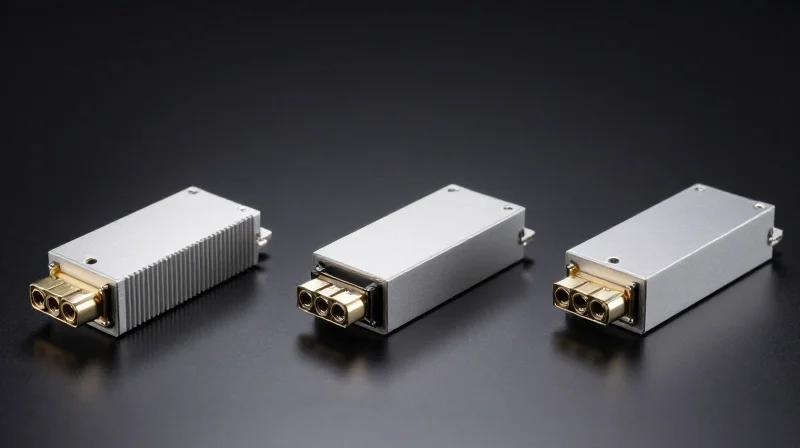
The primary distinction between 400G FR4 and its counterparts lies in its use of Coarse Wavelength Division Multiplexing (CWDM) technology, which allows it to transmit 400Gbps over a single pair of single-mode fibers (SMF) for up to 2km. Unlike SR8 and DR4, which require complex parallel fiber arrays, the 400G FR4 module leverages four distinct wavelengths on a single optical path, making it the most efficient solution for data centers aiming to upgrade capacity without overhauling their existing LC duplex cabling infrastructure.
Understanding Optical Lane Mapping and Fiber Efficiency
In the 400G landscape, fiber consumption is a critical variable in total cost of ownership (TCO). The 400G SR8 (Short Reach) uses 16 fibers (8 Tx, 8 Rx) via Multi-mode Fiber (MMF), limiting its reach to 100 meters. The 400G DR4 (Datacenter Reach) uses 8 single-mode fibers (4 Tx, 4 Rx) for a 500m reach. By contrast, the 400G FR4 multiplexes four 100G PAM4 signals onto four wavelengths (1271, 1291, 1311, and 1331 nm). This allows wholesale buyers to achieve 400G throughput using only two fibers total, representing a 75% reduction in fiber usage compared to DR4.
| Feature | 400G SR8 | 400G DR4 | 400G FR4 |
|---|---|---|---|
| Max Reach | 100m (OM4) | 500m | 2km |
| Fiber Type | Multi-mode (MMF) | Single-mode (SMF) | Single-mode (SMF) |
| Connector Type | MPO-16 / MPO-24 | MPO-12 | Duplex LC |
| Transmission | 8x50G PAM4 (Parallel) | 4x100G PAM4 (Parallel) | 4x100G PAM4 (CWDM) |
Why FR4 is the Standard for 2km Infrastructure
When sourcing 400G modules wholesale, the decision often comes down to the physical layout of the data center. While DR4 is excellent for breakout applications (splitting 400G into 4x100G links), FR4 is the superior choice for leaf-to-spine interconnects where distance exceeds 500 meters. The integration of a built-in multiplexer and de-multiplexer within the FR4 transceiver simplifies the optical path, reduces the risk of connector contamination, and ensures reliable performance over the standard 2km reach required for large-scale enterprise campuses.
- Can 400G FR4 modules interoperate with 400G DR4?
No, they are not directly interoperable because FR4 uses wavelength division multiplexing (WDM) on two fibers, while DR4 uses parallel fiber transmission on eight fibers. - What is the connector advantage of FR4?
FR4 uses standard Duplex LC connectors, which are more common, less expensive, and easier to clean than the MPO/MTP connectors required for DR4 and SR8. - How does power consumption compare?
Modern 400G FR4 modules in QSFP-DD or OSFP form factors typically operate within a 10W to 12W power envelope, comparable to DR4 despite the added complexity of the CWDM lasers.
The Strategic Value of Wholesale Purchasing
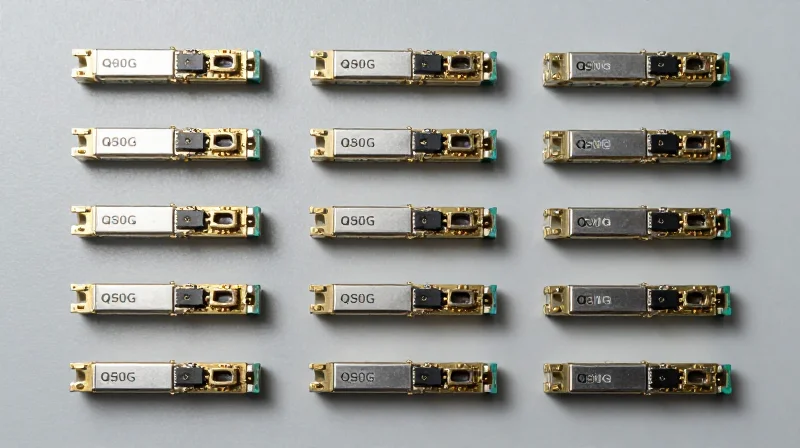
The strategic value of wholesale purchasing for 400G FR4 modules extends beyond simple unit-price discounts; it is a fundamental pillar of modern data center financial engineering and operational scalability. By securing 400G FR4 optics in bulk, enterprises can effectively lower their Total Cost of Ownership (TCO) while insulating themselves from the volatility of the global semiconductor supply chain. This approach allows for a more predictable capital expenditure (CAPEX) model and ensures that massive network upgrades—often involving thousands of ports—are not delayed by piecemeal logistics or inconsistent hardware revisions.
Quantifying the Financial Impact: TCO and Unit Economics
In a 400G environment, the transceiver cost can represent up to 50% of the total networking hardware investment. Wholesale purchasing shifts the cost curve by leveraging economies of scale that are unavailable in the retail or small-batch market. Beyond the initial purchase price, bulk procurement reduces administrative overhead, as a single custom quote covers an entire fiscal quarter's or year's deployment needs, streamlining procurement workflows and reducing legal and accounts-payable cycles.
| Procurement Metric | Retail/Small-Batch Purchasing | Wholesale/Bulk Procurement |
|---|---|---|
| Average Unit Cost | Premium/List Pricing | Tiered Volume Discounts (15-35% Lower) |
| Shipping & Logistics | High per-unit shipping costs | Consolidated freight & reduced import fees |
| Testing & QA | Variable batch quality | Standardized manufacturing run/Batch testing |
| Lead Time Stability | Subject to spot-market availability | Contractually guaranteed delivery windows |
Mitigating Supply Chain Risk and Hardware Inconsistency
One of the most overlooked advantages of bulk purchasing is the guarantee of hardware homogeneity. 400G FR4 modules utilize complex CWDM4 laser technologies and DSPs; even minor variations between firmware versions or component batches can lead to troubleshooting challenges in a massive leaf-spine architecture. Wholesale agreements typically ensure that all modules are sourced from the same production run or adhere to a specific hardware baseline, significantly simplifying the validation and deployment process for network engineers.
Strategic Procurement FAQs
- Why should we request a custom quote instead of using list prices?
Custom quotes allow vendors to factor in long-term partnerships, specific testing requirements, and current component yields, often resulting in pricing significantly below what is advertised on public e-commerce platforms. - How does bulk purchasing affect warranty and support?
Wholesale contracts often include enhanced Service Level Agreements (SLAs), dedicated technical support contacts, and prioritized Advance Replacement (AR) programs that are not available to retail customers. - What is the typical threshold for wholesale pricing on 400G FR4?
While it varies by vendor, wholesale discussions typically begin at 48 to 96 units (standard switch port density), with the most aggressive pricing tiers unlocked at 500+ units.
Ultimately, moving to a wholesale model for 400G FR4 optics transforms the procurement office from a reactive buyer to a proactive strategic partner. This ensures that as data demands grow, the physical infrastructure required to support them is both financially sustainable and technically consistent.
Customization through OEM/ODM Services
The Strategic Edge of Custom OEM/ODM Services for 400G FR4
Customization through OEM (Original Equipment Manufacturer) and ODM (Original Design Manufacturer) services transforms 400G FR4 transceivers from commodity hardware into specialized assets that align perfectly with a provider's unique technical constraints and branding requirements. By leveraging these services, wholesale buyers can move beyond 'off-the-shelf' limitations to secure modules that are pre-configured for seamless interoperability within proprietary switch environments, thereby reducing deployment latency and operational overhead.
Firmware Optimization and EEPROM Coding
The primary challenge in high-speed networking is vendor lock-in and compatibility. OEM services allow for custom EEPROM coding, which ensures that the 400G FR4 module is recognized by the host equipment (such as Cisco, Arista, or Juniper switches) as a native or approved device. This prevents software warnings and port-disabling issues, ensuring that the CWDM4 grid performance is optimized according to the specific diagnostic monitoring interface (DOM) requirements of the user's operating system.
Physical Hardware and Branding Customization
For large-scale service providers and data center operators, physical customization is essential for inventory management and brand consistency. This includes custom pull-tab colors for easy identification in high-density racks, laser-etched serial numbers for asset tracking, and private labeling for companies looking to resell the hardware under their own brand name. ODM services can even extend to structural modifications of the heat sink or shell to meet specific thermal dissipation needs in non-standard environments.
| Feature | OEM (Original Equipment Manufacturer) | ODM (Original Design Manufacturer) |
|---|---|---|
| Primary Focus | Compatibility and Branding | Hardware Design and Specification |
| Software/Firmware | Custom EEPROM/Coding for Host ID | Custom Diagnostic Features and Logic |
| Physical Attributes | Custom Labels, Pull-tabs, and Packaging | Custom Shells and Thermal Management |
| MOQ Requirement | Moderate (Ideal for Mid-Large Scale) | High (Ideal for Massive Hyperscale) |
Customization FAQ
- Can I request custom firmware for 100% compatibility with legacy switches?
Yes, our OEM services include specialized firmware development that mimics the vendor-specific signatures required by older or strictly locked networking hardware. - What is the typical lead time for custom-labeled 400G FR4 modules?
While standard wholesale orders ship quickly, custom branding and specific EEPROM coding typically add 1-2 weeks to the lead time depending on the order volume. - Do custom-coded modules support full DOM/DDM functionality?
Absolutely. Custom coding ensures that all Digital Optical Monitoring (DOM) data—such as temperature, voltage, and bias current—is accurately reported to your specific network management system.
Ensuring Interoperability and Standards Compliance
Why Standards Compliance is Non-Negotiable for Wholesale Buyers
In the 400G ecosystem, interoperability is the linchpin of network scalability, requiring that modules adhere strictly to Multi-Source Agreements (MSAs) and IEEE 802.3cu standards to ensure electrical and optical compatibility across different hardware platforms. For organizations purchasing in bulk, compliance is the only safeguard against vendor lock-in and high-latency performance issues. A standards-compliant 400G FR4 module ensures that the CWDM4 optical signals and the QSFP-DD or OSFP electrical interfaces operate harmoniously, regardless of whether the host switch is a Cisco Nexus or an Arista 7060 series.
Cross-Vendor Compatibility Testing
Wholesale procurement demands a 'plug-and-play' assurance that lab environments cannot always replicate. Leading optical manufacturers mitigate this risk by maintaining extensive 'compatibility labs' stocked with the latest chassis from industry giants. This involves verifying that the module’s EEPROM/firmware is correctly coded to be recognized by the Network Operating System (NOS), such as Cisco's NX-OS, Arista's EOS, or Juniper's Junos. Testing parameters typically include Bit Error Rate (BER) monitoring before and after Forward Error Correction (FEC), and verifying Digital Optical Monitoring (DOM) accuracy.
| Standard/Interface | Primary Function | Interoperability Benefit |
|---|---|---|
| IEEE 802.3cu | Optical signal specifications (100G per lane) | Ensures 2km reach and signal integrity across all SMF infrastructure. |
| QSFP-DD MSA | Mechanical and Electrical Interface | Guarantees physical fit, backward compatibility, and thermal dissipation. |
| CMIS 4.0/5.0 | Common Management Interface Specification | Standardizes how the switch software communicates with the module hardware. |
| EEPROM Coding | Vendor ID and Serial Recognition | Prevents 'unsupported transceiver' errors in Cisco, Arista, and Juniper gear. |
Frequently Asked Questions: Interoperability & Compliance
- Will 400G FR4 modules work with older 100G switches?
Directly, no. However, 400G FR4 modules in a QSFP-DD port can often support breakout modes or communicate with 400G-capable ports on older chassis if the hardware supports the QSFP-DD form factor and the specific breakout logic. - How does a wholesale provider handle firmware updates for Arista or Cisco?
Reputable vendors offer custom firmware coding services during the quoting process and can provide 're-programming boxes' that allow onsite engineers to update module firmware if a switch vendor releases a disruptive NOS update. - Is FEC (Forward Error Correction) standardized across all FR4 modules?
Yes, 400G FR4 relies on KP4 FEC, which is defined by IEEE standards. Interoperability depends on both the module and the switch port supporting the same FEC type to ensure error-free data transmission.
Evaluating Supplier Reliability and Quality Control

Evaluating Supplier Reliability and Quality Control
Selecting a wholesale partner for 400G FR4 modules requires a move beyond simple price-per-unit metrics; it demands a rigorous audit of the supplier's manufacturing consistency and technical accountability. Reliability in the 400G ecosystem is defined by a vendor's ability to maintain tight tolerances in PAM4 signaling and thermal dissipation across thousands of units, ensuring that bulk shipments perform identically to initial samples.
Manufacturing Standards and MSA Compliance
A reputable wholesale supplier must adhere to the Multi-Source Agreement (MSA) standards for QSFP-DD or OSFP form factors. This ensures that the 400G FR4 modules are physically and electrically compatible with your existing switch fabric. Look for facilities that hold ISO 9001 and ISO 14001 certifications, which signal a mature Quality Management System (QMS) capable of tracking batch-level performance and material sourcing.
| Evaluation Criterion | Tier-1 Wholesale Partner | Discount/Generic Supplier |
|---|---|---|
| Testing Protocol | 100% traffic testing in target switches | Batch/Sample testing only |
| Traceability | Serial-level manufacturing logs | Limited or no component tracking |
| Technical Support | Dedicated FAE (Field Application Engineer) | Generic email support |
| Warranty | 3-5 years with Advanced Replacement | 1-year limited depot repair |
Rigorous Testing and Validation Protocols
The transition to 400G introduces higher sensitivity to signal noise and jitter. Reliable suppliers implement a multi-stage testing pipeline before modules are cleared for wholesale distribution. This process should ideally involve original OEM equipment—such as Cisco or Arista switches—to simulate real-world data center environments rather than relying solely on loopback testers.
- EEPROM Verification
Ensuring the internal coding correctly identifies the module speed, reach, and vendor ID to prevent port-lockout issues. - Full Traffic Load Testing
Running the module at 400Gbps capacity for an extended period to monitor Bit Error Rate (BER) and packet loss. - Thermal Stress Screening
Validating that the FR4 module remains within operational temperature ranges (0-70°C for commercial grade) under full load. - Optical Power Characterization
Measuring TX/RX power levels to ensure they fall within the 2km reach specification for the FR4 standard.
Post-Sale Accountability and Technical Expertise
Wholesale procurement is a long-term partnership. The best suppliers offer more than just hardware; they provide the technical expertise to troubleshoot firmware incompatibilities that may arise during future network OS updates. Verify if your supplier offers an Advanced Replacement Program, which minimizes downtime by shipping replacement modules before the faulty units are returned.
- What should I ask regarding firmware updates?
Inquire if the supplier provides field-reprogrammable modules and the necessary software tools to update vendor coding without returning the hardware. - How is the RMA process handled for bulk orders?
A reliable partner should provide a clear Service Level Agreement (SLA) for RMAs, ideally offering a local buffer stock for rapid turnaround. - Can the supplier provide test reports for specific batches?
Professional wholesale vendors can provide serialized test reports that document the performance of every module in your specific shipment.
2026 Market Outlook: Pricing Trends and Availability

2026 Market Outlook: Pricing Trends and Availability
In 2026, the 400G FR4 module market has entered a phase of 'mature scaling,' where increased production efficiencies are finally meeting the unprecedented demand surges from AI and machine learning infrastructure. Wholesale pricing for 400G QSFP-DD FR4 optics is projected to experience a year-over-year decline of 12% to 18%, driven by improved yields in 7nm DSP manufacturing and the widespread adoption of silicon photonics. For bulk purchasers, this translates to a window of high liquidity and more favorable negotiation leverage than was present during the supply-constrained periods of 2022 and 2023.
Analyzing the 400G FR4 Price/Performance Curve
The primary factor stabilizing 2026 pricing is the diversification of the component supply chain. With more vendors offering MSA-compliant 400G FR4 solutions, the previous reliance on a few Tier-1 chipmakers has diminished. This competition is particularly visible in custom quoting for volume orders exceeding 500 units, where margin compression is most aggressive.
| Metric | 2023 Status | 2026 Projection | Impact on Wholesale Buyers |
|---|---|---|---|
| Average Unit Cost | High (Early Adoption) | Moderate (Mass Market) | Lower entry cost for 400G migration |
| Standard Lead Times | 8-14 Weeks | 4-6 Weeks | Faster project deployment cycles |
| Supply Availability | Allocated/Constrained | High Liquidity | Easier to secure bulk inventory |
| DSP Technology | 7nm Maturity | Initial 5nm Shift | Higher efficiency and lower power/heat |
The 'AI Effect' on Availability
While overall availability is high, the massive expansion of generative AI clusters by hyperscalers creates localized supply 'crunches.' When a major cloud provider places an order for hundreds of thousands of 400G modules, it can temporarily absorb the global capacity of specific Tier-1 fabs. Wholesale buyers are advised to utilize rolling forecasts and locked-in pricing agreements to bypass these macro-economic fluctuations.
Market Dynamics FAQ
- Will 400G FR4 prices drop further in late 2026?
While incremental drops are expected, the price floor is nearing for current-generation 7nm DSP modules. Significant further drops are unlikely until 800G becomes the dominant volume standard. - How do lead times for custom-coded modules compare to generic ones?
Custom-coded modules for vendors like Arista or Cisco typically add only 1-2 weeks to the lead time, provided the underlying hardware is in stock. - Is there a risk of obsolescence for 400G FR4 in 2026?
No. 400G FR4 remains the 'sweet spot' for data center interconnects (DCI) up to 2km and will likely remain the primary standard for enterprise core networks for the next 3 to 5 years.
Step-by-Step Guide to Requesting a Custom Quote
To secure the most competitive wholesale pricing for 400G FR4 modules, procurement teams must provide granular technical specifications—including reach requirements, connector types, and host platform compatibility—to ensure that the initial quote reflects both technical feasibility and high-volume discounts. Ubytelink streamlines this process by matching your specific data center architecture with the most cost-effective manufacturing runs available in the 2026 market.
The Information Required for an Accurate Wholesale Quote
Before contacting our sales engineering team, gathering precise physical layer data is essential. This prevents delays caused by 'technical back-and-forth' and allows us to provide a firm, final price that accounts for specific hardware optimizations or custom coding requirements.
| Requirement Category | Essential Data Points | Impact on Pricing |
|---|---|---|
| Physical Interface | Connector type (LC Duplex) and Form Factor (QSFP-DD vs. OSFP) | Standardization reduces lead times and unit cost. |
| Transmission Specs | Operating distance (up to 2km) and Wavelength (CWDM4) | Ensures performance stability in high-density environments. |
| Compatibility | Host platform model (Cisco, Arista, Juniper, etc.) | Enables pre-programming to bypass vendor lock-in fees. |
| Volume & Logistics | Immediate quantity vs. quarterly forecast | Determines eligibility for tiered bulk discounts. |
Steps to Finalizing Your Bulk Order
- Initial Inquiry Submission
Submit your project scope via our RFQ portal, detailing the total number of units and the expected delivery timeline for 2026-2025. - Technical Validation Call
Our engineers review your switch matrix and software versions (e.g., SONiC, EOS) to ensure the 400G FR4 modules are coded for 100% interoperability. - Quote Generation & Tiered Analysis
Receive a detailed breakdown of pricing based on volume thresholds, including shipping logistics and tax/duty estimates for international ports. - Sample Testing & Verification
For large-scale deployments, we provide evaluation units for in-rack testing to confirm Bit Error Rate (BER) and power consumption metrics. - Purchase Order & Manufacturing
Once the PO is issued, we initiate the production run with serialized tracking and comprehensive QC testing reports included.
Frequently Asked Questions Regarding Custom Quotes
- What is the typical turnaround time for a custom wholesale quote?
Standard quotes are usually delivered within 24 business hours. Complex projects involving custom firmware or multi-vendor compatibility may take 48 to 72 hours for full engineering validation. - Can I mix different module types within a single custom quote?
Yes. We encourage 'blended quotes' where you can combine 400G FR4, 400G DR4, and DAC cables to maximize your total volume discount across the entire project. - Do you offer pricing protection for long-term rollouts?
For multi-quarter deployments, we can offer price-lock agreements based on committed volumes, shielding your budget from potential market volatility in the semiconductor supply chain.
Upgrading to a 400G network is a critical step in maintaining a competitive edge in the digital economy. By partnering with Ubytelink for your 400G FR4 module needs, you gain access to tier-1 quality, wholesale savings, and expert OEM/ODM support. Ready to scale? Contact Ubytelink today for a personalized quote and accelerate your network's performance.