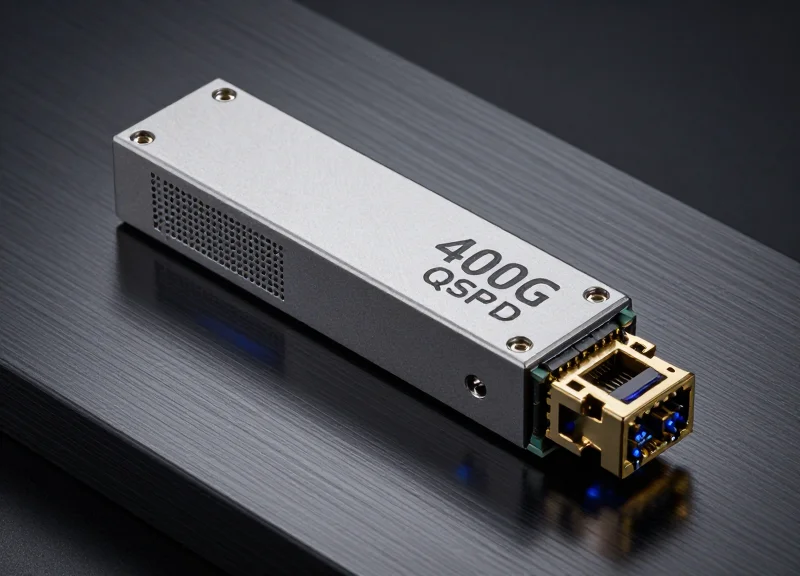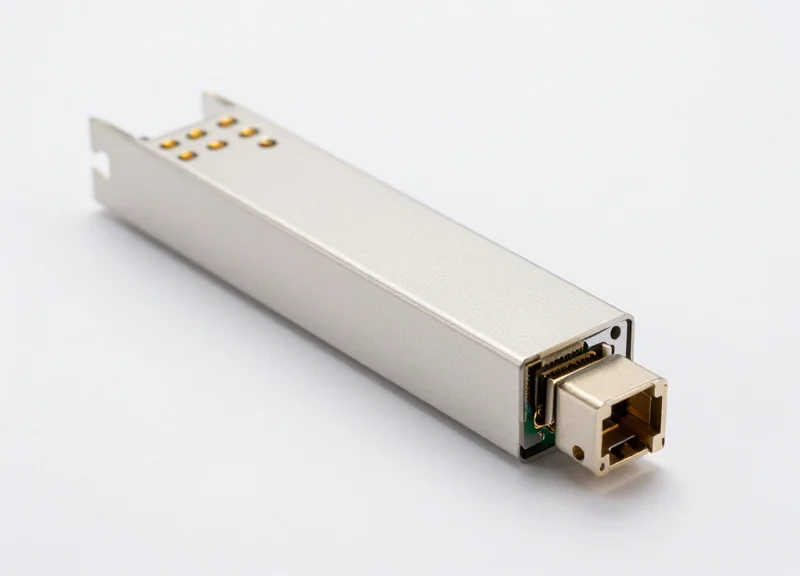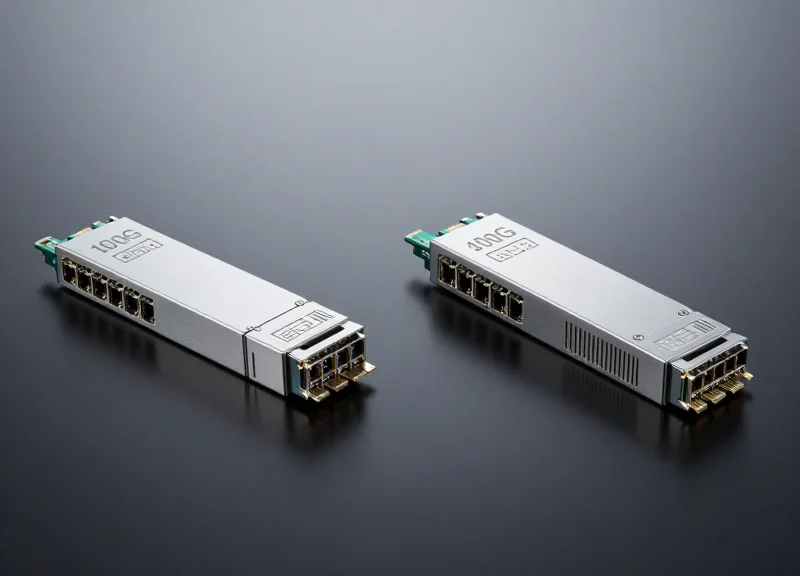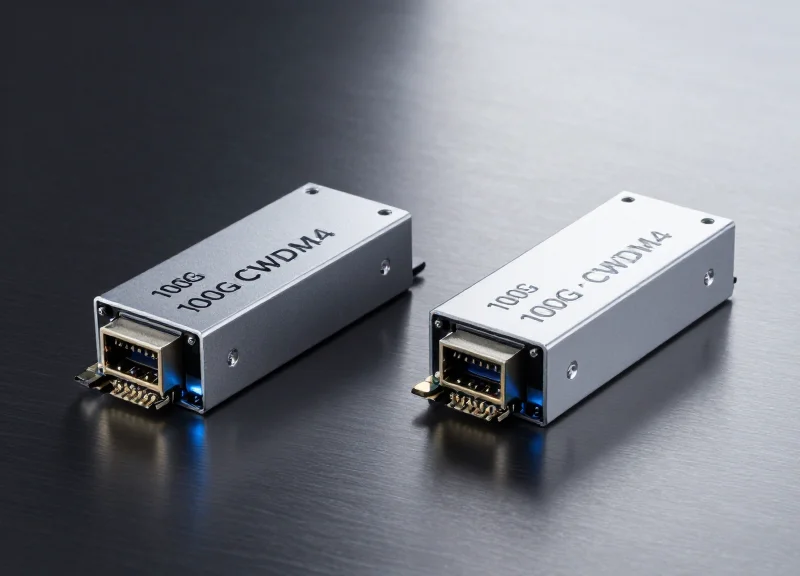
As modern data centers evolve to support AI, cloud computing, and high-frequency trading, the choice of 100G optical transceivers has moved beyond simple connectivity. It is now a strategic decision impacting operational expenditure and network reliability. This article provides a veteran perspective on how the 100G CWDM4 Economy variant stacks up against traditional alternatives like PSM4, SR4, and LR4, helping you optimize your infrastructure for both performance and budget.
The Rise of 100G CWDM4 Economy in Modern Data Centers
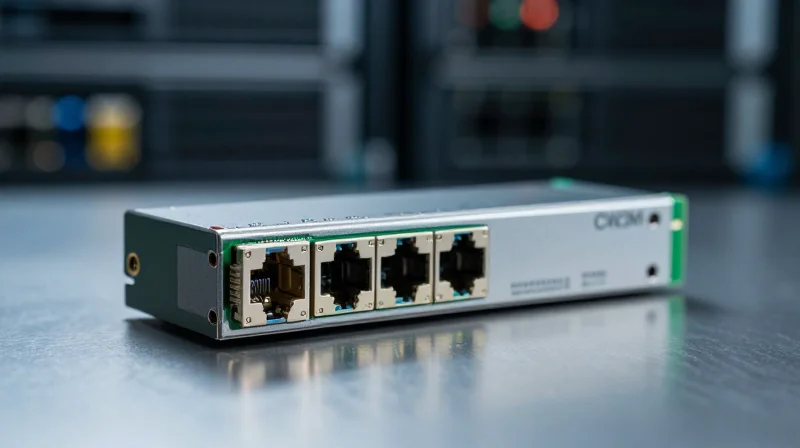
Understanding the 100G CWDM4 Economy Mandate
As hyperscale data centers migrated from 10G and 40G to 100G, the industry faced a significant cost bottleneck. Traditional 100G LR4 modules were often over-engineered for intra-data center reaches, while standard CWDM4 modules still carried price premiums that hindered massive scale-out. The CWDM4 'Economy' variant emerged as a pragmatic solution, offering the same 100Gbps throughput but optimized specifically for 500m to 2km links within controlled climate environments. This move transitioned the 100G interface from a specialized long-haul component to a commoditized building block for modern leaf-and-spine architectures.
Bridging the Gap: Performance vs. Cost
The 'Economy' designation is more than a marketing term; it reflects a shift in engineering priorities. By relaxing specific parameters—such as narrowing the operating temperature range and focusing on shorter reach thresholds—manufacturers can significantly increase production yields. This reduction in manufacturing complexity translates directly to lower end-user costs without sacrificing the low-latency performance required for high-frequency trading or AI training clusters.
| Feature | 100G LR4 | 100G CWDM4 Standard | 100G CWDM4 Economy |
|---|---|---|---|
| Max Distance | 10km | 2km | 500m - 2km |
| Typical Application | Campus/Metro | Inter-DC | Intra-DC Fabric |
| Wavelengths | LAN-WDM (1295-1309nm) | CWDM (1271-1331nm) | CWDM (1271-1331nm) |
| Relative Cost | Highest | Moderate | Lowest |
Market Dynamics and Adoption FAQ
- Why choose CWDM4 Economy over Standard CWDM4?
The primary driver is cost-per-port. For data centers where the vast majority of fiber runs are under 500 meters, the Economy variant provides identical bandwidth at a fraction of the price of standard 2km modules. - Is CWDM4 Economy compatible with existing fiber infrastructure?
Yes, it operates over standard G.652 single-mode fiber (SMF) and utilizes the same LC duplex connectors, making it a drop-in replacement for existing CWDM4 slots. - Can it interoperate with LR4 modules?
No. Due to the difference in wavelength spacing (CWDM vs. LAN-WDM), CWDM4 Economy modules cannot talk directly to LR4 modules without an intermediate conversion layer.
Architectural Differences: CWDM4 vs. PSM4 and SR4
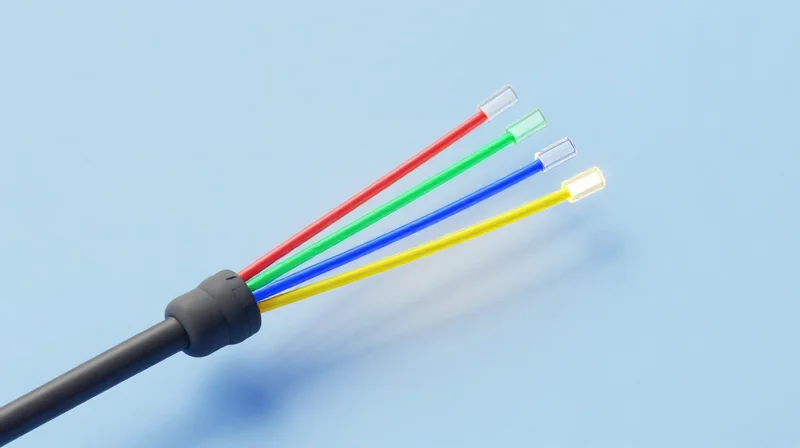
The fundamental architectural distinction between these 100G standards lies in the utilization of the physical layer: CWDM4 employs wavelength division multiplexing (WDM) to transmit signals over a single fiber pair, while PSM4 and SR4 utilize parallel fiber paths to achieve identical throughput. This difference dictates the complexity of the optical components inside the transceiver versus the complexity and cost of the external cabling infrastructure.
Wavelength Multiplexing vs. Parallel Fiber Design
100G CWDM4 uses four distinct wavelengths (1271, 1291, 1311, and 1331 nm) to carry four 25Gbps lanes simultaneously. An internal optical multiplexer and de-multiplexer combine and split these signals, allowing the module to operate over a standard duplex LC single-mode fiber (SMF). In contrast, 100G PSM4 and SR4 transmit four 25Gbps lanes at a single wavelength (1310nm for PSM4 and 850nm for SR4) across eight separate fibers (four for transmit and four for receive), typically requiring high-density MPO/MTP connectors.
Comparison of Physical Layer Specifications
| Feature | 100G CWDM4 | 100G PSM4 | 100G SR4 |
|---|---|---|---|
| Media Type | Single-Mode (SMF) | Single-Mode (SMF) | Multi-Mode (MMF) |
| Max Distance | 2km | 500m | 100m (OM4) |
| Fiber Count | 2 (Duplex) | 8 (Parallel) | 8 (Parallel) |
| Connector Type | Duplex LC | MPO/MTP | MPO/MTP |
| Wavelengths | 4 (1271-1331nm) | 1 (1310nm) | 1 (850nm) |
Optical Complexity and Reach Implications
The CWDM4 architecture is inherently more complex inside the module because it requires a TOSA (Transmit Optical Sub-Assembly) and ROSA (Receiver Optical Sub-Assembly) capable of handling four wavelengths with high precision. However, this complexity is rewarded with a significantly longer reach of up to 2km and lower cabling costs. PSM4 simplifies the transceiver design by using a single laser source split into four paths, but the 500m reach and the requirement for 8-fiber MPO cabling create a cost-vs-distance trade-off that favors shorter intra-row connections.
Architectural FAQs
- Why does CWDM4 use an LC connector instead of MPO?
Because CWDM4 multiplexes four signals onto a single optical path, it only requires two fibers (Tx/Rx), which fits the standard duplex LC interface common in legacy single-mode infrastructure. - Can PSM4 and CWDM4 interoperate?
No. Despite both using single-mode fiber, they are architecturally incompatible due to differing wavelength schemes (4-wavelength WDM vs. 1-wavelength parallel) and connector types. - How does SR4 architecture impact cost compared to CWDM4?
SR4 uses inexpensive VCSEL lasers and multi-mode fiber, making the hardware cheaper for very short distances (under 100m), but multi-mode cabling is more expensive than single-mode for long-run deployments.
Latency Analysis: Minimizing Delays in High-Speed Links
Latency in 100G optical links is predominantly determined by the digital signal processing (DSP) overhead and the mandatory implementation of Forward Error Correction (FEC) rather than the speed of light through fiber. In the context of 100G CWDM4 Economy modules, minimizing delays requires a strategic understanding of the RS-FEC (Reed-Solomon FEC) requirements stipulated by the IEEE 802.3bm and CWDM4 MSA standards. While the 'Economy' variant maintains cost-effectiveness through relaxed optical specifications, it remains bound to the same FEC processing cycles as standard modules to ensure a Bit Error Rate (BER) of 5x10^-5 or better, adding approximately 100 to 120 nanoseconds of latency per link segment.
The Role of FEC in 100G CWDM4 Economy Transmission
Most 100G interfaces, including CWDM4 and its Economy variants, utilize KR4 RS-FEC (Clause 91). This is essential because as signal rates increase to 25Gbps per lane, the signal-to-noise ratio decreases, making data more susceptible to errors. The FEC engine at the host side buffers incoming data blocks to calculate parity, which introduces a fixed serialization delay. For latency-sensitive environments like High-Frequency Trading (HFT) or massive AI training clusters, this microsecond-level overhead can become a bottleneck when compounded across multiple switches.
Latency Comparison by Transceiver Type
| Transceiver Type | Typical FEC Requirement | Processing Latency (Approx.) | Primary Latency Driver |
|---|---|---|---|
| 100G CWDM4 Economy | RS-FEC (Required) | 100ns - 130ns | Host-side FEC Engine |
| 100G SR4 | RS-FEC (Required) | 100ns - 120ns | Parallel Retiming/FEC |
| 100G PSM4 | RS-FEC (Required) | 100ns - 130ns | Optical-Electrical Conversion |
| 100G LR4 | None/Optional | < 10ns | Pure Analog/Gearbox Only |
DSP-Free vs. DSP-Based Designs
A key differentiator in the 'Economy' market is the shift toward DSP-free or analog clock and data recovery (CDR) designs. Standard CWDM4 modules often use a power-hungry DSP to compensate for chromatic dispersion and signal degradation over 2km. However, CWDM4 Economy modules frequently optimize for shorter reach (typically 500m to 1km), allowing for simpler analog CDRs. This reduction in internal processing complexity not only lowers power consumption but can marginally reduce the transceiver-internal jitter, although the dominant latency remains the host-side FEC.
Frequently Asked Questions regarding 100G Latency
- Can FEC be disabled on CWDM4 Economy links to reduce latency?
Technically yes, but it is not recommended. Disabling RS-FEC will drop latency by ~100ns but will likely result in a high Bit Error Rate (BER), causing packet loss that degrades total network throughput far more than the FEC delay. - How does the latency of CWDM4 Economy compare to 100G LR4?
100G LR4 typically uses a discrete LAN-WDM laser setup that doesn't strictly require FEC for 10km reaches, making it lower latency. However, LR4 is significantly more expensive than the Economy CWDM4 variant. - Does fiber distance impact latency significantly at 100G?
Light travels through fiber at roughly 5ns per meter. For a 500m CWDM4 Economy link, the propagation delay is 2.5 microseconds, which is much larger than the transceiver processing time but smaller than the switch fabric latency.
Power Consumption: The Hidden Cost of Cooling

The 100G CWDM4 Economy module represents a strategic optimization in power efficiency, typically consuming between 2.0W and 2.5W, which provides a significant thermal advantage over standard LR4 or high-performance CWDM4 alternatives that often exceed 3.5W. This reduction in power consumption directly correlates to lower heat dissipation per port, allowing data center operators to maintain optimal ambient temperatures with less aggressive cooling infrastructure, thereby lowering the overall facility PUE.
Analyzing the Wattage Gap: CWDM4 Economy vs. Alternatives
In high-density switching environments, every fraction of a watt counts. While 100G SR4 modules remain the lowest power consumers due to their short-reach VCSEL drivers, they lack the reach required for large-scale campus or inter-pod connectivity. The CWDM4 Economy fills this gap by providing 2km reach while keeping power profiles closer to short-reach optics than to long-reach (LR4) standards. This is achieved by utilizing uncooled DFB lasers and simplifying the internal circuitry, which avoids the high power draw associated with the thermoelectric coolers (TEC) found in LR4 modules.
| Transceiver Type | Typical Power Consumption | Max Reach | Cooling Requirement |
|---|---|---|---|
| 100G CWDM4 Economy | 2.0W - 2.5W | 2 km | Passive/Low |
| Standard 100G CWDM4 | 3.5W | 2 km | Moderate |
| 100G PSM4 | 2.5W - 3.5W | 500 m | Moderate |
| 100G LR4 | 3.5W - 4.5W | 10 km | High (Active TEC) |
| 100G SR4 | 1.5W - 2.0W | 100 m (OM4) | Very Low |
The Impact on Data Center PUE and OpEx
The hidden cost of high-power transceivers isn't just the electricity fed into the module, but the 'cooling multiplier.' In most enterprise data centers, for every 1W of power consumed by IT equipment, an additional 0.5W to 1W is required for the cooling system to remove that heat (depending on the PUE). By deploying 100G CWDM4 Economy modules across thousands of ports, operators can achieve a compounding reduction in utility costs. Furthermore, lower operating temperatures extend the Mean Time Between Failures (MTBF) for both the transceiver and the host switch silicon, reducing long-term maintenance overhead.
- How does the CWDM4 Economy module reduce heat compared to LR4?
Unlike LR4 modules which use a Thermoelectric Cooler (TEC) to stabilize laser wavelengths for 10km transmission, CWDM4 Economy uses uncooled DFB lasers optimized for shorter distances, eliminating the most power-hungry component of the optical assembly. - Can lower power consumption impact signal integrity?
No. The power reduction is achieved through architectural simplification and component selection that meets the specific 2km link budget of CWDM4, ensuring signal integrity remains within IEEE and MSA standards. - What is the financial impact of choosing CWDM4 Economy in a hyperscale setup?
In a leaf-spine architecture with 10,000 links, switching from 3.5W modules to 2.5W modules saves 10kW of direct energy. Including cooling overhead, this can result in tens of thousands of dollars in annual savings depending on regional energy rates.
Cabling Infrastructure: MPO vs. LC Duplex Cost Savings
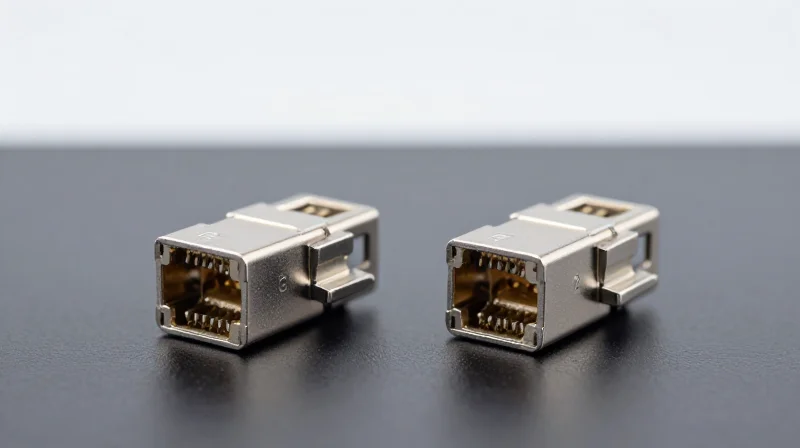
Cabling Infrastructure: MPO vs. LC Duplex Cost Savings
The choice between 100G CWDM4 and parallel optics like PSM4 or SR4 fundamentally dictates the complexity and cost of the underlying passive optical network. CWDM4 utilizes Wavelength Division Multiplexing (WDM) to transmit four 25G channels over a single pair of duplex single-mode fibers (SMF), whereas parallel alternatives require eight fibers per link. This distinction allows the CWDM4 Economy model to achieve significant cost savings in fiber-rich environments by maximizing existing cable plant utility and reducing the physical footprint of the cabling infrastructure.
Material and Installation CapEx Comparison
While MPO connectors offer high density, they carry a premium in both material cost and cleaning/maintenance complexity. LC duplex systems benefit from the ubiquity of standard SMF components, which are significantly less expensive than the multi-fiber trunks and specialized cassettes required for MPO-8 or MPO-12 configurations. For data centers with long cable runs, the reduction in fiber volume offered by CWDM4 directly translates to lower cable tray congestion and reduced installation labor.
| Component | 100G CWDM4 (LC Duplex) | 100G PSM4 (MPO-8/12) | 100G SR4 (MMF MPO) |
|---|---|---|---|
| Fiber Count Per Link | 2 Fibers | 8 Fibers | 8 Fibers |
| Cabling Media | Standard G.652 SMF | Ribbon / Loose Tube SMF | OM3/OM4 MMF |
| Connector Type | LC Duplex | MPO-12 / MPO-8 | MPO-12 / MPO-8 |
| Relative Infrastructure Cost | Low | Moderate-High | High (at distance) |
| Patching Complexity | Low (Standard) | High (Polarity Management) | High (Polarity Management) |
Long-term Scalability and Migration Paths
The financial advantage of LC-based infrastructure extends into future-proofing. As networks migrate toward 400G, the 2-fiber SMF plant used for 100G CWDM4 is directly compatible with 400G-FR4 transceivers. In contrast, users of MPO-based 100G systems may face complex migration paths involving expensive conversion cables or the replacement of cassettes to handle different fiber orientations or increased fiber counts.
- Is LC duplex always cheaper than MPO for 100G?
In terms of passive infrastructure (cables and patch panels), LC duplex is almost always cheaper for long-reach applications due to the significantly lower cost of duplex fiber compared to 8-fiber or 12-fiber MPO trunks. - How does CWDM4 reduce cable tray congestion?
By using only two fibers per link instead of eight, CWDM4 reduces the bulk of the cable plant by 75%, allowing for better airflow and easier management in high-density racks. - Can existing MPO plants support CWDM4?
Yes, through the use of MPO-to-LC breakout cassettes, though this adds an extra layer of cost and insertion loss compared to a native LC duplex installation.
Total Cost of Ownership (TCO) Deep Dive
Achieving a sustainable Total Cost of Ownership (TCO) in 100G deployments depends on balancing the upfront transceiver cost with the long-term expenses of power consumption and fiber plant maintenance. While PSM4 optics often feature the lowest per-unit price, their requirement for expensive MPO-8/12 cabling frequently results in a higher net-cost-per-link compared to CWDM4. Conversely, 100G LR4 offers the reach needed for longer spans but carries a significant premium in both procurement and power usage, making CWDM4 Economy the most cost-effective middle-ground for data center reaches up to 2km.
5-Year TCO Comparison Matrix
| Cost Factor | 100G CWDM4 Economy | 100G PSM4 | 100G LR4 |
|---|---|---|---|
| Transceiver CapEx | Moderate | Lowest | Highest |
| Cabling Infrastructure | Low (LC Duplex) | High (MPO-12) | Low (LC Duplex) |
| 5-Year Energy (at $0.12/kWh) | ~$130 - $160 per port | ~$110 - $140 per port | ~$180 - $220 per port |
| Maintenance & Cleaning | Standard (Simplified) | Complex (MPO Matrix) | Standard (Simplified) |
| Aggregate TCO Ranking | 1 (Most Economical) | 2 (Distance Dependent) | 3 (Performance Focused) |
The Impact of Power Usage Effectiveness (PUE)
In a modern data center with a PUE of 1.5, every watt consumed by a transceiver requires an additional 0.5 watts for cooling. CWDM4 Economy modules typically operate within a 2.5W to 3.5W envelope. Over a five-year lifecycle, the operational expenditure (OpEx) for a single 100G LR4 module can exceed the CWDM4 cost by over $50 solely in electricity and cooling overhead. When scaled across a 48-port leaf switch, the savings realized by adopting CWDM4 Economy optics can reach thousands of dollars per rack.
Total Cost of Ownership FAQ
- Why is the cabling cost for PSM4 so much higher if the transceivers are cheaper?
PSM4 requires parallel fiber (8 fibers per link via MPO connectors). The cost of high-density MPO trunk cables and patch cords is significantly higher than the 2-fiber LC duplex cables used by CWDM4, which often offsets the initial savings on the transceivers. - Does the uncooled laser in CWDM4 Economy affect its lifespan and TCO?
No, CWDM4 Economy optics are designed for the controlled environments of data centers (0-70°C). By omitting the Thermo-Electric Cooler (TEC) required by LR4, they reduce complexity and power draw without compromising the typical 5-to-7-year hardware lifecycle. - What is the primary hidden cost in 100G LR4 deployments?
Beyond the higher purchase price, the primary hidden cost is the power consumption associated with the LAN-WDM optical sub-assembly and the high-precision lasers required to maintain tight wavelength spacing, which increases both energy bills and heat load.
Reach and Reliability: Solving the 2km Distance Challenge
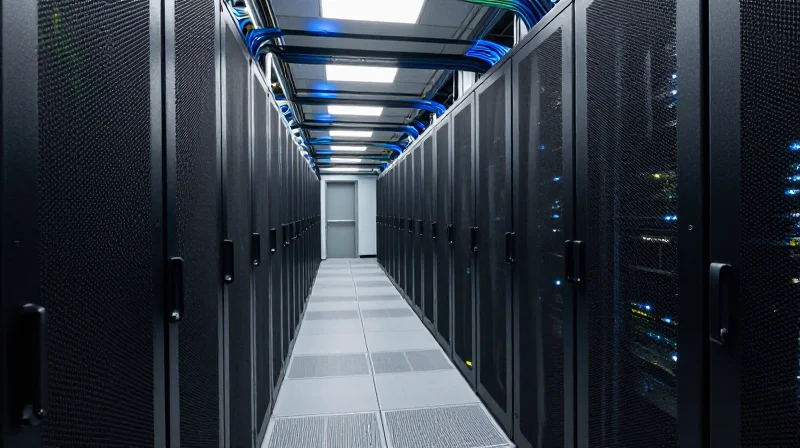
The 100G CWDM4 Economy transceiver effectively solves the 2km distance challenge by providing a reliable, mid-reach single-mode solution that eliminates the performance bottlenecks of multimode fiber while avoiding the excessive cost and power consumption of 10km long-reach optics. For the vast majority of hyperscale and enterprise data centers, 2km is the 'Goldilocks' distance—sufficient to span across large halls and between separate data rooms without the signal degradation inherent in shorter-range alternatives.
Bridging the Gap: The 2km Strategic Advantage
In contemporary Clos and leaf-spine topologies, the physical layout of the data center dictates the optical requirements. While 100G SR4 is limited to roughly 100 meters over OM4 fiber, large-scale facilities often require links that exceed this range. Conversely, 100G LR4 supports up to 10km, but the hardware required to achieve that distance—such as cooled EML lasers—is prohibitively expensive and power-hungry for internal data center use. CWDM4 Economy utilizes four uncooled 25Gbps WDM channels to maintain signal integrity over 2,000 meters, perfectly matching the requirements of large-scale campus fabrics.
| Transceiver Specification | 100G SR4 | 100G CWDM4 Economy | 100G LR4 |
|---|---|---|---|
| Maximum Reach | 100m (OM4) | 2km (G.652 SMF) | 10km (G.652 SMF) |
| Laser Type | VCSEL | Uncooled DML | Cooled EML |
| Fiber Type | Multimode (8-fiber) | Single-mode (2-fiber) | Single-mode (2-fiber) |
| Ideal Use Case | Intra-rack / Top-of-Rack | Inter-row / Leaf-to-Spine | Campus / Inter-building |
Reliability and Signal Integrity at Scale
The reliability of the CWDM4 Economy module is rooted in its simplified design. By targeting a 2km limit, the transceiver can operate using uncooled Distributed Feedback (DFB) lasers. This reduces the number of components prone to failure and lowers the thermal profile of the module. When deployed in high-density spine switches, where hundreds of ports are active simultaneously, the lower heat dissipation of CWDM4 Economy translates directly into improved system-level MTBF (Mean Time Between Failures) and more consistent optical power levels across the fiber plant.
- Does CWDM4 Economy require Forward Error Correction (FEC)?
Yes, to ensure reliable 2km transmission and meet IEEE standards, CWDM4 Economy requires RS-FEC (528,514) on the host equipment to maintain a low bit error rate. - Can CWDM4 Economy be used for very short distances?
Absolutely. Unlike some long-reach optics that require attenuators to prevent receiver saturation at short distances, CWDM4 Economy is stable across the entire 0m to 2km range. - Is the 2km reach affected by the number of patch panels?
While every connection adds insertion loss, the 2km power budget for CWDM4 is designed to accommodate the typical 2-4 patch panel connections found in a standard data center structured cabling link.
Interoperability and EEAT: Ensuring Standards Compliance
Interoperability: The Non-Negotiable Standard for Economy Modules
While 'Economy' variants of 100G CWDM4 transceivers offer significant cost reductions, their value is entirely dependent on strict adherence to industry standards, specifically the CWDM4 MSA. True interoperability ensures that these modules can communicate flawlessly with existing switches, routers, and higher-cost LR4 or standard CWDM4 optics within a leaf-spine architecture. Without rigorous compliance, 'Economy' solutions risk becoming proprietary silos that increase technical debt and operational complexity.
The CWDM4 MSA and Technical Benchmarks
The CWDM4 Multi-Source Agreement defines the optical and electrical specifications for 100Gb/s interfaces over duplex single-mode fiber up to 2km. Economy modules achieve their price point by optimizing the laser cooling and screening processes, but they must still meet the fundamental Bit Error Rate (BER) and eye diagram requirements to be considered viable. Failure to meet these specs leads to packet loss and intermittent link flaps that are difficult to diagnose in high-density data center environments.
| Parameter | CWDM4 MSA Requirement | CWDM4 Economy Standard | Impact of Non-Compliance |
|---|---|---|---|
| Wavelengths | 1271, 1291, 1311, 1331nm | Same (Strict adherence) | Optical crosstalk & signal loss |
| Connector Type | Duplex LC | Duplex LC | Physical physical interface mismatch |
| Maximum Reach | 2km | 2km (Validated) | Link failure at distance |
| Operating Temp | 0°C to 70°C | 0°C to 60°C (Case Optimized) | Thermal shutdown in dense racks |
Establishing Trust: The EEAT Framework in Optical Procurement
To avoid the pitfalls of low-quality optical components, network architects should apply the EEAT (Experience, Expertise, Authoritativeness, and Trustworthiness) framework to their procurement process. This involves verifying that the vendor has a proven track record in high-volume production (Experience), deep technical knowledge of silicon photonics or TOSA/ROSA assemblies (Expertise), industry-recognized certifications like ISO 9001 (Authoritativeness), and provides transparent batch testing reports (Trustworthiness).
- Can I mix CWDM4 Economy with standard CWDM4 modules from different brands?
Yes, provided both modules are MSA-compliant. The MSA ensures that optical power levels, wavelengths, and modulation formats are compatible across different manufacturers, enabling a healthy multi-vendor ecosystem. - Does 'Economy' mean a higher Bit Error Rate (BER)?
No. A compliant Economy module must maintain a pre-FEC BER of better than 5E-5. The cost savings come from manufacturing efficiencies and slightly tighter operating temperature ranges, not signal quality degradation. - How do I verify the interoperability of a new batch of modules?
Perform 'golden pair' testing against established brand-name optics and use an Optical Time Domain Reflectometer (OTDR) to ensure the link budget is within the 5dB loss allowance defined by the MSA.
Strategic Selection: Which 100G Standard Fits Your Business?

Strategic Selection: Which 100G Standard Fits Your Business?
Selecting the ideal 100G standard is a multi-dimensional calculation that balances existing physical fiber assets, required link distances, and total cost of ownership (TCO) over a three-to-five-year refresh cycle. While CWDM4 Economy has emerged as the dominant choice for high-density data centers, the specific architecture of your server room or campus network may dictate a different path to ensure maximum ROI and operational stability.
The Decision Matrix: Standard Comparison
| Standard | Max Reach | Fiber Type | Cabling Complexity | Relative Cost |
|---|---|---|---|---|
| SR4 | 100m | Multi-mode (OM4) | High (8-fiber MPO) | Lowest |
| PSM4 | 500m | Single-mode | High (8-fiber MPO) | Low-Medium |
| CWDM4 Economy | 2km | Single-mode | Low (2-fiber LC) | Medium |
| LR4 | 10km | Single-mode | Low (2-fiber LC) | High |
Matching Standards to Use Cases
For enterprise environments with legacy multi-mode infrastructure, SR4 remains the path of least resistance for short-reach top-of-rack (ToR) switching. However, as data centers scale toward leaf-spine architectures, the limitations of multi-mode fiber become apparent. This is where CWDM4 Economy excels, providing a 2km reach over standard duplex single-mode fiber, which significantly reduces the cost of cable management compared to PSM4, which requires expensive 8-fiber MPO connectors and ribbon cables. Organizations managing large-scale cloud deployments often find that CWDM4 offers the 'sweet spot'—avoiding the high price and power consumption of LR4 while providing four times the distance of PSM4.
Strategic Implementation FAQ
- When is it worth paying more for LR4 instead of CWDM4?
LR4 should only be selected when your link distance exceeds 2km, such as in campus-wide backbones or data center interconnects (DCI). For any internal data center link under 2km, the CWDM4 Economy module provides identical performance at a 30-50% lower price point. - Does CWDM4 Economy work with existing PSM4 cabling?
No. PSM4 uses a parallel ribbon fiber (MPO), while CWDM4 uses duplex fiber (LC). Converting PSM4 cabling to support CWDM4 requires breakout cables or patch panels, which may negate the transceiver cost savings. - How does power consumption affect the choice between these standards?
CWDM4 and PSM4 generally consume less power (approx. 3.5W) compared to LR4 (up to 4.5W). In a hyperscale environment with thousands of ports, choosing CWDM4 over LR4 can result in significant annual savings in cooling and electricity costs. - Is CWDM4 Economy compatible with standard MSA CWDM4?
Yes, CWDM4 Economy modules are designed to be fully compliant with the Multi-Source Agreement (MSA), ensuring they can interoperate with other standard-compliant 100G CWDM4 optics from different vendors.
Selecting the right 100G transceiver is a balancing act between immediate performance needs and long-term operational costs. The 100G CWDM4 Economy offers a high-performance, low-power solution that minimizes TCO without sacrificing reliability. To determine the best optical strategy for your unique environment, contact our expert consulting team for a detailed network audit and customized hardware recommendations.