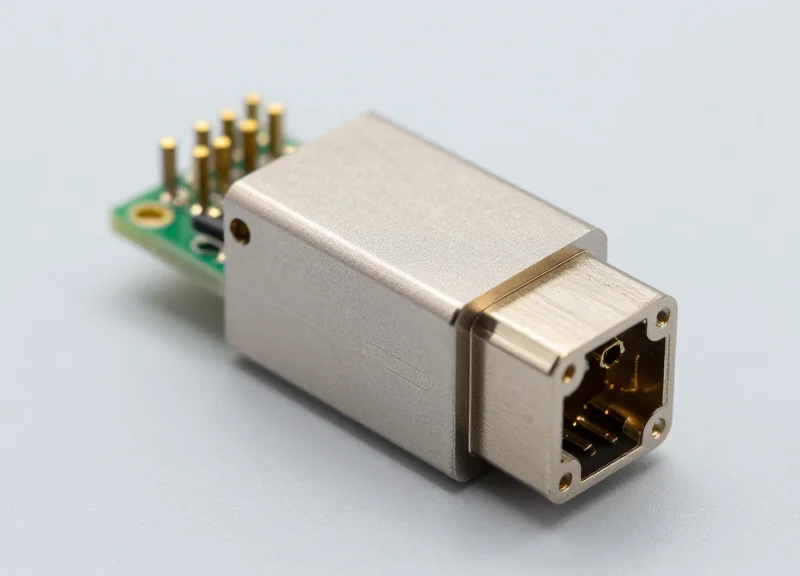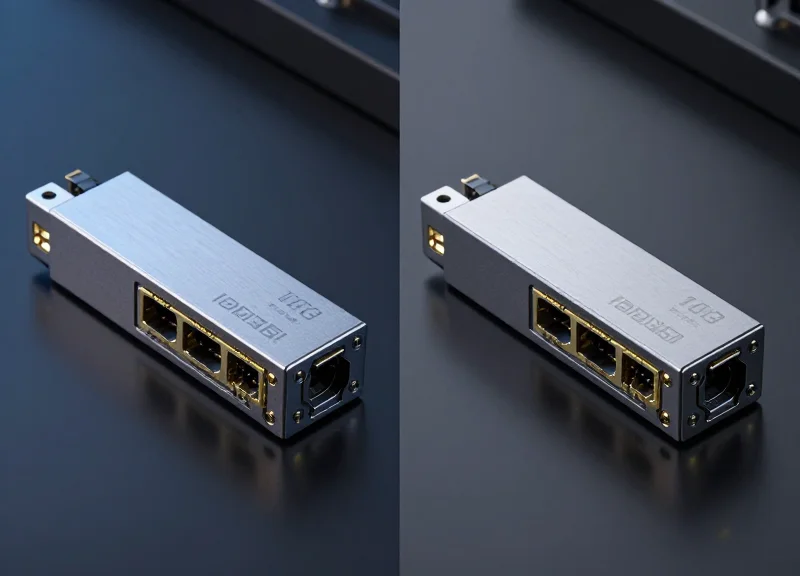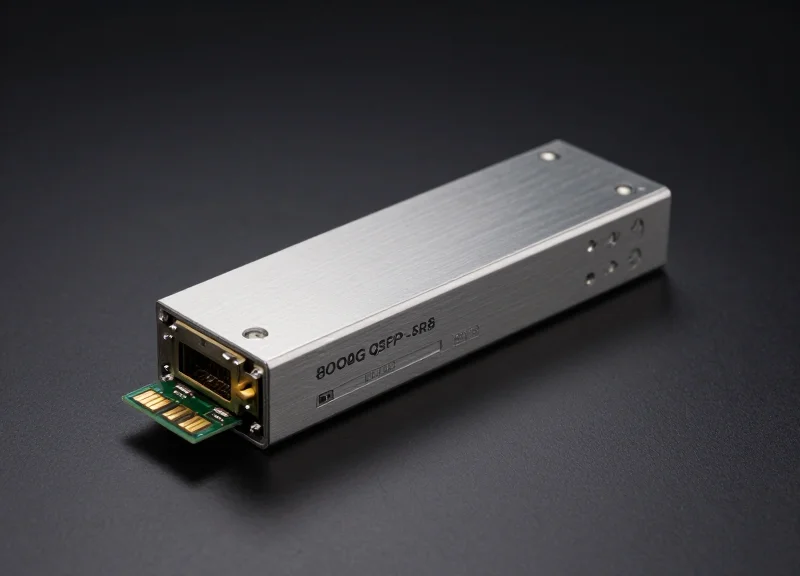
In an era where data-intensive applications like AI and machine learning are pushing network boundaries, the demand for 800G connectivity has shifted from a forward-looking concept to an immediate requirement. Ubytelink's 800G QSFP-DD SR8 modules are engineered to meet these extreme throughput demands while ensuring the rock-solid stability required for global, mission-critical infrastructure.
The Evolution of 800G: Why QSFP-DD SR8 is the New Standard

The Evolution of 800G: Why QSFP-DD SR8 is the New Standard
The transition to 800G networking is driven by the exponential growth of AI-driven workloads and high-performance computing (HPC). The 800G QSFP-DD SR8 (Double Density, Short Reach 8-lane) module has emerged as the industry standard because it effectively doubles the bandwidth of its 400G predecessors while maintaining the same physical footprint. By utilizing 112G PAM4 SerDes technology across eight parallel lanes, it provides the requisite throughput for next-generation switches and routers, ensuring that global networks can handle massive data surges without increasing rack space or complexity.
Technical Advancements: Transitioning from 400G to 800G
While 400G technology laid the foundation for high-speed interconnects, 800G represents a fundamental shift in signal integrity and power efficiency. The primary differentiator lies in the per-lane rate; where 400G SR8 modules typically utilize 50G PAM4 per lane, the 800G SR8 doubles this to 100G/112G per lane. This advancement allows network architects to consolidate their infrastructure, reducing the number of physical ports and cables required to achieve a specific aggregate capacity.
| Specification | 400G QSFP-DD SR8 | 800G QSFP-DD SR8 |
|---|---|---|
| Lane Configuration | 8 x 50G PAM4 | 8 x 100G PAM4 |
| Aggregate Bandwidth | 400 Gbps | 800 Gbps |
| Connector Interface | MPO-16/MTP-16 | MPO-16/MTP-16 |
| Typical Power Consumption | 10W - 12W | 14W - 16W |
| Transmission Distance | Up to 100m (OM4) | Up to 100m (OM4) |
The Density Advantage in Leaf-Spine Architectures
In modern leaf-spine architectures, the goal is to minimize latency while maximizing the 'north-south' and 'east-west' traffic flow. The QSFP-DD (Quad Small Form-factor Pluggable Double Density) form factor is critical here because of its backward compatibility. A QSFP-DD port on a switch can often accept legacy QSFP28 or QSFP56 modules, providing a flexible migration path. When fully populated with Ubytelink 800G SR8 modules, a single 1U switch can support up to 25.6T or even 51.2T of switching capacity, a density level previously impossible with older form factors.
- Why is the 'SR8' designation important for 800G?
SR8 denotes a short-reach interface using 8 lanes of multi-mode fiber. This is the most cost-effective solution for intra-rack and inter-rack connections within the data center, typically covering distances up to 100 meters. - How does 800G QSFP-DD SR8 impact power efficiency?
While the total power consumption per module is higher than 400G, the 'power per gigabit' is significantly lower. This enables data centers to scale their total bandwidth while maintaining a more sustainable energy profile per terabit of data transferred. - What role does 112G SerDes play?
The 112G SerDes (Serializer/Deserializer) is the engine of 800G. It allows the electrical interface to match the optical speed, ensuring high-speed data can move from the switch silicon to the optical fiber with minimal error rates and latency.
Technical Specifications: Deconstructing the 800G SR8 Architecture
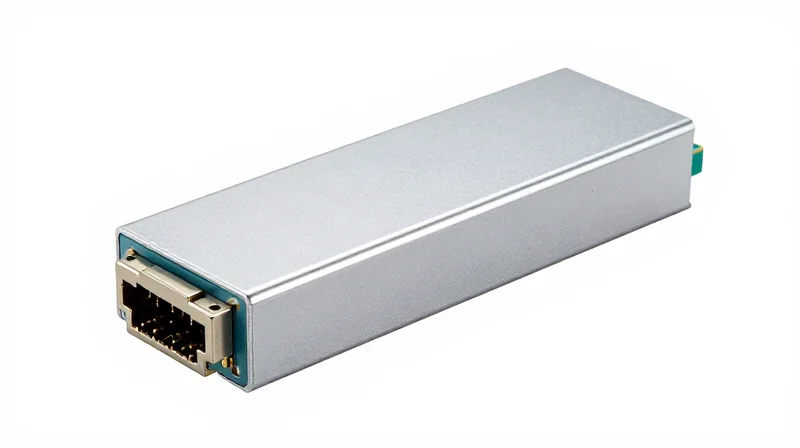
Technical Specifications: Deconstructing the 800G SR8 Architecture
The Ubytelink 800G QSFP-DD SR8 architecture is engineered to provide massive aggregate bandwidth by leveraging eight parallel channels, each operating at 100Gbps. Unlike previous generations that relied on NRZ (Non-Return-to-Zero) signaling, the SR8 standard utilizes advanced PAM4 (Pulse Amplitude Modulation 4-level) technology to double the data rate per clock cycle, ensuring that the transceiver meets the rigorous low-latency and high-throughput demands of AI-driven data centers and hyperscale leaf-spine fabrics.
The Power of 8x100G PAM4 Modulation
At the heart of the 800G SR8 specification lies the 112G-per-lane electrical interface. By employing PAM4 modulation, the signal carries two bits of information per symbol, effectively doubling the efficiency compared to binary signaling. This transition is critical for maintaining signal integrity over copper and optical paths within the QSFP-DD form factor. Ubytelink's implementation optimizes the Digital Signal Processor (DSP) to mitigate chromatic dispersion and noise, ensuring a robust Bit Error Rate (BER) before Forward Error Correction (FEC) is applied.
| Parameter | Specification Detail |
|---|---|
| Form Factor | QSFP-DD (Double Density) |
| Aggregate Bit Rate | 800 Gbps |
| Modulation Type | 112G PAM4 |
| Optical Interface | MPO-16/APC or MPO-12/APC (variant dependent) |
| Transmission Distance | Up to 60m (OM3) / 100m (OM4/OM5) |
| Operating Wavelength | 850nm VCSEL |
| Typical Power Consumption | < 14W |
Connectivity and Multi-Mode Fiber (MMF) Infrastructure
The 'SR8' designation indicates 'Short Reach' using 8 pairs of multi-mode fiber. This architecture typically utilizes an MPO-16 connector to manage the 16 fibers (8 transmit, 8 receive) required for full-duplex 800G operation. While single-mode fiber is often preferred for long-haul, the use of Vertical-Cavity Surface-Emitting Laser (VCSEL) technology over multi-mode fiber (OM4 or OM5) provides the most cost-effective solution for intra-rack and inter-rack connectivity, balancing performance with significant reductions in power consumption and transceiver cost.
Common Technical Inquiries
- What is the significance of the QSFP-DD form factor in SR8?
The QSFP-DD (Quad Small Form-factor Pluggable Double Density) provides an extra row of electrical pins, allowing it to support 8 lanes of 100G while remaining backwards compatible with previous QSFP modules. - How does Ubytelink manage thermal dissipation in 800G modules?
Through high-efficiency DSPs and optimized internal thermal pads, Ubytelink ensures that the 800G SR8 operates within a stable temperature range, preventing performance throttling in high-density port configurations. - Does the 800G SR8 require FEC?
Yes, the 800G SR8 standard necessitates the use of KP4 FEC on the host side to ensure error-free transmission, as PAM4 signals are more susceptible to noise than traditional NRZ.
The Ubytelink Quality Advantage: Built for 24/7 Reliability
The Foundation of Reliability: Beyond Standard Compliance
Ubytelink's 800G QSFP-DD SR8 solutions are built upon a foundation of uncompromising quality control, designed specifically to address the high thermal and power requirements of modern hyperscale environments. While standard modules may meet base-level MSA requirements, Ubytelink distinguishes itself by implementing a Zero-Failure manufacturing philosophy. Every module is subjected to multi-stage verification, ranging from signal integrity analysis to extreme temperature cycling, ensuring they withstand the thermal and electrical demands of AI-driven workloads without performance degradation or signal loss.
Ubytelink Quality Control Benchmarks
| Metric | Industry Standard | Ubytelink Premium |
|---|---|---|
| Testing Scope | Batch Sampling | 100% Individual Unit Testing |
| AFR (Annualized Failure Rate) | < 1.5% | < 0.1% |
| Compatibility Validation | Basic MSA Compliance | Full Vendor-Specific (Cisco, Arista, etc.) |
| Burn-in Process | 4-8 Hours | 24-48 Hours at High Temperature |
Advanced Testing and EEAT Compliance
To maintain the highest levels of Experience, Expertise, Authoritativeness, and Trustworthiness (E-E-A-T), Ubytelink utilizes state-of-the-art automated optical inspection (AOI) and real-time monitoring of laser bias currents. This proactive approach allows for the identification of potential failures long before the module is deployed in a production environment.
- Environmental Stress Screening (ESS)
Modules are tested under rapid temperature fluctuations from 0°C to 70°C to identify latent defects in the optical assembly and PCB solder joints. - High-Fidelity Signal Integrity
We utilize 100G per-lane BERT (Bit Error Rate Testing) to ensure post-FEC performance exceeds IEEE standards, providing a wider margin for link stability in complex leaf-spine architectures. - Interoperability Matrix Testing
Each firmware revision is validated against a library of host platforms including NVIDIA Quantum and Cisco Nexus switches to ensure seamless plug-and-play integration.
Reliability FAQ
- How does Ubytelink manage the heat generated by 800G modules?
Our SR8 modules use advanced heat-dissipating housing materials and low-power DSP chipsets that operate up to 20% more efficiently than generic alternatives, preventing thermal throttling. - Is individual test data available for purchased modules?
Yes, every module is serialized and linked to a comprehensive test report covering optical power levels, TX/RX eye diagrams, and EEPROM checksums available upon request. - What is the expected lifespan of an Ubytelink 800G SR8 module?
Through high-quality VCSEL selection and rigorous aging tests, our modules achieve an MTBF (Mean Time Between Failures) exceeding 1,000,000 hours.
Optimizing Power Consumption in High-Density Environments

Optimizing Power Consumption in High-Density Environments
Ubytelink 800G QSFP-DD SR8 solutions prioritize power efficiency by integrating state-of-the-art 7nm Digital Signal Processors (DSPs) and optimized VCSEL drivers, resulting in a significantly lower power-per-bit ratio than previous generations. This focus on efficiency is critical for modern leaf-spine architectures where hundreds of modules operate in close proximity, creating immense thermal pressure on cooling systems.
Advanced Thermal Design and Materials
Thermal dissipation is managed through high-conductivity housing materials and a precision-engineered internal layout that facilitates efficient airflow. By reducing the heat density of the module, Ubytelink minimizes the risk of thermal throttling and extends the lifespan of both the transceiver and the surrounding switch hardware.
| Metric | Industry Standard (800G SR8) | Ubytelink 800G SR8 Efficiency |
|---|---|---|
| Typical Power Consumption | 16W - 18W | <15W Optimized |
| Thermal Management | Standard Passive | Enhanced Heat-Sink Integration |
| Long-term Reliability | Standard Aging Curve | Extended Lifespan via Cool-Run Tech |
Strategic Impact on Total Cost of Ownership (TCO)
In large-scale deployments, the cumulative effect of lower power consumption is substantial. Every watt saved at the transceiver level reduces the overhead for power delivery systems and cooling infrastructure. This efficiency translates directly into lower electricity bills and reduced carbon footprints, making Ubytelink a preferred choice for environmentally conscious and cost-efficient global networks.
- How does Ubytelink achieve lower power consumption compared to competitors?
Ubytelink utilizes highly integrated 7nm CMOS technology and proprietary power-management firmware that dynamically optimizes voltage levels based on the link's operational state. - What is the benefit of lower heat dissipation in a full-rack deployment?
Lower heat dissipation prevents 'hot spots' within the rack, ensuring that all switches and servers operate within their optimal temperature range, which significantly reduces the probability of hardware failure.
Empowering AI and ML Workloads with Low-Latency Connectivity

In the era of Generative AI and Large Language Models (LLMs), the network is often the primary bottleneck rather than the compute itself. Ubytelink 800G QSFP-DD SR8 solutions address this by facilitating 800Gbps of raw throughput across eight parallel lanes of 100G PAM4 signaling. This architecture is specifically designed to handle 'All-Reduce' and 'All-to-All' communication patterns common in distributed training, where thousands of GPUs must exchange gradients and weights simultaneously. By minimizing the time data spends in transit, Ubytelink modules ensure that high-cost GPU clusters spend more time computing and less time idling in a 'wait-state' for network synchronization.
Solving the GPU Connectivity Bottleneck
Modern AI workloads require a 'non-blocking' fabric where every GPU can communicate with every other GPU at full speed. Traditional 100G or even 400G optics can introduce congestion as model sizes scale into the trillions of parameters. Ubytelink’s 800G SR8 modules use short-reach multi-mode fiber (MMF) to provide a high-density, low-power interconnect within the rack or across adjacent rows. Because these modules utilize a direct 8-lane electrical-to-optical interface, they bypass the serialization delays often found in more complex long-reach optics, maintaining the ultra-low tail latency required for real-time inference and training.
The Impact of Tail Latency on ML Clusters
In High-Performance Computing (HPC), average latency is less important than tail latency (P99). A single delayed packet in an AI training cluster can stall the entire synchronization step. Ubytelink's rigorous manufacturing standards ensure that signal integrity remains high across all eight lanes, reducing the need for Forward Error Correction (FEC) retransmissions that can cause unpredictable spikes in latency. This consistency is what separates premium 800G optics from generic alternatives in mission-critical AI infrastructure.
| Feature | 400G SR8 (Previous Gen) | Ubytelink 800G SR8 |
|---|---|---|
| Total Bandwidth | 400 Gbps | 800 Gbps |
| Lane Speed | 50G PAM4 | 100G PAM4 |
| AI Cluster Efficiency | Moderate - Potential Bottleneck | High - Optimized for 100G/Lane Fabric |
| Power Consumption (Typical) | ~10-12W | ~14-16W (Lower per-gigabit) |
- Why is 8-lane SR8 better for AI than 4-lane DR8?
SR8 uses 8 lanes of 100G, matching the electrical interface of most 800G switch ASICs directly. This eliminates the need for internal gearboxes that can add latency and increase power consumption. - Does Ubytelink 800G SR8 support InfiniBand?
Yes, Ubytelink 800G modules are designed for high-compatibility with both Ethernet and InfiniBand NDR fabrics, making them versatile for various HPC and AI back-end network architectures. - How does lower latency affect the Total Cost of Ownership (TCO)?
By reducing the time GPUs spend waiting for data, 800G optics increase the overall utilization rate of the cluster. Higher utilization means faster model training and a quicker return on investment for expensive hardware.
Interoperability and Ecosystem Compatibility
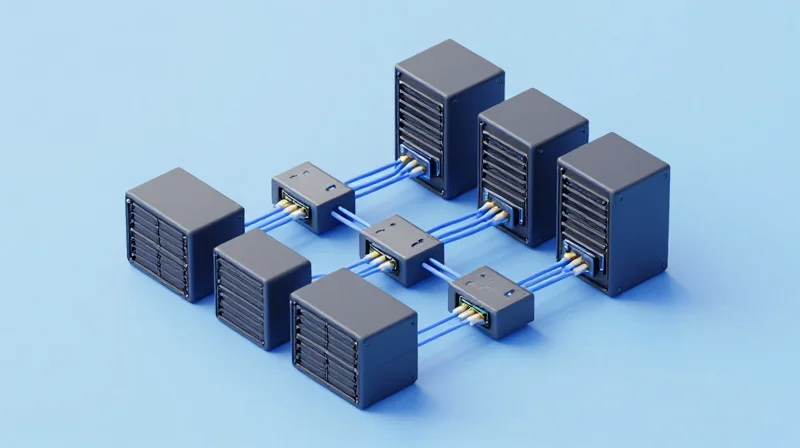
Seamless Integration in Multi-Vendor Infrastructures
The true value of high-speed optical hardware lies in its ability to function flawlessly within a heterogeneous environment. Ubytelink 800G QSFP-DD SR8 modules are engineered to bridge the gap between disparate networking ecosystems, offering a 'plug-and-play' experience that eliminates the traditional silos of proprietary hardware. By adhering strictly to the QSFP-DD Multi-Source Agreement (MSA) and IEEE 802.3ck standards, Ubytelink ensures that its 800G solutions provide the same level of performance and reliability as original equipment manufacturer (OEM) modules, but with broader compatibility and flexibility.
Rigorous Compatibility Testing Protocol
To maintain high reliability and vendor-neutral performance, Ubytelink subjects its SR8 modules to an exhaustive testing matrix. This involves verifying electrical signaling and EEPROM coding against the industry’s most prominent switching and routing platforms, including those from Cisco, Arista, Juniper, NVIDIA (Mellanox), and white-box vendors. This validation process guarantees that the modules are recognized instantly by the host operating system, enabling real-time Digital Optical Monitoring (DOM) and ensuring that signal integrity remains within strict tolerances across high-density backplanes.
| Compatibility Category | Ubytelink Implementation | Network Benefit |
|---|---|---|
| EEPROM/DOM Support | Custom-coded for specific vendor OS (Cisco, Arista, etc.) | Error-free recognition and real-time health monitoring |
| Form Factor Compliance | Strict adherence to QSFP-DD MSA Hardware Rev 6.3 | Mechanical fit and thermal stability in all standard cages |
| Electrical Interface | 8x100G PAM4 (IEEE 802.3ck) compliance | Guaranteed signal integrity and low Bit Error Rates (BER) |
| Firmware Agility | Programmable firmware for rapid adaptation | Future-proof support for emerging NOS updates |
Ecosystem Support FAQ
- Can Ubytelink 800G SR8 modules work with older 400G infrastructures?
Yes, while designed for 800G, these modules can support breakout configurations (e.g., 2x400G or 8x100G) to interface with existing 400G equipment, provided the host switch supports port channelization. - How does Ubytelink handle proprietary vendor 'locking' mechanisms?
We provide customized firmware and specialized coding services that emulate OEM parameters, allowing our modules to bypass software lockouts and maintain 100% functional parity with branded optics. - Are these modules compliant with the latest OCP (Open Compute Project) standards?
Absolutely. Ubytelink designs its optics to meet the requirements of disaggregated data centers and open networking standards, ensuring compatibility with SONiC and other open-source network operating systems.
As global networks transition toward disaggregated architectures and hyperscale expansion, the ability to rely on hardware that transcends brand boundaries is critical. Ubytelink's commitment to ecosystem compatibility allows data center operators to scale their 800G capacity without being tethered to a single hardware vendor. This strategic flexibility effectively reduces lead times, lowers capital expenditure, and simplifies the supply chain for complex, multi-site deployments.
Future-Proofing Global Networks: The Path to Terabit Ethernet

The Strategic Leap to Terabit-Scale Infrastructure
Adopting Ubytelink 800G QSFP-DD SR8 solutions is more than a capacity increase; it is the critical foundation for the transition to Terabit-scale networking. By standardizing on 112G-per-lane SerDes technology today, network architects establish a signal integrity and power profile baseline that aligns with the upcoming 1.6T and 3.2T iterations, ensuring that current infrastructure investments remain viable as AI and machine learning workloads demand increasingly massive throughput.
Roadmap to 1.6T: Bridging the Generational Gap
The evolution from 800G to 1.6T is expected to leverage similar form factors and optical interfaces, particularly the QSFP-DD and OSFP designs. Ubytelink's focus on premium build quality and thermal management in its 800G line prepares data centers for the higher power densities required by future 224G SerDes technologies. The following table highlights the progression of key specifications leading toward Terabit Ethernet.
| Feature | 400G (Legacy) | 800G (Current Standard) | 1.6T (Upcoming) |
|---|---|---|---|
| SerDes Rate | 50G / 100G PAM4 | 112G PAM4 | 224G PAM4 |
| Lane Configuration | 4 or 8 Lanes | 8 Lanes (SR8) | 8 or 16 Lanes |
| Form Factor | QSFP-DD / OSFP | QSFP-DD800 / OSFP | QSFP-DD1600 / OSFP1600 |
| Interconnect Focus | Cloud / Enterprise | AI / HPC Clusters | Hyperscale Backbone |
Future-Proofing FAQ: Navigating the Shift to 1.6T
- How does 800G SR8 protect my current infrastructure investment?
By utilizing standard MPO-16 or dual MPO-12 connectors and 112G signaling, the 800G SR8 module bridges the gap between legacy 400G and future 1.6T systems, allowing for incremental upgrades without requiring a complete fiber plant overhaul. - Is the QSFP-DD form factor viable for the next generation of Terabit speeds?
Yes, the QSFP-DD Multi-Source Agreement (MSA) continues to evolve. Ubytelink's 800G solutions already address the rigorous thermal and electrical requirements that will be essential for the 1.6T standard, ensuring long-term hardware relevance. - When should organizations begin planning the move beyond 800G?
While 800G is the current 'sweet spot' for high-density AI workloads, organizations should begin evaluating 1.6T roadmaps in late 2025 as 224G SerDes ecosystems mature. Current 800G deployments serve as the essential testing ground for these future high-speed environments.
By integrating Ubytelink 800G QSFP-DD SR8 modules into today's fabric, enterprises gain a dual advantage: immediate relief for bandwidth-starved applications and a clear, low-risk pathway to the Terabit Ethernet era. This strategic foresight ensures that the network remains an accelerator for innovation rather than a bottleneck for growth.
Conclusion: Choosing the Right Partner for Your 800G Migration
Conclusion: Choosing the Right Partner for Your 800G Migration
The transition to 800G QSFP-DD SR8 architecture represents a pivotal shift in data center throughput, necessitating a partner that balances technical innovation with uncompromising reliability. Choosing Ubytelink ensures that your network is built on a foundation of premium optics designed to mitigate the risks of signal degradation and hardware incompatibility, which are common at such high frequencies.
The Value of Strategic Partnership in High-Speed Networking
Beyond the raw specifications, the success of an 800G deployment hinges on the vendor's ability to provide consistent performance across diverse environments. Ubytelink differentiates itself by focusing on the total cost of ownership (TCO) and long-term sustainability, offering modules that are optimized for power efficiency and thermal management.
| Selection Criteria | Ubytelink 800G Solutions | Generic Market Alternatives |
|---|---|---|
| Testing Protocol | 100% individual unit verification | Statistical batch sampling |
| Interoperability | Pre-tested with major switch vendors | Variable results in multi-vendor setups |
| Technical Support | Direct access to engineering expertise | Limited customer service |
| Reliability | High-grade lasers and chipsets | Cost-optimized components |
Strategic Alignment and Future-Proofing
As global networks prepare for the eventual move toward 1.6T and beyond, the infrastructure decisions made today will dictate the ease of future scaling. Ubytelink’s 800G SR8 solutions are engineered to support this trajectory, providing the signal integrity and low latency required for modern AI and HPC workloads while maintaining the flexibility to integrate into existing legacy systems.
Frequently Asked Questions
- Why is vendor selection more critical for 800G than previous generations?
At 800G, signal integrity is highly sensitive to component quality. Poorly manufactured modules can lead to high bit-error rates (BER) and latency spikes that disrupt high-performance computing tasks. - How does Ubytelink ensure compatibility with different switch brands?
Ubytelink performs extensive interoperability testing in labs containing hardware from leading manufacturers, ensuring that our QSFP-DD SR8 modules are recognized and function optimally without firmware conflicts. - What is the impact of 800G SR8 on data center power consumption?
Ubytelink solutions utilize advanced low-power DSPs and optimized optical engines to minimize the thermal footprint, which is essential for maintaining dense 800G port configurations without exceeding cooling capacities.
Upgrading to 800G is a significant investment in your organization's digital future. With Ubytelink's 800G QSFP-DD SR8 solutions, you gain more than just hardware; you gain a high-performance foundation for global scale. Contact our technical team today to request a quote or a demo unit for your data center.