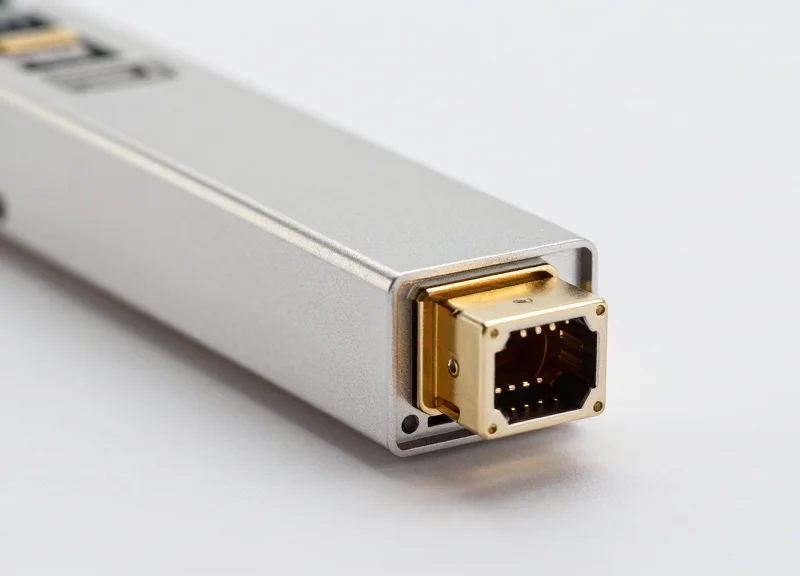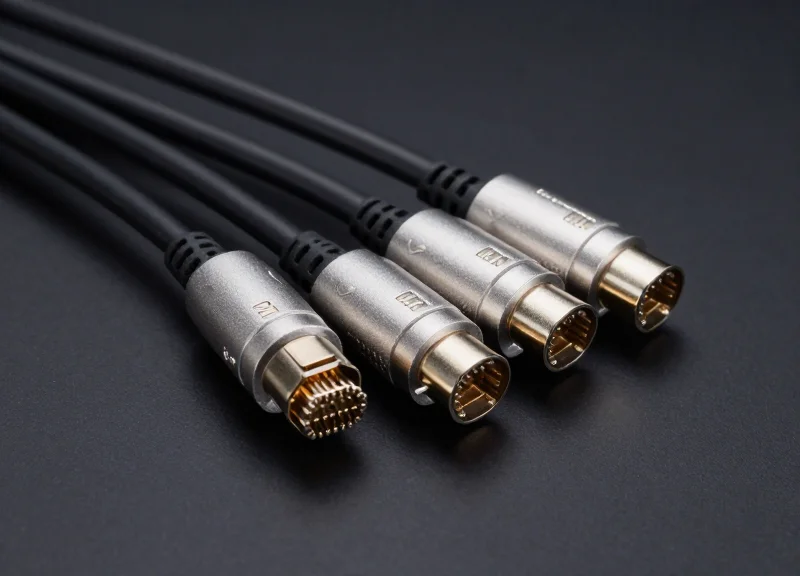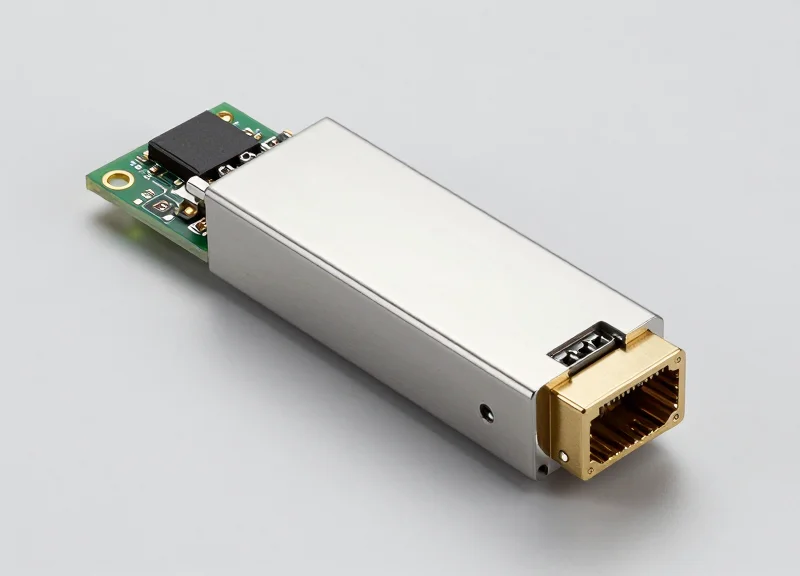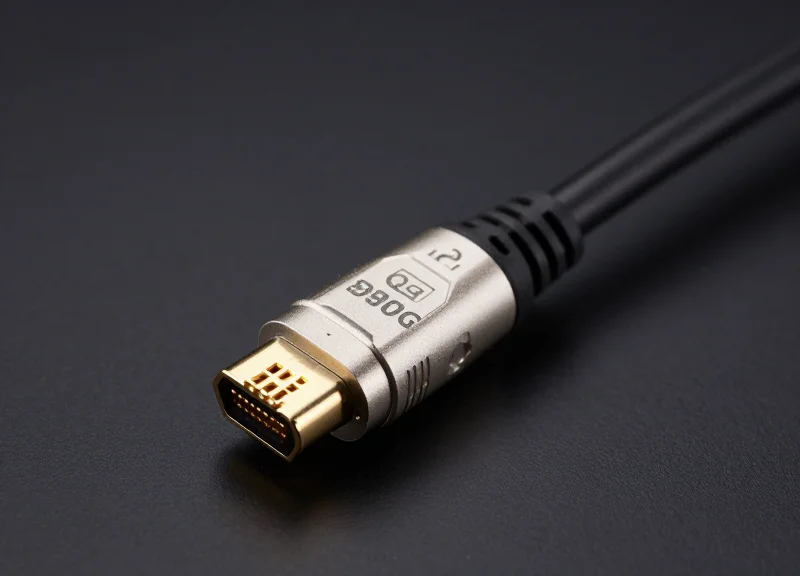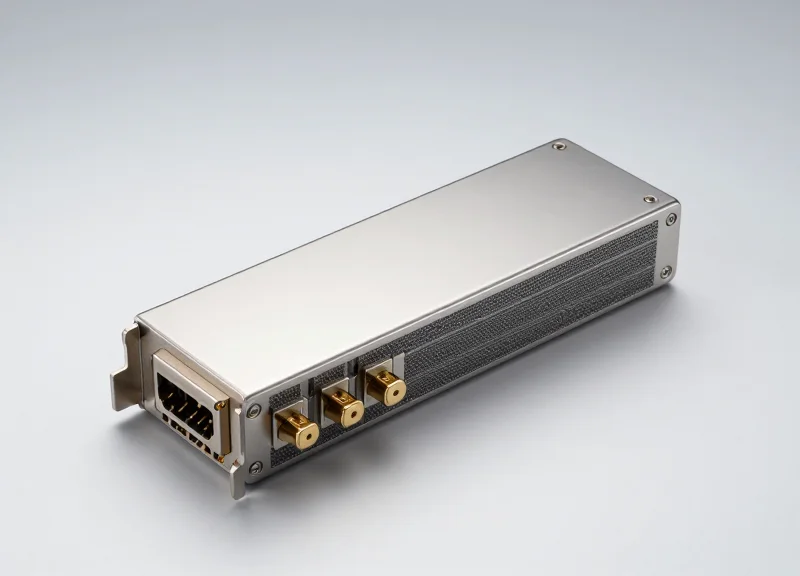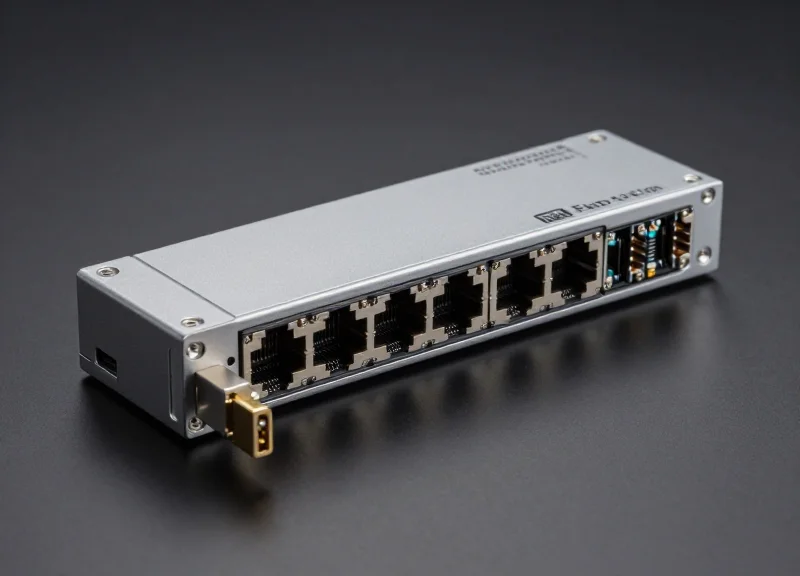
In the cutthroat world of High-Frequency Trading (HFT), every nanosecond is a battleground. Your networking infrastructure isn't just a utility; it's the delivery system for your profitability. As financial institutions move toward more complex and faster execution models in 2026, the demand for specialized, high-performance trading link modules has never been higher. Ubytelink addresses the critical need for reliable, low-latency hardware with scalable wholesale solutions and bespoke OEM/ODM options.
The Evolution of Financial High-Frequency Trading Infrastructure

The evolution of financial high-frequency trading (HFT) infrastructure represents a relentless pursuit of speed, where the standard of competition has shifted from millisecond software optimizations to nanosecond-level hardware and transmission engineering. Modern HFT architectures no longer rely on generic commodity servers; instead, they utilize specialized trading link modules, custom-built FPGA (Field-Programmable Gate Array) circuits, and proprietary networking protocols designed to minimize jitter and maximize throughput across global financial hubs. This shift necessitates a wholesale approach to infrastructure, where firms procure custom-tuned links to ensure deterministic performance in increasingly crowded electronic markets.
The Paradigm Shift: From Proximity to Physical Link Engineering
In the early days of algorithmic trading, competitive advantage was primarily gained through simple co-location—placing servers physically close to exchange matching engines to reduce distance-based delays. However, as the industry reached a 'latency floor' with traditional fiber, the focus in 2026 has expanded to the physical layer of connectivity and specialized hardware components. Wholesale financial trading links now incorporate specialized 'straight-line' fiber paths, hollow-core fiber optics, and wireless microwave relays that bypass traditional internet backbones to shave off precious microseconds.
Comparison of Infrastructure Architectures
| Feature | Legacy Data Center Gear | Modern HFT Link Modules |
|---|---|---|
| Primary Objective | Reliability and High Throughput | Ultra-Low Latency and Determinism |
| Switching Logic | Standard Layer 3 Routing | Layer 1 Cut-Through / FPGA Driven |
| Transmission Medium | Standard Multi-mode Fiber | Hollow-Core Fiber & Point-to-Point Wireless |
| Procurement Model | Retail/SaaS Subscriptions | Wholesale Bulk Links & Custom Quotes |
| Latency Profile | Variable (High Jitter) | Fixed (Deterministic) |
Infrastructure Scaling and the Move to Wholesale
As trading strategies become more global, the need for integrated, high-speed links connecting New York, London, Tokyo, and Chicago has grown. This has led to the rise of wholesale link procurement, where trading firms and hedge funds secure bulk capacity on private, low-latency networks. By moving away from retail-grade connections, firms can lock in custom quotes for high-bandwidth modules that are physically isolated from general traffic, ensuring that their execution remains competitive during periods of extreme market volatility.
HFT Infrastructure Evolution FAQ
- Why is 'determinism' more important than raw speed in 2026?
Determinism ensures that a packet always takes the same amount of time to travel. In HFT, variable latency (jitter) can cause orders to arrive out of sequence, leading to failed strategies even if the average speed is high. - How do wholesale trading links differ from standard enterprise fiber?
Wholesale trading links are often 'dark' or dedicated paths that use specialized equipment like FPGA-based transceivers and hollow-core fiber, which allows light to travel 30% faster than in standard glass fiber. - What role does custom pricing play in infrastructure upgrades?
Because HFT needs are highly specific to the route and the hardware required, custom quotes allow firms to negotiate pricing based on specific latency targets and the volume of links across a global footprint.
Technical Deep-Dive: What Makes an HFT Link Module Different?
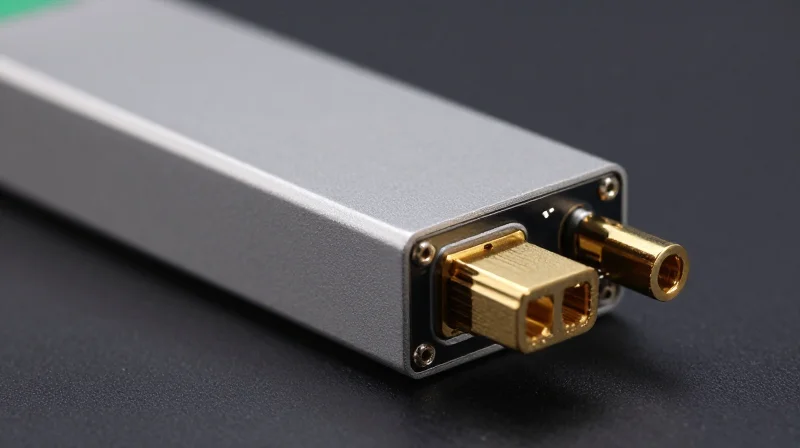
Engineering for Determinism: Beyond Standard Bandwidth
Unlike standard enterprise network modules that focus on aggregate throughput and data reliability through heavy error correction, High-Frequency Trading (HFT) link modules are precision instruments designed for absolute determinism. In a landscape where microseconds represent millions in potential slippage, HFT modules prioritize the elimination of 'tail latency'—those rare but catastrophic spikes in processing time. By utilizing high-grade oscillators and stripped-down protocol stacks, these modules ensure that every packet arrives with predictable timing, regardless of network congestion or environmental variables. The primary goal is not just speed, but the consistency of that speed over millions of discrete transactions.
Technical Comparison: Standard vs. HFT-Grade Links
| Feature | Standard Enterprise Link | HFT-Grade Link Module |
|---|---|---|
| Latency Profile | Variable (Microsecond range) | Deterministic (Sub-nanosecond) |
| Clocking Source | Standard TCXO | Ultra-low Phase Noise OCXO |
| Error Correction | Heavy FEC usage | FEC-less / Direct Path |
| Thermal Sensitivity | High (subject to drift) | Active Thermal Stabilization |
| Buffer Strategy | Deep Buffering (FIFO) | Cut-through / Zero-buffer |
Minimizing Jitter and Maximizing Signal Integrity
Jitter—the variation in time between packet arrivals—is the primary enemy of algorithmic execution. HFT link modules utilize specialized clock recovery circuits and high-performance crystal oscillators to keep phase noise at a minimum. Furthermore, these modules are often engineered for 'FEC-less' operation. While Forward Error Correction (FEC) is standard in 25G and 100G Ethernet to ensure data integrity over long distances, it introduces significant computational latency. HFT-grade links rely on superior physical signal integrity and shorter, high-quality fiber runs to maintain low bit-error rates without the overhead of error-correcting algorithms.
The Role of Thermal Management in Frequency Stability
Thermal management in HFT link modules is not merely about preventing hardware failure; it is about maintaining frequency stability. Standard modules may experience 'frequency drift' as data center temperatures fluctuate, leading to subtle timing inconsistencies. High-end wholesale HFT links often feature customized heat sinks and specialized firmware that regulates the internal temperature of the transceiver to within a fraction of a degree. This ensures that the internal clock remains perfectly synchronized with the exchange's matching engine, providing a stable platform for time-sensitive arbitrage strategies.
- Why is 'FEC-less' operation critical for HFT?
Forward Error Correction adds several nanoseconds of delay to process parity bits. In high-frequency trading, the physical link is often of high enough quality that FEC is disabled to shave off every possible nanosecond of transit time. - Does environmental heat affect wholesale link performance?
Yes. Frequency drift in oscillators is highly sensitive to temperature. HFT-specific modules use advanced thermal dissipation and stabilized housing to maintain constant performance during high-load bursts. - Are these modules compatible with standard FPGA NICs?
Most HFT link modules follow standard SFP+/QSFP form factors, making them physically compatible, though they require specific firmware settings on the FPGA or NIC to utilize their low-latency bypass modes effectively.
The Economic Advantage of Wholesale Procurement in 2026
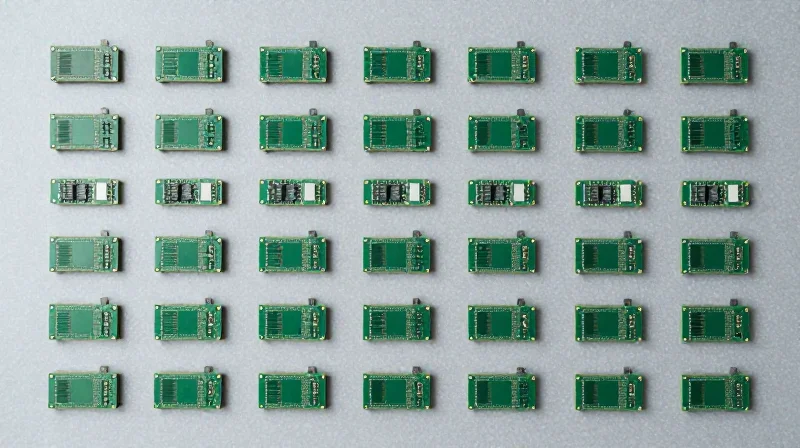
In the highly competitive 2026 financial market, the decision to buy financial high-frequency trading links wholesale is no longer just about cost-cutting; it is a strategic maneuver to secure infrastructure at scale, allowing trading desks to deploy hundreds of nodes simultaneously without the premium margins and stock limitations associated with retail transactions.
The Shift from Retail to Strategic Wholesale Models
Trading firms traditionally acquired hardware as needed, but the extreme hardware requirements of 2026 have made this 'retail-on-demand' model obsolete. Wholesale procurement via Ubytelink provides a predictable cost structure, ensuring that as a firm expands its footprint across global liquidity hubs, its per-unit capital expenditure remains constant or decreases through tiered volume incentives.
| Procurement Metric | Retail/Spot Sourcing | Wholesale/Bulk Procurement |
|---|---|---|
| Average Per-Unit Cost | Market Premium (100%) | Discounted (60-80% of MSRP) |
| Supply Chain Priority | Low - Subject to Lead Times | High - Reserved Inventory |
| Component Uniformity | Varied Batches | Single-Batch Uniformity |
| Customization | Off-the-shelf Only | Custom Signal Calibration |
Maximizing ROI Through Volume-Based Custom Quotes
Ubytelink's custom quotes for bulk pricing allow trading desks to optimize their Return on Investment (ROI) by aligning procurement cycles with hardware refresh windows. By purchasing in bulk, firms eliminate the hidden costs of fragmented shipping, individual component testing, and administrative overhead, which can account for up to 15% of total infrastructure spending.
- How does wholesale pricing impact the total cost of ownership (TCO)?
Wholesale pricing reduces the TCO by lowering initial capital outlay and providing consistent hardware specifications that simplify long-term maintenance and firmware updates across the entire trading fleet. - Can I get custom technical specs on bulk orders?
Yes. Wholesale orders through Ubytelink allow for custom quotes that include specific jitter tolerances and thermal management configurations tailored to your desk's unique latency requirements. - What is the minimum volume for wholesale pricing in 2026?
While specific thresholds depend on the module type, wholesale pricing typically begins at 50 units, with significantly deeper discounts applied at the 500+ unit tier.
Custom OEM/ODM Solutions: Tailoring Hardware to Proprietary Algorithms

Custom OEM and ODM solutions are the bridge between high-level algorithmic logic and physical execution, allowing financial institutions to eliminate the hardware-induced bottlenecks inherent in off-the-shelf equipment. By tailoring parameters such as EEPROM coding, optical wavelengths, and thermal thresholds, Ubytelink enables trading desks to ensure that every nanosecond of computational speed is preserved across the network fabric, directly correlating to higher execution rates and improved profitability in HFT environments.
Engineering for Algorithmic Precision
Generic networking hardware is designed for broad compatibility, which often results in 'average' performance profiles that include unpredictable jitter and latency spikes. In contrast, proprietary trading algorithms require a deterministic environment. Our ODM services allow firms to request specific silicon tuning and firmware optimizations that prioritize low-latency pathways over standard error-correction protocols that might otherwise delay a trade execution by several critical microseconds.
| Feature | Standard Enterprise Modules | Ubytelink Custom OEM/ODM |
|---|---|---|
| Firmware Logic | Fixed/Locked | Customized for Protocol Acceleration |
| Latency Profile | Variable (Best-Effort) | Ultra-Low Deterministic |
| Signal Integrity | Standard SNR | Optimized for Short-Reach High-Speed Links |
| Thermal Management | Passive/Standard | Active Heat Dissipation for High-Density Racks |
| Compatibility | Broad/General | Hard-Coded for Specific Proprietary Switches |
Seamless Integration with Proprietary Architectures
The 2026 HFT landscape demands more than just speed; it requires seamless integration into complex, often air-gapped or highly specialized network architectures. Ubytelink’s wholesale OEM capabilities extend to physical branding and technical labeling, ensuring that large-scale deployments across global data centers (such as Equinix or Interxion) are easily manageable and fully compliant with internal security and operational protocols. We provide the ability to modify the internal DOM (Digital Optical Monitoring) parameters to provide real-time telemetry that matches the firm's specific monitoring software.
- Can Ubytelink provide custom EEPROM coding for niche switch brands?
Yes, our OEM services include custom coding to ensure 100% compatibility with specialized or legacy financial switching hardware, preventing 'unsupported module' errors and ensuring full functionality of diagnostic features. - What is the minimum order quantity (MOQ) for custom ODM solutions?
MOQs vary based on the level of hardware customization required, but we offer scalable wholesale tiers designed to accommodate both boutique trading shops and global investment banks. - How does customization impact the lead time for bulk orders?
While standard modules are often available for immediate shipping, custom ODM projects typically involve a validation phase. We provide accelerated prototyping to ensure your custom solutions are deployed within your specified market-entry window.
Validation and Quality Assurance for High-Stakes Trading
Every custom-engineered link undergoes rigorous stress testing designed to simulate the extreme bursts of traffic typical of market opening and closing volitility. By choosing an OEM/ODM partner like Ubytelink, wholesale buyers gain access to specialized testing reports that confirm the hardware’s performance under the specific algorithmic loads it was designed to carry.
Minimizing Latency Through Strategic Hardware Placement

In the high-stakes arena of High-Frequency Trading (HFT), minimizing latency is not merely about the speed of light, but about the efficiency of the physical path signals must traverse. Strategic hardware placement, facilitated by high-quality link modules sourced through wholesale channels, allows trading firms to optimize their presence within exchange data centers. By reducing the number of 'hops' and ensuring that every transceiver and cable is tuned for ultra-low latency, firms can achieve a competitive edge where even a few nanoseconds determine the success of an algorithmic execution.
Optimizing Co-location and Intra-Rack Connectivity
Co-location puts the trading server in the same facility as the exchange's matching engine, but the physical layout within the rack remains a critical variable. Strategic placement involves minimizing the distance between the Network Interface Card (NIC) and the top-of-rack switch. Utilizing wholesale-grade QSFP28 or SFP+ modules with optimized internal circuitry ensures that signal conversion happens with near-zero processing delay, maintaining the integrity of the data stream across the shortest physical distance possible.
Performance Comparison: Standard vs. HFT-Optimized Links
| Feature | Standard Enterprise Links | HFT-Optimized Wholesale Links |
|---|---|---|
| Latency per Hop | 5ns - 10ns | < 1.5ns |
| Signal Jitter | Variable / High | Ultra-Low / Deterministic |
| Component Consistency | Mixed Batches | Single-Origin Wholesale Batches |
| EMI Shielding | Standard | Enhanced for High-Density |
Eliminating 'Hop' Latency through Component Uniformity
Every transition point in a network—from a transceiver to a patch panel—introduces a 'hop' that can add latency. When firms buy financial HFT links wholesale, they can specify tight tolerances for signal-to-noise ratios and power consumption. This uniformity prevents 'micro-burst' bottlenecks that occur when mismatched hardware components struggle to synchronize. By standardizing on a single, high-performance hardware profile, firms ensure that the entire communication fabric within the data center behaves predictably under heavy load.
- How does strategic placement reduce 'hop' latency?
By minimizing the physical cable length and the number of intermediate switches, strategic placement reduces the time a packet spends in 'flight' and being processed by active electronics. - Why is wholesale procurement better for latency sensitive environments?
Wholesale procurement allows for 'batch-matching,' ensuring that all modules in a deployment have identical performance characteristics, which is crucial for deterministic latency. - What role do custom cable lengths play in HFT?
Custom lengths eliminate excess cable coils, which can act as antennas for EMI and add unnecessary nanoseconds to the signal path due to the physical distance the signal must travel.
In 2026, the trend toward 'zero-hop' architectures is driving demand for custom-engineered link modules. Firms are increasingly moving away from off-the-shelf retail solutions in favor of wholesale-sourced, proprietary-grade hardware that supports 400G and 800G speeds with specialized low-latency firmware. This strategic focus on hardware at the physical layer is what separates top-tier institutional desks from the rest of the market.
Supply Chain Resilience and Global Logistics for Financial Firms

Supply Chain Resilience and Global Logistics for Financial Firms
In the high-stakes world of high-frequency trading (HFT), the physical availability of link modules and networking hardware is as vital as the proprietary code running on them. For financial firms, supply chain resilience is not merely a logistical concern but a strategic imperative that dictates the speed of market entry and the ability to maintain uptime during periods of extreme volatility. By opting to buy financial high-frequency trading links wholesale with custom quotes and bulk pricing in 2026, firms can effectively bypass the vulnerabilities of the retail market, securing a stable pipeline of mission-critical components that are hardened against global shortages.
Navigating Hardware Procurement in a Volatile Market
The semiconductor and optical component markets are notoriously susceptible to geopolitical shifts and manufacturing bottlenecks. For HFT firms, a delay of even a few days in receiving specialized transceivers can result in missed opportunities and diminished competitive standing. Ubytelink mitigates these risks by leveraging deep-tier supplier relationships and maintaining strategic inventory buffers specifically for the financial sector. Our logistics framework is designed to provide 'just-in-time' delivery without the typical risks associated with lean inventory models, ensuring that your data center expansion or hardware refresh stays on track regardless of external market pressures.
| Feature | Standard Retail Procurement | Ubytelink Wholesale Logistics |
|---|---|---|
| Lead Time Stability | Highly variable and reactive | Prioritized via reserved capacity |
| Inventory Buffer | Minimal or non-existent | Strategic reserves for bulk partners |
| Shipping Priority | Standard commercial lanes | Expedited global air freight |
| Compliance Support | Standard documentation only | Full customs and regulatory handling |
Streamlined Global Distribution for Financial Hubs
Reliable logistics extend beyond simple shipping; they require an understanding of the regulatory and technical demands of major financial centers. Ubytelink provides end-to-end logistics management that ensures hardware reaches colocation facilities in New York, London, Tokyo, and Singapore with zero friction. Our wholesale program includes dedicated account managers who oversee the entire lifecycle of an order, from factory floor to data center rack, providing the transparency and accountability required by institutional financial audits.
- How does Ubytelink ensure delivery during global component shortages?
We maintain long-term manufacturing contracts and material reservations, giving our wholesale financial clients priority access to inventory even when the broader market faces scarcity. - What international shipping options are available for bulk orders?
We utilize Tier-1 express carriers and specialized logistics partners to provide door-to-door delivery with full insurance and real-time tracking to all global financial hubs. - How are customs and import duties handled for high-value links?
Ubytelink provides comprehensive documentation and DDP (Delivered Duty Paid) options to simplify the import process, ensuring components clear customs without delay.
Compliance and Reliability: Meeting Global Financial Standards
Compliance and Reliability: Meeting Global Financial Standards
In the hyper-competitive landscape of high-frequency trading (HFT), hardware reliability is not merely an operational preference; it is a regulatory and systemic mandate. When firms look to buy financial high-frequency trading links wholesale, they are investing in the backbone of global liquidity. To prevent flash crashes, systemic outages, and data integrity errors, the hardware utilized—ranging from SFP+ modules to advanced optical fiber—must adhere to stringent international standards. These benchmarks ensure that every micro-millisecond of data transmission is consistent, predictable, and compliant with the rules of the world's leading exchanges.
The Gold Standard: Key Certifications for HFT Infrastructure
Global financial hubs like New York, London, and Tokyo require hardware that has undergone rigorous third-party verification. These certifications guarantee that network components can withstand the unique electromagnetic environments of dense data centers while maintaining ultra-low latency profiles.
| Certification | Focus Area | Significance for HFT |
|---|---|---|
| ISO 9001:2015 | Quality Management | Ensures manufacturing consistency and defect reduction in bulk optical links. |
| NEBS Level 3 | Network Robustness | The highest level of carrier-grade reliability for extreme environments and uptime. |
| CE / FCC Class B | EMC Compliance | Mitigates electromagnetic interference that can cause signal jitter or packet loss. |
| RoHS/WEEE | Environmental/Material | Ensures hardware meets global sustainability standards for international trade. |
Rigorous Testing Protocols for Zero-Fail Trading
Standard commercial testing is often insufficient for the demands of 2026’s financial markets. Leading wholesale providers now employ 'Burn-in' testing and Signal Integrity (SI) analysis to identify potential failures before hardware ever reaches the co-location facility. This involves running components at maximum capacity under varying thermal conditions to simulate the peak volatility seen during market openings or major economic announcements. Signal integrity is measured using Eye Diagram analysis to ensure that high-speed data pulses remain sharp and distinguishable, minimizing the need for Forward Error Correction (FEC), which can add unwanted latency.
FAQ: Financial Compliance and Hardware Sourcing
- Why is Mean Time Between Failures (MTBF) critical for HFT?
MTBF provides a statistical prediction of hardware longevity. In HFT, a single link failure can result in millions of dollars in missed opportunities or exposure. High-quality wholesale links should boast an MTBF of over 1 million hours. - Does hardware compliance vary by exchange?
Yes. Exchanges like the NYSE or NASDAQ may have specific environmental and performance requirements for hardware placed in their co-location suites to ensure they do not interfere with the matching engine or other participants. - How does Ubytelink ensure signal integrity in bulk orders?
We utilize automated testing stations that verify the BER (Bit Error Rate) and optical power levels for every module in a bulk order, ensuring that 100% of the units delivered meet the custom quote specifications.
How to Request a Custom Quote and Evaluate Bulk Pricing
Securing high-frequency trading (HFT) infrastructure at scale requires a procurement strategy that balances immediate hardware costs with long-term performance reliability and technical support. In the competitive landscape of 2026, requesting a custom quote from Ubytelink is not merely a transaction; it is a consultative process designed to align your network’s low-latency requirements with volume-based cost efficiencies. To achieve the best ROI, procurement teams must provide granular technical specifications—including fiber types, connector precision, and shielding requirements—while evaluating how bulk pricing tiers can offset the costs of network-wide upgrades.
Step-by-Step: The Custom Quote Workflow
- Technical Audit and BOM Creation
Compile a detailed Bill of Materials (BOM) identifying specific lengths, latency thresholds (picosecond tolerances), and jacket materials (LSZH/OFNP) required for your data center environment. - Volume Tier Identification
Consult with a Ubytelink account manager to identify which pricing tier your volume falls into. Bulk discounts typically trigger at 500+, 1,000+, and 5,000+ units. - Support and Logistics Review
Specify your needs for customized labeling, pre-shipment testing reports, and staged delivery schedules to match your deployment phases. - Final Quote Analysis
Review the formal proposal, which includes the unit price, total freight costs, and the inclusive Service Level Agreement (SLA) terms for the wholesale batch.
Evaluating Wholesale Pricing Structures
When evaluating a bulk quote, it is essential to look beyond the per-unit cost. A comprehensive evaluation should account for the 'all-in' value, including specialized testing for HFT compliance and the inclusion of technical support staff for the initial integration phase.
| Order Volume (Units) | Discount Range | Technical Value-Add | Recommended Use Case |
|---|---|---|---|
| 100 - 499 | 5% - 10% | Standard Certification | Regional Exchange Expansion |
| 500 - 1,999 | 11% - 20% | Custom Labeling & Batch Testing | Data Center Refresh |
| 2,000+ | 21%+ Negotiable | Dedicated Engineering Support | Global Network Overhaul |
Procurement FAQs for 2026 Bulk Orders
- Can custom lengths be mixed within a single bulk quote?
Yes. Ubytelink allows for varied configurations within a wholesale order. The total volume of fiber determines the discount tier, regardless of specific length variations per cable. - What is the typical lead time for wholesale HFT links?
In 2026, standard bulk orders are processed and shipped within 10-15 business days. Extremely high volumes or specialized custom shielding may extend lead times to 4 weeks. - Is technical support included in the pricing?
For orders exceeding 500 units, Ubytelink provides a dedicated technical consultant to assist with link budget calculations and integration troubleshooting. - Are performance reports provided for every cable in a bulk order?
Yes. Every wholesale link comes with an individual test report (Interferometry and IL/RL testing) to ensure compliance with financial exchange standards.
By following this structured approach to custom quotes, financial firms can ensure their network infrastructure is not only cost-effective but also engineered to the exacting standards required for high-frequency trading success.
Upgrading your network infrastructure is a strategic investment that directly impacts your bottom line. By choosing Ubytelink for your wholesale HFT link modules, you gain access to industry-leading low-latency technology and the flexibility of custom OEM/ODM manufacturing. Don't let hardware bottlenecks slow down your execution. Contact Ubytelink today for a personalized quote and ensure your network is ready for the future of high-frequency trading.