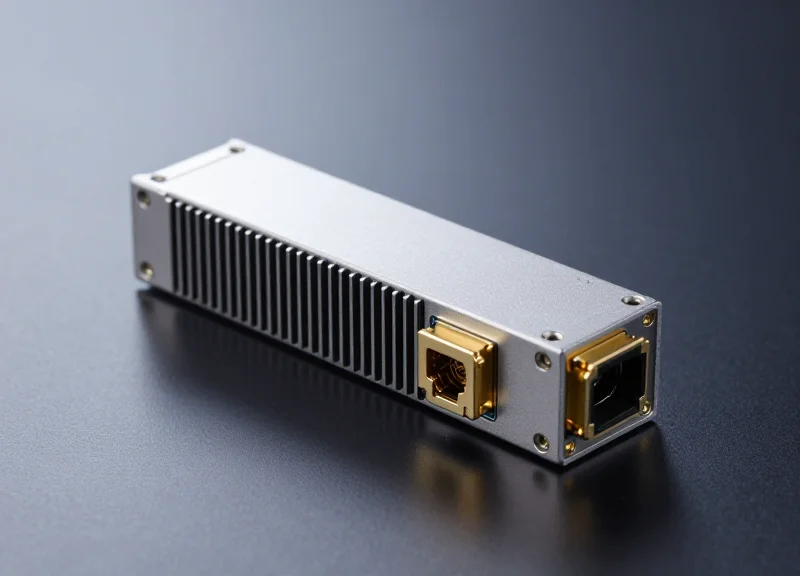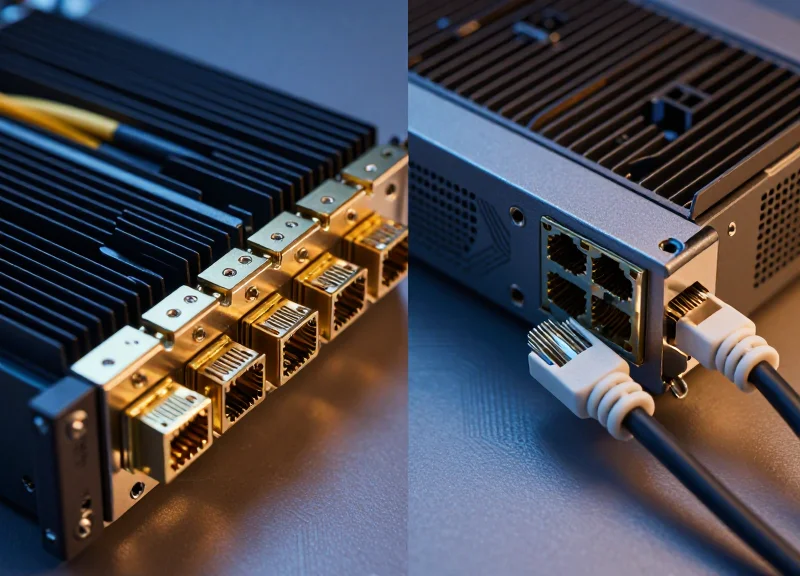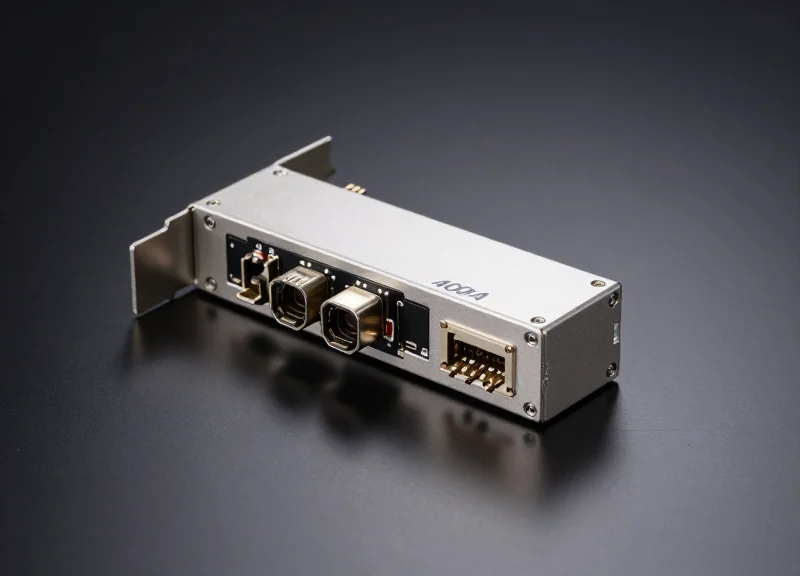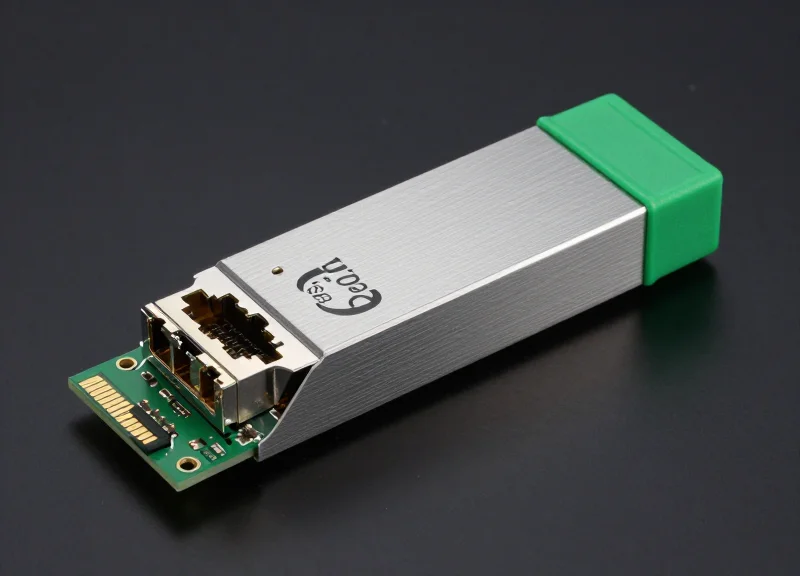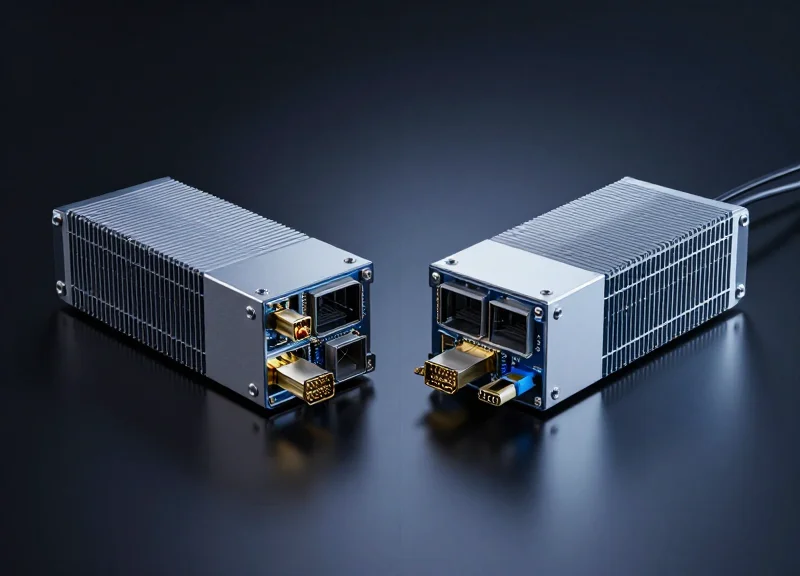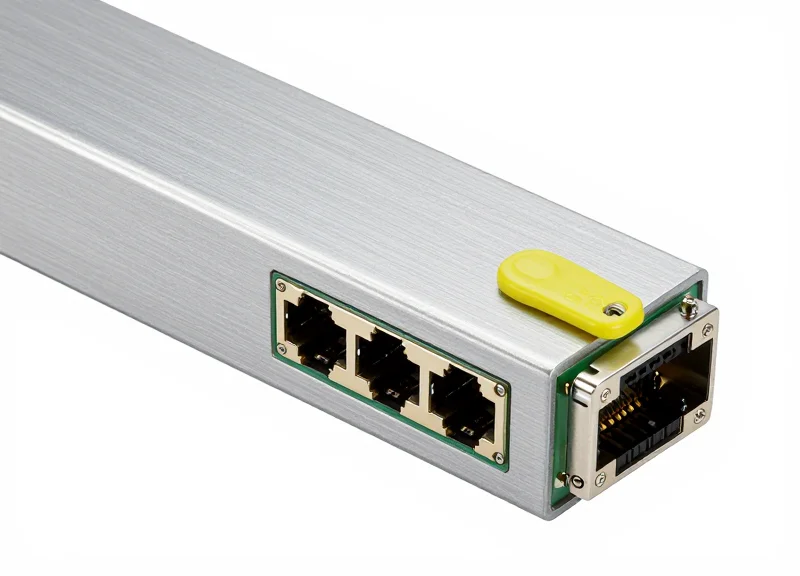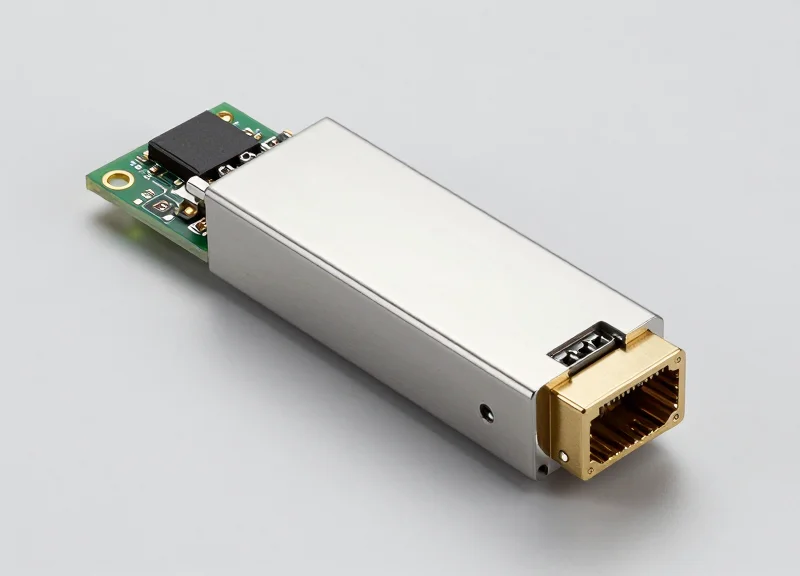
The transition to 5G demands unprecedented bandwidth and ultra-low latency, placing immense pressure on fronthaul infrastructure. Ubytelink's 25G SFP28 modules are designed to meet these rigorous demands, providing the backbone for next-generation global connectivity with uncompromising stability.
The Evolution of 5G Fronthaul: Why 25G SFP28 is the New Standard

The adoption of 25G SFP28 as the new standard for 5G fronthaul is driven by the fundamental transition from the legacy Common Public Radio Interface (CPRI) to the more efficient Enhanced Common Public Radio Interface (eCPRI). As 5G New Radio (NR) utilizes wider channel bandwidths (up to 100MHz) and Massive MIMO technology, the 10Gbps limits of 4G LTE-era SFP+ modules have become a bottleneck. 25G SFP28 provides the necessary 2.5x increase in throughput while maintaining the same small form factor, allowing operators to scale capacity without redesigning existing physical infrastructure.
From CPRI to eCPRI: Architecting for Efficiency
In 4G networks, the CPRI protocol transmitted digitized RF signals in a constant bit-rate stream, which led to significant bandwidth waste. 5G networks utilize the eCPRI protocol, which moves some of the physical layer processing from the Baseband Unit (BBU) to the Remote Radio Unit (RRU). This functional split drastically reduces the required bandwidth on the fronthaul link, making it possible to carry massive 5G data loads over 25G fiber links that would have previously required hundreds of gigabits under the old CPRI standard.
| Feature | 4G CPRI (SFP+) | 5G eCPRI (SFP28) |
|---|---|---|
| Standard Bandwidth | 10 Gbps | 25 Gbps |
| Protocol Efficiency | Constant Bit Rate (Low) | Packet-Based (High) |
| Typical Latency | Fixed/Higher | Variable/Ultra-Low |
| MIMO Support | Limited (2x2, 4x4) | Massive MIMO (64T64R) |
The Bandwidth Sweet Spot for 5G NR
The 25G threshold is not arbitrary; it is the mathematical 'sweet spot' for 5G deployments. A typical 5G NR carrier with 100MHz bandwidth and 64T64R Massive MIMO configuration requires approximately 25Gbps of fronthaul capacity per sector when using the 7-2x functional split. While 10G is insufficient and 100G remains cost-prohibitive for widespread cell-site deployment, 25G SFP28 offers the optimal balance of performance, power consumption, and cost-per-bit for global carriers.
- Why can't we just use 10G SFP+ for 5G?
10G SFP+ lacks the raw throughput required for 5G's 100MHz channels and Massive MIMO. Using 10G would require significantly more fiber strands and hardware, leading to higher OpEx and lower spectral efficiency. - Is 25G SFP28 backward compatible?
Yes, most 25G SFP28 ports are designed to be backward compatible with 10G SFP+ modules, providing a flexible migration path for operators upgrading from 4G to 5G infrastructure. - What role does Ubytelink play in this evolution?
Ubytelink provides industrial-grade 25G SFP28 modules specifically engineered for the harsh outdoor environments of 5G cell towers, ensuring signal integrity and low latency across the eCPRI ecosystem.
Technical Specifications: Decoding the Power of Ubytelink Modules
Technical Specifications: Decoding the Power of Ubytelink Modules
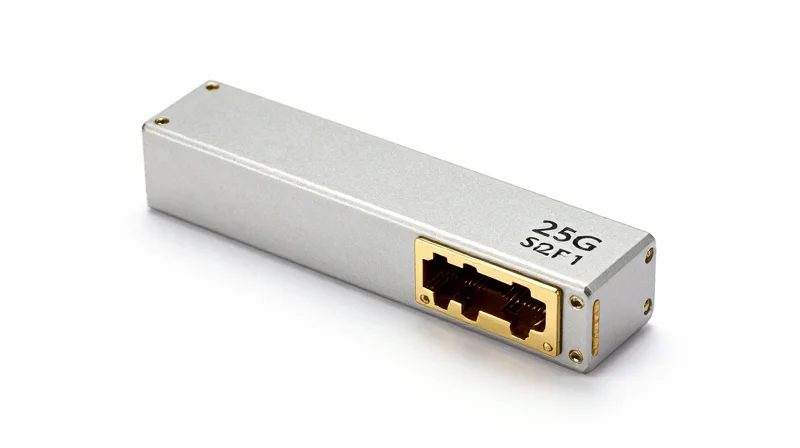
Ubytelink 25G SFP28 modules represent a pinnacle of optical engineering, designed specifically to address the stringent requirements of 5G fronthaul networks by providing a high-bandwidth, low-latency interface that fits within the established SFP footprint. Unlike standard 10G optics, these modules utilize advanced 25G NRZ (Non-Return to Zero) signaling to meet the throughput demands of eCPRI, ensuring that massive MIMO and high-frequency 5G NR deployments operate without architectural bottlenecks.
Transmission Reach and Spectral Efficiency
The diversity of 5G cell site deployments requires varying transmission distances, ranging from short-reach connections within a centralized hub to long-distance links for rural coverage. Ubytelink modules are available in distances up to 10km and 20km using single-mode fiber (SMF), utilizing 1310nm DFB lasers or BiDi (Bidirectional) technology to maximize fiber utilization. For dense urban environments where fiber exhaust is a concern, Ubytelink’s CWDM/DWDM SFP28 solutions allow multiple 25G channels to be multiplexed over a single fiber pair.
| Module Type | Wavelength (nm) | Transmission Distance | Fiber Type |
|---|---|---|---|
| 25G SFP28 SR | 850nm (VCSEL) | 100m (OM4) | Multi-mode (MMF) |
| 25G SFP28 LR | 1310nm (DFB) | 10km | Single-mode (SMF) |
| 25G SFP28 BiDi | 1270TX / 1330RX | 10km/20km | Single-mode (Simplex) |
| 25G SFP28 ER | 1550nm (EML) | 40km | Single-mode (SMF) |
Thermal Management and Form Factor Advantages
A key challenge in 5G fronthaul is the deployment of equipment in uncontrolled outdoor environments. Ubytelink SFP28 modules are designed with industrial-grade components supporting an operating temperature range of -40°C to +85°C. The high-density design ensures that power consumption remains typically below 1.2W to 1.5W, minimizing the heat signature within the Distributed Unit (DU) or Remote Radio Unit (RRU) chassis and extending the MTBF (Mean Time Between Failures) of the entire system.
- Is FEC (Forward Error Correction) required for these modules?
Yes, to achieve the rated 10km or 20km distances at 25.78 Gbps, host-side RS-FEC (Reed-Solomon FEC) is generally required to maintain a Bit Error Rate (BER) better than 5E-5. - Are Ubytelink SFP28 modules backwards compatible?
Most Ubytelink 25G modules support dual-rate functionality, allowing them to operate at 10.3Gbps for legacy 4G LTE CPRI traffic while being ready for future 25G 5G upgrades. - How does BiDi technology benefit 5G deployment?
Ubytelink BiDi SFP28 modules use WDM to transmit and receive on different wavelengths over a single strand of fiber, effectively doubling the capacity of existing fiber plant.
Industrial-Grade Reliability: Operating in Extreme Environments
Industrial-Grade Reliability: Operating in Extreme Environments
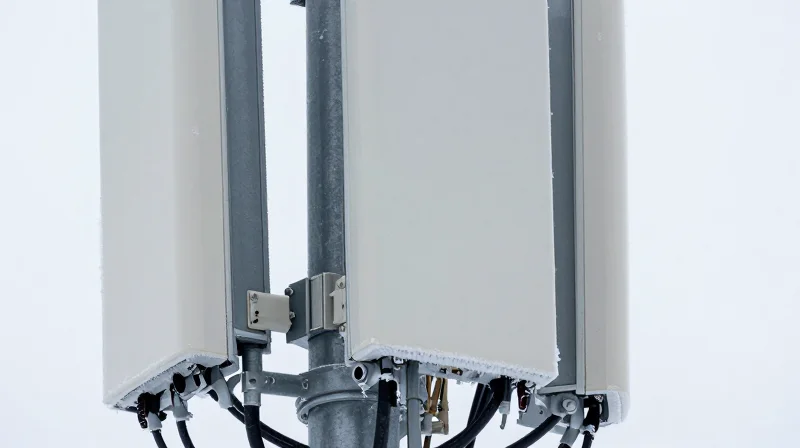
The transition to 5G New Radio (NR) demands that optical transceivers migrate from the protected confines of climate-controlled data centers to the rugged realities of outdoor towers and street-level small cells. Ubytelink 25G SFP28 modules are specifically engineered for these deployments, supporting an Industrial Temperature (I-Temp) range of -40°C to +85°C. This thermal resilience is critical for maintaining the tight synchronization and low-latency requirements of eCPRI protocols when equipment is exposed to direct solar radiation, high humidity, and extreme seasonal fluctuations.
The Thermal Challenge of Outdoor Macro Stations
In a 5G fronthaul architecture, the Remote Radio Head (RRH) or Active Antenna Unit (AAU) is typically mounted high on a mast where it is subjected to harsh ambient conditions. Standard commercial-grade modules (0°C to 70°C) often fail in these scenarios due to laser wavelength drift and accelerated component aging. Ubytelink’s industrial-grade design utilizes specialized laser drivers and heat-dissipating housing materials to ensure that the optical signal remains stable even as the internal temperature of the radio unit climbs toward the 85°C limit.
| Feature | Commercial Grade (C-Temp) | Industrial Grade (I-Temp) |
|---|---|---|
| Temperature Range | 0°C to 70°C | -40°C to 85°C |
| Primary Environment | Indoor Enterprise / Data Center | Outdoor Macro Stations / RRH |
| Component Grade | Standard Reliability | High-Reliability / Ruggedized |
| Link Stability | Risk of drift in heat/cold | Maintained via Thermal Compensation |
Reliability Questions for Outdoor 5G Deployments
- Why is -40°C support necessary for 5G?
In cold climates, equipment startups (cold boots) can occur at sub-zero temperatures. I-Temp modules ensure the laser stabilizes instantly without requiring external heaters, preventing delayed network recovery after power outages. - How does Ubytelink prevent wavelength drift at 85°C?
We employ advanced Internal Calibration and Temperature Compensation circuits that adjust the bias current and modulation in real-time, keeping the center wavelength within strict ITU-T specifications. - Does the industrial design impact power consumption?
Ubytelink 25G SFP28 modules are optimized for a low power envelope (typically <1.5W), reducing the thermal load on the host radio unit and improving the overall lifespan of the outdoor equipment.
By adhering to rigorous Telcordia GR-468 standards for reliability, Ubytelink ensures that every SFP28 module can withstand the mechanical vibrations and thermal stresses inherent in 5G infrastructure. This commitment to quality minimizes maintenance costs and prevents the expensive 'truck rolls' associated with replacing failed transceivers in difficult-to-reach tower locations.
Optimizing Latency for Mission-Critical 5G Applications

Optimizing Latency for Mission-Critical 5G Applications
Ubytelink 25G SFP28 modules are precision-engineered to eliminate the bottlenecks that cause signal delay, providing the sub-millisecond responsiveness required for Ultra-Reliable Low-Latency Communications (URLLC). By optimizing the physical layer (L1) performance and ensuring high-speed serialization/deserialization (SerDes) processes, these transceivers facilitate the near-instantaneous data transfer necessary for 5G mission-critical services such as remote surgery, autonomous vehicular coordination, and smart factory automation.
The Impact of 25G Bandwidth on URLLC
In a 5G environment, latency is not merely about the speed of light through fiber; it is about the time required for the network to process and forward packets. Ubytelink’s 25G SFP28 solution addresses this by providing a massive increase in throughput over legacy 10G systems. This increased 'pipe' size reduces the time-of-flight for large data packets and minimizes queuing delays at the Distributed Unit (DU) and Remote Unit (RU) interfaces.
| Application Type | Latency Requirement | Ubytelink 25G Advantage |
|---|---|---|
| Autonomous Driving | < 1ms to 5ms | Reduced serialization delay for V2X safety signals. |
| Industrial IoT (IIoT) | 1ms to 10ms | High-precision timing and synchronization for robotics. |
| Augmented Reality (AR) | < 20ms | Consistent throughput to prevent motion-to-photon lag. |
| Standard Broadband | 30ms to 50ms | Overhead capacity for peak-hour congestion management. |
Balancing FEC and Real-Time Performance
Forward Error Correction (FEC) is essential for maintaining signal integrity over long distances, but it can introduce processing lag. Ubytelink’s 25G SFP28 modules are designed to work seamlessly with the host system's FEC algorithms—specifically RS-FEC (255, 223)—optimizing the trade-off between error-free transmission and speed. This ensures that even in high-interference outdoor environments, the 5G fronthaul maintains a 'lean' protocol stack that does not compromise the URLLC budget.
- How does Ubytelink ensure synchronization for low latency?
Ubytelink modules support SyncE (Synchronous Ethernet) and IEEE 1588 PTP (Precision Time Protocol), ensuring that all nodes in the 5G fronthaul remain perfectly aligned in time, which is critical for minimizing jitter. - Does the 25G speed directly affect ping times?
Yes. Higher bandwidth reduces serialization delay, meaning the time it takes to put a packet onto the fiber is significantly shorter than with 10G modules. - Are these modules suitable for edge computing?
Absolutely. By reducing the latency in the fronthaul, Ubytelink 25G SFP28 enables Multi-access Edge Computing (MEC) to process data closer to the user effectively.
Energy Efficiency: Reducing TCO in Massive Scale Deployments
Energy efficiency is a cornerstone of sustainable 5G profitability, as Ubytelink 25G SFP28 modules are engineered to operate at power levels significantly below the industry average, directly lowering the operational expenditure (OPEX) associated with electricity and cooling. In massive-scale deployments where thousands of Remote Radio Units (RRUs) are active simultaneously, the cumulative energy savings from low-wattage transceivers fundamentally transform the financial viability of the network.
Quantifying the TCO Advantage: Energy-Efficient Optical Engineering
The Total Cost of Ownership for 5G infrastructure extends far beyond the initial purchase price of hardware. It encompasses power consumption, thermal dissipation requirements, and the maintenance costs associated with heat-induced component failure. Ubytelink's 25G SFP28 modules utilize advanced Digital Signal Processing (DSP)-free or low-power Clock and Data Recovery (CDR) designs to keep power consumption typically under 1.0W per module. This lean energy profile is essential for high-density fronthaul switches and cell site gateways where airflow is often restricted.
| Feature Description | Standard 25G SFP28 Module | Ubytelink 25G SFP28 Solution | Economic Impact |
|---|---|---|---|
| Typical Power Consumption | 1.5W - 1.8W | 0.9W - 1.0W | 35-45% Reduction in Energy Cost |
| Heat Dissipation Profile | High Thermal Output | Ultra-Low Thermal Output | Reduced Cooling Fan OPEX |
| Density Limit (per Rack) | Thermal Throttling Common | Optimized for Max Density | Maximizes Port Utilization |
| Estimated Lifespan (MTBF) | Standard | Extended (Low Heat Stress) | Lower Replacement Frequency |
The Relationship Between Low Power and Network Reliability
Excessive heat is the primary catalyst for laser degradation in optical transceivers. By reducing the power draw at the circuit level, Ubytelink ensures that internal components operate well within their optimal temperature ranges. This architectural efficiency not only saves on the utility bill but also enhances the Mean Time Between Failures (MTBF), ensuring that global networks remain operational for longer periods without the need for manual intervention at remote tower sites.
FAQ: Maximizing TCO with Ubytelink Energy Efficiency
- How does low power consumption affect the signal reach of the 25G SFP28?
Lower power consumption does not compromise signal integrity; Ubytelink uses high-efficiency laser drivers that maintain full 10km or 20km transmission distances while optimizing the voltage-current curves to avoid wasted energy. - Can these modules help in meeting corporate ESG (Environmental, Social, and Governance) goals?
Yes. By deploying thousands of modules that draw 0.5W to 0.8W less than standard alternatives, operators significantly reduce their carbon footprint, aligning with global green energy initiatives. - Does the low-power design impact the industrial temperature (I-Temp) rating?
Actually, it improves it. Because the module generates less internal heat, it is less likely to exceed its thermal ceiling when operating in high-temperature outdoor environments (-40°C to +85°C).
By prioritizing an energy-efficient architecture, Ubytelink provides a strategic advantage for telecom operators. The 25G SFP28 for 5G Fronthaul solutions prove that premium quality and high performance can coexist with a lower power profile, ensuring that the next generation of global networks is both environmentally sustainable and economically superior.
Seamless Compatibility and MSA Compliance Standards
Seamless Compatibility and MSA Compliance Standards
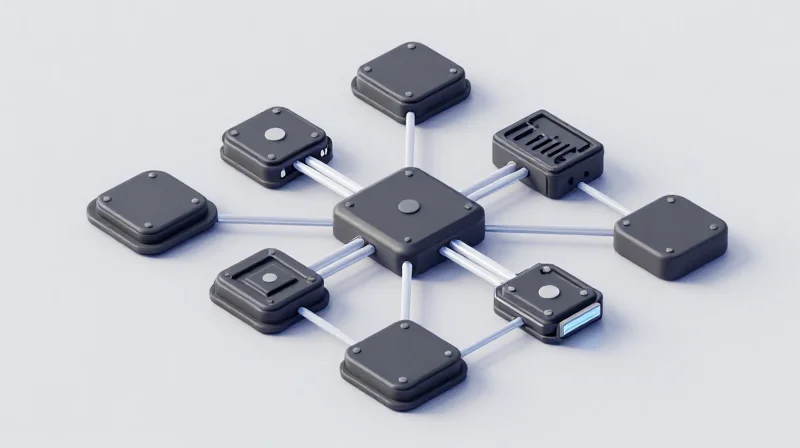
Ubytelink 25G SFP28 transceivers are engineered to solve the multi-vendor complexity inherent in modern 5G fronthaul architectures by strictly adhering to industry-standard Multi-Source Agreements (MSA). This rigorous commitment ensures that telecommunications operators can deploy Ubytelink hardware across diverse network environments—from the edge to the core—without the risk of proprietary lock-in, hardware rejection, or signal degradation.
Adherence to SFF-8431 and SFF-8472 Specifications
The foundation of Ubytelink's reliability lies in its compliance with key SFF specifications. Adherence to SFF-8431 provides the precise mechanical and electrical specifications necessary for SFP28 high-speed signal integrity. Simultaneously, compliance with SFF-8472 enables Digital Diagnostic Monitoring (DDM), allowing network administrators to perform real-time analysis of optical power, temperature, and voltage. These standards ensure that Ubytelink modules are not only physically compatible but also fully communicative with modern network management systems.
| Standard | Technical Scope | Operational Benefit for 5G |
|---|---|---|
| SFF-8431 | Electrical & Mechanical Interface | Ensures physical fit and signal integrity across all SFP28 ports. |
| SFF-8472 | Digital Diagnostic Monitoring (DDM) | Enables proactive fault detection and real-time health monitoring. |
| IEEE 802.3by | 25Gb/s Ethernet Specification | Guarantees data throughput consistency for high-bandwidth fronthaul. |
Global Interoperability with Tier-1 Equipment Vendors
In the fragmented landscape of 5G infrastructure, interoperability is the primary concern for CapEx and OpEx efficiency. Ubytelink addresses this by conducting comprehensive validation testing within environments that simulate the hardware ecosystems of global leaders such as Cisco, Nokia, Ericsson, and Juniper. By utilizing sophisticated EEPROM coding techniques, Ubytelink modules are recognized as native components by host devices, eliminating 'unsupported transceiver' errors and ensuring seamless link initialization.
- Does Ubytelink support vendor-specific port security protocols?
Yes. Our modules feature customized firmware and coding options designed to bypass vendor-specific lockouts on equipment from Cisco, Huawei, and Nokia while maintaining full DDM functionality. - Can these modules be used in mixed-vendor RRH and BBU configurations?
Absolutely. Ubytelink’s adherence to MSA standards ensures they act as a reliable bridge between different vendor platforms, making them ideal for Open-RAN (O-RAN) and traditional 5G deployments. - How is compatibility verified before shipping?
Each batch undergoes a 100% compatibility test in our specialized lab, where they are plugged into the exact switch and router models specified by the client to confirm handshake and throughput performance.
Quality Assurance: Ubytelink's Rigorous Testing Protocols

To meet the uncompromising demands of 5G infrastructure, Ubytelink 25G SFP28 modules undergo a multi-stage testing framework designed to eliminate hardware infant mortality and ensure consistent performance across diverse network environments. This process guarantees that every module delivered provides the 99.999% availability essential for mission-critical URLLC and high-bandwidth eMBB services.
Comprehensive Signal Integrity and BER Validation
Signal integrity is the cornerstone of low-latency 5G communications. Every Ubytelink 25G SFP28 transceiver is subjected to Bit Error Rate (BER) testing to ensure data transparency. We mandate a pre-FEC (Forward Error Correction) BER better than 10^-12, providing a massive safety margin for signal degradation over long fiber spans. Furthermore, high-resolution eye diagram analysis is conducted to verify jitter margins, extinction ratios, and optical mask compliance, ensuring the module functions perfectly with host equipment from vendors like Cisco, Nokia, and Ericsson.
Environmental Stress Screening (ESS) for Extreme Conditions
5G Remote Radio Units (RRUs) are frequently deployed in harsh outdoor environments subject to extreme temperature fluctuations. Ubytelink modules undergo Environmental Stress Screening (ESS), including thermal cycling from -40°C to +85°C. This process identifies latent defects in the laser diode or TOSA/ROSA assemblies before they reach the field. Additionally, damp heat and vibration tests are performed in accordance with Telcordia GR-468-CORE standards to simulate a 15-year operational lifespan.
| Test Category | Metric / Protocol | Compliance Standard |
|---|---|---|
| Optical Characterization | Tx/Rx Power & Wavelength | IEEE 802.3cc / SFF-8472 |
| Data Integrity | Bit Error Rate (BER) < 10^-12 | SFF-8431 |
| Reliability | Accelerated Aging & Thermal Cycle | Telcordia GR-468-CORE |
| Interoperability | Multi-Vendor Switch Integration | MSA Compliant |
Quality Assurance FAQ
- How does Ubytelink ensure 'Five Nines' (99.999%) reliability?
We achieve this through 100% factory testing of every unit rather than batch sampling. By combining automated optical inspection with rigorous burn-in cycles, we reduce field failure rates to near-zero levels. - What standards govern the testing of 25G SFP28 modules?
Our protocols strictly follow IEEE 802.3cc for optical specifications and SFF-8431/SFF-8472 for mechanical and management interface standards, ensuring seamless global interoperability. - How is power consumption verified during testing?
Each module is tested under full load and across the entire temperature range to ensure it remains below the 1.0W or 1.2W thresholds required for high-density 5G base station deployments.
Future-Proofing Your Network: Scalability with Ubytelink
Scalability is the cornerstone of modern telecommunications, and the Ubytelink 25G SFP28 represents a strategic entry point that balances current performance requirements with future-proof design. By deploying high-quality 25G modules today, operators build a resilient physical layer capable of supporting the densification of 5G cells and the eventual migration to higher-bandwidth edge computing without premature infrastructure overhauls.
Bridging the Gap: The Evolution to 50G and 100G
The transition from 25G to 50G or 100G isn't just about speed; it's about network architectural efficiency. Ubytelink's premium modules utilize advanced signal integrity features that minimize latency and maximize reach, which are critical as fronthaul networks move closer to the user through Multi-access Edge Computing (MEC). This ensures that while the demand for data grows, the underlying hardware remains compatible with next-generation multiplexing and aggregation strategies.
| Network Phase | Target Bandwidth | Primary Use Case | Infrastructure Impact |
|---|---|---|---|
| Initial 5G Deployment | 25G SFP28 | Enhanced Mobile Broadband (eMBB) | Standard 5G Macro Sites |
| Advanced 5G/URLLC | 50G SFP56 | Ultra-Reliable Low Latency | Small Cell Densification |
| Edge AI & IoT | 100G QSFP28/DSFP | Hyper-connected Edge Nodes | MEC & Data Center Interconnect |
Sustainable Infrastructure through Premium Quality
Low-quality modules often fail under the thermal and electrical stress of high-density 5G environments, leading to costly 'truck rolls' and service outages. Ubytelink's focus on premium components and rigorous environmental testing means these modules are built to last through multiple technology cycles. This longevity reduces the Total Cost of Ownership (TCO) and allows capital expenditure to be redirected toward active electronics and software-defined networking capabilities rather than replacing failed physical links.
Frequently Asked Questions about Network Scalability
- Can I use Ubytelink 25G modules in ports designed for 50G?
Yes, many next-generation 50G/100G ports are backward compatible with 25G SFP28 modules, allowing for a phased upgrade approach where you only increase speed as traffic demands necessitate. - How does 25G SFP28 impact edge computing latency?
Ubytelink 25G modules are optimized for the O-RAN fronthaul interface, ensuring deterministic latency which is vital for edge applications like autonomous driving and industrial automation. - Is it worth investing in premium 25G now if 50G is coming?
Absolutely. 25G will remain the dominant fronthaul standard for several years. Premium modules ensure that your current investment won't fail prematurely, providing a stable platform for the gradual integration of 50G/100G components.
Investing in high-quality optical modules is essential for the longevity and performance of 5G networks. Ubytelink offers the technical expertise and premium hardware needed to scale confidently. Contact our engineering team today for a custom consultation or request a quote for your next infrastructure project.