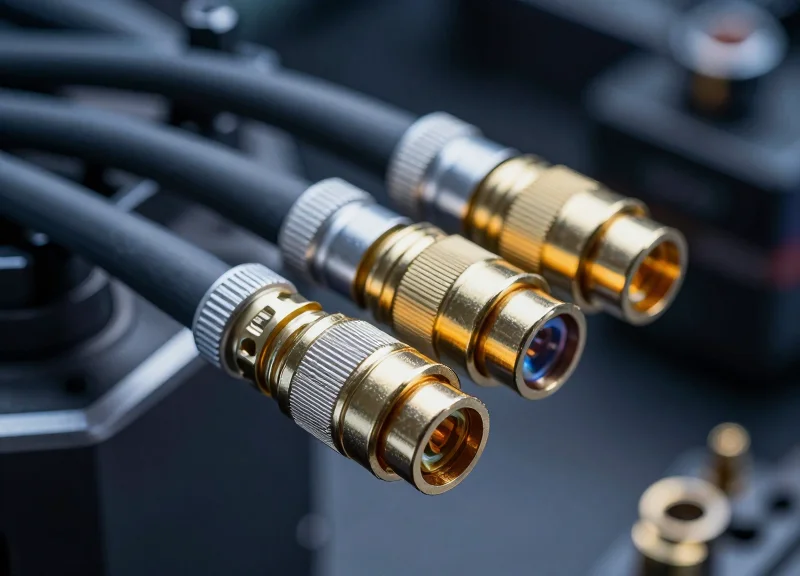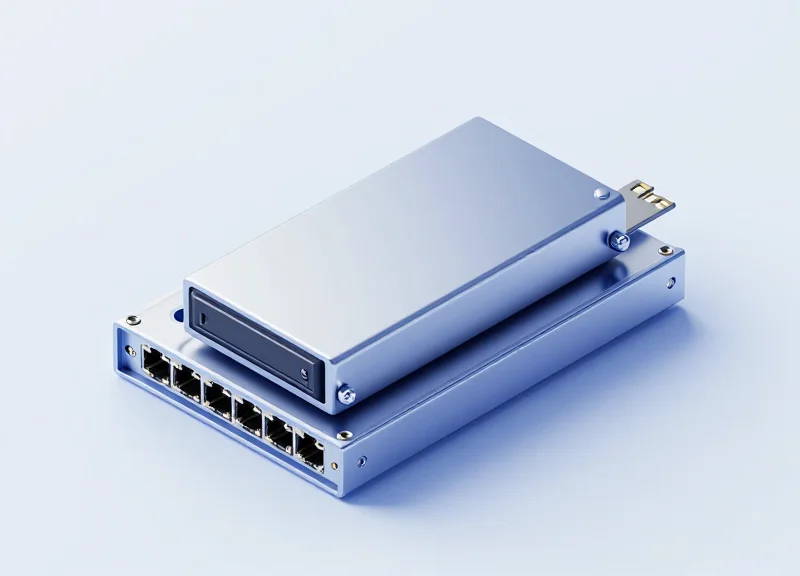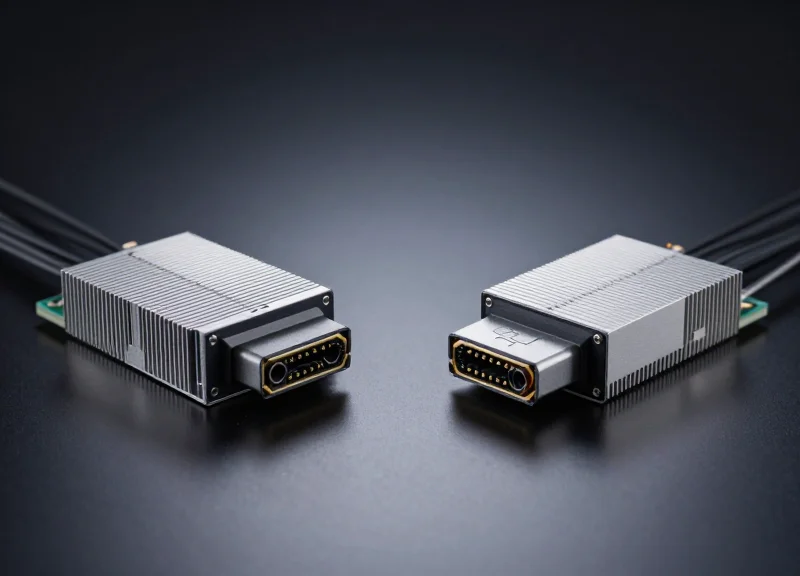
In today's hyper-connected landscape, the ability of network components to work together seamlessly is the difference between operational excellence and costly downtime. Ubytelink addresses this challenge with our state-of-the-art Interoperability Testing (IOT) modules, designed to provide carrier-grade reliability across diverse hardware ecosystems.
Defining Interoperability Testing (IOT) in Modern Networking

Defining Interoperability Testing (IOT) in Modern Networking
Interoperability Testing (IOT) is a rigorous validation methodology used to confirm that individual network components—specifically optical transceivers—function correctly within a multi-vendor ecosystem. Unlike basic functional testing, IOT simulates real-world high-density environments to ensure that hardware from different manufacturers can exchange data, execute protocols, and maintain link stability without degradation. In an era where software-defined networking (SDN) and open-source operating systems are becoming the norm, Ubytelink Interoperability Testing (IOT) Solutions serve as the ultimate benchmark for reliability, transforming generic hardware into verified, mission-critical assets.
The Shift from Proprietary to Open Networking
Historically, network administrators were locked into single-vendor ecosystems to guarantee compatibility. Modern data centers, however, demand the flexibility to mix and match hardware from Cisco, Juniper, Arista, and others. IOT is the process that makes this flexibility possible. It goes beyond checking if a laser fires; it verifies that the module's EEPROM and Digital Optical Monitoring (DOM) data are correctly interpreted by the host system's specific firmware, ensuring that the network management software can monitor temperature, voltage, and bias current accurately.
| Feature | Standard Bench Testing | Ubytelink IOT Solutions |
|---|---|---|
| Hardware Recognition | Basic electrical connection | Full EEPROM/DOM handshake verification |
| Software Integration | Generic driver support | OS-specific command line (CLI) diagnostics |
| Traffic Load | Limited packet bursts | Continuous 100% throughput stress testing |
| Compatibility | One-to-one link | Multi-vendor switch-to-switch verification |
Why IOT is Critical for Optical Transceivers
- Why can't I rely solely on MSA compliance?
While MSA (Multi-Source Agreement) defines physical and electrical specs, it doesn't account for the unique software handshake or proprietary locking mechanisms used by different OEMs. IOT ensures these software barriers are bypassed. - How does IOT prevent network downtime?
By verifying 'hot-swapping' capabilities and link-flap stability under heavy load, IOT ensures that new modules do not trigger system panics, port shutdowns, or erratic CRC errors. - Is IOT necessary for all network speeds?
As speeds move from 10G to 400G and 800G, signal integrity becomes more volatile. IOT is even more critical at higher speeds to ensure that Forward Error Correction (FEC) and signal modulation work across different platforms.
By implementing a comprehensive IOT strategy, Ubytelink ensures that every optical solution delivered is pre-validated for the specific environment it will inhabit. This proactive approach eliminates the 'trial and error' phase of network deployment, significantly reducing Mean Time to Repair (MTTR) and Total Cost of Ownership (TCO) for global network operators.
The Ubytelink Difference: Beyond Basic Compatibility
The Ubytelink Difference: Beyond Basic Compatibility
While many providers offer 'plug-and-play' claims, Ubytelink differentiates its Interoperability Testing (IOT) by moving beyond simple connectivity checks to perform exhaustive validation of optical, electrical, and logical characteristics. True interoperability is not merely the ability to establish a link; it is the guarantee that a transceiver will maintain signal integrity, support advanced telemetry, and resist protocol-level errors across a multi-vendor environment under peak load conditions.
| Testing Metric | Basic Compatibility Claims | Ubytelink Premium IOT |
|---|---|---|
| Link-up Verification | Basic 'up/down' status check | Deep handshake and link-training analysis |
| Signal Diagnostics | Static RSSI reading | Real-time Bit Error Rate (BER) and Eye-diagram testing |
| Vendor Ecosystem | Limited to common platforms | Comprehensive multi-vendor lab covering 100+ platforms |
| Firmware Logic | Standard EEPROM cloning | Dynamic microcode optimization for specific NOS versions |
| Stress Testing | Ambient temperature only | Thermal cycling and extreme traffic congestion simulations |
Deep-Layer Protocol Analysis
Ubytelink engineers utilize advanced protocol analyzers to inspect the interaction between the transceiver's internal microcontroller and the host system’s Network Operating System (NOS). This process ensures that Digital Optical Monitoring (DOM) data is accurately reported and that auto-negotiation sequences are perfectly timed. By resolving micro-level timing discrepancies in the I2C interface, Ubytelink prevents the 'soft-failures' and intermittent packet drops that frequently plague generic third-party modules when inserted into high-end switches.
Hardware-Level Validation and Physical Integrity
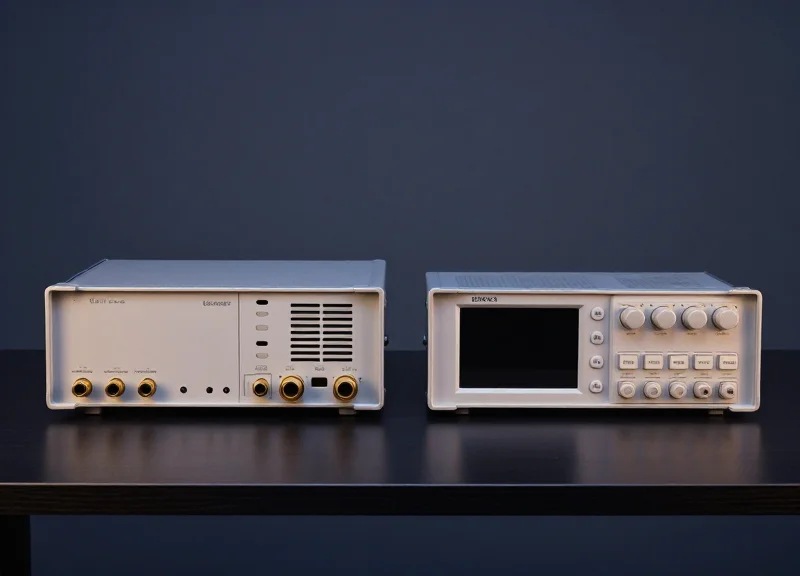
Our IOT solutions include hardware-level validation where physical signal characteristics are scrutinized using high-performance oscilloscopes. We measure the 'Eye Mask' of every signal to ensure that jitter and noise levels remain well within IEEE and MSA specifications. This rigorous physical layer testing ensures that Ubytelink modules do not just work on day one, but continue to provide error-free transmission throughout their entire lifecycle, even as network components age and environmental conditions fluctuate.
- Why is signal integrity testing more important than simple link-up?
A link can appear 'up' while suffering from high Bit Error Rates (BER) that cause retransmissions and latency. Signal integrity testing ensures the electrical path is clean, preventing invisible performance degradation. - How does Ubytelink address firmware-level incompatibilities?
We develop custom firmware profiles that are specifically tuned to match the unique logic requirements of different brands, such as Cisco, Arista, and Juniper, ensuring full feature parity with OEM modules. - Does Ubytelink testing account for future software updates?
Yes, our IOT lab continuously updates host device software (NOS) to verify that existing transceivers remain compatible with the latest patches and operating system versions.
The Rigorous 4-Step Testing Lifecycle for IOT Modules

The Ubytelink IOT lifecycle is a rigorous end-to-end engineering framework designed to transition optical modules from raw components into verified assets capable of operating within any Tier-1 networking environment. By systematically isolating potential points of failure—ranging from EEPROM coding discrepancies to high-temperature signal degradation—this workflow ensures that every module behaves as a native, high-performance component within the host system, regardless of the vendor hardware.
Step 1: Initial Compatibility Screening and Handshake Verification
The first phase focuses on the fundamental 'digital handshake' between the transceiver and the host equipment, such as switches from Cisco, Arista, or Juniper. Engineers verify that the module’s EEPROM (A0h/A2h) data is correctly mapped to the host's specific requirements. This includes meticulous verification of vendor names, serial numbers, and checksums. By resolving these data-level nuances, Ubytelink prevents the 'unrecognized transceiver' alarms that often trigger port shutdowns in proprietary environments.
Step 2: Signal Integrity (SI) and Bit Error Rate Analysis
Physical recognition is only the baseline; the module must deliver clean electrical and optical signals. Ubytelink utilizes high-speed sampling oscilloscopes to perform Eye Diagram analysis, measuring jitter, rise/fall times, and extinction ratios. A core metric in this stage is the Bit Error Rate (BER). We ensure a Pre-FEC (Forward Error Correction) BER that exceeds industry standards, ensuring that data transmission remains reliable even over maximum-reach fiber links and through complex patch panels.
Step 3: Saturated Throughput and Thermal Stress Testing
Real-world data centers are volatile environments. In this phase, modules are subjected to 'bursty' traffic patterns and 100% saturated throughput scenarios to observe how the internal Digital Signal Processor (DSP) handles heat and power consumption. We simulate high-ambient temperature conditions and airflow restrictions to confirm that the module does not throttle performance or experience 'silent packet loss' during peak operational loads.
Step 4: Multi-Version Firmware Regression
Interoperability is a moving target due to frequent Network Operating System (NOS) updates. Ubytelink’s regression testing involves cycling modules through multiple versions of host software (e.g., moving from Cisco IOS-XE 16.x to 17.x). This ensures that firmware optimizations remain stable over the long term, preventing service disruptions during future network maintenance cycles or hardware upgrades.
| Testing Phase | Primary Focus | Key Success Metric |
|---|---|---|
| Compatibility Screening | Protocol & Handshake | EEPROM Checksum Match |
| Signal Integrity | Physical Layer Quality | BER & Eye Margin |
| Stress Testing | Environmental Stability | Thermal/Power Thresholds |
| Firmware Regression | OS Lifecycle Support | Cross-Version Stability |
Technical FAQ: The IOT Lifecycle
- Why is Pre-FEC BER more important than Post-FEC results?
Pre-FEC BER reveals the raw quality of the optical signal. If the raw signal is poor, the FEC must work harder, increasing latency and reducing the margin for error during minor fiber bends or aging. - How does Ubytelink handle proprietary 'Vendor Lock-in' software?
We use advanced coding techniques to emulate the specific signature required by the host OS, ensuring the transceiver is treated as a fully supported native component. - Can firmware regression testing prevent network downtime?
Yes. By identifying incompatibilities in newer OS versions before they are deployed in production, we allow for firmware adjustments that keep the network stable through upgrades.
Solving the Multi-Vendor Paradox
Solving the Multi-Vendor Paradox
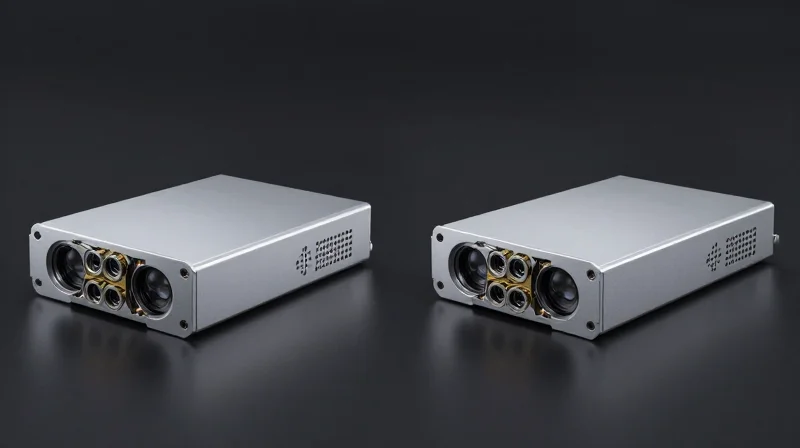
The multi-vendor paradox is the operational challenge of building a cost-effective, high-performance network while being restricted by the proprietary licensing and 'lock-in' tactics of major hardware manufacturers. Ubytelink Interoperability Testing (IOT) Solutions solve this by decoupling the optical layer from the switch ecosystem. By utilizing advanced EEPROM coding and platform-specific firmware validation, Ubytelink ensures that optics are recognized as fully compliant 'native' modules by the host operating system, whether it is Cisco IOS-XE, Arista EOS, or Juniper Junos.
Neutralizing Vendor Lock-in through Technical Precision
True interoperability goes beyond a simple link light; it requires the accurate reporting of Digital Optical Monitoring (DOM) data, the absence of 'unsupported transceiver' errors, and the maintenance of signal integrity across long distances. Ubytelink’s lab maintains an exhaustive inventory of the latest chassis and line cards from market leaders to simulate real-world heterogeneous environments. This allows network architects to mix and match hardware without sacrificing the telemetry and monitoring capabilities essential for data center management.
| Interoperability Metric | Standard Third-Party Optics | Ubytelink IOT Solutions |
|---|---|---|
| OS Recognition | Often flagged as 'Unknown' | 100% Native Recognition |
| DOM/Telemetry | May be restricted or inaccurate | Full Real-time Diagnostic Support |
| Protocol Handshaking | Generic standard only | Vendor-Specific Protocol Emulation |
| Deployment Risk | High (Risk of link failure after OS updates) | Zero (Validated against latest OS releases) |
Multi-Vendor Compatibility FAQ
- Will using Ubytelink modules void my manufacturer warranty?
No. Legal frameworks such as the Magnuson-Moss Warranty Act protect consumers, ensuring that hardware warranties remain intact when using third-party components that meet industry standards. - How does Ubytelink ensure modules work after an OS update?
Our IOT lifecycle includes firmware regression testing. When vendors like Cisco or Arista release new software versions, our engineering team validates the transceiver handshake to ensure continued compatibility. - Can Ubytelink modules bridge different brands?
Yes. Our IOT solutions are engineered for cross-brand connectivity, meaning a Ubytelink module in a Dell switch will seamlessly communicate with a module in a Juniper router at the physical and protocol layers.
Ensuring Stability in Mission-Critical Infrastructure

Ensuring Stability in Mission-Critical Infrastructure
For mission-critical infrastructure, the cost of network failure extends far beyond financial loss; it impacts patient safety in healthcare and market integrity in global finance. Ubytelink Interoperability Testing (IOT) solutions provide a preemptive shield against these risks by ensuring that disparate hardware components—from high-speed transceivers to core switches—function as a unified, stable system. By validating signal integrity and protocol compliance at the hardware level, we eliminate the 'silent' errors that often plague multi-vendor environments under high load.
Mitigating Latency and Packet Loss in High-Stakes Environments
| Industry Segment | Critical Network Requirement | Ubytelink IOT Impact |
|---|---|---|
| High-Frequency Trading | Sub-microsecond Latency | Eliminates serialization delays across multi-vendor switch fabrics |
| Healthcare Systems | Zero Packet Loss | Ensures high-fidelity diagnostic imaging and real-time patient monitoring |
| Industrial Automation | Deterministic Timing | Validates Precision Time Protocol (PTP) interoperability for synchronized robotics |
In financial data centers, even a millisecond of latency can lead to significant slippage and failed executions. Ubytelink’s IOT lab specifically targets buffer management and flow control mechanisms across mixed-vendor links to ensure that bursty traffic does not trigger unnecessary packet drops. Similarly, in healthcare networks, our testing ensures that high-bandwidth medical imaging data reaches its destination without jitter, providing clinicians with the clarity required for life-saving decisions.
- How does IOT prevent silent packet drops?
By validating that buffer thresholds and flow control protocols are perfectly aligned between different vendor chipsets, preventing overflows that standard testing might miss. - Can IOT improve failover times in critical systems?
Yes, Ubytelink validates that redundancy protocols like LACP, OSPF, and BGP synchronize flawlessly across multi-vendor nodes, ensuring sub-second recovery during hardware failures. - Is IOT necessary for pre-existing legacy infrastructure?
Absolutely. We test the integration of modern high-speed modules with legacy backplanes to ensure that aging infrastructure does not become a bottleneck or a point of failure for new services.
Future-Proofing Through Advanced Firmware Management

Future-Proofing Through Advanced Firmware Management
Advanced firmware management is the cornerstone of sustainable network architecture, allowing optical modules to adapt dynamically to host device software updates and emerging communication standards. By maintaining a deep library of OEM-specific codebases and proprietary tuning algorithms, Ubytelink ensures that hardware deployed today remains operational through multiple generations of software upgrades, effectively decoupling the hardware lifecycle from restrictive vendor software cycles.
Proactive Adaptation to OEM Software Cycles
Major manufacturers like Cisco, Juniper, and Arista frequently release OS patches and major version upgrades—such as Cisco IOS-XE or Arista EOS updates—that can inadvertently 'lock out' or misread third-party modules that lack sophisticated firmware. Ubytelink mitigates this risk through a proactive engineering lifecycle. When an OEM announces a software shift, our IOT labs immediately conduct regression testing to identify protocol changes or EEPROM identification shifts, ensuring our solutions provide a seamless 'plug-and-play' experience regardless of the host's software version.
| Feature | Generic Third-Party Modules | Ubytelink IOT Solutions |
|---|---|---|
| OS Compatibility | Static/Fixed at manufacturing | Dynamic and Updatable |
| Vendor Lock-in Risk | High after OS updates | Zero (Mitigated via active coding) |
| DOM/DDM Accuracy | Variable/Unreliable | Precision-tuned per OEM spec |
| Lifecycle Support | Limited to initial sale | Full lifecycle firmware maintenance |
Firmware Regression and Validation
Unlike commodity transceivers that utilize generic code, Ubytelink employs custom-coded EEPROM architectures. This allows for precise tuning of power consumption, thermal thresholds, and Digital Optical Monitoring (DOM) accuracy. Our firmware regression process ensures that new optimizations do not compromise existing stability. By validating every firmware iteration against a massive matrix of legacy and modern hardware, we maintain 100% interoperability across even the most complex heterogeneous environments.
- Can Ubytelink modules be updated in the field?
Yes. Ubytelink provides specialized portable coding tools and cloud-based firmware repositories that allow network engineers to re-program or update module firmware on-site to match new equipment or software requirements. - How does firmware management reduce Total Cost of Ownership (TCO)?
By preventing hardware obsolescence caused by OEM software shifts, organizations avoid the cost of premature hardware replacement and the significant downtime associated with compatibility errors. - Does custom firmware affect the manufacturer's warranty?
No. Ubytelink firmware is designed to be fully compliant with MSA standards and OEM specifications, ensuring that host devices recognize them as high-quality components without voiding system warranties.
Compliance and Global Standards Alignment
Adherence to International Regulatory and Performance Frameworks
Compliance with global standards is the bedrock of Ubytelink’s Interoperability Testing (IOT) solutions, ensuring that every optical transceiver and network component functions reliably within the complex ecosystems of global Tier-1 providers. By strictly adhering to Multi-Source Agreements (MSA) and IEEE specifications, Ubytelink eliminates the risks associated with proprietary hardware limitations, facilitating seamless integration across disparate networking environments while maintaining rigorous safety and environmental benchmarks.
The Role of Multi-Source Agreements (MSA) in IOT
MSA standards define the form factors, electrical interfaces, and optical characteristics of transceivers. Ubytelink’s IOT protocols verify that modules like SFP28, QSFP28, and QSFP-DD meet these specific dimensions and signaling requirements. This ensures that a Ubytelink module is physically and electrically identical to original equipment manufacturer (OEM) parts, allowing for true hot-swappable compatibility in switches from Cisco, Arista, and others without triggering 'unsupported transceiver' errors.
| Standard Body | Primary Focus Area | Impact on Network Quality |
|---|---|---|
| MSA (Multi-Source Agreement) | Form factor, pin assignments, and EEPROM mapping | Ensures physical fit and electrical communication across different hardware brands. |
| IEEE 802.3 | Optical signaling, data rates, and error correction | Guarantees bit-error rate (BER) performance and transmission distance accuracy. |
| RoHS / REACH | Environmental safety and hazardous substance restriction | Protects data center environments from toxic materials and ensures legal market access. |
| CE / FCC | Electromagnetic interference (EMI) and safety | Prevents equipment from interfering with other electronics and ensures operator safety. |
IEEE Performance Benchmarking and Signaling Integrity
Beyond physical compatibility, Ubytelink aligns its IOT with IEEE 802.3 standards to ensure data integrity. Our testing validates that optical signals remain within specified tolerances for power levels, wavelength accuracy, and dispersion. This alignment is critical for high-speed 100G, 400G, and 800G networks where even minor deviations from IEEE standards can lead to excessive packet loss or total link failure.
Environmental Stewardship and Global Safety Compliance
Global network deployments require adherence to environmental regulations. Ubytelink’s products undergo testing to ensure they are RoHS (Restriction of Hazardous Substances) and REACH compliant. This commitment ensures that our high-performance solutions are not only technically superior but also meet the stringent safety and sustainability requirements of international markets, including the EU and North America.
- Why is MSA compliance critical for third-party optics?
MSA compliance ensures that third-party optics follow the same industry-standard blueprints as OEM modules, preventing hardware damage and ensuring the switch OS can read the module's diagnostic data correctly. - How does Ubytelink ensure its IOT remains current with new standards?
We actively monitor updates from the IEEE and MSA groups, updating our firmware and testing scripts as new iterations of the 802.3 standard or form factor specifications are released. - What are the consequences of using non-compliant hardware?
Non-compliant hardware can cause unpredictable system reboots, physical damage to host ports due to incorrect voltage, and significant EMI issues that disrupt nearby network equipment.
The Strategic ROI of Interoperability Testing
The Financial Impact of Interoperability: Beyond Technical Compatibility
Investing in Ubytelink Interoperability Testing (IOT) Solutions is fundamentally a strategic move to safeguard network uptime and fiscal performance. By ensuring that optical modules function seamlessly across heterogeneous hardware environments, organizations can bypass the hidden costs of trial-and-error deployments. The return on investment is realized through the drastic reduction of Return Material Authorizations (RMAs), lower labor costs for troubleshooting, and the prevention of catastrophic network outages that can cost thousands of dollars per minute in high-stakes industries like finance and healthcare.
Quantifying the Value: Standard vs. IOT-Verified Modules
| Metric | Generic Optical Modules | Ubytelink IOT-Verified Modules |
|---|---|---|
| Average RMA Rate | 3% - 5% annually | <0.1% annually |
| Deployment Speed | High manual configuration needed | Plug-and-Play (Zero-touch) |
| Downtime Risk | High due to firmware mismatch | Minimal due to multi-platform validation |
| Operational Expense (OPEX) | Increasing with network age | Stable and predictable |
Minimizing RMAs and Streamlining Global Deployment
The logistical and financial burden of a Return Material Authorization (RMA) extends far beyond the price of the module itself. It includes the cost of specialized technician labor, expedited shipping, and the missed opportunity costs of network downtime. Ubytelink's rigorous IOT protocols identify potential protocol conflicts and physical layer discrepancies before the product reaches the data center. This proactive approach ensures that large-scale global deployments can proceed on schedule, allowing enterprises to scale their infrastructure without the friction of hardware incompatibility.
FAQ: Maximizing ROI Through Interoperability
- How does IOT testing directly influence the Total Cost of Ownership?
IOT reduces TCO by eliminating the costs associated with troubleshooting incompatible hardware, reducing the frequency of hardware replacements (RMAs), and extending the lifecycle of existing networking equipment through superior firmware adaptation. - Why is the initial cost of IOT-verified modules considered a strategic investment?
While the upfront cost may be higher than generic alternatives, the 'Day 2' savings in labor and the avoidance of network outages provide a full return on investment often within the first quarter of deployment. - Can IOT testing simplify multi-vendor network environments?
Yes. By validating modules against a wide array of OEM switches and routers, IOT ensures that your hardware stack remains flexible, preventing vendor lock-in and allowing for more competitive procurement strategies.
Case Study: Scaling Global Data Centers with Ubytelink

Case Study: Scaling Global Data Centers with Ubytelink
Scaling global data centers effectively hinges on the ability to deploy optical components that are agnostic to vendor-specific software constraints while maintaining the highest signal integrity across heterogeneous hardware. For global enterprises, the true test of an Interoperability Testing (IOT) solution is its capacity to eliminate the 'vendor-lock' barrier, allowing for a seamless blend of Tier-1 switching platforms with high-performance transceivers without sacrificing telemetry or link stability.
The Challenge: Navigating a Fragmented Multi-Vendor Landscape
A leading Tier-1 cloud service provider operating across North America, Europe, and Asia faced a critical bottleneck during their 400G infrastructure refresh. Their architecture utilized a mix of Cisco core routers, Arista leaf switches, and Juniper edge platforms. The primary challenge was the high failure rate of generic optics, which frequently triggered 'unsupported transceiver' errors and caused inconsistent port flapping, leading to increased Mean Time to Repair (MTTR) and significant logistics overhead.
| Performance Metric | Legacy Multi-Vendor Environment | Ubytelink Unified IOT Solution |
|---|---|---|
| Component Compatibility | Variable (85-90% success rate) | Validated 99.99% (Plug-and-Play) |
| Deployment Velocity | Weeks (Manual Firmware Patching) | Days (Pre-configured IOT Modules) |
| Operating Temperature Range | Inconsistent (High heat output) | Optimized Low-Power Design |
| Monitoring & Telemetry | Fragmented (DOM failures) | Full Real-time DOM Support |
The Ubytelink Solution: Precision Engineering and Firmware Synchronization
Ubytelink intervened by deploying a customized suite of IOT-validated modules. Our engineering team conducted rigorous environment-simulation testing, replicating the client's specific software versions (IOS-XR, EOS, and Junos OS). By tailoring the EEPROM coding to match the strict handshake protocols of each OEM, Ubytelink provided a unified transceiver inventory that functioned flawlessly across all platforms. This strategic alignment allowed the provider to streamline their procurement process and reduce the number of required SKUs by 40%.
- How did Ubytelink resolve the OS-specific handshake issues?
We utilized our proprietary IOT lab to emulate the exact OS environments of the client's hardware, adjusting the transceiver firmware to bypass vendor-specific locks while maintaining full access to Digital Optical Monitoring (DOM) data. - What was the measurable impact on Total Cost of Ownership (TCO)?
The client reported a 30% reduction in TCO over 18 months, primarily driven by a 60% decrease in Return Merchandise Authorizations (RMAs) and the elimination of premium 'brand-name' markup on optical components. - Can these IOT solutions adapt to future hardware upgrades?
Yes. Ubytelink’s IOT modules are designed with updateable firmware architectures, ensuring that as the client migrates from 400G to 800G, the interoperability standards remain consistent with the latest OEM software releases.
As global networks become more complex, the demand for verified, reliable, and interoperable components continues to rise. Ubytelink's IOT modules represent the pinnacle of network engineering, offering the peace of mind required for modern enterprise scale. Ready to upgrade your infrastructure? Contact our engineering specialists today for a custom compatibility audit.