As data centers transition to 400G and beyond, power efficiency has shifted from a 'nice-to-have' to a critical operational requirement. High energy consumption leads to thermal challenges and increased OpEx. This article provides a comprehensive look at how businesses can leverage wholesale pricing and specialized OEM/ODM options to secure high-efficiency 400G modules that reduce carbon footprints and maximize ROI.
The Strategic Importance of Power Efficiency in 400G Networks

The strategic importance of power efficiency in 400G networks lies in the fundamental shift from prioritizing raw capacity to optimizing power-per-bit. For modern network operators, power is now the ultimate constraint on scalability; as data centers reach the limits of their utility power envelopes, the ability to deliver 400Gbps of throughput with significantly lower energy consumption per gigabit than legacy 100G hardware is the only viable path for sustainable growth.
The Economic Driver: Power-per-Bit as an OpEx Multiplier
In the current economic climate, energy costs represent a significant and volatile portion of a network's Total Cost of Ownership (TCO). High-efficiency 400G optics and switches allow operators to consolidate their infrastructure, replacing four 100G ports with a single 400G port. This consolidation reduces the overall power draw for the active electronics and simultaneously lowers the cooling requirements, creating a compounding effect on operational savings. When purchasing at wholesale volumes, these efficiency gains translate into millions of dollars in saved utility costs over the hardware lifecycle.
| Efficiency Metric | Legacy 100G (QSFP28) | Advanced 400G (QSFP-DD) |
|---|---|---|
| Typical Power per Module | 3.5W - 4.5W | 10W - 12W |
| Total Throughput | 100 Gbps | 400 Gbps |
| Efficiency (Watts per Gbps) | 0.035 - 0.045 W/Gbps | 0.025 - 0.030 W/Gbps |
| Relative Power Savings | Baseline | Up to 33% Reduction |
Sustainability and Wholesale Procurement Strategy
- How does 400G power efficiency impact ESG goals?
By reducing the energy required to move every petabyte of data, 400G technology directly lowers the carbon footprint of the data center, helping organizations meet increasingly strict Environmental, Social, and Governance (ESG) compliance standards. - Why is power efficiency critical for custom wholesale quotes?
Wholesale buyers look for modules that utilize 7nm or 5nm DSP technology, as these advanced components offer the lowest heat dissipation, ensuring that high-density 400G deployments do not lead to thermal throttling or premature hardware failure. - Does higher power efficiency affect the initial purchase price?
While ultra-low-power 400G modules may carry a slight premium in bulk pricing, the long-term OpEx savings from reduced electricity and cooling costs typically result in a much faster Return on Investment (ROI) compared to cheaper, less efficient alternatives.
Technical Innovations Driving Low-Power 400G Modules

The Architecture of Efficiency: 400G Technical Breakthroughs
The shift toward power-efficient 400G networking is underpinned by a transition from brute-force speed to architectural refinement. By optimizing the three core pillars of transceiver design—the Digital Signal Processor (DSP), the optical engine, and the laser source—manufacturers are now delivering QSFP-DD and OSFP modules that consume significantly less power than early-generation prototypes. These innovations allow data centers to maximize port density without exceeding the thermal cooling capacities of existing rack infrastructure.
Next-Generation DSPs: The 7nm and 5nm Advantage
The DSP is historically the most power-intensive component within any pluggable module, often accounting for over 50% of total energy consumption. The move from 16nm to 7nm CMOS process nodes has been a game-changer, enabling a reduction in DSP power consumption by approximately 35-40%. Wholesale 400G buyers in 2026 are increasingly prioritizing 7nm and emerging 5nm DSP designs, which offer superior Forward Error Correction (FEC) capabilities while maintaining a power envelope of roughly 10W to 12W for standard DR4 and FR4 modules.
| Component Tech | Typical Power Impact | Efficiency Benefit |
|---|---|---|
| 7nm DSP Architecture | High Reduction | Lower switching heat; supports complex modulation at <12W |
| Silicon Photonics (SiPh) | Moderate Reduction | Fewer discrete components; reduced electrical trace loss |
| Advanced EML Lasers | Optimization | Higher stability for longer reaches with lower drive voltage |
| LPO (Linear Drive) | Maximum Reduction | Eliminates DSP entirely for short-reach, ultra-low power |
Silicon Photonics and Optical Integration
Silicon Photonics (SiPh) integrates multiple optical components—such as modulators and detectors—onto a single silicon substrate. This high level of integration minimizes the distance signals must travel, reducing parasitic capacitance and the power required to drive electrical-to-optical conversions. For bulk purchasers, SiPh-based 400G modules represent a more scalable and reliable option compared to traditional discrete TOSA/ROSA designs, particularly in high-volume 400G DR4 deployments.
Innovation in Laser Technology: EML vs. SiPh
Externally Modulated Lasers (EML) remain the gold standard for 400G FR4 and LR4 applications due to their high bandwidth and low chirp. Recent innovations in EML design focus on lowering the drive voltage, which directly translates to reduced heat dissipation. When paired with advanced thermal management in QSFP-DD form factors, these lasers allow for stable 400G performance even in the high-temperature environments typical of densely packed wholesale switch configurations.
- How does 400G power consumption affect OPEX?
Lower power consumption reduces the electricity required for both the hardware and the cooling systems, significantly lowering the total cost of ownership (TCO) over a 5-year lifecycle. - What is the difference between QSFP-DD and OSFP power limits?
QSFP-DD is designed for up to 15W, while OSFP can support up to 15W-20W. However, modern efficiency innovations mean most 400G modules now operate well below these maximum thresholds. - Is Linear Drive (LPO) a viable wholesale option?
LPO modules eliminate the DSP to save power, but they require specific switch-side interoperability. They are ideal for niche, ultra-low-latency applications rather than general-purpose 400G networking.
Comparing 400G Form Factors: Power Consumption and Thermal Management
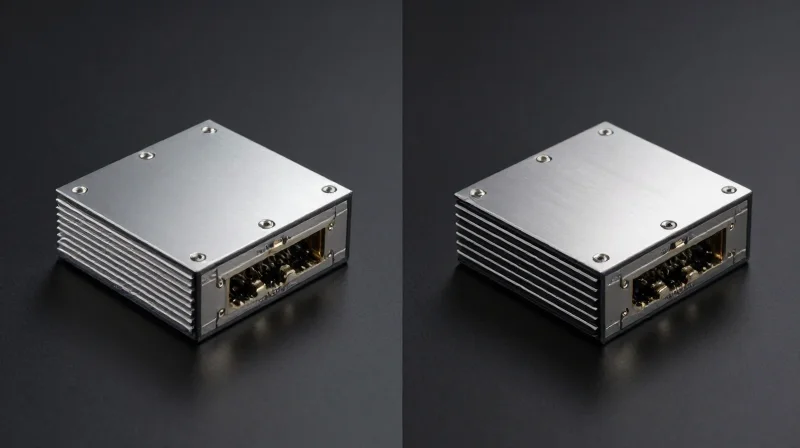
The choice between QSFP-DD and OSFP form factors is the most significant hardware decision affecting the power efficiency of a 400G deployment. While QSFP-DD emphasizes high-density backward compatibility, OSFP prioritizes superior thermal dissipation through its larger physical footprint and integrated heatsink design. For wholesale buyers, selecting the right form factor depends on balancing the immediate need for port density against the long-term operational costs associated with cooling high-power modules like 400G-ZR.
Thermal Engineering: QSFP-DD vs. OSFP
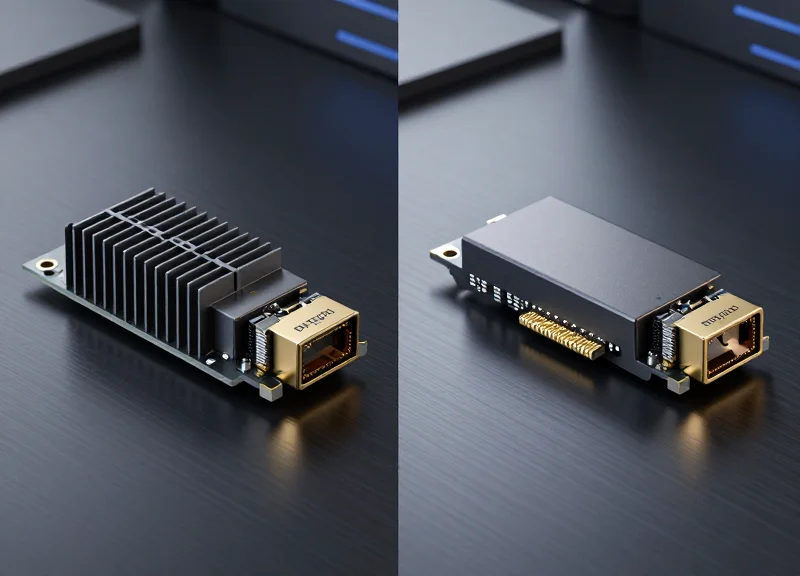
Thermal management is the primary bottleneck in 400G performance. OSFP modules are physically wider and deeper than QSFP-DD, allowing for integrated cooling fins that increase surface area for airflow. This design enables OSFP to handle power loads up to 15W-18W with ease. QSFP-DD, while more compact, relies heavily on the switch's internal cooling system and sophisticated cage designs to maintain a stable 12W to 14W power envelope, making it more sensitive to ambient data center temperatures.
| Feature | QSFP-DD (Double Density) | OSFP (Octal Small Form-Factor) |
|---|---|---|
| Max Power Envelope | Approx. 12W - 14W | Up to 15W - 18W |
| Thermal Management | Relies on cage/internal airflow | Integrated heatsink fins |
| Backward Compatibility | Native support for QSFP28/QSFP56 | Requires mechanical adapter |
| Port Density | 36 ports per 1U (Typical) | 32 ports per 1U (Typical) |
| Primary Use Case | Enterprise/Standard Data Centers | Hyperscale/DCI/Next-Gen 800G |
Efficiency Implications for Bulk Procurement
When negotiating custom quotes for 2026, infrastructure leads must consider that the OSFP form factor offers a smoother migration path to 800G and 1.6T, as its thermal ceiling is significantly higher. However, QSFP-DD remains the wholesale favorite for organizations looking to leverage existing 100G (QSFP28) infrastructure. The 'efficiency' of the module is not just measured in Watts per bit, but in the total energy required to keep the system within operating parameters—where OSFP's integrated cooling often leads to lower fan speeds and reduced overall chassis power draw.
- Which form factor is more efficient for 400G-ZR long-haul applications?
OSFP is generally superior for ZR and ZR+ modules because these coherent optics generate significant heat that the OSFP integrated heatsink manages more effectively than QSFP-DD. - Does choosing QSFP-DD lower initial bulk pricing?
Generally, yes. Because QSFP-DD is more widely adopted in legacy-compatible environments, the volume of production often results in slightly lower per-unit wholesale costs compared to OSFP. - How does thermal management affect module lifespan?
Modules that consistently run near their thermal limit (common in high-density QSFP-DD setups) experience faster laser degradation. Effective cooling via OSFP can extend the Mean Time Between Failures (MTBF).
The Economics of Wholesale 400G Procurement
The ROI of High-Efficiency 400G Wholesale Procurement
The transition to 400G infrastructure represents one of the largest capital investments for modern data centers, but the true cost is often hidden in the electricity bill. By prioritizing energy-efficient modules at the wholesale level, organizations can achieve a 'double-dip' in savings: securing lower per-unit pricing through volume commitments and slashing the multi-year OpEx associated with power-per-bit. High-efficiency optics, such as those utilizing 7nm DSPs, may carry a marginal 'green premium' upfront, but in a wholesale model, this cost is frequently offset by volume discounts, making the long-term energy savings pure profit for the operator.
Breaking Down the TCO: Standard vs. Energy-Optimized Modules
Total Cost of Ownership (TCO) in a 400G environment is calculated by the sum of the acquisition price (CapEx) and the cumulative cost of power and cooling (OpEx) over a 5-year lifecycle. When purchasing wholesale, the spread between a standard 12W module and an optimized 8W module becomes a massive financial lever when scaled across thousands of ports.
| Metric (Per 1,000 Ports) | Standard 400G (12W) | High-Efficiency 400G (8W) |
|---|---|---|
| Average Wholesale Unit Price | $1,150 | $1,250 |
| Annual Power Consumption (kWh) | 105,120 kWh | 70,080 kWh |
| 5-Year Energy Cost (@ $0.15/kWh) | $78,840 | $52,560 |
| 5-Year Estimated Cooling Cost | $39,420 | $26,280 |
| Total 5-Year Lifecycle Cost | $1,268,260 | $1,328,840 |
While the initial CapEx for high-efficiency modules may appear higher on a custom quote, the reduction in thermal load allows for higher port density without upgrading expensive HVAC systems. This hidden 'density dividend' often justifies the wholesale shift to low-power optics in 2026.
Custom Quotes and Bulk Pricing Strategy for 2026
- How much can wholesale pricing reduce the cost per module?
Volume-based tiers typically offer 15% to 35% discounts compared to list prices, depending on the commitment level and the mix of form factors like QSFP-DD and OSFP. - What is the typical payback period for low-power modules?
In high-density environments, the energy savings usually cover the price difference (the 'green premium') within 14 to 18 months of continuous operation. - Do custom quotes include thermal performance guarantees?
Premium wholesale agreements often include performance SLAs that guarantee modules will operate within a specific power envelope (e.g., <10W) to ensure rack-level cooling compliance. - How does 2026 bulk pricing differ from previous years?
Market stabilization and improved yields on 7nm DSPs have narrowed the price gap between standard and high-efficiency optics, making 2026 an ideal year for wholesale upgrades.
By requesting custom quotes that emphasize power-per-bit, procurement teams can align their technical requirements with ESG (Environmental, Social, and Governance) targets, effectively turning a networking necessity into a corporate sustainability win.
OEM/ODM Capabilities: Customizing Optics for Specific Hardware

OEM/ODM Capabilities: Customizing Optics for Specific Hardware
When organizations choose to buy 400G network power efficiency wholesale, the ability to tailor hardware to specific environmental constraints is a critical factor in achieving the desired Return on Investment (ROI). Ubytelink’s OEM/ODM services go beyond simple labeling; we provide deep-level hardware and firmware engineering that allows for the fine-tuning of power profiles and thermal management systems to meet the unique demands of high-density data centers. By aligning the transceiver’s performance with the specific electrical and thermal characteristics of the host switch, we eliminate the energy waste associated with generic, over-provisioned modules.
Firmware Optimization for Energy Efficiency
Firmware is the brain of the optical module, controlling the Digital Signal Processor (DSP) and the laser driver. Through custom firmware tuning, Ubytelink can adjust the power consumption of 400G modules by optimizing the DSP's operational voltage and frequency for specific link lengths. This results in significant energy savings when deployed across thousands of ports in a wholesale environment, as the module only consumes the power necessary for the specific distance and fiber type in use.
| Customization Element | Off-the-Shelf 400G Module | Ubytelink OEM/ODM Solution |
|---|---|---|
| Power Consumption | Standard MSA maximum power | Optimized for specific port budget |
| Host Compatibility | Generic MSA compliance | Vendor-specific (Cisco, Arista, Juniper) |
| Thermal Management | Standard cooling fin design | Custom heat sinks and high-K thermal pads |
| Firmware Flexibility | Locked/Static | Upgradable and Tunable for DSP efficiency |
Hardware Modifications for Thermal Excellence
Physical hardware adjustments are often necessary for hardware environments with restricted airflow or unique mechanical constraints. Ubytelink’s ODM capabilities include the integration of high-performance thermal interface materials (TIM) and customized shell designs that improve heat dissipation. By lowering the internal operating temperature of the module, we reduce the burden on the switch's cooling fans, further decreasing the overall power draw of the network rack and extending the lifespan of the optical components.
Customization and Compatibility FAQ
- Can firmware be tuned to reduce power on shorter fiber runs?
Yes. For specific short-reach applications, Ubytelink can calibrate the DSP and laser bias to operate at a lower power state without sacrificing bit-error rate (BER) performance, reducing the total wattage per port. - Does customization impact the lead time for bulk 400G orders?
While engineering changes require an initial validation phase, our streamlined OEM/ODM pipeline ensures that bulk manufacturing for customized 400G modules remains highly competitive with standard industrial lead times. - How is compatibility ensured for proprietary switch vendors?
We utilize precise EEPROM coding and vendor-specific handshake protocols to ensure that customized modules are recognized instantly and operate with full Digital Optical Monitoring (DOM) support across all major hardware platforms.
Sustainability and ESG Compliance in High-Speed Networking
The Intersection of 400G Performance and ESG Mandates
In the current regulatory landscape, transitioning to 400G infrastructure is as much an environmental strategy as it is a performance upgrade. As data centers account for a growing percentage of global electricity consumption, procurement officers must prioritize hardware that aligns with Environmental, Social, and Governance (ESG) criteria. High-efficiency 400G modules, such as those utilizing Silicon Photonics (SiPh), provide a dual benefit: they provide the massive throughput required for modern AI and cloud workloads while significantly lowering the Watts-per-Gigabit ratio compared to legacy 100G or 200G systems.
Key Sustainability Standards for Optical Networking
To ensure long-term compliance and mitigate the risk of 'brownouts' or regulatory penalties, wholesale 400G hardware must adhere to recognized global energy and material standards. These frameworks ensure that equipment is not only efficient during its operational life but also manufactured and disposed of responsibly.
| Standard | Focus Area | Impact on 400G Procurement |
|---|---|---|
| IEEE 802.3az | Energy-Efficient Ethernet (EEE) | Reduces power consumption during periods of low data activity. |
| RoHS/REACH | Hazardous Substances | Ensures modules are free from lead, mercury, and restricted chemicals. |
| EU Ecodesign (Lot 9) | Server & Storage Efficiency | Mandates minimum efficiency levels for power supply units in networking gear. |
| Carbon Footprint (ISO 14067) | Lifecycle Emissions | Quantifies the CO2e impact from raw material extraction to end-of-life. |
Reducing Scope 2 and Scope 3 Emissions via Bulk Efficiency
When sourcing 400G components wholesale, the cumulative impact of efficiency gains is profound. A 1W saving per module may seem negligible at the unit level, but across a 1,000-port deployment, it translates to significant reductions in Scope 2 emissions (indirect emissions from purchased electricity). Furthermore, partnering with vendors who utilize optimized supply chains and recycled packaging helps organizations address Scope 3 emissions, which cover the entire value chain of the hardware being purchased.
Sustainability FAQ
- How does 400G improve energy density compared to 100G?
400G optics typically consume approximately 10-12W per module, whereas four 100G modules would consume 16-20W total. This represents a 40% reduction in power for the same amount of bandwidth. - Can custom firmware tuning further enhance ESG compliance?
Yes. Customizing firmware to disable unused features or optimizing laser bias currents can shave off additional milliwatts, which scales significantly in wholesale deployments. - What role does 'Green Ethernet' play in high-speed optics?
Green Ethernet (IEEE 802.3az) allows the physical layer to enter a low-power state during idle time, which is essential for enterprise networks with fluctuating traffic patterns.
Testing and Quality Assurance for Wholesale 400G Shipments
The Critical Role of Rigorous QA in High-Density 400G Deployments
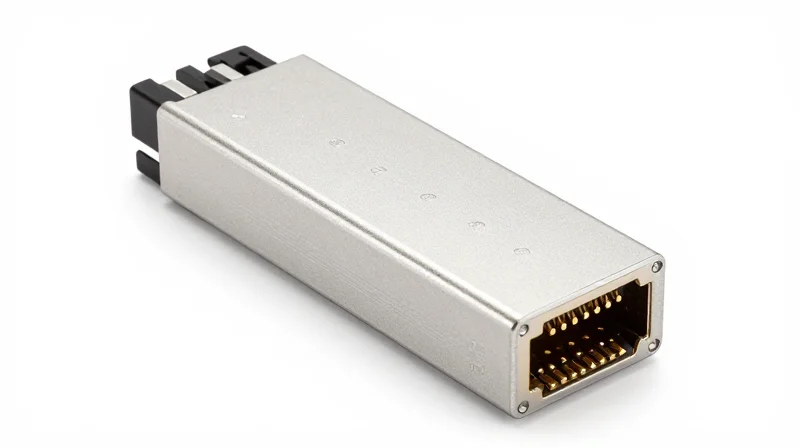
Rigorous testing and quality assurance (QA) for wholesale 400G shipments are the only way to guarantee that the theoretical power savings promised during the quote process manifest in real-world data center environments. When deploying hundreds or thousands of modules, even a minor deviation in power consumption per unit can lead to significant thermal management challenges and increased OpEx. Wholesale validation focuses on ensuring that every unit in the batch performs consistently within a narrow band of energy efficiency and signal integrity parameters.
Standard vs. Premium Wholesale Testing Protocols
| Test Metric | Standard Commodity QA | Ubytelink Wholesale Efficiency QA |
|---|---|---|
| Power Consumption | Pass/Fail at startup | Continuous monitoring under 100% traffic load |
| Thermal Stress | Brief heat check | 48-72 hour burn-in at maximum operating temperature |
| Bit Error Rate (BER) | Measured at room temp | BER validation across full temperature range (0-70°C) |
| Consistency | Statistical sampling | 100% individual unit serialization and logging |
Burn-In and Thermal Cycling for Long-Term Reliability
A critical component of quality assurance for bulk orders is the burn-in process. By subjecting 400G modules to sustained high-traffic loads while cycling through temperature extremes, manufacturers can identify 'infant mortality' cases—units that might fail within the first few weeks of deployment. For 400G DR4 or FR4 optics, this testing ensures the Silicon Photonics or EML lasers maintain their efficiency curves over time, preventing 'power creep' where aging components begin to draw more current to maintain signal strength.
Wholesale QA and Testing FAQ
- How is power efficiency verified in bulk shipments?
Each module is tested using automated test equipment (ATE) that measures current draw while the module is processing full 400G throughput. Units exceeding the specified wattage by more than 5% are rejected from the batch. - Can we receive individual test reports for wholesale orders?
Yes, for large-scale deployments, we provide serialized test data including Eye Diagrams, BER results, and power consumption metrics for every individual module in the shipment. - What is the typical DOA rate for high-efficiency 400G optics?
Through our rigorous multi-stage QA process, we aim for a Dead-on-Arrival (DOA) rate of less than 0.01%, ensuring that your deployment schedule remains on track without the need for constant RMAs. - Are modules tested for interoperability with specific switch vendors?
Yes, as part of our wholesale service, we can conduct compatibility testing on specific hardware platforms (e.g., Cisco, Arista, Juniper) to ensure firmware stability and optimal power profiles.
Future-Proofing Your Infrastructure: From 400G to 800G
Transitioning from 400G to 800G infrastructure is less about a total rip-and-replace and more about architectural readiness. By investing in power-efficient 400G modules today, organizations optimize their current cooling and power delivery units (PDUs) to handle the significantly higher thermal loads of next-generation 112G and 224G SerDes technologies. This 'thermal headroom' is the single most critical factor in avoiding expensive data center retrofits when 800G becomes the wholesale standard.
Leveraging 400G Efficiency for 800G Readiness
The leap to 800G requires a shift in signaling density. While 400G often utilizes 50G or 100G PAM4 lanes, 800G demands 112G per lane, which generates more heat per square inch of silicon. Sourcing 400G hardware that adheres to strict energy-efficiency standards ensures that your existing switch chassis and rack configurations are not already at their thermal limit when the time comes to populate them with higher-density optics.
| Specification | 400G Efficiency Focus | 800G Transition Requirement |
|---|---|---|
| Signaling | 50G / 100G PAM4 | 112G / 224G PAM4 |
| Standard Power Per Port | 10W - 12W | 16W - 24W |
| Efficiency Goal | <0.025W per Gbps | <0.020W per Gbps |
| Form Factor Compatibility | QSFP-DD / OSFP | OSFP800 / QSFP-DD800 |
The Financial Logic of Power-First Procurement
When requesting custom quotes for wholesale 400G shipments, focusing on low-power silicon (such as 7nm or 5nm DSPs) ensures a lower total cost of ownership (TCO). These energy savings provide the necessary capital to fund future 800G upgrades. Furthermore, power-efficient 400G modules generally exhibit higher reliability and longer lifespans, bridging the gap to 800G without mid-cycle hardware failures.
- Will my 400G fiber plant support 800G?
Most high-quality MPO-12 and MPO-16 fiber installations for 400G are compatible with 800G breakouts, provided the path loss and dispersion are within next-gen tolerances. - Why is the 'Power Wall' a concern for 800G?
The power wall occurs when a data center's cooling capacity cannot dissipate the heat generated by high-density 800G ports. Starting with efficient 400G prevents reaching this wall prematurely. - Can I mix 400G and 800G in the same chassis?
Yes, modern high-radix switches support mixed-speed configurations, making it vital that the 400G 'legacy' ports consume as little power as possible to leave room for 800G expansion.
Optimizing your network's power efficiency is no longer optional in a high-cost energy market. By choosing Ubytelink as your wholesale partner, you gain access to industry-leading 400G technology, tailored OEM/ODM services, and competitive bulk pricing that fuels growth without inflating your utility bill. Ready to scale sustainably? Contact Ubytelink today for a custom quote on 400G Network Power Efficiency modules.