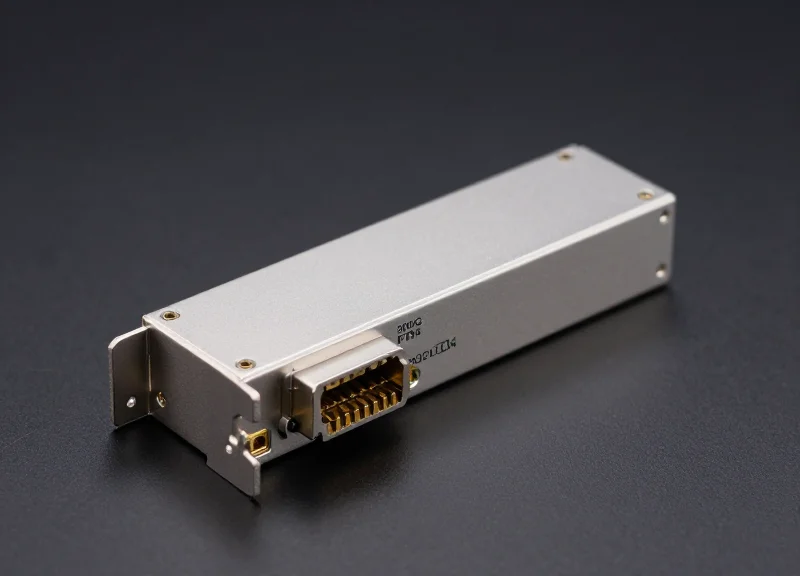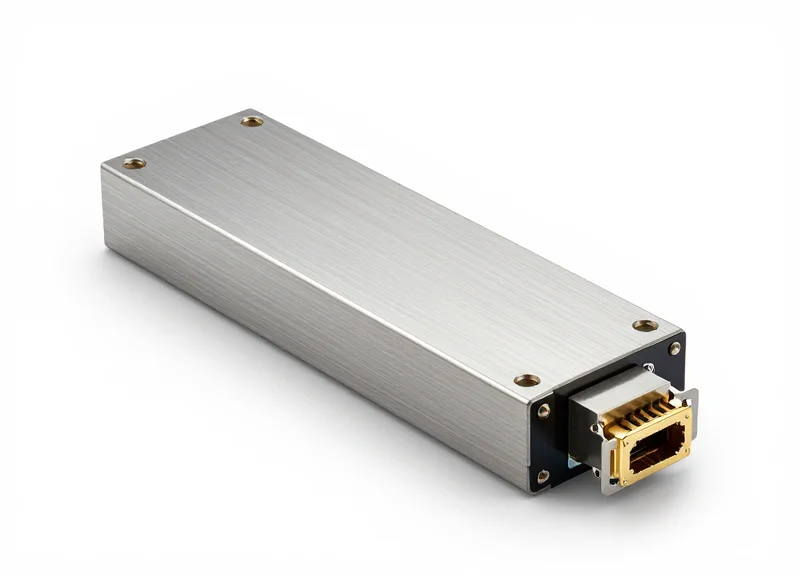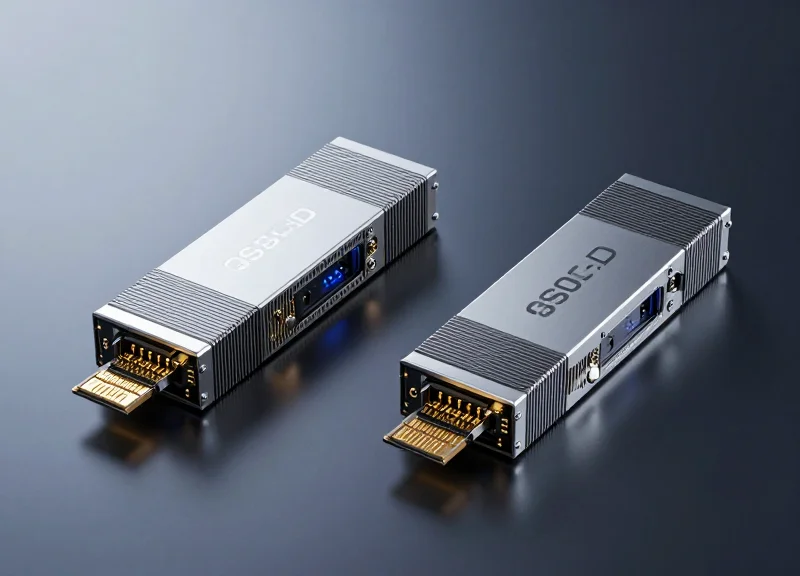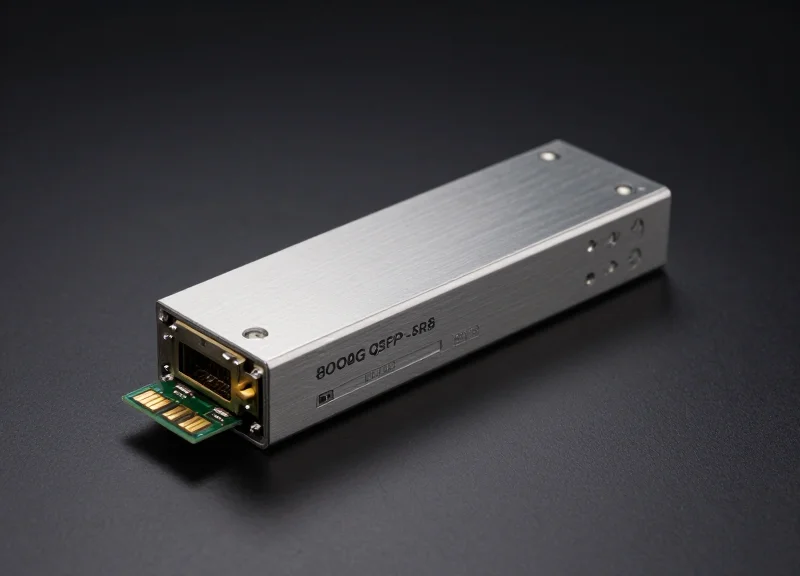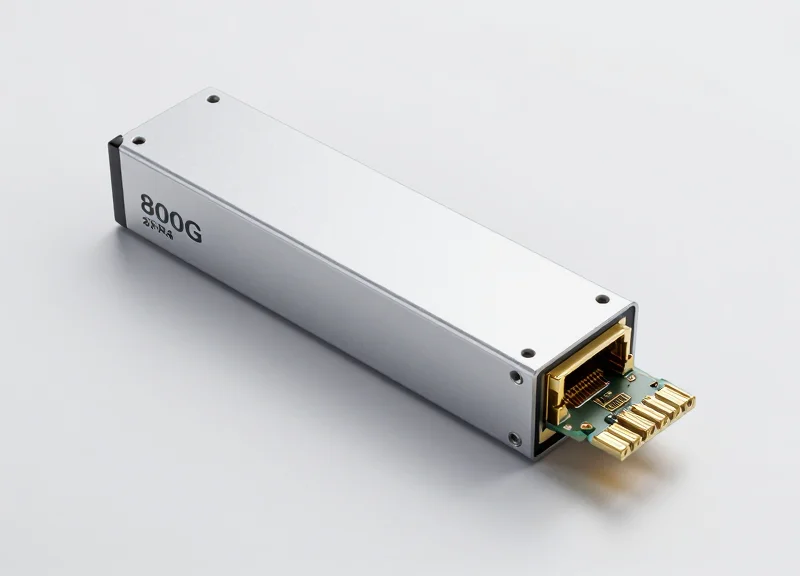
As the demand for bandwidth skyrockets driven by AI and hyperscale cloud computing, 800G networking has shifted from a luxury to a necessity. Sourcing high-performance 800G OSFP 2xFR4 modules at scale requires a strategic approach to balance cost, compatibility, and reliability. Ubytelink provides the industry-leading manufacturing expertise and wholesale pricing models needed to future-proof your infrastructure without overextending your budget.
The Evolution to 800G OSFP 2xFR4: Technical Foundation
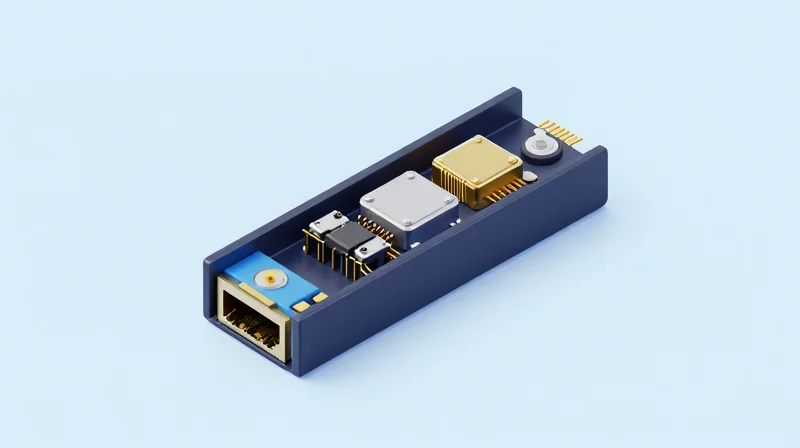
The Evolution to 800G OSFP 2xFR4: Technical Foundation
The 800G OSFP 2xFR4 represents a critical shift in high-speed networking, utilizing two independent 400G FR4 optical engines within a single Octal Small Form-factor Pluggable (OSFP) module to support up to 2km transmission over single-mode fiber (SMF). This configuration is specifically engineered to bridge the gap between legacy 400G systems and the massive bandwidth requirements of AI-driven workloads. By multiplexing eight channels of 100G PAM4 electrical signals into two sets of four-wavelength optical signals, the 2xFR4 provides a high-density, power-efficient solution for interconnecting leaf-spine architectures.
Thermal Superiority of the OSFP Form Factor
Unlike the QSFP-DD, the OSFP (Octal Small Form-factor Pluggable) was designed from the ground up to handle the significant thermal loads associated with 800G throughput. The integrated heat sink on the module allows for superior heat dissipation, supporting power envelopes between 15W and 18W. For wholesale buyers and data center operators, this translates to improved long-term reliability and reduced cooling costs in high-density rack environments where air-flow management is paramount.
Dual 400G Logic: Why 2xFR4 Over DR8?
The choice between 2xFR4 and DR8 often comes down to fiber infrastructure costs and reach requirements. While DR8 is excellent for short-reach breakout applications using MPO cabling, the 2xFR4 architecture excels in 2km spans by utilizing CWDM4 technology. This allows operators to leverage existing duplex single-mode fiber plants while maintaining backward compatibility with 400G FR4 interfaces.
| Feature | 800G OSFP 2xFR4 | 800G OSFP DR8 |
|---|---|---|
| Max Reach | 2km (Single Mode) | 500m (Single Mode) |
| Optical Connector | Dual LC (or CS) | MPO-16 / MPO-12 |
| Wavelength | CWDM4 (1271, 1291, 1311, 1331nm) | 1310nm |
| Fiber Count | 4 Fibers (2 Pairs) | 16 Fibers |
| Main Use Case | Inter-building / Campus link | Intra-rack / Breakout |
Technical FAQ: 800G OSFP 2xFR4 Implementation
- Does 800G 2xFR4 require special cooling?
The OSFP form factor includes an integrated heatsink, but system-level airflow must still meet the module's thermal requirements (typically 15-17W) to maintain performance. - Is it compatible with 400G FR4 transceivers?
Yes, through breakout cables or specific port configurations, the 2xFR4 module can communicate with two independent 400G FR4 modules, protecting your current hardware investment. - What modulation technique is used?
The module utilizes 100G PAM4 (Pulse Amplitude Modulation) across 8 electrical lanes and 2x4 optical lanes to achieve the aggregate 800Gbps throughput.
Key Performance Advantages of 2xFR4 Architecture

The 800G OSFP 2xFR4 architecture represents a strategic optimization of optical interconnects, utilizing two internal 400G FR4 engines to achieve an aggregate 800G throughput. By leveraging four-wavelength CWDM (Coarse Wavelength Division Multiplexing) technology on each engine, this design significantly enhances spectral efficiency and signal reliability. This dual-engine approach allows network operators to maximize bandwidth density while maintaining the 2km reach required for large-scale leaf-spine architectures and campus-wide deployments.
Enhanced Signal Integrity and Thermal Efficiency
One of the primary advantages of the 2xFR4 configuration is its superior signal integrity. By splitting the 800G payload into two separate 400G optical streams, the module minimizes the Bit Error Rate (BER) and reduces the complexity of the Digital Signal Processing (DSP) required to recover data over 2km distances. Furthermore, the integration of 112G SerDes lanes ensures that the electrical-to-optical transition remains stable, even in the high-heat environments typical of 2026-standard AI compute clusters.
Power Consumption Comparison
| Parameter | 800G OSFP 2xFR4 | 800G OSFP DR8 | Legacy 2x400G Stacks |
|---|---|---|---|
| Max Power Consumption | ~14W - 16W | ~16W - 18W | ~20W - 24W |
| Fiber Type | Single-Mode (Duplex LC) | Single-Mode (MPO-16) | Dual MPO-12 |
| Max Transmission Reach | 2km | 500m | 500m - 2km |
| Cooling Efficiency | High (OSFP Fin Design) | Moderate | Low |
Infrastructure Optimization and Fiber Utilization
For wholesale buyers and data center architects, fiber utilization is a critical cost driver. The 2xFR4 module utilizes Dual LC connectors, allowing for a 4-wavelength CWDM multiplexing scheme. This reduces the total fiber count compared to DR8 solutions, which require expensive parallel MPO cabling. By using existing duplex fiber plants to carry 800G of traffic, operators can significantly lower their Total Cost of Ownership (TCO) while simplifying cable management in high-density racks.
Key Performance FAQs
- How does 2xFR4 reduce latency compared to standard FR8?
The 2xFR4 architecture uses a simpler internal layout with two parallel 400G engines, which can reduce the computational overhead on the DSP compared to a single-engine 8-wavelength (FR8) design, leading to more consistent latency profiles. - Is the 2xFR4 module backward compatible?
Yes, the 2xFR4 is designed for breakout applications. It can seamlessly interface with two 400G FR4 modules, providing a flexible path for upgrading legacy 400G networks to 800G without replacing the entire infrastructure. - Why is the OSFP form factor preferred for 2xFR4?
The OSFP form factor features integrated heat sinks that handle the thermal load of 800G optics more effectively than QSFP-DD, ensuring that the 2xFR4 engines maintain performance without throttling under high-load AI training workloads.
Wholesale Procurement: Reducing Total Cost of Ownership (TCO)
Procuring 800G OSFP 2xFR4 modules at scale transforms the network upgrade from a capital-heavy burden into a strategic long-term investment. By moving beyond spot-market purchasing, organizations can leverage volume discounts that dramatically reduce the price-per-gigabit, ensuring that the transition to next-generation bandwidth remains financially sustainable as traffic demands grow.
Analyzing the Economic Impact on TCO
Total Cost of Ownership (TCO) in 800G environments extends far beyond the initial purchase price. It incorporates the operational expenses related to power efficiency, port density consolidation, and the reliability of the supply chain. Wholesale procurement minimizes the acquisition cost component, while the inherent efficiency of the 2xFR4 architecture reduces the long-term energy and cooling overhead per bit of transmitted data.
| Financial Metric | Spot/Small Batch Purchase | Wholesale/Bulk Procurement |
|---|---|---|
| Average Unit Cost | Market Premium | Tiered Discounts (Up to 30% Savings) |
| Inventory Management | Fragmented/Ad-hoc | Consolidated/Strategic |
| Shipping & Logistics | High Per-Unit Freight | Optimized Bulk Freight |
| Price Stability | Subject to Market Spikes | Contractually Locked-In |
Strategic Benefits of Custom Quoting in 2026
In the current market, custom quotes provide a level of predictability that is essential for large-scale deployments. By engaging in wholesale discussions, enterprises and service providers can secure dedicated production slots and staged delivery schedules. This prevents project delays caused by hardware shortages and allows for more accurate fiscal planning over multi-quarter rollouts.
- How does bulk pricing improve ROI for 800G transitions?
Bulk pricing lowers the CAPEX entry point, allowing the operational savings from 800G—such as lower power consumption and reduced cable complexity—to offset the initial investment faster, typically shortening the ROI period by several months. - What should be included in a custom 800G wholesale quote?
A comprehensive quote should include volume-based pricing tiers, guaranteed lead times, extended warranty options, and technical support SLAs to ensure long-term network stability. - Does wholesale procurement affect product reliability?
Wholesale agreements often involve direct manufacturer or tier-1 distributor relationships, ensuring consistent batch quality and more robust RMA (Return Merchandise Authorization) processes compared to diverse small-batch sourcing.
OEM/ODM Capabilities: Customizing Your Optical Solutions
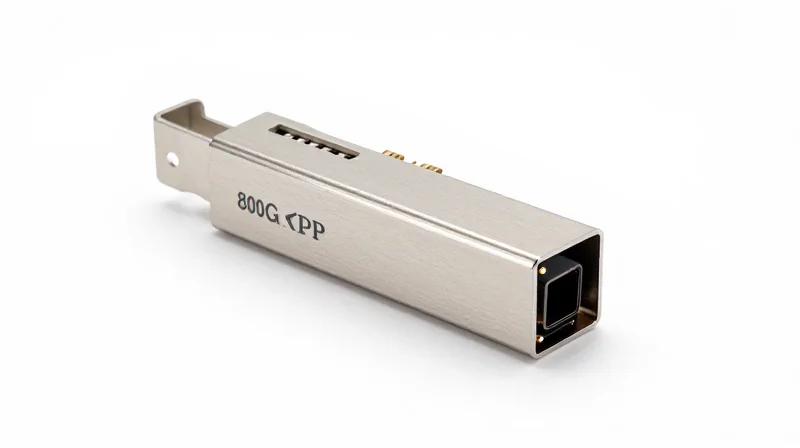
Customizing 800G OSFP 2xFR4 for Unique Infrastructure Needs
For large-scale data center operators and high-frequency trading environments, off-the-shelf optical modules often fall short of meeting specific architectural demands. Ubytelink’s OEM/ODM capabilities bridge this gap by offering a granular level of customization for 800G OSFP 2xFR4 transceivers, ensuring that every module is optimized for the specific switch-to-server or switch-to-switch interface it serves. By leveraging custom-engineered solutions, organizations can achieve 100% hardware compatibility while maintaining a unified brand presence through private labeling and specialized firmware profiles.
Custom Firmware and Multi-Vendor Interoperability
The primary challenge in deploying 800G optics across diverse hardware estates is vendor lock-in and EEPROM compatibility. Through our OEM services, we offer custom firmware coding that allows the 800G OSFP 2xFR4 to be recognized as native equipment by major brands such as Cisco, Arista, Juniper, and NVIDIA (Mellanox). This involves precise adjustments to the module's internal register settings and digital optical monitoring (DOM) parameters to ensure seamless telemetry reporting, alarm thresholds, and system stability across different OS platforms.
| Feature | Standard Module | OEM/ODM Customization |
|---|---|---|
| Firmware Compatibility | Generic MSA Compliant | Vendor-Specific (Cisco, Arista, etc.) |
| Labeling & Branding | Manufacturer Standard | Private Logo & Custom Serial Numbers |
| EEPROM Configuration | Fixed Factory Settings | User-Defined Thresholds & Data |
| Physical Pull-Tab | Standard Length/Color | Custom Color-Coding & Ergonomics |
| Thermal Management | Standard Heatsink | Optimized Airflow Modifications |
Physical and Hardware Modifications
Beyond software, physical tailoring is essential for operational efficiency in high-density environments. Ubytelink provides options to modify pull-tab lengths and colors to assist technicians in identifying 800G 2xFR4 links within complex cable management systems. Additionally, for specific hardware configurations that experience unusual thermal loads, we can adapt the module's heat sink design to better align with the chassis airflow direction (Front-to-Back or Back-to-Front), ensuring the 800G silicon operates within peak efficiency ranges.
- Can we request specific serial numbering for asset management?
Yes, Ubytelink can implement custom SN sequences and barcode formats that integrate directly into your internal inventory and asset tracking databases. - Is it possible to adjust TX power levels via ODM?
Technical modifications to the optical engine can be requested for specific network scenarios, such as high-loss links or ultra-short reach requirements within a single rack. - Do you support custom-branded packaging for resale?
We offer full private label services, including custom-printed retail boxes, anti-static inserts, and individualized documentation tailored to your brand identity.
By choosing Ubytelink for your wholesale 800G OSFP 2xFR4 needs, you are not just buying a component; you are investing in a tailored solution that reduces technical friction and enhances the professional appearance of your network infrastructure.
Thermal Management and Power Efficiency in 800G Modules

The Thermal Imperative: Managing Heat in 800G OSFP 2xFR4 Modules
At 800G speeds, power density becomes a primary engineering challenge, as individual modules can consume between 14W and 18W depending on the DSP architecture. The OSFP (Octal Small Form-factor Pluggable) design is specifically engineered to handle these thermal loads through an integrated heat sink and optimized airflow paths, ensuring that high-density switches do not suffer from thermal throttling or premature component failure. By facilitating direct heat dissipation from the module to the cooling environment, 800G OSFP 2xFR4 optics maintain stable signal integrity and lower the cooling overhead for the entire data center rack.
Thermal Performance Comparison: OSFP vs. QSFP-DD
| Thermal Characteristic | 800G OSFP 2xFR4 | 800G QSFP-DD 2xFR4 |
|---|---|---|
| Heat Sink Design | Integrated (Finmed) for direct airflow contact | Rely on cage-mounted external heat sinks |
| Max Power Envelope | Up to 17-20W (Excellent headroom) | 14-15W (Tight thermal margins) |
| Cooling Efficiency | Higher efficiency via top-side cooling fins | Moderate efficiency; sensitive to cage layout |
| Airflow Resistance | Optimized for high-speed switch fans | Requires higher static pressure for equivalent cooling |
The 2xFR4 architecture, while doubling the throughput by utilizing two 400G engines, requires sophisticated Digital Signal Processing (DSP) that generates significant heat. Wholesale buyers must prioritize modules that utilize 7nm or 5nm CMOS technology in their DSPs, as these smaller process nodes significantly reduce the Watts-per-Gigabit ratio, leading to a more favorable Power Usage Effectiveness (PUE) for the data center.
Thermal Management FAQ
- Why is thermal management critical for 800G wholesale procurement?
Poor thermal management leads to 'thermal throttling,' where the module reduces clock speeds to protect hardware, causing packet loss and increased latency. Bulk purchasers must ensure modules meet strict thermal specifications to avoid network-wide performance degradation. - How does the OSFP form factor improve reliability in 800G 2xFR4 modules?
The OSFP design includes built-in fins that act as a personal heat sink for each module. This allows for better individual module cooling in 32-port or 64-port high-density switches where airflow might otherwise be restricted. - What is the typical power consumption of an 800G OSFP 2xFR4 module?
Typical power consumption ranges from 14W to 16W. High-quality wholesale modules are often tuned to operate at the lower end of this range to reduce the total power draw of a fully loaded switch.
When sourcing 800G OSFP 2xFR4 modules at scale, it is essential to request thermal testing reports. These reports should detail performance at 'Case Temperature' limits (typically 0°C to 70°C). Efficient power consumption not only lowers operational costs (OPEX) but also extends the Mean Time Between Failures (MTBF) for the optical components, providing a superior long-term return on investment for wholesale buyers.
Ensuring Interoperability and Rigorous Quality Control
Ensuring interoperability for 800G OSFP 2xFR4 optics requires a dual-track approach that combines automated physical layer validation with live-traffic stress testing on high-performance switches to guarantee 100% compatibility in high-radix data center environments. For wholesale buyers, this rigorous quality control is the primary safeguard against the systemic failure of high-density clusters.
Rigorous Testing Protocols for 800G Performance
Quality control for wholesale 800G modules begins with the validation of the PAM4 (Pulse Amplitude Modulation 4-level) signal integrity. Because 800G architectures rely heavily on Forward Error Correction (FEC), our testing ensures that the raw Bit Error Rate (BER) is low enough for the FEC to maintain a virtually error-free link. This is critical for 2xFR4 applications where two 400G channels are aggregated, as any internal electrical crosstalk can lead to massive packet loss in a production environment.
| Test Category | Metric Description | Target Benchmark |
|---|---|---|
| Signal Integrity | TDECQ (Transmitter and Dispersion Eye Closure) | < 3.2 dB |
| Receiver Sensitivity | OMA (Optical Modulation Amplitude) sensitivity | < -8.5 dBm |
| Thermal Reliability | Stable operation under full load at 70°C | Pass |
| Vendor Handshake | I2C communication and EEPROM recognition | 100% Success |
Cross-Platform Interoperability and Firmware Customization
A primary concern when purchasing 800G OSFP 2xFR4 wholesale is the vendor lock-in effect commonly found in proprietary ecosystems. To mitigate this, Ubytelink modules are programmed with custom firmware tailored to the specific handshake protocols of major switch OEMs. Whether deploying in an NVIDIA Quantum-2 InfiniBand environment or a Cisco Nexus 9000 series fabric, the optical transceivers must correctly report DOM (Digital Optical Monitoring) data and power levels to the Network Operating System (NOS) to avoid port-disablement triggers.
- How do you ensure compatibility with NVIDIA Spectrum-4 switches?
We utilize a 'Golden Unit' testing methodology, verifying each batch against the latest NVIDIA OS and InfiniBand firmware versions to ensure the specific 800G handshaking protocols are met. - Can custom EEPROM coding be requested for bulk orders?
Yes, bulk wholesale orders include complimentary custom coding for vendor-specific compatibility strings, ensuring seamless plug-and-play functionality across mixed-vendor environments. - What is the expected failure rate for these wholesale 800G modules?
Through automated optical testing and 48-hour high-temperature burn-in periods, we maintain a Field Failure Rate (FFR) of less than 0.01% across all 800G OSFP units.
Navigating the Supply Chain for 800G Components

Navigating the Supply Chain for 800G Components
Successfully navigating the 800G supply chain in 2026 requires a pivot from reactive purchasing to proactive strategic planning, as global demand for AI-optimized networking continues to strain the availability of critical sub-components like EML lasers and 7nm/5nm DSPs. To secure 800G OSFP 2xFR4 modules at wholesale prices, organizations must establish direct communication channels with tier-1 manufacturers and maintain flexible procurement schedules to hedge against geopolitical and logistical volatility.
Managing Lead Times and Procurement Risks
The primary challenge in the current market is the unpredictable lead times for high-density optics. While standard 400G modules have stabilized, 800G OSFP 2xFR4 modules often face fluctuations based on the production yields of advanced silicon photonics. Buyers should prioritize vendors who provide real-time inventory visibility and those who offer 'buffer stock' agreements for high-volume deployments. This approach ensures that even during unexpected surges in demand, your data center expansion remains on schedule.
| Supply Chain Factor | Market Impact | Mitigation Strategy |
|---|---|---|
| DSP Chip Availability | High: Essential for signal processing | 6-month rolling forecasts |
| EML Laser Yields | Medium: Affects total output volume | Multi-vendor sourcing (Dual-sourcing) |
| Logistical Bottlenecks | Low-Medium: Affects delivery speed | Strategic warehousing in regional hubs |
| Component Customization | High: Adds to manufacturing time | Early finalization of EEPROM specs |
Strategic Supply Chain FAQ
- What is the typical lead time for bulk 800G OSFP 2xFR4 orders?
Lead times currently range from 4 to 8 weeks depending on the customization requirements and order volume. We recommend placing orders at least one quarter in advance of the required deployment date. - How does Ubytelink stabilize pricing amidst market volatility?
We utilize long-term contracts with raw material suppliers and maintain significant localized inventory to shield our clients from sudden price spikes and component shortages. - Can custom firmware requirements delay the supply chain?
Yes, custom EEPROM coding for specific switch compatibility can add 1-2 weeks to production. Finalizing compatibility requirements during the RFQ stage is critical for timely delivery.
By integrating these supply chain strategies into your 2026 procurement cycle, your organization can effectively manage the transition to 800G infrastructure without the risks of downtime or cost overruns. Partnering with a reliable wholesaler like Ubytelink provides the necessary transparency and technical support to navigate this complex landscape.
Future-Proofing with Ubytelink: Your 800G Partner
The Strategic Advantage of a Specialized 800G Partner
Choosing Ubytelink as your 800G partner transcends a mere transactional relationship; it provides a comprehensive framework for navigating the complexities of high-radix networking. As data centers migrate to 800G OSFP 2xFR4 architectures to support AI/ML workloads, the risks associated with component variability and thermal management intensify. Ubytelink mitigates these risks by providing engineering-grade optical solutions, direct access to wholesale pricing tiers, and a commitment to long-term hardware reliability that standard retailers cannot match.
Comparing Procurement Models for 800G Infrastructure
| Feature | Standard Marketplace Purchase | Ubytelink Wholesale Partnership |
|---|---|---|
| Pricing Structure | Fixed MSRP / Low Volume Discount | Custom Tiered Wholesale & Project-Based Quotes |
| Technical Support | Generic Customer Service | Dedicated Optical Engineers & Compatibility Labs |
| Supply Chain | Vulnerable to Stock Fluctuations | Strategic Buffer Stock & Reserved Production Slots |
| Quality Control | Batch Sampling | 100% Interoperability Testing on Target Platforms |
Engineering Support for AI-Driven Networks
The transition to 800G requires more than just hardware; it demands a deep understanding of link budgets and thermal footprints. Ubytelink’s technical team works alongside your network architects to validate the performance of OSFP 2xFR4 modules across varied fiber plants. By providing detailed EEPROM customization and firmware tuning, we ensure that every module is recognized instantly by host platforms from NVIDIA, Arista, and Cisco, eliminating the costly downtime associated with 'unsupported transceiver' errors.
Scaling Logistics and Future-Proofing
In the volatile market of optical components, consistency is the primary driver of successful scaling. Ubytelink provides visibility into the 800G roadmap, helping partners plan for the eventual shift to 1.6T while maximizing the ROI of their current 800G investments. Our global logistics network ensures that whether you are deploying a single cluster or a multi-region data center, your 800G OSFP 2xFR4 supply remains uninterrupted by market shifts or component shortages.
Common Questions on 800G Wholesale Partnerships
- How does Ubytelink handle custom quotes for large-scale 800G projects?
We provide bespoke pricing based on volume, project duration, and specific technical requirements. Each quote is generated after a consultation to ensure the modules meet the exact thermal and power specifications of your hardware environment. - Can Ubytelink guarantee compatibility with third-party network operating systems?
Yes. Our OSFP 2xFR4 modules undergo rigorous testing in a lab environment mimicking your production setup, ensuring full compatibility with SONiC, Cumulus, and proprietary vendor OS versions. - What are the typical lead times for bulk 800G OSFP 2xFR4 orders?
While market conditions vary, our wholesale partners benefit from reserved inventory and prioritized production queues, typically resulting in lead times 30-50% shorter than standard retail channels.
Transitioning to 800G is a significant milestone for any enterprise or service provider. By securing your supply of 800G OSFP 2xFR4 modules through Ubytelink's wholesale and OEM/ODM programs, you ensure a seamless, cost-effective path to high-speed connectivity. Ready to scale? Contact our expert team today for a personalized quote and technical consultation.