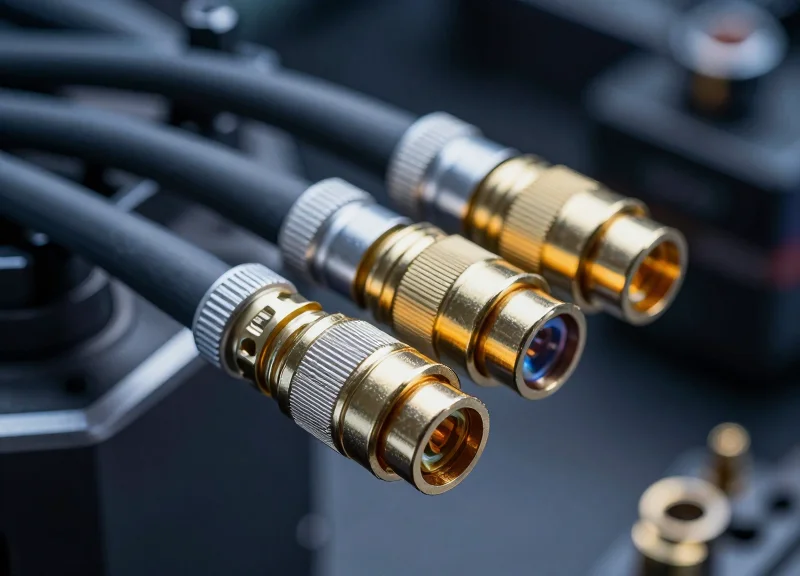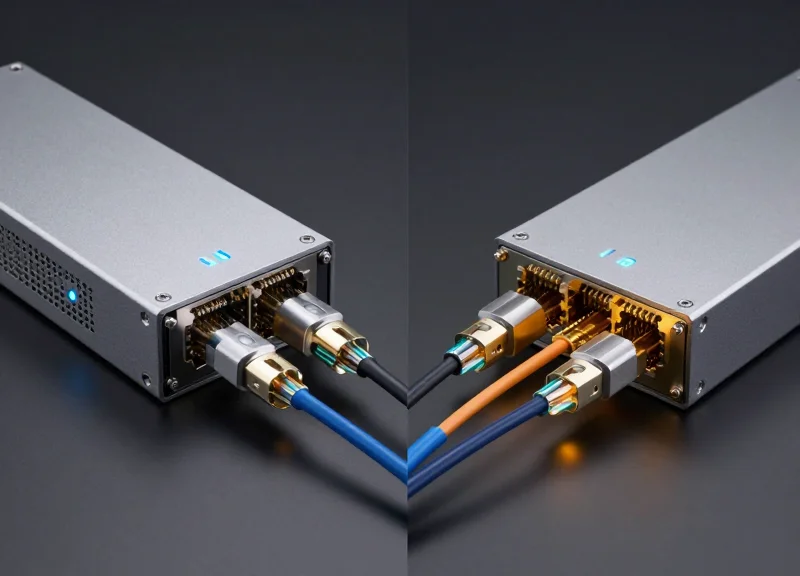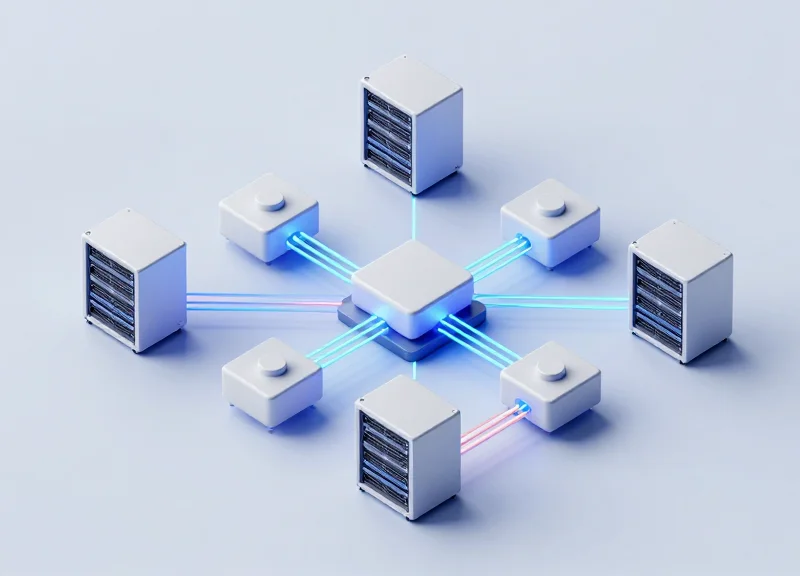
As data processing shifts from centralized clouds to the network periphery, the demand for high-performance interconnects has never been greater. This article provides an authoritative technical analysis of the hardware and protocols that facilitate seamless, low-latency communication between edge nodes and the core network, solving the critical bottleneck for real-time applications.
Defining the Edge Computing Interconnect Landscape

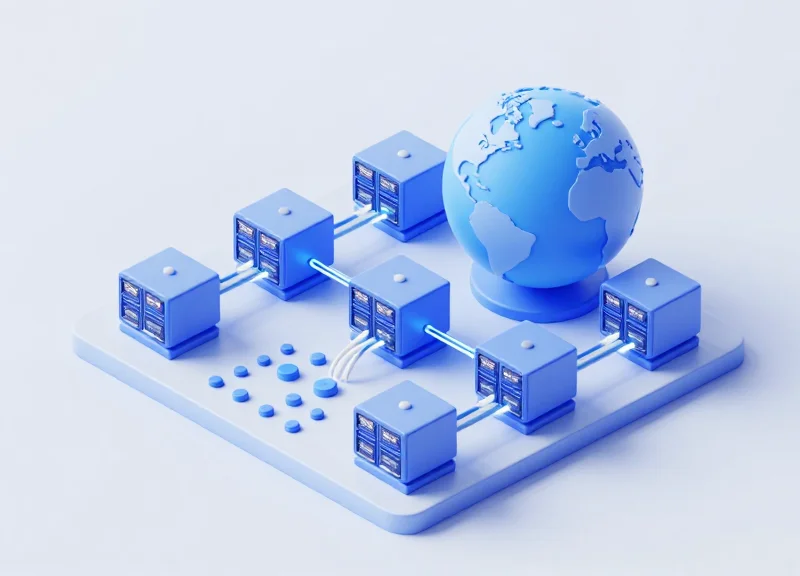
At its core, an edge computing interconnect is the physical and logical networking infrastructure that enables seamless communication between geographically dispersed edge locations, local data centers, and the central cloud. These interconnects serve as the critical connective tissue of decentralized architectures, prioritizing deterministic latency and high-availability over the bulk throughput typically seen in traditional wide-area networks (WAN). By placing compute resources closer to the data source, edge interconnects eliminate the bottlenecks inherent in backhauling all traffic to a distant centralized server.
Edge Interconnects vs. Traditional Data Center Interconnects (DCI)
While both technologies aim to move data between facilities, they operate on different scales and for different purposes. Traditional DCI is primarily concerned with connecting massive core data centers for disaster recovery and workload balancing. In contrast, edge interconnects manage the 'last mile' and 'middle mile' of connectivity, handling a higher volume of endpoints with significantly more complex routing requirements.
| Feature | Traditional DCI | Edge Interconnects |
|---|---|---|
| Latency | 20ms to 100ms or higher | <5ms to 10ms |
| Topology | Point-to-Point / Hub-and-Spoke | Distributed Mesh / Multi-point |
| Traffic Pattern | Stable, high-volume batches | Burst-heavy, event-driven streams |
| Primary Metric | Throughput (Gbps/Tbps) | Latency and Jitter Control |
The Vital Role in Decentralized Architectures
In a decentralized edge environment, the interconnect layer is responsible for workload mobility and data synchronization. It allows for 'east-west' traffic—data moving between edge nodes—without requiring the data to traverse the 'north-south' path to the core cloud. This architectural shift is vital for multi-access edge computing (MEC) and Private 5G deployments where localized decision-making is paramount. Without robust interconnects, the edge would simply be a collection of isolated islands rather than a cohesive, scalable ecosystem.
Common Questions on Edge Connectivity
- What is the primary function of an edge interconnect?
The primary function is to provide a dedicated, low-latency path for data exchange between distributed compute nodes and end-users, bypassing the congestion and unpredictability of the public internet. - Why can't standard fiber-optic links alone suffice?
While fiber is the medium, the interconnect layer includes specific protocols—such as SRv6 or EVPN—and physical cross-connects at colocation facilities that optimize the routing path for speed and reliability rather than just distance. - How do interconnects impact 5G deployments?
Edge interconnects are the backbone of 5G, linking the Radio Access Network (RAN) to the User Plane Function (UPF) at the edge, ensuring the high-speed processing promised by 5G standards is maintained across the network.
The Role of Optical Transceivers in Edge Connectivity
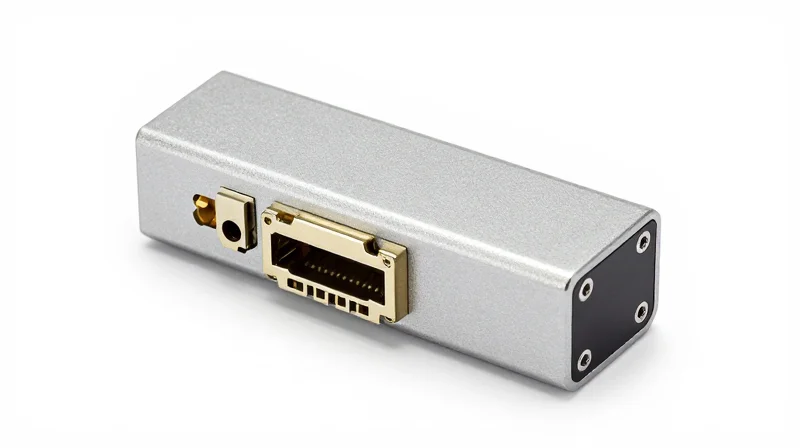
The Role of Optical Transceivers in Edge Connectivity
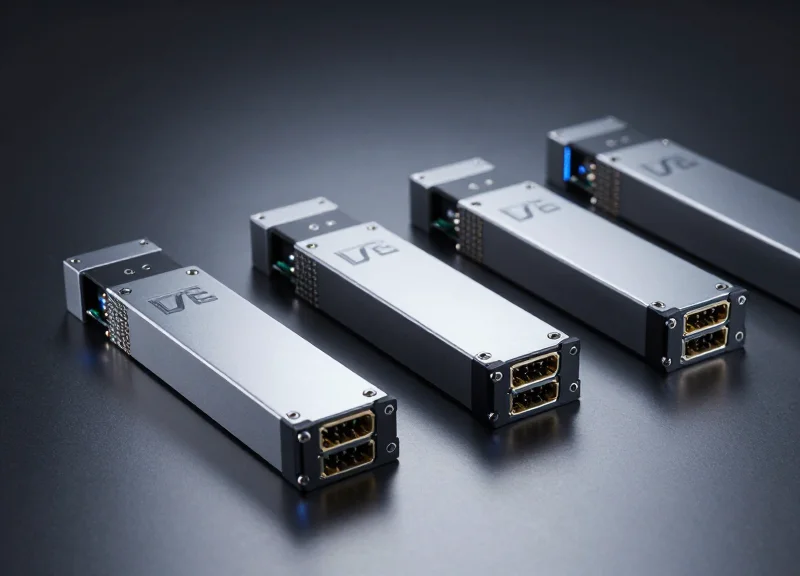
Optical transceivers are the foundational components of edge interconnects, functioning as the bridge between electrical processing units and fiber optic transmission media. Unlike centralized data centers where distance is often managed through massive fiber trunking, edge environments require transceivers that balance high throughput with extreme constraints on power, heat, and physical space. These modules are responsible for converting digital signals into light pulses with sub-microsecond precision, ensuring that the low-latency promise of edge computing is not bottlenecked by physical layer conversion.
Evolution of Form Factors: SFP+ to QSFP-DD
The architecture of edge nodes is shifting from simple 10G SFP+ links to high-density 100G and 400G interfaces. While SFP+ remains a staple for low-power IoT gateways and small-cell deployments, the explosion of AI-at-the-edge and 5G RAN (Radio Access Network) infrastructure has necessitated the adoption of QSFP28 and QSFP-DD form factors. These modules allow for significantly higher port density within the compact 1U or smaller chassis typically found in edge cabinets.
| Form Factor | Typical Data Rate | Typical Power Consumption | Primary Edge Application |
|---|---|---|---|
| SFP+ | 10 Gbps | 1.0 - 1.5W | IoT Gateways, Branch Office Links |
| SFP28 | 25 Gbps | 1.5 - 2.0W | 5G Fronthaul, High-Speed Edge Compute |
| QSFP28 | 100 Gbps | 3.5 - 5.0W | Edge Aggregation Hubs, Local Data Centers |
| QSFP-DD | 400 Gbps / 800 Gbps | 12.0 - 15.0W | AI Inference Clusters, Regional Edge Exchanges |
The Shift Toward 400G and 800G at the Edge
To handle the massive data volumes generated by autonomous vehicles and industrial automation, edge interconnects are rapidly adopting 400G and even 800G standards. This transition is not merely about speed; it is about spectral efficiency and thermal management. OSFP (Octal Small Form-factor Pluggable) and QSFP-DD modules are being engineered with integrated heat sinks and advanced DSPs (Digital Signal Processors) to maintain signal integrity in the 'uncontrolled' environments of outdoor edge enclosures, where temperature fluctuations are common.
- Why is power consumption critical for edge transceivers?
Edge nodes often operate on limited power budgets and lack the sophisticated cooling systems of core data centers; therefore, high-efficiency transceivers (low Watts per Gigabit) are essential to prevent thermal throttling. - Can 800G be deployed in small edge cabinets?
Yes, through the use of high-density form factors like QSFP-DD and OSFP, 800G is becoming viable, though it requires advanced thermal design and short-reach (SR) or active optical cable (AOC) solutions to manage heat. - What is the impact of transceiver latency on edge computing?
Transceiver latency is typically measured in nanoseconds, but the choice of FEC (Forward Error Correction) within high-speed modules like 400G can add microsecond-level delays, which must be accounted for in ultra-reliable low-latency communications (URLLC).
Key Technical Specifications: Bandwidth, Latency, and Power

The Trinity of Edge Metrics: Latency, Bandwidth, and Power
The technical superiority of edge computing interconnects is measured by their ability to maintain a delicate equilibrium between raw throughput, deterministic latency, and strict power envelopes. Unlike centralized data centers where power and cooling are abundant, edge interconnects operate in resource-constrained environments where every milliwatt counts. These specifications ensure that data generated by IoT sensors, autonomous vehicles, and industrial robotics is processed in near-real-time without exceeding the thermal or energy limits of the edge node.
Sub-Millisecond Latency and Deterministic Timing
In edge environments, latency is often more critical than total bandwidth. Interconnects must minimize the 'Time to Insight' by reducing Physical Layer (PHY) processing times and overhead. Achieving sub-millisecond latency requires the use of streamlined protocols and high-speed serialized/deserialized (SerDes) architectures. For applications like 5G URLLC (Ultra-Reliable Low-Latency Communications), the interconnect must provide a deterministic path where packet jitter is virtually non-existent, ensuring that control loops in smart factories remain synchronized.
Scaling Bandwidth in Constrained Form Factors
While latency is the priority, the explosion of high-resolution video analytics and AI inference at the edge demands significant bandwidth. Current edge deployments are migrating from 10G/25G to 100G and even 400G capacities. However, increasing bandwidth at the edge is not just about speed; it is about density. Designers utilize high-density form factors like QSFP-DD to provide maximum throughput within the limited physical footprint of outdoor cabinets and pole-mounted enclosures.
| Interconnect Type | Typical Bandwidth | Target Latency | Power Consumption (per port) |
|---|---|---|---|
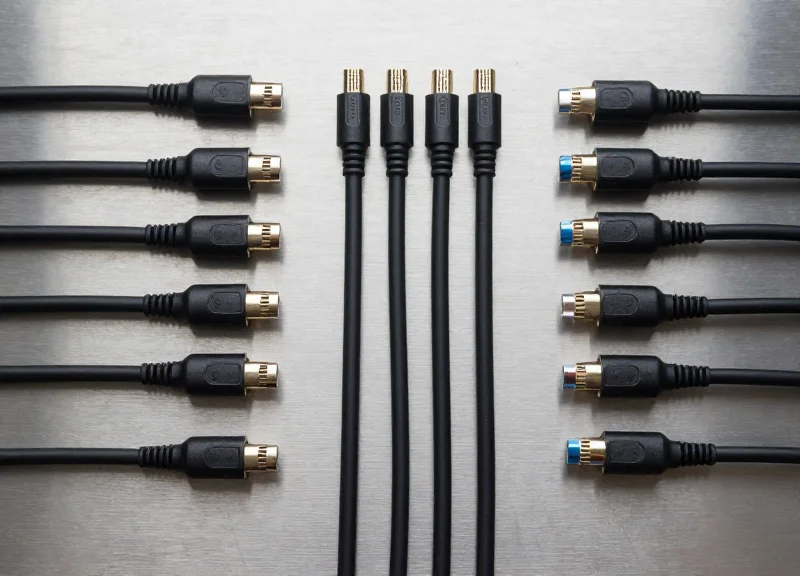
| Direct Attach Copper (DAC) | 10G - 400G | < 0.1 µs | < 0.1W |
| Active Optical Cable (AOC) | 25G - 400G | < 1 µs | 1.5W - 3.5W |
| Optical Transceiver (SR4) | 100G - 400G | < 2 µs | 2.5W - 4.5W |
| 5G Fronthaul (eCPRI) | 10G - 25G | < 100 µs | 5W - 12W |
Power Efficiency and Thermal Management
Power consumption at the edge is a primary constraint because many edge nodes are located in uncooled or passively cooled environments. The metric of 'Watts per Gigabit' (W/G) is the gold standard for evaluating edge interconnect efficiency. To minimize heat dissipation, engineers opt for low-power Digital Signal Processors (DSPs) or 'DSP-less' designs (such as Linear Drive optics) where the transmission distance allows. Reducing power consumption not only lowers operational costs but also increases the reliability and lifespan of the hardware by preventing thermal throttling.
- Why is power consumption so critical for edge interconnects?
Edge nodes often lack active cooling and operate on limited power budgets; high power consumption leads to heat buildup, which can cause hardware failure or performance degradation. - How does latency impact edge AI performance?
Edge AI relies on rapid inference; if the interconnect adds significant latency, the window for taking action based on the AI's output may pass, rendering the system ineffective for real-time tasks. - What is the typical latency target for industrial edge interconnects?
Most industrial and autonomous edge applications aim for end-to-end latency of less than 1 to 10 milliseconds, requiring the interconnect component itself to contribute only microseconds of delay.
Interconnect Architectures: Front-haul vs. Back-haul
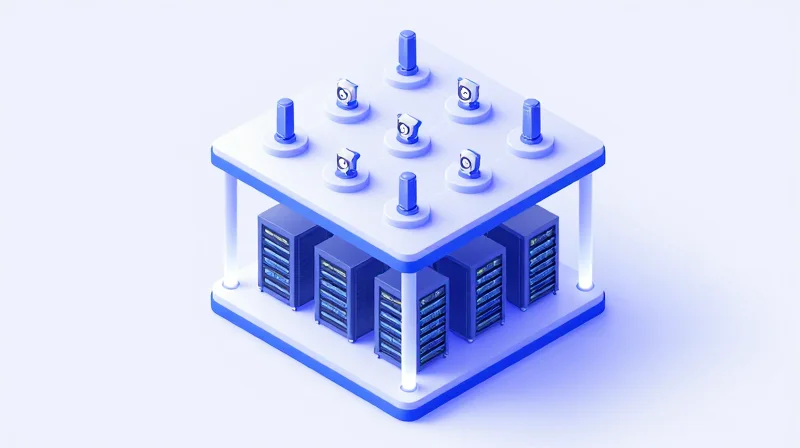
Edge computing interconnects are architecturally segmented into front-haul and back-haul paths to optimize for conflicting requirements: the extreme low latency needed at the point of data ingestion and the high-throughput efficiency required for long-distance transport. Front-haul handles the 'first mile' connectivity between end-point devices and local processing units, while back-haul manages the 'middle and last mile' transit to centralized infrastructure.
Front-haul: The Real-Time Data Ingestion Layer
Front-haul represents the immediate link between distributed sensors, cameras, or 5G Remote Radio Heads (RRH) and the Baseband Units (BBU) or Edge Servers. In 5G and industrial IoT contexts, front-haul is characterized by ultra-low latency requirements—often sub-100 microseconds—and the use of specialized protocols like eCPRI (enhanced Common Public Radio Interface). High-speed optical transceivers are deployed here to ensure that raw data is delivered to the edge processor with minimal jitter, enabling real-time decision-making for autonomous systems and industrial robotics.
Back-haul: Bridging the Edge to the Cloud
Back-haul serves as the primary pipeline connecting edge aggregation points to the regional data center or the global cloud core. Unlike front-haul, which deals with raw, high-frequency signals, back-haul typically carries processed or aggregated data. The architectural focus shifts toward massive bandwidth and carrier-grade reliability. This layer often utilizes Wavelength Division Multiplexing (WDM) and high-capacity fiber optics to bridge the hundreds or thousands of miles between a localized edge deployment and a central cloud provider.
| Feature | Front-haul | Back-haul |
|---|---|---|
| Primary Objective | Low Latency & Jitter | High Throughput & Reach |
| Typical Distance | 0 - 10 km | 10 km - 1000+ km |
| Key Protocols | eCPRI, TSN, RoE | IP/MPLS, Ethernet, OTN |
| Latency Tolerance | Extremely Low (<1ms) | Moderate (10ms - 100ms) |
The Emergence of Mid-haul in Disaggregated RAN
In modern Open RAN (O-RAN) architectures, a third layer—mid-haul—is introduced. Mid-haul connects the Distributed Unit (DU) to the Centralized Unit (CU). This disaggregation allows for more flexible placement of computing resources, balancing the load between local hardware and regional edge centers while maintaining the strict performance profiles required for mission-critical 5G services.
- Why is front-haul more sensitive to latency than back-haul?
Front-haul often carries raw signal data that must be processed in near real-time for radio synchronization and control loops, whereas back-haul carries packetized data that has already been processed or filtered at the edge. - Can the same hardware be used for both?
While some optical transceivers are versatile, front-haul typically requires specialized low-latency features or industrial-grade temperature ratings for outdoor deployment, while back-haul hardware focuses on long-reach coherent optics like DWDM.
Protocol Standards and Interoperability
Protocol Standards and Interoperability
Protocol standards define the rules and formats that allow diverse edge devices—ranging from low-power IoT sensors to high-performance edge servers—to exchange data reliably and efficiently. In the context of edge computing interconnects, interoperability is not merely about connectivity; it is about ensuring that timing, priority, and data integrity are maintained across distributed and often fragmented nodes. By abstracting the physical hardware layer, these protocols facilitate a unified fabric where compute resources can be dynamically allocated without being restricted by proprietary vendor silos or hardware-specific limitations.
The Landscape of Edge Networking Standards
| Protocol Standard | Primary Application | Key Performance Advantage | Determinism Level |
|---|---|---|---|
| Standard Ethernet | General-purpose edge networking | Cost-effective and ubiquitous | Low (Best-effort) |
| InfiniBand | High-performance AI clusters | Extreme throughput and RDMA offloading | Medium |
| TSN (Time-Sensitive Networking) | Industrial Robotics/Automotive | Guaranteed low-latency delivery | High (Deterministic) |
| RoCE v2 | Data-intensive edge storage | Ethernet-compatible RDMA | Medium-High |
Determinism and Time-Sensitive Networking (TSN)
While standard Ethernet is sufficient for general IT tasks, mission-critical edge applications in industrial automation and autonomous systems require absolute determinism. Time-Sensitive Networking (TSN) addresses this by extending IEEE 802.1 standards to provide precise timing and scheduled traffic. By implementing mechanisms like time-aware shaper (IEEE 802.1Qbv) and frame replication for reliability (IEEE 802.1CB), TSN ensures that high-priority control data is never delayed by non-critical background traffic. This level of interoperability is essential for synchronizing thousands of sensors and actuators in real-time edge environments.
Achieving Interoperability in Heterogeneous Environments
True interoperability at the edge requires a convergence between Operational Technology (OT) and Information Technology (IT) layers. This is achieved through cross-platform frameworks such as OPC UA (Open Platform Communications Unified Architecture), which provides a standardized data model, and lightweight messaging protocols like MQTT (Message Queuing Telemetry Transport) that are optimized for high-latency or bandwidth-constrained links. These software-defined layers work in tandem with physical interconnects to ensure that data packets are not just delivered, but are contextually understood and processed with minimal jitter across the entire edge-to-cloud continuum.
FAQ: Edge Interconnect Protocols
- Can TSN and standard Ethernet coexist on the same physical infrastructure?
Yes, TSN is designed for backward compatibility. TSN-aware switches can schedule time-critical traffic alongside standard best-effort Ethernet traffic, ensuring both can share the same link without the latter impacting the former's latency. - What is the role of RDMA in edge protocol standards?
Remote Direct Memory Access (RDMA) allows for data transfer directly from the memory of one edge node to another without involving the CPU or operating system, significantly reducing latency and overhead in high-throughput interconnects like InfiniBand and RoCE. - How does OPC UA contribute to edge interconnectivity?
OPC UA acts as a semantic bridge, allowing devices from different manufacturers to communicate using a common language. It ensures that the data moving across the physical interconnect is structured and readable by various edge applications regardless of their source.
Solving the Latency Challenge in Multi-access Edge Computing (MEC)

Solving the Latency Challenge in Multi-access Edge Computing (MEC)
MEC shifts the computational load from the core network to the radio access network (RAN), but the physical and logical interconnects between these edge nodes are what truly enable sub-10ms response times. By optimizing the data plane and control plane interactions through specialized interconnect fabrics, MEC environments can bypass the congestion of traditional backhaul, ensuring that data-intensive 5G applications—such as autonomous driving and remote surgery—receive the deterministic performance and high-bandwidth delivery they require.
The Interconnect Requirements for URLLC
Ultra-Reliable Low-Latency Communication (URLLC) demands a network architecture where packet loss is near zero and latency is strictly bounded. Specialized interconnects achieve this by implementing hardware-level prioritization and hardware-offloaded switching. These technologies ensure that high-priority URLLC traffic is never queued behind lower-priority background tasks, maintaining a consistent jitter profile across the edge fabric and meeting the 99.999% reliability standards defined by 3GPP.
| Feature | Standard Edge Interconnect | MEC-Optimized Interconnect |
|---|---|---|
| Latency Target | >20ms | 1-5ms |
| Handover Protocol | Stateful Re-establishment | Predictive Session Transfer |
| Reliability (SLA) | 99.9% | 99.999% |
| Traffic Priority | Best-effort | Hardware-enforced QoS |
Enabling Rapid Handovers via Low-Latency Interconnects
In a mobile environment, user equipment (UE) frequently transitions between different base stations (gNBs). For MEC, this means the application state must migrate between edge hosts almost instantaneously to prevent service interruption. High-performance interconnects facilitate 'make-before-break' handovers by providing high-bandwidth paths for state synchronization between neighboring edge nodes. This 'sidehaul' connectivity allows nodes to exchange session data without traversing the core network, significantly reducing the handover latency that would otherwise cause lag in mobile applications.
- How does MEC improve 5G latency?
MEC places processing power at the network edge, reducing the physical distance data travels, while specialized interconnects ensure data moves between these edge points without bottlenecks. - What is a 'sidehaul' interconnect?
Sidehaul refers to a direct, high-speed connection between adjacent edge computing nodes, used primarily for low-latency synchronization and fast user handovers in mobile environments. - Why is jitter a concern in MEC?
Jitter, or variation in latency, can disrupt real-time control loops in industrial IoT; MEC interconnects use Time-Sensitive Networking (TSN) to ensure predictable delivery windows.
Security and Data Integrity in Distributed Interconnects
Security and data integrity in edge computing interconnects are paramount because edge nodes often reside outside the protective perimeter of a traditional data center, making them vulnerable to both physical tampering and sophisticated cyber-attacks. Unlike centralized cloud architectures, edge interconnects must provide robust, low-latency encryption that protects data in transit across diverse, often unsecured, geographical locations while ensuring that the physical hardware remains untampered.
Hardware-Level Protection: The Role of MACsec
To mitigate the risk of eavesdropping and man-in-the-middle attacks without sacrificing performance, edge interconnects increasingly rely on Media Access Control Security (MACsec) as defined by IEEE 802.1AE. MACsec operates at the Data Link Layer (Layer 2), providing point-to-point encryption between adjacent nodes. By encrypting traffic at the hardware level, MACsec ensures line-rate performance with minimal jitter, which is critical for the ultra-low latency requirements of Edge Interconnects.
| Feature | MACsec (Layer 2) | IPsec (Layer 3) |
|---|---|---|
| Latency | Near-zero (Hardware-based) | Higher (Software overhead) |
| Scope | Point-to-point (Link level) | End-to-end (Network level) |
| Visibility | Protects all L2 traffic | Protects only IP payloads |
| Implementation | Physical switch/NIC level | OS/Gateway level |
Physical Layer Security and Remote Integrity
Physical security is a unique challenge for edge computing because devices are frequently deployed in 'wild' environments like utility poles, factory floors, or smart city kiosks. Edge interconnect security must extend to the physical layer through tamper-evident enclosures and Secure Boot sequences. If an edge node is physically compromised, the interconnect must be capable of automatically severing its link to the core network and wiping local cryptographic keys stored in the Trusted Platform Module (TPM) to prevent lateral movement by attackers.
Zero Trust Interconnect Architectures
The evolution of edge interconnects is moving toward a Zero Trust Architecture (ZTA). In this model, no connection is inherently trusted, even within the local edge cluster. Every session between edge nodes or between the edge and the cloud must be continuously authenticated and authorized using micro-segmentation and Software-Defined Perimeters (SDP), ensuring that data integrity is maintained even if one segment of the interconnect is breached.
- How does MACsec prevent data breaches at the edge?
MACsec encrypts all traffic between two physically connected ports at the hardware level, ensuring that any data intercepted directly from the cable or switch is unreadable without the specific hardware keys. - What is the primary risk of using standard IPsec for edge interconnects?
While secure, IPsec introduces significant packet overhead and processing latency, which can degrade the performance of real-time edge applications like autonomous driving or industrial robotics. - Can edge interconnects detect physical tampering?
Yes, advanced interconnects utilize link-state monitoring and hardware sensors that can detect signal anomalies or chassis intrusions, triggering immediate lockdown protocols.
Future Trends: Co-Packaged Optics and AI-Driven Edge Networking
Future Trends: Co-Packaged Optics and AI-Driven Edge Networking
The next evolution of edge computing interconnects is characterized by a fundamental shift from pluggable, reactive hardware to integrated, proactive systems. By moving optical engines closer to the processor via Co-Packaged Optics (CPO) and utilizing AI for predictive traffic orchestration, the industry is addressing the 'I/O wall'—a bottleneck where traditional electrical interconnects can no longer keep pace with the bandwidth and power efficiency demands of decentralized AI workloads and 6G-ready infrastructure.
Co-Packaged Optics (CPO): Breaking the Physical Constraints
As edge sites are often constrained by space and power, traditional pluggable transceivers are reaching their physical limits. CPO integrates the optical components directly onto the same package as the ASIC or switch silicon. This proximity reduces the length of electrical traces, significantly lowering power consumption and signal attenuation. For edge interconnects, this means higher port density and the ability to handle 800G and 1.6T speeds in compact form factors that were previously impossible to cool or power efficiently.
| Feature | Pluggable Optics | Co-Packaged Optics (CPO) |
|---|---|---|
| Power Consumption | High (significant loss over long traces) | Low (shortened electrical paths) |
| Bandwidth Density | Limited by faceplate space | Maximum (integrated on-chip) |
| Serviceability | High (hot-swappable modules) | Low (requires sophisticated repair/replacement) |
| Signal Integrity | Challenging at 112G/224G SerDes | Superior due to reduced trace length |
AI-Driven Edge Networking: The Shift to Autonomous Interconnects
Managing a mesh of distributed edge interconnects manually is becoming unsustainable. AI-driven networking introduces machine learning models that monitor telemetry data in real-time to optimize path selection and load balancing. In the context of edge interconnects, AI can predict congestion points and reroute critical traffic—such as V2X (Vehicle-to-Everything) data—before latency spikes occur. This 'self-healing' capability ensures that even as the network scales, the interconnect remains the most reliable component of the stack.
Future-Proofing Edge Interconnects FAQ
- Why is CPO critical for AI at the edge?
AI training and inference at the edge require massive data transfers between nodes. CPO provides the necessary bandwidth density and low latency to support these high-performance clusters within tight thermal envelopes. - How does AI improve interconnect security?
AI algorithms can detect anomalous traffic patterns across interconnects, identifying potential DDoS attacks or data exfiltration attempts much faster than signature-based security systems. - What are the primary barriers to CPO adoption?
The main challenges include a lack of standardized manufacturing processes, complex thermal management of integrated lasers, and the difficulty of replacing failed components compared to traditional pluggable modules.
In conclusion, Edge Computing Interconnects are the vital arteries of the modern digital ecosystem, bridging the gap between raw data and actionable intelligence. As bandwidth demands continue to scale, choosing the right optical infrastructure is paramount. Contact our technical specialists today to evaluate your edge networking strategy and optimize your high-speed interconnect deployments.