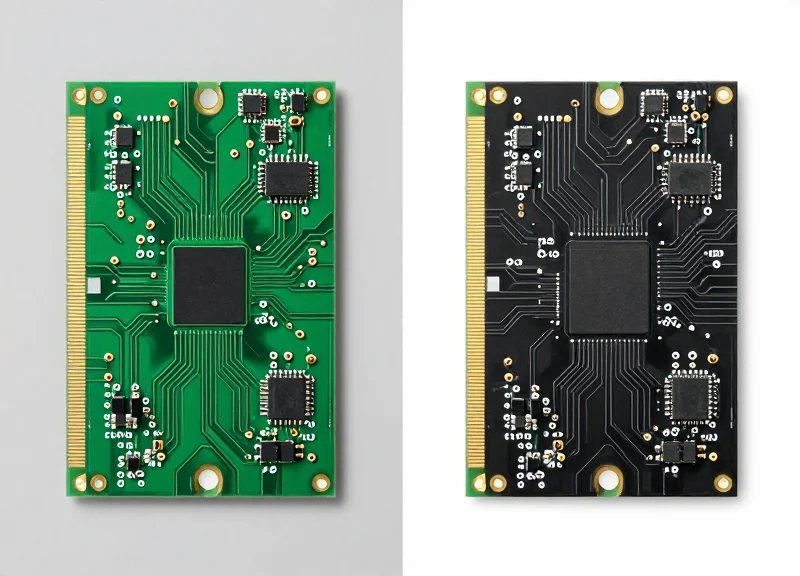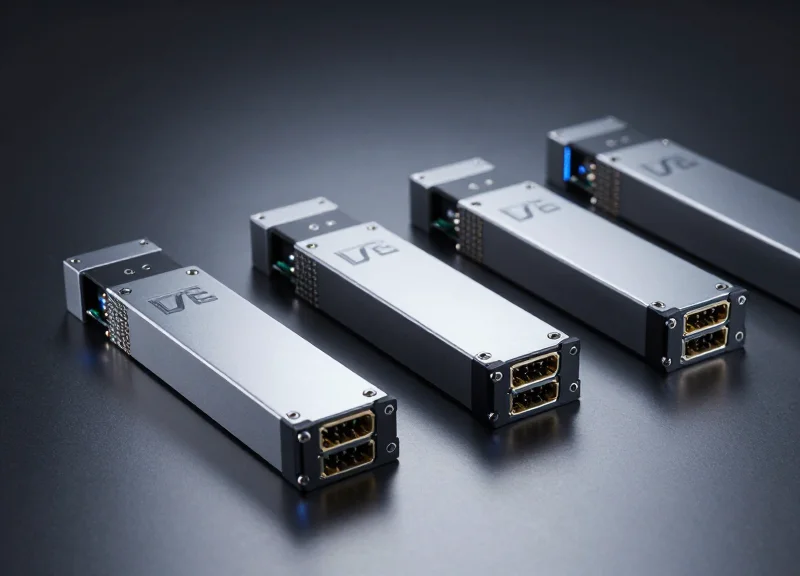
As the global transition to 5G Standalone (SA) architecture intensifies, the pressure on fronthaul transport networks has reached a tipping point. Traditional CPRI protocols are evolving into more efficient eCPRI standards to handle the massive bandwidth requirements of 5G. For network operators and infrastructure providers, sourcing reliable, high-performance CPRI/eCPRI modules at scale is no longer just a procurement task—it is a strategic necessity for maintaining a competitive edge in 2026 and beyond.
The Evolution of Mobile Fronthaul: CPRI vs. eCPRI

The Evolution of Mobile Fronthaul: CPRI vs. eCPRI
The migration from the Common Public Radio Interface (CPRI) to the evolved CPRI (eCPRI) is a critical requirement for 5G NR (New Radio) deployments, primarily because eCPRI shifts the functional split between the Baseband Unit (BBU) and Remote Radio Head (RRH) to allow for a 10x improvement in bandwidth efficiency. By moving specific physical layer processing into the radio unit, eCPRI transforms the fronthaul from a rigid, synchronous bit-stream into a flexible, packet-based Ethernet architecture capable of supporting Massive MIMO and ultra-low latency applications.
Technical Comparison: Legacy CPRI vs. Next-Gen eCPRI
| Feature | CPRI (Legacy 4G/LTE) | eCPRI (Standard 5G) |
|---|---|---|
| Transport Protocol | Constant Bit Rate (CBR) / Synchronous | Packet-based (Ethernet/IP) |
| Bandwidth Efficiency | Low (Scales linearly with antenna count) | High (Independent of antenna count) |
| Fronthaul Topology | Point-to-Point / Daisy Chain | Mesh, Ring, and Tree via SDN |
| Functional Split | Legacy (All PHY in BBU) | Flexible (Typically Option 7-2x) |
| Standard Interface Speed | Up to 24.3 Gbps (CPRI Option 10) | 25G / 100G Ethernet |
Why Wholesale Buyers are Prioritizing eCPRI for 2026
For 5G wholesale providers and network operators, the shift to eCPRI is not just a technical necessity but a financial imperative. Traditional CPRI required massive amounts of fiber because its bandwidth requirements scaled linearly with the number of antennas and sampling rates. In a Massive MIMO environment, CPRI would require hundreds of Gbps for a single site. eCPRI solves this by utilizing statistical multiplexing and moving the 'split point' to the PHY-high layer (Option 7-2x), which significantly compresses the data before it enters the fiber link, ensuring that bulk pricing for 25G and 100G optics remains cost-effective.
- Does eCPRI replace CPRI entirely?
While eCPRI is the standard for 5G, many legacy LTE sites still utilize CPRI. Most modern wholesale equipment supports interworking functions or dual-mode transport to maintain backward compatibility during the transition. - What is the primary bandwidth benefit of eCPRI?
eCPRI reduces the required fronthaul bit rate by roughly 10 times compared to CPRI for the same antenna configuration, allowing operators to support 5G speeds over existing fiber infrastructure. - Are eCPRI components more expensive in bulk?
Despite the increased complexity, eCPRI leverages standard Ethernet components. In 2026, bulk pricing for eCPRI-compatible 25G SFP28 and 100G QSFP28 transceivers has stabilized, often making them more cost-effective per Gbps than legacy CPRI optics.
Critical Specifications for 5G Optical Modules
Critical Specifications for 5G Optical Modules
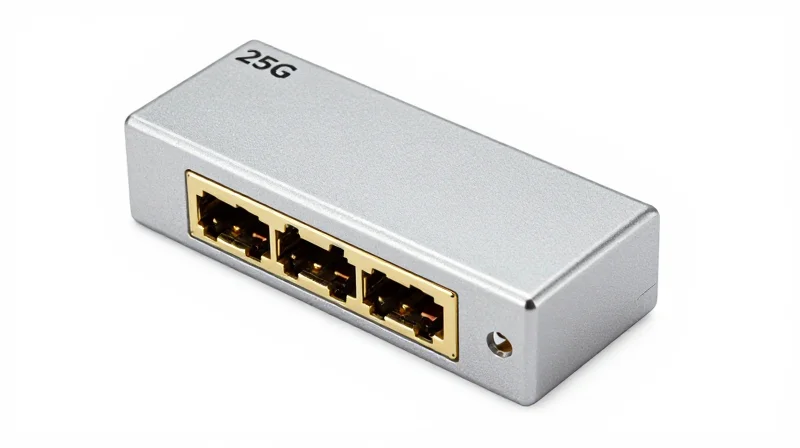
To achieve the promised speeds and reliability of 5G, optical modules must evolve beyond the 10Gbps limitations of 4G LTE. The transition to 5G New Radio (NR) and eCPRI protocols demands modules that support significantly higher data rates, typically starting at 25Gbps, while maintaining extreme precision in timing and environmental resilience. For wholesale buyers, understanding these specific technical benchmarks is the key to ensuring interoperability between Distributed Units (DU) and Radio Units (RU) in a multi-vendor environment.
Data Rates: The Shift to 25G and 50G
In the 5G fronthaul ecosystem, the 25G SFP28 module has become the industry standard, replacing the older 10G SFP+. However, as massive MIMO (Multiple-Input Multiple-Output) arrays become more complex, 50G QSFP28 and even 100G solutions are being deployed to handle the massive influx of data. These higher rates are necessary to support the expanded bandwidth of the sub-6GHz and mmWave spectrum.
| Module Type | Protocol Support | Typical Distance | Application |
|---|---|---|---|
| 25G SFP28 DWDM | eCPRI / CPRI Option 10 | 10km - 20km | Standard 5G Fronthaul |
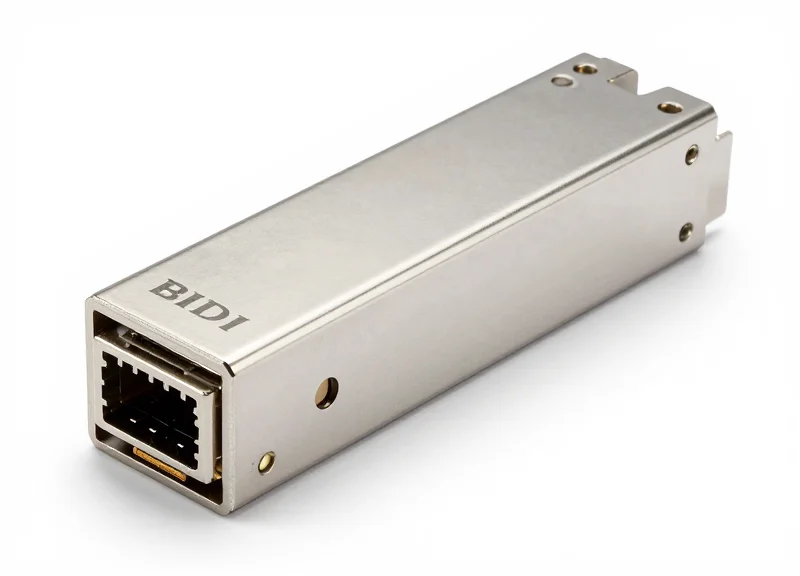
| 25G SFP28 BiDi | eCPRI / CPRI Option 10 | 10km - 15km | Fiber-Constrained Sites |
| 50G QSFP28 | eCPRI / 50GE | Up to 10km | High-Capacity Aggregation |
Synchronization and Latency Requirements
5G applications, particularly those involving Ultra-Reliable Low-Latency Communications (URLLC), require end-to-end latency to be measured in microseconds. Optical modules must contribute minimal delay and support strict synchronization standards. This is achieved through integrated support for IEEE 1588v2 Precision Time Protocol (PTP) and Synchronous Ethernet (SyncE), ensuring that the entire network remains phase-aligned for features like carrier aggregation and coordinated multipoint (CoMP) transmission.
- Why is Industrial Temperature (I-Temp) support critical?
Most 5G fronthaul equipment is deployed in unconditioned outdoor cabinets. Modules must support an operating temperature range of -40°C to +85°C to prevent signal degradation or hardware failure in extreme climates. - What role does FEC play in 25G/50G modules?
Forward Error Correction (FEC) is often required at the host level to improve link budget and compensate for signal-to-noise ratio (SNR) challenges at higher data rates, though it can slightly increase latency. - Is BiDi technology necessary for 5G wholesale?
Bi-Directional (BiDi) modules are highly sought after in wholesale because they allow transmit and receive over a single fiber strand, effectively doubling the capacity of existing fiber infrastructure and reducing leasing costs.
Why Bulk Procurement is Essential for 5G Rollouts
The Economic Imperative for Wholesale CPRI/eCPRI Acquisition
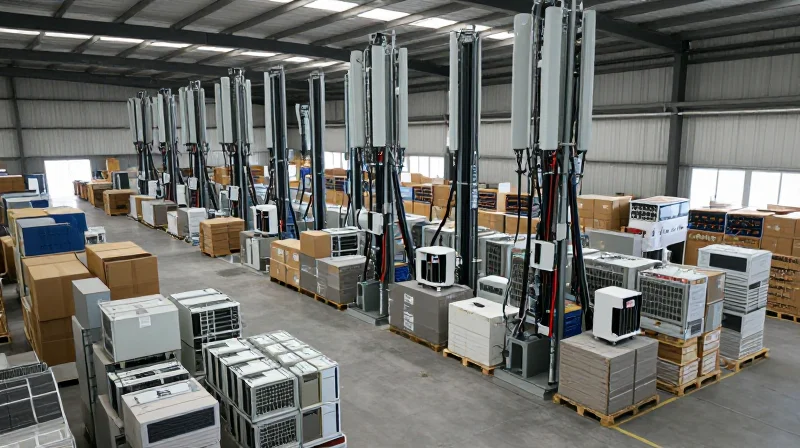
As 5G networks transition from pilot projects to nationwide coverage, the volume of required optical transceivers has grown exponentially. For network operators and infrastructure contractors, purchasing CPRI and eCPRI modules in bulk is no longer merely a logistics preference but a financial necessity. High-density deployments require thousands of interconnections between Baseband Units (BBU/DU) and Remote Radio Heads (RRH/AAU); wholesale procurement ensures that these components are acquired at the lowest possible price point while maintaining the technical uniformity essential for network integrity.
Maximizing Unit Cost Reduction through Economies of Scale
The primary advantage of bulk procurement lies in the significant reduction of per-unit costs. In the 2026 market, the price delta between retail and wholesale for 25G eCPRI SFP28 modules can range from 15% to 35%. By consolidating orders, enterprises reduce the overhead associated with shipping, import duties, and individual transaction processing, allowing CAPEX budgets to be allocated more efficiently toward site expansion rather than hardware premiums.
| Procurement Metric | Spot/Retail Purchase | Bulk/Wholesale Agreement |
|---|---|---|
| Unit Pricing | Premium (High) | Tiered Discounts (Low) |
| Shipping Logistics | Individual Freight Costs | Consolidated Palletized Shipping |
| Technical Support | Standard Customer Service | Dedicated Account Management |
| Lead Time Priority | Subject to Market Availability | Guaranteed Inventory Allocation |
Inventory Stability and Lead Time Mitigation
Global supply chains for semiconductors and high-speed optics remain susceptible to volatility. Bulk procurement contracts allow network builders to lock in inventory months in advance, insulating their project timelines from sudden market shortages. Having a pre-staged inventory of CPRI/eCPRI modules ensures that field technicians are never stalled by 'out-of-stock' notifications, which is critical for meeting the strict deployment deadlines set by regulatory bodies and spectrum license requirements.
Long-Term Project Planning and Scalability
Wholesale agreements often include provisions for 'call-off' orders, where modules are delivered in phases. This aligns the supply of hardware with the physical construction stages of the 5G rollout. Furthermore, bulk purchasing from a single manufacturing batch ensures better consistency in optical performance, such as laser wavelength stability and power consumption levels, which simplifies the troubleshooting and maintenance of large-scale fronthaul networks.
- Why is bulk pricing better than spot-market buying?
Bulk pricing leverages high-volume manufacturing runs, allowing vendors to pass on lower raw material and labor costs to the buyer, which is impossible during low-volume spot purchases. - Does wholesale procurement affect product warranty?
No. In fact, wholesale agreements often include enhanced Service Level Agreements (SLAs) and extended warranty terms that are not available to retail buyers. - How does bulk buying assist in network synchronization?
By purchasing a single batch of eCPRI modules, operators ensure that all units share identical internal components and firmware versions, reducing jitter and latency variance across the network.
Unlocking Value through OEM/ODM Customization
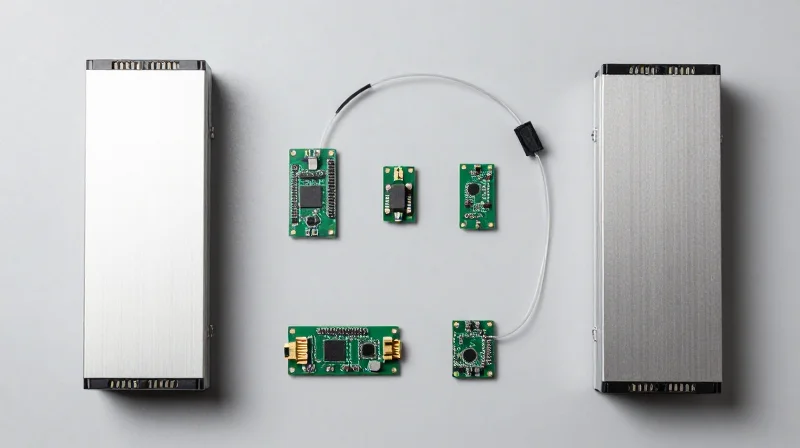
In the complex landscape of 5G fronthaul, off-the-shelf optical transceivers often fall short of meeting the unique technical demands of proprietary Baseband Units (BBUs) and Remote Radio Heads (RRHs). Unlocking value through OEM/ODM customization allows wholesale buyers to move beyond generic hardware, integrating tailored firmware, specialized physical housing, and private labeling into their procurement strategy. This level of customization is not merely a branding exercise; it is a technical necessity for ensuring multi-vendor interoperability and optimizing signal integrity across diverse network architectures.
Firmware Tuning and Protocol Compatibility
The primary advantage of ODM services lies in firmware optimization. Many Tier-1 equipment manufacturers employ strict vendor-locking mechanisms that reject third-party modules. By leveraging custom coding services, wholesale buyers can request specific EEPROM data, vendor names, and part numbers to be embedded into the module's memory. This ensures that 25G eCPRI modules are recognized as 'native' by the host equipment, preventing port lockdowns and ensuring that Digital Optical Monitoring (DOM) functions accurately transmit real-time telemetry data.
| Feature | Standard Modules | OEM/ODM Customized Modules |
|---|---|---|
| Vendor Compatibility | Generic (May trigger errors) | Tailored (Cisco, Nokia, Ericsson, etc.) |
| EEPROM Coding | Fixed Factory Settings | Programmable to specific PN/SN |
| Physical Labeling | Generic Manufacturer Brand | Private Label / Custom Part Numbers |
| Operating Temperature | Commercial (0°C to 70°C) | Industrial (-40°C to 85°C) available |
Hardware Customization for Extreme Environments
Beyond the code, physical hardware customization is essential for 5G deployments in challenging outdoor environments. OEM partners can provide industrial-grade temperature hardening to ensure that CPRI modules maintain performance in unconditioned cabinets or tower-mounted equipment. Additionally, custom housing can include specialized pull-tabs or connector types designed to fit specific mechanical constraints of high-density patch panels, reducing the risk of fiber damage during field installations.
The Strategic Impact of Private Labeling
For telecommunications distributors and large-scale system integrators, private labeling offers a significant competitive edge. By applying custom branding and unique SKU systems to high-performance eCPRI modules, organizations can build brand equity while simplifying their internal inventory management. This allows for a streamlined replacement process in the field, as technicians can easily identify proprietary-approved hardware.
- What is the typical Minimum Order Quantity (MOQ) for custom OEM firmware?
While it varies by manufacturer, most wholesale suppliers offer custom coding for orders as small as 50-100 units, though significant price breaks usually begin at 500+ units. - Can ODM services provide customized wavelengths for CWDM/DWDM fronthaul?
Yes, ODM customization allows for the selection of specific ITU-grid channels in CWDM or DWDM 25G eCPRI modules, enabling high-density wavelength division multiplexing in fiber-constrained environments. - Does customization void the standard warranty?
No, when ordered through a reputable OEM/ODM partner, the custom specifications are built into the production lifecycle and are fully covered by the manufacturer's performance guarantee.
Interoperability and Multi-Vendor Integration

Interoperability and Multi-Vendor Integration Challenges
The primary barrier to scaling 5G fronthaul infrastructure through wholesale procurement is the legacy 'vendor lock' strategy employed by major equipment manufacturers. To ensure multi-vendor integration, bulk-purchased CPRI and eCPRI modules must be engineered with high-performance EEPROM coding and firmware that can emulate the handshaking protocols of proprietary systems. This allows operators to deploy 'white-box' or third-party optical transceivers into Ericsson, Nokia, or Huawei Baseband Units (BBUs) and Remote Radio Heads (RRHs) without triggering system errors or performance degradation.
Bypassing Proprietary Lock-in with Firmware Emulation
When purchasing in bulk for 2026 rollouts, the technical focus shifts to firmware compatibility. Leading third-party manufacturers now offer modules that are 'vendor-agnostic' at the hardware level but 'vendor-specific' at the software level. By utilizing advanced programming interfaces, these modules can be flashed with specific codes that satisfy the checksum requirements of proprietary Distributed Units (DU) and Radio Units (RU). This flexibility is a cornerstone of the Open RAN (O-RAN) movement, providing wholesalers the leverage to source high-quality components outside the traditional OEM supply chain.
| Feature | OEM Proprietary Modules | Interoperable 3rd Party | Impact on Wholesale |
|---|---|---|---|
| Cost Basis | Premium Pricing | Market-Competitive | 30-60% Savings |
| Flexibility | Single-Vendor Only | Multi-Vendor (Flashable) | Simplified Inventory |
| Supply Stability | Subject to OEM Lead Times | Diverse Supply Chain | Reduced Project Delays |
| Standardization | Closed Ecosystem | O-RAN/MSA Compliant | Future-Proof Scaling |
Frequently Asked Questions: Multi-Vendor Integration
- Will third-party eCPRI modules void my equipment warranty?
Legally, in many jurisdictions like the US (via the Magnuson-Moss Warranty Act), using third-party peripherals cannot void a hardware warranty unless the module itself causes direct damage. High-quality modules meet or exceed MSA standards to prevent such risks. - How is synchronization maintained across different vendors?
Interoperable modules support Precision Time Protocol (PTP) IEEE 1588v2 and SyncE, ensuring that frequency and phase synchronization remain consistent even when mixing transceiver brands across the fronthaul link. - Can I re-program modules if I switch from Nokia to Ericsson hardware?
Yes, many wholesale-grade modules are 'tunable' or 're-programmable' using a simple coding box, allowing network engineers to update the firmware field-side to match new hardware requirements.
As the industry trends toward Open RAN architectures, the demand for interoperable CPRI and eCPRI solutions has reached a critical mass. For 5G wholesalers, this means that custom quotes should not only reflect volume discounts but also include technical validation for the specific vendor environments where the modules will be deployed. Ensuring this compatibility upfront eliminates the hidden costs of troubleshooting and replacement during the deployment phase.
Quality Assurance: Testing Protocols for 5G Modules
Quality Assurance: Testing Protocols for 5G Modules
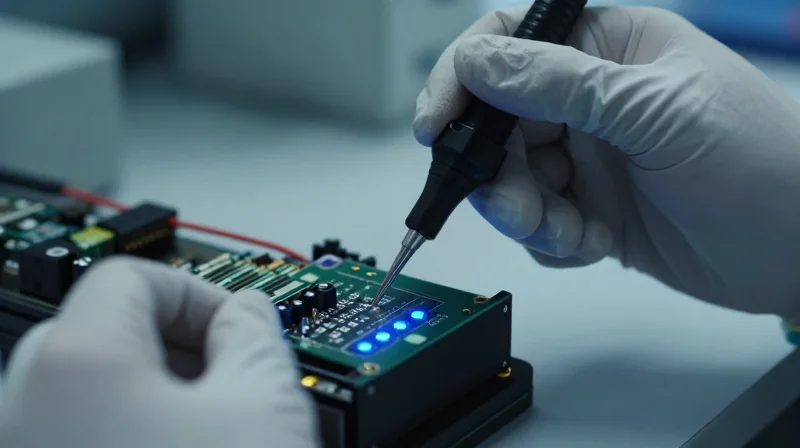
In the context of 5G wholesale procurement, Quality Assurance (QA) serves as the primary safeguard against systemic network failures and unsustainable maintenance overhead. When purchasing CPRI/eCPRI modules in bulk, the financial risk shifts from individual unit costs to the long-term reliability of the infrastructure. A robust testing protocol ensures that every transceiver—whether SFP+ or SFP28—meets the stringent latency and jitter requirements of O-RAN and traditional fronthaul architectures.
Critical Performance Metrics: BER and Signal Integrity
The cornerstone of 5G module reliability is Bit Error Rate (BER) testing. For eCPRI applications, which typically operate at 25Gbps, maintaining a BER of less than 10^-12 is non-negotiable. Modules must undergo comprehensive eye-diagram analysis to verify signal integrity across various fiber lengths. This prevents packet loss and synchronization issues that can degrade the Quality of Service (QoS) for end-users.
| Test Category | Protocol Requirement | Impact on 5G Network |
|---|---|---|
| BER Testing | < 10^-12 (Standard) | Prevents data retransmissions and latency spikes. |
| Temp Cycling | -40°C to +85°C (Industrial) | Ensures stability in outdoor Remote Radio Units (RRUs). |
| MSA Compliance | SFF-8472 / SFF-8431 | Guarantees hardware interoperability across vendors. |
| Jitter Analysis | UI (Unit Interval) Limits | Maintains timing synchronization for TDD networks. |
Environmental Stress Screening (ESS)
Since 5G hardware is frequently deployed in unconditioned outdoor environments, temperature cycling is a vital component of the QA process. Wholesale modules should be subjected to 'burn-in' tests where they are cycled through extreme thermal ranges. This process identifies 'infant mortality' cases—units prone to early failure due to soldering defects or component weaknesses—before they are shipped to the field.
- Why is MSA compliance critical for wholesale buyers?
Multi-Source Agreement (MSA) compliance ensures that the optical transceivers adhere to standardized physical dimensions and electrical interfaces, allowing them to function seamlessly in switches and routers from different manufacturers. - What role does DDM play in 5G quality control?
Digital Diagnostics Monitoring (DDM) allows network operators to monitor real-time parameters such as laser bias current, optical output power, and temperature, enabling predictive maintenance to avoid downtime. - Does bulk pricing affect the level of testing performed?
Reputable vendors maintain the same testing rigors for bulk orders as they do for single units, as high-volume failures can lead to massive RMA costs and reputational damage.
The Path to 99.999% Reliability
Achieving 'five-nines' availability requires a multi-layered approach to testing that spans from the wafer level to the final assembly. By insisting on detailed test reports for wholesale CPRI/eCPRI batches, procurement officers can ensure that their 5G rollout remains resilient against the physical and spectral challenges of modern telecommunications.
Future-Proofing Your Network for 6G and Beyond

Securing Long-Term ROI Through 6G-Ready Hardware
Future-proofing a 5G network infrastructure requires a strategic shift from 'adequate' technical specifications to 'forward-compatible' hardware that anticipates the shift toward sub-terahertz frequencies and AI-native networking. By investing in 100G and 400G eCPRI modules today, wholesale buyers can bypass the expensive forklift upgrades typically associated with cellular generation shifts. These high-spec modules ensure that existing fiber fronthaul can support the massive MIMO evolutions, extreme densification, and integrated sensing capabilities expected with the arrival of 6G.
Technical Comparison: Standard vs. Future-Proofed eCPRI
| Feature | Standard 5G eCPRI (25G) | Future-Ready eCPRI (100G/400G+) |
|---|---|---|
| Throughput Max | 25 Gbps | 100 Gbps to 800 Gbps |
| Latency Tolerance | Sub-millisecond | Sub-microsecond (μs) |
| Fronthaul Efficiency | Standard Compression | Ultra-High via AI-Optimized Waveforms |
| Compatibility | 5G / 5G-Advanced | Native 6G Readiness |
Strategic Advantages of High-Spec Bulk Procurement
Wholesale procurement in 2026 should prioritize modules with enhanced spectral efficiency and superior thermal stability. High-spec eCPRI transceivers offer broader wavelength tuning and better power consumption profiles, which become critical as network cell density increases. Purchasing these advanced modules in bulk through custom quotes not only lowers the per-unit cost but also standardizes the network fabric, significantly reducing operational complexity and maintenance overhead when 6G protocols are eventually ratified and deployed.
Future-Proofing FAQ
- Can 100G eCPRI modules be used in current 5G Open RAN environments?
Yes, most high-capacity 100G eCPRI modules are backward compatible with 25G/50G standards and provide the necessary bandwidth headroom for advanced RAN functional splits. - Why is latency the primary focus for 6G-ready eCPRI?
6G will enable next-generation applications like holographic communication and the tactile internet, which require latencies significantly lower than current 5G standards allow. - Is it cost-effective to buy 400G modules for a 5G network today?
For high-density urban fronthaul and core aggregation points, the total cost of ownership (TCO) is lower because 400G modules reduce the number of physical fiber links and ports required to manage equivalent traffic levels.
Navigating the 2026 Supply Chain for Optical Components
The State of the 2026 Optical Supply Chain
Navigating the 2026 supply chain for optical components necessitates a transition from the 'just-in-time' logic of previous years to a 'just-in-case' strategic reserve model. While the extreme shortages of the post-pandemic era have largely stabilized, the surge in 5G Open RAN deployments and AI-driven data center demand has created new pockets of scarcity, particularly for high-frequency EML lasers and specialized DSPs used in high-speed eCPRI applications.
Lead Time Comparisons and Expectations
| Component Category | 2023 Avg. Lead Time | 2026 Projected Lead Time | Primary Constraint |
|---|---|---|---|
| SFP28 25G (eCPRI) | 12-16 Weeks | 4-8 Weeks | Production capacity |
| SFP+ 10G (CPRI) | 6-10 Weeks | 2-4 Weeks | Legacy component priority |
| QSFP28/QSFP-DD (Aggregation) | 20-24 Weeks | 8-12 Weeks | High-end DSP availability |
Mitigating Logistics and Sourcing Risks
To avoid project stalls, wholesale buyers must move beyond transactional purchasing. Establishing rolling forecasts with Tier-1 manufacturers allows for better wafer allocation and ensures that custom-spec modules—such as those requiring industrial temperature ranges (-40°C to +85°C) for outdoor small cells—are prioritized in the production queue. Diversifying supply chains across different geographical regions also serves as a hedge against localized geopolitical disruptions or shipping lane closures.
- How can I secure bulk pricing amidst market volatility?
Commit to annual volume contracts rather than spot-buying to lock in rates and ensure guaranteed allocation during peak demand cycles. - What is the biggest threat to 5G deployment timelines in 2026?
Logistical bottlenecks at major shipping hubs and the scarcity of specialized testing equipment for high-bandwidth modules remain the primary risks. - Are there regional differences in optical module availability?
Yes; Southeast Asian manufacturing hubs currently offer shorter lead times for standard transceivers, while European and North American markets prioritize specialized, high-security modules.
Sourcing the right CPRI/eCPRI modules is the backbone of a robust 5G strategy. By prioritizing technical excellence and wholesale efficiency, you can scale your network without compromising on quality or budget. Ready to optimize your infrastructure? Contact Ubytelink today for the best wholesale pricing and professional OEM/ODM options tailored to your 5G deployment needs.