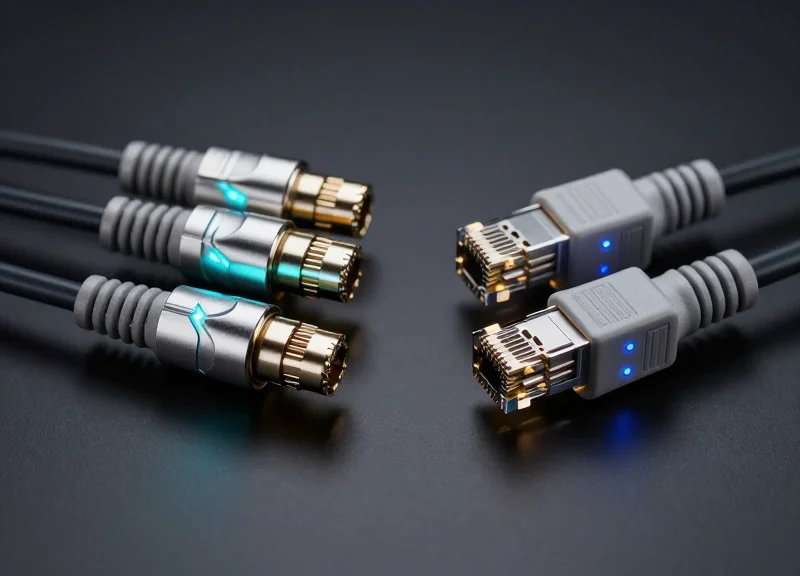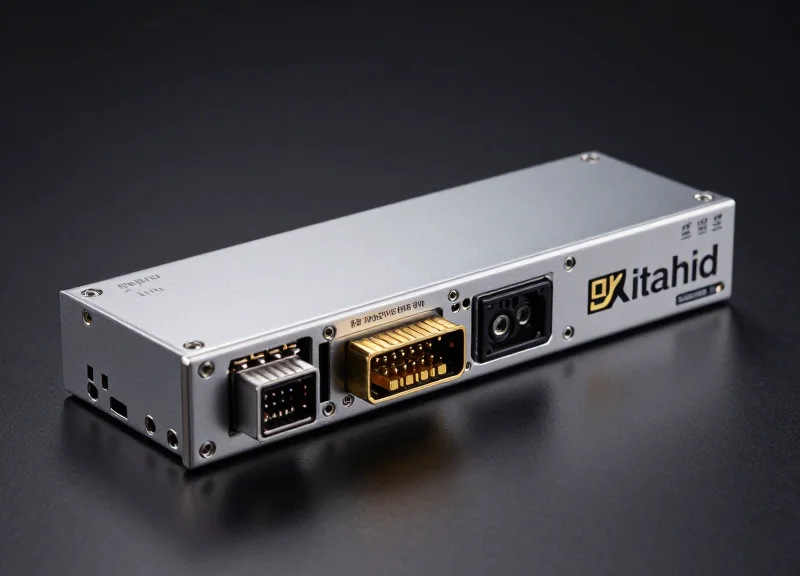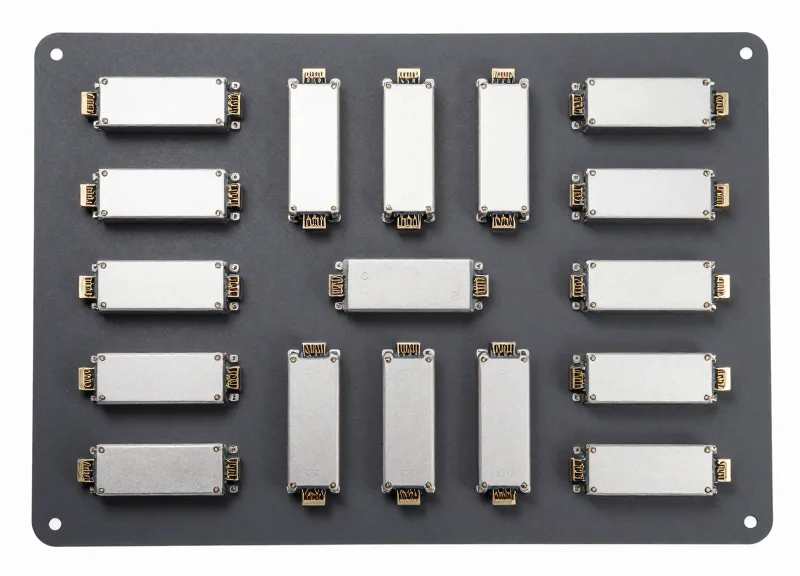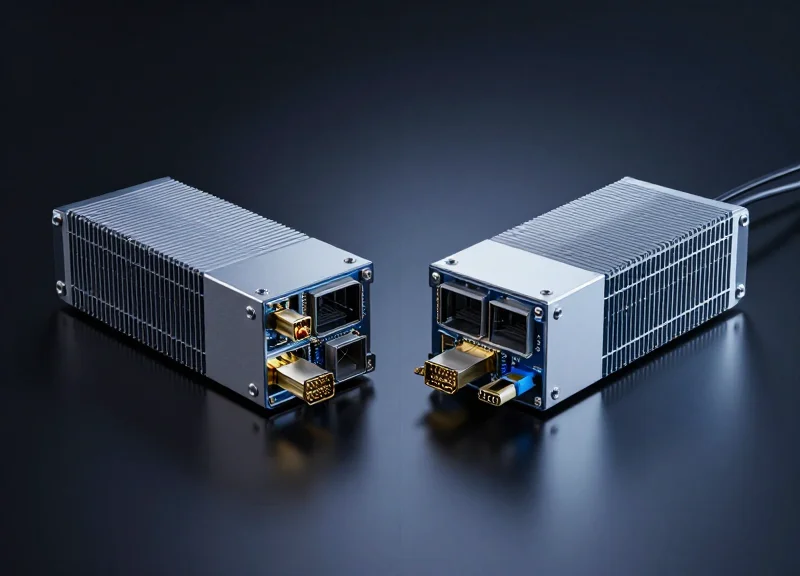
In the era of digital transformation, the enterprise core switch serves as the central nervous system of corporate IT infrastructure. This deep dive explores how modular components provide the scalability and speed required for modern data-heavy environments, offering a detailed look at the technology driving next-generation connectivity.
Defining Enterprise Core Switch Modules
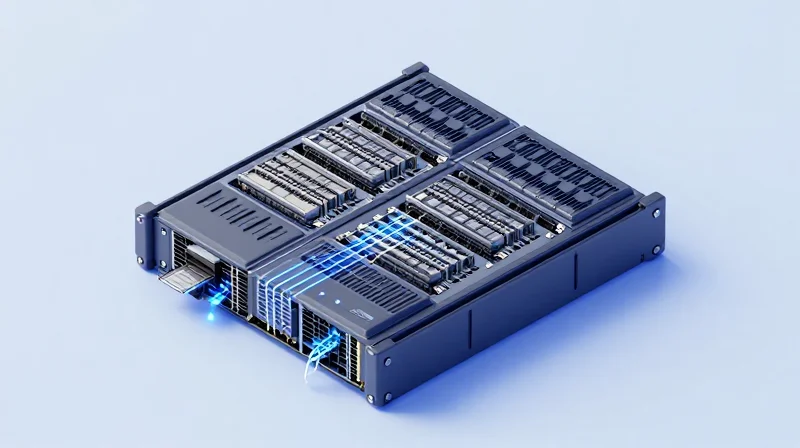
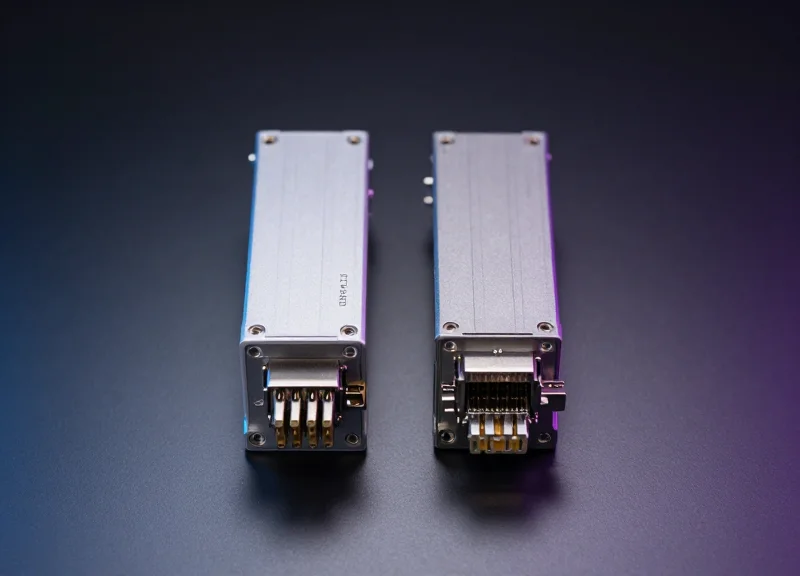
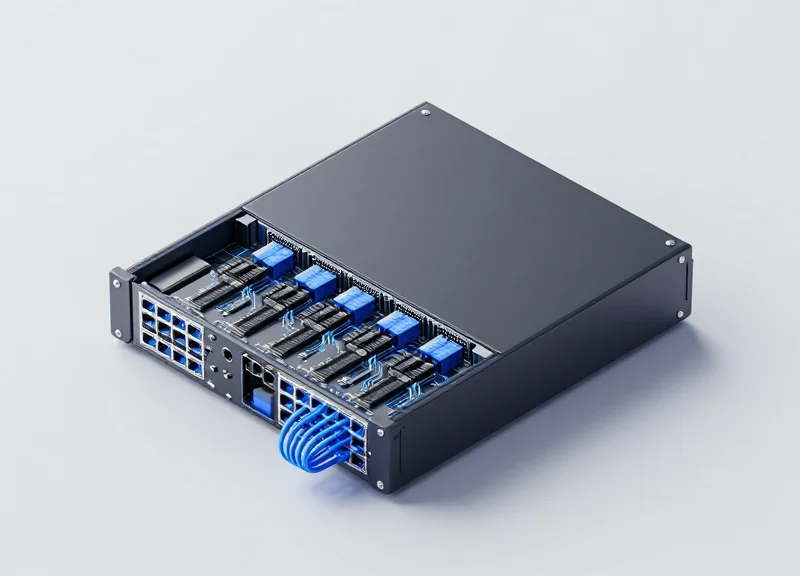
Enterprise core switch modules are interchangeable hardware components—ranging from high-density Ethernet line cards to specialized supervisor engines—that integrate into a central chassis to form the backbone of a corporate network. Unlike fixed switches with a set number of ports, these modules allow IT architects to customize port speeds (10G, 40G, 100G, or 400G), media types (copper or fiber), and processing power to meet the specific throughput and latency requirements of a campus or data center core. By decoupling the switching fabric and the physical interfaces from the chassis frame, modular switching provides the flexibility required for long-term infrastructure growth and high-availability operations.
The Architecture of Modularity
The fundamental concept behind a modular core switch is the separation of the data plane, control plane, and power systems. While a fixed-configuration switch is a 'sealed' unit where a failure in one component often necessitates the replacement of the entire device, a modular system treats each functional block as a hot-swappable module. This architecture ensures that as bandwidth demands increase, an enterprise can simply swap an older 10GbE line card for a 100GbE version without replacing the entire core infrastructure.
Comparison: Modular vs. Fixed-Configuration Switches
| Feature | Modular Core Modules | Fixed-Configuration Switches |
|---|---|---|
| Scalability | High: Add line cards as needed up to chassis capacity. | Limited: Restricted to the built-in port count. |
| Redundancy | Dual Supervisor Engines and redundant power/fans. | Usually limited to external power supply redundancy. |
| Serviceability | Hot-swappable parts; minimal downtime during repairs. | Requires full unit replacement if internal hardware fails. |
| Cost Profile | Higher initial CAPEX; lower long-term upgrade costs. | Lower initial cost; 'rip-and-replace' for upgrades. |
Core Module Categories and Functional Roles
- What is a Supervisor Engine?
This is the 'brain' of the modular switch. It handles the control plane functions, routing table updates, and management tasks. High-end enterprise cores usually feature two supervisors for instant failover. - What are Line Cards?
These modules provide the actual physical ports (I/O). They come in various configurations, such as 48-port SFP+ for fiber or high-density RJ45 for copper, and handle the data plane forwarding. - What is a Switch Fabric Module?
Often located at the rear of the chassis, these modules provide the high-speed pathways that connect the different line cards together, determining the overall throughput capacity of the system.
In modern enterprise environments, the core module is no longer just about port density; it is about intelligence. Advanced modules now incorporate hardware-accelerated features for VXLAN, security group tagging (SGT), and deep packet inspection, ensuring that the core of the network remains as agile as the edge.
The Anatomy of a Chassis-Based Core Switch
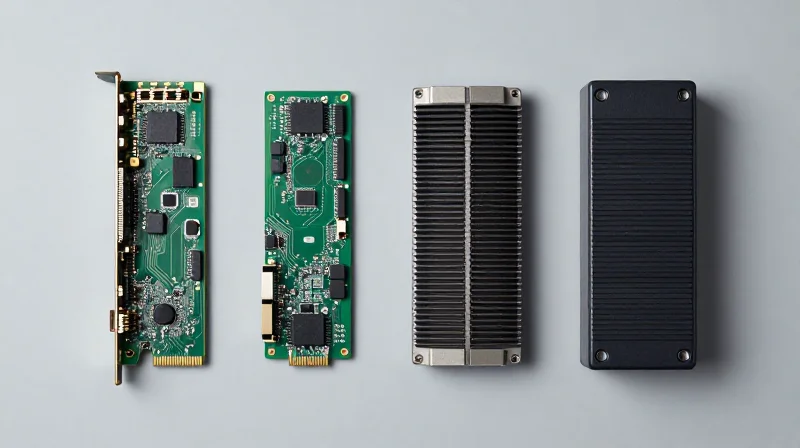
The Anatomy of a Chassis-Based Core Switch
A chassis-based core switch is a modular hardware ecosystem designed to decouple the control, data, and power planes into discrete, hot-swappable components. Unlike fixed-configuration switches where all logic is integrated into a single PCB, the chassis architecture uses a passive or active backplane to interconnect specialized modules, allowing network architects to scale port density and processing power independently of the physical frame.
Supervisor Engines: The Intelligence Center
The Supervisor Engine (or Management Module) acts as the 'brain' of the chassis. It manages the control plane, handling tasks such as routing table updates, SNMP management, and system-wide configuration. In high-availability enterprise environments, core switches typically house two supervisor engines in an active-standby or active-active configuration. If the primary module fails, the secondary takes over via Statefully Switchover (SSO), ensuring zero-to-minimal packet loss.
Line Cards: Scalable Connectivity
Line cards provide the physical interfaces for the network, ranging from 10G SFP+ to 400G QSFP-DD ports. These modules are responsible for the data plane; they receive packets, perform local lookups, and forward traffic across the backplane. Modern line cards often feature local ASICs (Application-Specific Integrated Circuits) to perform distributed switching, which reduces the processing load on the supervisor engine and prevents bottlenecks during peak traffic.
Switch Fabric Modules (SFMs): The Interconnect
The Switch Fabric Modules (SFMs) represent the true throughput capacity of the chassis. While the backplane provides the physical lanes, the SFM is the crossbar that directs traffic between different line cards. By adding more SFMs to a chassis, organizations can increase the total switching capacity (Gbps/Tbps) and provide N+1 redundancy, ensuring that the failure of a single fabric module doesn't cripple the entire network's performance.
| Component | Primary Function | Redundancy Logic |
|---|---|---|
| Supervisor Engine | Control Plane & Management | 1+1 (Active/Standby) |
| Line Card | Data Plane Connectivity (I/O) | Distributed across slots |
| Switch Fabric | Internal Data Routing | N+1 or N+M Scaling |
| Power Supply | Electrical Delivery | Grid Redundancy (N+N) |
Modular Reliability: Power and Cooling
Beyond data processing, the chassis must sustain its modular components through robust power and thermal management. Power supply units (PSUs) in core switches are typically load-sharing and redundant, capable of supporting the full PoE (Power over Ethernet) budget of installed line cards even if one feed fails. Similarly, modular fan trays provide directional airflow, often controlled by sensors that adjust RPM based on the heat generated by specific high-density modules.
- What is a 'Midplane' in a core switch?
A midplane is a hardware board in the center of the chassis that allows line cards to plug in from the front and switch fabric modules to plug in from the rear, maximizing space and airflow efficiency. - Can I mix different speeds of line cards?
Yes, one of the primary benefits of modular switches is the ability to mix 1G, 10G, 40G, and 100G+ line cards within the same chassis to meet diverse departmental needs. - Why are Switch Fabrics separate from Supervisors?
Decoupling them allows for independent upgrades; you can increase the bandwidth capacity by replacing SFMs without needing to change your management software or supervisor logic.
Performance Metrics: Bandwidth and Switching Capacity
Performance Metrics: Bandwidth and Switching Capacity
In the context of enterprise core switch modules, performance is characterized by the internal ability of the chassis to move data between different line cards at wire speed. Unlike access layer switches, core modules must handle the aggregate traffic of the entire organization, necessitating massive switching fabrics that support Terabits per second (Tbps) of capacity and billions of Packets Per Second (PPS) in throughput to ensure zero-drop performance during peak loads.
Switching Fabric and Non-Blocking Backplanes
The switching capacity (or backplane bandwidth) represents the total volume of data the switch can process per second across all ports. For a core module to be considered truly 'non-blocking,' the switching fabric must have a capacity equal to or greater than the sum of all ports operating at full-duplex. If the fabric capacity is lower than the aggregate potential of the line cards, the switch is 'oversubscribed,' which can lead to packet loss and increased latency during high-traffic bursts in the data center or campus core.
Understanding Throughput and Packets Per Second (PPS)
While bandwidth measures the raw data volume (bits), throughput focuses on the forwarding rate of packets. In an enterprise core, small packet performance is the ultimate stress test. If a switch can forward 64-byte packets at wire speed across all 100G or 400G interfaces, it demonstrates a robust ASIC design. This metric, measured in PPS, ensures that the supervisor engine and line card processors can handle the header lookups and security filtering required for every individual frame without creating a bottleneck.
| Metric | Technical Definition | Standard Unit | Enterprise Impact |
|---|---|---|---|
| Switching Capacity | Total data volume handled by the internal fabric. | Gbps / Tbps | Determines maximum port density and speed. |
| Forwarding Rate (PPS) | The number of packets processed per second. | Mpps / Bpps | Critical for processing small-packet traffic (VoIP/IoT). |
| Backplane Latency | Time taken for a packet to traverse the switch. | Microseconds (µs) | Impacts time-sensitive applications and high-frequency trading. |
| Oversubscription Ratio | Port bandwidth vs. backplane bandwidth. | Ratio (e.g., 1:1, 2:1) | Indicates potential for congestion during peak use. |
Optimizing Core Performance FAQ
- What is 'Wire Speed' in core switching?
Wire speed refers to a switch's ability to process data at the maximum theoretical rate of the physical cable (e.g., 10Gbps) without any delay introduced by the internal hardware processing. - How does oversubscription affect core modules?
Oversubscription occurs when the total bandwidth of the connected line cards exceeds the capacity of the switch fabric. While acceptable at the edge, it is generally avoided in the core to prevent packet drops during traffic spikes. - Why is PPS more important than Gbps in some scenarios?
A switch might have high Gbps but low PPS. If the network has many small packets (like DNS queries or ACK packets), a low PPS rate will cause the CPU/ASIC to bottleneck even if the total bandwidth isn't fully utilized.
Interface Diversity: From SFP+ to 800G Modules
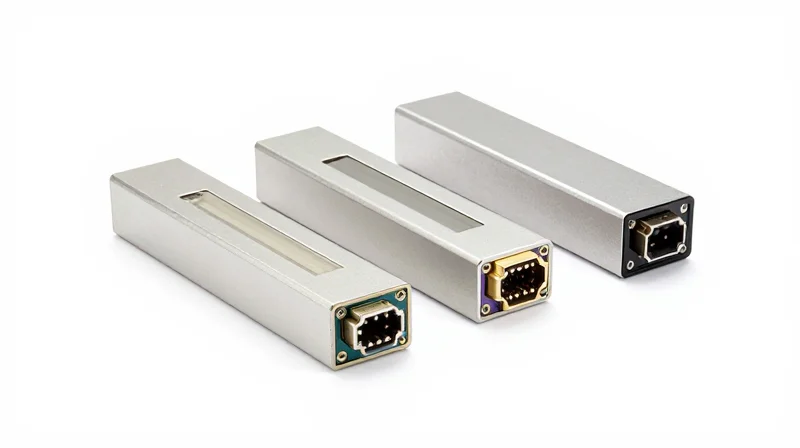
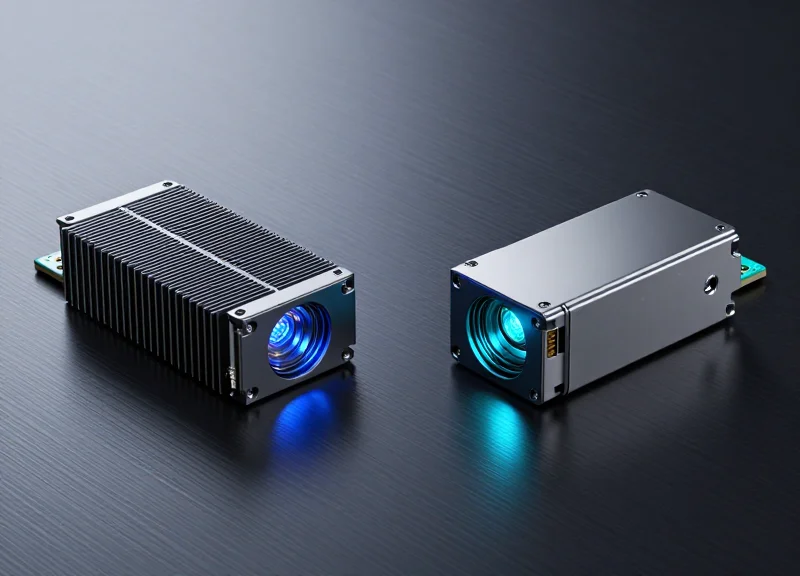
Interface diversity is the cornerstone of a modular core switch's flexibility, allowing network architects to scale bandwidth from 10Gbps to 800Gbps within the same chassis by simply swapping or upgrading line cards. As enterprise data centers and campus backbones face exponential traffic growth driven by AI and cloud services, the shift from Small Form-factor Pluggable (SFP) to Quad Small Form-factor Pluggable Double Density (QSFP-DD) reflects a fundamental evolution in signal modulation, port density, and power efficiency.
The Evolution of Form Factors: SFP to QSFP
The transition from SFP to QSFP architectures marked a significant jump in density. While SFP modules utilize a single lane for transmission, QSFP (Quad SFP) modules employ four parallel lanes. This allows for significantly higher throughput within a similar physical footprint. In enterprise core environments, the 100G QSFP28 has become the de facto standard, balancing cost with high-performance requirements.
| Form Factor | Max Speed | Modulation | Common Application |
|---|---|---|---|
| SFP28 | 25 Gbps | NRZ | Server-to-Leaf / High-speed Access |
| QSFP28 | 100 Gbps | NRZ | Standard Enterprise Core & Aggregation |
| QSFP56 | 200 Gbps | PAM4 | Mid-range Data Center Interconnects |
| QSFP-DD | 400 Gbps | PAM4 | Next-Gen Campus Core & Hyperscale |
| OSFP / QSFP-DD800 | 800 Gbps | PAM4 | AI Clusters & Ultra-High-Density Core |
Pushing the Boundaries: 400G and 800G Connectivity
To achieve speeds of 400G and 800G, the industry moved from NRZ (Non-Return to Zero) to PAM4 (Pulse Amplitude Modulation 4-level). PAM4 doubles the data throughput on the same physical lane by transmitting two bits per signal level. This technological leap is essential for modular core switches that must support massive aggregation points without increasing the physical size of the chassis or the number of line cards.
Backward Compatibility and Investment Protection
A critical advantage of modern modular core switches is the backward compatibility built into newer form factors. For instance, a QSFP-DD port is designed to accept older QSFP28 or QSFP56 modules. This ensures that organizations can incrementally upgrade their infrastructure—starting with high-density 400G-capable line cards while still utilizing their existing 100G fiber optics and cabling.
- Why is PAM4 necessary for 800G modules?
At higher frequencies, traditional NRZ signaling suffers from extreme signal degradation. PAM4 allows for higher bandwidth at lower symbol rates, making 112Gbps-per-lane signaling feasible for 800G optics. - What is the difference between QSFP-DD and OSFP?
QSFP-DD is smaller and backward compatible with standard QSFP ports, while OSFP (Octal Small Form-factor Pluggable) is slightly larger but offers superior thermal management for high-wattage 800G or 1.6T optics. - Can I mix different module speeds on the same line card?
Most modern enterprise core modules support 'breakout' modes, allowing a single 400G port to be split into 4x100G or 2x200G links depending on the specific optic and software configuration.
Scalability and Future-Proofing with Modular Design
The Economic and Operational Logic of Modular Scalability
Modular core switches represent a strategic shift from static hardware to elastic infrastructure, where the chassis serves as a permanent architectural shell that accommodates evolving line cards and supervisor engines. This decoupling of the physical enclosure from the underlying processing power allows enterprises to increase switching capacity—such as moving from 10G to 400G—without the disruptive and costly 'forklift upgrade' of replacing the entire network core. By treating the network core as a modular asset, IT departments can align hardware procurement cycles with actual traffic growth rather than over-provisioning for theoretical future needs.
The Pay-As-You-Grow Investment Model
The 'pay-as-you-grow' philosophy inherent in modular design significantly mitigates initial Capital Expenditure (CapEx). Instead of investing in a fully populated fixed switch that may go underutilized for years, enterprises can deploy a chassis with only the necessary number of line cards required for current operations. As user demand increases or new branches are integrated, additional modules can be hot-swapped into the chassis. This approach preserves cash flow and ensures that when new capacity is purchased, it leverages the most current price-per-port and energy-efficiency standards.
| Feature | Fixed-Configuration Switches | Modular Core Switches |
|---|---|---|
| Scalability | Limited to fixed port count | Elastic expansion via line cards |
| Lifecycle | 3-5 years (Total replacement) | 7-10+ years (Component upgrades) |
| Upgradability | Software and Firmware only | Hardware-level ASIC and Fabric upgrades |
| Serviceability | Entire unit replacement required | Individual module hot-swapping |
Future-Proofing: Upgrading Logic without Replacing Iron
True future-proofing in modular switches is achieved through the independent upgradeability of the Supervisor Engine and Switch Fabric Modules. In a traditional switch, the internal processing logic is permanently fixed to the board. In a modular system, a next-generation Supervisor can be installed to add support for new protocols, enhanced security features, or higher management telemetry without touching the existing copper or fiber terminations. This allows the physical infrastructure—the chassis, power supplies, and cooling—to remain in place for a decade or more, even as the network's logical capabilities leap forward to meet the demands of AI-driven traffic and 800G standards.
- How does modular design reduce Total Cost of Ownership (TCO)?
It reduces TCO by extending the hardware lifecycle and minimizing downtime during upgrades, as only specific components are replaced rather than the entire unit. - Can I mix different interface speeds in one chassis?
Yes, modular switches support mixed-media environments, allowing 10G, 40G, and 400G modules to operate within the same frame, facilitating a gradual migration. - Is the backplane capacity upgradeable?
In many modern chassis designs, the switch fabric modules are separate from the line cards, meaning the total backplane throughput can be increased by simply swapping the fabric modules while keeping the rest of the unit.
High Availability and Redundancy Mechanisms
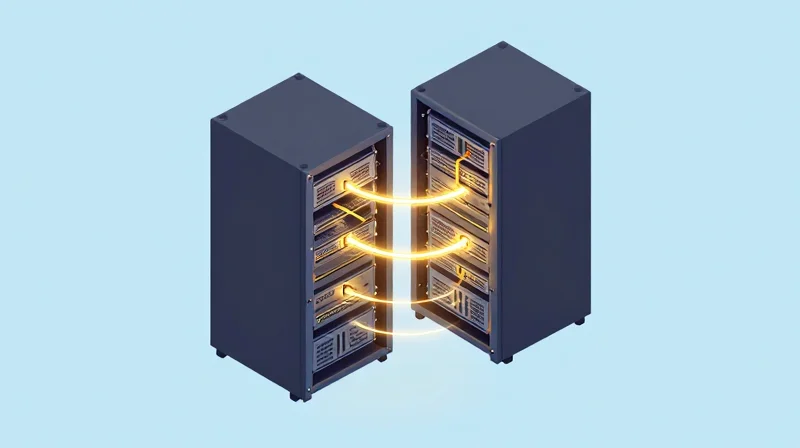
The Architecture of Network Resilience
High availability (HA) in core switch modules is a structural requirement for mission-critical networks where even seconds of downtime can result in significant financial loss. By integrating redundant hardware paths and automated recovery protocols, these systems ensure that a single component failure—be it a supervisor engine, power supply, or cooling fan—does not lead to network-wide service disruption. This resilience is achieved through a combination of physical hardware duplication and sophisticated software synchronization that maintains the state of the network during a transition.
Redundant Supervisor Engines and Stateful Switchover (SSO)
The supervisor engine acts as the central intelligence of the modular switch. In high-availability configurations, two supervisor modules are installed: one operates in active mode, while the other remains in a hot-standby state. Through Stateful Switchover (SSO), the standby supervisor continuously synchronizes its control plane state, including L2 and L3 protocol information, with the active unit. If the active supervisor fails, the standby takes over in milliseconds, maintaining established user sessions and routing tables without requiring a full system reboot.
| Component | Redundancy Type | Functional Benefit |
|---|---|---|
| Supervisor Engine | 1+1 (Active/Standby) | Eliminates control plane single point of failure via SSO. |
| Power Supply Units | N+1 or N+N | Ensures continuous power during PSU or circuit failure. |
| Switch Fabric | Distributed/N+1 | Maintains data throughput even if one fabric card fails. |
| Fan Trays | N+1 / Variable Speed | Prevents thermal shutdown during individual fan failure. |
Non-Stop Forwarding (NSF) and Hitless Failover
While SSO handles the control plane synchronization, Non-Stop Forwarding (NSF) ensures the data plane continues to pass traffic during a supervisor transition. By leveraging the distributed architecture of line cards, the switch continues forwarding packets based on existing Forwarding Information Base (FIB) entries until the new supervisor completes its routing protocol reconvergence. This 'hitless' process is essential for maintaining the integrity of time-sensitive applications like VoIP and high-frequency trading where packet drops are unacceptable.
Serviceability with Hot-Swappable Components
Modular core switches are designed for 'zero-touch' maintenance. Every critical module, including line cards, supervisor engines, and power supplies, is designated as a Field Replaceable Unit (FRU). These components are hot-swappable, meaning they can be removed and replaced while the chassis remains powered and operational. This capability allows network administrators to perform hardware upgrades or replace faulty modules without scheduling intrusive maintenance windows that impact business productivity.
High Availability FAQ
- What is the difference between N+1 and N+N redundancy?
N+1 adds a single extra component as a backup for any failure, while N+N provides a complete mirror of the required components, often allowing the switch to survive the failure of an entire power grid or PDU. - Does a supervisor failover disconnect active users?
No. When Stateful Switchover (SSO) and Non-Stop Forwarding (NSF) are correctly configured, active user sessions and data traffic continue to flow without interruption during the failover. - Are all modular switch components hot-swappable?
Most enterprise-grade modules (Line cards, PSUs, Fans, Supervisors) are hot-swappable, though it is always recommended to verify specific chassis documentation for thermal or power constraints during a swap.
Application Scenarios: Data Centers vs. Large Campus Cores
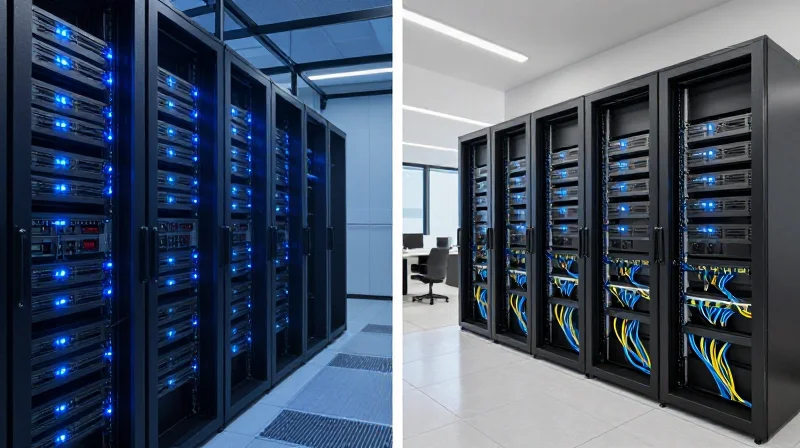
Strategic Implementation: Tailoring Modules to the Environment
Selecting enterprise core switch modules is not a one-size-fits-all process; it requires an architectural alignment with the specific traffic profile of the network. While data center environments demand massive throughput and ultra-low latency for server-to-server communication, campus cores must prioritize high-density connectivity for distributed user layers and the integration of robust security and management services.
Comparative Analysis: Data Center vs. Campus Core Requirements
| Feature/Metric | Data Center Core Modules | Large Campus Core Modules |
|---|---|---|
| Primary Traffic Pattern | East-West (Server-to-Server) | North-South (User-to-Internet/App) |
| Typical Interface Speeds | 100G, 400G, 800G | 10G, 40G, 100G |
| Latency Tolerance | Ultra-low (Microseconds) | Low to Moderate |
| Buffer Requirements | Deep Buffers (Micro-burst handling) | Adaptive/Standard Buffers |
| Key Protocols | VXLAN, EVPN, RoCE v2 | OSPF, BGP, PIM (Multicast), ACLs |
Data Center Core: Optimized for Hyper-Connectivity
In the modern data center, core modules are the backbone of a leaf-spine architecture. These modules are engineered for non-blocking performance and high-density 100G or 400G ports to facilitate the rapid movement of data across virtualized workloads. Advanced modules often include specialized ASICs for hardware-accelerated VXLAN termination and telemetry, allowing operators to monitor flow-level data in real-time to prevent congestion before it impacts application performance.
Campus Core: The Service-Rich Aggregator
The campus core acts as the central aggregation point for thousands of users and diverse IoT endpoints. Unlike the data center, the priority here is often service diversity. Campus core modules must support extensive Quality of Service (QoS) profiles to prioritize voice and video traffic over bulk data. Furthermore, these modules frequently incorporate hardware-based MACsec encryption to secure data in transit between buildings and support massive routing tables to accommodate large, segment-heavy enterprise networks.
Deployment Considerations and FAQs
- Can data center modules be used in a campus core?
While technically possible, data center modules often lack the specific features required for campus environments, such as high-density PoE management (at the distribution level) or advanced multicast routing for campus-wide AV services, making them an expensive and potentially inefficient choice. - How does port density impact module selection in large campuses?
In large campuses, core modules with high-density 10G and 25G interfaces are often preferred to aggregate numerous fiber runs from distribution closets, whereas data centers prioritize fewer but higher-speed (100G+) uplinks. - Why is buffer size more critical in the data center?
Data centers face 'Incast' problems where many servers send data to one recipient simultaneously. Deep-buffer modules are essential to prevent packet loss during these brief but intense bursts, which are less common in standard user-driven campus traffic.
Integration with Software-Defined Networking (SDN)

Modern enterprise core switch modules serve as the programmable bedrock for Software-Defined Networking (SDN), transitioning from static, CLI-managed devices to dynamic, policy-driven engines. By decoupling the control plane from the data plane and providing deep hardware support for network virtualization protocols like VXLAN, these modules enable IT organizations to automate complex configurations, enforce consistent security policies, and achieve the agility required for hybrid cloud operations.
Programmability and Open APIs
At the heart of SDN integration is the ability to communicate with the hardware programmatically. Advanced core modules are no longer black boxes; they export rich datasets and accept configuration via industry-standard protocols. Support for NETCONF and YANG models allows for structured data exchange, while RESTful APIs enable DevOps teams to integrate network provisioning directly into their CI/CD pipelines. Many modern modules also support gRPC (Google Remote Procedure Call) for high-frequency telemetry, providing real-time visibility into traffic patterns and hardware health that was previously impossible with legacy polling methods like SNMP.
Hardware-Accelerated VXLAN and Overlays
While SDN provides the logic, core modules provide the physical performance needed to handle network overlays. Virtual Extensible LAN (VXLAN) is the standard for creating large-scale, Layer 2 virtual networks over Layer 3 infrastructure. High-end core modules feature specialized ASICs that perform VXLAN encapsulation and decapsulation at wire speed. This hardware-based VTEP (Virtual Tunnel End Point) functionality ensures that micro-segmentation and workload mobility do not introduce latency bottlenecks, allowing virtual machines and containers to migrate across the data center without reconfiguring the underlying physical network.
| Feature | Legacy Core Modules | SDN-Ready Core Modules |
|---|---|---|
| Management Interface | Manual CLI / SNMP | RESTful APIs / NETCONF / YANG |
| Network Virtualization | VLANs (Limited to 4096) | VXLAN / NVGRE (16M+ Segments) |
| Provisioning Speed | Hours/Days (Manual) | Seconds/Minutes (Automated) |
| Telemetry | Reactive (SNMP Traps) | Proactive (Streaming Telemetry / gRPC) |
| Policy Enforcement | Port-based ACLs | Identity-based Micro-segmentation |
Automated Orchestration in Hybrid Cloud
In a hybrid cloud ecosystem, the enterprise core must bridge the gap between on-premises resources and public cloud providers. SDN-integrated modules act as the gateway for automated orchestration tools like Ansible, Terraform, and Cisco ACI. When a new application is deployed in the cloud, these tools can automatically trigger the core modules to update routing tables, adjust quality of service (QoS) parameters, and establish secure encrypted tunnels. This synchronization ensures that the internal network remains as elastic as the cloud services it connects to, reducing the risk of manual configuration errors that often lead to downtime or security vulnerabilities.
Common Questions on SDN and Core Modules
- Do I need a specific SDN controller to use these modules?
While many core modules are designed to work with proprietary controllers (e.g., Cisco DNA Center or Arista CloudVision), most also support open standards, allowing them to be managed by third-party or custom-built SDN orchestrators. - Can legacy modules be upgraded to support SDN?
In some cases, software updates can add basic API functionality. However, hardware-heavy features like VXLAN VTEP performance usually require specific ASICs found only in newer-generation modules. - How does SDN integration improve security?
SDN integration allows for 'Intent-Based Networking,' where security policies are defined at a high level (e.g., 'HR cannot access Engineering servers') and the SDN controller automatically programs the core modules with the necessary micro-segmentation rules.
Selecting the right enterprise core switch modules is the first step toward building a resilient, high-speed network. By prioritizing modularity, scalability, and high-performance specs, organizations can ensure their infrastructure is ready for the future. For a professional consultation or to explore our latest modular switching solutions, contact our engineering team today.