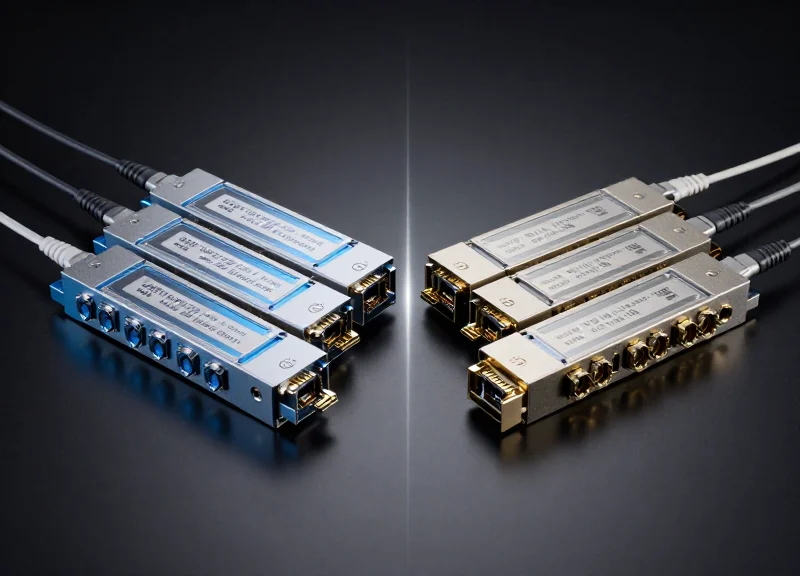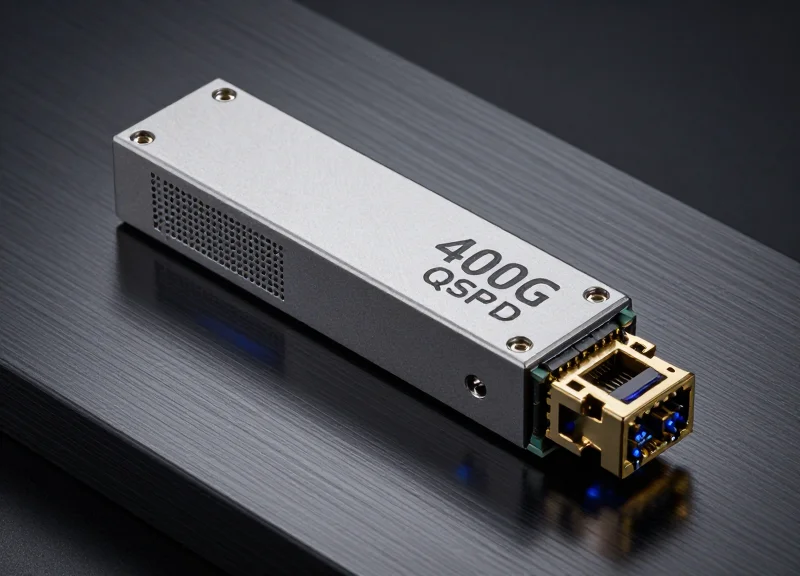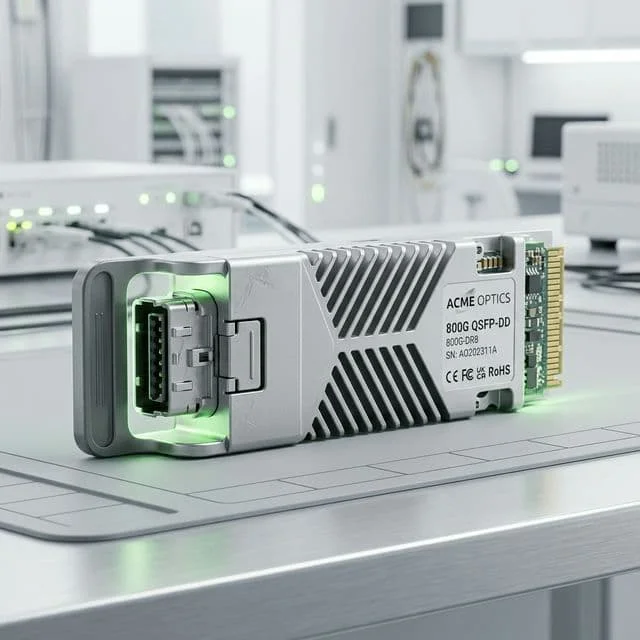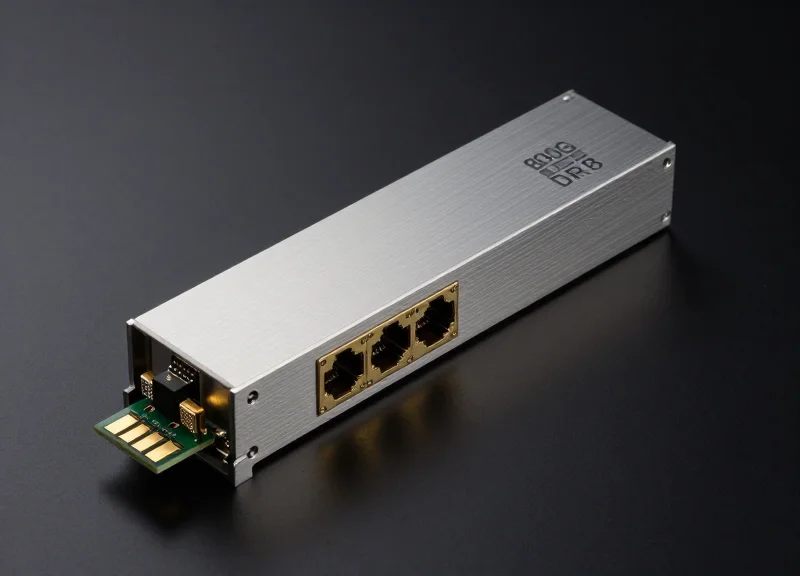
As the demand for artificial intelligence and massive data processing scales exponentially, the network backbone has become the critical frontier for performance. Ubytelink's 800G OSFP DR8 modules are designed to meet this challenge head-on, providing the ultra-high bandwidth and rock-solid stability required for the next generation of global mission-critical infrastructure.
Understanding the 800G Transition: Why OSFP DR8 Matters

The transition to 800G represents a critical milestone in data center evolution, driven primarily by the massive bandwidth requirements of Artificial Intelligence (AI) and Machine Learning (ML) workloads. The OSFP (Octal Small Form-factor Pluggable) DR8 transceiver has emerged as the preferred solution for this leap because it offers the thermal management necessary for 15-18W modules while providing eight parallel 100G lanes. This configuration allows for seamless integration with high-radix 51.2T switches, enabling massive throughput with reduced complexity compared to previous generations.
The Drivers Behind the 800G Migration
As hyperscale data centers move from 400G to 800G, the primary goal is to increase port density and power efficiency per bit. Modern 51.2T switching silicon, such as Broadcom’s Tomahawk 5, requires interconnects that can match its density. The OSFP DR8 module provides a direct 800G interface that can be utilized as a single fat pipe or broken out into two 400G or eight 100G connections, offering the flexibility required for tiered network architectures.
| Feature | 400G QSFP-DD DR4 | 800G OSFP DR8 |
|---|---|---|
| Aggregate Data Rate | 400 Gbps | 800 Gbps |
| Lane Configuration | 4 x 100G (PAM4) | 8 x 100G (PAM4) |
| Standard Reach | 500m (SMF) | 500m (SMF) |
| Thermal Capacity | Moderate (External Heatsink) | High (Integrated Heatsink) |
| Switch Radix | Lower Density | High-Radix (51.2T/102.4T) |
Why DR8 is Essential for High-Radix Connectivity
The 'DR8' designation signifies Data-center Reach using 8 parallel fibers. By utilizing 8 channels of 100G PAM4 modulation over single-mode fiber (SMF), the DR8 specification ensures low latency and high reliability. For network architects, the OSFP form factor is particularly advantageous because its larger surface area and integrated heat fins allow it to dissipate the heat generated by the high-speed DSPs (Digital Signal Processors) more effectively than the tighter QSFP-DD footprint.
- What makes the OSFP DR8 unique compared to FR8?
The DR8 uses parallel fiber (MPO-16) for reaches up to 500m, whereas FR8 uses Wavelength Division Multiplexing (WDM) over a single pair of fibers for 2km reaches. DR8 is generally more cost-effective for internal data center fabric. - Can 800G OSFP DR8 modules be used for breakout?
Yes, they are specifically designed for breakout applications, allowing one 800G port on a spine switch to connect to multiple 100G or 400G leaf nodes, maximizing port utilization. - Is OSFP backward compatible with QSFP?
While they are physically different sizes, many OSFP ports are designed to be mechanically compatible with QSFP modules via adapters, though native OSFP is preferred for the 800G thermal envelope.
In summary, the transition to 800G via OSFP DR8 is not merely a speed upgrade; it is a fundamental shift in how global networks handle the scale of modern data. Ubytelink’s solutions leverage this form factor to provide the thermal headroom and signal integrity required for the most demanding high-radix switching environments.
Technical Architecture of Ubytelink 800G OSFP DR8
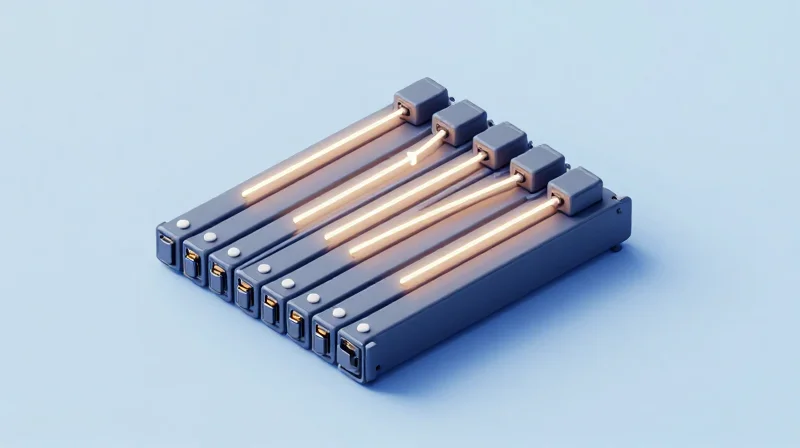
The technical architecture of the Ubytelink 800G OSFP DR8 is built upon an 8x100G framework, utilizing sophisticated Pulse Amplitude Modulation 4-level (PAM4) signaling and a Parallel Single-Mode 8-lane (PSM8) optical design to achieve a 500-meter reach with 800Gbps aggregate bandwidth.
8x100G PAM4 Modulation and the DSP Engine
At the heart of the Ubytelink 800G DR8 module lies a high-performance 7nm or 5nm Digital Signal Processor (DSP). This engine is responsible for converting 8 lanes of 100G electrical signals into 53.125 GBaud PAM4 optical signals. By encoding two bits per symbol, PAM4 allows the module to double the data rate compared to traditional NRZ without requiring a proportional increase in bandwidth, effectively managing signal integrity over the high-speed lanes.
Parallel Single-Mode (PSM8) Optical Path
Unlike WDM-based solutions that multiplex different wavelengths onto a single fiber, the DR8 architecture utilizes a Parallel Single-Mode (PSM8) approach. This design employs 16 distinct fibers—8 for transmission and 8 for reception—typically accessed via an MPO-16 or Dual MPO-12 connector. This parallel path simplifies the optical sub-assembly by removing the need for complex multiplexing filters, which reduces internal insertion loss and enhances thermal efficiency.
Core Component Specifications
| Component | Technical Role | Performance Impact |
|---|---|---|
| DSP/Gearbox | Signal conditioning and FEC | Reduces Bit Error Rate (BER) and enables 800G throughput |
| EML/Silicon Photonics | Light modulation and emission | Ensures stable optical power and high extinction ratios |
| PIN Photodiode | Optical-to-electrical conversion | High sensitivity for reliable signal reception over 500m |
| OSFP Fins | Integrated Heat Sink | Optimizes airflow for thermal management in high-density switches |
Architectural FAQs
- Why is the 8-lane design preferred over 4-lane for 800G?
The 8x100G architecture leverages mature 100G-per-lane ecosystems, which provides higher manufacturing yields and better cost-per-bit compared to emerging 200G-per-lane technologies. - How does the DR8 form factor handle power consumption?
The Ubytelink 800G OSFP DR8 is designed for a power envelope of approximately 14-16W, utilizing advanced DSPs and low-power SiPh components to maintain efficiency in high-radix environments. - What fiber cabling is required for this architecture?
The module requires G.652 Single-Mode Fiber (SMF) with MPO-16 or MPO-12 connectors, supporting point-to-point 800G links or 1-to-8 breakout applications to 100G DR1.
The Silicon Photonics Advantage: Efficiency and Scalability
The Silicon Photonics Advantage: Efficiency and Scalability
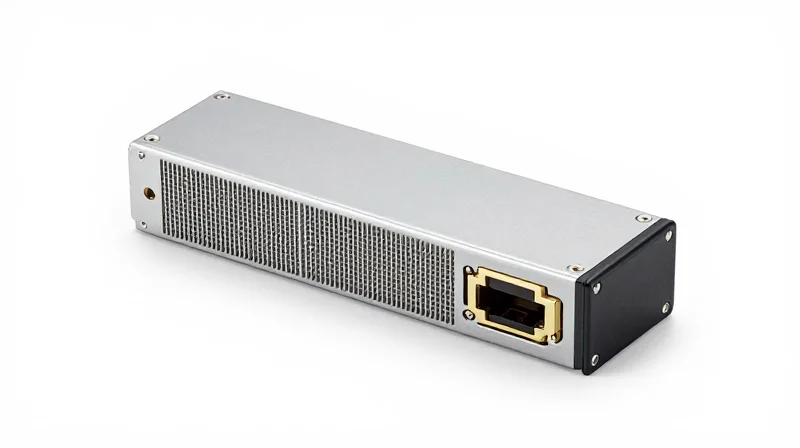
Ubytelink 800G OSFP DR8 solutions leverage Silicon Photonics (SiPh) to overcome the physical and economic limitations of traditional discrete optical designs. By migrating from Electro-absorption Modulated Lasers (EML) to integrated silicon-based circuits, these modules achieve a significant reduction in component count and thermal output, ensuring stable performance in dense data center environments. This transition is not merely a technical upgrade; it is a fundamental shift that enables the sustainable scaling of AI-driven networks.
Streamlined Manufacturing and Higher Yields
Traditional EML-based designs require complex manual alignment of multiple discrete components, which often leads to lower manufacturing yields and higher failure rates at 800G speeds. In contrast, Ubytelink’s SiPh-based DR8 modules utilize automated CMOS-compatible manufacturing processes. By integrating modulators, waveguides, and photodetectors onto a single silicon substrate, the 'chip-scale' approach minimizes assembly errors and enhances long-term reliability for global network operators.
| Feature | Traditional EML Design | Ubytelink SiPh Solution |
|---|---|---|
| Component Count | High (Multiple Discrete Parts) | Low (Monolithic Integration) |
| Power Consumption | Higher (Typical 16W-18W) | Lower (Optimized <15W) |
| Manufacturing Yield | Variable and Sensitive | Consistent/CMOS-based |
| Thermal Dissipation | Concentrated Heat Sources | Distributed/Uniform Profile |
Optimizing Power for Global Sustainability
Power efficiency is a critical metric for 800G networks where thousands of transceivers may operate in a single cluster. The SiPh architecture in Ubytelink’s DR8 solutions reduces the energy required for signal modulation and transmission. This reduction not only lowers operational expenses (OPEX) but also simplifies the cooling requirements for high-radix switches, allowing for greater port density without thermal throttling or excessive fan power consumption.
- Does Silicon Photonics impact the reach of the 800G DR8 module?
No, the SiPh architecture maintains the standard 500m reach over parallel single-mode fiber (PSM8), matching the performance of EML-based modules while offering superior efficiency. - How does SiPh improve the reliability of Ubytelink products?
By reducing the number of points of failure—specifically the physical interfaces between discrete optical components—SiPh significantly improves the Mean Time Between Failures (MTBF) compared to legacy designs. - Is Silicon Photonics compatible with existing 800G standards?
Yes, Ubytelink SiPh solutions are fully compliant with IEEE 802.3ck and OSFP MSA standards, ensuring seamless interoperability with third-party switches and NICs.
Thermal Management: Solving the 800G Heat Challenge
The Thermal Frontier: Why 800G Requires Advanced Cooling
Transitioning to 800G speeds introduces significant thermal density challenges, as power consumption per module can reach 16W to 18W in peak operation. Ubytelink addresses this through the OSFP form factor's superior surface area and integrated fin designs, ensuring that critical components like Silicon Photonics engines and high-speed DSPs operate within strict temperature margins even in 51.2T switching environments.
Engineered Heat Dissipation Features of the OSFP Package
The OSFP (Octal Small Form-factor Pluggable) design is inherently more thermally efficient than alternative form factors like QSFP-DD. Ubytelink enhances this structural advantage by employing high-conductivity Thermal Interface Materials (TIM) and an optimized internal component layout that eliminates heat traps. This design allows for a direct thermal path from the optical engine to the external environment.
| Thermal Feature | Ubytelink OSFP DR8 Advantage | Impact on Performance |
|---|---|---|
| Integrated Heat Fins | High-density fin arrays built into the module shell | Increases surface area for faster convection |
| TIM Selection | Ultra-low thermal resistance interface materials | Reduces junction temperature of the DSP and SiPh |
| Airflow Optimization | Aerodynamic housing designed for 2m/s+ airflow | Maintains stability in 45°C ambient air-cooled racks |
| Liquid Cooling Support | Dielectric-compatible housing and sealed optics | Enables deployment in immersion cooling tanks |
Adapting to Air and Liquid Cooling Paradigms
As global data centers shift toward hybrid and liquid cooling to manage rising rack densities, Ubytelink's 800G OSFP DR8 solutions provide the necessary versatility. For air-cooled environments, the module's fin profile maximizes airflow velocity. For advanced liquid cooling, including cold-plate and immersion techniques, the materials are selected for chemical compatibility and low thermal impedance, facilitating rapid heat transfer into the cooling medium without degradation.
- How does Ubytelink prevent thermal throttling at peak loads?
Each module features real-time digital diagnostic monitoring (DDM) via the I2C interface, allowing the host switch to monitor internal sensors and adjust fan speeds or workloads before critical thresholds are reached. - Is the OSFP DR8 compatible with immersion cooling liquids?
Yes, Ubytelink offers specific variants validated for immersion cooling environments, utilizing specialized sealants to prevent fluid ingress into the optical path. - What is the typical case temperature range for these modules?
Ubytelink OSFP DR8 solutions are rated for a standard commercial operating temperature range of 0°C to 70°C, with custom industrial-grade options available for harsher environments.
Rigorous Reliability Testing and EEAT Compliance
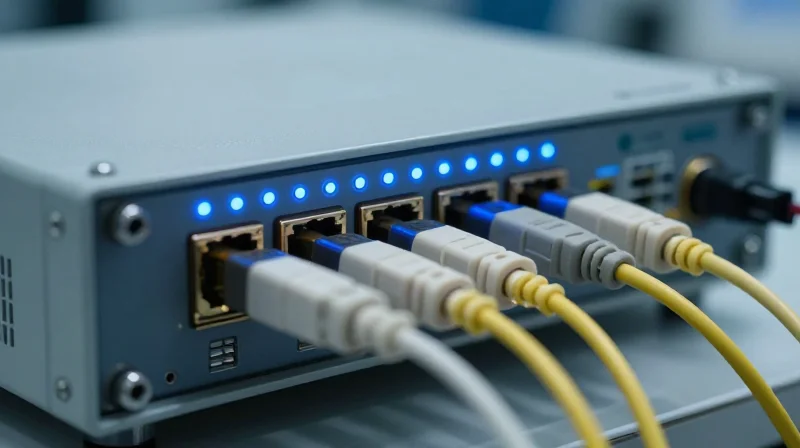
The Architecture of Trust: Ubytelink’s Proprietary Testing Ecosystem
In the realm of 800G networking, reliability is the primary differentiator between experimental deployments and enterprise-grade infrastructure. Ubytelink’s commitment to quality is anchored in a proprietary testing lab where every OSFP DR8 module is subjected to validation protocols that exceed standard IEEE 802.3ck requirements. By integrating advanced Signal Integrity (SI) analysis with exhaustive Bit Error Rate (BER) verification, we ensure that our silicon photonics-based solutions maintain absolute stability under the extreme electrical and thermal conditions found in modern AI and HPC clusters.
Signal Integrity and Precision PAM4 Analysis
Since 800G DR8 utilizes 100G-per-lane PAM4 (Pulse Amplitude Modulation 4-level) technology, the margin for error in signal quality is significantly narrower than in previous generations. Our lab utilizes high-bandwidth sampling oscilloscopes and error detectors to perform real-time eye diagram analysis. We specifically focus on TDECQ (Transmitter and Dispersion Eye Closure Quaternary) measurements to verify that the optical signal is clean enough for the receiving Forward Error Correction (FEC) engine to operate without performance penalties.
| Testing Parameter | Industry Standard | Ubytelink Quality Threshold |
|---|---|---|
| Transmitter TDECQ | 3.4 dB | < 2.8 dB (Typical) |
| Pre-FEC BER | 2.4E-4 | < 1.0E-5 |
| Post-FEC BER | 1E-12 | < 1E-15 (Error-Free Performance) |
| Operating Temperature | 0°C to 70°C | -5°C to 75°C (Extended Stress Margin) |
Environmental Stress and Long-Term Reliability
To guarantee the EEAT (Experience, Expertise, Authoritativeness, and Trustworthiness) of our products, Ubytelink employs Accelerated Life Testing (ALT). This involves placing modules in specialized chambers to simulate years of operation through rapid temperature cycling and high-humidity bias testing. These tests ensure the structural integrity of the Silicon Photonics assembly and the durability of the internal optical coupling, protecting your investment against the 'infant mortality' of components common in lower-tier 800G solutions.
- How does Ubytelink ensure multi-vendor interoperability?
Every OSFP DR8 module is tested across a wide matrix of switches and NICs from major vendors to ensure full compliance with MSA standards and seamless integration into existing fabric environments. - What is the role of 100% factory burn-in?
We conduct a mandatory 24-hour burn-in at maximum operating temperature for every unit. This process identifies potential hardware defects before the product ever reaches a customer’s data center. - How is Signal Integrity maintained over long fiber runs?
Through rigorous BER verification at maximum link lengths (500m for DR8), we verify that our transceivers maintain a stable signal-to-noise ratio even when faced with connector losses and fiber chromatic dispersion.
Seamless Interoperability in Multi-Vendor Ecosystems

Achieving high-speed data transmission at 800G requires more than just raw performance; it necessitates plug-and-play reliability across diverse hardware ecosystems. Ubytelink 800G OSFP DR8 modules are engineered to eliminate the friction of multi-vendor environments by adhering to strict industry protocols and undergoing exhaustive cross-platform validation, ensuring they function identically to original equipment manufacturer optics without the associated premium costs or vendor lock-in.
Standardized Engineering: The Foundation of Interoperability
At the core of Ubytelink's compatibility strategy is a commitment to the Multi-Source Agreement (MSA) specifications, including the OSFP MSA and IEEE 802.3ck standards. By strictly following these electrical and mechanical blueprints, Ubytelink ensures that the 800G DR8 transceiver is physically and electronically compatible with the host ports of top-tier networking devices, regardless of the vendor logo on the chassis. This adherence guarantees that the host-to-module communication protocol—specifically the CMIS (Common Management Interface Specification)—operates flawlessly for provisioning and monitoring.
Comprehensive Vendor Ecosystem Validation
| Vendor Platform | Compatibility Level | Key Features Supported |
|---|---|---|
| NVIDIA / Mellanox | Full Integration | Link Training, Auto-negotiation, InfiniBand HDR/NDR support |
| Arista Networks | Seamless | EOS Recognition, Real-time DOM Monitoring, ZTP Support |
| Cisco Systems | Native Recognition | IOS-XR/NX-OS Support, IDPROM verification, Secure Boot compliance |
| Juniper Networks | Full Compatibility | Junos OS Support, Performance Telemetry, High-Density Configuration |
EEPROM Customization and Software Integration
To prevent deployment hurdles such as 'unrecognized transceiver' alarms, Ubytelink employs a precision-coded EEPROM system. This allows the 800G DR8 module to provide the exact signature required by specific network operating systems (NOS). This sophisticated coding ensures full access to advanced features like Digital Diagnostic Monitoring (DDM), allowing network administrators to monitor temperature, voltage, and laser bias current in real-time within their existing management dashboards.
Frequently Asked Interoperability Questions
- Will Ubytelink 800G DR8 modules void my switch hardware warranty?
No. Using third-party transceivers does not void hardware warranties. Ubytelink modules are designed to meet or exceed OEM specifications, ensuring safe operation within any compliant host system. - How does Ubytelink ensure signal integrity across different port types?
Each module undergoes rigorous TDECQ (Transmitter and Dispersion Eye Closure Quaternary) testing to ensure the optical signal meets the sensitivity requirements of various receiver architectures from different vendors. - Do these modules support breakout configurations in multi-vendor setups?
Yes. The 800G DR8 is designed for versatility, supporting 2x400G or 8x100G breakouts, which allows for seamless interfacing between 800G core switches and 100G/400G edge devices from different manufacturers.
Optimizing TCO for Hyperscale AI Clusters
In the context of hyperscale AI networking, the true value of an optical transceiver is measured by its long-term reliability and operational stability rather than just its acquisition price. Ubytelink 800G OSFP DR8 solutions are engineered to provide a lower Total Cost of Ownership (TCO) by reducing the frequency of hardware replacements and mitigating the catastrophic costs associated with network downtime during intensive distributed training sessions. For large-scale operators, investing in premium optics is a strategic decision that safeguards expensive compute resources and ensures maximum network uptime.
Strategic TCO Advantages of Ubytelink 800G DR8
| TCO Component | Generic 800G Modules | Ubytelink Premium 800G DR8 |
|---|---|---|
| Annualized Failure Rate (AFR) | Typically >1.5% | Less than 0.1% through rigorous testing |
| Maintenance Overhead | Frequent site visits for replacement | Low intervention with stable signal integrity |
| Power Consumption | Unoptimized (higher heat density) | Highly efficient (14W-16W typical range) |
| System Downtime Risk | Higher due to link flapping | Minimal due to superior BER performance |
The Financial Impact of Network Reliability in AI
AI training workloads involve massive data synchronization across thousands of GPUs. A single failing 800G link can trigger a checkpoint restart or cause substantial idle time for thousands of compute nodes, costing hyperscalers thousands of dollars per hour in lost productivity. By utilizing high-grade silicon photonics and advanced manufacturing processes, Ubytelink ensures that the interconnect remains a robust backbone, preventing the tail latency issues that often plague lower-quality transceivers. This reliability translates directly into faster training cycles and significantly higher GPU utilization rates.
Operational Efficiency and Scaling
Scaling to tens of thousands of ports requires a simplified maintenance strategy. Ubytelink’s adherence to strict EEAT compliance and multi-vendor interoperability means that operators can maintain a unified inventory, reducing the complexity of spare parts management and streamlining technical support workflows. Furthermore, the optimized thermal design reduces the strain on data center cooling infrastructure, contributing to lower Power Usage Effectiveness (PUE) scores and reduced long-term utility costs.
- How does Ubytelink reduce 'No Trouble Found' (NTF) events?
By providing superior signal integrity and consistent firmware, Ubytelink modules reduce intermittent errors that lead technicians to troubleshoot non-defective hardware. - Why is power efficiency important for TCO?
Lower power consumption per module reduces heat dissipation requirements, allowing for higher density rack configurations and lower electricity bills over a five-year lifecycle. - How does interoperability impact logistics?
Modules that work seamlessly across Arista, Cisco, and NVIDIA switches allow hyperscalers to avoid vendor lock-in and negotiate better pricing across their entire network stack.
Future-Proofing Your Network: Beyond 800G
The Architectural Bridge to 1.6T and Beyond
Future-proofing a network with Ubytelink 800G OSFP DR8 solutions involves more than just immediate capacity; it establishes a strategic architectural bridge to 1.6T (1600G) and next-generation silicon photonics. By adopting the OSFP form factor today, data center operators are investing in a thermal and electrical ecosystem designed to accommodate the 200G-per-lane signaling required for the next leap in bandwidth, ensuring that current fiber deployments and rack configurations remain relevant as the industry moves toward Terabit-scale networking.
Scaling Performance: From 800G to 1.6T
The evolution from 800G to 1.6T is largely driven by the advancement of SerDes (Serializer/Deserializer) technology. While 800G DR8 utilizes 100G PAM4 lanes, the shift to 1.6T will leverage 200G PAM4 lanes. Ubytelink's commitment to signal integrity and high-quality optical components ensures that the physical infrastructure—specifically the MPO-16 fiber cabling used for DR8—remains compatible with future 1.6T DR8 modules, protecting the massive investment in cabling plants.
| Metric | Current 800G OSFP DR8 | Future 1.6T OSFP DR8/XD |
|---|---|---|
| Lane Rate | 100G PAM4 | 200G PAM4 |
| Total Lanes | 8 Lanes | 8 Lanes (or 16 for XD) |
| Standard Fiber Type | Singlemode (OS2) | Singlemode (OS2) |
| Max Power Envelope | Approx. 15-18W | Approx. 25-30W |
Sustainability and Power Efficiency in Next-Gen Optics
As networks scale, the 'Power per Bit' metric becomes the most critical KPI for hyperscale operators. Ubytelink is actively researching Low Power Consumption (LPC) designs and Co-Packaged Optics (CPO) to further reduce the thermal footprint of high-speed interconnects. By utilizing the superior heat dissipation capabilities of the OSFP shell, Ubytelink ensures that even as power density increases at 1.6T, the modules can maintain stable performance without requiring exotic cooling solutions.
Future-Proofing FAQ
- Will 1.6T modules fit into current 800G OSFP ports?
Yes, the OSFP-XD (Extra Density) and standard OSFP form factors are designed with backward compatibility in mind, though the switch silicon must support the 200G per lane electrical signaling to reach 1.6T speeds. - Can I reuse my current MPO-16 cabling for 1.6T?
Absolutely. The MPO-16 singlemode fiber infrastructure used for Ubytelink 800G DR8 is perfectly suited for future 1.6T DR8 applications, making it a highly sustainable long-term investment. - When should I start planning for the 1.6T transition?
Planning should begin during the current 800G deployment phase by ensuring your physical layer (fiber and racks) supports the thermal and density requirements of the OSFP standard.
In the fast-evolving landscape of high-speed networking, the choice of optical transceiver determines the resilience of your entire infrastructure. Ubytelink 800G OSFP DR8 modules combine cutting-edge Silicon Photonics with industry-leading quality control to deliver unmatched performance. Upgrade your global network with confidence—contact Ubytelink's engineering team today for a technical consultation and demo.