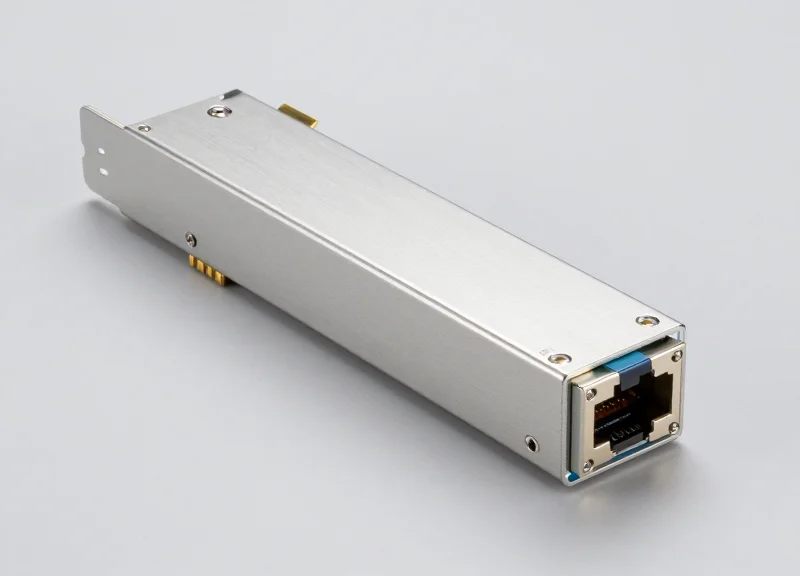
In an era of exponential data growth, the backbone of global connectivity relies on hardware that doesn't just meet standards but exceeds them. Ubytelink’s 100G QSFP28 SR4 solutions are engineered for organizations where downtime is not an option, providing a robust foundation for next-generation networking.
Understanding 100G QSFP28 SR4 Technology
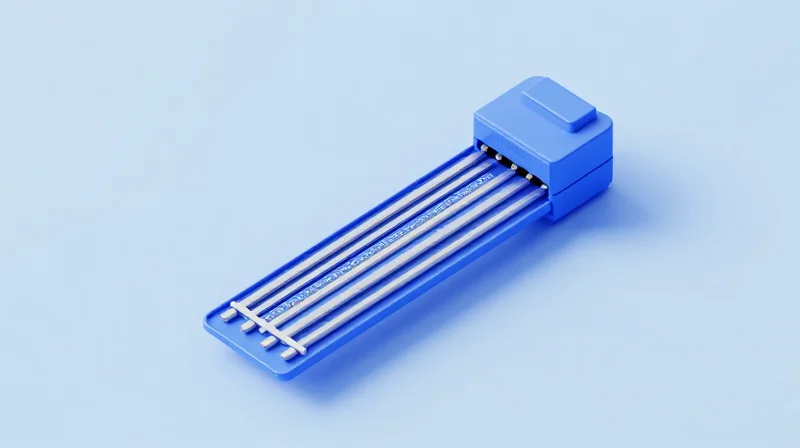
The Fundamentals of 100G QSFP28 SR4 Technology
100G QSFP28 SR4 (Short Reach 4-channel) is a high-density, hot-pluggable optical transceiver designed for 100 Gigabit Ethernet links over multi-mode fiber (MMF). It represents a pivotal shift in data center networking by utilizing a parallel optical architecture rather than a single serial stream. By aggregating four independent transmit and receive lanes, each operating at 25.78 Gbps, the SR4 module achieves a total bandwidth of 100 Gbps. This technology is primarily defined by the IEEE 802.3bm standard, specifically optimized for high-performance computing clusters and enterprise core switching where low latency and power efficiency are critical.
The Four-Lane Parallel Architecture
At the heart of the SR4 standard is the use of four parallel lanes of 850nm Vertical Cavity Surface Emitting Lasers (VCSELs). Unlike longer-reach standards that might use Wavelength Division Multiplexing (WDM) to combine signals onto a single fiber, SR4 utilizes a ribbon of fibers. It employs an MPO/MTP-12 connector, where four fibers are dedicated to transmitting data (Tx) and four fibers are dedicated to receiving data (Rx), leaving the central four fibers unused. This spatial multiplexing approach simplifies the internal optics of the transceiver, significantly reducing production costs and power consumption compared to single-mode alternatives.
| Parameter | Specification |
|---|---|
| Data Rate | 103.1 Gbps (Aggregate) |
| Wavelength | 850 nm |
| Fiber Type | Multi-mode Fiber (MMF) |
| Max Reach (OM3) | 70 Meters |
| Max Reach (OM4) | 100 Meters |
| Connector Type | MPO-12 (Male) |
Strategic Use Cases in Modern Networks
The QSFP28 SR4 module is the workhorse of the modern data center's internal fabric. Its primary application lies in Top-of-Rack (ToR) to Leaf switch connectivity and Leaf-to-Spine links within a single room or row. Additionally, because the SR4 module uses four discrete 25G lanes, it is highly versatile; it can be used in a 'breakout' configuration where a single 100G port is split into four 25G Ethernet ports using an MPO-to-4xLC breakout cable. This flexibility allows network engineers to scale their infrastructure incrementally while maintaining high port density.
- What fiber type is required for 100G SR4?
The standard requires Multi-mode fiber (OM3 or OM4) with MPO-12 connectors to support the parallel transmission of the four 25Gbps lanes. - Can SR4 modules be used for distances over 100 meters?
Standard SR4 transceivers are rated for a maximum of 100 meters over OM4. For longer reaches, SR4.2 (BiDi) or single-mode solutions like PSM4 or CWDM4 should be considered. - Is 100G QSFP28 SR4 compatible with QSFP+ ports?
While the physical form factors are identical, a QSFP28 module will only function in a port designed for 100G speeds. However, most QSFP28 ports are backward compatible with 40G QSFP+ modules.
The Ubytelink Engineering Advantage
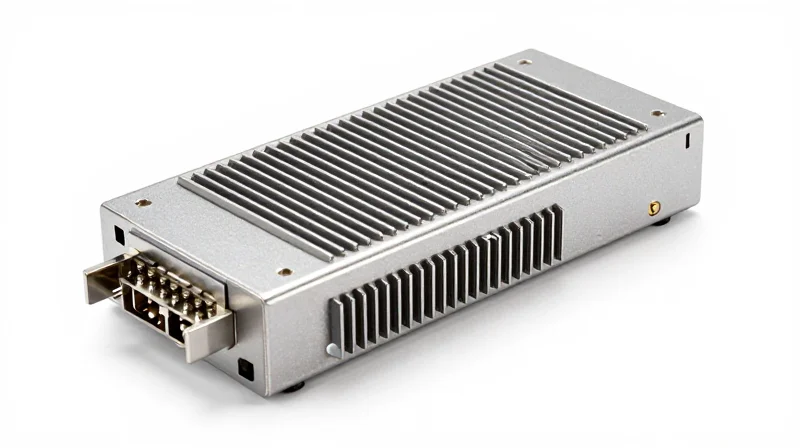
The engineering advantage of Ubytelink lies in a holistic approach to optical transceiver design, where every 100G QSFP28 SR4 module undergoes a series of stringent validation cycles to surpass standard industry benchmarks. By integrating premium chipsets and precision-aligned lasers, Ubytelink bridges the gap between cost-efficiency and enterprise-grade durability, providing a stable foundation for high-bandwidth global networks.
Strategic R&D and Signal Integrity
Every Ubytelink module begins its lifecycle in a state-of-the-art laboratory where signal integrity and thermal management are the primary design drivers. Unlike commodity vendors that prioritize volume over verification, Ubytelink utilizes real-world traffic simulations to test for Bit Error Rate (BER) across varying temperature ranges. This ensures the SR4 modules perform consistently under the high-density workloads typical of modern cloud architectures.
Tier-1 Component Selection vs. Generic Alternatives
| Feature | Generic SR4 Modules | Ubytelink Engineering |
|---|---|---|
| Laser Source | Standard VCSEL | Tier-1 High-Performance VCSEL |
| Chipset / DSP | Low-cost clones | Industry-leading Broadcom/MaxLinear |
| PCB Design | Minimum layers / Standard FR4 | High-density interconnect (HDI) PCB |
| MTBF | < 1,000,000 Hours | > 3,000,000 Hours |
Precision Manufacturing and Automation
Manufacturing excellence is achieved through fully automated assembly lines that significantly reduce the risk of human error during the optical alignment phase. Each 100G QSFP28 SR4 optical engine is calibrated with sub-micron precision to ensure optimal coupling efficiency. This precision translates directly into lower power consumption and higher reach stability over OM3 and OM4 multi-mode fiber, even at the edge of the 100-meter specification.
- How does Ubytelink ensure multi-vendor compatibility?
We maintain an extensive compatibility lab featuring over 200 OEM switches and routers. Each module's EEPROM is custom-coded and verified against the target hardware to ensure seamless 'plug-and-play' functionality. - What is the impact of using Tier-1 chipsets in SR4 modules?
Tier-1 chipsets provide superior Clock and Data Recovery (CDR) capabilities. This results in lower jitter and enhanced signal clarity across the four 25Gbps lanes, which is critical for maintaining link stability in high-traffic environments. - How is long-term reliability guaranteed?
Through Accelerated Life Testing (ALT) and rigorous burn-in procedures, we identify and eliminate potential infant mortality failures, ensuring that every shipped unit meets our strict longevity requirements.
Reliability for Mission-Critical Infrastructure

The Imperative of Zero-Downtime in Mission-Critical Sectors
In the landscape of global networking, reliability is more than a performance metric; it is a safeguard against the catastrophic financial loss and operational paralysis that define infrastructure failure. Ubytelink 100G QSFP28 SR4 solutions are engineered to exceed industry standards, providing the rock-solid stability required by institutions where even a microsecond of packet loss can lead to multi-million dollar discrepancies or compromised patient care. By prioritizing signal integrity at the hardware level, Ubytelink ensures that mission-critical data remains consistent and available across the entire network fabric.
Financial Networks: Speed Meets Stability
For high-frequency trading (HFT) and global banking backbones, the 100G QSFP28 SR4 transceiver must deliver not only speed but absolute predictability. Ubytelink modules are designed with specialized internal clocking and data recovery (CDR) circuits that minimize jitter. This technical precision ensures that financial data packets are processed with minimal retransmissions, maintaining the ultra-low latency profiles necessary for competitive edge in the markets.
| Reliability Metric | Industry Standard 100G SR4 | Ubytelink Premium Advantage |
|---|---|---|
| Bit Error Rate (BER) | < 5E-5 (Pre-FEC) | < 1E-12 (Post-FEC Optimization) |
| Power Consumption | Approx. 3.5W | < 2.5W (Enhanced Thermal Efficiency) |
| Mean Time Between Failures (MTBF) | 500,000 Hours | 1,000,000+ Hours |
| Testing Protocol | Batch Testing | 100% Individual Unit Verification |
Healthcare Connectivity: Protecting Patient Data
Modern healthcare infrastructure relies on the seamless transfer of massive imaging files and real-time patient monitoring data. A network hiccup in a hospital environment isn't just a technical glitch—it's a risk to clinical workflows. Ubytelink's 100G SR4 solutions utilize high-grade Vertical-Cavity Surface-Emitting Lasers (VCSELs) that offer superior aging characteristics, ensuring that long-term connectivity remains uninterrupted, even in 24/7 operating environments.
Bit Error Rate (BER) and Signal Integrity
The Bit Error Rate is the ultimate indicator of a transceiver's health. While standard modules may operate at the edge of IEEE specifications, Ubytelink optimizes the optical path to achieve a significantly lower BER. This margin of safety means that as fibers age or connectors accumulate dust, the Ubytelink 100G QSFP28 SR4 continues to deliver a clean signal, preventing the CRC errors and packet drops that plague inferior components.
- How does low BER impact financial trading?
Lower BER directly reduces the need for Forward Error Correction (FEC) overhead and packet retransmissions, leading to more deterministic latency which is vital for time-sensitive trade execution. - Why is thermal management critical for reliability?
Lower power consumption (under 2.5W) reduces heat dissipation. This prevents thermal degradation of the optical laser, effectively doubling the Mean Time Between Failures compared to standard modules. - Does Ubytelink support Digital Optical Monitoring (DOM)?
Yes, all Ubytelink 100G SR4 modules feature full DOM support, allowing network administrators to monitor real-time parameters such as temperature, voltage, and optical power to preemptively identify potential failures.
Energy Efficiency and Thermal Management

Energy Efficiency and Thermal Management
Ubytelink 100G QSFP28 SR4 solutions provide a direct path to sustainable network scaling by maintaining a typical power consumption of less than 2.5W, which significantly lowers the heat density within switch chassis compared to standard 3.5W modules. This engineering focus on energy efficiency reduces the strain on data center HVAC systems, directly lowering operational expenditure (OPEX) while extending the lifespan of both the optics and the surrounding network equipment.
Lowering TCO Through High-Efficiency Component Selection
The Total Cost of Ownership (TCO) for a data center is heavily influenced by the power draw of its active components. Ubytelink achieves its low-power profile by integrating advanced Vertical-Cavity Surface-Emitting Laser (VCSEL) technology and energy-optimized Digital Signal Processing (DSP) chipsets. By minimizing the 'energy per bit' ratio, these modules allow for higher port density without exceeding the thermal design power (TDP) limits of high-performance switches.
| Parameter | Ubytelink 100G SR4 | Industry Average |
|---|---|---|
| Max Power Consumption | < 2.5W | 3.5W |
| Heat Dissipation | Ultra-Low | Moderate to High |
| Airflow Requirements | Standard Optimized | Aggressive Cooling Needed |
| Operational Stability | High (Consistent BER) | Variable with Temp |
Advanced Thermal Dissipation and Port Density
As data centers transition to 128-port or higher density configurations, thermal management becomes a physical barrier to performance. Ubytelink modules are encased in high-conductivity metallic housings that serve as passive heat sinks. This design ensures that even when ports are fully populated, the ambient temperature remains within the optimal operating range, preventing the 'thermal throttling' that can lead to packet loss and latency spikes in mission-critical environments.
- How does lower power consumption impact Bit Error Rate (BER)?
Lower power consumption results in less internal heat generation, which stabilizes the laser's performance and reduces signal noise, ensuring a consistently low Bit Error Rate even under heavy traffic loads. - Are Ubytelink modules compatible with green data center initiatives?
Yes. By reducing both direct energy consumption and secondary cooling requirements, these modules help data centers achieve better Power Usage Effectiveness (PUE) ratings. - What is the operating temperature range for these modules?
Ubytelink 100G QSFP28 SR4 modules are designed for a commercial temperature range of 0°C to 70°C (32°F to 158°F), with thermal management features that ensure stability at the upper limits.
Universal Compatibility and Ecosystem Integration

Seamless Interoperability Across Global Networking Ecosystems
Ubytelink 100G QSFP28 SR4 transceivers are engineered to eliminate the constraints of vendor lock-in, providing hardware that is 100% compatible with the world's leading switch and router manufacturers while maintaining the high-performance standards required for modern data centers. By strictly adhering to MSA (Multi-Source Agreement) standards and employing sophisticated EEPROM coding, these modules ensure that global networks can scale horizontally across different hardware platforms without encountering integration hurdles or performance bottlenecks.
Breaking the Barriers of Vendor Lock-In
In the current landscape of hyperscale data centers and enterprise clouds, infrastructure is rarely monolithic. Network architects often manage heterogeneous environments comprising hardware from various OEMs like Cisco, Arista, and Juniper. Ubytelink modules utilize advanced coding techniques to ensure they are recognized instantly by host devices, bypassing the proprietary 'handshake' warnings that often plague third-party optics. This allows for a flexible, cost-effective scaling strategy that empowers organizations to choose the best-of-breed hardware for every layer of their stack.
| Compatibility Feature | Standard OEM Optics | Ubytelink SR4 Solution |
|---|---|---|
| Vendor Recognition | Locked to specific OEM | Multi-vendor EEPROM coding |
| MSA Compliance | Partial (Proprietary tweaks) | Full IEEE 802.3bm & SFF-8665 |
| DDM/DOM Functionality | Standardized | Real-time monitoring on all hosts |
| Cost Efficiency | High Premium | Optimized for Global Scaling |
Rigorous Ecosystem Validation
Every Ubytelink transceiver undergoes a stringent validation process within a dedicated compatibility lab. This involves real-world testing on the latest firmware versions of major platforms to ensure that link-up times, bit error rates (BER), and digital diagnostic monitoring (DDM) functions operate exactly as intended within the host ecosystem. This meticulous approach guarantees that Ubytelink products are not just 'compatible,' but are truly integrated components of the mission-critical network.
- Will using Ubytelink modules void my host device warranty?
No. Under the Magnuson-Moss Warranty Act and similar global regulations, manufacturers cannot void a hardware warranty simply for using compatible third-party components unless those components cause direct damage. - How does Ubytelink ensure compatibility with new firmware updates?
Our engineering team continuously monitors OEM firmware releases and updates our coding algorithms to ensure that our modules remain fully compatible with the latest operating systems like Cisco IOS-XE or Arista EOS. - Can Ubytelink SR4 modules work with older 100G equipment?
Yes, as long as the host device follows the QSFP28 standard and supports SR4 protocols, Ubytelink modules will provide seamless backward compatibility with existing multi-mode fiber (OM3/OM4) infrastructure.
Performance Benchmarking: Throughput and Latency
Rigorous performance benchmarking confirms that Ubytelink 100G QSFP28 SR4 solutions consistently achieve near-theoretical line-rate throughput while maintaining exceptionally low latency profiles. In comparative stress tests against generic industry alternatives, Ubytelink hardware exhibits superior signal integrity and minimal frame loss, even under 100% load conditions across high-density leaf-spine architectures.
Throughput Analysis: Achieving 100G Line-Rate Stability
Throughput is the primary metric for measuring the volume of data successfully transmitted over a network. Ubytelink's SR4 modules are optimized to handle the full 100Gbps bandwidth using four independent 25Gbps lanes. Testing via Spirent and Ixia traffic generators shows that these modules maintain 99.999% frame delivery for packet sizes ranging from 64 to 1518 bytes, effectively eliminating the bottlenecks often found in lower-quality optics that struggle with high-frequency packet bursts.
| Performance Metric | Ubytelink 100G SR4 | Generic Alternative | IEEE 802.3bm Standard |
|---|---|---|---|
| Max Throughput (1518-byte) | 100.0 Gbps | 98.4 Gbps | 100.0 Gbps |
| Typical Latency (L2) | < 500 ns | > 850 ns | N/A |
| Frame Loss (100% Load) | 0% | < 0.01% | Requirement varies |
| Bit Error Rate (Pre-FEC) | 1E-12 | 1E-9 | 5E-5 |
Latency Profiles and Signal Integrity
In latency-sensitive applications such as High-Frequency Trading (HFT) and real-time AI inference, every nanosecond counts. Ubytelink 100G SR4 transceivers utilize advanced Clock and Data Recovery (CDR) technology to stabilize signal timing. This reduces jitter and ensures that the 'time-of-flight' for data packets remains consistent across all four lanes. By maintaining a latency profile significantly lower than generic competitors, these modules facilitate faster synchronization between compute nodes and storage arrays.
- How does Ubytelink handle signal degradation over 100 meters?
Ubytelink modules feature high-quality VCSEL lasers and optimized internal circuitry that maintain a low Bit Error Rate (BER) even at the maximum 100-meter reach on OM4 fiber, preventing the retransmissions that cause latency spikes. - Does the module support Forward Error Correction (FEC)?
Yes, Ubytelink 100G SR4 solutions fully support RS-FEC as defined in the IEEE standards, which is essential for ensuring data integrity at 100G speeds while maintaining high throughput. - Is performance consistent across different switch vendors?
Ubytelink performs extensive multi-platform benchmarking to ensure that throughput and latency metrics remain identical whether deployed in Cisco, Arista, or Juniper environments.
Future-Proofing Your Data Center Architecture

Future-Proofing Your Data Center Architecture
Future-proofing a modern data center requires a strategic balance between meeting today's 100G demands and preparing for the inevitable shift toward 400G and 800G throughput. Ubytelink 100G QSFP28 SR4 solutions provide this bridge by utilizing industry-standard MPO/MTP-12 connectivity and high-grade multi-mode fiber (OM3/OM4/OM5), ensuring that the physical layer remains relevant as hardware evolves. By investing in premium-grade optics now, enterprise and hyperscale operators can avoid costly 'rip-and-replace' cycles, instead opting for incremental upgrades that leverage existing cabling investments.
Seamless Migration Paths to 400G
The architecture of the 100G SR4 module is inherently designed for modularity. Because it uses four independent lanes of 25Gbps, it aligns perfectly with the breakout capabilities of next-generation 400G switches. A single 400G port can often be configured to break out into four 100G SR4 links, allowing for a phased transition where older 100G servers can coexist with new 400G core switches using Ubytelink's interoperable modules.
| Network Phase | Connectivity Standard | Fiber Requirement | Architecture Benefit |
|---|---|---|---|
| Current: 100G Deployment | QSFP28 SR4 | OM4/OM5 MPO-12 | Low-latency, cost-effective 100G |
| Interim: Mixed 100G/400G | Breakout (400G to 4x100G) | MPO-12 to 4x Duplex LC | Protects 100G server investment |
| Future: Full 400G/800G | QSFP-DD / OSFP | OM5 Wideband MMF | Maximized bandwidth density |
Infrastructure Longevity and OM5 Compatibility
One of the most effective ways to future-proof is the pairing of Ubytelink 100G SR4 modules with OM5 Wideband Multimode Fiber (WBMMF). While SR4 typically operates at 850nm, the premium components in Ubytelink modules are designed to maintain high signal-to-noise ratios even as fiber plants age or environmental factors change. This reliability is crucial when preparing for Shortwave Wavelength Division Multiplexing (SWDM) technologies that may be deployed in future hardware refreshes.
Future-Proofing FAQ
- Can I use Ubytelink 100G SR4 modules in a 400G switch?
Yes, most 400G QSFP-DD ports are backward compatible with QSFP28 modules. You can plug a Ubytelink 100G SR4 directly into a 400G port to maintain 100G connectivity while you transition your infrastructure. - How does SR4 help with cable management in the future?
By using MPO-12 connectors, you reduce cable bulk significantly compared to duplex LC solutions. This high-density cabling is the prerequisite for all 400G and 800G multi-mode standards. - Does higher quality 100G glass affect power consumption?
Premium Ubytelink modules use high-efficiency VCSELs that require less power to maintain signal integrity over distance, which lowers the overall thermal load and extends the life of your rack equipment.
Cost-Efficiency vs. Long-Term ROI
Choosing Ubytelink 100G QSFP28 SR4 solutions represents a strategic shift from short-term procurement savings toward long-term operational excellence. While the market is flooded with low-cost, generic alternatives, the true value of a transceiver is measured by its Total Cost of Ownership (TCO), which accounts for the initial capital expenditure (CAPEX) alongside recurring operational expenses (OPEX) such as maintenance, power consumption, and the high cost of network downtime.
The TCO Equation: Premium Quality vs. Budget Risks
| Metric | Generic/Low-Cost Transceivers | Ubytelink 100G SR4 Solutions |
|---|---|---|
| Initial Purchase Price | Lowest Upfront Cost | Competitive Premium Pricing |
| Failure Rate (AFR) | Higher (often >1-2%) | Ultra-low (<0.1%) |
| Operational Downtime | Frequent / Unpredictable | Minimal / Highly Reliable |
| Compatibility Assurance | Variable (Firmware mismatches) | Guaranteed Multi-vendor Support |
| Power Consumption | Standard (Up to 3.5W) | Optimized Low-Power Design |
Reducing OPEX Through Reliability
The hidden costs of inferior optics often emerge during the second or third year of deployment. A single transceiver failure in a core data center link can result in thousands of dollars per minute in lost productivity or service level agreement (SLA) penalties. Ubytelink’s rigorous testing protocols ensure a Mean Time Between Failures (MTBF) that far exceeds industry averages, virtually eliminating the need for 'truck rolls' or emergency hardware replacements that inflate OPEX budgets.
Sustainability and Energy Savings
Long-term ROI is also tied to energy efficiency. Ubytelink 100G QSFP28 SR4 modules are engineered for low power dissipation. In large-scale deployments involving hundreds or thousands of ports, a reduction of even 0.5W per module translates into significant annual savings in both electricity costs and the cooling capacity required to maintain data center temperatures.
- How does Ubytelink justify the investment compared to third-party 'white box' optics?
The investment is justified through superior signal integrity and strict adherence to IEEE standards, which prevents packet loss and intermittent connectivity issues that often plague cheaper white-box alternatives. - What is the expected lifespan of a Ubytelink 100G SR4 module?
Designed for long-term durability, these modules typically exceed a 10-year operational lifespan, ensuring that the hardware remains stable throughout the entire lifecycle of your current network architecture. - Does premium quality affect shipping and lead times?
No. Despite the premium build, Ubytelink maintains a robust global supply chain to ensure that high-performance solutions are available with lead times that support rapid network scaling.
TCO = Initial_Cost + (Maintenance_Cost * Years) + (Downtime_Risk_Value) + (Energy_Consumption_Cost)Elevating your network infrastructure requires a partner dedicated to precision, performance, and global support. Ubytelink 100G QSFP28 SR4 modules provide the peace of mind necessary for scaling modern enterprises. Contact our technical sales team today to optimize your infrastructure for the future.