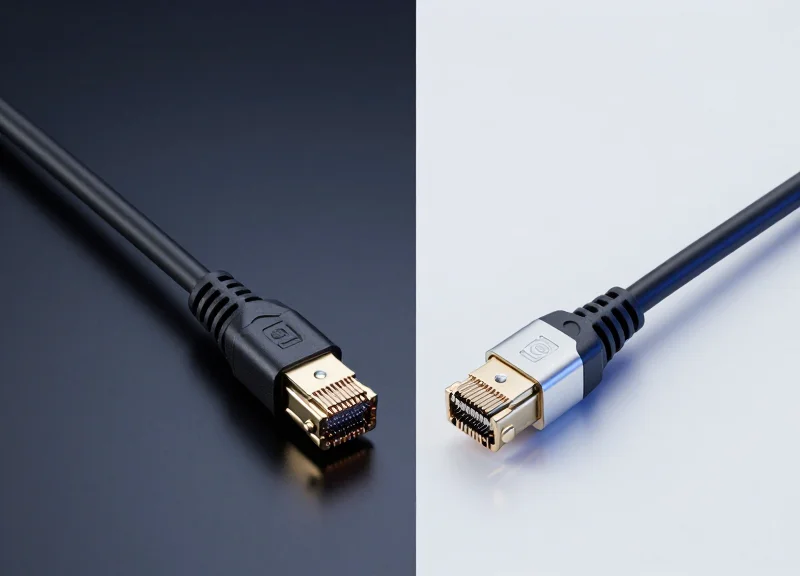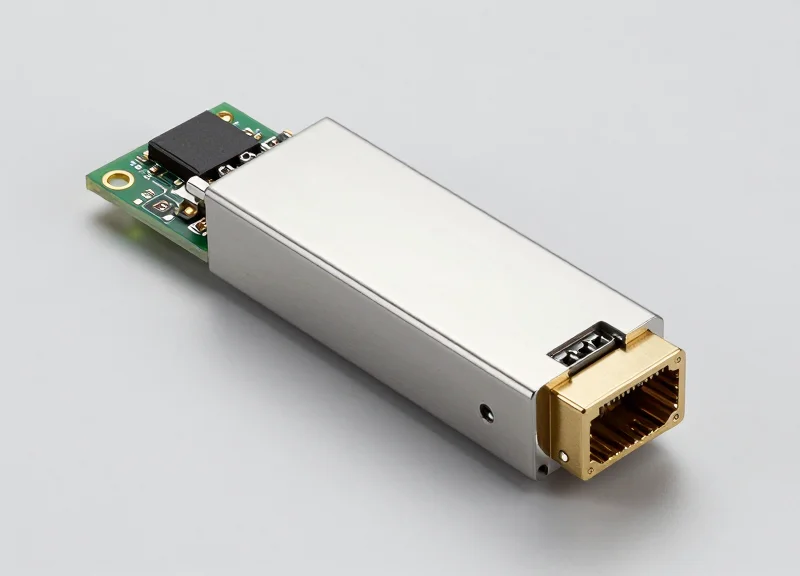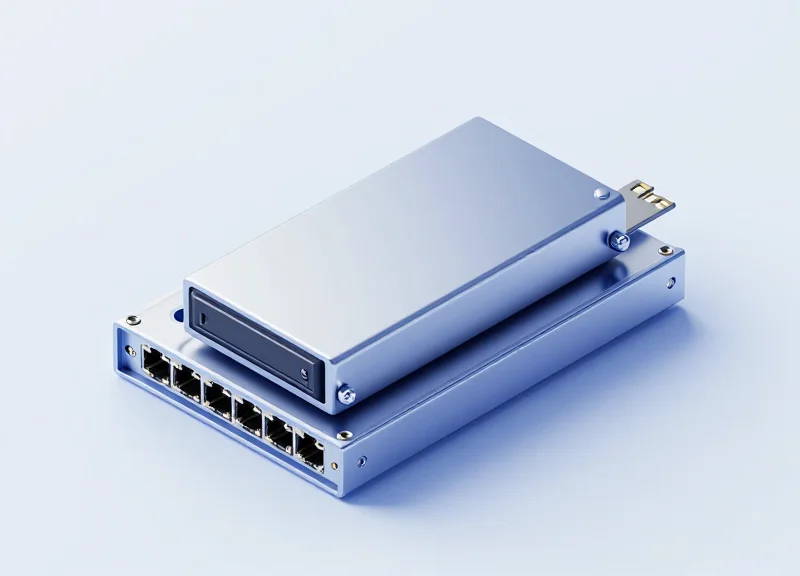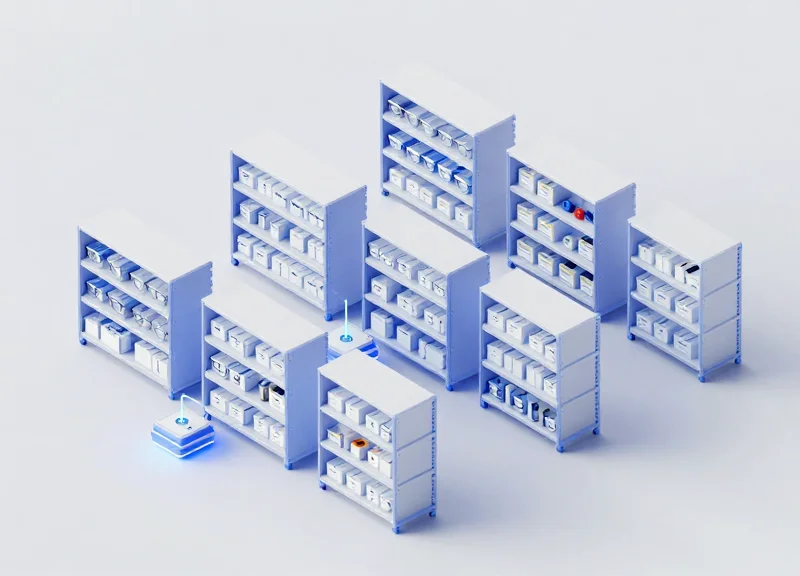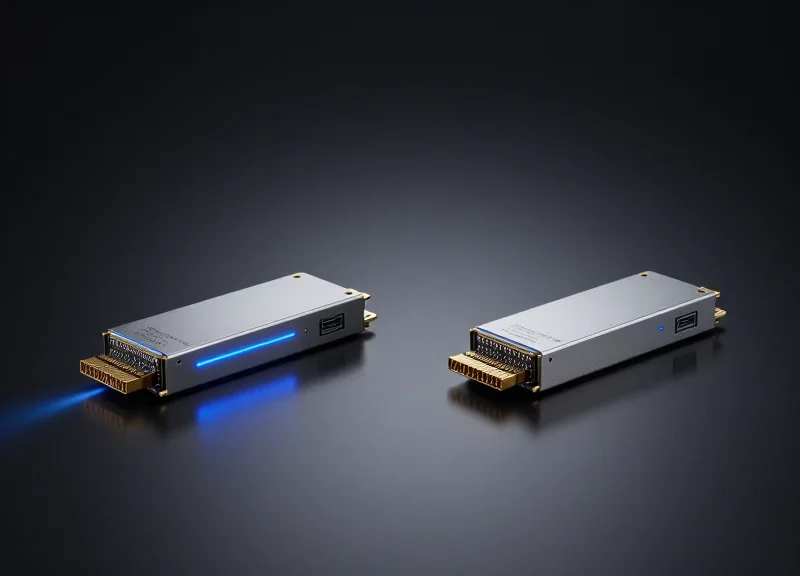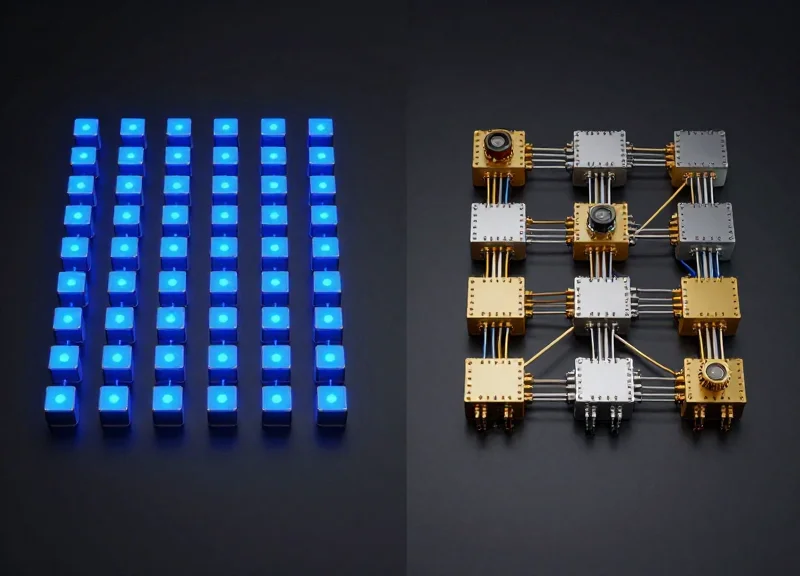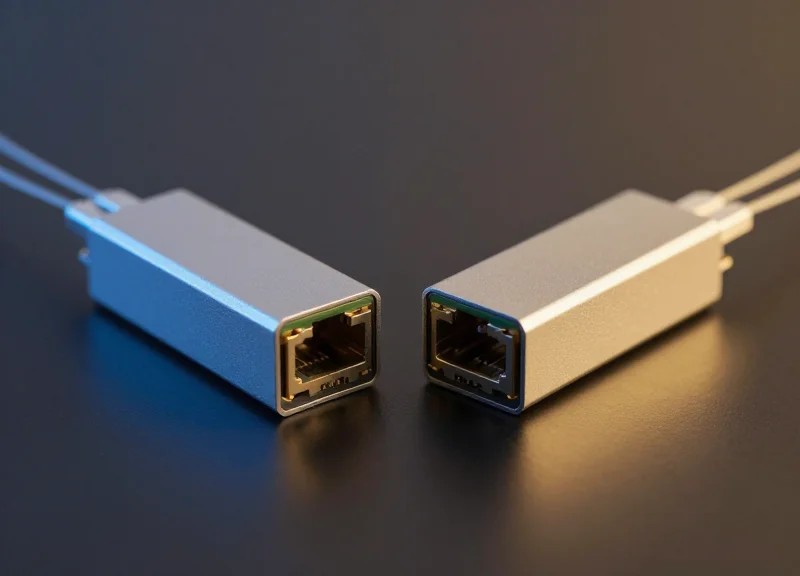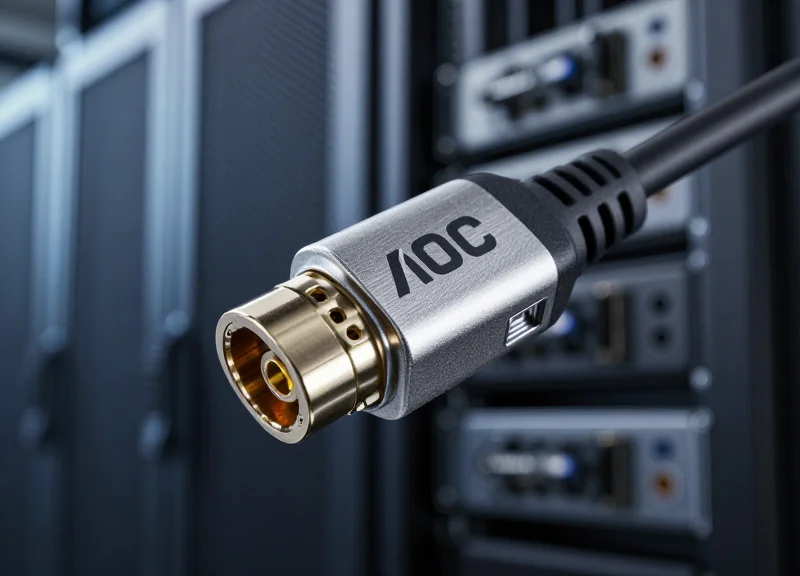
In the era of AI and hyperscale computing, data centers are pushing the limits of bandwidth and physical density. High-density racks require more than just speed; they demand connectivity solutions that manage heat, power, and space effectively. Ubytelink's 800G AOC (Active Optical Cable) solutions are engineered to meet these challenges head-on, providing the backbone for the world's most resilient and efficient global networks.
The Rise of 800G: Meeting Next-Generation Bandwidth Demands

The shift to 800G Ethernet represents a critical evolution in networking, designed to eliminate the data bottlenecks created by the rapid adoption of Artificial Intelligence (AI), Large Language Models (LLM), and real-time big data analytics. As global traffic volumes surge, 800G provides the necessary throughput to support massive parallel processing and high-velocity data transfers, ensuring that network infrastructure can keep pace with the computational demands of next-generation hardware.
Catalysts for 800G Network Adoption
Several industry trends are converging to make 800G the new standard for backbone and leaf-spine architectures. The most prominent driver is the deployment of specialized AI accelerators that require massive East-West traffic capacity to synchronize distributed workloads across thousands of GPUs.
- Artificial Intelligence & Machine Learning
AI clusters require high-bandwidth, low-latency interconnects to minimize the 'tail latency' that can significantly degrade training performance. - Cloud and Hyperscale Expansion
Tier-1 cloud providers are transitioning to 800G to increase port density and reduce the total cost of ownership (TCO) per gigabit. - Edge Computing Proliferation
The decentralization of data processing requires robust high-speed links to aggregate data from edge nodes back to core data centers.
Performance Comparison: 400G vs. 800G
| Metric | 400G Standard | 800G Standard |
|---|---|---|
| Bandwidth per Port | 400 Gbps | 800 Gbps |
| Modulation Type | PAM4 (56G or 112G) | PAM4 (112G) |
| Max Throughput per 1U | 12.8 Tbps / 25.6 Tbps | 51.2 Tbps |
| Typical Application | General Cloud / Enterprise | AI Clusters / HPC |
Challenges in High-Density Rack Implementation
While 800G offers unprecedented speed, it introduces significant physical layer challenges. High-density racks must now manage increased thermal output and maintain signal integrity over high-speed PAM4 lanes. Standard copper solutions often reach their reach limits at these speeds, while traditional optical transceivers may drive up power consumption. This has led to the rise of specialized solutions like Active Optical Cables (AOC) which balance reach, power efficiency, and cable flexibility.
Frequently Asked Questions about 800G Demands
- Why is 800G preferred over multiple 400G links?
800G reduces the number of physical cables and ports required to achieve the same bandwidth, which simplifies cable management and reduces power consumption at the switch level. - What is the role of 112G SerDes in 800G?
The move to 112G SerDes (Serializer/Deserializer) technology allows for 8 lanes of 100G to create a single 800G link, doubling the density compared to 56G SerDes-based 400G links. - How does 800G impact data center cooling?
800G components generate more heat per port; therefore, choosing energy-efficient interconnects like Ubytelink AOCs is vital to keep thermal loads within the operating limits of high-density racks.
Ubytelink 800G AOC Architecture: Precision Engineering

The architecture of Ubytelink 800G AOCs is built upon a foundation of precision engineering designed to mitigate the physical challenges of 112G per lane signaling. By integrating cutting-edge Digital Signal Processors (DSPs) with optimized vertical-cavity surface-emitting lasers (VCSELs), Ubytelink achieves a seamless 800Gbps aggregate throughput. This architecture is specifically tuned to maintain signal integrity over distances up to 100 meters, ensuring that high-density rack deployments remain stable under the rigorous demands of AI and hyperscale workloads.
The Core Engine: 7nm DSP and Signal Integrity
At the heart of the Ubytelink 800G AOC lies a high-performance 7nm CMOS DSP. This component is critical for managing the transition to PAM4 (Pulse Amplitude Modulation 4-level) signaling. Unlike traditional NRZ, PAM4 is highly susceptible to noise and inter-symbol interference. The Ubytelink DSP employs advanced adaptive equalization and Forward Error Correction (FEC) algorithms to reclaim signal quality, allowing for a Bit Error Rate (BER) that exceeds industry standards while keeping power consumption significantly lower than previous generations.
Optical Conversion: VCSEL and PD Optimization
Ubytelink utilizes an array of 850nm VCSEL lasers paired with high-speed Photodetectors (PD). Each channel is calibrated for uniform output power and extinction ratios. The tight integration of the optical engine with the electrical driver reduces parasitic capacitance, which is essential for maintaining the 56GBaud rate required for 800G operation. This precision in the optical path minimizes jitter and ensures that the AOC can thrive in the high-EMI environments typical of modern data center switches.
| Component | Technical Specification | Performance Impact |
|---|---|---|
| DSP Process | 7nm Low-Power CMOS | Reduces thermal footprint by 20% vs 16nm |
| Modulation | 112G PAM4 (8 Channels) | Enables 800G aggregate bandwidth |
| Laser Source | 850nm VCSEL Array | Optimized for short-reach high-speed MMF |
| Form Factor | QSFP-DD800 / OSFP | Ensures backward and forward compatibility |
Thermal Engineering for High-Density Racks
Heat is the primary enemy of optical longevity and performance. Ubytelink 800G AOCs feature a specialized heat-sink casing designed for maximum surface area within the constraints of QSFP-DD and OSFP form factors. By utilizing high-thermal-conductivity materials for the internal bridge between the DSP and the outer shell, Ubytelink ensures that the modules operate within safe temperature ranges even when 64 or more ports are active in a single 1U chassis. This mechanical precision prevents 'thermal throttling' of the data link.
- Why is the 7nm DSP significant for 800G AOCs?
The 7nm process allows for higher transistor density, enabling more complex signal processing algorithms to run at lower power levels, which is crucial for preventing overheating in dense rack configurations. - Does Ubytelink architecture support multi-vendor interoperability?
Yes, the architecture adheres strictly to IEEE 802.3ck and MSA standards, ensuring the AOCs function seamlessly with switches from Cisco, Arista, NVIDIA, and other major manufacturers. - How does Ubytelink address the fragility of 800G fibers?
The AOCs utilize reinforced cable jackets and precision strain relief boots to protect the internal multimode fibers from micro-bends that could cause signal loss during installation.
Optimizing High-Density Racks: Space and Airflow Efficiency
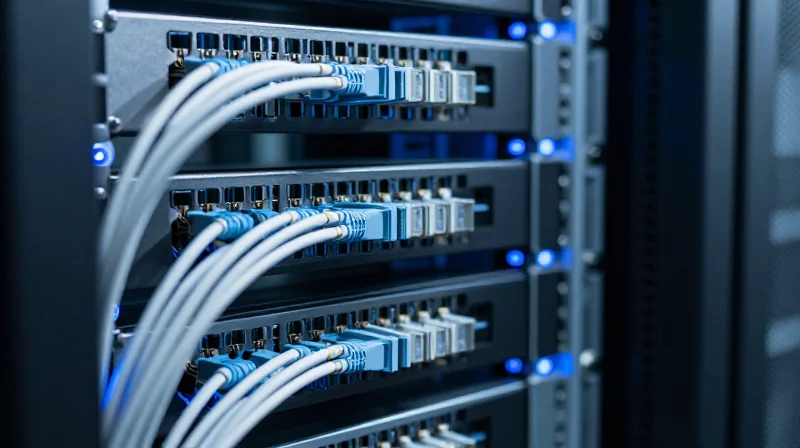
In modern 800G environments, the physical volume of interconnects often becomes a primary constraint for data center efficiency, as traditional cabling can create 'cable dams' that impede airflow and cause thermal throttling. Ubytelink 800G Active Optical Cables (AOCs) solve this challenge by providing a significantly thinner and lighter footprint than copper alternatives, allowing network architects to maximize port density without compromising the cooling capacity of the rack or increasing the energy required for fans to overcome air resistance.
Overcoming the Limitations of Traditional Cabling
As 800G ports become the standard for spine-and-leaf architectures, the physical diameter of cables becomes a critical factor. Direct Attach Copper (DAC) cables, while cost-effective for very short distances, are notoriously thick and rigid at 800G speeds, often requiring large bend radii that consume valuable U-space. Ubytelink 800G AOCs utilize advanced optical fibers that are up to 50% thinner than equivalent DACs, facilitating cleaner cable paths and reducing the bulk in vertical cable managers and overhead trays.
| Feature | 800G DAC (Typical) | Ubytelink 800G AOC | Airflow Impact |
|---|---|---|---|
| Cable Diameter | 7.0mm - 9.5mm | 3.0mm - 4.5mm | AOC enables 2x air paths |
| Weight (per 3m) | ~650g | ~180g | AOC reduces rack load |
| Bend Radius | ~50mm+ | ~25mm | AOC allows tighter routing |
| Flexibility | Very Low/Rigid | High/Flexible | AOC simplifies management |
Thermal Performance and PUE Optimization
The slim profile of Ubytelink 800G AOCs directly contributes to a lower Power Usage Effectiveness (PUE) by improving the data center's aerodynamic efficiency. By eliminating the 'wall of cables' typically found at the rear of high-density chassis, air can flow freely from the cold aisle to the hot aisle. This reduces the static pressure against switch fans, allowing them to run at lower speeds while maintaining safe operating temperatures for internal ASICs and transceivers.
- How does the bend radius of Ubytelink AOCs improve rack density?
A smaller bend radius allows the cable to turn sharply within the rack's side panels or management arms without signal loss, preventing cables from protruding into the airflow path or blocking adjacent ports. - Can switching from DAC to Ubytelink AOCs reduce cooling costs?
Yes. By reducing physical obstruction by nearly 50%, rack fans can operate more efficiently, leading to measurable reductions in cooling-related electricity consumption. - What is the weight advantage in large-scale deployments?
AOCs are significantly lighter than copper cables. In a fully populated 42U rack, switching to Ubytelink AOCs can reduce the total weight load on the rack and floor tiles by several hundred kilograms.
Leading Thermal Management and Heat Dissipation
Leading Thermal Management and Heat Dissipation
The migration to 800G networking creates a paradox: while data throughput increases exponentially, the physical space for cooling remains constant or shrinks. Ubytelink 800G AOCs solve this thermal bottleneck through a combination of ultra-low-power Digital Signal Processors (DSPs) and high-conductivity module housing. By reducing power consumption at the chip level and accelerating heat transfer through the transceiver casing, these cables ensure that even the most congested server racks maintain optimal operating temperatures, preventing the localized 'hot spots' that lead to hardware failure and signal instability.
Material Innovation for Enhanced Cooling
Ubytelink utilizes proprietary high-K thermal conductivity alloys for its transceiver shells. This material choice is critical because standard zinc or aluminum alloys often fail to dissipate the heat generated by 800G optical engines quickly enough. Our engineering team has optimized the internal layout of the AOC to place high-heat components in direct contact with these specialized thermal pathways, effectively turning the entire connector into a passive heat sink.
| Thermal Metric | Generic 800G AOC | Ubytelink 800G AOC |
|---|---|---|
| Average Power Consumption | 16W - 18W | Under 14W |
| Casing Material | Standard Zinc Alloy | High-K Thermal Alloy |
| Operating Temperature Range | 0°C to 70°C | 0°C to 85°C (Extended) |
| Thermal Throttling Protection | Standard Firmware | AI-Driven Dynamic Power Scaling |
Thermal Performance FAQ
- How does low power consumption impact overall rack cooling?
Each Ubytelink 800G AOC consumes up to 20% less power than market averages. In a fully loaded 48-port switch, this results in nearly 200W of reduced heat output, significantly lowering the burden on the facility's CRAC (Computer Room Air Conditioning) units. - Does the thermal design affect the lifespan of the optical components?
Yes. Heat is the primary enemy of VCSEL lasers. By keeping internal temperatures 10-15% lower than competitors, Ubytelink AOCs reduce laser degradation, leading to a higher Mean Time Between Failures (MTBF) and more reliable long-term network performance. - Is additional active cooling required for these AOCs?
No. The passive heat dissipation design of Ubytelink 800G AOCs is engineered to work with standard switch-to-server airflow patterns, requiring no specialized cooling infrastructure.
Power Efficiency: Driving Down Total Cost of Ownership (TCO)
The Architectural Advantage of Integrated Optics
The Ubytelink 800G AOC for High-Density Racks Solutions: Premium Quality for Global Networks represents a strategic shift in data center economics by addressing the primary driver of operational costs: power consumption. Unlike discrete transceiver-and-fiber combinations that require high-power laser drivers and complex optical alignment at every junction, the integrated design of Ubytelink AOCs optimizes the electrical-to-optical conversion process. By eliminating the need for independent optical connectors within the assembly, these cables reduce the power overhead required for signal amplification, resulting in a lower wattage-per-gigabit ratio that directly enhances Total Cost of Ownership (TCO).
In traditional setups, two 800G transceivers connected by a separate patch cord must maintain high signal integrity across multiple physical interfaces. This necessitates higher power output from the Digital Signal Processor (DSP) and VCSEL components. Ubytelink 800G AOCs streamline this by hardwiring the optical components within a factory-sealed unit, allowing for tighter optimization of the signal path and significantly reduced thermal output.
| Solution Type | Avg. Power Consumption (per end) | Heat Dissipation | Long-term TCO Impact |
|---|---|---|---|
| Ubytelink 800G AOC | <14W - 16W | Low | Maximum Savings |
| 800G Transceiver + MPO Fiber | 16W - 19W | Moderate to High | Baseline Cost |
Quantifying OpEx Savings and Sustainability
The financial benefits of power efficiency are twofold. First, there is the direct reduction in electricity consumption for the networking equipment itself. Second, because these cables generate less heat, the data center’s cooling system (HVAC) operates with less strain, improving the Power Usage Effectiveness (PUE) of the entire facility. Over a standard 3-to-5-year hardware lifecycle in a high-density environment containing thousands of links, these marginal gains aggregate into significant operational expenditure (OpEx) savings, making Ubytelink AOCs a cornerstone of sustainable data center strategy.
- How does Ubytelink 800G AOC improve ROI?
By reducing initial procurement costs compared to separate components and lowering recurring energy bills and cooling overhead throughout the product's lifespan. - Does lower power consumption affect signal distance?
For short-reach high-density rack environments, the optimized power profile maintains full 800G throughput without any signal degradation over the specified cable length. - Why is TCO more important than initial price?
Power and cooling often exceed the initial hardware purchase price over the life of a network; AOCs optimize this long-term cost profile through energy efficiency.
Signal Integrity and Low Latency for AI Workloads

Signal Integrity and Low Latency for AI Workloads
In the architecture of high-performance computing (HPC) and artificial intelligence, the network is frequently the primary bottleneck; Ubytelink 800G AOCs mitigate this by delivering near-zero signal degradation and minimal latency, ensuring that distributed GPU nodes function as a single, cohesive unit. As AI models grow to trillions of parameters, the efficiency of the interconnect dictates the speed of training and the responsiveness of real-time inference.
The Necessity of Signal Integrity at 800G Speeds
At 800Gbps, maintaining signal clarity is a significant engineering challenge due to electromagnetic interference (EMI) and signal attenuation. Ubytelink 800G AOCs utilize advanced signal processing and high-grade internal shielding to maintain a superior Bit Error Rate (BER). This precision ensures that packets are delivered correctly the first time, preventing the retransmission delays that can cripple synchronous AI training cycles.
Optimizing All-Reduce Operations with Low Latency
AI training relies heavily on 'All-Reduce' operations, where gradients from multiple GPUs must be shared and synchronized across the cluster. Any micro-delay in the cabling infrastructure leads to idle GPU cycles, wasting expensive compute resources. Ubytelink's 800G AOCs are engineered with optimized electrical-to-optical conversion paths that shave off critical nanoseconds, providing the high-speed transit needed for seamless distributed deep learning.
| Feature | Standard Fiber Patch Cables | Ubytelink 800G AOC |
|---|---|---|
| Latency Profile | Higher (Connector interfaces) | Ultra-Low (Integrated design) |
| Signal Loss (dB) | Variable based on cleaning | Fixed & Optimized |
| Bit Error Rate (BER) | Requires strict maintenance | Pre-tested < 1E-15 |
| EMI Resistance | Moderate | Superior Shielding |
Quality Control and Performance Assurance
- Why is low latency critical for Large Language Model (LLM) training?
LLM training involves frequent synchronization points between nodes; high latency causes 'tail latency' issues where the entire cluster must wait for the slowest data packet to arrive, drastically increasing training time. - How does Ubytelink ensure signal integrity across high-density racks?
Every Ubytelink 800G AOC undergoes rigorous eye-diagram testing and thermal stress testing to ensure the optical signal remains crisp even in the high-EMI environment of a crowded server rack. - Do Ubytelink AOCs support Forward Error Correction (FEC)?
Yes, they are designed to work seamlessly with the IEEE 802.3ck and 800G Ethernet standards, supporting the advanced FEC required to maintain data integrity at high frequencies.
AOC vs. DAC vs. Transceivers: Choosing the Right 800G Link
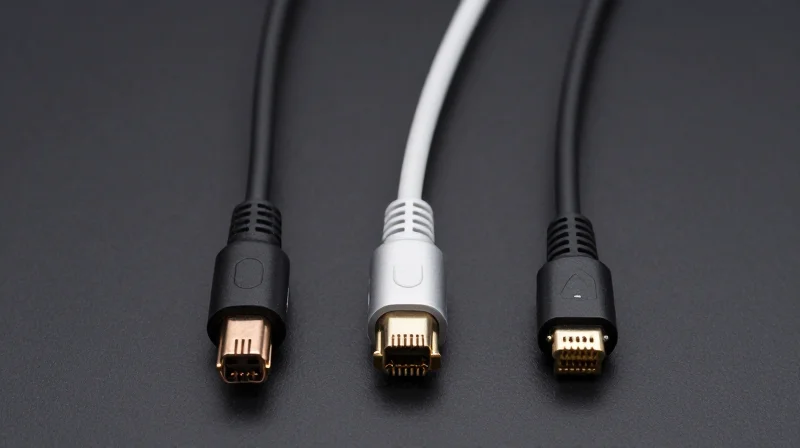
Selecting the optimal 800G interconnect requires a strategic balance between transmission distance, power consumption, and thermal management. For high-density racks, the choice often boils down to the physical layout of the cluster; while Direct Attach Copper (DAC) is suitable for very short spans, and discrete transceivers offer the longest reach, Ubytelink 800G AOCs provide a superior 'sweet spot' for inter-rack connections by delivering the thinness of fiber with the cost-effectiveness of integrated assemblies.
800G Interconnect Comparison: DAC vs. AOC vs. Transceivers
| Feature | 800G DAC | Ubytelink 800G AOC | 800G Transceiver + Fiber |
|---|---|---|---|
| Max Distance | Up to 2-3m | Up to 30-100m | Up to 2km (DR8) / 10km (LR8) |
| Power Consumption | Near Zero | Low (~14-16W per end) | Higher (~16-20W per end) |
| Cable Diameter | Thick/Rigid | Thin/Flexible | Thin/Flexible |
| Deployment Cost | Lowest | Moderate | Highest |
| Main Use Case | Intra-rack (ToR to Server) | Inter-rack (Switch to Switch) | Long-reach / Structured Cabling |
Strategic Deployment: Why Ubytelink AOCs Win in the Middle Ground
At the 800G threshold, copper (DAC) encounters significant physical limitations; the gauge required to maintain signal integrity over 3 meters makes cables thick and difficult to route, often blocking airflow in high-density racks. Discrete transceivers solve the distance problem but introduce higher latency, higher power draw, and the risk of link failure due to contaminated fiber connectors. Ubytelink 800G AOCs eliminate these risks by using a factory-sealed optical assembly that prevents dust ingress and reduces power consumption by bypassing the need for certain long-reach retimers, making them the most reliable choice for AI/ML clusters spanning multiple adjacent racks.
Critical Decision Factors for 800G Connectivity
- When should I use 800G DAC?
DACs are best used for connections under 2 meters where power consumption must be minimized and cable bulk does not impede rack airflow. - Can Ubytelink 800G AOCs be used for breakout configurations?
Yes, Ubytelink offers 800G AOCs in breakout configurations (e.g., 800G to 2x400G or 8x100G) to facilitate high-density distribution from core switches to leaf switches. - Why choose AOC over discrete transceivers for 20m spans?
AOCs are more cost-effective because they eliminate the need for separate fiber patch cords and the labor-intensive cleaning of optical interfaces, while typically consuming 15-20% less power. - How does Ubytelink ensure compatibility across different switch brands?
Ubytelink 800G AOCs are programmed with multi-vendor compatible EEPROM signatures, ensuring seamless 'plug-and-play' operation with major networking hardware providers.
Industry Standards and Global Interoperability
Standardized Connectivity for Global Heterogeneous Networks
Ubytelink 800G AOCs are engineered to bridge the gap between proprietary hardware silos by strictly adhering to international Multi-Source Agreements (MSAs) and IEEE 802.3ck standards. This commitment to standardization ensures that our active optical cables function as plug-and-play components within diverse networking ecosystems, providing a reliable fabric for high-density racks regardless of the underlying hardware vendor. By eliminating 'vendor lock-in,' Ubytelink empowers data center architects to build agile, scalable infrastructures using a mix of best-of-breed switches and servers.
Adherence to QSFP-DD800 and OSFP MSAs
The foundation of interoperability at the 800G tier lies in the QSFP-DD800 and OSFP MSAs. These agreements define the critical mechanical, electrical, and thermal parameters that allow a cable to interface correctly with a host port. Ubytelink 800G AOCs are rigorously validated to meet these specifications, ensuring that physical dimensions, connector pinouts, and electrical signaling (such as 100G PAM4 lanes) are perfectly synchronized with standard-compliant hardware.
| Standard Specification | QSFP-DD800 MSA Compliance | OSFP MSA Compliance |
|---|---|---|
| Electrical Interface | 8-lane 112Gbps PAM4 | 8-lane 112Gbps PAM4 |
| Connector Density | High-density, backwards compatible | Superior thermal management |
| Management Interface | CMIS 5.0 and above | CMIS 5.0 and above |
| Typical Application | Core/Leaf Switch Aggregation | AI/ML Compute Clusters |
Multi-Vendor Compatibility and Testing
To guarantee performance in real-world scenarios, Ubytelink 800G AOCs undergo extensive compatibility testing within our lab environment, which simulates various high-tier networking stacks. We verify that our EEPROM coding is recognized by the Network Operating Systems (NOS) of industry leaders, ensuring that the link-up process is instantaneous and that diagnostic data is accurately reported through standard monitoring tools.
- Verified Compatibility Brands
Ubytelink 800G AOCs are tested for seamless operation with equipment from Cisco, Arista, NVIDIA (Mellanox), Juniper, and Dell. - CMIS Support
Full support for the Common Management Interface Specification (CMIS) allows for standardized module configuration and performance telemetry across different platforms. - Dual-Coding Services
We offer custom coding for each end of the AOC to support mixed-vendor environments, such as connecting an Arista switch to an NVIDIA H100 GPU server.
Interoperability FAQ
- Are Ubytelink 800G AOCs compliant with IEEE 802.3ck?
Yes, our cables meet the IEEE 802.3ck electrical standards for 800Gb/s Ethernet, ensuring they work with any standards-compliant 100G-per-lane host interface. - How does Ubytelink handle proprietary vendor encryption?
Our engineering team continuously updates our firmware and EEPROM profiles to ensure our cables bypass proprietary 'lock-out' mechanisms used by some hardware manufacturers. - Can these cables be used in Open Compute Project (OCP) environments?
Absolutely. Because Ubytelink follows open MSA standards, our AOCs are ideal for OCP-compliant data centers and white-box switching environments.
Case Studies: Ubytelink in Global Network Deployments

Real-World Scaling with Ubytelink 800G AOCs
Ubytelink's 800G AOC solutions have evolved from high-performance laboratory benchmarks to essential components in global production environments, where they facilitate the rapid scaling of AI clusters and cloud-native backbones. By providing a pre-terminated, low-power alternative to discrete transceivers and bulky copper cabling, Ubytelink enables network architects to maximize rack density without exceeding the thermal envelopes of modern data center cooling systems.
North American Hyperscale AI Training Cluster
In a major deployment for a North American cloud provider, Ubytelink 800G AOCs were utilized to interconnect over 2,000 GPU-accelerated nodes. The primary challenge was the limited airflow in high-density racks. Traditional transceiver-based solutions generated excessive heat at the port level. By switching to Ubytelink 800G AOCs, the facility reduced per-link power consumption by approximately 15%, ensuring stable signal integrity across the fabric and maintaining the 100ns latency threshold required for large language model (LLM) training.
European Enterprise Cloud Migration
A leading European telecommunications firm integrated Ubytelink 800G OSFP AOCs to modernize its core switching fabric. The transition from 400G to 800G was necessitated by a 300% increase in edge-to-cloud traffic. Ubytelink’s interoperability with Tier-1 switch vendors allowed for a seamless 'plug-and-play' upgrade path. The thin, flexible design of the active optical cables significantly improved cable management in existing 42U racks, reducing physical congestion and simplifying maintenance cycles.
| Regional Deployment | Infrastructure Type | Primary Constraint | Key Outcome |
|---|---|---|---|
| North America | AI Supercomputing | Thermal Throttling | 15% Power Reduction |
| Europe | Tier-1 Telecom Core | Rack Space/Congestion | 300% Bandwidth Increase |
| Asia-Pacific | Financial Services Hub | Latency Sensitivity | Zero-Error Link Stability |
Global Deployment FAQ
- How does Ubytelink ensure interoperability across different global regions?
All Ubytelink 800G AOCs adhere strictly to MSA standards (QSFP-DD800 and OSFP), and undergo rigorous EEPROM coding and testing with global switch brands like Arista, Cisco, and NVIDIA to ensure immediate recognition and performance. - What is the typical lead time for large-scale international projects?
Ubytelink maintains a robust global supply chain, allowing for rapid fulfillment of high-volume 800G orders, typically ranging from two to four weeks depending on regional logistics and custom configuration requirements. - Can Ubytelink AOCs handle the higher ambient temperatures of non-traditional data centers?
Yes, Ubytelink 800G AOCs are designed with premium components that support standard commercial temperature ranges, with specific industrial-grade options available for more demanding environmental conditions.
These case studies demonstrate that Ubytelink 800G AOCs are more than just cables; they are strategic assets that allow global operators to push the limits of their hardware while maintaining high reliability and operational efficiency.
Ubytelink’s 800G AOC solutions provide the perfect balance of performance, power savings, and reliability for the most demanding high-density environments. As your network scales, trust the premium quality of Ubytelink to keep your data moving. Contact our technical team today for a consultation or to request a quote.