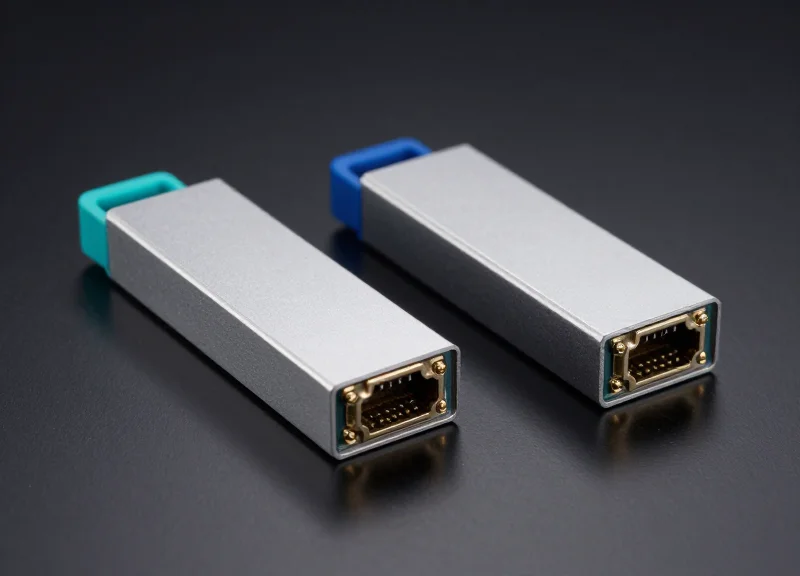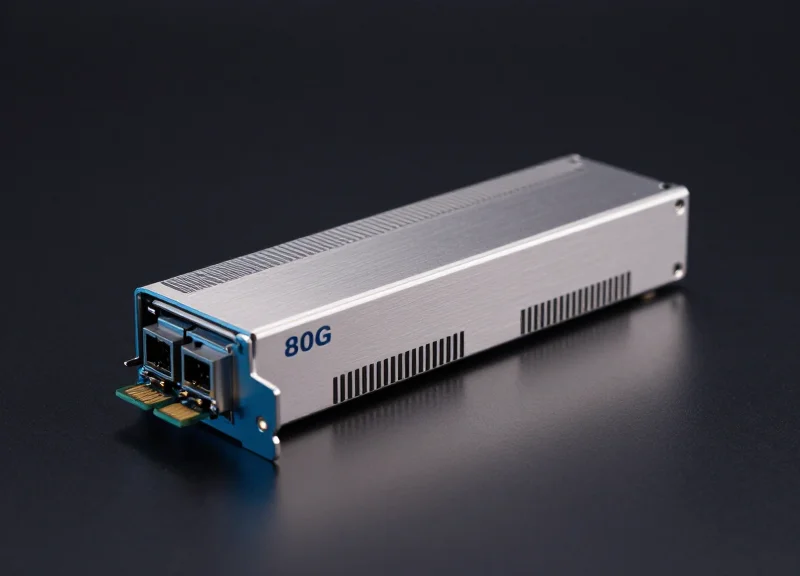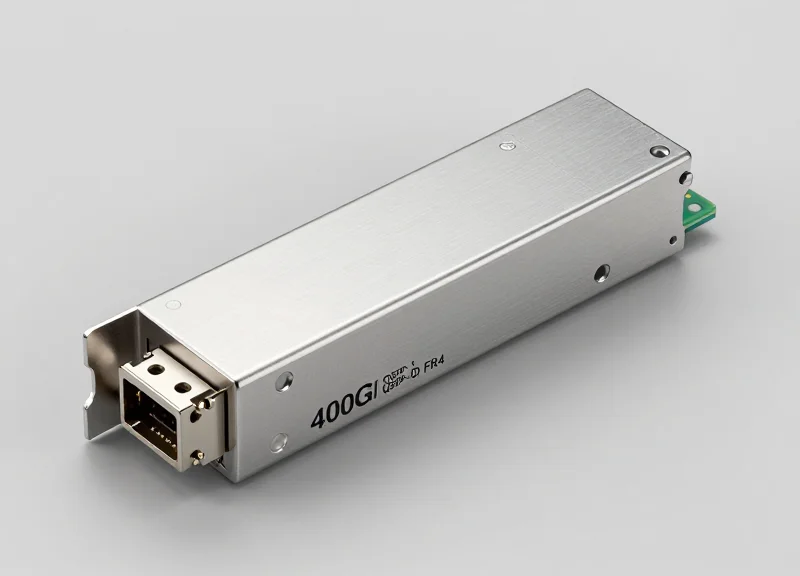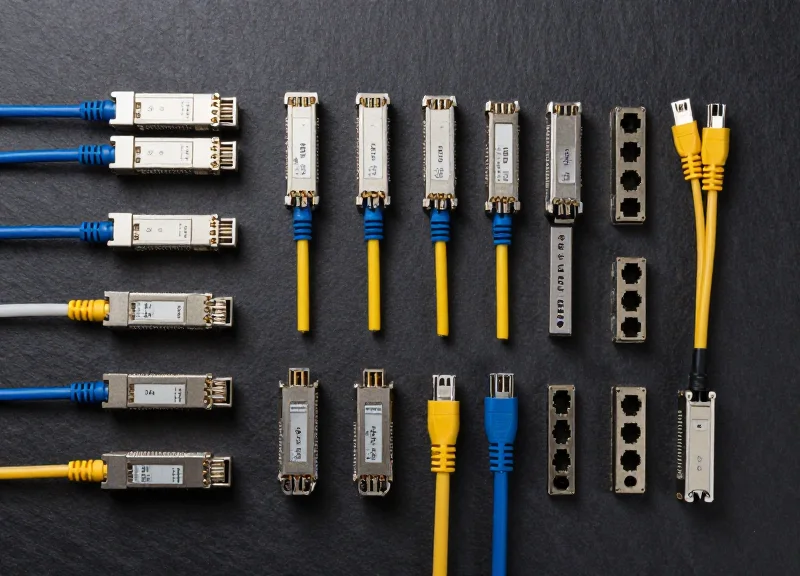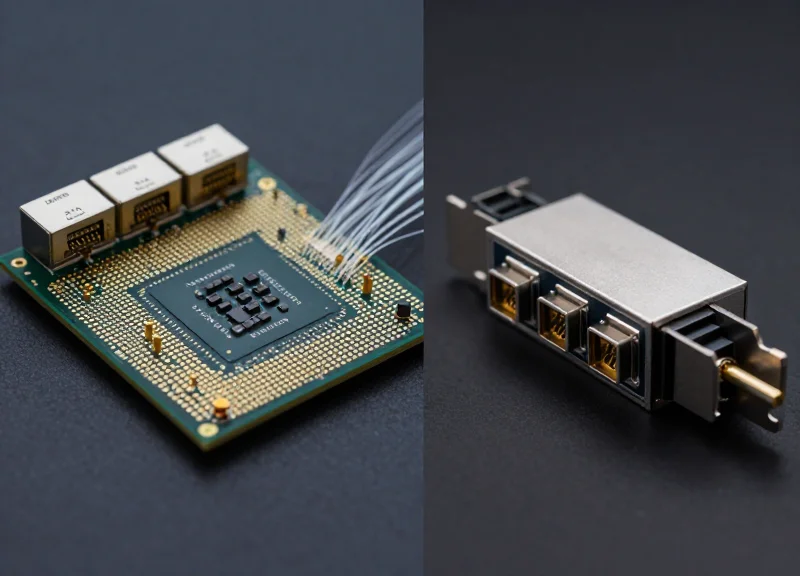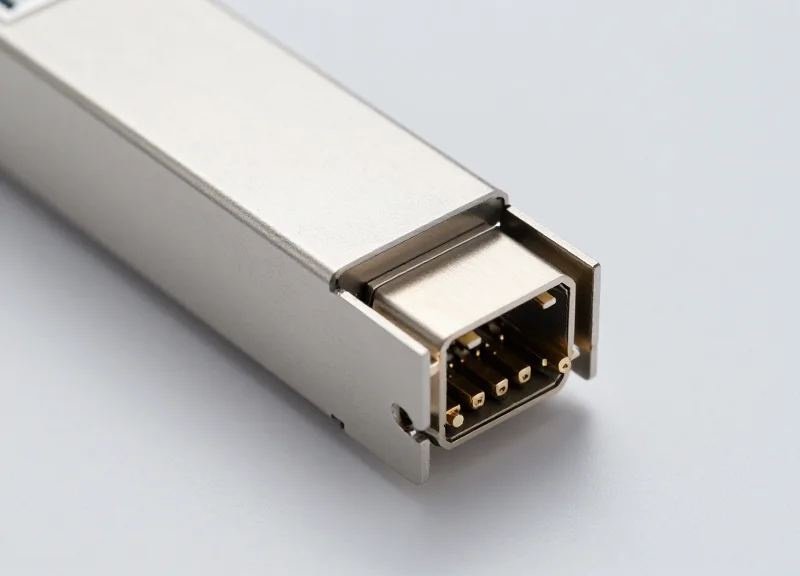
The explosive growth of generative AI and Large Language Models (LLMs) has pushed data center networking to its limits. To keep pace with the massive throughput required by modern GPU clusters, 800G optical connectivity is no longer a luxury—it is a necessity. Ubytelink stands at the forefront of this revolution, providing premium 800G optical transceivers engineered for the rigorous demands of mission-critical AI infrastructure.
The Rise of 800G Connectivity in the AI Era

The Imperative for 800G in AI Data Centers
The rapid evolution of Generative AI and Large Language Models (LLMs) has fundamentally reshaped data center architecture, necessitating a shift from 400G to 800G optical interconnects. As AI training models scale to trillions of parameters, the demand for high-speed data exchange between GPU clusters has reached an unprecedented level. 800G optical transceivers provide the essential throughput required to support these massive workloads, ensuring that the network fabric does not become a performance bottleneck during intensive compute cycles.
Comparing 400G and 800G for AI Infrastructure
| Feature | 400G QSFP-DD | 800G OSFP/QSFP-DD800 |
|---|---|---|
| Aggregate Bandwidth | 400 Gbps | 800 Gbps |
| Lane Speed | 50G or 100G PAM4 | 100G or 112G PAM4 |
| Power Efficiency | ~30mW per Gbps | ~22-25mW per Gbps |
| System Density | Standard | Double bandwidth per RU |
Why 400G is No Longer Sufficient
While 400G was the gold standard for cloud networking, AI workloads utilize a different traffic pattern known as 'East-West' traffic, where GPUs constantly communicate with one another to synchronize gradients and data. At 400G speeds, the sheer volume of this synchronization traffic can cause congestion, leading to 'tail latency' issues that leave expensive GPUs idle. 800G technology, leveraging 112G SerDes architecture, effectively doubles the capacity per port, allowing for larger, more efficient AI clusters with reduced cabling complexity and lower power consumption per bit.
Common Questions Regarding 800G Adoption
- How does 800G reduce total cost of ownership (TCO) in AI labs?
By doubling the bandwidth per port, 800G allows operators to support the same data throughput with half the number of switch ports and optical cables, significantly reducing power and cooling requirements. - Is the transition to 800G compatible with existing fiber infrastructure?
Yes, 800G transceivers utilize standard MPO or LC connectors and can often operate in breakout modes (e.g., 2x400G or 8x100G) to maintain compatibility with legacy hardware while scaling up. - What role does latency play in 800G for AI?
800G optics are optimized for ultra-low latency, which is critical for the collective communication primitives (like All-Reduce) used in distributed AI training.
Architecting AI Clusters: The Role of Optical Interconnects

Architecting AI Clusters: The Role of Optical Interconnects
Architecting an AI cluster requires more than just raw GPU power; it demands a high-performance optical fabric that can keep pace with the massive data exchanges inherent in distributed deep learning. In these environments, the optical interconnect serves as the nervous system, facilitating the synchronization of parameters across thousands of GPUs and ensuring that compute resources never sit idle waiting for data packets. Ubytelink 800G optical transceivers provide the critical bandwidth density needed to scale these networks without compromising on latency or power efficiency.
The Shift to East-West Traffic and Non-Blocking Topologies
Unlike traditional data centers where traffic primarily moves North-South between clients and servers, AI clusters are defined by intense East-West traffic. Distributed training models, such as Large Language Models (LLMs), require GPUs to communicate constantly to update weights and gradients. To support this, architects employ non-blocking Fat-Tree or Clos topologies. These designs utilize 800G transceivers to maximize the radix of switches, reducing the number of tiers in the network and significantly lowering the end-to-end latency that can otherwise degrade training performance.
| Design Metric | Standard Cloud Data Center | AI Training Cluster |
|---|---|---|
| Traffic Pattern | Predominantly North-South | Massive East-West (All-to-All) |
| Latency Tolerance | High (Milliseconds) | Ultra-Low (Microseconds) |
| Bandwidth Utilization | Bursty/Intermittent | Sustained High-Load |
| Preferred Interconnect | 400G QSFP-DD | 800G OSFP/QSFP800 |
Technical Advantages of 800G in AI Fabric
The transition to 800G connectivity is not merely an incremental speed upgrade but a fundamental requirement for the next generation of AI accelerators. By deploying Ubytelink 800G modules, data center operators can achieve higher port density within a single rack, which reduces the physical footprint and complexity of the cabling infrastructure. Furthermore, advanced 800G solutions incorporate sophisticated Digital Signal Processing (DSP) and silicon photonics that maintain signal integrity across the high-density fabric, ensuring reliable data delivery during long-duration training jobs.
- How do 800G transceivers help reduce GPU idle time?
By providing 800Gbps of throughput, these transceivers ensure that the data pipeline to the GPU is never a bottleneck, allowing the processors to operate at maximum TFLOPS utilization during collective communication phases. - Why is the OSFP form factor often preferred for 800G AI clusters?
The OSFP (Octal Small Form-factor Pluggable) design offers superior thermal management capabilities, which is critical in high-density AI racks where heat dissipation is a primary operational challenge. - Does 800G improve power efficiency in the data center?
Yes, 800G transceivers generally offer a lower power-per-bit ratio than using multiple 400G links, helping to manage the massive energy demands of modern AI infrastructure.
Comparing 800G Form Factors: OSFP vs. QSFP-DD800
Comparing 800G Form Factors: OSFP vs. QSFP-DD800
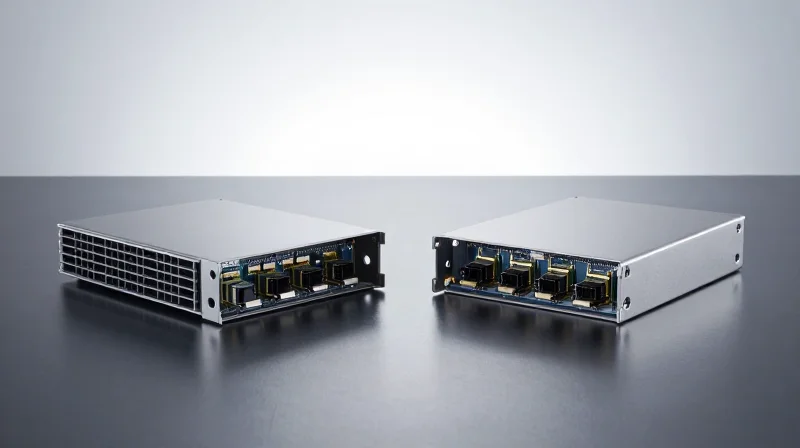
The choice between OSFP (Octal Small Form-factor Pluggable) and QSFP-DD800 (Quad Small Form-factor Pluggable Double Density) is the most critical architectural decision when deploying 800G optical transceivers in AI clusters. While both form factors support 8x100G electrical lanes, OSFP is engineered for superior thermal dissipation required by power-intensive AI workloads, whereas QSFP-DD800 offers the advantage of backward compatibility with legacy QSFP ports, facilitating a smoother transition for existing data center infrastructures.
OSFP: The Thermal Lead for Next-Gen High-Power Nodes
OSFP is slightly wider and deeper than its counterpart, but its most defining feature is the integrated heat sink. This design allows OSFP modules to handle power envelopes exceeding 15W—and potentially up to 30W in future iterations—without compromising signal integrity. For AI environments utilizing high-radix switches like the NVIDIA Quantum-2 or Broadcom Tomahawk 5, OSFP's thermal efficiency is often the preferred choice to prevent thermal throttling during sustained, compute-heavy collective communication operations.
QSFP-DD800: Density and Deployment Flexibility
The QSFP-DD800 form factor maintains the physical footprint of the established QSFP ecosystem. Its primary strength lies in its ability to support backward compatibility; a QSFP-DD800 port can accept standard 400G QSFP-DD, 100G QSFP28, and even 40G QSFP+ modules using appropriate adapters or direct insertion. While its thermal management is more challenging due to the lack of an integrated heat sink, it allows for higher front-panel port density, which is vital for organizations looking to maximize the bandwidth of their existing rack configurations.
| Feature | OSFP 800G | QSFP-DD800 |
|---|---|---|
| Module Size (W x L) | 22.58mm x 107.8mm | 18.35mm x 89.4mm |
| Max Power Dissipation | Up to 15W - 30W | Up to 14W - 20W |
| Backward Compatibility | Via Adapter Only | Native with QSFP series |
| Cooling Design | Integrated Heat Sink | Rely on Cage/System Airflow |
| Future Path | Clear path to 1.6T | Challenging at 1.6T |
Implementation Considerations for Global Networks
- Which form factor is better for 1.6T future-proofing?
OSFP is widely considered the superior choice for the transition to 1.6T (2x800G) due to its larger physical volume and thermal capacity, which can accommodate the higher power requirements of next-generation 224G SerDes. - How does power consumption affect AI cluster OpEx?
Lower thermal resistance in OSFP modules can lead to reduced cooling requirements at the rack level, potentially lowering the long-term operational expenditure (OpEx) for massive AI fabrics compared to higher-density, higher-heat QSFP-DD800 layouts. - Are Ubytelink modules available in both form factors?
Yes, Ubytelink provides premium 800G transceivers in both OSFP and QSFP-DD800 form factors, ensuring compatibility with all major switch vendors including Arista, Cisco, and NVIDIA.
Ubytelink's Engineering Excellence: Performance and Reliability
Engineering Excellence: The Backbone of Reliable AI Networking
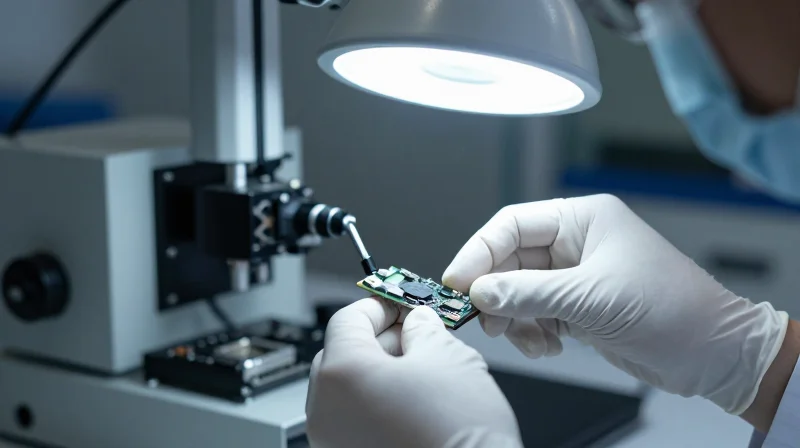
Ubytelink's engineering philosophy centers on the principle that in AI-driven environments, the network is as vital as the compute power itself. Our 800G transceivers are designed to provide the low latency and high throughput required for Large Language Model (LLM) training, where even a minor link failure can halt an entire GPU cluster. By integrating advanced Digital Signal Processing (DSP) and high-performance lasers, we ensure that signal integrity remains pristine over extended distances and through complex switching fabrics.
Rigorous Validation and Testing Protocols
Every Ubytelink 800G module undergoes a comprehensive testing suite that exceeds standard industry benchmarks. This includes rigorous Bit Error Rate (BER) testing, thermal cycling from -5°C to 70°C, and interoperability verification across major switch vendor platforms. Our manufacturing process incorporates automated optical inspection and real-time performance monitoring to catch deviations before they ever reach a customer's data center.
| Feature | Industry Standard | Ubytelink Engineering |
|---|---|---|
| Pre-FEC BER | 1E-5 | Better than 1E-7 |
| Laser Selection | Standard Grade EML/SiPh | Premium Grade-A Low-Noise EML |
| Thermal MTBF | Variable | Verified 1,000,000+ Hours |
| Interoperability | Generic IEEE Compliance | Multi-Vendor Certified & Lab-Tested |
Premium Components for Sustained Performance
The longevity of an 800G link is determined by the quality of its internal components. Ubytelink sources high-end EML (Electro-absorption Modulated Lasers) and Silicon Photonics (SiPh) platforms that offer superior power efficiency and lower heat dissipation. Coupled with 7nm or 5nm DSPs, our transceivers minimize the power-per-bit ratio, reducing the overall thermal load on the AI cluster chassis and extending the operational lifespan of the optical engine.
- How does Ubytelink ensure signal integrity at 800G speeds?
We utilize advanced PAM4 modulation and high-performance DSPs with integrated Equalization (EQ) and Forward Error Correction (FEC) to mitigate signal degradation caused by chromatic dispersion and jitter. - What measures are taken to prevent thermal throttling?
Our modules feature optimized housing designs and low-power internal components that keep operating temperatures well within safe thresholds, even in high-density rack configurations. - Are these transceivers compatible with legacy 400G systems?
Yes, Ubytelink 800G transceivers support breakout modes (2x400G or 8x100G) to ensure seamless integration into existing infrastructures while providing a path for future scaling.
Solving the Heat Challenge: Advanced Thermal Management
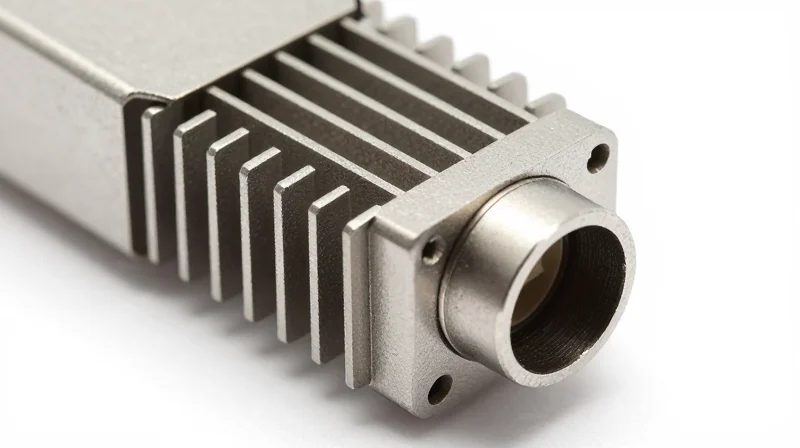
Solving the Heat Challenge: Advanced Thermal Management
In the high-velocity world of AI networking, heat is the ultimate enemy of performance; Ubytelink solves this by integrating industry-leading thermal dissipation technologies that reduce power consumption per gigabit and maximize airflow. As 800G modules push the limits of power density, Ubytelink’s engineering focus shifts from mere connectivity to ensuring that every module operates within its optimal thermal envelope, even under the 24/7 heavy-load cycles characteristic of Large Language Model (LLM) training.
The Thermal Architecture of High-Density 800G Modules
The transition to 800G introduces a significant jump in power consumption, often reaching 14W to 17W per transceiver. Ubytelink mitigates this through a multi-pronged approach. First, we employ 5nm and 7nm Digital Signal Processors (DSPs) that offer superior energy efficiency compared to legacy silicon. Second, our OSFP (Octal Small Form-factor Pluggable) modules feature integrated finned heat sinks that maximize the cooling efficiency of the switch's internal fans, drawing heat away from critical internal components like the laser drivers and TOSA/ROSA assemblies.
| Feature | Ubytelink 800G Optimized Design | Standard Industry 800G |
|---|---|---|
| Typical Power Consumption | 12.5W - 14.5W | 16W - 18W |
| Heat Sink Design | Integrated Deep-Fin (OSFP) | Standard Flat-Top |
| Internal Silicon | Ultra-low power 5nm DSP | Standard 7nm DSP |
| Operating Temperature Range | 0°C to 70°C (Stable) | 0°C to 70°C (Fluctuating) |
Ensuring Long-Term Reliability Through Thermal Testing
Reliability in global networks depends on more than just initial specs; it requires consistent performance over time. Ubytelink utilizes high-conductivity Thermal Interface Materials (TIMs) to bridge the gap between internal optical engines and the external housing, ensuring zero-gap heat transfer. Every batch of Ubytelink transceivers undergoes 'burn-in' testing in simulated high-temperature data center environments to guarantee that thermal expansion does not lead to mechanical fatigue or optical misalignment.
- How does Ubytelink prevent thermal throttling in AI clusters?
By maintaining a lower power-per-port profile, our modules run cooler, preventing the switch from reducing clock speeds or shutting down ports due to thermal overloads. - Is there a thermal difference between OSFP and QSFP-DD800?
Yes, OSFP modules generally offer superior thermal performance due to their larger surface area and integrated fins, making them the preferred choice for the highest-wattage 800G applications. - Does lower power consumption impact signal distance?
No, our advanced DSPs optimize power for efficiency without compromising the signal integrity required for 500m (DR8) or 2km (FR8) reaches.
Lowering Total Cost of Ownership (TCO) through Energy Efficiency
Maximizing ROI: Energy Efficiency as a TCO Catalyst
For global network operators managing AI clusters, the Total Cost of Ownership (TCO) is increasingly dominated by operational expenditures (OPEX) rather than initial capital investment. Ubytelink 800G transceivers address this shift by delivering industry-leading power-per-bit efficiency. By reducing the power required to transmit every terabit of data, these modules mitigate the escalating costs of electricity and the significant secondary expenses associated with heat dissipation and data center cooling infrastructure.
The Metrics of Efficiency: Power-per-Bit
The transition from 400G to 800G is not merely about doubling bandwidth; it is about doing so within a manageable power envelope. Ubytelink utilizes state-of-the-art 5nm DSP (Digital Signal Processing) technology and high-efficiency silicon photonics to keep power consumption per 800G module significantly lower than first-generation alternatives. This efficiency is critical when scaling to thousands of nodes in an AI training cluster, where a saving of even 2 Watts per module can translate into kilowatts of saved power across a single row of racks.
| Transceiver Generation | Typical Power Consumption | Power Efficiency (Watts per 100G) | TCO Impact (5-Year Scale) |
|---|---|---|---|
| Standard 400G QSFP-DD | 10W - 12W | 2.5W - 3.0W | Baseline OPEX |
| Legacy 800G OSFP | 18W - 21W | 2.25W - 2.6W | Moderate Savings |
| Ubytelink 800G Premium | 14W - 16W | 1.75W - 2.0W | High ROI / Low OPEX |
Reducing the Cooling Burden
In high-density AI environments, every watt of power consumed by an optical module generates heat that must be removed. This creates a 'multiplier effect' on energy costs, as cooling systems (CRAC units) often require 0.5W to 1W of power for every 1W of heat generated by IT equipment. Ubytelink’s thermal-optimized designs ensure that transceivers operate at lower temperatures, reducing the strain on fan speeds and liquid cooling systems, thereby extending the lifespan of both the optics and the host switch hardware.
- How does 800G efficiency affect long-term TCO?
By lowering the power-per-bit, operators reduce monthly utility bills and delay the need for expensive power grid upgrades at the facility level, leading to a faster return on investment. - Does lower power consumption compromise signal reach?
No. Ubytelink uses advanced 5nm DSPs that maintain high signal integrity and low Bit Error Rates (BER) while optimizing power draw, ensuring performance is never sacrificed for efficiency. - What role does Ubytelink play in 'Green' AI initiatives?
Our 800G solutions are designed to meet sustainability targets by minimizing the carbon footprint per terabyte of data processed, aligning with global corporate ESG goals.
Interoperability and Seamless Global Integration

Universal Interoperability: Breaking Vendor Lock-in
Ubytelink 800G optical transceivers are engineered to provide seamless interoperability within heterogeneous network environments, allowing data center operators to integrate high-performance optics without the constraints of vendor lock-in. By strictly adhering to IEEE 802.3ck and OSFP/QSFP-DD800 Multi-Source Agreements (MSAs), Ubytelink ensures that its modules are electrically and optically compatible with a wide array of switches and routers from industry leaders such as Cisco, Arista, and NVIDIA Mellanox.
Cross-Platform Compatibility Matrix
| Vendor Platform | Compatibility Status | Key Integration Feature |
|---|---|---|
| NVIDIA Mellanox | Fully Validated | Support for LinkX logic and low-latency RDMA fabrics |
| Arista Networks | Fully Validated | EOS recognition with full DOM/DDM monitoring support |
| Cisco Systems | Fully Validated | Smart-coding for Nexus and Catalyst series recognition |
| Juniper Networks | Fully Validated | Junos OS integration for seamless port configuration |
Rigorous Compliance and Testing Protocols
The foundation of Ubytelink's global integration capability lies in its rigorous testing facility. Every 800G module undergoes extensive 'real-world' environment simulation where it is tested on original host hardware rather than just software emulators. This ensures that the EEPROM coding, firmware protocols, and signal integrity meet the specific handshake requirements of diverse network operating systems (NOS). For global AI clusters, this means zero-touch deployment and immediate link-up upon installation.
Frequently Asked Questions: Global Integration
- Will using Ubytelink transceivers void my switch manufacturer's warranty?
No. Under laws such as the Magnuson-Moss Warranty Act in the US and similar global regulations, manufacturers cannot void a warranty simply for using third-party components. Ubytelink transceivers are designed to meet or exceed OEM specifications. - How does Ubytelink handle firmware updates for new switch OS releases?
Ubytelink maintains an agile firmware development cycle. When major vendors release NOS updates that change transceiver polling logic, Ubytelink provides updated coding to ensure continued compatibility. - Can Ubytelink 800G modules interoperate with 400G legacy infrastructure?
Yes, through breakout configurations (e.g., 2x400G or 8x100G), Ubytelink 800G modules support backward compatibility, allowing for a phased migration to higher speeds across the global network.
Future-Proofing AI Infrastructure: The Path to 1.6T
The Trajectory Toward 1.6T Connectivity
As artificial intelligence models grow in complexity, the demand for networking bandwidth is expected to double every two years. The transition to 1.6T Ethernet is already on the horizon, driven by the adoption of 224G SerDes technology and the necessity for lower latency in massive GPU clusters. While 800G is the current gold standard for high-performance AI environments, the architectural decisions made today regarding transceiver quality and cabling density will determine the ease with which data centers can migrate to 1.6T in the coming years.
Technical Milestones: 800G vs. 1.6T
| Specification | 800G Generation | 1.6T Generation |
|---|---|---|
| Per-Lane Speed | 112Gbps (PAM4) | 224Gbps (PAM4) |
| Standard Form Factors | OSFP, QSFP-DD | OSFP-XD, OSFP1600 |
| Modulation Scheme | PAM4 | PAM4 / Advanced DSP |
| Interconnect Distance | Up to 2km (DR8/FR8) | Initial 500m to 2km focus |
Ensuring Backward Compatibility and Longevity
Future-proofing an AI cluster requires more than just raw speed; it requires a commitment to signal integrity and thermal management. Ubytelink 800G transceivers are designed with high-margin DSPs and robust optical engines that exceed current IEEE standards, ensuring that the underlying fiber infrastructure remains viable as switch silicon evolves. By deploying premium 800G modules now, operators can maintain a stable environment that supports mixed-speed configurations during the inevitable transition period to 1.6T hardware.
- When should organizations begin planning for 1.6T?
Planning should begin as soon as the roadmap for 51.2T and 102.4T switching silicon is integrated into the data center strategy, typically 12-18 months before a full-scale hardware refresh. - Will current fiber plants support 1.6T?
High-quality single-mode fiber (SMF) installations used for 800G are generally compatible with 1.6T, provided the connectors and patch panels meet stringent reflectance and loss budgets. - What is the role of OSFP-XD in the 1.6T era?
The OSFP-XD (Extra Density) form factor is designed to double the number of electrical lanes, allowing 1.6T throughput in a similar footprint to existing 800G modules, necessitating advanced cooling solutions.
Ubytelink remains at the forefront of this evolution, actively developing optical solutions that bridge the gap between today's 800G requirements and tomorrow's 1.6T demands. By prioritizing low power consumption and high reliability in current 800G deployments, Ubytelink helps global enterprises reduce the risk of forklift upgrades and ensures a seamless path to the next level of AI scalability.
In conclusion, Ubytelink's 800G optical transceivers offer the perfect balance of high-speed performance, thermal efficiency, and proven reliability for the world's most demanding AI clusters. As global networks continue to scale, choosing a partner with a commitment to premium quality is essential for long-term success. Contact the Ubytelink engineering team today to optimize your AI infrastructure with our cutting-edge 800G solutions.