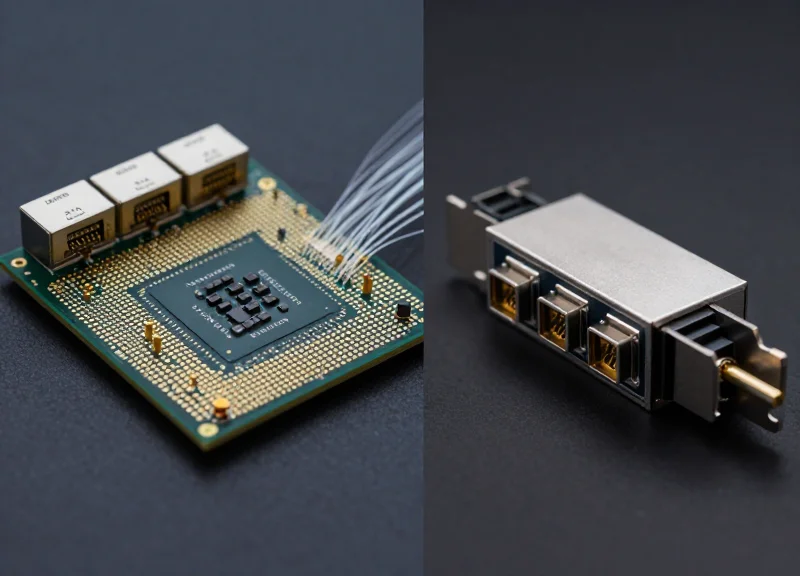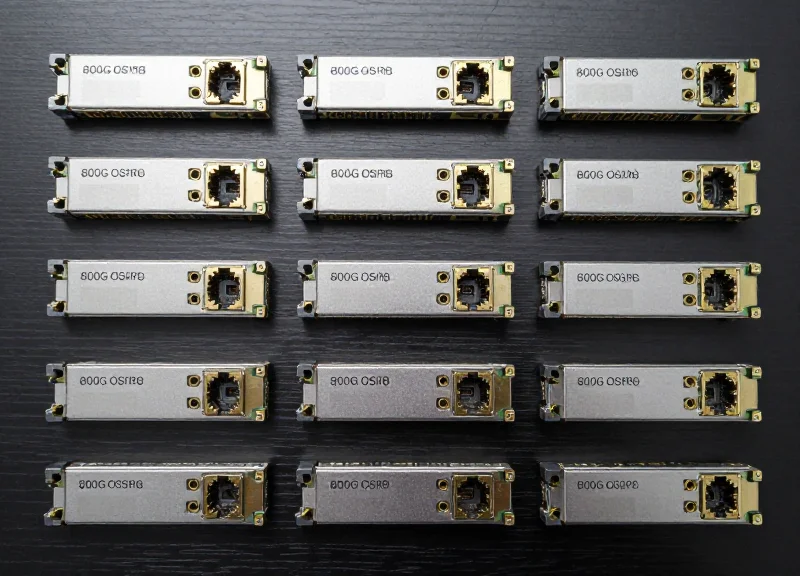
As AI workloads and cloud computing demand unprecedented bandwidth, the industry is pivoting toward 800G connectivity. Sourcing 800G OSFP DR8 modules at scale is no longer just a procurement task—it is a strategic necessity for modern data centers. This guide explores how to navigate wholesale markets, leverage OEM/ODM flexibility, and partner with Ubytelink to secure the hardware required for future-proof network infrastructure.
The Evolution of 800G: Why OSFP DR8 is the New Standard

The shift to 800G Ethernet is driven by the exponential growth in AI-driven traffic and hyperscale cloud demands, where the OSFP DR8 form factor has become the industry standard due to its superior thermal efficiency and high-density parallel fiber architecture. By utilizing eight lanes of 100G PAM4 modulation, the DR8 module provides a seamless path for 800G deployments, offering the necessary bandwidth to support next-generation switch ASICs like the Broadcom Tomahawk 5.
The Technological Leap: 400G vs. 800G Infrastructure
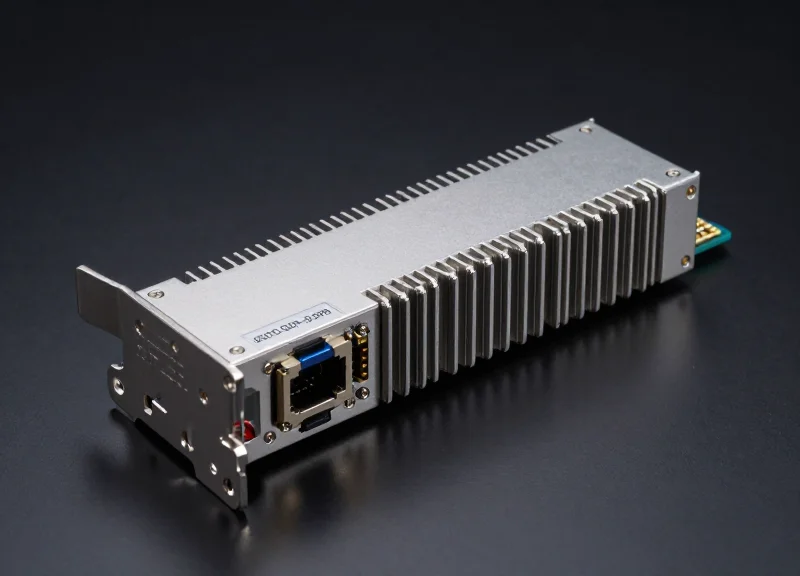
Transitioning from 400G to 800G is not merely about doubling speed; it is about optimizing the power-to-bit ratio. The 800G OSFP DR8 module supports a 500-meter reach over single-mode fiber (SMF), making it the ideal candidate for intra-data center interconnects. Unlike previous generations, the OSFP (Octal Small Form-factor Pluggable) design includes an integrated heat sink, which is critical for maintaining performance in high-radient environments where modules can consume up to 16W-18W.
| Feature | 400G DR4 | 800G DR8 |
|---|---|---|
| Aggregate Bandwidth | 400 Gbps | 800 Gbps |
| Electrical Interface | 8 x 50G PAM4 | 8 x 100G PAM4 |
| Optical Interface | 4 x 100G (Parallel) | 8 x 100G (Parallel) |
| Fiber Type | Single-mode (SMF) | Single-mode (SMF) |
| Typical Connector | MPO-12 | MPO-16 / Dual MPO-12 |
Efficiency Through Parallel Fiber Architecture
The 'DR8' designation signifies its capability to transmit over eight parallel channels. This architecture is particularly advantageous for breakout applications, allowing a single 800G port to connect to eight 100G DR or two 400G DR4 endpoints. This flexibility reduces the number of physical switches required and simplifies cable management in dense rack configurations.
- Why is OSFP preferred over QSFP-DD for 800G DR8?
While both exist, the OSFP form factor provides superior thermal dissipation and can handle higher power loads, which is essential for the reliability of 800G optical engines in 2026 high-density environments. - What are the primary use cases for OSFP DR8?
It is primarily used for leaf-spine fabric connectivity, AI back-end networks, and high-speed breakout to lower-speed legacy ports. - How does DR8 contribute to cost savings in wholesale procurement?
By consolidating bandwidth into fewer ports and cables, enterprises reduce the Total Cost of Ownership (TCO) per gigabit, especially when buying in bulk for large-scale data center refreshes.
Technical Deep Dive: Key Specifications of 800G OSFP DR8
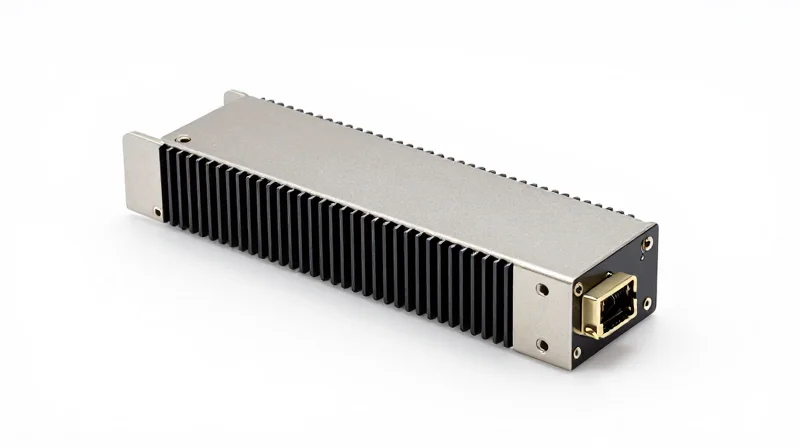
Technical Specifications of the 800G OSFP DR8 Transceiver
The 800G OSFP DR8 (Datacenter Reach 8-lane) transceiver is engineered to meet the aggressive bandwidth demands of AI-driven data centers, utilizing a parallel transmission architecture over single-mode fiber (SMF). By leveraging eight independent channels, each operating at 100Gbps, the DR8 module provides a seamless migration path for operators moving from 400G to 800G infrastructure without sacrificing port density or signal integrity.
Modulation and Electrical Interface: The 100G PAM4 Advantage
At the core of the 800G OSFP DR8 performance profile is the 8x100G PAM4 (Pulse Amplitude Modulation 4-level) electrical interface. Unlike traditional NRZ signaling, PAM4 allows for the transmission of two bits per symbol, effectively doubling the data rate within the same bandwidth. This 8-lane configuration aligns perfectly with the latest generation of switch ASICs, such as Broadcom's Tomahawk 5, ensuring low-latency communication and high radix switching capabilities.
| Parameter | Specification Detail |
|---|---|
| Data Rate | 850Gbps (8x106.25Gbps) |
| Wavelength | 1310nm |
| Reach | Up to 500m over G.652 SMF |
| Connector Type | MPO-12/APC or MPO-16/APC |
| Modulation | 100G PAM4 |
| Power Consumption | <16W (Typical 14W-15W) |
| Operating Temp | 0°C to 70°C (Commercial) |
Power Efficiency and Thermal Design
The OSFP (Octal Small Form-factor Pluggable) design is specifically favored for 800G DR8 applications due to its superior thermal management. Unlike the QSFP-DD, the OSFP features an integrated heat sink, which significantly enhances heat dissipation. This allows the DR8 module to maintain a power consumption profile of roughly 14W to 16W while preventing thermal throttling, a critical factor when stacking 32 or 64 ports in a 1U chassis.
- Why is the 1310nm wavelength used for DR8?
The 1310nm window offers low dispersion on single-mode fiber, which is ideal for the 500m reach required in modern leaf-spine architectures within the data center. - What is the difference between MPO-12 and MPO-16 connectors for DR8?
MPO-12 uses 8 fibers (4 transmit, 4 receive) for 400G or specific breakouts, while MPO-16 is the standard for full 8-lane 800G parallel transmission to ensure all 16 fibers (8 Tx, 8 Rx) are utilized. - Is the 800G OSFP DR8 backward compatible?
While the electrical interface supports varying speeds, backward compatibility depends on the switch's port logic and the use of breakout cables (e.g., 1x800G to 2x400G DR4).
The Strategic Benefits of Wholesale Procurement
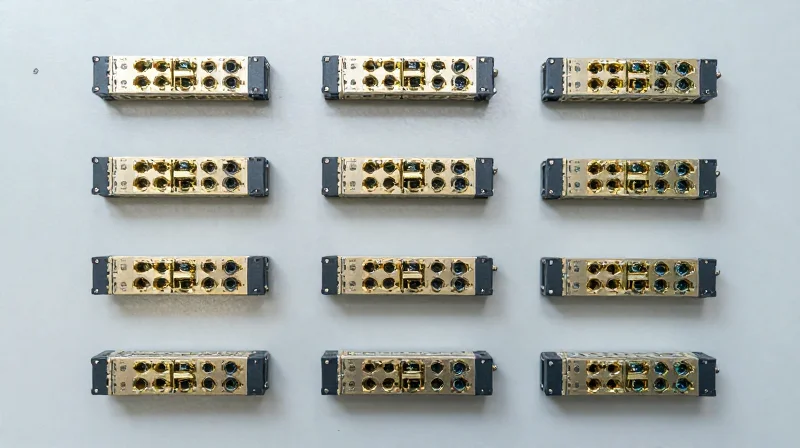
The transition to 800G infrastructure represents a massive capital expenditure for modern data centers. Strategic wholesale procurement mitigates these costs by leveraging economies of scale, providing a predictable cost-per-bit that is significantly lower than piecemeal retail acquisitions. Beyond the immediate financial savings, bulk sourcing establishes a reliable pipeline of critical components, insulating organizations from the volatile lead times and price fluctuations that often plague the high-performance networking market.
The Economics of Scale: Maximizing Cost-per-Bit Efficiency
As bandwidth requirements double, the primary goal for network architects is to keep power and cost increases sub-linear. Purchasing 800G OSFP DR8 modules in bulk allows operators to capitalize on the 'density-to-dollar' ratio. When moving from 400G to 800G, the hardware density is doubled without doubling the space or power footprint. Bulk procurement further compresses the unit price, making the cost of moving 800Gbps of data more economical than maintaining multiple lower-speed legacy links.
| Procurement Metric | Retail/Small Batch | Wholesale (Bulk Pricing) |
|---|---|---|
| Average Unit Cost | Standard MSRP | 15% - 30% Reduction |
| Cost-per-Bit (per 100G) | Higher due to overhead | Optimized for maximum ROI |
| Lead Time Priority | Standard Queue | Dedicated Inventory/Expedited |
| Technical Support | General Support | Dedicated Account Management |
Mitigating Supply Chain Volatility in 2026
The semiconductor and optical component markets remain susceptible to sudden shifts in demand, particularly with the explosive growth of AI and machine learning clusters. Wholesale agreements often include rolling forecasts and reserved stock, which protects buyers from the 'bullwhip effect'—where small changes in demand cause large swings in availability. By securing custom quotes for 2026 deployments, enterprises can lock in pricing and ensure that their upgrade cycles are not delayed by component shortages.
Custom Quotes: Beyond Standard Pricing
Wholesale procurement is rarely a one-size-fits-all transaction. Custom quotes allow for the inclusion of value-added services such as specialized labeling, pre-testing for multi-vendor interoperability, and staggered delivery schedules. This level of customization ensures that the 800G OSFP DR8 modules are ready for immediate deployment upon arrival, reducing labor costs and integration errors.
- Why is wholesale procurement better for 800G projects?
It provides a significantly lower cost-per-bit and ensures that large-scale infrastructure projects have a guaranteed supply of optics, avoiding project delays due to market volatility. - How does bulk pricing impact the Total Cost of Ownership (TCO)?
Bulk pricing reduces the initial capital expenditure (CAPEX) per port, which, when combined with the lower power consumption of 800G per gigabit, drastically lowers the long-term TCO. - Can wholesale orders be customized for specific data center environments?
Yes, custom wholesale quotes often include specific firmware requirements, compatibility testing for certain switches, and flexible shipping terms to match project timelines.
Unlocking Value with OEM and ODM Solutions

The transition to 800G networking often necessitates more than off-the-shelf hardware; it requires precision-engineered solutions that align with specific software-defined networking (SDN) stacks and proprietary switch environments. By leveraging Original Equipment Manufacturer (OEM) and Original Design Manufacturer (ODM) services, wholesale buyers can secure 800G OSFP DR8 modules that are tailored for optimal performance, ensuring that electrical interfaces, thermal management, and diagnostic monitoring are perfectly calibrated for their unique infrastructure.
Customizing the 800G OSFP DR8 via OEM/ODM
Customization in the 800G space typically focuses on three critical areas: firmware compatibility, hardware branding, and physical optimization. For wholesale clients, this means the ability to request custom EEPROM coding to ensure 'plug-and-play' compatibility with major switch vendors like Arista, Cisco, or NVIDIA (Mellanox). Beyond software, ODM solutions allow for physical modifications, such as enhanced heat sink designs to accommodate specific airflow patterns within high-density racks.
| Feature | OEM Model (Wholesale) | ODM Model (Custom Design) |
|---|---|---|
| Design Ownership | Manufacturer's standard design | Buyer's custom specification |
| Branding | Private labeling available | Full proprietary branding |
| Firmware | Pre-coded for multi-vendor support | Exclusive proprietary code |
| Lead Times | Shorter (Standardized production) | Longer (Design and validation cycles) |
| Minimum Order (MOQ) | Lower threshold for bulk buyers | High threshold for custom engineering |
Strategic Benefits of Proprietary Hardware
The primary advantage of ODM services for 800G OSFP DR8 modules is the mitigation of vendor lock-in while maintaining the performance of tier-one hardware. By developing a custom specification, operators can control the Bill of Materials (BOM), ensuring that specific internal components—such as the Digital Signal Processor (DSP) or the laser source—meet their longevity and power efficiency standards. This level of control is vital for 2026 deployments where power consumption per bit is a key KPI.
- Can I request custom firmware for 800G OSFP DR8 modules?
Yes, OEM solutions allow for custom EEPROM and firmware tweaks to ensure the transceivers pass host-integrity checks on proprietary network operating systems (NOS). - How does ODM impact wholesale pricing?
While ODM involves initial NRE (Non-Recurring Engineering) costs, the unit price for high-volume orders is often lower as unnecessary features are stripped to meet specific deployment needs. - What branding options are available for wholesale orders?
Most wholesale providers offer 'white label' options or private labeling, allowing the modules to be integrated into the buyer's own product ecosystem with custom pull-tab colors and serialized labels.
Ensuring Reliability: EEAT Standards in Optical Networking
In the high-stakes environment of 800G networking, reliability is defined by a supplier's adherence to EEAT standards—Experience, Expertise, Authoritativeness, and Trustworthiness—expressed through rigorous hardware validation. For wholesale purchasers, ensuring that 800G OSFP DR8 modules meet strict IEEE 802.3ck and Multi-Source Agreement (MSA) specifications is the only way to mitigate the risk of catastrophic network downtime in mission-critical data centers.
The Foundation of Interoperability: MSA Compliance
Multi-Source Agreement (MSA) compliance is the bedrock of optical networking reliability. By following the OSFP MSA guidelines, manufacturers ensure that their DR8 modules are mechanically and electrically compatible with a wide array of switch silicon, including Broadcom Tomahawk 5 and NVIDIA Spectrum-4 platforms. This standardization prevents the proprietary 'vendor lock-in' while guaranteeing that signal integrity remains consistent across diverse hardware ecosystems.
Standardized Testing Benchmarks for 800G DR8
| Testing Phase | Key Objective | Benchmark / Metric |
|---|---|---|
| Design Verification | Signal Quality | TDECQ < 3.4 dB |
| Environmental Stress | Thermal Stability | 72-Hour Burn-in at 70°C |
| Production Testing | Data Integrity | Pre-FEC BER < 1E-5 |
| Interoperability | Switch Compatibility | Packet Loss 0% over 24 hrs |
Quality Assurance Protocols for Bulk Procurement
When soliciting custom quotes for wholesale 800G OSFP DR8, it is imperative to verify the supplier's Quality Management System (QMS). Leading manufacturers utilize automated testing stations that verify every single module for optical output power, wavelength stability, and receiver sensitivity. Unlike lower-tier providers who may perform batch testing, tier-1 wholesale partners provide serialized test reports for every unit in the shipment.
Reliability and Compliance FAQ
- Why is TDECQ important for 800G DR8?
Transmitter and Dispersion Eye Closure Quaternary (TDECQ) is the primary measure of optical signal quality for PAM4 modulation. A low TDECQ ensures the signal can be accurately recovered by the receiver even after fiber attenuation. - Does wholesale pricing impact the quality of the modules?
Reputable suppliers maintain the same testing standards for wholesale and retail units; however, bulk pricing is achieved through manufacturing efficiencies and high-volume raw material procurement, not by cutting quality corners. - What certifications should I look for in a 2026 quote?
Ensure the vendor is ISO 9001 certified and that the hardware complies with RoHS (Restriction of Hazardous Substances), CE, and FCC Part 15 standards for electromagnetic interference.
Ultimately, the longevity of an 800G deployment depends on the confluence of high-quality components—such as EML lasers and silicon photonics integrated circuits—and a robust verification process. By prioritizing these EEAT standards during the procurement phase, enterprises can secure their network infrastructure against the volatile failure rates of unverified hardware.
Comparing OSFP vs. QSFP-DD in 800G Deployments
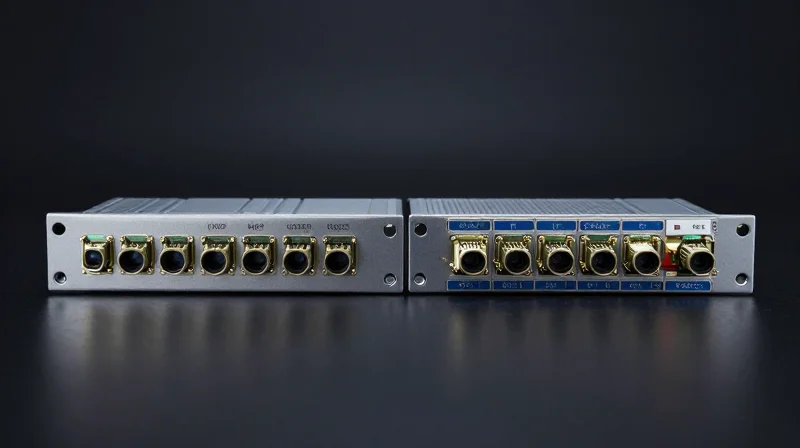
Comparing OSFP vs. QSFP-DD in 800G Deployments
The transition to 800G Ethernet hinges on two primary form factors: Octal Small Form-factor Pluggable (OSFP) and Quad Small Form-factor Pluggable Double Density (QSFP-DD). While both utilize eight lanes of 100G PAM4 to achieve 800G throughput, OSFP has emerged as the front-runner for 800G DR8 wholesale deployments in high-density data centers. This preference is driven by OSFP's superior thermal management capabilities and its ability to support higher power envelopes, which are critical for the advanced Digital Signal Processors (DSPs) found in DR8 modules.
Thermal Dynamics and Power Capacity
The most significant differentiator is the thermal design. OSFP modules feature an integrated heat sink, allowing them to dissipate heat more effectively than QSFP-DD, which relies on the equipment cage for cooling. As 800G DR8 modules often push power consumption toward 15W or higher, the OSFP's design prevents thermal throttling and extends the lifespan of the optical components. This makes OSFP the more reliable choice for enterprise buyers looking to secure long-term stability in their 2026 infrastructure upgrades.
| Feature | 800G OSFP | 800G QSFP-DD |
|---|---|---|
| Heat Dissipation | Integrated Heat Sink (Superior) | Cage-based Cooling (Standard) |
| Power Envelope | Up to 15W - 18W+ | Up to 12W - 15W |
| Backward Compatibility | Requires Adapter | Native with QSFP28/QSFP56 |
| 1.6T Path | Seamless Transition | Potential Thermal Limitations |
| Physical Size | Slightly Larger/Wider | More Compact |
Choosing the Right Factor for Wholesale Procurement
When sourcing 800G OSFP DR8 wholesale, network architects must weigh the benefits of OSFP's thermal headroom against the backward compatibility of QSFP-DD. For greenfield AI clusters and hyperscale expansions, OSFP is the industry standard due to its future-proofing for 1.6T speeds. However, for organizations maintaining legacy QSFP-based environments, QSFP-DD remains a viable option, provided the cooling infrastructure can handle the increased heat density of 800G optics.
- Why is OSFP preferred for AI networking?
AI workloads generate intense heat; OSFP’s superior cooling prevents performance drops during peak processing, ensuring the 800G DR8 modules maintain consistent low latency. - Can I use OSFP modules in QSFP-DD ports?
No, the physical dimensions and electrical interfaces are different. You must select the form factor that matches your switch or router's port specification. - Is there a price difference when buying wholesale?
Pricing for 800G OSFP DR8 and QSFP-DD DR8 is generally comparable at scale, though OSFP can sometimes command a slight premium due to its advanced thermal housing.
Optimizing Your Supply Chain with Ubytelink

Strategic Supply Chain Integration with Ubytelink
Ubytelink serves as a critical strategic partner for global enterprises by bridging the gap between high-performance 800G optical hardware and the complex logistics of large-scale infrastructure projects. By leveraging a robust global distribution network and direct manufacturer relationships, we ensure that bulk orders of 800G OSFP DR8 modules are delivered with reduced lead times and at price points that significantly lower the Total Cost of Ownership (TCO). Our integrated approach combines deep technical expertise with supply chain resilience, allowing organizations to scale their bandwidth capacity without the operational risks typically associated with wholesale hardware procurement.
The Wholesale Advantage: Efficiency and Support
| Service Feature | Standard Procurement | Ubytelink Wholesale |
|---|---|---|
| Average Lead Time | 4-8 Weeks | 1-3 Weeks (Priority) |
| Technical Support | Standard Documentation | Dedicated Solutions Architect |
| Pricing Model | Fixed Retail MSRP | Custom Tiered Bulk Pricing |
| Quality Assurance | Batch Testing | 100% Individual Unit Validation |
Frequently Asked Questions
- How do custom quotes benefit large-scale 2026 deployments?
Our custom quoting process accounts for project-specific timelines and volume tiers, ensuring that 2026 budgets are optimized against market fluctuations and hardware availability. - Does Ubytelink provide interoperability testing for bulk orders?
Yes, every module is tested for MSA compliance and verified against specific host platform requirements in our labs before shipping to ensure zero-touch installation for the client. - Can Ubytelink manage global logistics for multi-site rollouts?
We offer comprehensive international shipping management, including customs clearance, duty handling, and regional distribution to global data center hubs to simplify multi-site expansion.
How to Request a Custom Quote for 800G Projects
Securing a custom quote for 800G OSFP DR8 modules is a strategic process that moves beyond simple price-per-unit calculations to encompass technical validation, supply chain logistics, and long-term scalability. Given the high power requirements and thermal sensitivity of 800G infrastructure, a comprehensive quote request ensures that the provided optics are not only cost-effective but also fully optimized for your specific data center environment and switch fabric.
Essential Data Points for an Accurate 800G Quote
To receive a quote that reflects the true scale and technical needs of your project, procurement teams must look beyond just the part number. Vendors require visibility into the network architecture to mitigate risk and provide accurate lead times.
| Quote Category | Information Required | Impact on Pricing/Lead Time |
|---|---|---|
| Order Volume | Total units required and phased rollout schedule. | High volume orders unlock deeper tier-based discounts. |
| Hardware Compatibility | Specific switch models (e.g., NVIDIA, Arista, Cisco). | Custom EEPROM coding may be required for vendor lock-in bypass. |
| Fiber Infrastructure | MPO/MTP connector types and polish (APC/PC). | Ensures physical layer compatibility and reduces return rates. |
| Logistics Needs | Shipping destination and requested delivery date. | Affects freight costs and inventory allocation priority. |
Defining Your Technical and Compatibility Requirements
800G OSFP DR8 modules are highly sensitive to the host environment's cooling and power delivery. When requesting a quote, specify whether your equipment uses the 'Finned' or 'Flat' top OSFP design. Furthermore, provide details on the SerDes configuration of your switches. Misalignment in these technical specifications can lead to costly deployment delays or hardware damage, so providing this data upfront allows engineers to validate the solution before the quote is finalized.
Volume Projections and Multi-Site Staging
If your project involves multiple data center locations or a multi-year expansion, communicate this in the initial RFQ. Wholesale providers often offer 'price protection' or 'blanket purchase orders' for 800G projects. This allows you to lock in 2026 pricing for future shipments, insulating your project from potential market volatility or silicon shortages in the 800G supply chain.
FAQ: Custom Quotes for 800G Wholesale Orders
- What is the typical Minimum Order Quantity (MOQ) for 800G wholesale pricing?
While it varies by manufacturer, wholesale tiers generally begin at 20 units. However, significant price breaks are typically realized at the 50-unit and 100-unit thresholds. - Can I request sample units for interoperability testing?
Yes. For large-scale 800G deployments, most reputable vendors provide evaluation samples to ensure seamless integration with your specific switch and NIC hardware. - How long are custom quotes valid?
Due to the fluctuating cost of high-end optoelectronics, most 800G quotes are valid for 15 to 30 days. It is advisable to finalize the quote near your procurement window. - Do custom quotes include technical support?
Wholesale quotes from enterprise-grade providers like Ubytelink usually include dedicated FAE (Field Application Engineer) support to assist with initial setup and troubleshooting.
Navigating the complexities of 800G scaling requires a partner who understands both the technology and the market dynamics. By choosing Ubytelink for your 800G OSFP DR8 wholesale needs, you gain access to superior performance, deep customization through OEM/ODM services, and industry-leading pricing. Ready to upgrade your network capacity? Contact Ubytelink today for a personalized consultation and a competitive custom quote.