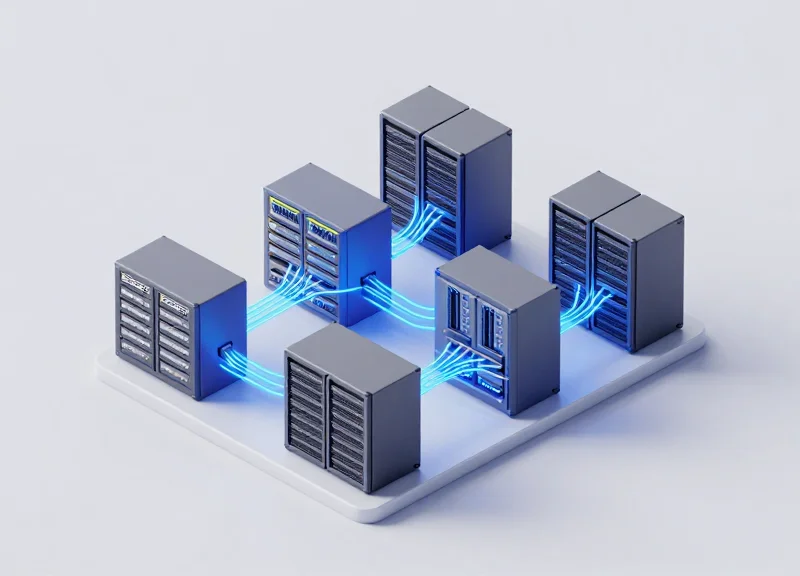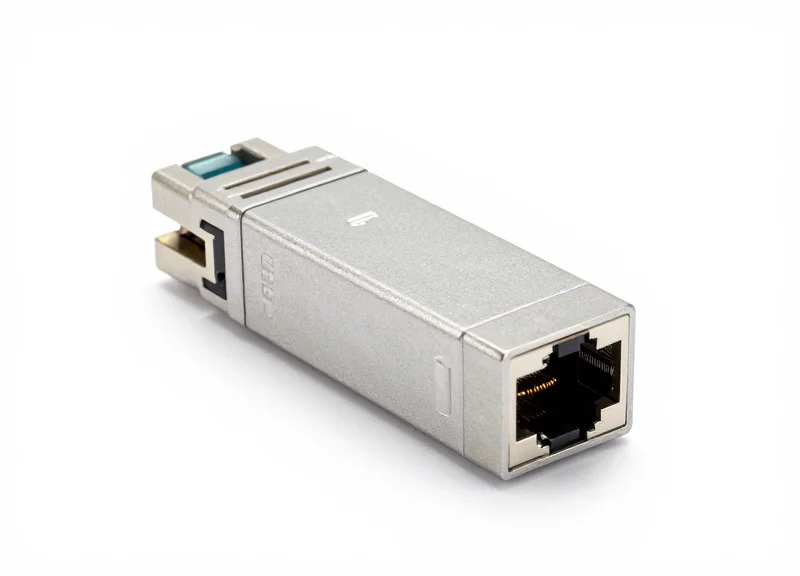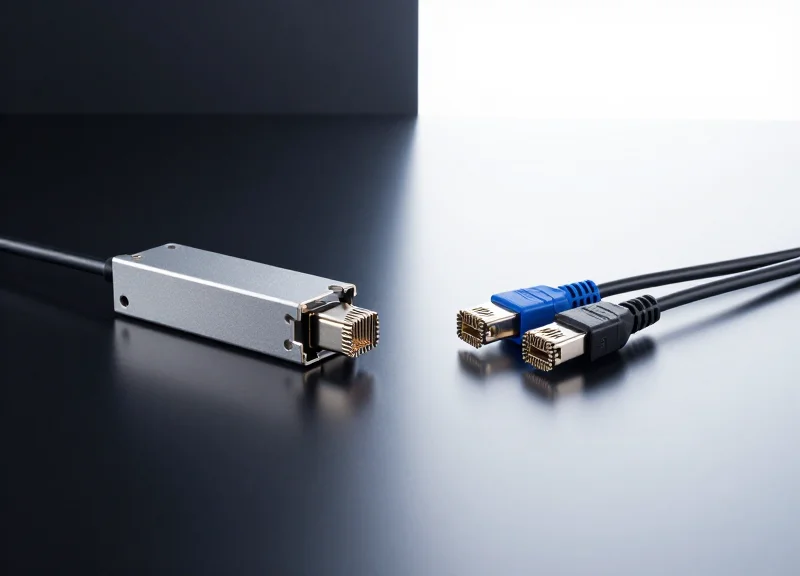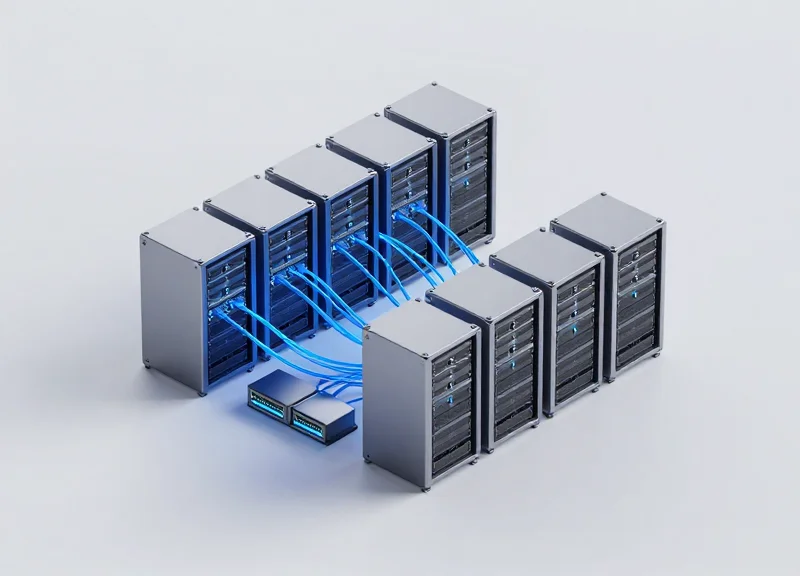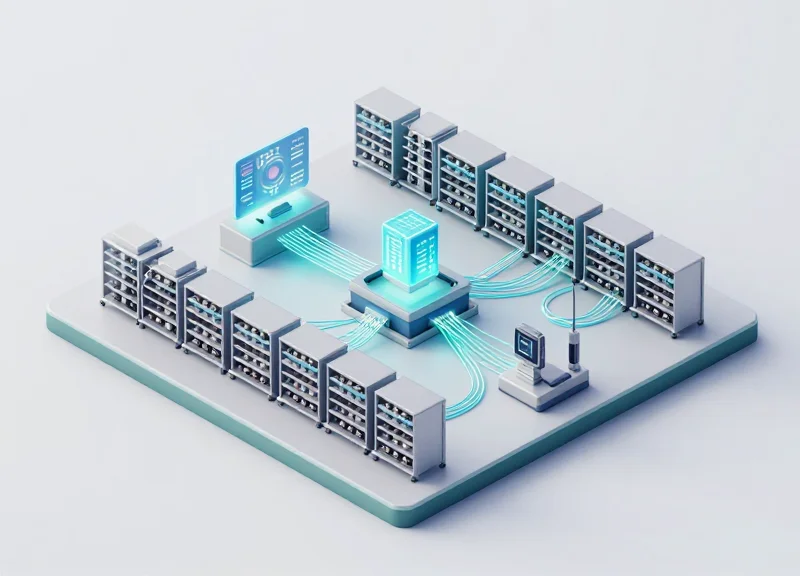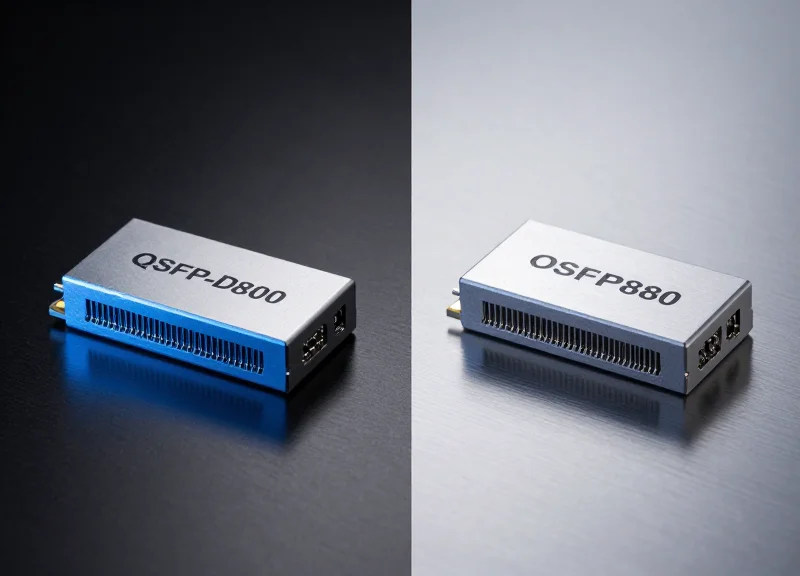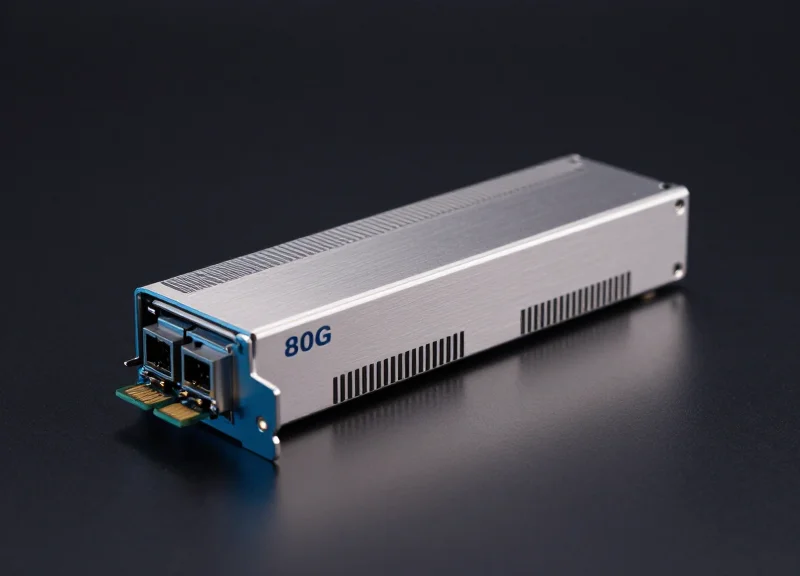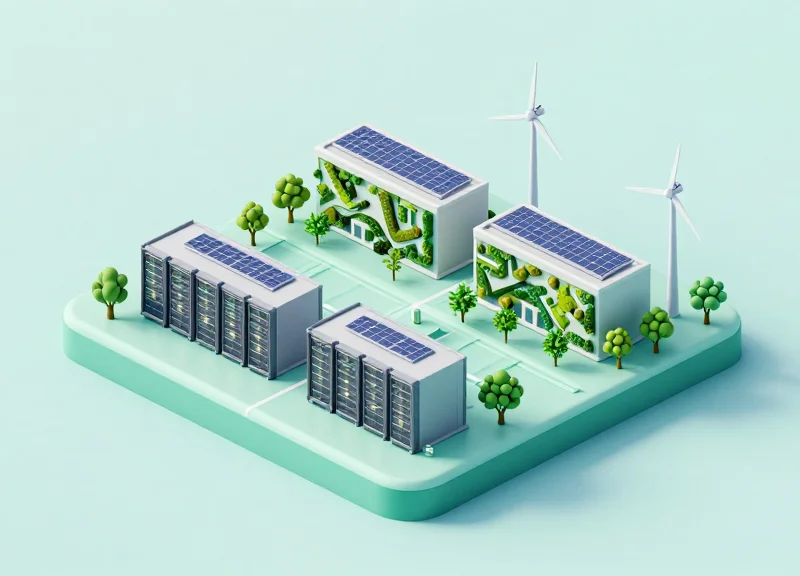
In an era where digital transformation demands unprecedented power, the environmental impact of data centers has become a primary concern for global enterprises. Ubytelink addresses this challenge by providing modular, sustainable green data center solutions that don't compromise on performance. This guide explores how our premium infrastructure supports global networks while drastically reducing carbon footprints and operational costs.
The Rise of the Sustainable Data Center
The Rise of the Sustainable Data Center
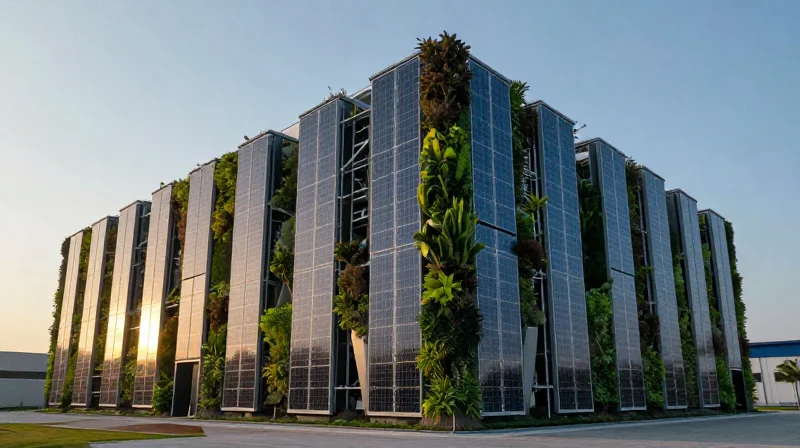
The global data center industry is currently undergoing a fundamental transformation, pivoting from carbon-intensive legacy facilities toward high-efficiency, sustainable ecosystems that align rapid digital growth with environmental stewardship. As the backbone of the digital economy, data centers must now balance the insatiable demand for compute power with the urgent need to reduce greenhouse gas emissions and resource consumption.
Driving Forces: ESG Mandates and Global Regulation
Environmental, Social, and Governance (ESG) criteria have evolved from elective corporate social responsibility initiatives into rigorous operational requirements. Global regulators and stakeholders are increasingly demanding transparency in carbon reporting, forcing a shift toward 'green' procurement strategies. For global networks, this means selecting infrastructure partners like Ubytelink that prioritize lower Power Usage Effectiveness (PUE) and sustainable lifecycle management.
| Feature | Traditional Data Centers | Sustainable Green Data Centers |
|---|---|---|
| Cooling Strategy | Standard CRAC units with high airflow loss | Liquid cooling and AI-optimized thermal management |
| Energy Source | Primarily fossil-fuel-dependent grids | Integration of renewables, PPA, and microgrids |
| Architecture | Monolithic, rigid, and over-provisioned | Modular, scalable, and right-sized designs |
| PUE Rating | Typically 1.5 to 2.0 | Targeting 1.2 or lower |
| Waste Management | High construction and e-waste | Circular economy focus and modular reuse |
Modular Innovation and Efficiency
A key pillar in the rise of sustainable infrastructure is the move toward modularity. By pre-fabricating data center components in controlled environments, providers can significantly reduce on-site construction waste and optimize the integration of energy-efficient power blocks. This approach ensures that cooling and power distribution are perfectly calibrated to the actual IT load, eliminating the massive energy drain associated with underutilized traditional floor space.
- What is the primary goal of a Green Data Center?
The primary goal is to maximize energy efficiency and minimize environmental impact by using advanced cooling technologies, renewable energy sources, and sustainable building materials. - Why is Power Usage Effectiveness (PUE) a critical metric?
PUE measures the ratio of total facility power to the power delivered to IT equipment. A lower PUE indicates that more energy is being used for computing rather than being wasted on overhead like cooling. - How do sustainable solutions impact global network performance?
Green data centers often utilize more advanced, compact technology that reduces latency and improves reliability while lowering the total cost of ownership through energy savings.
Ubytelink's Modular Design Philosophy
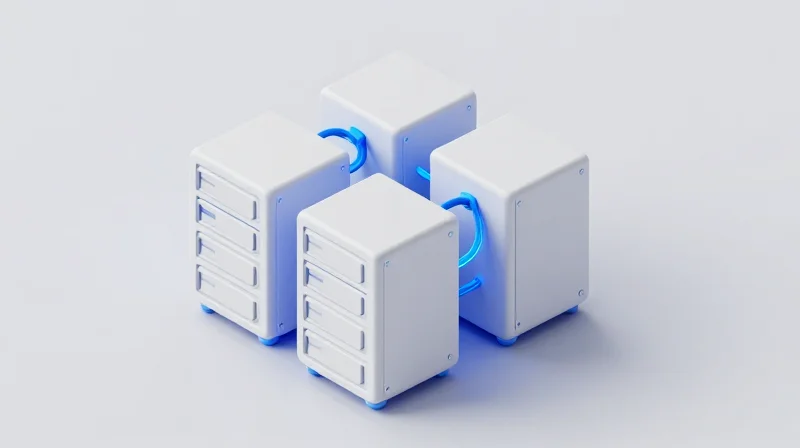
Ubytelink Sustainable Green Data Centers Solutions: Premium Quality for Global Networks are built upon the principle of modularity, which treats data center infrastructure as a series of standardized, factory-integrated units. This philosophy allows for unprecedented precision in resource management, enabling global enterprises to scale their digital footprint with predictable costs and significantly lower carbon emissions compared to traditional stick-built facilities.
The Building Block Approach: Precision and Scalability
By moving the bulk of construction from the job site to a controlled factory environment, Ubytelink eliminates the unpredictability of weather, local labor shortages, and material waste. Each module—whether it is for power distribution, thermal management, or IT racks—is engineered to fit seamlessly into a larger ecosystem, functioning as an interoperable 'building block' that can be deployed individually or as part of a massive hyperscale cluster.
| Feature | Traditional Construction | Ubytelink Modular Design |
|---|---|---|
| Deployment Speed | 18–24 Months | 6–9 Months |
| Scalability | Fixed Capacity | Incremental 'Pay-as-you-grow' |
| Construction Waste | High (On-site scrap) | Minimal (Controlled Factory) |
| Quality Control | Variable (Field testing) | Superior (Factory Witness Testing) |
Sustainability Through Optimized Resource Efficiency
The modular philosophy is inherently green. Traditional construction often leads to over-provisioning—building more space than is immediately needed—which results in 'ghost' energy consumption. Ubytelink’s approach enables 'just-in-time' infrastructure. Operators only deploy what is required, reducing initial capital expenditure and ensuring that every watt of power is utilized effectively, thereby driving down the Power Usage Effectiveness (PUE) ratio from day one.
Common Questions Regarding Modular Architecture
- Does modular design limit customization for specific workloads?
No. While the framework is standardized, the internal configurations are highly flexible, allowing for specific liquid cooling, high-density AI racks, or specialized security protocols. - How does modularity contribute to a lower total cost of ownership (TCO)?
By reducing deployment time by up to 50% and minimizing on-site engineering requirements, modularity lowers both CAPEX and long-term operational costs through better energy efficiency. - Can these modules be deployed in harsh environmental conditions?
Yes, Ubytelink modules are ruggedized and factory-sealed to withstand diverse climates, making them ideal for edge deployments in remote or industrial locations.
Achieving Industry-Leading PUE (Power Usage Effectiveness)

Achieving Industry-Leading PUE (Power Usage Effectiveness)
At the core of Ubytelink's green initiative is the pursuit of a Power Usage Effectiveness (PUE) rating as close to the theoretical limit of 1.0 as possible. While traditional data centers often operate with PUE values ranging from 1.5 to 2.0, Ubytelink utilizes a holistic engineering approach that treats the data center as a single, integrated thermodynamic system. By minimizing energy losses during power conversion and optimizing heat rejection through advanced cooling architectures, we ensure that every watt drawn from the grid is primarily dedicated to computational output rather than facility overhead.
High-Efficiency Power Distribution Architecture
Energy loss often occurs silently through multiple stages of voltage transformation and AC-to-DC conversion. Ubytelink mitigates these losses by deploying high-voltage DC (HVDC) power distribution and modular UPS systems that operate at peak efficiency even under partial loads. By reducing the number of conversion steps and utilizing intelligent busway systems instead of traditional cabling, Ubytelink reduces electrical resistance and heat generation within the power path itself.
| Efficiency Metric | Traditional Data Centers | Ubytelink Optimized Facilities |
|---|---|---|
| Average PUE Rating | 1.67 - 1.80 | 1.15 - 1.25 |
| Cooling Technology | DX Air Conditioning | Liquid Cooling & Free Air Exchange |
| Power Conversion Loss | 12% - 15% | Less than 4% |
| Thermal Management | Manual Setpoints | AI-Driven Real-Time Optimization |
AI-Driven Thermal Management and Liquid Cooling
Cooling typically represents the largest portion of a data center's non-IT power consumption. Ubytelink addresses this through a multi-tier thermal strategy. For high-density workloads, we implement direct-to-chip liquid cooling and rear-door heat exchangers, which are significantly more efficient at removing heat than air-based systems. Furthermore, our proprietary AI management layer analyzes telemetry from thousands of sensors to dynamically adjust fan speeds, pump rates, and chilled water temperatures in real-time, preventing over-cooling and eliminating energy waste.
Frequently Asked Questions: PUE Optimization
- How does Ubytelink maintain low PUE in hot climates?
We utilize adiabatic cooling and advanced thermal insulation alongside our liquid cooling modules to maintain high efficiency even when ambient external temperatures rise, reducing reliance on energy-intensive mechanical refrigeration. - Does a lower PUE affect system reliability?
No. In fact, our high-efficiency components and AI monitoring often increase reliability by reducing the thermal stress on IT equipment and providing predictive maintenance alerts before components fail. - Is PUE the only metric Ubytelink tracks?
While PUE is critical, we also monitor Water Usage Effectiveness (WUE) and Carbon Usage Effectiveness (CUE) to ensure our sustainability efforts are comprehensive and balanced across all resources.
Advanced Cooling Technologies for Mission-Critical Loads
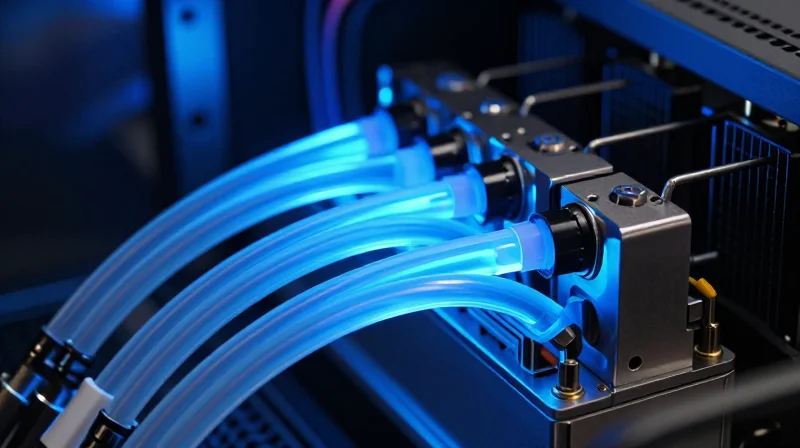
Thermal Management for High-Density Computing Environments
Ubytelink Sustainable Green Data Centers Solutions integrate cutting-edge cooling methodologies to solve the thermal challenges of modern mission-critical loads, ensuring that high-performance hardware operates within strict temperature parameters to prevent throttling and premature failure. By shifting from traditional perimeter cooling to targeted liquid and smart-airflow solutions, Ubytelink significantly reduces the energy required to remove heat, directly supporting global sustainability goals and ensuring 24/7 reliability for global networks.
Liquid Cooling: From Edge to Core
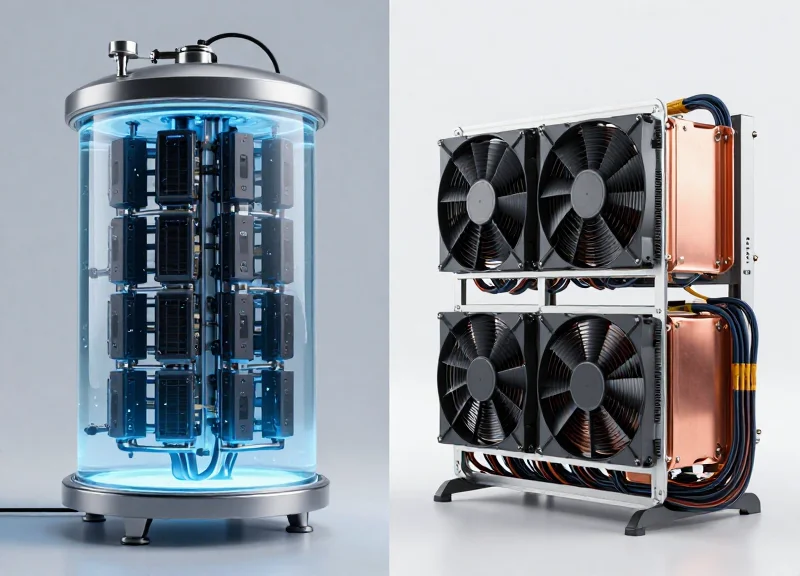
As rack densities exceed 20kW due to AI and high-performance computing (HPC) workloads, traditional air cooling reaches its physical limits. Ubytelink employs Direct-to-Chip (DTC) and Immersion Cooling technologies to handle these extreme heat loads. DTC systems circulate non-conductive fluids directly over the processor, capturing up to 90% of heat at the source. Alternatively, immersion cooling bathes entire server chassis in specialized dielectric liquids, eliminating the need for internal server fans and drastically reducing mechanical vibrations that can impact mechanical disk reliability and fan power consumption.
| Feature | Traditional Air Cooling | Ubytelink Liquid Cooling Solutions |
|---|---|---|
| Heat Transfer Efficiency | Low (Air acts as an insulator) | High (Liquid has 3000x the thermal capacity of air) |
| Rack Density Support | 5kW to 15kW per rack | 30kW to over 100kW per rack |
| Energy Overhead | High (Fans and humidity control) | Minimal (Efficient pumps and heat exchangers) |
| Hardware Longevity | Moderate (Affected by thermal cycling) | Superior (Constant, stable thermal environment) |
Intelligent Airflow and AI-Driven Control
For facilities utilizing air-based thermal management, Ubytelink deploys Smart Airflow Management via computational fluid dynamics (CFD) modeling and real-time AI sensors. Cold and hot aisle containment systems prevent the mixing of air streams, while AI algorithms adjust variable frequency drives (VFDs) on fans and pumps in milliseconds based on fluctuating server workloads. This precision cooling ensures that no energy is wasted on over-cooling vacant spaces, maintaining a tight thermal envelope across the entire facility.
- How does advanced cooling improve hardware reliability?
By maintaining a constant, lower operating temperature and reducing thermal fluctuations, advanced cooling minimizes the physical stress on silicon and solder joints, extending the Mean Time Between Failures (MTBF) of critical components. - Can Ubytelink solutions be retrofitted into existing data centers?
Yes, Ubytelink's modular cooling units, including Rear Door Heat Exchangers (RDHx), can be integrated into legacy environments to boost capacity without requiring a full facility overhaul. - What is the impact of liquid cooling on Water Usage Effectiveness (WUE)?
Ubytelink prioritizes closed-loop liquid systems that recycle coolant, significantly lowering water consumption compared to traditional evaporative cooling towers that require constant replenishment.
Ensuring 24/7 Reliability in Green Environments
Ensuring 24/7 Reliability in Green Environments
A common misconception in the industry is that 'going green' necessitates a sacrifice in reliability; however, Ubytelink Sustainable Green Data Centers Solutions prove that premium quality and environmental stewardship are mutually inclusive. By engineering systems that prioritize both energy efficiency and maximum uptime, Ubytelink ensures that global networks remain operational without interruption, regardless of the energy source or cooling method employed. Our infrastructure is designed to exceed standard availability metrics while minimizing the carbon footprint of the digital economy.
Redundant Power Architectures and Grid Resilience
Ubytelink utilizes multi-tier redundancy protocols, including 2N+1 power configurations that bridge the gap between renewable energy intermittency and mission-critical requirements. By integrating large-scale Battery Energy Storage Systems (BESS), our facilities can smooth out fluctuations from solar or wind inputs while maintaining a seamless transition to backup systems if the primary grid fails. This hybrid approach ensures that the load remains stable and protected against voltage sags or total power loss.
| Feature | Standard Data Center | Ubytelink Green Solution |
|---|---|---|
| Uptime Tier | Tier III (99.982%) | Tier III/IV Equivalent (99.99%+) |
| Power Redundancy | N+1 Traditional | 2N+1 Green-Optimized |
| Monitoring | Reactive Alarms | AI-Driven Predictive Maintenance |
| Energy Backup | Diesel-Only | Hybrid BESS + Eco-Diesel |
Fail-Safe Protocols and Predictive Intelligence
The core of Ubytelink's reliability lies in its software-defined infrastructure. Advanced AI algorithms monitor environmental variables—such as humidity, localized heat maps, and electrical harmonics—in real-time. This allows for automated fail-over procedures that activate before a component reaches a critical failure point, effectively eliminating human error and mechanical downtime. Every green component is rigorously tested to ensure it meets the same 'always-on' standards as traditional hardware.
- Does using renewable energy affect the stability of the power supply?
No. Ubytelink uses advanced power conditioning and BESS technology to ensure that the electricity delivered to servers is stable and 'clean,' regardless of its origin. - How does Ubytelink handle cooling failures in high-density environments?
Our liquid cooling and smart airflow systems are equipped with secondary thermal reservoirs and redundant pump modules to maintain safe operating temperatures even during maintenance cycles. - Are green data centers more prone to outages than traditional ones?
Statistically, Ubytelink's green solutions offer higher reliability due to the modernization of the equipment and the integration of digital twin monitoring technologies.
Global Network Integration and Compatibility

Global network integration is a cornerstone of Ubytelink’s design philosophy, ensuring that green data centers do not sacrifice connectivity for sustainability. By utilizing standardized high-density fiber interfaces and supporting modern software-defined networking (SDN) protocols, Ubytelink modules plug directly into major international exchanges and tier-1 provider backbones without the need for complex translation layers or specialized hardware. This native compatibility ensures that enterprises can scale their operations globally while maintaining the highest levels of performance and environmental responsibility.
Optimizing High-Speed Fiber-Optic Backbones
To facilitate massive data throughput across international borders, Ubytelink incorporates pre-terminated high-density MPO/MTP fiber assemblies within its modular units. These systems are designed to support 400G and 800G Ethernet standards, providing the bandwidth necessary for AI-driven workloads, real-time analytics, and global cloud synchronization. The physical layer is optimized for minimal signal attenuation, maintaining signal integrity over long-haul connections to ensure that geographically dispersed users experience zero perceptible lag.
Architectural Compatibility and Standards
| Network Architecture | Supported Protocols | Integration Benefit |
|---|---|---|
| Software-Defined Networking (SDN) | OpenFlow, NETCONF, YANG | Enables automated traffic orchestration and dynamic resource allocation. |
| Hybrid Cloud / Multi-Cloud | Direct Connect, ExpressRoute | Provides secure, low-latency tunnels to major public cloud providers. |
| Legacy Enterprise IP | BGP, OSPF, MPLS | Ensures smooth transition for existing infrastructures into green environments. |
Global Connectivity: Common Integration Questions
- How does Ubytelink maintain low latency in cross-border deployments?
Ubytelink optimizes the physical networking path and supports edge-caching configurations, which significantly reduces the 'hop count' between the data center node and the global internet exchange (IXP). - Is Ubytelink hardware compatible with non-standard regional network grids?
Yes, our modular architecture includes multi-protocol network gateways and adaptive interface modules designed to bridge regional technical differences without requiring expensive custom hardware. - Does the energy-efficient design impact network reliability or throughput?
No. The sustainability features are focused on cooling and power distribution; the network fabric remains physically and logically isolated to ensure 99.999% availability and full-rated throughput speeds.
Future-Proofing Through Modularity
As global network standards evolve, Ubytelink’s modular approach allows for the rapid swapping of network interface cards (NICs) and optical transceivers. This modularity ensures that as the world moves toward Terabit Ethernet, Ubytelink data centers can be upgraded with minimal downtime, preserving the long-term value of the green infrastructure investment.
Compliance, Certifications, and EEAT Standards
The Pillars of Trust: Regulatory Compliance and Green Certification
Ubytelink ensures premium quality for global networks by strictly adhering to a multi-layered compliance architecture that bridges the gap between high-performance computing and environmental stewardship. By integrating internationally recognized certifications into the core design of our sustainable data center modules, we provide enterprise clients with a validated foundation for security, efficiency, and legal compliance across different jurisdictions.
Core Certification Framework
| Category | Certification/Standard | Strategic Benefit for Global Networks |
|---|---|---|
| Environmental Management | ISO 14001 / LEED Gold | Validates reduction in carbon footprint and waste management efficiency. |
| Information Security | ISO/IEC 27001 | Ensures the highest level of data integrity and protection against cyber threats. |
| Energy Efficiency | ISO 50001 / PUE < 1.2 | Demonstrates systematic improvement in energy performance and operational cost reduction. |
| Infrastructure Tiering | Uptime Institute Tier III/IV | Guarantees 99.98% to 99.99% uptime for mission-critical global operations. |
| Quality Management | ISO 9001 | Standardizes manufacturing and deployment processes for consistent global quality. |
Establishing EEAT: Experience, Expertise, Authoritativeness, and Trustworthiness
In the specialized field of green infrastructure, Ubytelink prioritizes EEAT standards to foster long-term partnerships with telecommunications and cloud providers. Our Expertise is demonstrated through our patented liquid cooling technologies and AI-driven thermal management. Our Authoritativeness is established by our active participation in global open-compute initiatives and sustainability forums. Trustworthiness is maintained through transparent reporting of PUE (Power Usage Effectiveness) and WUE (Water Usage Effectiveness) metrics, allowing clients to audit their ESG (Environmental, Social, and Governance) progress accurately.
Common Compliance Inquiries
- How does Ubytelink ensure compliance with regional data sovereignty laws?
Our modular units are designed to house localized hardware that complies with GDPR, HIPAA, and other regional mandates, ensuring data remains within specified borders while maintaining green efficiency. - Are Ubytelink solutions compatible with OCP (Open Compute Project) standards?
Yes, our designs follow OCP guidelines to ensure hardware interoperability and reduce proprietary lock-in, which enhances long-term sustainability. - What role does ISO 50001 play in Ubytelink operations?
ISO 50001 provides the framework for our Energy Management System (EnMS), which helps us continuously optimize energy consumption patterns across our modular deployments. - Is the liquid cooling system certified for safety?
Our liquid cooling technologies undergo rigorous UL and CE safety testing to prevent leakages and ensure hardware protection under peak load conditions.
By maintaining these stringent standards, Ubytelink Sustainable Green Data Centers Solutions provide more than just infrastructure; they provide a certified, risk-mitigated pathway for global enterprises to expand their digital footprint sustainably.
The ROI of Switching to Green Infrastructure

The Financial Logic of Sustainable Infrastructure
The transition to Ubytelink’s green infrastructure is driven by a powerful economic rationale: reducing the Total Cost of Ownership (TCO) while enhancing the resilience of global network assets. While the initial migration requires capital expenditure, the lifecycle savings—primarily driven by a 30-40% reduction in power consumption—often result in a payback period of less than three years for enterprise-scale deployments. By integrating premium energy-efficient hardware, companies shift from a reactive spending model to a proactive, value-generating infrastructure.
| Financial Metric | Traditional Data Center | Ubytelink Green Solution |
|---|---|---|
| Power Usage Effectiveness (PUE) | 1.6 - 2.0 | 1.1 - 1.2 |
| Annual Energy Costs | High and Volatile | Low and Predictable |
| Maintenance Frequency | High (Thermal Stress) | Low (Optimized Cooling) |
| Regulatory Impact | Carbon Taxes and Penalties | Carbon Credits and Subsidies |
Lowering Utility Bills and Maintenance Overhead
Ubytelink’s premium quality components are engineered to operate at peak efficiency even under high-density workloads. By utilizing advanced liquid cooling and AI-driven power management, these solutions minimize waste heat. This not only slashes electricity bills but also reduces the mechanical wear on cooling fans and power supplies, leading to a measurable decrease in spare part inventory costs and a reduction in the frequency of emergency maintenance interventions.
- How do carbon tax credits impact the ROI?
Many global markets now impose financial penalties on high-carbon operations; Ubytelink's certified green modules allow firms to claim carbon credits, effectively turning a potential regulatory liability into a tangible financial asset. - Does green infrastructure affect hardware lifespan?
Yes, by maintaining a more stable and cooler operating environment, Ubytelink solutions reduce the rate of component degradation, extending the usable life of servers and networking gear by up to 25%. - What is the impact on insurance premiums?
Sustainable facilities that adhere to modern safety and environmental standards often qualify for lower insurance premiums due to reduced fire risks from efficient power distribution and better disaster recovery profiles.
Ubytelink is committed to powering the future of the internet without costing the planet. By choosing our sustainable modular solutions, your business secures a high-performance, future-proof foundation for its global operations. Ready to optimize your infrastructure? Contact our specialist team today for a comprehensive green data center audit and consultation.