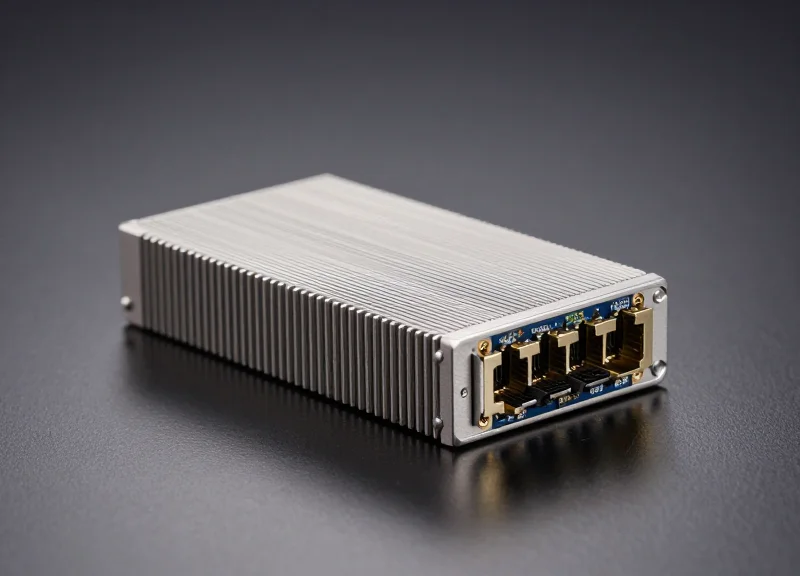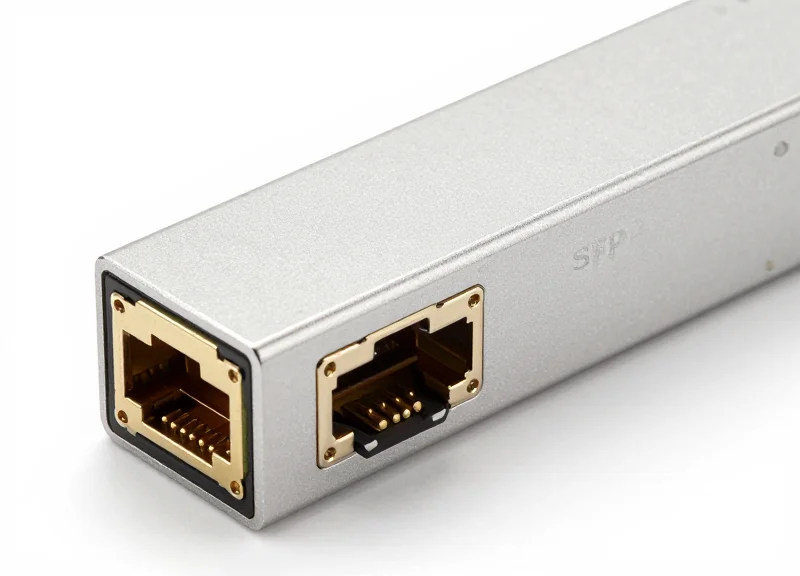
In an era of hyper-connectivity, the reliability of optical infrastructure is the backbone of the digital economy. As global data demands surge, managing optical inventory effectively has become a strategic necessity rather than a back-office task. Ubytelink’s sophisticated management modules provide the precision and performance required to maintain high-availability networks across the globe.
The Evolution of Optical Network Infrastructure

The Evolution of Optical Network Infrastructure
The evolution of optical network infrastructure represents a journey from basic point-to-point light transmission to a sophisticated, software-defined global web that powers the modern digital economy. As data demands have surged from megabits to terabits, the hardware supporting this growth—transceivers, switches, and cabling—has become increasingly specialized, demanding a more rigorous approach to inventory management to ensure seamless performance and zero downtime across distributed global architectures.
From Static Links to Dynamic Ecosystems
In the early days of fiber optics, networking was largely characterized by static links and predictable growth. Modern networks, however, rely on Dense Wavelength Division Multiplexing (DWDM) and coherent technology to squeeze maximum bandwidth out of every glass strand. This complexity means that operators no longer manage just simple cables, but a vast array of intelligent components that must be compatible, tested, and tracked across multiple geographies. The transition to 400G and 800G speeds has turned the physical layer into a high-stakes environment where inventory precision is synonymous with network stability.
| Era | Key Technology | Inventory Challenge | Management Requirement |
|---|---|---|---|
| Legacy (1G-10G) | Direct Detect | Low variety, local tracking | Simple spreadsheets |
| Expansion (40G-100G) | Early WDM | Growing SKU counts | Centralized databases |
| Modern (400G-800G+) | Coherent / Silicon Photonics | Extreme complexity, compatibility | Real-time Ubytelink solutions |
The Shift Toward Precision Inventory
With the advent of hyperscale data centers and 5G backhaul, the margin for error in hardware provisioning has vanished. Premium quality optics must be matched with precise inventory data to avoid the 'hidden costs' of network deployment—specifically, shipping delays, mismatched transceiver coding, and stock-outs. Ubytelink Optics Inventory Management Solutions address these bottlenecks by bridging the gap between high-end hardware availability and intelligent supply chain oversight, ensuring that global networks remain agile and resilient.
- How does network evolution impact inventory risk?
As networks become more complex, the risk of deploying incompatible or sub-par optics increases, leading to signal degradation or total link failure if inventory is not strictly managed. - Why is Ubytelink's approach necessary for modern networks?
Traditional logistics cannot handle the technical nuances of global optical deployments; Ubytelink provides the specialized technical oversight required for premium optics. - What is the future of optical infrastructure?
The future lies in even higher densities and automation, where inventory management is integrated directly into the network orchestration layer to support autonomous scaling.
Critical Challenges in Modern Optics Management
Critical Challenges in Modern Optics Management
Managing an optical inventory in the modern era is a balancing act between maintaining high-performance standards and controlling escalating operational costs. Network operators today must navigate an environment where technical complexity is increasing—driven by 400G and 800G migrations—while global supply chains remain volatile. The primary challenge lies in ensuring that every transceiver, whether deployed in a core data center or a remote edge site, provides consistent performance without introducing interoperability failures that can paralyze a network.
The Interoperability and Compatibility Gap
Vendor lock-in remains one of the most significant pain points for network architects. Original Equipment Manufacturers (OEMs) often utilize proprietary coding to ensure their hardware only accepts 'branded' optics. This ecosystem creates a bottleneck, limiting the operator's ability to source components from multiple channels and often leading to inflated procurement costs. When a third-party optic lacks the precise firmware profile required by a specific switch or router, it can result in port-flapping, missing DOM (Digital Optical Monitoring) data, or a total system rejection.
| Challenge Metric | OEM Standard | Low-Cost Generic | Ubytelink Premium Solutions |
|---|---|---|---|
| Procurement Cost | Extremely High | Very Low | Balanced / Competitive |
| Compatibility | Native Only | Unreliable / Hit-or-Miss | Multi-Vendor Programmed |
| Lead Times | 6-12 Months | 1-2 Weeks | Immediate / Local Stock |
| Reliability (MTBF) | High | Low / Variable | High / Tested |
Supply Chain Volatility and Performance Risks
Beyond compatibility, the physical reliability of the components is a major concern. Substandard optics often utilize inferior laser diodes and TOSA/ROSA components that are sensitive to thermal fluctuations. In a high-density environment, these components may fail prematurely or experience 'silent' data corruption, increasing the Bit Error Rate (BER) and forcing expensive manual troubleshooting. Furthermore, the global logistics crisis has made lead times unpredictable; relying solely on a single source of supply can lead to project delays that last for quarters, impacting the overall agility of the network deployment.
- Why do generic optics often fail in multi-vendor environments?
Generic optics often lack the specific EEPROM coding and firmware handshaking necessary to satisfy the strict diagnostic protocols of major hardware vendors like Cisco, Arista, or Juniper. - How does thermal management affect optics longevity?
Lower-quality components often have poor heat dissipation, leading to wavelength drift and physical degradation of the laser, which significantly shortens the module's lifespan. - What is the true cost of a failed transceiver?
The cost is not just the hardware replacement, but the combined expense of network downtime, service level agreement (SLA) penalties, and the technician's time for onsite replacement.
The Ubytelink Standard: Reliability by Design
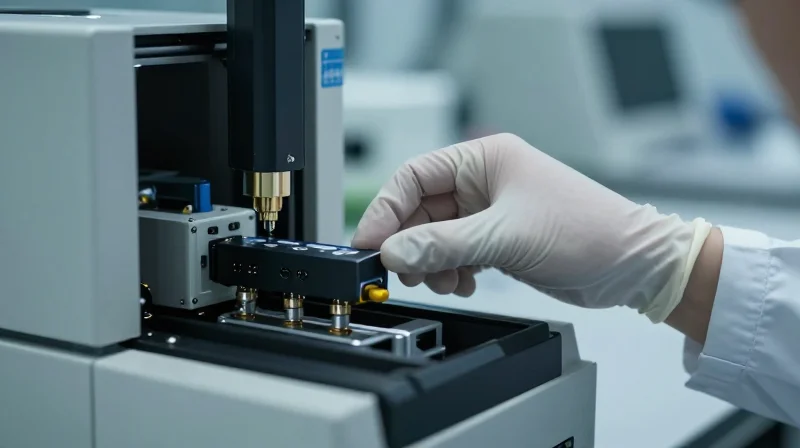
The Ubytelink Standard: Reliability by Design is not merely a marketing slogan; it is a comprehensive engineering framework that ensures Ubytelink Optics Inventory Management Solutions deliver premium quality for global networks. By moving beyond basic functional checks to exhaustive environmental and protocol-specific stress tests, Ubytelink guarantees that every optical module maintains peak performance throughout its operational lifecycle, even in the most demanding data center and telecommunications environments.
Engineering Excellence Through Component Integrity
The reliability of an optical transceiver is fundamentally determined by the quality of its internal components. Ubytelink sources only Tier-1 lasers (including VCSEL, DFB, and EML variants) and high-performance Integrated Circuits (ICs) from industry-leading semiconductor manufacturers. This meticulous selection process minimizes the risk of early-life failures and signal degradation, providing a robust physical layer for high-speed data transmission.
| Parameter | Standard Industry Practice | Ubytelink Standard |
|---|---|---|
| Testing Scope | Random batch sampling (AQL) | 100% Individual unit verification |
| Compatibility Testing | Generic EEPROM coding | Platform-specific firmware optimization |
| Environmental Stress | Ambient temperature checks | Extended temperature cycling (-40°C to +85°C) |
| Error Detection | Basic link-up check | Bit Error Rate (BER) and Eye Pattern Analysis |
The Ubytelink Rigorous Testing Protocol
Every module undergoes a multi-stage verification process within our state-of-the-art testing labs. This includes 'Four Corner' testing, where performance is measured at the extremes of both voltage and temperature ranges. Furthermore, Ubytelink utilizes a massive library of original host equipment—ranging from legacy switches to the latest 400G/800G platforms—to ensure 100% interoperability and eliminate the 'unrecognized transceiver' errors that often plague generic third-party optics.
Reliability and Performance FAQ
- How does Ubytelink ensure the longevity of its optical modules?
We employ accelerated aging tests and thermal shock protocols to simulate years of operation, ensuring that the Mean Time Between Failures (MTBF) exceeds 500,000 hours. - Are Ubytelink optics compatible with all major OEM hardware?
Yes, our modules are programmed with vendor-specific code and tested on the actual hardware (Cisco, Arista, Juniper, etc.) to ensure seamless integration and full support for Digital Optical Monitoring (DOM). - What measures are taken to prevent signal loss in high-density environments?
Ubytelink utilizes precision-aligned TOSAs and ROSAs with ultra-low insertion loss connectors, ensuring maximum link budget and signal integrity even in complex fiber architectures.
Optimizing Performance for Mission-Critical Data Centers

In mission-critical data centers, performance optimization is fundamentally tied to the physical layer's resilience and the speed of hardware restoration. Specialized inventory management functions as a strategic safeguard, ensuring that high-density environments maintain peak throughput by providing immediate access to pre-validated optics, thereby eliminating the operational friction and latency inherent in traditional procurement cycles.
Strategic Buffering in High-Density Leaf-Spine Architectures
As data centers migrate toward 400G and 800G fabrics, the complexity of the interconnect layer increases exponentially. In a leaf-spine architecture, the failure of a single high-capacity link can lead to significant oversubscription and congestion on remaining paths. Ubytelink's inventory solutions address this by maintaining 'Strategic On-Site Buffers' of critical transceivers. This allows network engineers to replace failing modules in minutes rather than days, ensuring that the network fabric remains balanced and capable of handling bursty traffic loads without packet loss.
| Performance Metric | Traditional Inventory Model | Ubytelink Optimized Inventory |
|---|---|---|
| Mean Time to Repair (MTTR) | 48-72 Hours (Shipping dependent) | Less than 1 Hour (On-site availability) |
| Signal Integrity Assurance | Variable (Batch-to-batch inconsistency) | Guaranteed (Uniform 'Golden Sample' testing) |
| Throughput Stability | High risk of BER-related throttling | Optimized for zero-packet-loss performance |
| Procurement Overhead | Reactive, high-urgency costs | Predictive, volume-optimized planning |
Mitigating the 'Silent Killers' of Data Center Throughput
Optimization is not just about avoiding total link failure; it is about preventing performance degradation. Substandard optics often suffer from high Bit Error Rates (BER) that trigger excessive CRC errors and retransmissions. These 'silent killers' can reduce effective throughput by up to 30% without alerting standard SNMP monitors to a hard failure. Ubytelink mitigates this through a rigorous inventory qualification process, where every module is screened for optical power consistency and wavelength stability, ensuring that the inventory intended for mission-critical deployments meets a higher standard than generic market alternatives.
- How does specialized inventory management impact Data Center TCO?
By significantly reducing Mean Time to Repair (MTTR) and preventing SLA penalties associated with downtime, specialized inventory management lowers Total Cost of Ownership (TCO) despite the initial investment in buffer stock. - What role does compatibility testing play in performance optimization?
Inventory that is pre-coded and tested for specific switch environments (e.g., Cisco, Arista, Juniper) eliminates the 'port flapping' and software-handshake errors that often occur with generic components, ensuring immediate 100% throughput upon installation. - Why is 'Golden Sample' consistency important for global networks?
Consistency ensures that optics deployed in a London facility perform identically to those in a Singapore facility, allowing for global standardization of network monitoring thresholds and performance benchmarks.
Predictive Restocking and Lifecycle Management
Ubytelink integrates inventory management with network lifecycle planning. By analyzing failure rates and deployment trends within mission-critical environments, we help operators predict when upgrades are necessary. This proactive stance ensures that data centers are never caught in a technology transition without the necessary optical components to support new hardware rollouts or emergency expansions.
Ensuring Interoperability Across Global Network Environments

Achieving true interoperability in a global network environment requires more than generic hardware; it demands specialized firmware synchronization that allows optical modules to communicate flawlessly with diverse host systems, from legacy carrier switches to next-generation hyperscale routers. Ubytelink Optics Inventory Management Solutions address this by providing transceivers that are pre-configured and tested for specific host behaviors, eliminating the 'vendor lock-in' that often inflates costs and complicates logistics for global operators.
Bridging the Multi-Vendor Divide in Global Infrastructure
In modern telecommunications, hardware fragmentation is a reality. A single network path might traverse equipment from Cisco, Arista, Juniper, and Huawei. Ubytelink’s approach to inventory management treats interoperability as a core engineering requirement rather than an afterthought. By maintaining an extensive library of vendor-specific code signatures, Ubytelink ensures that every module identifies correctly to the host software, enabling full access to Digital Optical Monitoring (DOM) and diagnostic features that are often disabled when using non-verified third-party optics.
Comparative Analysis: Interoperability Performance
| Feature | Generic Third-Party Optics | Ubytelink Premium Optics |
|---|---|---|
| Hardware Identification | Often flagged as 'Unknown' or 'Unsupported' | 100% OEM-equivalent handshake |
| DOM/DMI Monitoring | Limited or inaccurate data reporting | Real-time, precision diagnostic transparency |
| Protocol Consistency | High jitter in multi-rate environments | Stable performance across all IEEE/MSA rates |
| System Reliability | Higher risk of link flaps after OS updates | Future-proofed firmware optimized for OS patches |
The Technical Pillars of Ubytelink Compatibility
- EEPROM Customization
Each Ubytelink module undergoes individual serialization and coding to match the specific requirements of the target platform, ensuring seamless integration with the host's operating system. - MSA Standard Adherence
By strictly following Multi-Source Agreements (MSA), Ubytelink guarantees physical and electrical compatibility across all standardized form factors, including SFP+, QSFP28, and OSFP. - Environmental Stress Testing
Interoperability is verified under extreme temperature and voltage fluctuations to ensure that global deployments remain stable in diverse geographic climates.
Reducing Operational Expenditure through Unified Inventory
By standardizing on Ubytelink's interoperable solutions, network architects can simplify their sparing strategies. Instead of maintaining unique stock for every hardware brand in the rack, operators can utilize a more streamlined inventory that serves multiple platforms, significantly reducing the capital tied up in redundant spare parts.
Frequently Asked Questions: Global Interoperability
- Will Ubytelink optics void my switch warranty?
No. In most jurisdictions, including under the Magnuson-Moss Warranty Act in the US, using third-party peripherals like transceivers does not void the hardware warranty of the host switch. - How does Ubytelink handle proprietary vendor 'lock-out' features?
Ubytelink engineers specific firmware wrappers that satisfy the proprietary checksums and security handshakes required by major vendors, ensuring the modules are recognized as 'authorized'. - Can these optics be updated if a vendor releases a new OS version?
Yes, Ubytelink provides field-programmable options and proactive firmware updates to maintain compatibility as network operating systems evolve.
Proactive Maintenance and Lifecycle Management
Maximizing Network Longevity through Proactive Maintenance
Proactive maintenance and lifecycle management are the cornerstones of Ubytelink's strategy to ensure global networks remain operational without interruption. By leveraging advanced telemetry and historical performance data, Ubytelink moves beyond reactive hardware replacement to a model of continuous health assessment. This approach ensures that every optical component is managed from the moment of procurement through its eventual decommissioning, maximizing the return on investment and minimizing the risk of catastrophic link failures.
Predictive Analytics and Real-Time Monitoring
Modern high-density networks generate vast amounts of diagnostic data. Ubytelink utilizes Digital Optical Monitoring (DOM) to provide real-time visibility into the performance of every module. By tracking variables such as laser bias current, temperature, and optical power, administrators can detect 'soft failures'—minor degradations in performance that occur before a total hardware breakdown. This predictive capability allows for maintenance to be scheduled during planned windows, preventing the high costs associated with emergency downtime.
| Lifecycle Phase | Management Action | Key Benefit |
|---|---|---|
| Deployment | Performance Baselining | Establishes a 'known good' state for future comparison |
| Operation | Continuous DOM Tracking | Identifies early signs of degradation to prevent outages |
| Optimization | Firmware & Compatibility Updates | Ensures ongoing interoperability with evolving network OS |
| Retirement | Phased Hardware Refresh | Prevents technical debt and ensures hardware modernization |
Strategic Lifecycle Planning and Asset Visibility
Lifecycle management is not just about avoiding failure; it is about strategic planning. Ubytelink helps organizations maintain a detailed inventory of their optical assets, including deployment dates, firmware versions, and revision history. This granular visibility enables network architects to plan for end-of-life (EoL) transitions years in advance, ensuring that hardware refreshes are budget-aligned and technically seamless. Furthermore, it ensures that old or inefficient optics do not become a bottleneck for next-generation throughput requirements.
- How does proactive maintenance reduce Total Cost of Ownership (TCO)?
By identifying failing components before they cause a network outage, organizations avoid the massive costs of service level agreement (SLA) penalties and emergency technician dispatches. - What metrics are most critical for optical lifecycle management?
Optical Transmit/Receive power levels and Bit Error Rate (BER) trends are the most reliable indicators of a module's health and remaining useful life. - Does Ubytelink support sustainable decommissioning?
Yes, our lifecycle management framework includes protocols for WEEE-compliant recycling and responsible hardware disposal to meet environmental sustainability goals.
Security and Compliance in Optical Hardware Sourcing
Security and Compliance in Optical Hardware Sourcing
In an era of increasing cyber threats and regulatory scrutiny, security in optical hardware sourcing is no longer optional; it is a foundational requirement for carrier-grade infrastructure. Ubytelink Optics Inventory Management Solutions mitigate risk by ensuring every transceiver and cable in our inventory meets stringent international security protocols and undergoes multi-stage verification to prevent the introduction of compromised or counterfeit hardware into global networks. By integrating security directly into the procurement and inventory lifecycle, we provide operators with the confidence that their physical layer is as secure as their logical layer.
Supply Chain Transparency and Traceability
Transparency is the bedrock of a secure supply chain. Ubytelink maintains a comprehensive 'Chain of Custody' for every component, from the initial silicon wafer to the final programmed module. This transparency allows for rapid identification of component batches and ensures that every item in our inventory can be traced back to its point of origin. This proactive approach is essential for preventing the infiltration of 'grey market' components that lack official warranty support and pose significant reliability and security risks.
| Compliance Metric | Standard Market Sourcing | Ubytelink Compliance Standards |
|---|---|---|
| Origin Verification | Variable/Limited Traceability | 100% Verified Tier-1 Foundries |
| Counterfeit Mitigation | Basic Visual Inspection | Advanced Cryptographic & Firmware Validation |
| Regulatory Certifications | CE / RoHS (Inconsistent) | TAA, ISO 9001, RoHS, REACH, CE |
| Hardware Security | Unverified Firmware | Bit-by-Bit Firmware Integrity Checks |
Adherence to International Regulatory Standards
Global networks demand adherence to diverse and often complex regulatory frameworks. Ubytelink ensures that all inventory items comply with international standards such as TAA (Trade Agreements Act) for government-bound deployments, as well as RoHS and REACH for environmental safety. Our inventory management system automatically flags components based on their certification status, ensuring that our clients never inadvertently deploy non-compliant hardware into regions with strict regulatory oversight.
- How does Ubytelink prevent hardware-level backdoors?
We utilize bit-by-bit firmware verification and source components only from audited foundries that comply with international security frameworks, ensuring no malicious code is embedded at the factory level. - What is the significance of TAA compliance for global networks?
TAA compliance ensures that hardware is manufactured or substantially transformed in approved countries, meeting the strict procurement requirements of government agencies and highly regulated enterprise sectors. - How is counterfeit hardware identified during inventory intake?
Our quality control process includes high-resolution microscopic inspection, serial number validation against manufacturer databases, and performance benchmarking against gold-standard profiles.
Scaling Infrastructure with Precision Inventory Tracking
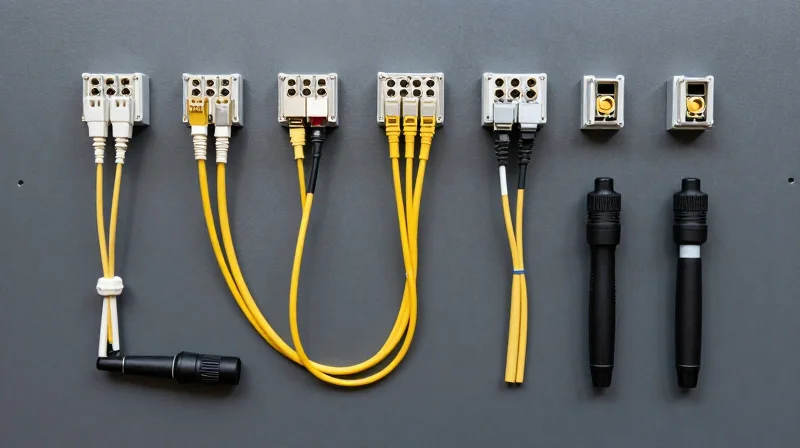
Scaling global network infrastructure requires a delicate balance between immediate hardware availability and financial prudence; Ubytelink’s precision inventory tracking provides the data-driven foundation necessary to expand capacity rapidly without the burden of over-provisioning or the risk of project delays due to component shortages. By leveraging granular visibility into every optical component, organizations can transform their supply chain from a cost center into a strategic asset for growth.
Data-Driven Forecasting for Global Expansion
The core of precision inventory tracking lies in its ability to convert raw data into actionable deployment strategies. By integrating real-time tracking with historical consumption patterns, network operators can identify specific demand trends and anticipate hardware requirements before they become critical bottlenecks. This proactive approach ensures that essential optical transceivers, passive filters, and high-speed cabling are staged at optimal geographic locations, significantly reducing the 'Time to Light' for new carrier-grade circuits and cross-border expansions.
| Metric | Traditional Inventory Management | Precision Inventory Tracking |
|---|---|---|
| Stock Buffers | High (Excessive Capital Tie-up) | Optimized (Just-in-Time Efficiency) |
| Lead Time Risk | High (Reactive Response) | Low (Predictive Staging) |
| Asset Visibility | Siloed and Manual | Global and Automated |
| Scalability Speed | Delayed by Sourcing Gaps | Instantaneous Deployment Readiness |
Optimizing Capital Expenditure (CAPEX) through Lean Logistics
Precision tracking enables a 'Just-in-Time' (JIT) logistics model for optical hardware. Instead of maintaining massive, stagnant warehouses filled with components 'just in case,' Ubytelink solutions allow organizations to maintain lean, high-velocity inventories. This frees up millions in capital that would otherwise be locked in depreciating assets, allowing firms to reinvest in emerging technologies like 800G and 1.6T networking while maintaining a 99.9% hardware availability rate across their global nodes.
Scaling Infrastructure FAQ
- How does precision tracking prevent 'Dead Stock' during expansion?
By monitoring the movement and age of every component in the system, Ubytelink’s management tools flag slow-moving hardware for redeployment to high-growth regions, preventing technical debt and asset depreciation. - Can these tracking solutions integrate with existing enterprise ERPs?
Yes, Ubytelink inventory management is designed for interoperability, allowing seamless data synchronization with major ERP systems to provide a unified view of hardware assets across the entire organization. - What impact does this have on multi-vendor environments?
Precision tracking categorizes components by compatibility profiles, ensuring that when an infrastructure is scaled, technicians receive the exact components validated for specific multi-vendor architectures, eliminating installation errors.
The Economic Impact of Smarter Optics Management
The economic impact of adopting Ubytelink Optics Inventory Management Solutions is defined by the shift from a reactive cost-center approach to a proactive strategic investment. By implementing precision tracking and predictive lifecycle analysis, global networks can eliminate the 'emergency tax'—the inflated costs associated with last-minute hardware acquisition, expedited shipping, and unforeseen downtime. Smarter management ensures that capital is deployed only when and where it is needed, significantly improving liquidity and reducing the depreciation risks associated with overstocking obsolete technology.
Quantifying the Shift: Reactive vs. Proactive Procurement
| Financial Metric | Reactive Procurement Strategy | Ubytelink Smarter Management |
|---|---|---|
| Average Unit Cost | Premium (Spot-market pricing) | Optimized (Volume & Contract pricing) |
| Logistics Expenses | High (Expedited/International air) | Low (Standard/Consolidated freight) |
| Inventory Carrying Cost | 15–25% (Overstocking safety nets) | 5–10% (Just-in-time precision) |
| Downtime Impact | High (Hours/Days of lost revenue) | Near-Zero (Pre-staged spares) |
The table above highlights that while the initial unit price of optics is a factor, the real economic gains are found in the reduction of 'soft costs.' Reactive strategies often lead to a 'death by a thousand cuts,' where administrative overhead and logistical emergencies erode the profit margins of network service providers. Ubytelink’s solutions stabilize these variables, providing a predictable expenditure model that appeals to CFOs and technical directors alike.
Long-Term Value and Total Cost of Ownership
Total Cost of Ownership (TCO) in optical networking extends far beyond the point of purchase. Smarter management impacts the bottom line through enhanced hardware longevity and compatibility assurance. By utilizing premium-quality optics that are rigorously tested for specific multi-vendor environments, organizations avoid the hidden costs of 'infant mortality' in hardware and the labor-intensive troubleshooting required when low-tier components fail. This reliability reduces the frequency of 'truck rolls' and maintenance cycles, directly lowering Operating Expenses (OpEx) over a 5-to-10-year infrastructure lifecycle.
Economic Impact Frequently Asked Questions
- How does smarter inventory management reduce capital tie-up?
By providing real-time visibility into global stock levels, companies can avoid 'just-in-case' hoarding. This allows capital that would have been frozen in warehouse shelves to be reinvested into revenue-generating network expansions. - What is the typical ROI period for implementing premium management solutions?
Most organizations see a return on investment within 6 to 12 months, primarily through the elimination of expedited shipping costs and the reduction of manual auditing hours. - Does better management affect hardware depreciation?
Yes. By tracking the age and versioning of optics, managers can rotate stock effectively and phase out older technology before it loses all market value or becomes a liability to network performance.
Ubytelink sets the gold standard for optics inventory management by combining technical excellence with strategic foresight. As global networks become more complex, our solutions provide the stability and scalability required for the future. Contact our expert team today to learn how we can fortify your mission-critical infrastructure.