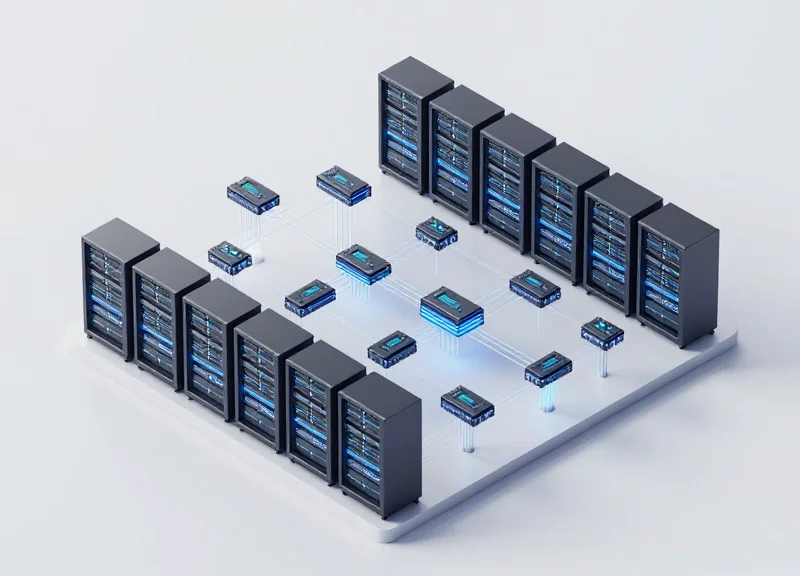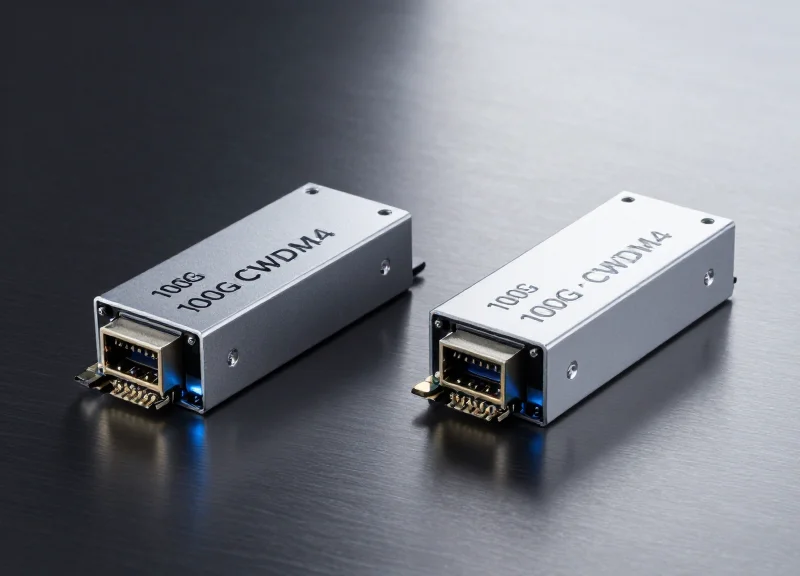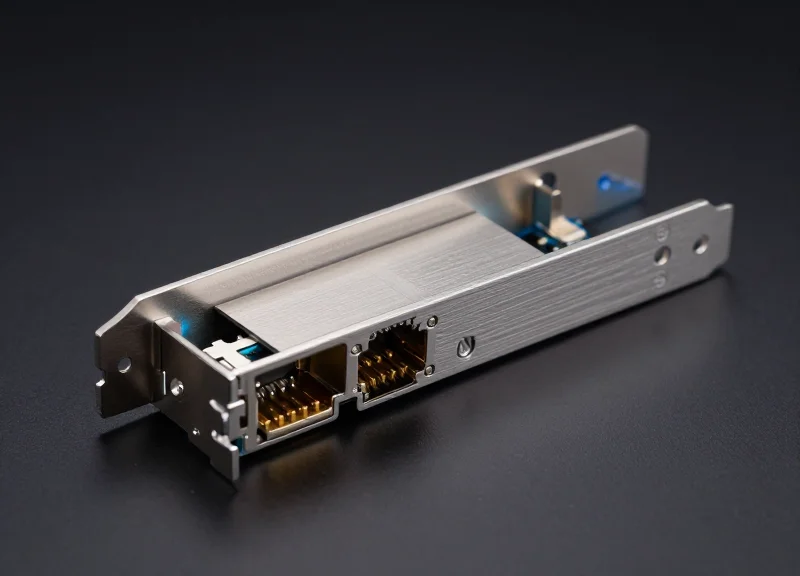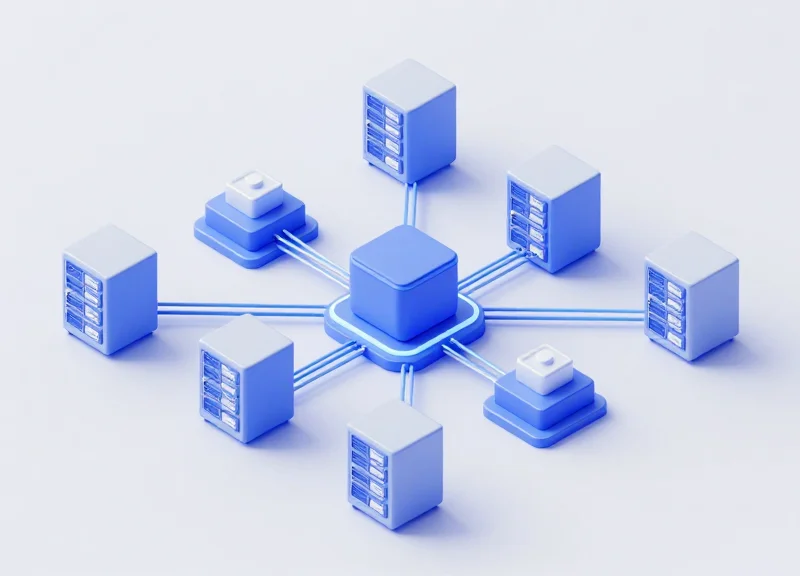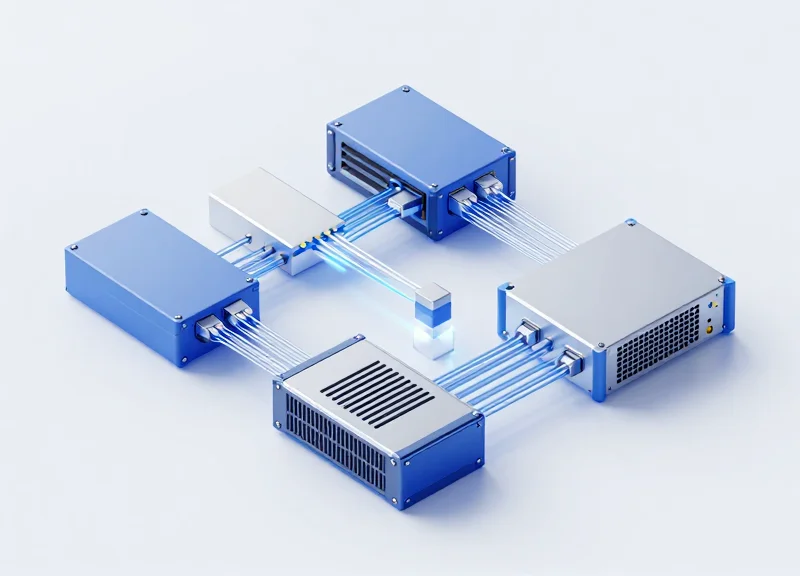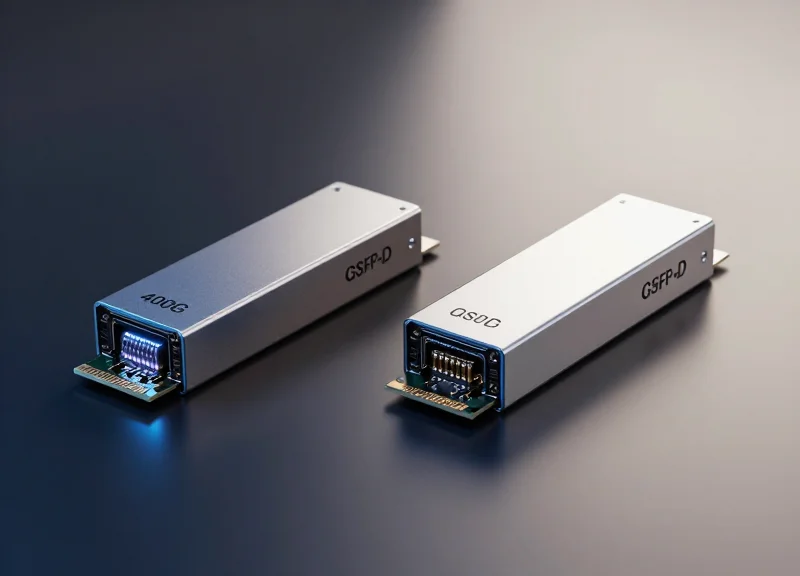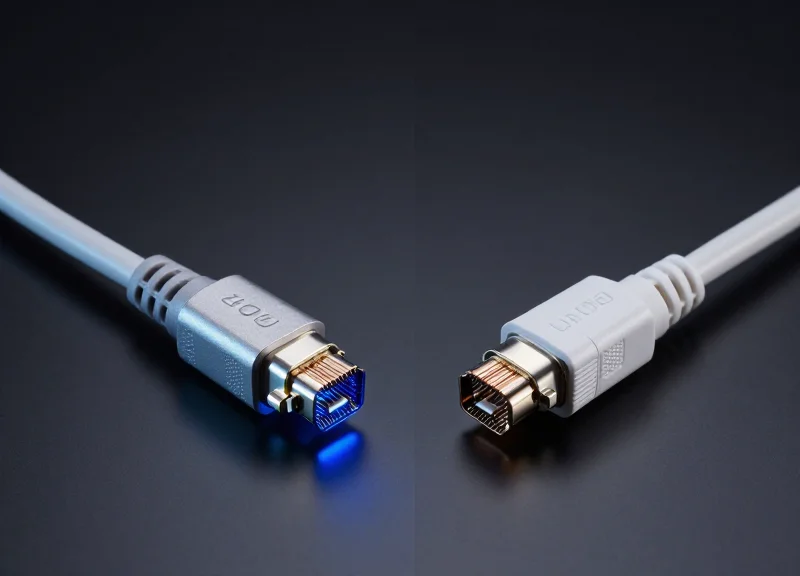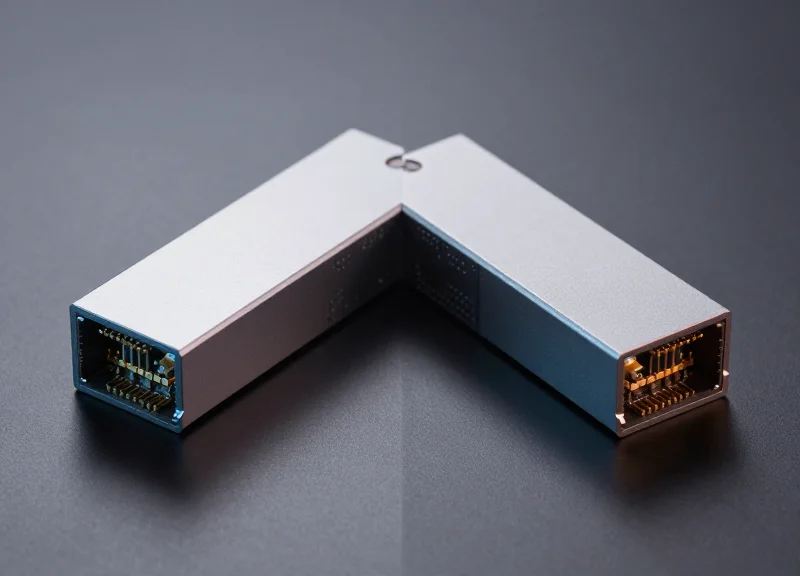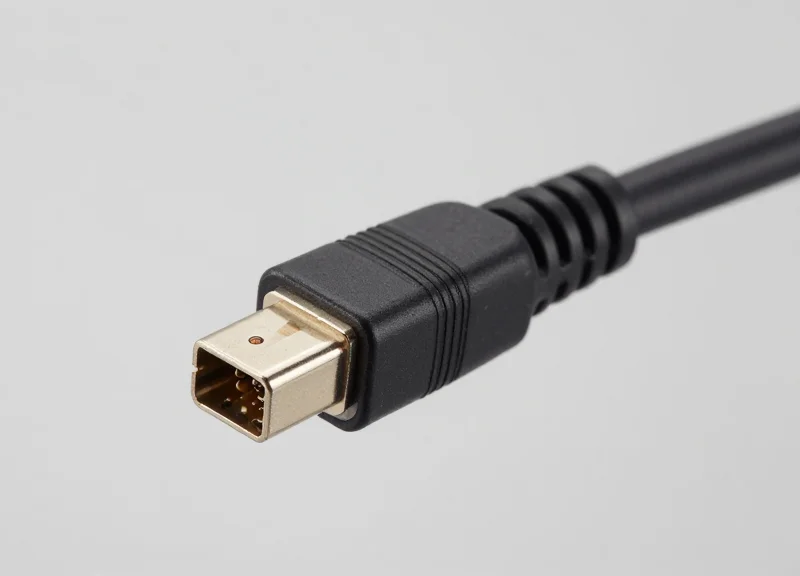
In an era where data throughput demands are skyrocketing, the physical layer of the network becomes the ultimate bottleneck. Ubytelink's 400G DAC high-speed cables address this challenge head-on, providing the robust connectivity required for high-density environments and mission-critical applications.
The Rise of 400G: Meeting the Demands of Modern Data Centers

The transition to 400G Ethernet is no longer a luxury but a necessity for modern data centers facing an unprecedented surge in data traffic. Driven by the proliferation of Artificial Intelligence (AI), High-Performance Computing (HPC), and the expansion of 5G networks, the industry is moving toward 400G to eliminate bandwidth bottlenecks. Ubytelink's 400G DAC (Direct Attach Copper) solutions sit at the heart of this evolution, providing the high-speed, low-latency interconnects required to support the massive throughput demands of next-generation leaf-spine architectures.
The Impetus for 400G Migration
Legacy 100G infrastructures are rapidly reaching their physical and efficiency limits. As data centers scale out to accommodate thousands of interconnected nodes, the energy consumption and physical space required by 100G links become prohibitive. 400G technology, particularly through the use of PAM4 (Pulse Amplitude Modulation 4-level) signaling, allows for four times the density of traditional 100G links. This enables network architects to maximize rack efficiency and significantly reduce the cost-per-bit, which is vital for maintaining competitive advantages in global cloud service markets.
Technical Comparison: 100G vs. 400G Standards
| Feature | 100G Ethernet | 400G Ethernet |
|---|---|---|
| Data Rate | 100 Gbps | 400 Gbps |
| Modulation | NRZ (Non-Return-to-Zero) | PAM4 (Pulse Amplitude Modulation) |
| Lane Configuration | 4 x 25G | 8 x 50G or 4 x 100G |
| Typical Latency | Higher per Gigabit | Ultra-low for AI Workloads |
| Power Efficiency | Standard | High (Better bits-per-watt ratio) |
Addressing Infrastructure Challenges
- How does 400G solve congestion in AI clusters?
400G provides the wider 'lanes' necessary for the massive east-west traffic patterns seen in AI training models, ensuring that GPUs and TPUs spend less time waiting for data and more time processing. - Why choose DAC cables over Optical Transceivers for 400G?
For short-reach distances within the rack (typically under 3-5 meters), 400G DACs offer significantly lower power consumption and zero-latency signaling compared to active optical alternatives, making them ideal for high-density environments. - Is backward compatibility possible with 400G hardware?
Yes, most 400G ports utilize QSFP-DD or OSFP form factors that are designed to be backward compatible with QSFP28 (100G) or can be split into breakout configurations to support legacy servers.
As global networks continue to densify, Ubytelink delivers the premium quality required to ensure signal integrity across these high-frequency 400G links. By leveraging advanced manufacturing techniques and rigorous testing, Ubytelink 400G DAC solutions provide the stability and performance needed for the mission-critical workloads of the modern digital era.
Anatomy of Ubytelink 400G DAC Technology
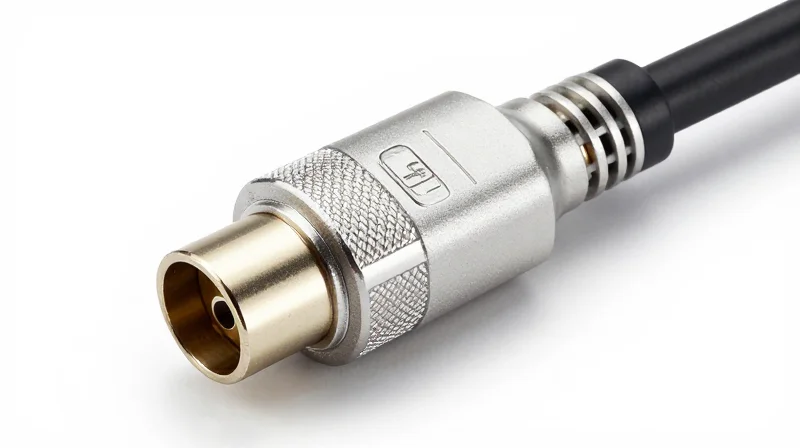
Ubytelink 400G DAC technology represents a pinnacle of passive copper interconnect engineering, utilizing high-purity silver-plated copper conductors and multi-layer shielding to maintain signal integrity at extreme bandwidths without the power overhead of optical components. By focusing on the physical layer's electrical characteristics, Ubytelink ensures that each cable provides the lowest possible latency for 400G Ethernet applications, specifically targeting Top-of-Rack (ToR) switching and server-to-switch connectivity.
Material Science: The Core of Signal Integrity
The foundation of Ubytelink’s performance lies in its choice of raw materials. To combat the skin effect—where high-frequency signals travel primarily on the surface of the conductor—Ubytelink utilizes oxygen-free, silver-plated copper. This reduces resistance and attenuation, which are significant challenges when dealing with 56G and 112G PAM4 signaling. Furthermore, the use of high-quality Foam-Polyethylene (PE) insulation ensures a stable dielectric constant, minimizing signal dispersion over the cable's length.
Precision Shielding and Connector Architecture
At 400G speeds, electromagnetic interference (EMI) and crosstalk (both NEXT and FEXT) can degrade performance to the point of link failure. Ubytelink 400G DACs employ a multi-layered shielding strategy, including individual pair shielding with aluminum-mylar foil and an overall tinned copper braid. The connector housing is crafted from a die-cast zinc alloy, providing robust mechanical durability and superior EMI suppression at the port interface.
| Feature | Ubytelink Standard | Impact on Performance |
|---|---|---|
| Conductor Material | Silver-Plated Oxygen-Free Copper | Lower attenuation at high frequencies |
| AWG Options | 26AWG, 28AWG, 30AWG | Optimized reach vs. cable flexibility |
| Signaling | PAM4 (Pulse Amplitude Modulation) | Doubles bit rate vs. NRZ within the same bandwidth |
| Differential Impedance | 100 +/- 5 Ohms | Minimizes signal reflection and return loss |
The Benefits of Passive DAC Design
- Zero Power Consumption
As passive components, these cables require no power to operate, significantly reducing the Thermal Design Power (TDP) of the data center. - Near-Zero Latency
The absence of O-E-O (Optical-to-Electrical) conversion means signals travel at the speed of the copper medium, ideal for high-frequency trading and AI clusters. - Enhanced Reliability
Fewer active components lead to a much higher Mean Time Between Failures (MTBF) compared to active optical cables (AOCs).
Technical FAQ: 400G DAC Specifications
- Why does AWG matter for 400G DAC cables?
The American Wire Gauge (AWG) determines the thickness of the copper. Thicker wire (lower AWG) has less resistance and can support longer distances (up to 2.5m or 3m), while thinner wire (higher AWG) is more flexible for tight cable management. - How does Ubytelink ensure compatibility across different vendor switches?
Each DAC is programmed with EEPROM signatures that comply with MSA (Multi-Source Agreement) standards, allowing them to be recognized by Cisco, Arista, Juniper, and NVIDIA Mellanox hardware. - What is the typical BER (Bit Error Rate) for these cables?
Ubytelink 400G DACs are designed to meet or exceed IEEE 802.3ck standards, typically achieving a pre-FEC BER of better than 1E-5, which is then corrected to 1E-12 by the system's Forward Error Correction.
Solving the Signal Integrity Puzzle
Achieving 400G speeds requires navigating the complex physics of high-frequency signal transmission, where even minor imperfections can lead to significant data loss. Ubytelink solves this puzzle by integrating multi-layered electromagnetic interference (EMI) suppression and rigorous crosstalk mitigation strategies into the cable architecture. By focusing on the 'Signal Integrity Budget,' Ubytelink ensures that signals remain clear and decodable across the entire link, even in the dense, electrically noisy environments typical of modern AI clusters and enterprise data centers. This approach minimizes the Bit Error Rate (BER) and maximizes the reach of passive copper solutions.
Mitigating Crosstalk in High-Density Environments
In 400G architectures using PAM4 signaling, Near-End Crosstalk (NEXT) and Far-End Crosstalk (FEXT) become critical bottlenecks. Because 400G systems pack more lanes into smaller form factors like QSFP-DD or OSFP, the potential for electrical leakage between adjacent pairs is high. Ubytelink addresses this through precision-twisted pair geometry and specialized cellular polyolefin insulation that maintains consistent differential impedance. This meticulous design prevents signals from one lane from 'bleeding' into another, ensuring that each of the eight 50G or 100G lanes operates with maximum clarity.
EMI Protection and Shielding Architecture
The outer architecture of a Ubytelink 400G DAC is as critical as its internal wiring. Electromagnetic interference from neighboring power supplies, fans, and wireless signals can corrupt data packets. Ubytelink employs a 360-degree shielding approach, utilizing a combination of aluminum-mylar foil and high-coverage tinned copper braiding. This dual-layer shield acts as a Faraday cage, preventing both external noise from entering the cable and internal high-frequency radiation from escaping, which is essential for maintaining regulatory compliance in global data centers.
| Performance Metric | Ubytelink 400G DAC | Standard Industry DAC |
|---|---|---|
| Insertion Loss | Ultra-low (-17.1dB @ 13.28GHz) | Standard (-19.5dB @ 13.28GHz) |
| Crosstalk Margin | >5dB Headroom across frequencies | Minimal compliance (0-2dB) |
| Shielding Type | Dual-Layer 360-degree Braiding | Single Foil Wrap |
| Impedance Control | 100 ± 3 Ohms | 100 ± 10 Ohms |
Frequently Asked Questions: Signal Stability
- How does Ubytelink handle signal skew?
By maintaining strictly matched physical lengths in differential pairs during the manufacturing process, Ubytelink reduces time-of-flight differences, ensuring synchronous data arrival and reducing jitter. - What role does the backshell play in EMI?
The zinc alloy die-cast housing provides a robust 360-degree shield at the connector interface, preventing electromagnetic leakage at the critical junction where the cable meets the switch port. - How does cable bending impact signal integrity?
Ubytelink cables are engineered with a specific minimum bend radius that preserves the internal structural integrity of the shielding and insulation, preventing impedance discontinuities that cause reflections.
Operational Efficiency: Low Latency and Zero Power Consumption

In the race for 400G supremacy, operational efficiency is defined by two critical metrics: power consumption and signal latency. Ubytelink 400G DAC High-Speed Cables offer a definitive advantage over optical alternatives by utilizing a passive copper architecture that requires no electricity to function. By bypassing the need for optical-to-electrical conversions, these cables provide a 'plug-and-play' solution that slashes the carbon footprint of high-density racks while ensuring the fastest possible data propagation between switches and servers.
The Physics of Passive Design: True Zero Power
Unlike Active Optical Cables (AOC) or pluggable transceivers, Ubytelink's passive DACs contain no lasers, drivers, or digital signal processors (DSPs). This design choice means the cable itself draws zero watts from the switch port. In a 400G environment where a single transceiver can consume 10 to 12 watts, deploying DACs for intra-rack connections can save hundreds of watts per rack. This reduction in power draw has a cascading effect, significantly lowering the heat output and, consequently, the energy required for data center cooling infrastructure.
| Interconnect Type | Power Consumption (per port) | Latency Profile | Max Reach (400G) |
|---|---|---|---|
| Ubytelink Passive DAC | ~0 Watts | Ultra-Low (Nanoseconds) | Up to 2.5m - 3m |
| Active Optical Cable (AOC) | 2.0 - 4.5 Watts | Moderate (Microseconds) | Up to 30m |
| 400G SR8 Transceiver | 10.0 - 12.0 Watts | Higher (Processing Overhead) | Up to 100m |
Latency: The Unfair Advantage of Copper
In latency-sensitive environments like High-Frequency Trading (HFT) and real-time AI training clusters, every nanosecond is a liability. Ubytelink 400G DACs provide a direct physical path for electrical signals, avoiding the time-consuming process of converting electrical signals to light and back again. While optical modules introduce latency through their internal DSPs and circuitry, Ubytelink’s high-purity copper cores ensure that signals move at the speed of the medium with virtually zero processing delay, providing a critical performance edge for mission-critical workloads.
Driving Down Total Cost of Ownership (TCO)
The economic impact of choosing Ubytelink 400G DACs extends beyond the initial purchase price. By eliminating power draw at the port level, organizations reduce their electricity bills and cooling requirements simultaneously. Furthermore, the absence of active components leads to a significantly higher Mean Time Between Failures (MTBF). With fewer parts to fail—no lasers to burn out or chips to overheat—Ubytelink DACs provide a stable, long-term foundation for global networks that demand 24/7 uptime without the maintenance overhead associated with optical networking.
- Does 'Zero Power' mean the cable consumes nothing at all?
Yes. Passive DACs use the electrical current already present in the host's signaling; they do not require additional power from the switch port to operate. - How does DAC latency compare to optical fiber?
DACs generally have lower latency for short distances (under 3m) because they avoid the 'O-E-O' (Optical-to-Electrical-to-Optical) conversion delay found in transceivers. - Can Ubytelink 400G DACs help with ESG goals?
Absolutely. By reducing electricity consumption and cooling demands, DACs are the greenest interconnect option for modern data centers.
Mission-Critical Reliability for Global Enterprises

Mission-Critical Reliability for Global Enterprises
Global enterprises across finance, healthcare, and telecommunications demand hardware that guarantees 24/7 uptime, as even a micro-second of connectivity failure can lead to catastrophic financial losses or compromised patient safety. Ubytelink 400G DAC solutions are engineered to meet these rigorous standards by utilizing premium-grade shielding and high-density copper conductors that prevent physical degradation and signal drift. Unlike standard-grade cables, Ubytelink's manufacturing process incorporates exhaustive stress testing and signal integrity validation, ensuring that every link in the data center remains stable under peak load conditions.
Industry-Specific Reliability Use Cases
- Financial Services
In high-frequency trading (HFT) and core banking systems, Ubytelink 400G DACs provide the low-jitter, deterministic latency required to execute millions of transactions without packet loss. - Healthcare Systems
Supports massive bandwidth for Picture Archiving and Communication Systems (PACS) and real-time robotic surgery data streams where link reliability is non-negotiable. - Telecommunications
Ideal for 5G core networks and edge computing nodes where high-density deployments require cables that can withstand heat and frequent reconfiguration.
Reliability Benchmarks and Compliance
| Feature | Ubytelink 400G DAC Standard | Enterprise Impact |
|---|---|---|
| MTBF (Mean Time Between Failures) | Exceeds 5,000,000 hours | Reduces emergency maintenance costs |
| Bit Error Rate (BER) | Better than 10^-15 (pre-FEC) | Ensures data integrity for financial records |
| Operating Temperature Range | 0°C to 70°C (Commercial) | Consistent performance in high-density racks |
| MSA Compliance | Fully QSFP-DD/OSFP compliant | Guarantees multi-vendor interoperability |
Reliability FAQ for IT Decision Makers
- How does Ubytelink ensure cable longevity in high-heat environments?
We use specialized LSZH or PVC jackets with high thermal resistance and superior heat dissipation through the copper core to prevent insulation breakdown over time. - Does Ubytelink support multi-vendor compatibility for diverse data centers?
Yes, our cables are coded and tested for 100% compatibility with major OEM switches, including Cisco, Arista, and Juniper, ensuring reliable link-up every time. - What testing protocols are used before shipping?
Every cable undergoes rigorous TDR (Time Domain Reflectometry) testing for impedance consistency and VNA (Vector Network Analyzer) testing for insertion loss and crosstalk.
Rigorous Testing: The Ubytelink Quality Assurance Process
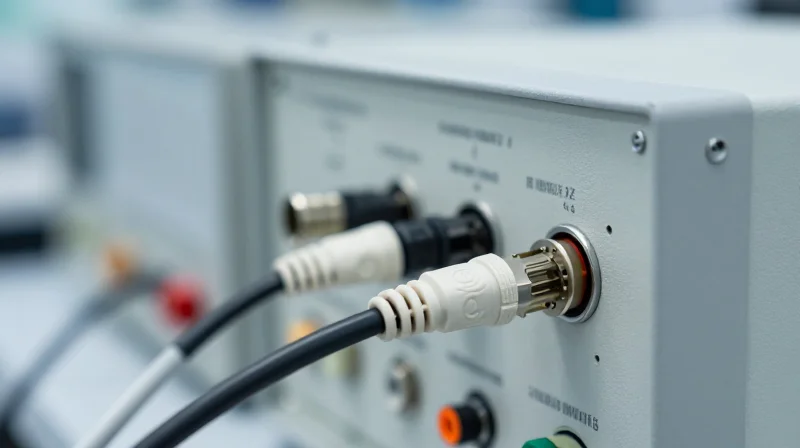
At Ubytelink, quality assurance is an exhaustive protocol designed to eliminate the variables of signal degradation and physical failure. Every 400G DAC cable is treated as a critical link in a global infrastructure, undergoing comprehensive validation that spans electrical, mechanical, and environmental domains. By surpassing standard IEEE requirements, Ubytelink ensures that high-density data centers achieve maximum uptime with zero compromise on throughput. This focus on precision allows for seamless 'plug-and-play' deployment in environments where even a millisecond of downtime is unacceptable.
Validation Protocol: Surpassing Industry Standards
Our testing begins with Signal Integrity (SI) verification, utilizing high-precision oscilloscopes and network analyzers to perform Eye Diagram analysis. This ensures that the voltage margins and jitter levels remain well within the acceptable thresholds for 400G transmission. Unlike generic alternatives, every Ubytelink cable is tested for Bit Error Rate (BER) performance, targeting levels significantly better than the industry-standard to provide an extra layer of operational cushion for high-frequency trading and telecommunications backbones.
| Testing Parameter | Industry Standard | Ubytelink Specification |
|---|---|---|
| Bit Error Rate (BER) | 10^-12 | ≤ 10^-15 |
| Insertion Cycles | 250 Cycles | 500+ Cycles |
| Thermal Range | 0°C to 70°C | -20°C to 85°C (Extended) |
| EMI Shielding | Standard Compliance | Enhanced 360° Shielding |
Environmental and Mechanical Stress Testing
To guarantee longevity in harsh data center environments, Ubytelink cables undergo accelerated life testing. This includes thermal cycling, where cables are repeatedly moved between extreme temperatures to test the integrity of the copper-to-connector interface. Mechanical durability is also prioritized through bend radius stress tests and pull-strength verification, ensuring that the cables can withstand the rigors of complex cable management systems without signal attenuation or physical jacket degradation.
Interoperability and Compliance FAQ
- How does Ubytelink ensure multi-vendor compatibility?
Every cable is validated against SFF-8665 and QSFP-DD Multi-Source Agreements (MSA). Furthermore, the EEPROM is custom-coded and verified on original switches to ensure 100% recognition by hardware from Cisco, Arista, Juniper, and Mellanox. - What specific certifications do these cables hold?
All Ubytelink 400G DAC solutions are fully compliant with RoHS, CE, and FCC standards, ensuring they meet the environmental and safety regulations required for global enterprise deployment. - Is every cable tested or just batch samples?
Ubytelink employs a 100% factory testing policy. Every single unit is serialized and tested for continuity, signal integrity, and EEPROM accuracy before it is cleared for shipping, resulting in a field failure rate of less than 0.01%.
Interoperability and Multi-Vendor Compatibility
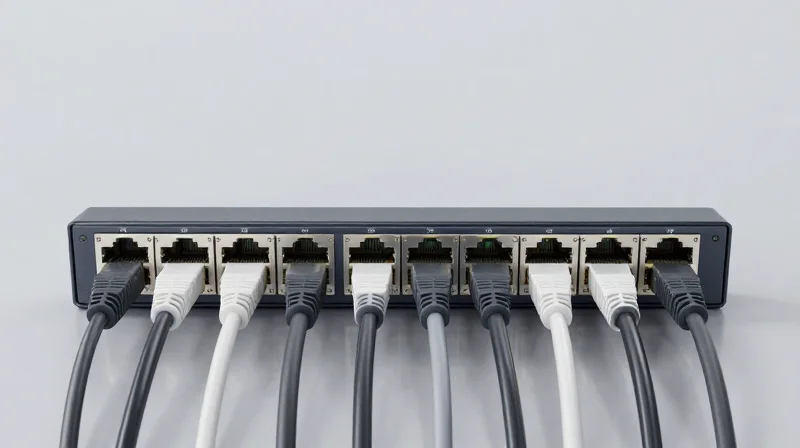
In the heterogeneous landscape of modern enterprise networking, interoperability is the cornerstone of scalable infrastructure. Ubytelink 400G DAC High-Speed Cable Solutions are designed to bridge the gap between disparate hardware platforms, offering a "plug-and-play" experience that rivals original equipment manufacturer (OEM) components. By adhering to strict industry standards and employing advanced EEPROM coding techniques, Ubytelink ensures that their 400G copper solutions are recognized instantly by top-tier switches, routers, and network interface cards (NICs), regardless of the manufacturer's logo on the chassis.
Eliminating Proprietary Barriers with MSA Compliance
The foundation of Ubytelink’s compatibility lies in its unwavering commitment to Multi-Source Agreements (MSA). For 400G applications, this includes strict adherence to QSFP-DD and OSFP form factor specifications. By following these open-source hardware standards, Ubytelink avoids the pitfalls of proprietary lock-in. Each cable is programmed with sophisticated firmware that communicates with the host system's diagnostic interface, providing real-time telemetry that matches the expectations of proprietary management software. This ensures that features like Digital Diagnostic Monitoring (DDM) function flawlessly, allowing network administrators to monitor port health and signal quality without compatibility errors.
Universal Manufacturer Compatibility Matrix
| Manufacturer | Compatibility Status | Primary Applications |
|---|---|---|
| Cisco | Fully Verified | Nexus 9000 & Catalyst Series |
| Arista | Fully Verified | 7060X & 7280R Series Switches |
| NVIDIA / Mellanox | Fully Verified | Spectrum-3 & ConnectX-6/7 NICs |
| Juniper | Fully Verified | PTX & QFX Series Platforms |
| Dell | Fully Verified | PowerSwitch S-Series & Z-Series |
Cross-Platform Optimization
One of the most significant challenges in 400G deployments is connecting hardware from two different vendors. Ubytelink solves this through customized coding services, where each end of a single DAC cable can be programmed with a different vendor's signature. This capability is vital for organizations transitioning between hardware providers or those utilizing a best-of-breed approach where switches and servers originate from different manufacturers.
Interoperability FAQ
- Will using Ubytelink DACs void my existing hardware warranty?
No. Under the Magnuson-Moss Warranty Act and similar international consumer protections, manufacturers cannot void a warranty for using third-party components unless those components directly cause hardware damage, which is avoided through Ubytelink's rigorous validation. - How does Ubytelink ensure cables work after a switch firmware update?
Ubytelink's engineering team maintains an extensive lab with the latest OEM hardware. We continuously monitor and test new firmware releases, updating our cable coding library to ensure persistent compatibility through system upgrades. - Are these cables compatible with auto-negotiation across different brands?
Yes. Ubytelink 400G DACs are engineered to support full auto-negotiation and Link Training (LT), ensuring that different hardware brands can successfully negotiate the link speed and FEC (Forward Error Correction) settings.
Scalability and Future-Proofing Your Network
Scalability and Future-Proofing Your Network with 400G DACs
Future-proofing a global network infrastructure requires a proactive shift from reactive capacity increases to a modular, high-density physical architecture. Ubytelink 400G DAC solutions serve as the critical foundation for this evolution, providing the signal integrity and thermal efficiency needed to scale without compromise. By standardizing on premium passive copper for short-reach interconnects, enterprises can maintain a stable cable plant that is ready for the next generation of high-speed silicon and networking protocols.
The Roadmap to 800G and Beyond
As data centers transition toward 800G and AI-driven workloads, the physical layer must support higher lane speeds—specifically the shift to 112G SerDes. Ubytelink 400G DACs are engineered with advanced shielding and precision-manufactured copper pairs that minimize electromagnetic interference (EMI) and crosstalk. This superior build quality ensures that current 400G deployments can coexist with newer hardware, facilitating breakout configurations and hybrid-speed racks that are essential for phased infrastructure upgrades.
| Scalability Factor | 400G DAC Implementation | Future-Proofing Benefit |
|---|---|---|
| Energy Efficiency | Passive Copper (0W) | Scalable rack density without thermal limits |
| Interconnect Density | QSFP-DD / OSFP | Maximizes port count for future multi-terabit switches |
| Backward Compatibility | Multi-vendor EEPROM support | Seamless integration with legacy 100G/200G hardware |
| Total Cost of Ownership | Lower CapEx/OpEx | Reallocates budget for active hardware lifecycle refreshes |
Managing Physical Plant Stability
A scalable network is only as strong as its cable management. Ubytelink's 400G DACs utilize specialized jackets and optimized bend radii to ensure that high-density cable bundles do not impede airflow or cause mechanical stress on switch ports. This focus on physical durability ensures that as you swap out switches and servers over the next 5 to 10 years, your cabling infrastructure remains a reliable, constant variable in your data center equation.
Future-Proofing FAQ
- How do Ubytelink 400G DACs assist in the eventual shift to 800G?
Our cables use high-grade materials that provide the signal headroom required for stable PAM4 signaling, making it easier to integrate 400G nodes into newer 800G fabrics via breakout cabling without signal degradation. - Are these cables compatible with future liquid-cooling systems?
Yes, Ubytelink DACs are designed with chemically resistant materials and slim profiles that are compatible with advanced cooling architectures, including immersion cooling and cold-plate designs common in future-ready AI clusters. - Why choose DACs over fiber for future-proofing short-reach links?
Passive DACs are significantly more durable than optical fibers and transceivers. They do not suffer from laser degradation over time, ensuring the physical link remains stable for many years as the surrounding network hardware evolves.
Ubytelink 400G DAC solutions offer the perfect balance of performance, reliability, and cost-effectiveness for modern enterprise networks. Don't let your physical layer hold you back—contact our engineering team today to optimize your infrastructure for the future.