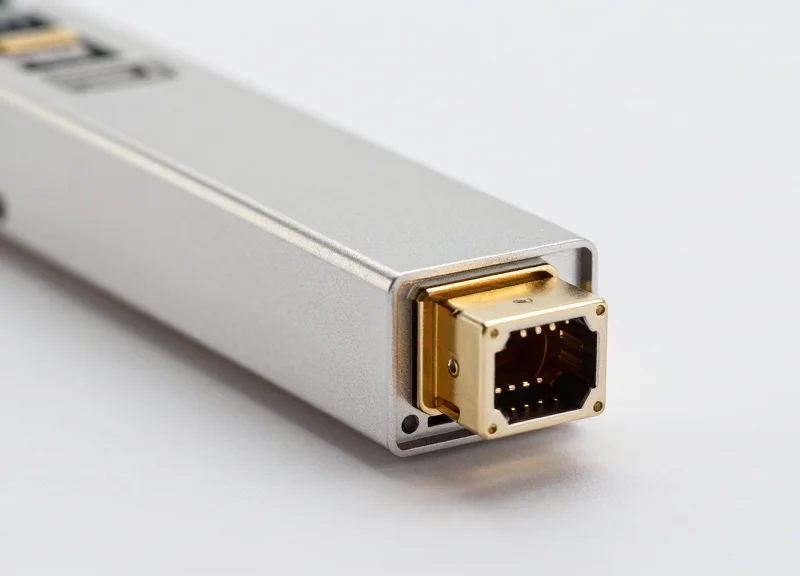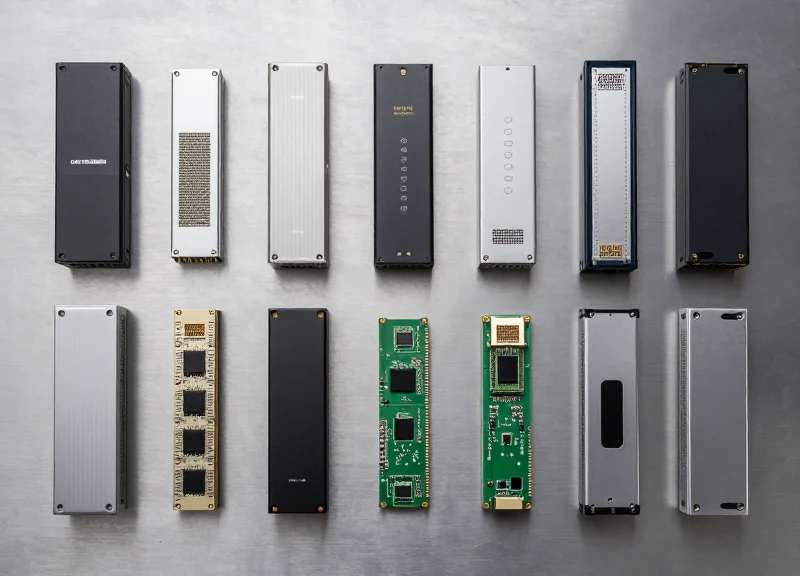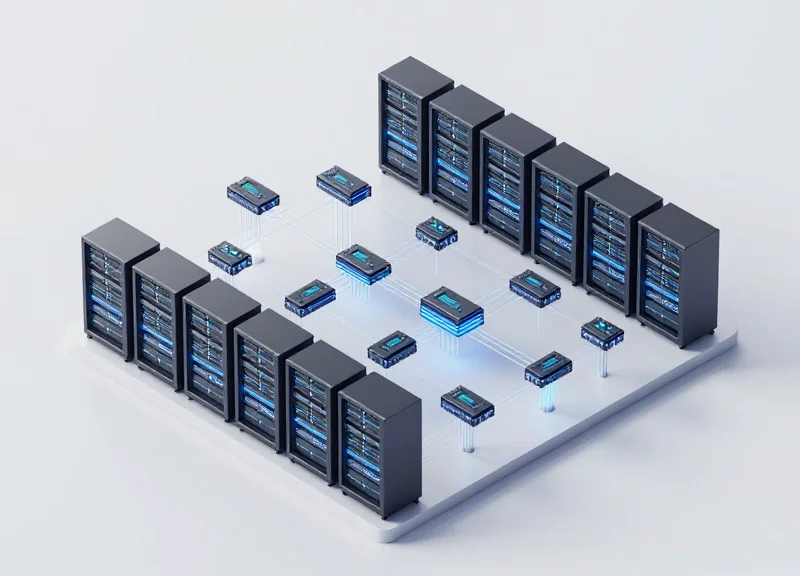
In the era of generative AI and massive datasets, the bottleneck of progress is often the underlying infrastructure. Traditional data centers struggle with the thermal and data-throughput demands of modern GPUs. Ubytelink provides a specialized modular architecture designed to bridge the gap between legacy systems and the high-performance requirements of mission-critical AI workloads.
The Shift to AI-Centric Data Center Design

The transition to AI-centric data center design is driven by the fundamental inadequacy of traditional infrastructure to handle the massive compute density and unique traffic patterns of Large Language Models (LLMs). Unlike standard enterprise applications that rely on discrete, independent server requests, AI training and inference require massive clusters of GPUs to operate as a single, synchronous entity, necessitating a complete rethink of power, cooling, and networking fabrics.
The Crisis of Legacy Infrastructure
Traditional data centers are built for 'North-South' traffic, where data primarily moves between the client and the server. However, AI workloads are dominated by 'East-West' traffic—massive volumes of data moving between compute nodes during the synchronization of model weights. Legacy architectures, often limited by 10kW to 15kW rack densities and standard air cooling, face immediate thermal and bandwidth bottlenecks when attempting to host AI clusters.
| Feature | Traditional Data Center | Ubytelink AI-Centric Design |
|---|---|---|
| Rack Power Density | 5kW - 15kW | 50kW - 120kW+ |
| Traffic Pattern | Client-to-Server (North-South) | Node-to-Node (East-West) |
| Cooling Strategy | Raised Floor / Air Cooling | Liquid Cooling (DLC / RDHx) |
| Network Fabric | Hierarchical Ethernet | Non-blocking Fat-Tree (RoCE/IB) |
Ubytelink's Design Philosophy
Ubytelink's architectural philosophy centers on 'Compute Efficiency Per Watt.' By utilizing high-density power distribution and integrated liquid-to-chip cooling, we eliminate the thermal barriers that lead to GPU throttling. Our designs prioritize a flat, non-blocking network topology that ensures every GPU in a cluster can communicate with any other at wire speed, minimizing tail latency and maximizing the return on investment for global network operators.
Optimizing for Global Scalability
Scaling AI infrastructure across global regions requires modularity. Ubytelink provides standardized blueprints that allow operators to deploy premium-quality AI clusters rapidly, ensuring consistency in performance regardless of the geographical location. This approach mitigates the complexities of sourcing specialized power and cooling components on a per-site basis.
- Why can't standard cooling handle AI workloads?
AI chips generate heat densities that exceed the physical limits of air as a heat-transfer medium; liquid cooling is required to maintain the tight temperature tolerances needed for stable GPU performance. - What is the importance of the East-West traffic optimization?
In AI training, GPUs must constantly exchange gradients and parameters; any delay in this 'East-West' communication stalls the entire cluster, making low-latency fabrics essential. - Does Ubytelink support mixed-use data centers?
Yes, our architecture allows for the integration of high-density AI zones within existing facilities through modular power and cooling upgrades.
Ubytelink Modular Architecture: Building Blocks for Success
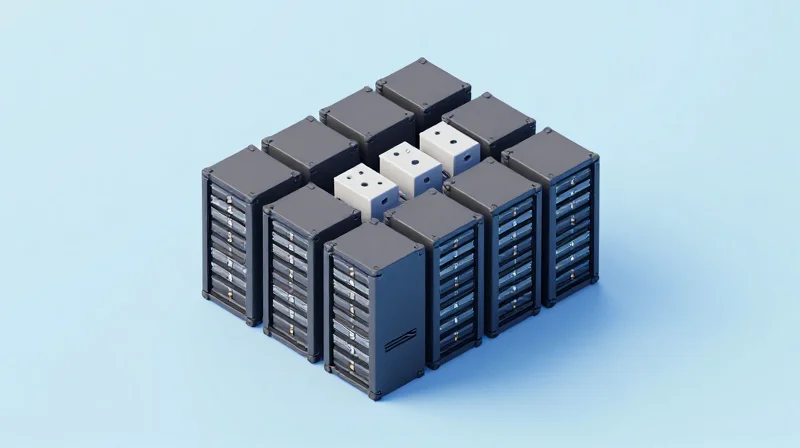
Ubytelink Modular Architecture: Building Blocks for Success
At the heart of Ubytelink AI Data Center Architecture Solutions lies a modular philosophy that treats complex infrastructure as a series of integrated, repeatable blocks. This approach moves away from bespoke, site-specific engineering toward a standardized model that allows global enterprises to scale horizontally without the traditional overhead of architectural redesign. By decoupling the physical infrastructure from the hardware layer, Ubytelink enables a plug-and-play environment where cooling, power, and compute units function as cohesive modules, drastically reducing the time-to-market for high-density AI workloads.
Comparative Advantages of Modularity
| Feature | Traditional Monolithic Design | Ubytelink Modular Architecture |
|---|---|---|
| Deployment Speed | 12-18 Months | 3-6 Months |
| Scalability | Hardware-dependent and rigid | Granular, incremental expansion |
| Maintenance | Requires facility-wide downtime | Module-level isolation and hot-swaps |
| Cooling Efficiency | Static airflow management | Dynamic, module-integrated liquid cooling |
Strategic Benefits for Global Infrastructure
The transition to a modular framework is not merely an engineering choice but a strategic imperative for organizations managing diverse global networks. Ubytelink's architecture provides a uniform blueprint that can be replicated across different geographic regions while still allowing for localized power grid and environmental adjustments.
- Rapid Global Deployment
Pre-configured modules are factory-tested and ready for rapid onsite assembly, ensuring that global nodes maintain consistent performance standards regardless of location. - Optimized Maintenance and Lifecycle Management
Individual modules can be upgraded or serviced without impacting the broader network, facilitating continuous operations for 24/7 AI training and inference tasks. - High-Level Customization
Enterprises can select specific modules for high-density GPU clusters, ultra-fast storage arrays, or specialized networking fabric based on their unique AI application requirements.
Modular Architecture FAQ
- How does modularity help with power density issues?
Ubytelink modules are designed with dedicated power distribution units (PDUs) and integrated cooling interfaces that handle the extreme thermal loads of modern AI chips like the H100/H200, which traditional layouts often fail to support. - Is Ubytelink's architecture compatible with existing data centers?
Yes, the modular design is built to be 'retrofittable,' allowing enterprises to integrate AI-ready blocks into their current brownfield facilities without a complete rebuild. - What is the impact on total cost of ownership (TCO)?
By reducing installation labor, minimizing energy waste through localized cooling, and preventing over-provisioning, Ubytelink's modular approach significantly lowers both CapEx and OpEx over the facility lifecycle.
Maximizing Throughput with High-Speed Interconnects
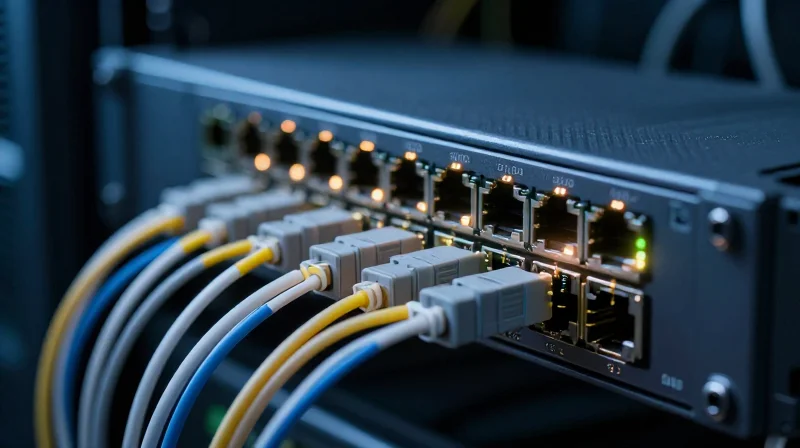
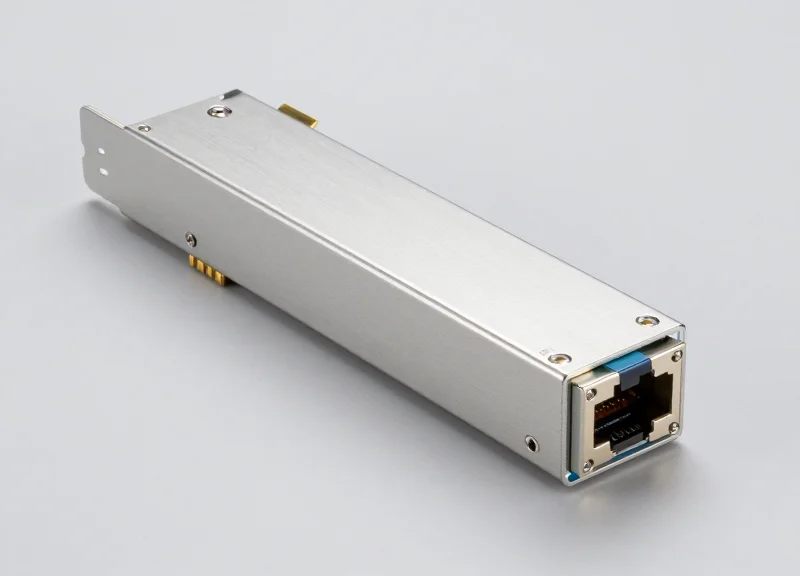
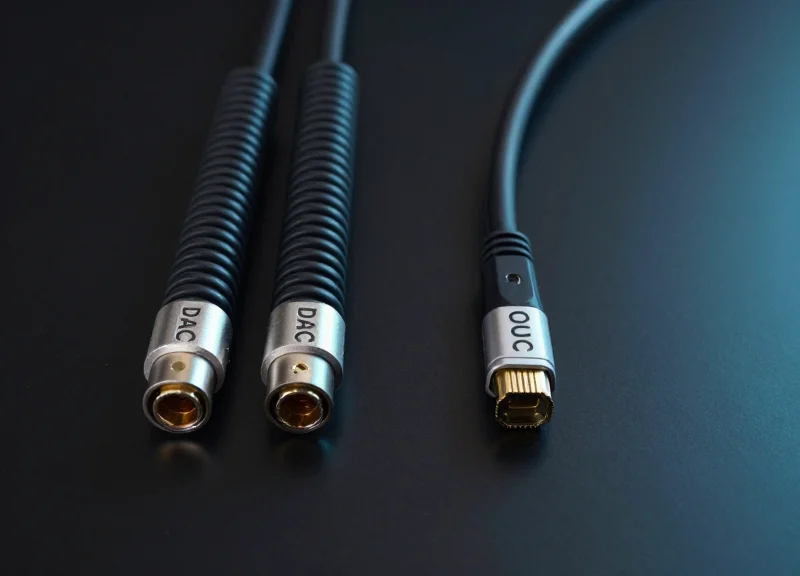
To achieve maximum throughput in AI-centric data centers, Ubytelink integrates state-of-the-art optical modules and high-speed cabling that support RDMA over Converged Ethernet (RoCE) and InfiniBand architectures, ensuring that data movement between massive GPU clusters occurs with sub-microsecond latency. By focusing on signal integrity and thermal efficiency at the physical layer, these interconnects eliminate the bandwidth bottlenecks that frequently stall distributed training iterations.
The Impact of 800G Optical Modules on AI Scaling
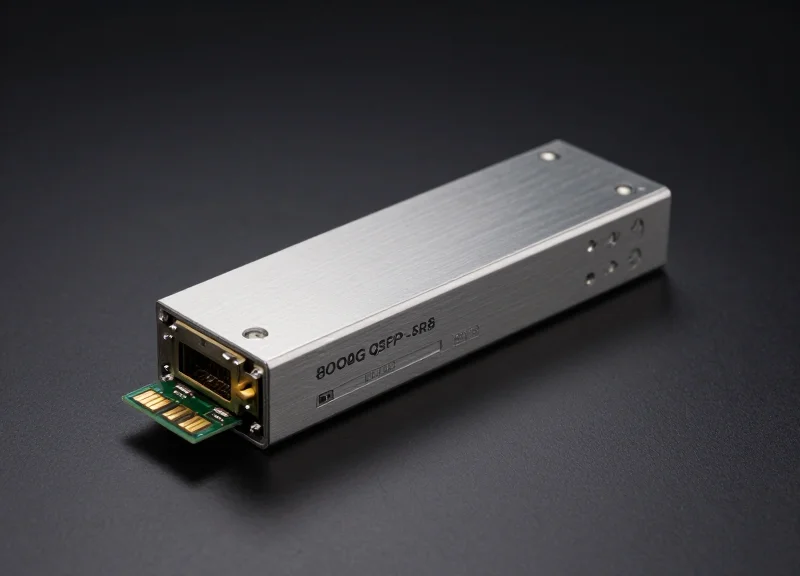
Scaling large language models (LLMs) requires massive parallelization across thousands of compute units. Ubytelink’s 800G OSFP and QSFP-DD modules leverage advanced PAM4 modulation and high-performance Digital Signal Processing (DSP) to maintain signal integrity over high-density fiber paths. These components are designed for 'lossless' networking, a prerequisite for the collective communication patterns (All-Reduce, All-to-All) that dominate AI training traffic.
| Module Type | Bandwidth | Modulation | Typical Application | Power Consumption |
|---|---|---|---|---|
| Ubytelink 400G QSFP112 | 400 Gbps | PAM4 | Leaf-Spine Interconnect | <10W |
| Ubytelink 800G OSFP | 800 Gbps | PAM4 | GPU Fabric / Back-end | <16W |
| Ubytelink 800G QSFP-DD | 800 Gbps | PAM4 | High-Density Core Switches | <14W |
| Ubytelink 1.6T OSFP | 1.6 Tbps | PAM4/112G | Next-Gen AI Clusters | <25W |
Minimizing Latency in Distributed Training
In distributed AI workloads, the network is effectively the backplane of a single giant computer. Ubytelink addresses this by optimizing the optical path and electrical-to-optical conversion. Our transceivers use low-power, low-latency DSP chipsets and silicon photonics to reduce heat and signal delay, which directly correlates to faster epoch completion times in deep learning tasks.
- How does Ubytelink ensure low latency in AI clusters?
We utilize low-power DSPs and optimized laser drivers to minimize electronic-to-optical conversion delay, paired with high-performance transceivers supporting RoCE v2 and InfiniBand protocols. - Are Ubytelink modules compatible with major switch vendors?
Yes, all Ubytelink modules comply with MSA standards and undergo rigorous interoperability testing with equipment from NVIDIA, Cisco, Arista, and Broadcom. - What is the benefit of OSFP vs. QSFP-DD for 800G?
OSFP offers superior thermal management for high-density environments through integrated heat sinks, while QSFP-DD provides better backward compatibility for certain legacy data center port configurations.
Engineered for Reliability: Mission-Critical Infrastructure
Engineered for Reliability: Mission-Critical Infrastructure
In the realm of high-performance computing, downtime is not merely an inconvenience; it represents significant financial loss and potential data corruption. Ubytelink AI Data Center Architecture Solutions are engineered with a zero-failure philosophy, employing industrial-grade components and sophisticated redundancy protocols that ensure 24/7 operational continuity even under the most demanding synthetic or training loads. By integrating structural integrity with intelligent monitoring, Ubytelink provides a foundation where uptime is the standard, not the goal.
Redundancy and Failover Strategies
Reliability is baked into both the physical and logical layers of the Ubytelink framework. By utilizing N+1 or 2N configurations for power and cooling, the system can withstand individual component failures without impacting the primary compute cluster. This is especially critical for long-running AI training jobs that require weeks of uninterrupted processing power. Ubytelink’s architecture includes automated failover mechanisms that detect anomalies at the microsecond level, rerouting power or data traffic to maintain equilibrium.
| Feature | Standard Infrastructure | Ubytelink AI Architecture |
|---|---|---|
| Redundancy Model | Basic N+1 | Enhanced 2N or 2N+1 |
| Material Grade | Commercial Standard | Industrial/Military Grade |
| Uptime Target | 99.9% | 99.999% ('Five Nines') |
| Thermal Management | Generic Airflow | Precision Liquid & Passive Cooling |
Premium Materials for Extreme Longevity
To sustain the high heat and electrical throughput characteristic of AI clusters, Ubytelink sources only premium materials for its infrastructure components. This includes high-purity copper for electrical pathways to minimize resistance and heat generation, as well as low-smoke zero-halogen (LSZH) cabling to ensure safety and longevity. Every connector and backplane is tested for mechanical durability, ensuring that physical wear does not lead to intermittent signal loss over the life of the data center.
Reliability and Resilience FAQ
- How does Ubytelink handle sudden power surges?
The architecture integrates multi-stage surge protection and uninterruptible power supplies (UPS) with millisecond response times to isolate sensitive AI hardware from grid fluctuations. - Are the cooling systems redundant?
Yes, Ubytelink employs redundant cooling loops and intelligent sensors that adjust thermal dissipation in real-time, preventing hot spots and hardware throttling. - What is the expected lifespan of Ubytelink infrastructure?
By using premium materials and over-engineered structural components, the infrastructure is designed for a 10-15 year lifecycle with minimal maintenance required.
Ultimately, the reliability of Ubytelink AI Data Center Architecture Solutions serves as a risk mitigation strategy for global enterprises. By investing in premium-quality materials and rigorous redundancy protocols, organizations can focus on innovation rather than infrastructure maintenance.
Scalability and Future-Proofing Global Networks

Scaling AI Infrastructure Without Disruption
Ubytelink AI Data Center Architecture Solutions provide a seamless pathway for global enterprises to scale their AI workloads horizontally, ensuring that initial investments remain productive even as demand surges. By decoupling the modular components of the data center from the core logic, Ubytelink allows for the integration of new-generation GPUs and high-speed networking fabrics without requiring a complete hardware refresh. This 'grow-as-you-go' philosophy minimizes upfront capital expenditure while providing the infrastructure agility needed to respond to the rapid evolution of generative AI and large language models.
| Scaling Parameter | Legacy Vertical Architecture | Ubytelink Horizontal Architecture |
|---|---|---|
| Expansion Method | Chassis-constrained upgrades | Incremental modular node addition |
| Hardware Lifespan | High risk of early obsolescence | Extended through modular compatibility |
| Interconnect Speed | Fixed or limited bandwidth | Ready for 800G and 1.6T migration |
| CapEx Efficiency | High upfront cost for peak capacity | Optimized investment aligned with growth |
Future-Proofing for Next-Gen Global Networks
To maintain a competitive edge in global markets, data centers must be prepared for the transition from PCIe 5.0 to 6.0 and beyond, as well as the shift toward 1.6T networking. Ubytelink designs its architecture with high-quality signal integrity materials and flexible physical layer configurations that accommodate these future standards today. This ensures that as enterprises deploy more complex AI clusters across different geographic regions, the underlying infrastructure remains a stable, high-performance foundation that does not require frequent, costly overhauls.
Scalability and Future-Proofing FAQ
- How does Ubytelink prevent hardware lock-in during expansion?
Ubytelink utilizes open standards for interconnects and modular frames, allowing organizations to integrate diverse accelerator brands and networking hardware within the same architectural ecosystem. - Can the architecture handle the transition to liquid cooling?
Yes, Ubytelink systems are engineered with hybrid cooling paths, making it simple to transition from air-cooled to liquid-to-chip cooling solutions as power densities increase. - Is it possible to scale across multiple global regions?
The modularity of Ubytelink solutions ensures that deployment remains consistent regardless of location, facilitating unified management and scaling for global AI initiatives.
Thermal Management and Energy Efficiency
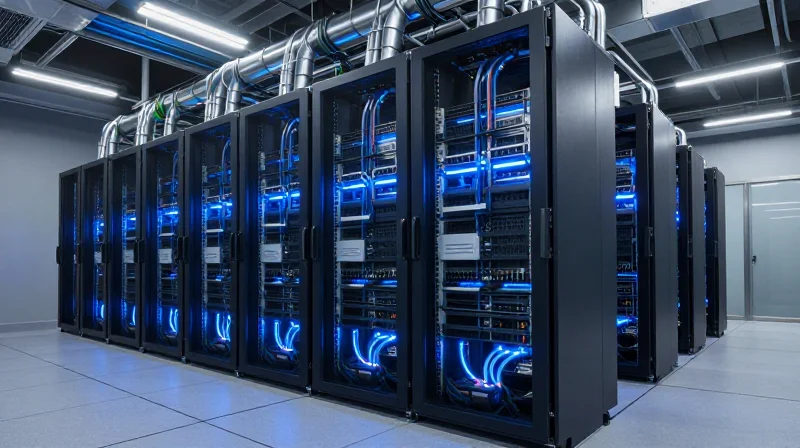
The cornerstone of Ubytelink AI Data Center Architecture Solutions is a holistic approach to thermal management that transforms heat dissipation from a operational bottleneck into a competitive advantage. By integrating hybrid cooling architectures—combining direct-to-chip liquid cooling with precision air containment—Ubytelink modules effectively mitigate the thermal stresses of dense AI clusters, ensuring sustained peak performance and industry-leading energy efficiency across global networks.
Advanced Liquid Cooling and Heat Dissipation
To support the 700W+ Thermal Design Power (TDP) of next-generation AI processors and GPUs, Ubytelink utilizes Direct-to-Chip (D2C) cold plate technology. This method captures up to 80% of server-generated heat directly through a liquid medium, which is significantly more efficient than air at transporting thermal energy. This shift allows for unprecedented rack densities—often exceeding 50kW to 100kW per cabinet—without the risk of thermal throttling or hardware degradation.
| Cooling Technology | Efficiency Level | Primary Application |
|---|---|---|
| Traditional CRAC Systems | Low (PUE 1.5+) | Standard Enterprise Workloads |
| Hot/Cold Aisle Containment | Moderate (PUE 1.3-1.4) | Mixed-Density Infrastructure |
| Ubytelink Hybrid Liquid/Air | High (PUE <1.2) | High-Performance AI Training & Inference |
Precision Airflow and AI-Driven Energy Optimization
Beyond liquid cooling, Ubytelink optimizes the remaining thermal load through intelligent airflow management. Using Computational Fluid Dynamics (CFD) modeling, our modules feature optimized containment structures that prevent the mixing of hot and cold air streams. Integrated Variable Frequency Drives (VFDs) on cooling fans adjust in real-time based on granular sensor telemetry, ensuring that energy is consumed only when and where thermal extraction is required.
Impact on Operational Costs and Sustainability
Energy efficiency in the AI era is a financial and environmental imperative. By drastically reducing the energy overhead required for cooling, Ubytelink enables global operators to allocate a higher percentage of their total power budget to compute tasks rather than facility maintenance. This results in a significantly lower Total Cost of Ownership (TCO) and supports corporate ESG goals by minimizing the carbon footprint of intensive AI operations.
Thermal Management FAQ
- How does Ubytelink maintain a low PUE in high-ambient temperature regions?
Our solutions utilize high-efficiency heat exchangers and optional adiabatic cooling components that maintain optimal performance even in challenging climates, reducing the reliance on energy-intensive mechanical refrigeration. - Is the Ubytelink cooling infrastructure scalable for future hardware generations?
Yes, the modular design of Ubytelink cooling loops allows for seamless upgrades to manifolds and pumps to accommodate the higher flow rates required by future, more powerful silicon architecture. - Does liquid cooling integration increase the risk of leaks?
Ubytelink employs aerospace-grade quick-disconnect couplings and multi-point leak detection sensors integrated with automated shut-off valves to ensure mission-critical reliability and hardware protection.
Security and Compliance in the AI Era

Security and Compliance in the AI Era
Ubytelink AI Data Center Architecture Solutions provide a multi-layered security framework designed to protect the integrity, confidentiality, and availability of massive datasets required for high-performance AI training. By integrating physical hardening with logical security protocols, Ubytelink ensures that global networks can scale safely while meeting rigorous international compliance mandates like GDPR and SOC2.
Hardware-Level Protection and Physical Integrity
Physical security is the first line of defense for AI infrastructure, where hardware value and data sensitivity are at their peak. Ubytelink utilizes industrial-grade materials and smart-locking mechanisms to prevent physical tampering. Each rack unit is equipped with intelligent sensors that monitor environmental variables and unauthorized access, providing real-time alerts to the network operations center.
| Security Feature | Ubytelink AI Implementation | Traditional Data Center Solution |
|---|---|---|
| Access Management | Integrated biometric and RFID locking systems with digital audit trails | Standard mechanical lock and key systems |
| Enclosure Security | Reinforced cold-rolled steel with EMI/RFI shielding | Standard grade ventilated enclosures |
| Environmental Monitoring | Integrated liquid leak detection and smoke sensors per rack | General room-level monitoring |
Navigating Global Compliance and Sovereignty
The global nature of AI development necessitates adherence to varying regional laws. Ubytelink's architecture facilitates compliance with standards such as GDPR, HIPAA, and SOC2 by enabling precise data sovereignty controls. Its modular nature allows organizations to isolate specific workloads within compliant zones, ensuring that sensitive personal data remains within localized boundaries as required by law, even within a global network framework.
- How does Ubytelink protect against hardware-based data breaches?
Ubytelink employs tamper-evident cabling paths and shielded rack enclosures to prevent physical signal interception and unauthorized hardware modifications. - Can these solutions adapt to changing AI regulations?
Yes, the modular design allows for the rapid integration of new encryption modules or security appliances without overhauling the entire network architecture. - Does the cooling system impact security monitoring?
No, Ubytelink integrates environmental security sensors directly into the thermal management modules to ensure simultaneous monitoring of equipment health and physical safety.
Why Global Enterprises Partner with Ubytelink
Why Global Enterprises Partner with Ubytelink
Partnering with Ubytelink allows global enterprises to bypass the traditional complexities of AI infrastructure by leveraging a refined, pre-validated architecture that guarantees both performance and longevity. In an era where downtime or latency translates directly to lost competitive advantage, Ubytelink provides the structural integrity and technical expertise required to sustain mission-critical AI workloads across diverse geographical regions. Our solutions are designed not just to meet current demands, but to provide a future-proof foundation for the next generation of neural processing.
Comparative Advantage: Ubytelink vs. Traditional Solutions
| Feature | Legacy Data Center Architecture | Ubytelink AI-Native Architecture |
|---|---|---|
| Deployment Velocity | 6 to 12 Months | 8 to 12 Weeks |
| Scaling Logic | Vertical/Monolithic | Horizontal/Modular |
| Energy Efficiency | Variable PUE (1.5+) | Optimized PUE (<1.2) |
| Hardware Synergy | Fragmented Ecosystem | Pre-Validated AI Integration |
Expert Support and Global Strategic Reliability
Beyond the hardware, the value of the Ubytelink partnership lies in our deep domain expertise. We provide a comprehensive support ecosystem that includes site-specific engineering, regulatory compliance navigation, and global logistics management. This ensures that whether an enterprise is deploying in North America, Europe, or Asia, the quality of the architecture and the efficiency of the network remain consistent. Our engineers work as an extension of your internal teams, reducing the burden on in-house resources while accelerating time-to-value for AI initiatives.
Frequently Asked Questions About Ubytelink Partnerships
- How does Ubytelink ensure consistency across different international sites?
We utilize standardized modular designs that are pre-configured to meet international electrical and safety standards, ensuring identical performance metrics regardless of location. - Can Ubytelink support existing legacy infrastructure?
Yes, our architecture is designed for hybrid integration, allowing enterprises to scale their AI capabilities without the need for a full 'rip-and-replace' of current data center investments. - What kind of ongoing technical support is available?
Ubytelink offers 24/7 global technical assistance, proactive monitoring, and on-site maintenance services to ensure maximum uptime for high-stakes AI operations. - How does Ubytelink address the rapid evolution of AI hardware?
Our modular rack and power configurations are built to be forward-compatible, accommodating upcoming generations of GPUs and specialized AI accelerators with minimal modification.
In summary, Ubytelink’s AI Data Center Architecture provides the robust, scalable, and efficient foundation required for the next generation of computing. Don't let your infrastructure limit your innovation—contact Ubytelink today to schedule a consultation with our senior architects.