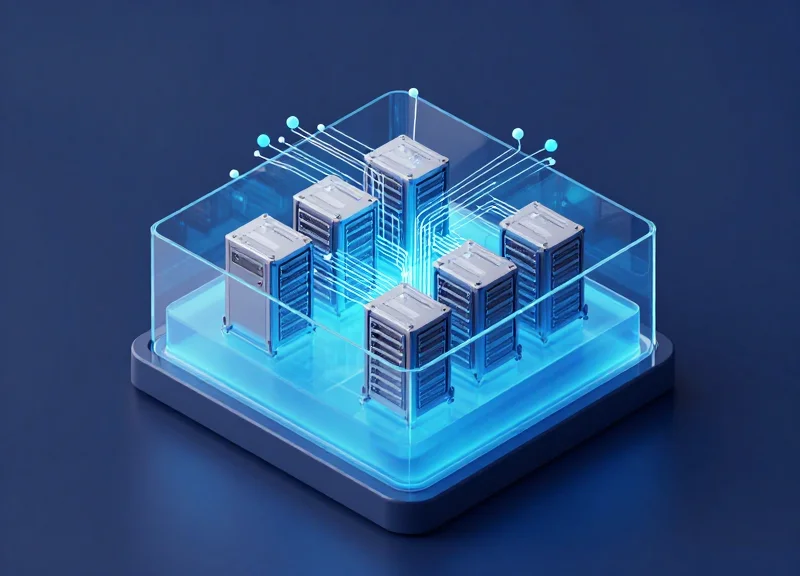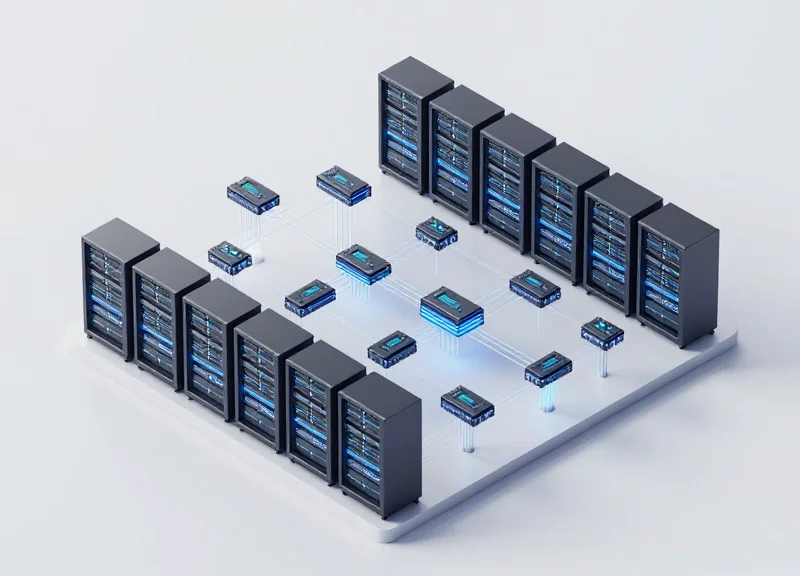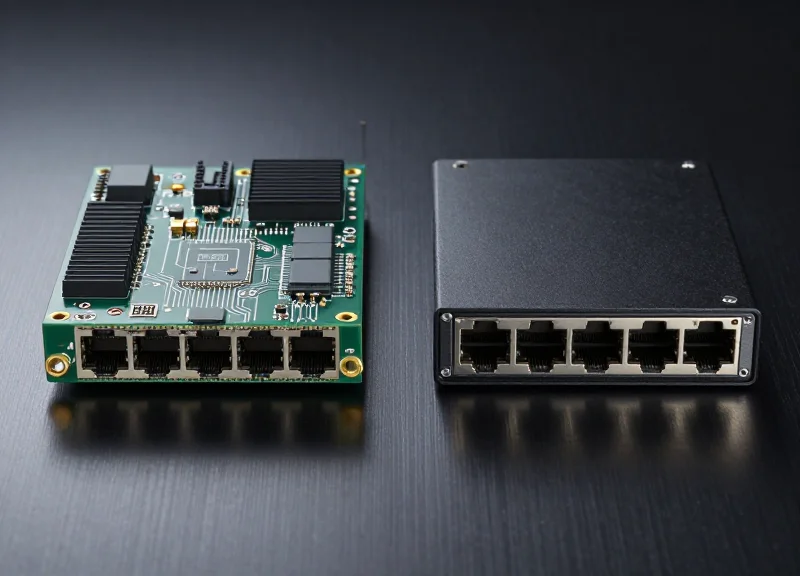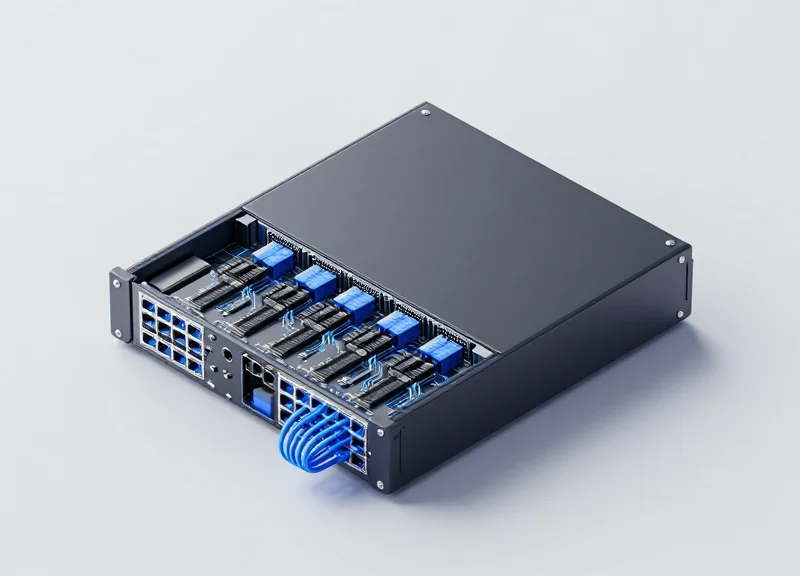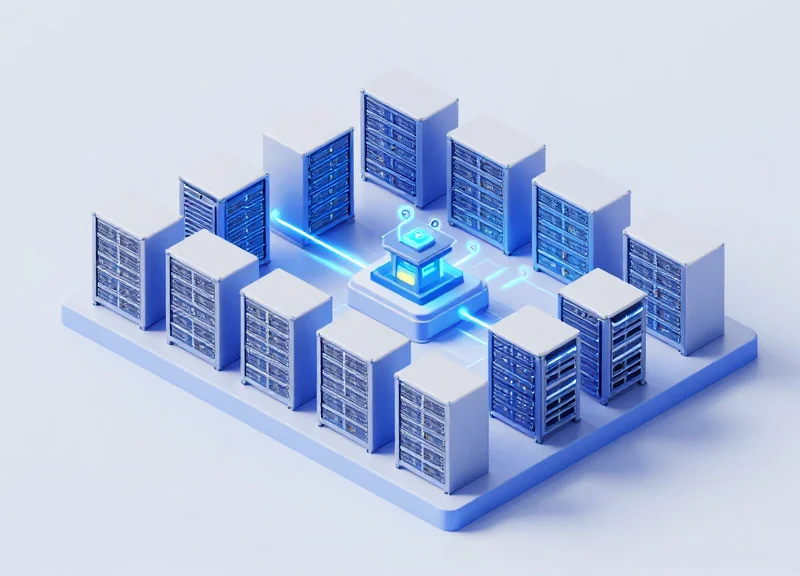
As data centers and enterprise networks face unprecedented demand for speed and efficiency, the architecture of switch software has become a primary bottleneck. Traditional off-the-shelf networking stacks offer convenience, but custom firmware coding for switches provides a level of hardware-level optimization that can redefine a company's competitive advantage. This article breaks down the technical and financial trade-offs between specialized firmware and general-purpose alternatives.
Understanding the Role of Firmware in Modern Switch Architectures

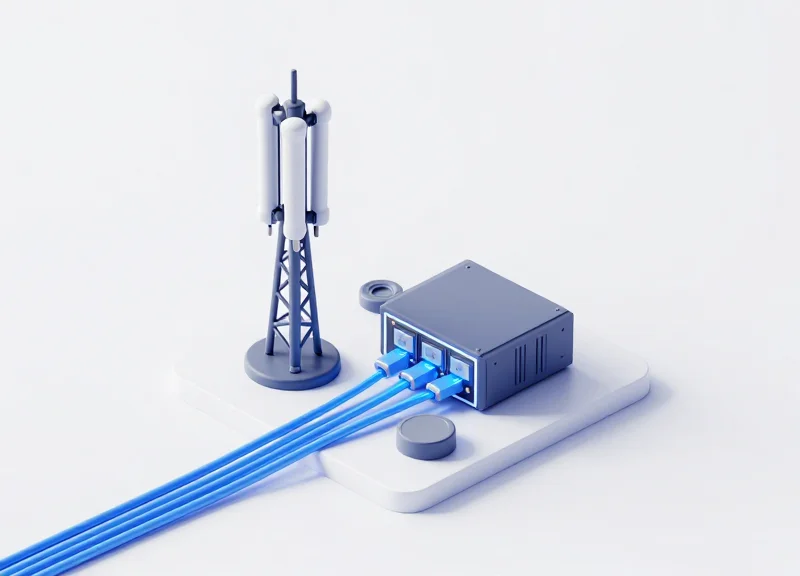
In the context of modern networking, firmware is not merely a piece of static code but a dynamic orchestration layer that defines how specialized hardware like Application-Specific Integrated Circuits (ASICs) and Network Processing Units (NPUs) interact with the broader network. While the silicon provides the raw horsepower for packet forwarding, the firmware provides the intelligence required to manage memory buffers, routing tables, and interface logic. Without optimized firmware coding, even the most advanced switch hardware remains an inert collection of gates and transistors, unable to adapt to the complex demands of high-density data centers.
The Bridge Between Silicon and Logic
Modern switch architectures rely on a layered approach where firmware serves as the Hardware Abstraction Layer (HAL). This layer hides the complexity of the underlying silicon, offering a standardized API—such as Broadcom's SDK or the Open Compute Project’s Switch Abstraction Interface (SAI)—to the network operating system (NOS). This decoupling allows network engineers to implement sophisticated features like VXLAN, EVPN, or deep packet inspection without needing to rewrite logic for every specific chip revision, effectively future-proofing the hardware investment.
Critical Firmware Operations in Networking
- ASIC Initialization
Configuring internal registers, clock speeds, and memory blocks during the boot process to prepare the data plane for traffic. - Table Management
Mapping high-level routing rules and security policies into Ternary Content-Addressable Memory (TCAM) or hash tables for line-rate execution. - Telemetry Aggregation
Collecting real-time metrics on packet loss, latency, and buffer utilization directly from the hardware for export to monitoring tools. - Error Correction
Managing hardware-level parity checks and link recovery protocols to ensure data integrity without CPU intervention.
Architecture Comparison: Fixed vs. Programmable Silicon
The role of firmware shifts significantly depending on the underlying chip architecture. In fixed-function switches, firmware is primarily used for configuration. In programmable architectures, such as those using the P4 language, firmware defines the very nature of the packet processing pipeline.
| Feature | Fixed-Function ASIC | Programmable ASIC (e.g., P4) |
|---|---|---|
| Firmware Role | Static configuration & management | Pipeline definition & logic compilation |
| Optimization | Hard-coded for standard protocols | Tailored for custom headers & telemetry |
| Flexibility | Limited to vendor-defined features | Support for new protocols via software |
| Efficiency | Highest for common L2/L3 tasks | Scalable for niche or emerging needs |
FAQ: Understanding Firmware's Strategic Criticality
- Does firmware affect switch latency?
Yes, inefficient table lookups or poorly optimized interrupt handling in the firmware can introduce significant jitter and micro-delays even on high-speed hardware. - Can firmware updates improve switch performance?
Absolutely; firmware updates often include optimizations for buffer management algorithms that can drastically reduce packet drops during congestion. - What is the difference between firmware and the NOS?
The Network Operating System (NOS) manages the overall system interface and user protocols, whereas the firmware handles the direct, low-level interaction with the packet-forwarding silicon.
Custom Firmware vs. Commercial Off-The-Shelf (COTS) Solutions
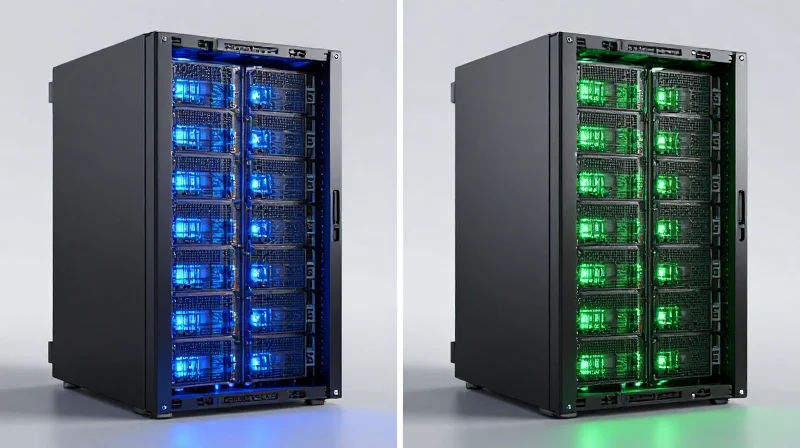
The choice between custom firmware coding and Commercial Off-The-Shelf (COTS) solutions represents a fundamental decision between architectural sovereignty and operational velocity. Custom firmware enables organizations to extract the absolute maximum performance from network silicon by eliminating generic software overhead, whereas COTS solutions provide a stabilized, vendor-supported ecosystem that drastically reduces the initial engineering burden and deployment risk.
Custom Firmware: Engineering for Precise Control
Custom firmware development allows for the implementation of specialized logic that is often unavailable in generic vendor packages. For high-frequency trading (HFT) or massive-scale data centers, every nanosecond of latency matters. By writing custom code, engineers can optimize buffer management, tailor the packet-processing pipeline (often via P4 or C), and implement proprietary telemetry protocols. This granular control ensures that the switch hardware serves the specific application needs rather than conforming to the average requirements of the general market.
COTS Solutions: Prioritizing Stability and Scale
COTS solutions, built on industry-standard Network Operating Systems (NOS) and vendor-supplied SDKs (such as Broadcom's SDK or NVIDIA's Spectrum), offer a 'black box' experience that prioritizes reliability. The primary advantage of COTS is the reduction of technical debt; the vendor handles the complex task of managing silicon errata, register configurations, and environmental monitoring. For enterprises where standard L2/L3 functionality is sufficient, the cost of maintaining a specialized firmware team often outweighs the marginal performance gains of a custom build.
| Feature | Custom Firmware | COTS Solutions |
|---|---|---|
| Development Speed | Slow (Months to Years) | Rapid (Days to Weeks) |
| Feature Flexibility | Infinite (Limited by ASIC) | Restricted to SDK APIs |
| Resource Requirement | High-Level Embedded Experts | Network/Systems Admins |
| Optimization Potential | Maximum (Silicon-specific) | Moderate (General Purpose) |
| Support Model | In-house / Community | Vendor SLA / Professional Services |
Strategic Implementation FAQ
- When should a company choose custom firmware over COTS?
Custom firmware is necessary when the use case requires non-standard protocol support, extreme latency optimization, or when the hardware is being used as a platform for a proprietary software-defined product. - What is the primary hidden cost of COTS solutions?
The hidden costs involve licensing fees and vendor lock-in, where performance bottlenecks or bugs cannot be fixed by the user, leading to 'waiting periods' for vendor patches. - Can COTS hardware run custom firmware?
Generally yes, if the hardware follows Open Compute Project (OCP) standards or provides an Open Network Install Environment (ONIE) bootloader, allowing third-party or custom firmware to be flashed.
The Latency Factor: Microseconds Matter in High-Frequency Networking

In the world of high-frequency networking, latency is the ultimate arbiter of performance; custom firmware coding allows engineers to strip away the abstractions of general-purpose operating systems to achieve deterministic, microsecond-level packet delivery. By interacting directly with the ASIC (Application-Specific Integrated Circuit) registers and bypassing the kernel-to-user-space context switching found in alternatives, firmware ensures that every CPU cycle is dedicated to data movement rather than administrative overhead.
Eliminating the 'Abstraction Tax' with Direct Register Access
Standard network operating systems (NOS) rely on Hardware Abstraction Layers (HALs) to ensure compatibility across different silicon vendors. While this promotes flexibility, it introduces an 'abstraction tax'—additional instructions required to translate generic API calls into hardware-specific commands. Custom firmware coding eliminates this middleman, allowing for immediate read/write operations to the switch's memory-mapped I/O. This direct path reduces the instruction count per packet, significantly lowering the processing tail latency that plagues complex COTS environments.
| Feature | Custom Firmware Approach | Alternative OS / COTS |
|---|---|---|
| Access Pattern | Direct Memory-Mapped I/O | Kernel System Calls / HAL |
| Context Switching | Minimal (Single-Threaded/Polled) | Frequent (Multi-tasking Interrupts) |
| Buffer Management | Static, Pre-allocated | Dynamic Allocation (Heap) |
| Average Latency | < 500 Nanoseconds | 2 - 10 Microseconds |
Deterministic Interrupt Handling vs. Kernel Scheduling
General-purpose kernels use sophisticated schedulers to balance various background tasks, which can lead to unpredictable 'jitter' in packet processing. In contrast, custom firmware is typically designed for a single purpose: moving data. By utilizing bare-metal interrupt service routines (ISRs) or high-speed polling loops, firmware developers can guarantee a deterministic response time. This ensures that the time taken to process a packet header remains constant, regardless of the overall traffic load or system state.
- Why is microsecond latency critical in financial networking?
In high-frequency trading (HFT), even a 1-microsecond delay can result in a failed trade or a lost price advantage. Custom firmware provides the speed necessary to outpace competitors using standard gear. - How does firmware reduce 'jitter' compared to an OS?
Firmware avoids the unpredictable timing caused by OS background processes, garbage collection, and CPU context switches, resulting in a consistent 'flat' latency profile. - What is the trade-off for this performance?
The primary trade-off is development complexity; writing bare-metal firmware requires deep knowledge of the specific hardware architecture and lacks the safety nets provided by a standard OS.
Power Consumption Dynamics: Optimizing the Watt-per-Gigabit Ratio
Optimizing the Watt-per-Gigabit ratio is a critical challenge in modern data centers, where energy costs often rival hardware acquisition costs over a three-year lifecycle. Custom firmware coding for switches provides a distinct advantage over generic network stacks by eliminating the 'computational tax'—the excess CPU cycles spent on context switching, kernel-to-user space transitions, and processing unused protocol layers. By tightening the execution path and interacting directly with the underlying silicon, firmware developers can significantly lower the thermal design power (TDP) required for a given throughput level.
The Efficiency Gap: Instruction Sets and Clock Cycles
Generic network operating systems (NOS) often rely on broad abstraction layers to ensure compatibility across various hardware platforms. While this simplifies deployment, it introduces overhead that consumes energy for every packet processed. In contrast, custom-coded firmware uses assembly-level optimizations and direct register access to process packets in fewer clock cycles. This lean execution model ensures that the processing unit spends less time in active states and more time in power-saving idle states, even during high-traffic bursts.
Comparative Energy Efficiency Metrics
| Metric | Custom Firmware Optimization | Generic Network Stack |
|---|---|---|
| Watt-per-Gigabit (Typical) | 0.18 - 0.30 W/Gbps | 0.45 - 0.70 W/Gbps |
| Idle Power Draw | Deep Sleep for Unused PHYs | Constant Background OS Activity |
| Packet Processing Cost | Low (Minimal Instruction Set) | High (Abstraction Overhead) |
| Thermal Output | Reduced Heat; Lower Cooling Needs | Significant Heat; High Fan Duty Cycle |
Active Power Management at the Silicon Level
Efficient firmware allows for 'surgical' control over hardware power domains. Unlike generic stacks that treat the switch as a monolithic entity, custom firmware can dynamically adjust the voltage and frequency of the Network Processing Unit (NPU) based on real-time traffic analysis. It can selectively disable logic blocks and ports that are not in use, a technique often referred to as 'Energy-Efficient Ethernet' (EEE) control, but implemented with much higher precision than standard COTS solutions allow.
Strategic Energy Optimization FAQ
- How does firmware reduce cooling costs?
By optimizing the code to use fewer CPU cycles, the chip generates less heat. This allows for lower fan speeds and reduces the power consumed by the chassis' thermal management system. - Does custom firmware support dynamic voltage scaling?
Yes, custom firmware can be programmed to interface directly with the Power Management Integrated Circuit (PMIC) to scale voltage based on the current throughput requirement, maximizing efficiency. - Is there a trade-off between power saving and latency?
While aggressive power saving can introduce wake-up latency, custom firmware minimizes this by using predictive algorithms and fast-path interrupts that return the hardware to an active state faster than generic OS layers.
Total Cost of Ownership (TCO): Beyond the Initial Purchase
Total Cost of Ownership (TCO): Beyond the Initial Purchase
Evaluating the financial landscape of Firmware Coding for Switches vs Alternatives: A Performance & Cost Comparison requires moving beyond the sticker price to analyze the entire operational lifecycle. While commercial switches offer rapid deployment, custom firmware coding provides a level of architectural efficiency that translates into massive OpEx savings through reduced power draw, the elimination of per-port licensing, and the extension of hardware utility.
Development Investment vs. Proprietary Licensing
The primary cost differentiator lies in the transition from Operational Expenditure (OpEx) to Capital Expenditure (CapEx). Custom firmware necessitates a high upfront investment in specialized engineering talent to build a bespoke network stack. However, this one-time cost effectively eliminates the recurring 'vendor tax' comprised of annual software maintenance fees and mandatory support contracts that are standard with proprietary alternatives.
| Cost Component | Custom Firmware Approach | Commercial/Off-the-Shelf |
|---|---|---|
| Hardware Acquisition | Lower (White-box hardware) | Higher (Brand-name markup) |
| Upfront Development | Significant R&D Investment | Minimal (Plug-and-play) |
| Software Licensing | Zero recurring costs | Ongoing per-port/feature fees |
| Maintenance | Internal engineering team | Vendor support contracts |
Energy Efficiency and Power Dynamics
Custom-coded firmware allows for granular control over the switch's Silicon-on-Chip (SoC) and port power states. By removing the 'bloatware' of generic operating systems, developers can significantly reduce CPU overhead and optimize clock speeds for specific throughput requirements. In high-density data centers, reducing the power consumption by even 15% per switch leads to substantial savings in both electricity and secondary cooling costs.
Extending Hardware Lifespan
One of the most compelling TCO benefits of custom firmware is the ability to bypass artificial 'End-of-Life' (EOL) cycles. Commercial vendors often stop supporting hardware to force a refresh. With custom firmware, organizations can backport modern security protocols and performance optimizations to legacy chipsets, effectively doubling the ROI on physical infrastructure by delaying capital-intensive hardware replacements.
TCO Frequently Asked Questions
- Is custom firmware cost-effective for small networks?
Generally, no. The high initial cost of engineering is best amortized over large-scale deployments where the savings on licensing and power scale exponentially. - What is the biggest hidden cost of custom firmware?
The primary hidden cost is the ongoing need for a specialized team to handle security patching and feature updates, which replaces the vendor's software team. - How does hardware choice impact TCO?
Utilizing open-standard white-box switches reduces initial hardware costs by 40-60%, though it places the entire burden of stability on the quality of the custom firmware code.
Scalability and Future-Proofing with Programmable Data Planes

Scalability and Future-Proofing with Programmable Data Planes
The primary advantage of custom firmware coding in modern networking is the transition from fixed-function logic to programmable data planes. While traditional alternatives rely on rigid, vendor-locked ASICs that support a limited set of pre-defined protocols, custom firmware allows engineers to define exactly how packets are parsed, processed, and forwarded. This programmability ensures that as new standards such as SRv6 or advanced telemetry protocols emerge, the infrastructure can be updated via code without the need for a 'forklift upgrade' of the physical hardware.
The P4 Advantage: Decoupling Logic from Silicon
Programming languages like P4 (Programming Protocol-independent Packet Processors) have revolutionized how firmware interacts with the switching pipeline. By using a PISA (Protocol-Independent Switch Architecture) approach, developers can write firmware that instructs the hardware on how to handle traffic. This contrasts sharply with 'black-box' industry-standard firmware, where the user is limited to the features exposed by the silicon manufacturer's SDK. Custom coding within these programmable planes provides the agility to implement bespoke security headers or experimental routing logic in days rather than the years typically required for hardware development cycles.
| Feature | Legacy/Rigid Firmware | Custom Programmable Firmware |
|---|---|---|
| Protocol Support | Hard-coded; restricted to vendor specs | Fully customizable via P4/C coding |
| Update Cycle | Requires new hardware acquisition | Deployed via software/firmware patches |
| Network Telemetry | Basic SNMP/NetFlow (fixed) | In-band Network Telemetry (INT) |
| Hardware Lifespan | 3–5 years (obsolescence-prone) | 6–10 years (logic-flexible) |
| Development Control | Dependent on vendor roadmaps | In-house control over features |
Maximizing ROI through Long-Term Adaptability
Investing in programmable firmware infrastructure represents a strategic shift from CapEx-heavy hardware cycles to an OpEx-focused software refinement model. By enabling a single piece of silicon to act as a load balancer, a firewall, or a standard switch simply by changing the firmware, organizations can drastically reduce their total cost of ownership (TCO). This flexibility is critical for data centers and service providers who must scale rapidly to meet unpredictable traffic demands without over-provisioning hardware that might become obsolete within a few years.
- How does P4 integration impact firmware performance?
P4 allows for highly optimized pipelines where only necessary protocols are processed, reducing latency and increasing throughput compared to 'one-size-fits-all' firmware that carries the overhead of unused legacy protocols. - Can custom firmware coexist with existing network standards?
Yes. Custom firmware is typically designed to be backwards compatible with standard protocols like BGP or OSPF while adding proprietary or newer extensions to the data plane. - What is the primary risk of relying on rigid, industry-standard firmware?
The main risk is 'vendor lock-in' and hardware stagnation, where the network cannot support emerging AI/ML workloads or new security paradigms without a complete and expensive hardware replacement.
Security at the Logic Level: Reducing the Attack Surface
The primary security advantage of custom firmware coding over generic alternatives lies in the radical reduction of the attack surface. While off-the-shelf Network Operating Systems (NOS) often include a broad suite of pre-installed services, utilities, and protocols to ensure broad compatibility, custom-coded firmware adopts a 'security by default' posture by only including the exact logic required for the switch’s specific role. This minimalist approach removes potential entry points for attackers, such as unused management daemons, hidden diagnostic ports, and legacy protocol support.
Eliminating Service Bloat and Vulnerabilities
Generic alternatives often run on top of a standard Linux kernel or a similar general-purpose OS. While functional, these systems carry thousands of lines of code that are irrelevant to high-performance switching. In contrast, custom firmware leverages a thinner abstraction layer. By stripping away unnecessary components like web-based GUI servers, universal plug-and-play (UPnP) services, and common scripting environments (e.g., Python or Perl), developers ensure that a vulnerability in a non-essential service cannot be leveraged to compromise the entire network fabric.
| Security Feature | Custom Firmware Coding | Generic/Alternative NOS |
|---|---|---|
| Code Footprint | Minimalist (Optimized Logic) | Large (Kernel + Multi-purpose Apps) |
| Default Services | None (Opt-in only) | Many (Opt-out/Always-on) |
| Patch Frequency | Low (Targeted updates) | High (Frequent kernel/utility CVEs) |
| Management Plane | Physically or Logically Isolated | Integrated (Often shared resources) |
Hardening the Data Plane vs. Control Plane
Advanced firmware coding allows for strict isolation between the data plane and the control plane at the logic level. In many generic alternatives, an intense DDoS attack on the management interface can exhaust CPU resources, inadvertently affecting the hardware's ability to forward packets. Custom-coded firmware can implement hard-coded rate limiting and resource partitioning that prevents control-plane saturation from impacting data-plane performance, providing a resilient defense against resource exhaustion attacks.
Security Logic Frequently Asked Questions
- How does a smaller codebase improve security auditing?
A smaller codebase allows for exhaustive formal verification and manual code reviews. When the firmware is purpose-built, security teams can trace every instruction, making it significantly harder for backdoors or logic flaws to remain hidden. - Does custom firmware protect against Zero-Day exploits better than standard OSs?
Yes, primarily because custom firmware often lacks the common libraries (like OpenSSL or glibc) that are frequent targets for wide-scale automated exploits. An attacker cannot use 'off-the-shelf' exploit kits against a proprietary, minimalist logic stack. - Is removing 'convenience' features like SSH-based management worth the security gain?
In high-security environments, yes. Custom firmware allows for out-of-band management or specialized API-driven configuration that doesn't rely on traditional, high-risk protocols like Telnet or unhardened SSH implementations.
Reliability and Determinism in Mission-Critical Environments
The Architecture of Predictability
In mission-critical environments like high-frequency trading, industrial automation, and telecommunications, the difference between success and failure is measured in nanoseconds of jitter. Dedicated firmware coding for switches provides a level of determinism that general-purpose networking stacks cannot match because it is engineered to prioritize packet-forwarding logic over complex background OS tasks. By eliminating the overhead of a general-purpose kernel, developers can ensure that every packet follows a strictly defined, time-invariant path through the logic gates.
Comparing Stability: Firmware vs. General Networking Software
| Metric | Optimized Custom Firmware | General-Purpose Networking Software |
|---|---|---|
| Latency Consistency | Deterministic (fixed cycle count) | Probabilistic (varies with load) |
| Jitter Profile | Ultra-low (nanoseconds) | Variable (microseconds to milliseconds) |
| Interrupt Handling | Hardware-mapped or Polled | Kernel-scheduled interrupts |
| Context Switching | None or minimal RTOS overhead | High (CPU cycles spent on OS tasks) |
| Failure Isolation | Hardware-level state machines | Software-level process management |
Eliminating Architectural Jitter
Generic networking software often runs atop a standard Linux kernel, which introduces 'jitter'—unpredictable variations in processing time. This is caused by CPU context switching, memory paging, and interrupt storms from unrelated services. Custom firmware avoids these pitfalls by utilizing bare-metal programming or Real-Time Operating System (RTOS) paradigms. In these environments, resource contention is eliminated, and the system clock is synchronized exclusively with the data plane's requirements, ensuring that latency remains flat even during 100% throughput utilization.
Resilience and Graceful Degradation
Reliability in mission-critical systems isn't just about avoiding failure; it's about how the system behaves when components do fail. Custom-coded firmware allows for the separation of the control plane and the data plane at a more granular level. If a management interface crashes in a generic OS, it may impact the entire networking stack. In an optimized firmware environment, the data plane can continue to forward traffic at wire speed using hard-coded logic while the management plane undergoes a transparent recovery process.
- Why is determinism critical for industrial networks?
In industrial IoT and robotics, control loops require precisely timed feedback. Even minor jitter can cause desynchronization between sensors and actuators, leading to physical system instability. - Can generic software be tuned for mission-critical use?
While 'Real-Time' patches for Linux improve performance, they cannot eliminate the fundamental complexity and non-deterministic branching inherent in a multi-purpose code base compared to minimalist firmware. - How does firmware impact the Mean Time Between Failures (MTBF)?
By reducing the code footprint and eliminating unnecessary services, the attack surface and the probability of software-induced crashes are significantly reduced, directly increasing the system's MTBF.
Case Studies: ROI of Specialized Switch Firmware in Data Centers
Real-World Evidence: The ROI of Specialized Switch Firmware
Specialized switch firmware delivers a measurable Return on Investment (ROI) by optimizing the hardware-software interaction at the silicon level, which directly reduces packet processing overhead and power consumption. Unlike generic alternatives that carry the technical debt of legacy features, custom-coded firmware allows data center operators to reclaim hardware resources, leading to higher throughput densities and lower Total Cost of Ownership (TCO). This financial gain is primarily realized through extended hardware lifespans and the elimination of licensing fees associated with bloated proprietary networking operating systems.
Case Study 1: Hyperscale Efficiency via P4 Programmability
A Tier-1 cloud service provider transitioned from a vendor-locked firmware model to a P4-programmable custom stack to manage telemetry and load balancing directly on the ASIC. By migrating these functions from the server CPU to the switch's data plane, the organization achieved a 35% reduction in CPU overhead across their compute nodes. The resulting efficiency allowed the provider to increase virtual machine density per rack, effectively deferring a $12 million CAPEX expenditure for new server hardware over a 24-month period.
Case Study 2: Reducing Tail Latency in Financial Services
In the high-frequency trading sector, a firm replaced its standard Linux-based network operating systems with a minimalist, deterministic firmware footprint. The goal was to eliminate 'jitter' caused by background OS processes. The results showed a 60% reduction in P99 tail latency. For the business, this translated into a higher percentage of 'filled' orders during volatile market events, providing a direct boost to revenue that eclipsed the initial development costs of the firmware within the first quarter of deployment.
| Metric | Generic/Legacy Firmware | Specialized Custom Firmware |
|---|---|---|
| Power Consumption | Baseline (100%) | 82-85% of Baseline |
| Packet Latency | Variable (Jitter-prone) | Deterministic (Stable) |
| Feature Overhead | High (Bloated) | Low (Minimalist) |
| Hardware Lifespan | 3-4 Years | 5-7 Years |
Operational Implementation FAQ
- What is the typical payback period for custom firmware development?
For data centers with over 500 nodes, the payback period is typically 12 to 18 months, driven by energy savings and reduced per-port licensing costs. - Does specialized firmware require specialized hardware?
No. Most performance gains are achieved on merchant silicon (like Broadcom or Barefoot) by simply replacing the software layer with more efficient, purpose-built code. - How does custom firmware affect maintenance costs?
While initial development requires expertise, long-term maintenance is often lower because the codebase is significantly smaller and contains fewer vulnerabilities than generic alternatives.
Decision Framework: When to Build and When to Buy

Determining whether to invest in custom firmware coding or opt for off-the-shelf alternatives hinges on the intersection of technical performance requirements and long-term operational scale. While commercial alternatives provide a faster time-to-market and lower initial R&D expenditure, custom firmware is the superior choice for environments where sub-microsecond latency, deterministic behavior, and hardware-level security are competitive necessities that generic software cannot satisfy.
Strategic Comparison Matrix: Build vs. Buy
| Feature/Metric | Custom Firmware (Build) | Merchant Alternatives (Buy) |
|---|---|---|
| Latency Profile | Ultra-low (Deterministic) | Standard (Jitter-prone) |
| Initial CAPEX | High (Engineering intensive) | Low to Moderate (Licensing) |
| Operational Flexibility | High (Hardware-specific optimization) | Limited (Vendor-locked features) |
| Security Surface | Minimalist (Reduced attack surface) | Broad (Generic services enabled) |
| Time-to-Market | Long (12-24 months) | Short (Weeks to Months) |
Technical Decision Triggers
The transition from 'buying' to 'building' is typically triggered by three main factors: scale, specialized protocols, and power efficiency. When managing tens of thousands of nodes, the ability to strip 10 watts of power consumption per unit through firmware optimization can save millions in annual cooling and energy costs. Furthermore, if your stack requires a non-standard protocol for High-Frequency Trading (HFT) or specialized AI training clusters, the constraints of merchant silicon software often become a bottleneck that only custom coding can resolve.
- When is the 'Buy' path most effective?
The 'Buy' path is ideal for standard enterprise networking, edge deployments with limited scale, and organizations that lack a dedicated internal low-level engineering team to manage long-term maintenance. - What is the primary risk of custom firmware coding?
The primary risk is 'technical debt' and the high cost of talent. Maintaining custom firmware requires a continuous pipeline of developers who understand silicon-specific instruction sets and real-time operating systems (RTOS). - Does custom firmware always lead to better performance?
Yes, in terms of resource utilization. By removing the overhead of generic kernel abstractions and unused drivers, custom firmware ensures that 100% of the silicon's processing power is dedicated to packet switching. - How does security influence this decision?
Custom firmware allows for 'Security by Design,' where unnecessary ports, protocols, and management interfaces are physically absent from the binary, effectively eliminating entire classes of remote exploits.
Final TCO Considerations
Total Cost of Ownership (TCO) must be calculated over a 5-to-7-year lifecycle. While building custom firmware has a steep upfront cost, the absence of recurring licensing fees and the extended lifespan of the hardware through optimized performance often result in a lower TCO for large-scale data center operators compared to the 'buy' model.
While off-the-shelf standards provide a fast track to market, the long-term gains in latency, power efficiency, and TCO make custom firmware coding the superior choice for high-performance networking. Organizations must weigh their immediate needs against the massive dividends of optimized hardware. Contact our engineering team today for a consultation on optimizing your network's firmware for maximum ROI.