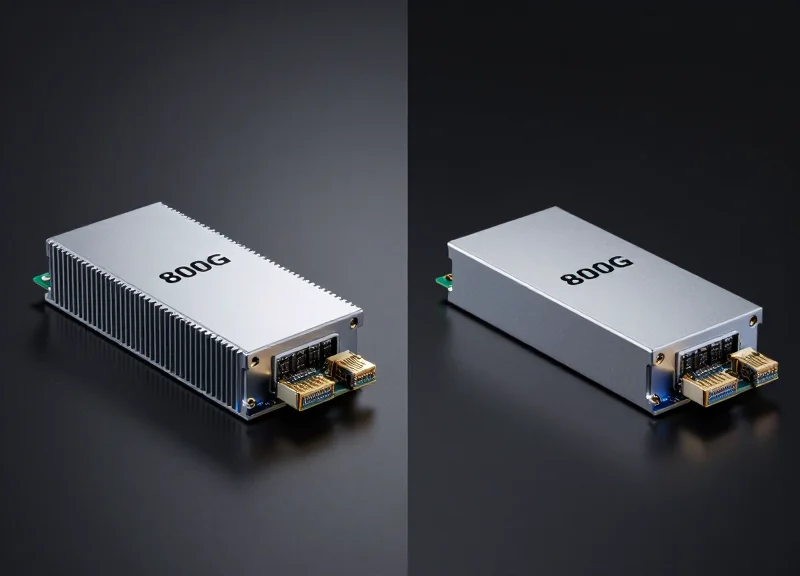
In the race for AI supremacy, the interconnect is often the bottleneck. As data centers scale to support LLMs and massive HPC workloads, the choice between NVIDIA/Mellanox proprietary solutions and standard industry alternatives becomes a multi-million dollar decision. This article provides a veteran perspective on the trade-offs between performance, power, and price.
The Current Landscape of High-Speed Interconnects

The Current Landscape of High-Speed Interconnects
Modern data center architecture has evolved into a 'network-centric' model where the interconnect is the primary bottleneck for AI and High-Performance Computing (HPC). NVIDIA/Mellanox Link Solutions, particularly InfiniBand and the Spectrum Ethernet series, dominate this space by offering deterministic latency and offloading capabilities that traditional Ethernet alternatives struggle to match in high-density GPU environments.
Comparing Interconnect Philosophies
| Feature | NVIDIA/Mellanox InfiniBand | NVIDIA Spectrum-X (Ethernet) | Traditional Enterprise Ethernet |
|---|---|---|---|
| Primary Protocol | InfiniBand (IB) | RDMA over Converged Ethernet (RoCE) | TCP/IP |
| Latency | Sub-microsecond | Low (Optimized) | Variable (High) |
| Flow Control | Credit-based (Lossless) | Priority Flow Control (PFC) | Best-effort / Dropped packets |
| Ideal Use Case | Large-scale AI Training | Cloud AI & Multi-tenant | General Web & File Services |
The Architectural Significance of the Link
The choice between NVIDIA/Mellanox and its alternatives is no longer just about raw bandwidth (e.g., 400G vs 800G). It is about the 'Effective Throughput.' NVIDIA's ecosystem utilizes proprietary technologies like SHARP (Scalable Hierarchical Aggregation and Reduction Protocol) to perform data reductions within the switch itself. This reduces the amount of data traversing the wires and significantly lowers the time GPUs spend waiting for synchronization, a feat that generic white-box switches cannot easily replicate without specialized silicon.
- Why is the NVIDIA/Mellanox ecosystem considered 'closed' compared to alternatives?
NVIDIA leverages tight integration between its NICs (ConnectX), switches (Quantum/Spectrum), and software (DOCA/NCCL) to optimize performance, which can limit the interoperability seen in open-standard Ethernet environments. - Are there viable alternatives to NVIDIA's high-speed links?
Yes, the Ultra Ethernet Consortium (UEC) is developing open standards to compete with InfiniBand, and vendors like Arista and Broadcom offer high-performance Ethernet silicon that targets AI workloads. - How does cost play into the landscape?
NVIDIA/Mellanox solutions typically command a premium price for the hardware and licensing, whereas Ethernet alternatives offer a lower entry cost and a broader supply chain, though often at the expense of higher tail-latency.
Latency Benchmarks: InfiniBand vs. RoCEv2

While both InfiniBand (IB) and RDMA over Converged Ethernet (RoCEv2) provide high-throughput connectivity, InfiniBand remains the superior choice for distributed AI training due to its hardware-offload architecture and sub-microsecond point-to-point latency. In benchmarks involving massive synchronization tasks—such as All-Reduce operations in Large Language Models (LLMs)—InfiniBand consistently exhibits lower tail latency and nearly zero jitter, whereas RoCEv2 performance can fluctuate under heavy congestion due to its reliance on Ethernet’s lossy foundations and complex flow control mechanisms.
Architectural Latency: Hardware vs. Software Management
The fundamental difference lies in how the network handles traffic. InfiniBand is a credit-based, lossless network by design, where the transport layer is managed entirely in hardware. This eliminates the need for complex software-defined congestion management. RoCEv2, conversely, attempts to map RDMA onto Ethernet. While it achieves high speeds, it requires Priority Flow Control (PFC) and Explicit Congestion Notification (ECN) to simulate losslessness, which introduces overhead and increases the probability of 'head-of-line blocking' during intense AI workloads.
| Metric | NVIDIA InfiniBand (NDR/HDR) | RoCEv2 (Spectrum-4/Other) |
|---|---|---|
| Switch Latency | < 100ns (Cut-through) | 400ns - 600ns (Typical) |
| Congestion Control | Hardware-based Adaptive Routing | PFC / ECN / DCQCN (Software-assisted) |
| Jitter (Variance) | Near-zero / Deterministic | Variable based on background traffic |
| CPU Utilization | Extremely Low (Full Offload) | Low (RDMA Offload required) |
The Impact of Tail Latency on AI Training
In distributed training, the speed of the cluster is governed by the slowest node. This is known as the 'tail latency' problem. In an Ethernet/RoCEv2 environment, even a small amount of packet loss or a retransmission can cause a 'stall' in the collective communication of thousands of GPUs. InfiniBand’s Adaptive Routing allows packets to take different paths through the fabric dynamically to avoid congested links, ensuring that the P99 latency (the latency of the slowest 1% of packets) remains exceptionally close to the P50 median.
Common Questions on Interconnect Latency
- Is RoCEv2 sufficient for small-scale GPU clusters?
Yes, for clusters with fewer than 128-256 GPUs, the latency differences are often negligible for most workloads. However, as the node count increases, the complexity of tuning Ethernet for RoCEv2 grows exponentially. - How does NVIDIA's Spectrum-4 improve RoCEv2 latency?
NVIDIA's Spectrum-4 Ethernet switches include hardware enhancements like RoCE Adaptive Routing, which narrows the performance gap with InfiniBand, though InfiniBand still holds the edge in pure determinism. - Why is 'jitter' such a critical metric for LLMs?
LLMs rely on synchronous SGD (Stochastic Gradient Descent). If one GPU waits for a delayed packet due to network jitter, the entire compute fabric idles, wasting expensive H100/B200 cycles.
In conclusion, while RoCEv2 offers a more flexible and often more cost-effective entry point using existing Ethernet expertise, InfiniBand remains the gold standard for performance. For enterprises where training time is the most expensive variable, the deterministic, low-latency nature of NVIDIA/Mellanox InfiniBand solutions provides a measurable ROI by maximizing GPU utilization.
Power Consumption and Thermal Efficiency
Physical Layer Efficiency and Power Density
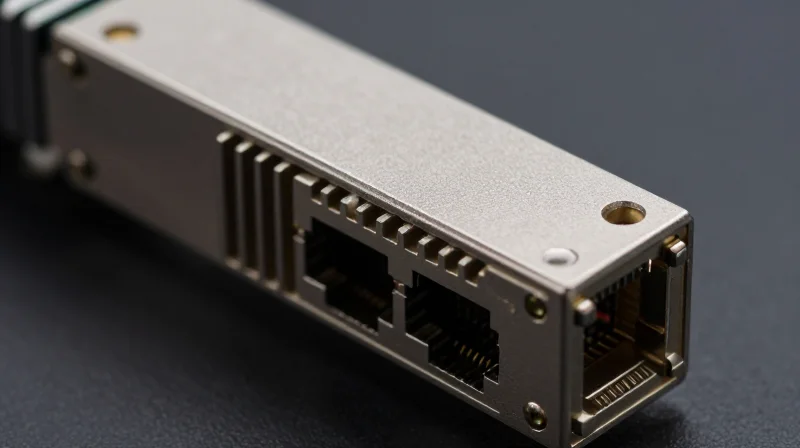
In modern data centers, power consumption is no longer just a utility cost; it is a fundamental constraint on compute density. NVIDIA/Mellanox LinkX solutions are engineered to minimize the power envelope of the physical layer by leveraging tightly integrated Digital Signal Processors (DSPs) and Laser Drivers that are co-designed with Spectrum and Quantum switch ASICs. Unlike generic 'white-box' optics that must maintain high voltage swings to ensure broad compatibility across various vendors, LinkX modules are tuned for the specific electrical characteristics of NVIDIA hardware. This synergy allows for lower power states without sacrificing bit-error rate (BER) performance, effectively reducing the thermal footprint of every port in the fabric.
Wattage-per-Gigabit Comparison
As speeds transition from 400G to 800G, the power delta between branded and generic optics becomes more pronounced. Generic transceivers often utilize off-the-shelf DSPs that prioritize manufacturing volume over power optimization, frequently resulting in a 20% to 30% higher power draw compared to NVIDIA’s optimized stack. In a massive AI cluster with thousands of interconnects, this cumulative energy demand increases the burden on the facility's cooling infrastructure and reduces the total power available for GPUs.
| Interconnect Type | NVIDIA/Mellanox Power (Typical) | Generic Alternative (Typical) | Relative Energy Saving |
|---|---|---|---|
| 400G DAC (Direct Attach) | <0.1W | <0.1W | 0% |
| 400G AOC (Active Optical) | 6.5W - 7.5W | 8.5W - 10.0W | 24% |
| 400G SR8 Transceiver | 7.5W - 8.2W | 10.0W - 11.5W | 28% |
| 800G DR8 Transceiver | 14.5W - 16.0W | 18.5W - 21.0W | 22% |
Thermal Management and Component Longevity
Thermal efficiency is the silent partner of power consumption. High-wattage transceivers generate localized heat that can lead to 'hot spots' within the switch chassis. NVIDIA’s focus on low-power design ensures that LinkX modules operate at lower ambient temperatures. This prevents the switch from entering thermal throttling modes and reduces the need for high-velocity fan speeds, which themselves consume significant auxiliary power. Furthermore, lower operating temperatures are directly correlated with an increased Mean Time Between Failures (MTBF), ensuring that the network fabric remains stable during long-running AI training jobs that can last weeks or months.
- Does optical power consumption vary by distance?
Generally, yes. While DACs are passive, longer-reach optics (like DR4 or FR4) require more powerful lasers and more complex DSPs to maintain signal integrity over kilometers, making NVIDIA's efficiency gains even more critical for multi-pod deployments. - Why do generic optics run hotter?
Generic manufacturers often use older or less efficient CMOS processes for their DSP chips to keep production costs low, which results in higher heat dissipation for the same data throughput. - What is the impact on Total Cost of Ownership (TCO)?
Reducing power by 2-3 Watts per module might seem small, but in a 32-port switch, that saves nearly 100 Watts. Over a three-year lifecycle in a large-scale data center, the savings in electricity and cooling overhead can offset the initial premium for branded LinkX hardware.
Total Cost of Ownership (TCO) Breakdown
Determining the true cost of high-performance networking requires looking beyond the unit price of a switch or transceiver to the multi-year lifecycle of the data center infrastructure. NVIDIA/Mellanox solutions typically command a 20-30% premium in upfront Capital Expenditure (CapEx) compared to white-box or commodity alternatives, but this is frequently offset by significant savings in Operational Expenditure (OpEx) through integrated management, lower power envelopes, and the elimination of performance-induced GPU idling.
Direct vs. Indirect Cost Comparison
| Cost Component | NVIDIA/Mellanox (InfiniBand/Spectrum) | Commodity Alternatives (RoCEv2/White-box) |
|---|---|---|
| Initial Hardware (CapEx) | High: Premium pricing for proprietary silicon. | Low to Moderate: Multiple vendors drive price down. |
| Software & Management | Included/Subscription: UFM provides automated telemetry. | Variable: Often requires expensive third-party tools or DIY. |
| Cabling & Interconnects | Optimized: LinkX provides validated, low-power DACs/AOCs. | Risk-Prone: Third-party cables often lead to higher bit-error rates. |
| Engineering Labor | Low: Turnkey integration and 'zero-touch' provisioning. | High: Requires extensive manual tuning for congestion control. |
| Performance Stability | Deterministic: Near-zero jitter for AI workloads. | Variable: Susceptible to PFC-induced deadlocks and packet loss. |
The Software Advantage: Unified Fabric Manager (UFM)
A critical, often overlooked component of TCO is the NVIDIA Unified Fabric Manager (UFM) platform. While alternatives may require network engineers to manually configure Priority Flow Control (PFC) and Explicit Congestion Notification (ECN) across thousands of nodes, UFM automates these tasks. By providing real-time telemetry and AI-powered predictive maintenance, UFM reduces the 'mean time to discovery' for link failures. For a large-scale enterprise, the reduction in engineering hours can represent hundreds of thousands of dollars in annual savings.
Calculating the 'Bottleneck Tax'
The 'Bottleneck Tax' is the cost of underutilizing expensive GPU assets due to networking inefficiencies. If a $10 million GPU cluster experiences a 10% performance degradation because the interconnect cannot handle the collective communication overhead, the effective loss is $1 million. NVIDIA/Mellanox Link Solutions are designed to minimize this tax through hardware-offloaded collectives (SHARP) and sub-microsecond latency, ensuring that the most expensive part of the data center—the compute engines—is never waiting for data.
Total Cost FAQ
- Does NVIDIA require proprietary cables for all links?
While NVIDIA systems are optimized for LinkX cables, they follow industry standards. However, using non-validated cables often leads to higher power consumption and increased error rates, which can void certain performance guarantees. - How does InfiniBand impact cooling and energy costs?
InfiniBand switches typically have a more efficient power-per-port ratio than high-end Ethernet switches. Over a five-year window, the lower thermal footprint can reduce cooling costs by 12-15%. - What is the training cost for staff migrating to Mellanox?
NVIDIA provides extensive documentation and standardized APIs. While there is a learning curve for InfiniBand, the automation tools usually mean fewer specialized staff are needed compared to managing a complex RoCEv2 Ethernet fabric.
Ecosystem Lock-in vs. Open Standards
The choice between NVIDIA/Mellanox solutions and open-standard alternatives represents a fundamental decision between the performance optimization of a closed vertical stack and the long-term flexibility of a multi-vendor environment. While NVIDIA's proprietary LinkX and InfiniBand technologies offer 'plug-and-play' peak performance, they create a dependency on a single hardware roadmap, whereas open standards like RoCEv2 and the forthcoming Ultra Ethernet Consortium (UEC) specifications aim to commoditize high-performance networking.
The NVIDIA Vertical Stack: Efficiency at a Price
NVIDIA’s strength lies in its ability to optimize the entire data path. By controlling the silicon (ConnectX/BlueField), the switch fabric (Quantum/Spectrum), and the interconnects (LinkX), NVIDIA ensures that features like SHARP (Scalable Hierarchical Aggregation and Reduction Protocol) are perfectly synchronized. This integration eliminates the 'finger-pointing' common in multi-vendor troubleshooting and ensures that firmware updates are validated across the entire link. However, this convenience results in ecosystem lock-in, where deviating from the NVIDIA bill of materials often leads to degraded telemetry or the loss of proprietary acceleration features.
Open Standards and the Rise of UEC
In response to NVIDIA's dominance, the Ultra Ethernet Consortium (UEC)—backed by Broadcom, AMD, and Arista—is developing an enhanced Ethernet stack specifically for AI and HPC workloads. The goal is to provide a reliable, low-latency alternative to InfiniBand that does not require proprietary optics or specialized cabling. Using open standards allows enterprises to mix and match components, such as using Broadcom Tomahawk switches with third-party transceivers and generic NICs, drastically reducing procurement risks during supply chain disruptions.
| Feature | NVIDIA/Mellanox (Closed) | UEC/Broadcom (Open) |
|---|---|---|
| Interoperability | Optimized for internal components | High (Multi-vendor support) |
| Innovation Speed | Rapid, proprietary iterations | Collaborative, standards-based |
| Supply Chain Risk | High (Single source for fabric) | Low (Multiple silicon/cable sources) |
| Management Tooling | Unified Fabric Manager (UFM) | SONiC / Open-source telemetry |
Strategic FAQ: Navigating the Lock-in
- Does using non-NVIDIA cables void support?
Generally no, but NVIDIA Technical Support often requires reproducing issues with LinkX cables to rule out third-party physical layer failures during troubleshooting. - Can RoCEv2 match InfiniBand performance?
With proper tuning and high-radix switches from vendors like Broadcom, RoCEv2 can approach InfiniBand throughput, though InfiniBand typically maintains a latency advantage in congested AI training clusters. - What is the primary risk of the open approach?
The 'integration tax'—enterprises must dedicate more engineering resources to validate interoperability and tune congestion control algorithms that are pre-configured in the NVIDIA stack.
Ultimately, the decision rests on the organization's engineering maturity. Those seeking a turnkey, highest-performance solution for massive GPU clusters will find NVIDIA's ecosystem indispensable. Conversely, hyperscalers and service providers prioritizing cost-per-port and vendor independence are increasingly moving toward Ethernet-based open standards to avoid the premiums associated with proprietary stacks.
Scalability and Reliability in Large-Scale Clusters
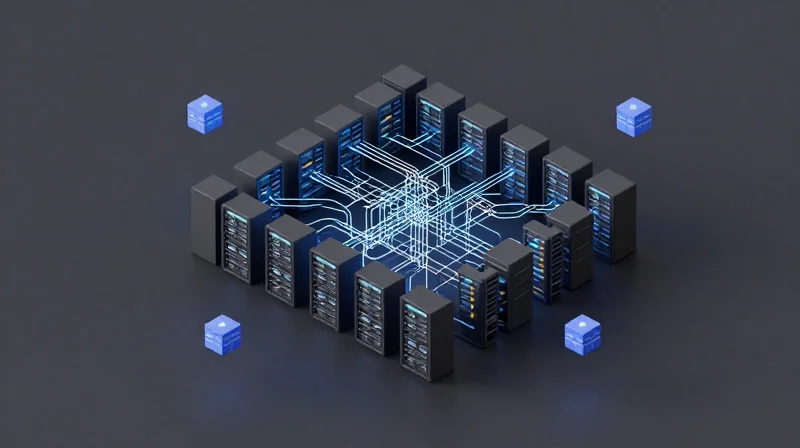
Scalability in modern AI and High-Performance Computing (HPC) clusters is fundamentally limited by the network's ability to handle congestion and 'incast' scenarios, where multiple nodes transmit data to a single destination simultaneously. NVIDIA/Mellanox solutions address these challenges through proactive hardware-based traffic management and isolation, whereas traditional Ethernet alternatives often rely on reactive, software-heavy packet loss recovery mechanisms that significantly degrade performance as node counts increase.
Adaptive Routing and Incast Mitigation
In standard Ethernet environments, heavy traffic bursts lead to buffer overflows and subsequent packet drops. These drops trigger the TCP/IP stack or RoCEv2 algorithms to retransmit data, introducing jitter and increased tail latency that can stall massive GPU synchronization tasks. In contrast, NVIDIA’s InfiniBand and Spectrum-X Ethernet switches utilize Adaptive Routing (AR) to dynamically re-route traffic based on real-time port load. By making routing decisions at the hardware level in nanoseconds, Mellanox solutions ensure that no single link becomes a bottleneck, effectively isolating traffic flows and maintaining near-linear scalability.
| Mechanism | NVIDIA/Mellanox (IB/Spectrum-X) | Standard Ethernet Alternatives |
|---|---|---|
| Routing Strategy | Adaptive (Dynamic per-packet/sub-flow) | Static or Hash-based (ECMP) |
| Congestion Control | Hardware-based (Quantized CC / SHARP) | Software/Buffer-based (PFC/ECN) |
| Incast Recovery | Avoidance via path diversification | Reactive retransmission after drop |
| Traffic Isolation | Hardware-enforced Virtual Lanes | VLANs (High overhead for large scale) |
Reliability through Hardware-Offloaded Recovery
Reliability in massive clusters is defined not just by component longevity but by the speed of recovery when a failure occurs. NVIDIA's networking stack utilizes SHIELD (Self-Healing Interconnect Networking Design) technology, allowing the hardware to detect and reroute around link failures in milliseconds without involving the CPU or control plane software. Standard Ethernet clusters often depend on slower protocols like BGP convergence or Spanning Tree transitions, which can take seconds—a lifetime in a high-speed AI training environment where thousands of GPUs are waiting for a single data packet.
- How does NVIDIA prevent 'incast' issues differently than Broadcom or Cisco?
NVIDIA uses fine-grained adaptive routing and global congestion notifications (GCN) to proactively steer traffic away from congested buffers before packets are dropped, whereas standard switches typically wait for buffer thresholds to be met, resulting in higher latency spikes. - Is InfiniBand more reliable than Ethernet for large-scale deployments?
Architecturally, yes; InfiniBand is a lossless fabric by design using credit-based flow control at the link layer, which eliminates packet loss due to buffer overflow, a common failure mode in traditional Ethernet 'best-effort' networks. - What is the impact of SHARP on scalability?
The Scalable Hierarchical Aggregation and Reduction Protocol (SHARP) offloads collective communications (like All-Reduce) from the GPUs to the network switches, reducing the amount of data traversing the fabric and significantly improving scalability in clusters with over 1,000 nodes.
Alternative Contenders: Broadcom, Marvell, and Cisco
While NVIDIA’s InfiniBand remains the premier choice for low-latency AI interconnects, Broadcom, Marvell, and Cisco are aggressively eroding its market share by offering 800G Ethernet solutions that provide higher radix, lower power consumption, and better cost-per-port efficiency. These alternatives allow hyperscalers to build flatter, more manageable networks using the Ultra Ethernet Consortium (UEC) standards, effectively challenging the performance-to-cost ratio of the proprietary Mellanox ecosystem.
The Ethernet Counter-Attack: High Radix and 800G Scaling
The most significant advantage of the Ethernet-based challengers is the concept of high radix. Broadcom’s Tomahawk 5, for instance, provides a massive 51.2 Tbps of switching capacity in a single chip. This allows for a higher number of ports per switch (e.g., 64 ports of 800G), which translates to fewer layers in the network fabric. In a massive AI cluster, reducing the number of 'hops' between GPUs not only lowers latency but also significantly decreases the number of optical transceivers and cables required, which are often the most expensive components of the build.
Broadcom: Tomahawk 5 and Jericho3-AI
Broadcom dominates the non-NVIDIA market with two distinct architectures. The Tomahawk series is optimized for maximum throughput and minimum latency in the spine of the network. Conversely, the Jericho3-AI is designed specifically for AI workloads, featuring deep buffers and 'perfect load balancing' technology. This scheduled fabric approach allows Ethernet to behave more like InfiniBand by ensuring that no single link becomes a bottleneck during heavy 'all-to-all' GPU communications.
| Feature | NVIDIA/Mellanox (Quantum-2) | Broadcom (Tomahawk 5) | Cisco (Silicon One G200) |
|---|---|---|---|
| Max Throughput | 25.6 Tbps | 51.2 Tbps | 51.2 Tbps |
| Radix (400G Ports) | 64 | 128 | 128 |
| Protocol | InfiniBand / NDR | RoCE v2 / Ethernet | RoCE v2 / UEC |
| Ecosystem | Proprietary / Closed | Open / Standard | Open / Standard |
| Best Use Case | Ultra-low latency training | Hyperscale AI / Cloud | Multi-tenant AI clusters |
Marvell and Cisco: Advanced Telemetry and Integration
Marvell’s Teralynx and Cisco’s Silicon One architectures differentiate themselves through advanced telemetry and silicon efficiency. Cisco’s Silicon One G200 provides a unified architecture that can handle both the front-end (standard cloud traffic) and back-end (GPU-to-GPU) networks, simplifying spare parts and management. Marvell focuses on ultra-low latency and integrated optics, pushing the boundaries of how light is used to transmit data directly from the switch silicon, which is critical for the next generation of 1.6T networking.
Frequently Asked Questions
- Can Ethernet really match InfiniBand latency?
With modern RoCE v2 and the upcoming UEC enhancements, Ethernet latency is now within microseconds of InfiniBand. While InfiniBand is still technically faster, the difference is negligible for all but the most sensitive synchronous training tasks. - Why choose Broadcom over NVIDIA?
Broadcom offers a higher radix (more ports per switch), which reduces the physical footprint and power consumption of the data center while avoiding the vendor lock-in associated with the NVIDIA stack. - What is the Ultra Ethernet Consortium (UEC)?
It is a collaborative effort by Broadcom, Cisco, Marvell, and others to evolve Ethernet specifically for AI, adding features like packet spraying and faster congestion notification that were previously exclusive to InfiniBand.
Decision Matrix: Which Solution Fits Your Workload?
Choosing between NVIDIA/Mellanox and industry alternatives depends on the critical path of your data pipeline. If your primary bottleneck is latency-sensitive GPU synchronization in a massive AI cluster, the premium for Mellanox LinkX and InfiniBand is often non-negotiable. However, for scale-out cloud applications and generic high-performance computing, the maturity of the Ethernet ecosystem provided by Broadcom or Cisco often provides a more favorable Total Cost of Ownership (TCO) without sacrificing meaningful production performance.
Workload Compatibility Matrix
| Workload Type | Priority | Recommended Solution | Primary Justification |
|---|---|---|---|
| Generative AI Training | Ultra-Low Latency | NVIDIA/Mellanox (InfiniBand) | Optimized for NCCL collectives and GPUDirect RDMA. |
| Big Data Analytics | Throughput & Capacity | Broadcom Tomahawk / Jericho | Superior price-per-Gbps for high-volume data movement. |
| High-Frequency Trading | Tick-to-Trade Latency | Mellanox (Spectrum) or Cisco | Consistent, jitter-free performance for sub-microsecond needs. |
| General Enterprise Cloud | Interoperability | Cisco / Marvell | Vendor neutrality and existing administrative expertise. |
| HPC Simulations | Bandwidth/Scaling | NVIDIA/Mellanox | Industry-standard for scientific parallel processing stacks. |
Strategic Selection Criteria
When evaluating these solutions, CTOs should apply the '80/20 Rule' of networking: if 80% of your traffic is north-south (client-to-server), standard high-performance Ethernet alternatives are almost always the smarter business move. Conversely, if your traffic is 80% east-west (server-to-server) within an AI or compute cluster, the proprietary optimizations of the NVIDIA stack act as a force multiplier for your most expensive assets—the GPUs.
Cost vs. Performance Inflection Points
- Cluster Size
Under 128 nodes, the management overhead of InfiniBand may outweigh its performance gains. Over 512 nodes, the efficiency of NVIDIA's fabric management becomes a distinct operational advantage. - Lifecycle Management
NVIDIA solutions often require a full-stack upgrade to see maximum benefit, whereas Broadcom and Marvell solutions allow for more granular, multi-generational hardware mixing. - Power Consumption
At the 400G and 800G levels, power efficiency varies significantly. Organizations with strict ESG targets or power-constrained data centers should compare the Watts-per-Terabit across vendors closely.
Decision FAQ
- Is the 'NVIDIA Tax' worth it for small-scale AI?
Rarely. For small clusters or inference-only workloads, high-end Ethernet from Broadcom or Marvell offers 90% of the performance at a significantly lower entry price. - Can I mix Mellanox transceivers with third-party switches?
Technically yes, but NVIDIA often locks advanced telemetry features to their own ecosystem. If you choose an alternative switch, it is more cost-effective to use brand-neutral optics. - What is the safest bet for a 5-year outlook?
Open-standard Ethernet. While InfiniBand leads today in AI training, the Ultra Ethernet Consortium (UEC) is rapidly closing the gap, making Ethernet a safer long-term investment for avoiding vendor lock-in.
The Future of Interconnects: Toward 1.6T and CXL

The future of interconnects is transitioning from simple data transport to 'memory-centric' networking, where the distinction between local and remote resources blurs. As AI models scale toward trillions of parameters, the industry is converging on 1.6T throughput and Compute Express Link (CXL) as the primary mechanisms to overcome the looming 'memory wall' and power efficiency bottlenecks.
The 1.6T Roadmap: InfiniBand vs. Ethernet
The jump from 800G to 1.6T represents more than just a doubling of speed; it requires a fundamental shift to 224G SerDes (Serializer/Deserializer) technology. NVIDIA is positioned to lead this transition with its upcoming Blackwell-generation networking, leveraging LinkX optics and Quantum-3 InfiniBand. However, the Ultra Ethernet Consortium (UEC) is rapidly closing the latency gap, positioning 1.6T Ethernet as a viable, lower-cost alternative for hyperscalers who want to avoid vendor lock-in.
| Feature | Current (800G) State | Future (1.6T) Evolution | Market Impact |
|---|---|---|---|
| SerDes Tech | 112G PAM4 | 224G PAM4 | Doubles density, increases signal integrity challenges. |
| NVIDIA Path | Quantum-2 / ConnectX-7 | Quantum-3 / ConnectX-8 | Maintains absolute lowest tail latency for H100/B200. |
| Ethernet Path | RoCE v2 / Spectrum-4 | UEC / Tomahawk 6 | 大幅 Reduces the InfiniBand 'premium' via open-source RDMA. |
| Physical Layer | Pluggable Optics | Co-Packaged Optics (CPO) | Reduces power consumption by 30-40% per bit. |
CXL and the Disaggregated Data Center
Compute Express Link (CXL) 3.0 and 3.1 are set to disrupt the traditional PCIe hierarchy. By allowing for memory pooling and fabric-level resource sharing, CXL enables a data center where GPUs can access a shared pool of DRAM or HBM across the rack. While NVIDIA utilizes NVLink to achieve similar results within its 'Superchips' (like Grace-Blackwell), CXL offers an industry-standard path for mixing CPUs and accelerators from different vendors (e.g., AMD, Intel, and Broadcom-based ASICs) without the proprietary tax.
Optical I/O: Breaking the Copper Barrier
As we reach 1.6T, electrical signaling over traditional copper cables faces severe distance and power limitations. The next 24 months will witness the rise of Silicon Photonics and Optical I/O, where laser-based communication is integrated directly into the silicon package. This shift favors vendors like Broadcom and Marvell, who have deep portfolios in optical PHYs, potentially challenging Mellanox’s dominance in short-reach electrical interconnects.
Future Strategy FAQ
- Will CXL replace NVLink?
Unlikely in the short term for GPU-to-GPU tasks. NVLink provides higher bandwidth for cache-coherent GPU clusters, while CXL focuses on host-to-device and memory pooling. They will coexist. - When will 1.6T hardware be production-ready?
Initial 1.6T switches and NICs are expected in late 2026 for testing, with large-scale data center deployment ramping up through 2025 and 2026. - Does 1.6T favor NVIDIA or the alternatives?
The complexity of 1.6T favors NVIDIA's integrated 'full-stack' approach initially, but the Ultra Ethernet Consortium is specifically designed to make 1.6T more accessible to the broader market.
Choosing the right networking fabric is no longer just an IT decision—it is a strategic financial one. While NVIDIA/Mellanox offers unmatched performance for tightly coupled AI workloads, the rising capabilities of open Ethernet standards present a compelling TCO argument for many. Ready to optimize your data center? Contact our architectural team today for a custom performance audit.