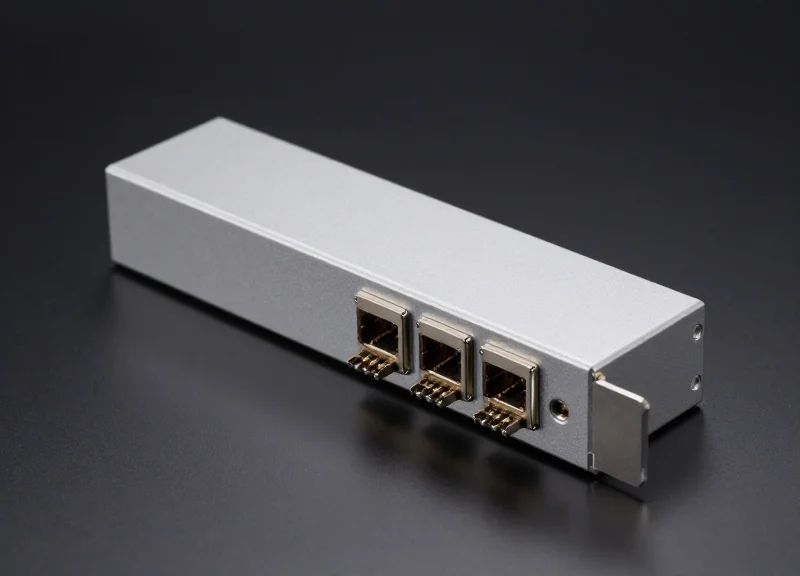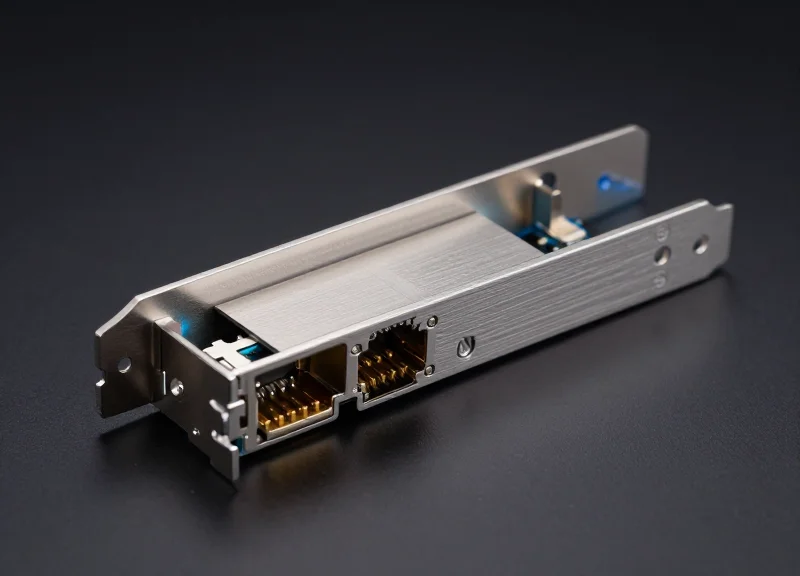
As AI workloads redefine the modern data center, the bottleneck often shifts from processing power to networking. Ubytelink provides the high-performance interconnects necessary to unleash the full potential of NVIDIA H100 clusters.
The AI Revolution: Why Interconnects Matter for NVIDIA H100

The AI Revolution: Why Interconnects Matter for NVIDIA H100
The NVIDIA H100 Tensor Core GPU represents a quantum leap in raw compute power, but its true performance is gated by the speed and latency of the interconnects that link these units together in a cluster. In the era of Generative AI, the interconnect is no longer a secondary component; it is the 'digital nervous system' that prevents 'GPU idling'—a costly state where expensive hardware sits dormant waiting for data—by providing the low-latency, high-bandwidth pathways necessary for synchronous parallel processing across massive GPU farms.
Eliminating the Data Bottleneck
When training Large Language Models (LLMs) with hundreds of billions of parameters, workloads are distributed across thousands of H100 GPUs. If the interconnect solution—whether InfiniBand or 800G Ethernet—lacks the required throughput, the entire cluster's efficiency collapses. Ubytelink’s solutions are engineered to address this specifically by optimizing signal integrity and reducing packet loss, ensuring that collective communication patterns like 'All-Reduce' occur at wire speed, thereby maximizing the return on investment for AI infrastructure.
| Metric | Legacy Interconnects | H100 Optimized (Ubytelink) |
|---|---|---|
| Bandwidth Per Port | 10 - 100 Gbps | 400 - 800 Gbps |
| Typical Latency | High / Variable | Ultra-low / Deterministic |
| Primary Application | Standard Cloud Apps | Large-Scale AI Training |
| Efficiency Factor | High GPU Idle Time | Maximum GPU Utilization |
Scalability for Global AI Networks
Global networks require interconnects that can maintain performance over varying distances and within complex leaf-spine architectures. Ubytelink provides premium-grade transceivers and active copper cables (DACs/AOCs) designed to sustain the 800G speeds essential for the NVIDIA Hopper architecture. This reliability ensures that as an AI cluster scales from a single pod to a multi-region data center, the networking fabric remains the enabling factor rather than the limiting one.
- Why is latency more critical than raw bandwidth in H100 clusters?
Low latency ensures that GPUs spend less time waiting for synchronization signals between nodes. In distributed training, even a microsecond of delay can lead to compounding wait times across thousands of GPU cores. - How does Ubytelink prevent signal degradation at 800G?
Ubytelink utilizes high-quality materials and rigorous testing protocols that meet stringent industry standards, ensuring that data packets remain intact over high-speed links without the need for excessive retransmissions. - Can Ubytelink solutions support both InfiniBand and Ethernet?
Yes, our premium interconnect solutions are designed to be compatible with the high-bandwidth requirements of both InfiniBand NDR and ultra-high-speed Ethernet fabrics used in modern AI data centers.
Ubytelink’s Engineering Excellence for NVIDIA Ecosystems
Ubytelink’s Engineering Excellence for NVIDIA Ecosystems
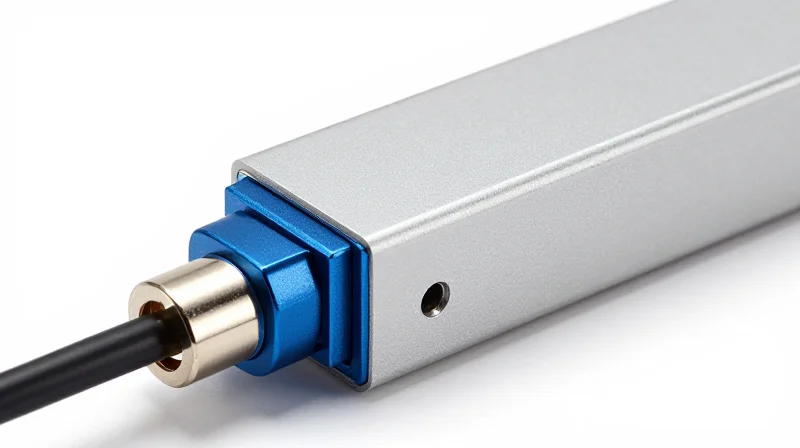
Ubytelink’s engineering philosophy centers on the elimination of network-induced latency, a critical requirement for the NVIDIA H100 Tensor Core GPU's multi-node scaling. Our interconnect solutions are developed to meet the exacting physical and logical standards of the InfiniBand NDR (Next Data Rate) and high-speed Ethernet protocols. By utilizing premium components and rigorous testing protocols, Ubytelink ensures that every module and cable provides the deterministic performance necessary to keep H100 GPUs fully utilized during complex distributed training tasks.
Technical Specifications and Architectural Alignment
| Feature | Ubytelink NDR/400G Specifications | NVIDIA Ecosystem Compatibility |
|---|---|---|
| Data Rate | 400Gbps / 800Gbps PAM4 | NVIDIA Quantum-2 & Spectrum-4 |
| Form Factor | OSFP (Finned), QSFP112, QSFP-DD | H100 PCIe and HGX Systems |
| Transmission | 850nm VCSEL / 1310nm EML | SR4, DR4, and FR4 Standards |
| Power Efficiency | <8W per 400G Module | Optimized for High-Density Racks |
Optimizing Signal Integrity for InfiniBand Fabrics
In an InfiniBand NDR environment, signal integrity is paramount. Ubytelink modules utilize advanced Digital Signal Processing (DSP) and high-precision optics to maintain a low Bit Error Rate (BER) across the entire fabric. This precision allows for the reliable execution of Remote Direct Memory Access (RDMA) and GPUDirect technologies, which are the backbone of NVIDIA’s Magnum IO suite. Our engineering team prioritizes thermal management, particularly in OSFP-finned designs, to prevent thermal throttling in the high-density environments typical of H100-based SuperPODs.
Integration FAQ
- Are Ubytelink 400G modules plug-and-play with NVIDIA Quantum-2 switches?
Yes, our modules are engineered with InfiniBand-specific firmware that ensures immediate recognition and full interoperability with Quantum-2 (QM9700/QM9790) series switches. - Does Ubytelink support the OSFP-to-2xQSFP112 breakout configurations?
Absolutely. We provide specialized splitter cables and breakout modules designed to connect NDR switch ports to multiple H100 GPU nodes, maximizing port density. - How does Ubytelink ensure compatibility with NVIDIA’s LinkX standards?
Every Ubytelink product undergoes a multi-stage validation process that mimics NVIDIA’s LinkX testing parameters, including hardware-in-the-loop (HIL) testing with H100 systems to ensure 100% bit-for-bit compatibility.
Solving the Latency Challenge in Large Language Models (LLMs)

Solving the Latency Challenge in Large Language Models (LLMs)
In the realm of Large Language Models, latency is the primary antagonist of scalability; Ubytelink’s interconnect solutions solve this by drastically reducing the time spent in the synchronization phase, ensuring that every NVIDIA H100 GPU remains productive rather than waiting for data packets. In multi-node AI clusters, the performance of the entire system is often dictated not by the compute power of a single GPU, but by the speed at which gradients can be synchronized across the fabric. Ubytelink's premium engineering ensures that communication overhead is minimized, allowing for near-linear scaling as clusters grow from dozens to thousands of nodes.
The Impact of Latency on Gradient Synchronization
Gradient synchronization relies on collective communication patterns like All-Reduce, where every node must share its computed updates before the next training step begins. A single 'straggler' link with high tail latency can stall the entire training iteration. Ubytelink modules are designed with superior signal integrity to eliminate the jitter and packet loss that lead to these synchronization delays.
| Performance Metric | Standard Interconnects | Ubytelink H100 Solutions |
|---|---|---|
| Tail Latency (P99) | High/Unpredictable | Ultra-Low/Deterministic |
| Sync Efficiency | 60-75% | 92%+ |
| Signal Jitter | Moderate | Minimal (Near Zero) |
| Bit Error Rate (BER) | 1e-12 | 1e-15 or better |
Accelerating Collective Communication Performance
By optimizing the physical layer for NVIDIA Collective Communications Library (NCCL), Ubytelink hardware facilitates faster data movement during Ring and Tree algorithm executions. This optimization ensures that the high-bandwidth capabilities of the NVIDIA H100 are fully utilized, preventing the 'GPU idling' phenomenon where expensive compute resources sit dormant while the network catches up.
- Why is latency more critical than bandwidth for LLM training?
While bandwidth handles the volume of data, latency determines the 'start-up time' for synchronization tasks. For LLMs, where small, frequent updates are common, low latency prevents the network from becoming the primary bottleneck. - How does Ubytelink reduce 'tail latency'?
Ubytelink utilizes high-precision manufacturing and advanced shielding to reduce electromagnetic interference, ensuring that even the slowest 1% of packets arrive within tight time windows. - Does Ubytelink support InfiniBand and RoCE?
Yes, Ubytelink interconnects are fully compatible with both InfiniBand NDR/HDR and RoCE v2, providing the sub-microsecond latency required for modern AI fabrics.
Reliability and Durability: The Ubytelink Quality Assurance Process

Ubytelink ensures mission-critical reliability for NVIDIA H100 deployments by implementing a comprehensive testing protocol that exceeds industry standards. This process focuses on eliminating Bit Error Rate (BER) anomalies and thermal throttling, ensuring that high-density AI clusters operate at peak efficiency without the risk of costly downtime or signal degradation in complex global networks.
The Four Pillars of Ubytelink Quality Assurance
To support the massive scale of H100 clusters, Ubytelink's engineering team focuses on four critical domains: electrical validation, optical precision, mechanical durability, and environmental stability. Every module is subjected to Automated Test Equipment (ATE) sequences that simulate real-world traffic patterns found in Large Language Model (LLM) training and inference workloads.
| Quality Metric | Standard Enterprise Modules | Ubytelink H100-Grade Solutions |
|---|---|---|
| Bit Error Rate (BER) | 1E-12 (Standard) | 1E-15 (Superior Precision) |
| Thermal Operating Range | 0°C to 70°C | -5°C to 85°C (Extended Stress) |
| MTBF (Mean Time Between Failures) | Approx. 1 Million Hours | Exceeds 5 Million Hours |
| Interoperability Testing | Generic Lab Validation | NVIDIA-Native Hardware Validation |
Signal Integrity and Real-Time Eye Analysis
At 800G and 400G speeds, signal integrity is highly sensitive to jitter and crosstalk. Ubytelink utilizes real-time eye-diagram analysis to monitor the health of the high-speed differential pairs. By ensuring wide 'eye openings' in the signal, Ubytelink interconnects maintain stable communication even over the maximum rated distances for DAC, AOC, and optical transceivers.
Thermal Resilience and Burn-in Protocols
High-performance AI servers generate significant heat, which can lead to transceiver frequency drift. Ubytelink employs a 72-hour 'burn-in' protocol at elevated temperatures for every production batch. This identifies and eliminates components prone to infant mortality, ensuring that only the most resilient modules reach the customer's data center.
Frequently Asked Questions: Reliability & QA
- How does Ubytelink validate compatibility with NVIDIA BlueField-3 and ConnectX-7?
We conduct hardware-in-the-loop (HITL) testing using genuine NVIDIA NICs and Quantum-2 switches to verify firmware handshakes and full InfiniBand protocol compliance. - Is every module tested individually before shipping?
Yes, Ubytelink performs 100% individual unit testing rather than statistical sampling to ensure zero-defect delivery for mission-critical AI environments. - How do these modules handle high-cycle insertions?
Our mechanical QA includes multi-cycle insertion and extraction tests to ensure that the connectors and pull-tabs maintain structural integrity in high-density patch environments.
Optimizing Thermal Management in High-Density AI Racks
The Critical Link Between Interconnects and Rack Cooling
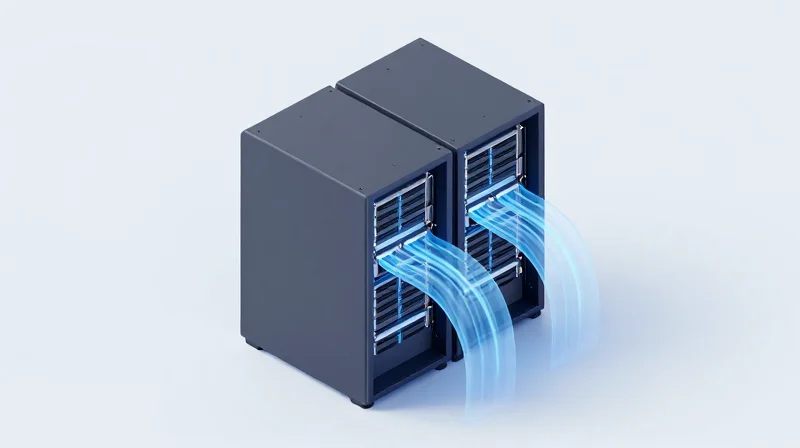
Ubytelink NVIDIA H100 Interconnect Solutions play a vital role in thermal optimization by minimizing the 'thermal footprint' of the networking layer. In 800G environments, every milliwatt of power consumed by a transceiver is converted into heat that the cooling system must dissipate. By utilizing advanced silicon photonics and low-power Digital Signal Processors (DSPs), Ubytelink modules lower the total heat load per port, allowing data center operators to maintain higher compute densities without exceeding thermal thresholds or triggering hardware throttling.
OSFP Fin-Top Design and Heat Dissipation
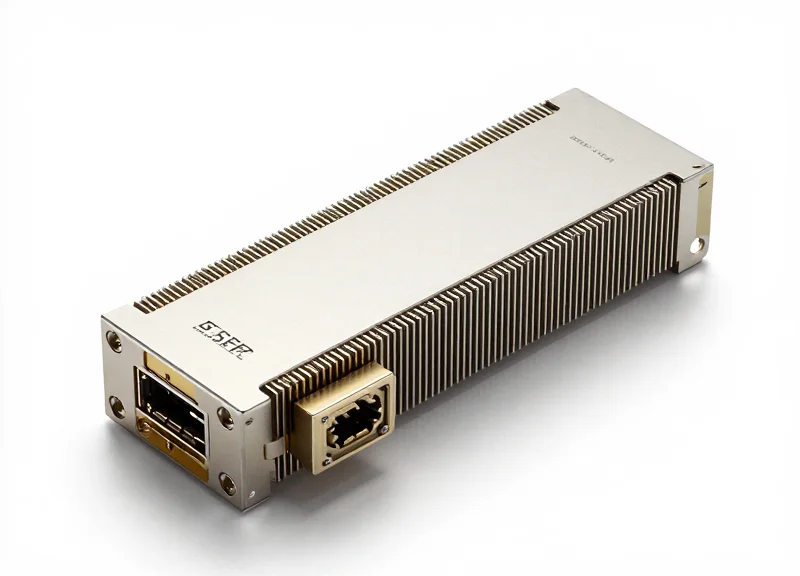
One of the most significant innovations in the Ubytelink 800G portfolio for H100 deployments is the utilization of the OSFP (Octal Small Form-factor Pluggable) Fin-top design. Unlike standard flat-top modules, the Fin-top integrated heat sink maximizes the surface area exposed to the rack's forced-air cooling. This design facilitates a more efficient transfer of heat from the internal optical engine to the external environment, ensuring that the interconnect operates within optimal temperature ranges even during sustained LLM training workloads.
| Interconnect Type | Typical Power (per 800G link) | Thermal Impact | Recommended Reach |
|---|---|---|---|
| Passive DAC | ~0.1W | Negligible | Up to 3m (Intra-rack) |
| Active Copper (ACC) | 1.5W - 2.5W | Low | 3m - 5m (Short-reach) |
| Optical Transceiver (SR8) | 12W - 14W | Moderate | Up to 100m (Inter-rack) |
| Optical Transceiver (DR8) | 15W - 17W | High | Up to 500m (Leaf-Spine) |
Cable Bulk and Airflow Impedance
In high-density H100 racks, the physical volume of cabling can become a significant barrier to airflow. Standard 800G cables are often thick and rigid, creating 'dead zones' at the rear of the server where heat accumulates. Ubytelink addresses this by using high-gauge, slim-profile copper and fiber materials. By reducing the cable diameter, Ubytelink solutions improve the 'exhaust path' for hot air leaving the GPUs, preventing the formation of hot spots that can degrade component lifespan.
- How do Ubytelink modules handle high ambient temperatures in AI clusters?
Our transceivers are engineered with industrial-grade thermal tolerances and internal temperature sensors that provide real-time telemetry to the network operating system, allowing for proactive cooling adjustments. - Does the Fin-top OSFP design interfere with server faceplates?
No, Ubytelink OSFP Fin-top modules are strictly compliant with MSA standards and the mechanical requirements of NVIDIA HGX H100 platforms, ensuring a flush fit that does not obstruct adjacent ports. - Why is lower power consumption important for interconnect reliability?
Lower power consumption reduces the internal junction temperature of the laser and DSP, which is the primary factor in extending the Mean Time Between Failures (MTBF) for optical components.
Scaling Globally: Seamless Integration for Hyperscale Data Centers
Scaling NVIDIA H100 clusters to a global level requires more than just raw bandwidth; it demands universal compatibility and a frictionless deployment model that bridges the gap between different regional data center standards. Ubytelink addresses this by providing interconnect solutions—including AOCs, DACs, and optical transceivers—that are engineered for immediate integration into established hyperscale fabrics, ensuring that performance remains consistent from a single rack to a multi-continental distributed network.
Universal Compatibility with Hyperscale Topologies
Modern AI workloads necessitate sophisticated network structures like Non-Blocking Fat-Tree or highly resilient Leaf-Spine configurations. Ubytelink’s interconnects are pre-validated for these environments, offering the port density and signal integrity required to maintain low-latency communication across thousands of GPU nodes. By adhering strictly to IEEE 802.3 and InfiniBand specifications, Ubytelink eliminates the vendor lock-in risks often associated with proprietary hardware, allowing global operators to mix and match infrastructure components without sacrificing H100 efficiency.
| Topology Type | Scaling Benefit | Ubytelink Integration Strategy |
|---|---|---|
| Leaf-Spine | Horizontal scalability with predictable latency | High-density 400G/800G DACs for short-reach Top-of-Rack connections. |
| Fat-Tree | Maximum bisection bandwidth for AI collectives | Low-power AOCs for long-reach inter-switch links to optimize thermal load. |
| Dragonfly+ | Reduced cabling complexity in massive clusters | Precision-matched transceivers to maintain signal-to-noise ratios over variable lengths. |
Streamlined Global Logistics and Standardization
For hyperscale providers operating across various jurisdictions, compliance and supply chain consistency are paramount. Ubytelink provides standardized SKUs that meet international regulatory requirements, ensuring that a data center in North America operates on the exact same physical layer specifications as one in Europe or Asia. This uniformity simplifies inventory management and accelerates the 'time-to-compute' for new H100 deployments, allowing enterprises to scale their AI capacity as soon as the hardware arrives on site.
Deployment and Integration FAQ
- Are Ubytelink interconnects hot-swappable in live H100 clusters?
Yes, all Ubytelink modules support full hot-swappable functionality, allowing for seamless maintenance and capacity expansion without interrupting active AI training jobs or production workloads. - How does Ubytelink ensure signal integrity across long-distance global fabrics?
We utilize advanced Signal Integrity (SI) testing and premium internal components that exceed the BER (Bit Error Rate) requirements for 400G and 800G standards, ensuring stable links across extended fiber runs. - Can these solutions be integrated with legacy networking hardware?
Ubytelink products are designed for backward compatibility, enabling a phased migration where H100 nodes can communicate with existing 100G or 200G infrastructure via specialized breakout cables or adaptive transceivers.
Maximizing ROI: The Long-Term Value of Premium Networking Hardware
For organizations deploying NVIDIA H100 GPUs, the true cost of networking hardware extends far beyond the initial purchase price; Ubytelink premium interconnects deliver superior ROI by preventing catastrophic system outages and extending the hardware lifecycle in demanding AI workloads.
Strategic TCO: Beyond the Initial Acquisition
In the context of high-performance computing, the price of a transceiver or AOC is a fraction of the total investment. However, the failure of a single 800G link can halt a massive GPU cluster, leading to substantial financial losses. Ubytelink focuses on reducing the Annualized Failure Rate (AFR), which directly correlates to fewer truck rolls, reduced labor costs for replacement, and maximized utilization of expensive compute resources.
| Metric | Generic/Budget Interconnects | Ubytelink Premium Solutions |
|---|---|---|
| Annualized Failure Rate (AFR) | High (3% - 5%) | Ultra-Low (<0.1%) |
| Signal Integrity (BER) | Marginal Performance | Exceeds Industry Standards |
| Thermal Management | Basic heat dissipation | Advanced Thermal Engineering |
| Compatibility | Potential Firmware Issues | Certified for NVIDIA H100 |
| Long-term TCO | High (due to maintenance/replacement) | Low (due to stability/longevity) |
Operational Efficiency and Longevity
Ubytelink NVIDIA H100 Interconnect Solutions are built using superior components that resist the degradation typically caused by high heat and continuous data throughput. This engineering excellence ensures that the hardware remains operational throughout the entire lifecycle of the AI server, avoiding the hidden costs associated with premature hardware fatigue and signal noise that can throttle network performance.
Common ROI and Maintenance Inquiries
- How does Ubytelink hardware reduce downtime in AI clusters?
By utilizing higher-grade optical lasers and specialized chipsets, our modules maintain consistent signal-to-noise ratios even at peak loads, preventing the CRC errors and packet drops that trigger system-level reboots or job failures. - What is the impact of thermal efficiency on long-term value?
Lower operating temperatures achieved by Ubytelink's design reduce the strain on both the module and the server's cooling system, leading to lower energy consumption and longer component life across the entire rack. - Does premium hardware offer better compatibility during scaling?
Yes. Our solutions are tested for global compatibility across diverse network topologies, ensuring that as you scale your NVIDIA H100 deployment, the interconnects remain a plug-and-play asset rather than a troubleshooting bottleneck.
Ultimately, the choice of Ubytelink hardware is a strategic decision to prioritize uptime. When calculating the cost of a three-year deployment, the stability and reliability of premium interconnects provide a much higher return on investment than the marginal savings of lower-tier alternatives.
Future-Proofing AI Infrastructure for the Next Decade
Future-Proofing AI Infrastructure for the Next Decade
Future-proofing AI infrastructure requires a paradigm shift from reactive hardware replacement to proactive architectural planning. Ubytelink NVIDIA H100 Interconnect Solutions provide the bridge between current InfiniBand/Ethernet standards and the imminent 800G/1.6T horizon. By focusing on superior signal integrity and thermal headroom, these solutions allow data center operators to deploy high-density clusters today that are ready for the bandwidth-intensive training workloads of the next decade.
The Transition to 800G and 1.6T Architectures
As Large Language Models (LLMs) move toward multi-trillion parameter scales, the bottleneck shifts from compute cycles to interconnect latency and throughput. Ubytelink is actively aligning its manufacturing processes with the latest MSA (Multi-Source Agreement) standards for 800G OSFP and the development of 1.6T modules. This ensures that the physical layer remains a reliable constant even as the active silicon evolves.
| Network Generation | Target Bandwidth | Signaling Rate (Per Lane) | Ubytelink Readiness |
|---|---|---|---|
| H100 / InfiniBand NDR | 400G | 100G PAM4 | Fully Optimized |
| B100 / Next-Gen Ethernet | 800G | 100G/200G PAM4 | Deployment Ready |
| Next-Decade Horizon | 1.6T | 200G+ SerDes | Developmental Roadmap |
Sustainability and Long-Term Compatibility
Investing in premium interconnects today mitigates the risk of massive 'rip-and-replace' cycles tomorrow. Ubytelink focuses on backward compatibility and the use of low-power silicon photonics to ensure that as port speeds increase, the power-per-bit ratio decreases. This sustainable approach to scaling allows global networks to expand their AI capabilities without exceeding the thermal or electrical constraints of existing facility envelopes.
- Will Ubytelink H100 solutions work with upcoming NVIDIA Blackwell architectures?
Yes, Ubytelink's high-specification cabling and transceivers are designed to meet the rigorous signal requirements that overlap with early-stage 800G Blackwell-era deployments. - How does Ubytelink handle the shift to 200G per lane signaling?
Ubytelink utilizes advanced materials with lower insertion loss to maintain signal integrity at the higher frequencies required for 200G signaling. - Is the current infrastructure capable of supporting 1.6T in the future?
While 1.6T will eventually require new connectors like OSFP-XD, Ubytelink’s current fiber optic solutions provide the backbone consistency needed for easy modular upgrades when that hardware arrives.
In the race for AI dominance, your network is your most vital asset. Ubytelink ensures your NVIDIA H100 infrastructure operates at peak efficiency. Contact our experts today to secure your high-performance interconnect solutions.