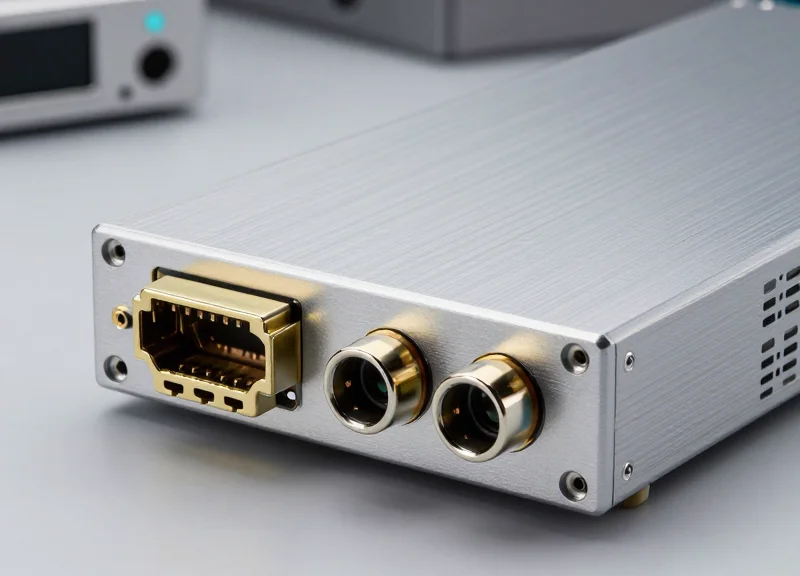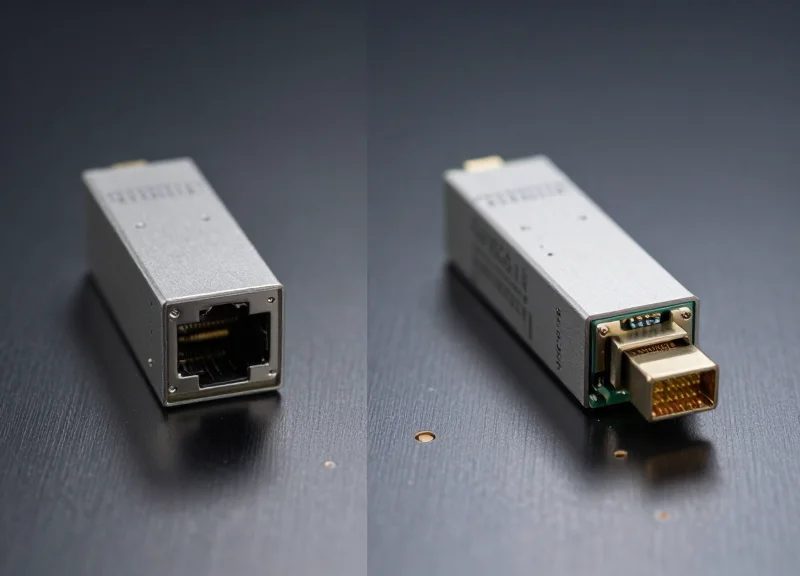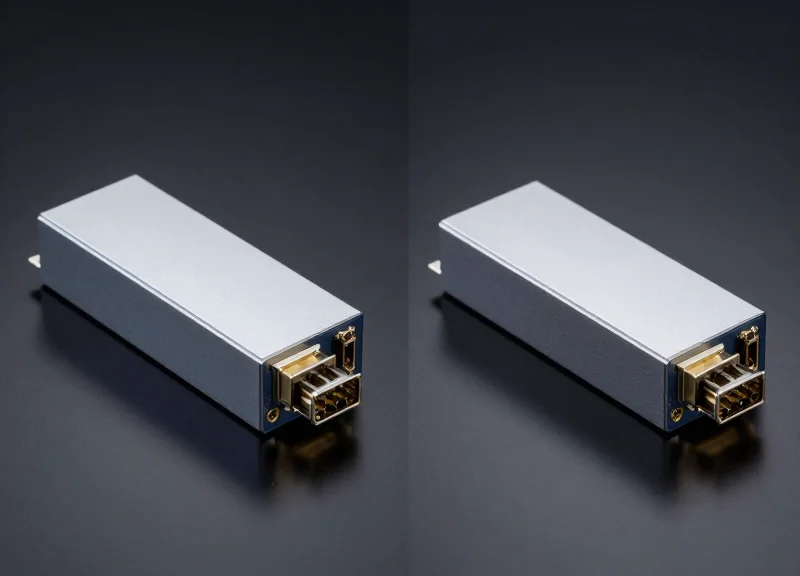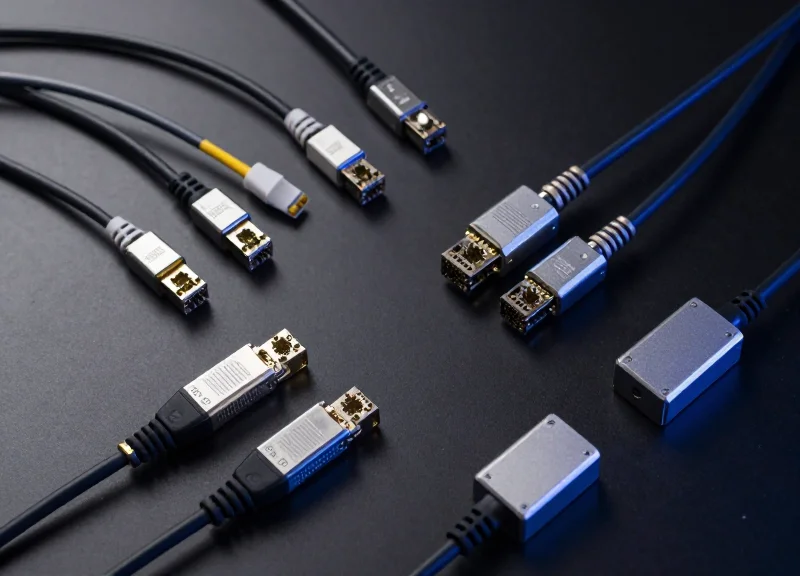
The leap to 800G connectivity is no longer a future roadmap item—it is the current reality for hyperscale data centers and service providers. As bandwidth demands explode, network engineers must choose between two dominant MSA-compliant form factors: QSFP-DD800 and OSFP800. This technical deep dive explores the nuances of these modules, providing the insights needed to navigate power density and thermal challenges in modern high-speed environments.
Understanding the 800G Landscape

Understanding the 800G Landscape
The shift to 800G ethernet represents a critical milestone in data center evolution, doubling the bandwidth of current 400G infrastructure to meet the explosive demands of Artificial Intelligence (AI), Machine Learning (ML), and hyperscale cloud services. At the heart of this transition are two primary hardware form factors—QSFP-DD800 and OSFP800—which provide the physical interface for high-speed optical transceivers through standards defined by industry-wide Multi-Source Agreements (MSAs). These form factors are designed to support 8 lanes of 112G PAM4 signaling, providing a scalable path toward future 1.6T networking.
The Impetus for 800G Adoption
As global data traffic continues to surge, current 400G links are increasingly becoming bottlenecks within spine-leaf architectures and data center interconnects (DCI). 800G optics provide the necessary density for next-generation 51.2 Tbps switching silicon. By migrating to 800G, operators can achieve significantly higher throughput within the same rack footprint, while simultaneously reducing the total power consumption per bit compared to utilizing multiple 100G or 400G modules.
| Feature | 400G Standard | 800G Standard |
|---|---|---|
| Electrical Lane Speed | 56Gbps or 112Gbps PAM4 | 112Gbps PAM4 |
| Aggregate Throughput | 400 Gbps | 800 Gbps |
| Total Electrical Lanes | 8 lanes (50G/100G) | 8 lanes (100G) |
| Primary Form Factors | QSFP-DD, OSFP | QSFP-DD800, OSFP800 |
The Role of Multi-Source Agreements (MSA)
Unlike traditional standards bodies like the IEEE, which define the protocol and electrical signaling, Multi-Source Agreements (MSAs) focus on the physical and mechanical specifications of the transceiver modules. The QSFP-DD MSA and the OSFP MSA are industry consortia that ensure interoperability between different vendors. By standardizing dimensions, connector pinouts, and management interfaces, MSAs create a healthy competitive ecosystem that drives down costs and ensures that network operators are not locked into a single supplier's proprietary hardware.
Common Questions on the 800G Transition
- Why are there two competing 800G standards?
QSFP-DD800 and OSFP800 coexist because they address different priorities. QSFP-DD800 focuses on backward compatibility with older QSFP modules, while OSFP800 is designed with superior thermal management for higher-wattage applications. - Is 800G simply two 400G links combined?
While 800G provides twice the bandwidth, it is technically more complex than just doubling links. It utilizes 112G SerDes technology to handle higher frequencies and requires more advanced Forward Error Correction (FEC) to maintain data integrity. - When should organizations consider moving to 800G?
The transition is typically triggered when upgrading to 25.6T or 51.2T switches, where high-density 800G ports are required to fully utilize the switch chip's capacity.
QSFP-DD800: Refined Evolution
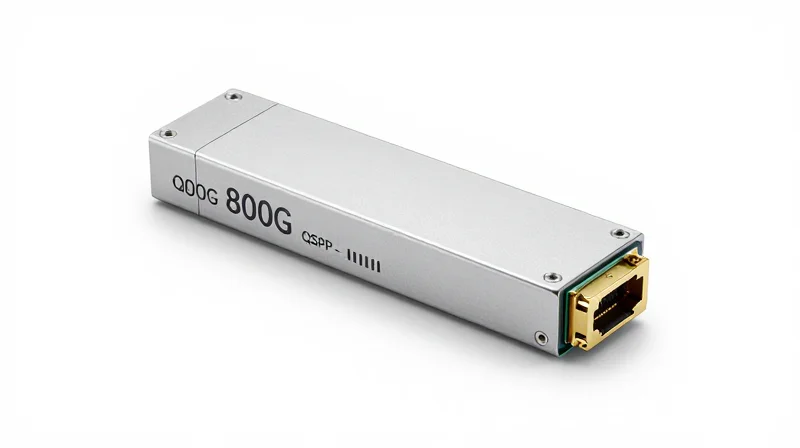
QSFP-DD800 (Double Density) is a high-density transceiver form factor specifically engineered to support 800Gbps throughput by leveraging eight lanes of 112G PAM4 electrical signaling. As the direct successor to the widely adopted 400G QSFP-DD, the 800G iteration focuses on refining signal integrity and thermal management to handle the increased power demands of next-generation data center networking while preserving the physical footprint that allows for seamless backward compatibility.
The Architecture of Double Density
The 'Double Density' nomenclature refers to the module's electrical interface, which features two rows of contacts instead of the single row found in traditional QSFP modules. This design effectively doubles the number of lanes from four to eight. In the QSFP-DD800 specification, each of these eight lanes operates at 112.5 Gbps using PAM4 modulation, resulting in a total aggregate bandwidth capacity of 800Gbps or higher depending on the specific protocol overhead.
| Feature | QSFP-DD (Original) | QSFP-DD800 |
|---|---|---|
| Max Aggregate Bandwidth | 400 Gbps | 800 Gbps |
| Electrical Lane Speed | 56 Gbps (PAM4) | 112 Gbps (PAM4) |
| Number of Lanes | 8 Lanes | 8 Lanes |
| Backward Compatibility | QSFP28/QSFP56 | QSFP28/56/DD |
| Connector Type | 2x1 or 1x1 Cage | Enhanced 1x1 Cage |
Signal Integrity and Thermal Challenges
Moving to 112G per lane introduces significant signal integrity hurdles, particularly regarding insertion loss and crosstalk. QSFP-DD800 addresses these through the use of high-performance internal PCB materials and optimized connector geometries defined in the MSA. Additionally, because 800G optical engines can consume between 15W and 25W, the QSFP-DD800 design incorporates improved heatsink integration and airflow management within the cage to prevent thermal throttling in high-radix switches.
Backward Compatibility: The Strategic Edge
One of the most compelling features of QSFP-DD800 is its hardware backward compatibility. A QSFP-DD800 port on a switch can accept legacy QSFP28 (100G), QSFP56 (200G), and QSFP-DD (400G) modules. This allows network operators to upgrade their infrastructure incrementally, protecting their investment in existing fiber plants and transceiver inventories while providing a clear migration path to 800G.
Quick FAQ: Understanding QSFP-DD800
- Can I use a 400G QSFP-DD module in an 800G port?
Yes, QSFP-DD800 ports are designed to be fully backward compatible with 400G QSFP-DD modules, as well as 100G and 200G QSFP modules. - What is the maximum power consumption supported?
While the form factor is evolving, QSFP-DD800 is designed to support modules with power envelopes reaching up to 24W to 25W with advanced cooling solutions. - Does QSFP-DD800 require new cabling?
For Direct Attach Copper (DAC) cables, new 112G-rated cables are required to reach 800G speeds. However, existing optical fiber (SMF/MMF) can still be used with the appropriate transceivers.
OSFP800: Built for the Future
OSFP800: Built for the Future
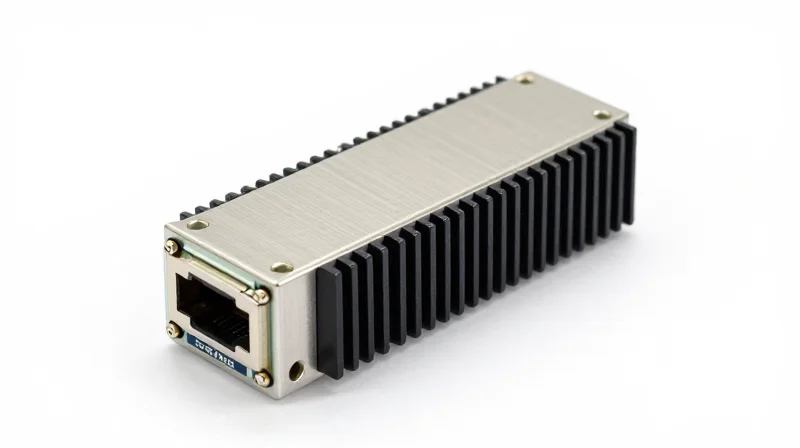
The OSFP800 (Octal Small Form-factor Pluggable) represents a fundamental shift in transceiver design, moving away from the legacy constraints of the QSFP family to prioritize cooling efficiency and electrical performance. While other form factors focus on maintaining physical backward compatibility with smaller modules, OSFP800 was engineered specifically to handle the aggressive thermal profiles of 800G and 1.6T applications, offering a larger physical envelope that facilitates integrated heat sinks and higher power margins.
Physical Footprint and Thermal Advantages
The most striking difference of the OSFP800 is its larger size. By being slightly wider and deeper than the QSFP-DD800, it allows for more sophisticated internal components and, crucially, an integrated heat sink directly on the module. This design allows the OSFP800 to dissipate up to 15W to 20W of power (and potentially more in future iterations), which is vital for the high-power Digital Signal Processors (DSPs) required for long-reach optics and coherent 800G links.
| Feature | OSFP800 Specification | Design Benefit |
|---|---|---|
| Width | 22.58 mm | Greater space for optical components and PCB routing. |
| Thermal Management | Integrated Heat Sink | Superior cooling efficiency compared to riding-heatsink designs. |
| Power Envelope | 15W - 18W+ | Supports high-performance DSPs and long-range coherent optics. |
| Electrical Interface | 8 Lanes at 100G (PAM4) | Provides 800Gbps aggregate bandwidth with high signal integrity. |
Scalability and the Road to 1.6T
OSFP800 is not merely a destination but a platform for future scaling. Because the physical design is robust enough to handle high power loads and maintains excellent signal integrity at higher frequencies, the OSFP MSA has already defined paths toward 1.6T. This future-proofing makes it the preferred choice for hyperscale cloud providers who are planning infrastructure that will eventually transition to 224G-per-lane signaling.
- Why is OSFP800 larger than QSFP-DD?
The larger size accommodates an integrated heat sink and more internal space, allowing the module to dissipate more heat and support higher power consumption required for high-speed optics. - Can OSFP800 ports support legacy QSFP modules?
Directly, no. However, OSFP-to-QSFP adapters exist, though the OSFP form factor is primarily intended for new, high-density greenfield deployments. - What is the primary use case for OSFP800?
It is predominantly used in AI clusters and hyperscale data centers where maximum cooling efficiency and the ability to scale to 1.6T are more critical than legacy compatibility.
Thermal Management and Power Dissipation
Thermal Management and Power Dissipation
Thermal management is the defining architectural differentiator between QSFP-DD800 and OSFP800, as 800G optical transceivers must dissipate between 15W and 25W of power per port. While both form factors are engineered to handle the intense heat generated by modern 7nm and 5nm Digital Signal Processors (DSPs), they utilize fundamentally different cooling philosophies: OSFP leverages an integrated heat sink for direct airflow contact, whereas QSFP-DD800 relies on system-level 'riding' heat sinks within the cage assembly.
OSFP800: The Advantage of Integrated Heat Sinks
The OSFP800 was designed from the ground up with thermal performance as its primary objective. By integrating the heat sink directly onto the module's top surface, it maximizes the surface area exposed to the switch's airflow. This design allows OSFP modules to support power envelopes exceeding 15W comfortably, with a theoretical ceiling approaching 30W in optimized environments. This 'closed-loop' thermal design simplifies switch chassis engineering, as the module itself provides a significant portion of its own cooling infrastructure.
QSFP-DD800: System-Level Thermal Optimization
QSFP-DD800 maintains a flat top surface to ensure backward compatibility with QSFP legacy ports. To cool the module, the switch chassis must utilize a 'riding heat sink'—a spring-loaded component built into the cage that makes physical contact with the module's shell. While this method is highly effective for densities up to 15W or 18W, it introduces a thermal interface resistance that OSFP lacks. However, recent innovations in cage design and thermal interface materials (TIMs) have allowed QSFP-DD800 to remain viable even in high-performance 800G deployments.
| Feature | QSFP-DD800 | OSFP800 |
|---|---|---|
| Heat Sink Design | External (Riding Heat Sink in Cage) | Integrated (Built into Module) |
| Typical Power Limit | 14W - 18W | 15W - 25W+ |
| Thermal Efficiency | Moderate (Air-to-Cage-to-Module) | High (Direct Air-to-Module) |
| Airflow Requirements | Higher system-level CFM needed | More efficient per-module cooling |
Critical Thermal Considerations for Data Center Design
- Does OSFP800 always run cooler than QSFP-DD800?
Not necessarily. While OSFP has a better thermal path, actual operating temperatures depend on the switch's airflow velocity and ambient inlet temperature. However, OSFP typically requires lower fan speeds to maintain the same junction temperature. - Can QSFP-DD800 support coherent 800G optics?
Coherent optics often exceed 20W. While QSFP-DD800 can support them, it requires highly specialized cooling solutions and may face stricter limits compared to the OSFP form factor, which handles high-wattage coherent DSPs more naturally. - How does power dissipation affect total cost of ownership (TCO)?
Modules that dissipate heat more efficiently (like OSFP) allow fans to run at lower RPMs, reducing the overall power consumption of the data center's cooling infrastructure and extending hardware lifespan.
Backward Compatibility and Interoperability
Backward Compatibility and Interoperability
The primary distinction in backward compatibility between the two 800G form factors is that QSFP-DD800 provides seamless, native mechanical support for legacy QSFP modules, while OSFP800 utilizes its larger physical footprint to accommodate legacy modules only through the use of external mechanical adapters. This choice fundamentally dictates whether a data center operator prioritizes ease of migration (QSFP-DD) or maximum thermal headroom for future generations (OSFP).
QSFP-DD800: Preserving the Legacy Ecosystem
QSFP-DD800 was engineered with the philosophy of 'backward first.' Because the cage dimensions remain consistent with previous iterations, a QSFP-DD800 port can accept QSFP28 (100G), QSFP56 (200G), and QSFP-DD (400G) transceivers without any additional hardware. This 'plug-and-play' capability allows network engineers to upgrade switches to 800G-capable hardware while continuing to use existing fiber plant and optics, significantly reducing the capital expenditure (CAPEX) associated with a phased migration.
OSFP800: Power Density via Adapters
In contrast, the OSFP800 form factor is physically wider and deeper than the QSFP standard. To achieve interoperability with legacy 100G, 200G, or 400G QSFP modules, OSFP systems require a 'QSFP-to-OSFP' adapter. While these adapters are highly reliable and maintain signal integrity, they add a layer of mechanical complexity and cost. However, the trade-off is that the OSFP cage is built to handle much higher power envelopes (up to 30W), making it more resilient as optical components push toward 1.6T and beyond.
| Feature | QSFP-DD800 Compatibility | OSFP800 Compatibility |
|---|---|---|
| Native Legacy Support | Yes (QSFP28, QSFP56, QSFP-DD400) | No (Requires Adapter) |
| Mechanical Adapter | Not Required | Required for QSFP form factors |
| Signal Compatibility | CMIS 4.0 / 5.0 Support | CMIS 4.0 / 5.0 Support |
| Migration Difficulty | Low (Standardized footprint) | Moderate (New infrastructure design) |
Software Interoperability: CMIS and Electrical Signaling
Beyond the physical dimensions, both form factors rely on the Common Management Interface Specification (CMIS) to ensure software-level interoperability. Whether using QSFP-DD800 or OSFP800, the management of 100G-PAM4 lanes remains consistent. This allows the host system to recognize and configure modules regardless of the physical shell, provided the host firmware supports the specific module's EEPROM mapping.
Transitioning FAQ
- Can I plug a 400G QSFP-DD module into an 800G QSFP-DD port?
Yes, QSFP-DD800 ports are natively backward compatible with 400G QSFP-DD modules, requiring no modifications or adapters. - Does using an OSFP adapter degrade the signal for legacy optics?
Generally, no. High-quality OSFP-to-QSFP adapters are designed to meet signal integrity standards, though they do introduce a minor amount of additional insertion loss. - Is the electrical interface different between 400G and 800G?
Yes, 800G modules utilize 112G-PAM4 electrical lanes compared to the 56G-PAM4 lanes found in standard 400G modules, but 800G ports can usually down-rate to support 400G signaling.
Connector Density and Faceplate Efficiency
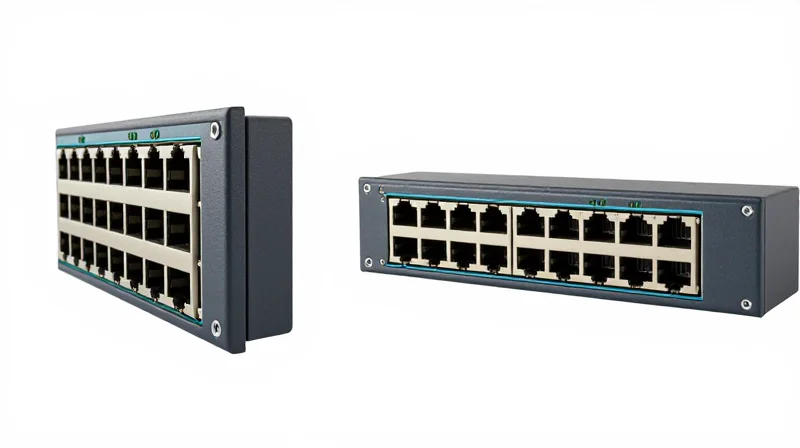
Maximizing Throughput: Faceplate Density and Port Count
The primary differentiator between QSFP-DD800 and OSFP800 regarding faceplate efficiency lies in their horizontal width and the resulting maximum port count achievable in a standard 19-inch 1U chassis. QSFP-DD800, maintaining the legacy width of the QSFP family (~18.35mm), allows network equipment manufacturers to fit up to 36 ports in a single 1U row, yielding a total throughput of 28.8 Tbps. In contrast, the wider OSFP800 form factor (~22.58mm) typically limits 1U designs to 32 ports, resulting in a slightly lower aggregate faceplate capacity of 25.6 Tbps without resorting to non-standard mechanical innovations.
| Metric | QSFP-DD800 | OSFP800 |
|---|---|---|
| Module Width | 18.35 mm | 22.58 mm |
| Typical Max 1U Ports | 36 Ports | 32 Ports |
| Total 1U Throughput | 28.8 Tbps | 25.6 Tbps |
| Horizontal Pitch | Smaller (Higher Density) | Larger (Lower Density) |
Mechanical Design and Faceplate Utilization
While QSFP-DD800 wins on raw port count per rack unit, faceplate efficiency is also a function of thermal management and mechanical complexity. The OSFP800's integrated heat sink allows for a 'closed' faceplate design where airflow is managed entirely through the module. This can simplify the internal cooling architecture of the switch. Conversely, the high density of QSFP-DD800 necessitates highly efficient 'belly-to-belly' or stacked cage configurations to manage the heat generated by 36 modules, which can lead to increased manufacturing complexity for the system PCB and thermal assembly.
- How many 800G ports fit in a 1U switch?
Standard designs accommodate 36 ports for QSFP-DD800 and 32 ports for OSFP800, though some specialized 2U chassis can exceed these limits for both types. - Does OSFP800 require more rack space?
No, both fit within standard 1U or 2U heights. However, OSFP800 requires more horizontal width per connector, reducing the number of connectors that can be placed side-by-side. - Which form factor is better for 51.2T switches?
51.2T switches requiring 64 ports of 800G are typically easier to design in a 2U form factor using QSFP-DD due to its narrower profile, which facilitates dual-row stacking. - Is the density difference significant for most operators?
For hyperscalers, the jump from 32 to 36 ports represents a 12.5% increase in bandwidth per rack unit, which is significant for maximizing data center footprint efficiency.
Signal Integrity and Electrical Performance
Signal Integrity and Electrical Performance
The transition to 800G is defined by the shift to 112G SerDes lanes using PAM4 modulation, which doubles the bandwidth per lane but significantly reduces the signal-to-noise ratio (SNR) and timing margins. While both QSFP-DD800 and OSFP800 are designed to handle 112G signaling, their physical architectures create different electrical performance profiles; OSFP typically exhibits lower insertion loss and better crosstalk performance due to its wider pin pitch and more robust connector design.
The 112G PAM4 Signaling Challenge
With a Nyquist frequency of approximately 28.125 GHz for 112G PAM4, the physical layer must manage extreme sensitivity to PCB trace length, via impedance, and connector reflections. At these frequencies, even minor discontinuities in the signal path can lead to significant Bit Error Rate (BER) degradation, necessitating advanced Forward Error Correction (FEC) and tighter manufacturing tolerances for both modules and host boards.
| Metric | QSFP-DD800 | OSFP800 |
|---|---|---|
| Nyquist Frequency | 28.125 GHz | 28.125 GHz |
| Contact Density | High (Dense 0.8mm pitch) | Moderate (Optimized spacing) |
| Signal Integrity Margin | Tighter tolerances required | Higher headroom due to size |
| Crosstalk Mitigation | Advanced shielding in connector | Inherent physical isolation |
Crosstalk and Impedance Control
OSFP800 leverages its larger physical volume to provide better shielding between high-speed differential pairs, which reduces Far-End Crosstalk (FEXT) and Near-End Crosstalk (NEXT). In contrast, QSFP-DD800 relies on highly optimized cage and connector materials to match the electrical performance of OSFP while maintaining the smaller footprint required for backward compatibility. This makes QSFP-DD800 designs more sensitive to PCB routing and stack-up quality compared to the more forgiving OSFP form factor.
- How does 112G signaling affect the Bit Error Rate (BER)?
The higher baud rate used in 112G PAM4 reduces the eye opening, which increases the Pre-FEC BER. Both standards rely on KP4 FEC to bring the final link quality to 1E-12, but signal integrity margins must be strictly maintained to avoid FEC failure. - Which form factor is better for Direct Attach Copper (DAC) cables?
OSFP800 is often preferred for longer 800G DAC reaches because its superior electrical performance provides the necessary margin to compensate for the higher attenuation inherent in passive copper cables at high frequencies. - Do both standards use the same electrical interface?
Yes, both utilize an 8-lane electrical interface (8x112G), but the physical arrangement of the pins differs, with OSFP having a slightly more advantageous layout for thermal and electrical isolation.
Deployment Scenarios: Choosing the Right Path

The choice between QSFP-DD800 and OSFP800 is dictated by the trade-off between maximizing existing infrastructure investments and preparing for the extreme thermal demands of next-generation high-performance computing. While QSFP-DD800 excels in density and backward compatibility, OSFP800 is the superior choice for high-wattage modules requiring maximum heat dissipation.
Enterprise and Cloud Data Centers: The QSFP-DD800 Advantage
For traditional cloud and enterprise data centers that have heavily invested in the QSFP ecosystem, QSFP-DD800 provides a cost-effective and low-risk transition. It allows operators to utilize existing fiber plants and maintain high port counts on 1U switches without overhauling thermal management systems, provided the power consumption per module remains within the 15W to 20W range. Its primary strength lies in its native ability to accept older QSFP transceivers, simplifying inventory management during phased upgrades.
AI Training and HPC Clusters: Why OSFP800 Wins
In AI-driven environments where transceivers often exceed 20W due to complex Digital Signal Processors (DSPs) and silicon photonics, OSFP800 is the preferred standard. Its larger physical dimensions and integrated cooling fins allow for more efficient heat transfer to the ambient air, reducing the risk of thermal throttling. This makes OSFP800 the default choice for InfiniBand networks and high-density AI clusters where sustained 800G performance is critical and cooling capacity is prioritized over backward compatibility.
Comparative Selection Matrix
| Metric | QSFP-DD800 | OSFP800 |
|---|---|---|
| Legacy Support | Native compatibility with QSFP+/28/56/DD | Requires mechanical adapters for QSFP |
| Thermal Management | Flat-top module design (lower headroom) | Integrated heat sink / Fin-top (high headroom) |
| Max Power Limit | Typically up to 20W-25W | Supports 30W and beyond |
| Primary Use Case | General Purpose Cloud / Ethernet Switching | AI/ML Training Clusters / InfiniBand / HPC |
Deployment FAQ
- Can I mix QSFP-DD800 and OSFP800 in the same network?
Yes. While they cannot share the same physical port, they are electronically compatible at the signal level. You can connect a QSFP-DD800 switch to an OSFP800 switch using appropriate fiber optic cables or breakout assemblies. - Is OSFP800 always more expensive than QSFP-DD800?
The modules themselves are priced competitively; however, the total cost of ownership for OSFP800 may be higher if you require adapters for legacy modules or specialized high-airflow cooling systems. - Which form factor is more likely to support 1.6T?
While both are evolving, the OSFP form factor's superior thermal properties and larger internal volume give it a slight architectural advantage for the initial waves of 1.6T transceivers.
Selecting between QSFP-DD800 and OSFP800 is a pivotal decision that impacts your data center's thermal profile and long-term scalability. While QSFP-DD800 offers unparalleled density and backward compatibility, OSFP800 provides the thermal robustness required for the most demanding AI-driven workloads. Ready to optimize your high-speed network? Contact our technical experts today for a personalized 800G migration strategy and hardware validation.