As data centers face unprecedented traffic growth, 200G FR4 solutions have emerged as the optimal balance between cost-efficiency and high-speed performance. In an era where 100G is hitting limits and 400G remains a high-cost investment, 200G FR4 provides a reliable, scalable pathway for modern network architectures. This guide explores the technical advantages and strategic benefits of wholesale procurement.
Understanding 200G FR4 Technology and PAM4 Signaling

200G FR4 is an optical transceiver specification designed to deliver 200 Gigabits per second (Gbps) of data throughput over single-mode fiber (SMF) for distances up to 2km. It achieves this high-speed performance by multiplexing four 50Gbps lanes of Coarse Wavelength Division Multiplexing (CWDM) light, with each lane utilizing 4-level Pulse Amplitude Modulation (PAM4). This combination allows data center operators to increase bandwidth density and efficiency without requiring the expensive infrastructure overhaul associated with shorter-reach or higher-fiber-count solutions.
The Role of PAM4 Signaling in 200G Networks
The transition from 100G to 200G and 400G was made possible primarily through the adoption of PAM4 signaling. Unlike traditional Non-Return-to-Zero (NRZ) modulation, which uses two voltage levels to represent a single bit, PAM4 uses four distinct signal levels. This allows the system to transmit two bits of information in each symbol period, effectively doubling the data rate while maintaining the same Nyquist frequency. For 200G FR4, this means each of the four optical lanes can carry 50Gbps of data, ensuring robust signal integrity over the 2km reach.
| Feature | NRZ (Traditional) | PAM4 (Advanced) |
|---|---|---|
| Voltage Levels | 2 (High/Low) | 4 (0, 1, 2, 3) |
| Bits per Symbol | 1 Bit | 2 Bits |
| Signal Density | Standard | Double |
| Application | 10G/40G/100G (SR4) | 200G/400G/800G |
Technical Specifications of 200G FR4
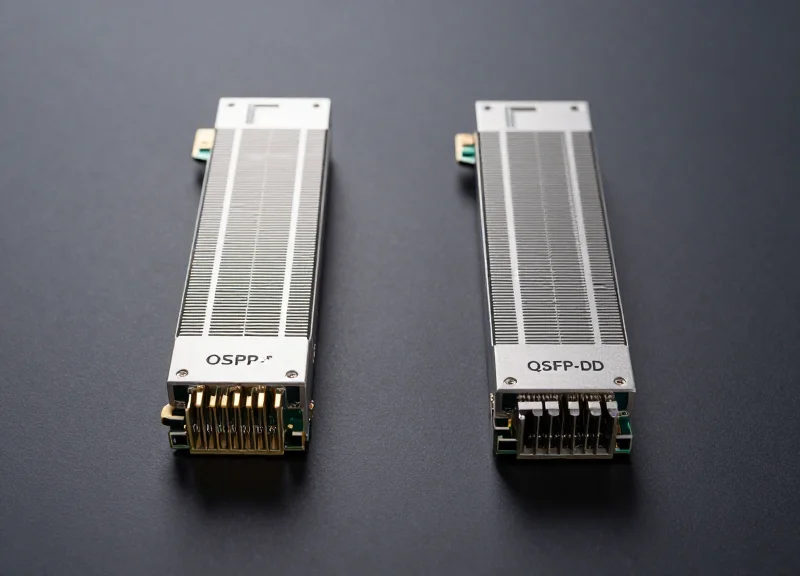
The 200G FR4 standard, typically housed in a QSFP56 form factor, operates across four specific wavelengths: 1271nm, 1291nm, 1311nm, and 1331nm. These wavelengths are combined and separated using optical multiplexing/demultiplexing components within the module. This 'FR' (Fine Reach) designation signifies its optimization for mid-range data center interconnects, bridging the gap between short-reach SR4 and long-haul LR4 technologies.
Core Advantages for Wholesale Buyers
- Fiber Efficiency
Uses just two fibers (one TX, one RX) for 200G transmission, significantly reducing cabling complexity compared to parallel fiber solutions like SR4. - Power Consumption
Modern QSFP56 200G FR4 modules are designed for low power dissipation, often under 5.5W, reducing thermal management costs in bulk deployments. - Scalability
The 2km reach supports most large-scale data center layouts, making it the 'sweet spot' for spine-to-leaf and inter-rack connectivity.
Common Questions on 200G FR4 Implementation
- Is 200G FR4 compatible with 100G CWDM4?
Generally no, because 200G FR4 uses PAM4 modulation whereas 100G CWDM4 uses NRZ. However, many switches allow breakout configurations depending on the OSFP/QSFP port settings. - What fiber type is required?
200G FR4 requires G.652 standard single-mode fiber (SMF) and uses LC duplex connectors. - Is Forward Error Correction (FEC) mandatory?
Yes, KP4 FEC is required to maintain a reliable link bit-error rate (BER) when using PAM4 signaling.
200G FR4 vs. SR4 and DR4: Choosing the Right Reach
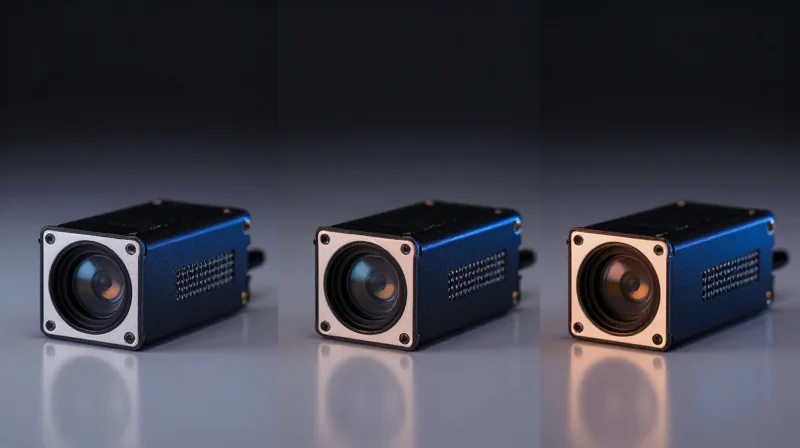
Navigating the 200G Optical Landscape: Reach and Reliability
Choosing between 200G FR4, SR4, and DR4 transceivers is not merely a matter of speed, but a strategic decision based on the physical dimensions of your data center and the existing fiber plant. While all three standards deliver 200Gbps throughput, the 200G FR4 module serves as the critical 'sweet spot' for enterprise and hyperscale operators, providing a 2km reach over duplex single-mode fiber (SMF) that effectively bridges the gap between short-range multi-mode solutions and expensive long-haul optics.
Technical Comparison: SR4, DR4, and FR4
| Feature | 200G SR4 | 200G DR4 | 200G FR4 |
|---|---|---|---|
| Fiber Type | Multi-mode (OM3/OM4) | Single-mode (SMF) | Single-mode (SMF) |
| Max Reach | 70m (OM3) / 100m (OM4) | 500m | 2km |
| Connector | MPO-12 | MPO-12 | Duplex LC |
| Wavelength | 850nm | 1310nm | CWDM (1271-1331nm) |
| Primary Use | Top-of-Rack (ToR) | Intra-rack / Leaf-Spine | Spine-to-Spine / DCI |
The FR4 Advantage in Leaf-and-Spine Architectures
In modern leaf-and-spine topologies, the distance between switch tiers often exceeds the 100-meter limitation of SR4 multi-mode optics. While DR4 offers a single-mode alternative, its 500-meter limit can be restrictive for larger facilities or those with complex cable routing. The 200G FR4 standard uses Coarse Wavelength Division Multiplexing (CWDM) to multiplex four 50Gbps lanes onto a single pair of fibers. This architecture significantly reduces the total fiber count compared to DR4—which requires parallel MPO cabling—leading to substantial savings in wholesale infrastructure costs and simplifying cable management in high-density environments.
Implementation FAQ
- Can 200G FR4 be used for distances shorter than 2km?
Yes, FR4 is fully compatible with shorter distances. It is frequently used for spans of 500m to 2km where SR4 or DR4 may lack the necessary link budget or fiber efficiency. - Does 200G FR4 require more power than SR4?
While single-mode lasers generally consume slightly more power than VCSELs used in SR4, the 200G FR4's integration of PAM4 and CWDM technologies has been optimized for high energy efficiency in bulk deployments. - Why choose Duplex LC (FR4) over MPO (DR4)?
Duplex LC connectors are often preferred in wholesale procurement because they leverage existing single-mode patch panels, reducing the need for expensive MPO-to-LC breakout cables or specialized hardware.
The Strategic ROI of Wholesale 200G Procurement

Securing 200G FR4 solutions through wholesale channels is the most effective method for large-scale networks to achieve a favorable Return on Investment (ROI). By leveraging volume-based pricing, organizations can significantly lower their initial Capital Expenditure (CAPEX) while ensuring a consistent hardware baseline across high-density data center fabrics. This strategic approach moves beyond simple transaction-based purchasing toward a lifecycle management model that prioritizes long-term financial stability and operational predictability.
Maximizing CAPEX Efficiency with Bulk Unit Pricing
The transition to 200G networking involves substantial hardware costs; however, bulk procurement allows for aggressive price negotiation that retail or small-batch orders cannot provide. For ISPs and enterprise-level data centers, the per-port cost becomes a critical metric. Wholesale agreements for 200G FR4 modules typically yield savings between 20% and 40% over standard market rates, depending on the volume. These savings can then be reinvested into other critical infrastructure areas, such as low-latency switching or advanced network security protocols.
| Procurement Metric | Retail/Small Batch | Wholesale/Bulk (2026) |
|---|---|---|
| Average Unit Cost | High (MSRP Focused) | Low (Volume Discounted) |
| Inventory Risk | Subject to Market Fluctuations | Stabilized via Forward-Ordering |
| Logistics Cost | Multiple Shipping Fees | Consolidated Freight Costs |
| Administrative Overhead | High (Frequent POs) | Low (Master Service Agreements) |
Logistical Optimization and Supply Chain Resilience
The strategic value of wholesale procurement extends into the operational domain. By obtaining custom quotes for bulk 200G FR4 solutions, network managers can lock in lead times and delivery schedules that align with their deployment phases. This reduces the risk of project delays caused by component shortages. Furthermore, maintaining a uniform inventory of transceivers from a single production batch minimizes compatibility variances, simplifying the troubleshooting process for network engineers and reducing the Mean Time to Repair (MTTR).
Wholesale Procurement FAQ
- How does bulk procurement impact the Total Cost of Ownership (TCO)?
Wholesale purchasing reduces TCO by lowering the initial acquisition cost per unit and decreasing administrative overhead through consolidated billing and simplified logistics management. - Are custom quotes available for mixed-reach deployments?
Yes, most wholesale providers offer custom quotes that package 200G FR4 with other module types like SR4 or DR4, allowing for a comprehensive, cost-effective network upgrade. - What are the typical volume thresholds for wholesale pricing in 2026?
While it varies by manufacturer, wholesale benefits often begin at 50 units, with significantly deeper discounts applied at the 250 and 500-unit tiers.
Custom OEM/ODM Services: Tailoring Hardware to Your Network
For enterprise networks and service providers, the ability to tailor hardware to specific architectural requirements is the difference between a seamless deployment and a multi-week troubleshooting cycle. Custom OEM/ODM services for 200G FR4 solutions allow buyers to move beyond generic specifications, enabling deep integration with existing vendor ecosystems such as Cisco, Arista, and Juniper while maintaining brand consistency through private labeling. Ubytelink provides these specialized services to ensure that high-bandwidth transitions are optimized for both performance and administrative ease.
Firmware Coding and Multi-Vendor Interoperability
One of the primary challenges in deploying 200G FR4 modules is the 'vendor lock-in' enforced by proprietary firmware. Our ODM services include custom EEPROM coding, which allows the transceivers to be recognized as native hardware by major switch and router manufacturers. This eliminates 'unsupported transceiver' errors and ensures that DDM (Digital Diagnostic Monitoring) data is accurately reported back to the network management system.
Hardware Modifications and Private Labeling
Wholesale buyers often require hardware that reflects their own brand identity or meets specific physical installation constraints. Our OEM capabilities extend to custom pull-tab colors for easy identification in high-density racks, laser-etched serial numbers for internal asset tracking, and bespoke packaging for downstream distribution.
| Feature | Standard Off-the-Shelf | Custom OEM/ODM Service |
|---|---|---|
| Compatibility | Generic (MSA Standard) | Vendor-Specific Coding (Cisco, Arista, etc.) |
| Branding | Manufacturer Default | Private Labeling & Custom Packaging |
| Diagnostics | Basic DDM Support | Tailored Telemetry & Monitoring Data |
| Hardware Logistics | Fixed Designs | Custom Pull-tabs & Form-factor Tweaks |
FAQ: Tailoring Your 200G FR4 Wholesale Order
- Can you code 200G FR4 modules for multiple vendors in a single batch?
Yes, we can provide split-coding services where a portion of your wholesale order is programmed for Cisco and another for Arista or Juniper, depending on your mixed-environment needs. - Is there a Minimum Order Quantity (MOQ) for private labeling?
While standard orders have no MOQ, custom private labeling and specialized packaging usually require a minimum volume of 50 to 100 units to offset setup costs. - Does custom firmware affect the warranty of the modules?
No. Our custom-coded modules are fully backed by our standard performance warranty, ensuring that custom-tailored solutions are as reliable as generic hardware. - What is the lead time for custom ODM hardware modifications?
Firmware customization typically adds 2-3 days to the processing time, while physical hardware modifications or custom housing may require 2-4 weeks depending on the complexity.
Ensuring Interoperability and Compatibility in Multi-Vendor Fabrics
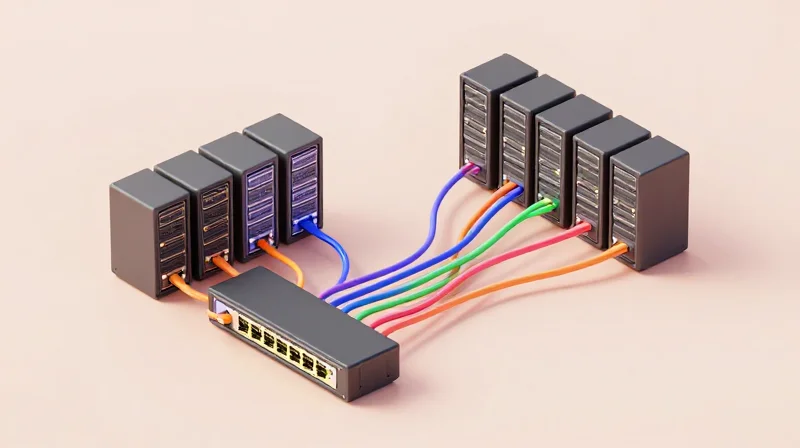
Ensuring Interoperability and Compatibility in Multi-Vendor Fabrics
The primary challenge in deploying wholesale 200G FR4 solutions across modern data centers is overcoming the proprietary 'vendor lock' mechanisms found in Cisco, Arista, and Juniper hardware. True interoperability is achieved when third-party modules are engineered with precise EEPROM coding and firmware that perfectly emulates the specific I2C responses and Management Interface Specification (MIS) parameters required by the host operating system. This ensures that the switch recognizes the 200G FR4 module as a native component, enabling all diagnostic features and preventing port-disable errors.
Cross-Platform Performance and Vendor Compliance
For enterprise networks and ISPs, the value of bulk procurement is only realized if the optics function seamlessly across a heterogeneous fabric. This involves more than just matching the QSFP56 form factor; it requires rigorous testing of the Digital Optical Monitoring (DOM) capabilities to ensure real-time telemetry—such as laser bias current, temperature, and RX/TX power levels—is accurately reported back to the network management software (NMS).
| Vendor Ecosystem | Common Compatibility Barriers | Interoperability Optimization Solution |
|---|---|---|
| Cisco Systems | Strict EEPROM signature verification and power class gating. | Custom firmware coding for NX-OS/IOS-XR to bypass 'non-supported' flags. |
| Arista Networks | High sensitivity to I2C timing and DOM data integrity. | High-speed microcontroller integration for zero-latency I2C responses. |
| Juniper Networks | Strict power-up sequences and specific ID requirements for Junos OS. | Pre-coded hardware sequences to match Juniper's startup diagnostic routine. |
| Generic/White Box | Standard MSA compliance is usually sufficient. | Optimized for power efficiency and thermal performance. |
Frequently Asked Questions Regarding Interoperability
- Will using these 200G FR4 modules void my switch warranty?
No. Under international law, including the Magnuson-Moss Warranty Act, network equipment manufacturers cannot legally void your warranty for using third-party optics unless they can prove the specific module caused damage to the hardware. - Can one module be used interchangeably between different vendor switches?
Yes, through 'Multi-Code' firmware. During the OEM/ODM process, modules can be programmed with a universal firmware profile or a 'multi-vendor' stack that allows them to function across diverse hardware environments without reconfiguration. - How do wholesale modules handle OS updates (e.g., a new version of Arista EOS)?
Top-tier wholesale solutions include future-proofed firmware that adheres to IEEE and MSA standards. For highly specialized environments, field-reprogramming tools can be provided to update module coding on-site.
By prioritizing specialized firmware engineering and extensive laboratory validation, Ubytelink ensures that every bulk-purchased 200G FR4 module offers a 'plug-and-play' experience, effectively eliminating the operational risks typically associated with third-party optical networking components.
Quality Control Standards and EEAT Compliance
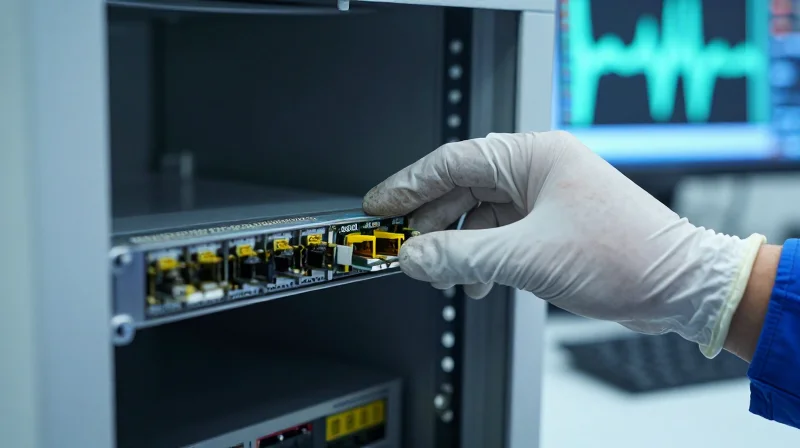
The Benchmarks of Quality Control for 200G FR4 Transceivers
To guarantee 100% uptime in high-density 200G fabrics, FR4 transceivers must undergo a rigorous battery of stress tests, including Bit Error Rate (BER) analysis, thermal cycling, and signal integrity validation, ensuring they exceed the performance requirements set by the IEEE 802.3bs standard. When buying wholesale, these quality control measures are the only way to mitigate the risks of premature optical degradation and hardware failure in the field.
Essential Testing Protocols for Wholesale Batches
Quality assurance for 200G FR4 modules involves more than a simple power-on test. For high-volume orders, manufacturers must implement automated testing environments that simulate real-world data center stress. This includes validating the PAM4 modulation scheme against excessive jitter and ensuring the 4-channel CWDM lasers maintain wavelength stability across varying temperatures.
| Testing Parameter | Standard Industry Procedure | Premium EEAT-Compliant Procedure |
|---|---|---|
| Bit Error Rate (BER) | Pre-FEC testing at room temperature. | Post-FEC validation at extreme temperature offsets (0-70°C). |
| Thermal Cycling | Random sample testing. | 100% batch testing through accelerated aging ovens. |
| Signal Integrity | Standard eye diagram check. | Full jitter decomposition and TDECQ measurement. |
| Interoperability | Single vendor switch validation. | Multi-vendor fabric testing (Cisco, Arista, Juniper). |
EEAT Compliance and Technical Transparency
In the networking hardware industry, Experience, Expertise, Authoritativeness, and Trustworthiness (EEAT) are demonstrated through documented compliance. Reputable wholesale suppliers provide detailed test reports (Serialized Test Data) for every module. Adherence to RoHS, CE, and FCC standards, combined with strict MSA (Multi-Source Agreement) alignment, ensures that the hardware is not only safe and legal but also technically superior for global deployment.
Quality Assurance FAQ
- What is the acceptable BER for 200G FR4?
A high-quality 200G FR4 module should achieve a pre-FEC Bit Error Rate of better than 1E-5 and a post-FEC rate approaching 1E-12 to ensure error-free transmission over 2km. - How does thermal cycling prevent hardware failure?
Thermal cycling stresses the solder joints and optical sub-assemblies (TOSA/ROSA). By oscillating between extreme cold and heat, manufacturers can identify 'infant mortality' failures before the modules are shipped to the customer. - Are wholesale modules individually serialized?
Yes, premium wholesale providers like Ubytelink individually serialize every module, allowing customers to track the specific test results and manufacturing date for every unit in their inventory.
Future-Proofing Your Infrastructure for 400G and Beyond

Strategically deploying 200G FR4 modules provides a critical bridge between legacy 100G systems and the next generation of 400G+ data centers. By leveraging 4x50G PAM4 modulation over single-mode fiber (SMF), 200G FR4 allows network operators to double their density while utilizing the exact same LC duplex cabling infrastructure that will eventually support 400G FR4 (4x100G PAM4). This alignment ensures that wholesale investments made in 2026 remain relevant as bandwidth demands scale, protecting the long-term ROI of physical layer assets.
Maximizing ROI Through Fiber Reuse and PAM4 Continuity
The transition to higher speeds often necessitates expensive rip-and-replace cycles of cabling. However, 200G FR4 is engineered to operate within the same power and distance parameters as future 400G standards. Because both 200G FR4 and 400G FR4 use standard G.652 single-mode fiber and LC duplex connectors, the transition becomes a modular swap of transceivers rather than a labor-intensive re-cabling project. This 'pay-as-you-grow' approach is particularly advantageous when securing bulk pricing for 200G solutions, as it stabilizes operational costs during phased upgrades.
| Feature | 200G FR4 | 400G FR4 | 800G (2x400G FR4) |
|---|---|---|---|
| Signaling | 4 x 50G PAM4 | 4 x 100G PAM4 | 8 x 100G PAM4 |
| Connector Type | LC Duplex | LC Duplex | Dual LC or CS |
| Fiber Type | Single-Mode (SMF) | Single-Mode (SMF) | Single-Mode (SMF) |
| Max Reach | 2km | 2km | 2km |
Strategic Readiness for Next-Generation Fabric Architectures
Implementing 200G FR4 also serves as an operational 'warm-up' for the complexities of PAM4 signaling. Unlike the simpler NRZ signaling used in 100G, PAM4 requires more sophisticated forward error correction (FEC) and tighter power budgets. By standardizing on 200G FR4 now, engineering teams can refine their testing protocols and monitoring systems, ensuring they are fully prepared for the 400G and 800G waves where PAM4 becomes the universal standard.
Future-Proofing FAQ
- Can 200G FR4 modules be used in 400G-capable switches?
Yes, most QSFP-DD ports are backward compatible with QSFP56 200G modules, allowing you to deploy high-density switches now and use 200G optics as an intermediate step. - Will I need to change my patch panels when upgrading to 400G?
No. Because 200G FR4 uses standard LC duplex connections on single-mode fiber, the same patch panels and trunk cables can be used for 400G FR4 upgrades. - How does buying 200G wholesale assist with future 800G planning?
Buying wholesale locks in lower per-gigabit costs today, freeing up capital for future investments in the higher-speed switching silicon required for 800G and 1.6T architectures.
Navigating the 2026 Supply Chain for Optical Transceivers
Navigating the 2026 supply chain for 200G FR4 optical transceivers requires a balance of early forecasting and strategic vendor selection, as lead times have largely stabilized compared to previous years but remain vulnerable to localized component shortages. While the global logistics environment has improved, the primary challenge now lies in 'manufacturing prioritization,' where Tier-1 fabrication facilities are increasingly shifting capacity toward 800G and 1.6T modules, making reliable sources for 200G legacy and current-gen infrastructure more valuable than ever.
Market Trends and Lead Time Projections for 2026
The demand for 200G FR4 remains robust, particularly in mid-tier data centers and enterprise backbones that require high-density 2km reaches without the cost overhead of 400G upgrades. However, supply chain experts observe that while raw materials are available, the specialized EML (Electro-absorption Modulated Laser) chips required for FR4 optics are often allocated to higher-margin products first. To avoid project delays, bulk buyers are encouraged to move away from 'just-in-time' ordering toward 'strategic stockpiling' or long-term supply agreements.
| Supply Factor | 2023 Market Status | 2026 Market Outlook |
|---|---|---|
| Average Lead Time | 10–14 Weeks | 4–8 Weeks (Standard) |
| Price Volatility | High (Quarterly Fluctuations) | Low to Moderate |
| Component Availability | Severe EML Scarcity | Improved, but Capacity-Constrained |
| Shipping & Logistics | Persistent Port Delays | Normalized Transit Times |
Ensuring Consistency with Ubytelink Wholesale Partnerships
To mitigate the risks of 2026 market shifts, Ubytelink leverages a diversified manufacturing footprint and deep inventory reserves of 200G FR4 modules. By maintaining a constant supply of high-quality components and adhering to rigorous testing cycles, we ensure that wholesale clients are insulated from the sudden lead-time spikes often seen in the retail market. A partnership with Ubytelink provides not just hardware, but a buffer against the unpredictability of the global semiconductor landscape, allowing for consistent bulk pricing and custom quote stability.
Supply Chain & Procurement FAQ
- How can I lock in bulk pricing for the entire fiscal year?
By requesting a custom quote for annual volume commitments, we can provide price protection agreements that shield your budget from mid-year component price hikes. - What is the current lead time for a wholesale order of 200G FR4?
Standard wholesale orders typically ship within 4 to 6 weeks, though we maintain ready-to-ship stock for urgent deployment requirements to ensure your network stays online. - Are there risks of 200G FR4 being discontinued in favor of 400G?
While 400G is growing, 200G FR4 remains a cornerstone technology for specific architectural tiers. We guarantee long-term availability and support for 200G solutions to match our clients' 5-to-10-year infrastructure cycles.
How to Request a Custom Wholesale Quote from Ubytelink
Streamlining Your 200G FR4 Procurement Process
Requesting a custom wholesale quote from Ubytelink is a strategic process designed to align high-performance 200G FR4 optical modules with your specific network architecture and budgetary constraints. By providing detailed technical requirements and volume forecasts up front, procurement teams can leverage tiered pricing models and ensure seamless hardware compatibility across diverse data center environments.
The Step-by-Step Quote Request Workflow
- Define Your Technical Scope
Identify the host equipment (switches/routers), required transmission distance (typically 2km for FR4), and fiber connector types (LC duplex). - Submit a Formal RFQ
Use the Ubytelink wholesale portal to submit your Request for Quote, including total volume, project timelines, and any specific coding requirements for vendor compatibility. - Technical Validation and Review
Our engineering team reviews the submission to ensure the 200G FR4 specifications match your infrastructure needs, preventing costly deployment errors. - Receive Your Tiered Proposal
Ubytelink provides a comprehensive quote featuring volume-based price breaks, estimated lead times, and shipping logistics tailored to your location.
Information Required for Accurate Pricing
To expedite the quoting process for 200G FR4 solutions in 2026, please ensure your request contains the following data points. This information allows our logistics team to calculate the most competitive bulk rates.
| Requirement Category | Details Needed | Impact on Wholesale Quote |
|---|---|---|
| Order Volume | Total units and batch sizes | Determines eligibility for Tier 1 or Tier 2 wholesale discounts. |
| Host Compatibility | Cisco, Arista, Juniper, or generic | Determines the EEPROM programming and testing protocol required. |
| Delivery Schedule | Immediate vs. Staged (Quarterly) | Influences inventory reservation and long-term price stability. |
| Compliance Needs | TAA compliance or specific certifications | Identifies the appropriate manufacturing facility for the order. |
Maximizing Your ROI with Custom Solutions
A custom quote does more than just lower the unit price; it allows Ubytelink to provide value-added services such as customized labeling, unique serialized tracking, and pre-configured testing reports. These services reduce the operational overhead for your on-site technicians during large-scale 200G deployments, effectively lowering your Total Cost of Ownership (TCO).
Wholesale Quoting FAQs
- What is the typical response time for a 200G FR4 quote?
Ubytelink typically issues a preliminary pricing estimate within 24 hours, with a fully validated technical proposal delivered within 2 business days. - Are evaluation units available before a bulk purchase?
Yes, for qualified wholesale projects, we offer sample modules for interoperability and performance testing in your specific lab environment. - Do you offer locked-in pricing for long-term projects?
For multi-quarter deployments, we can provide price protection agreements that shield your budget from market fluctuations during the project lifecycle.
Scaling your network capacity shouldn't be a bottleneck for your business growth. By leveraging Ubytelink's 200G FR4 solutions, you gain access to tier-1 quality, wholesale cost advantages, and the flexibility of custom OEM/ODM manufacturing. Ready to optimize your infrastructure? Contact Ubytelink today for a personalized quote and technical consultation to jumpstart your 2026 network expansion.