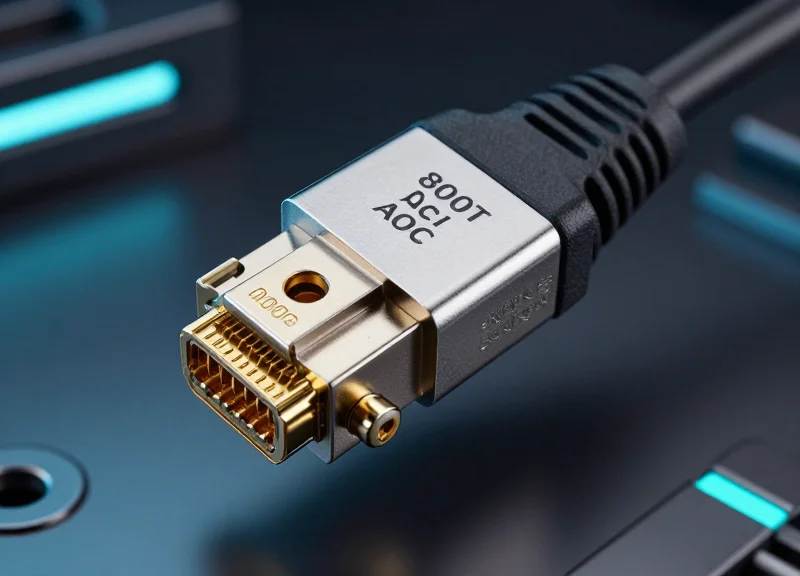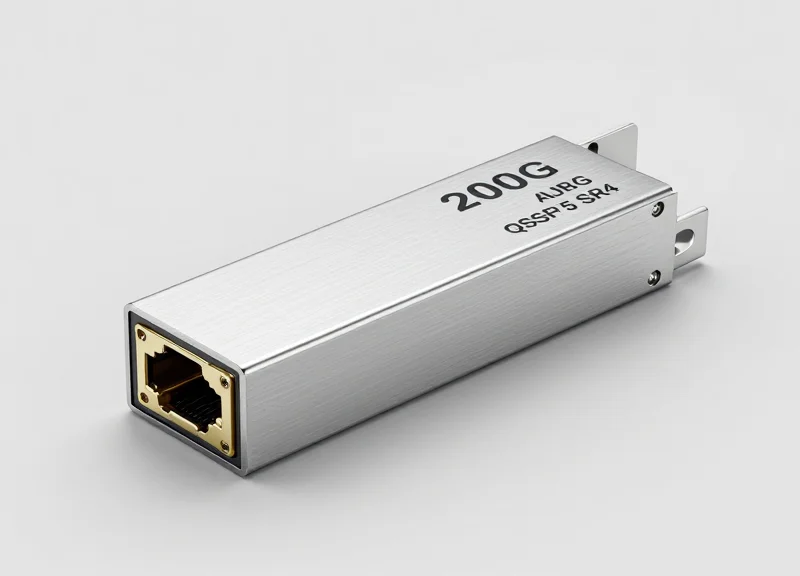
As modern data centers evolve to meet the demands of AI and high-performance computing, the transition to 200G connectivity has become a strategic necessity. Navigating the complexities of hardware procurement requires more than just a vendor; it requires a partner that offers technical excellence and cost-effective scalability. This guide explores why the 200G QSFP56 SR4 is the current industry standard and how Ubytelink provides the wholesale and customization options you need to stay ahead.
Understanding 200G QSFP56 SR4: The Core of Modern Interconnects
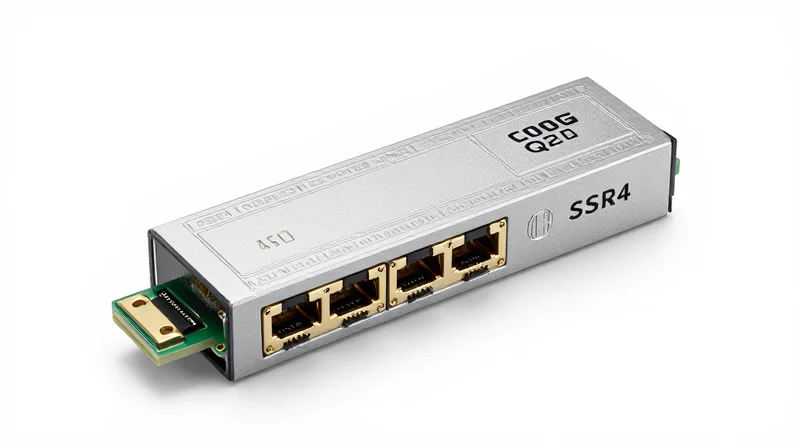
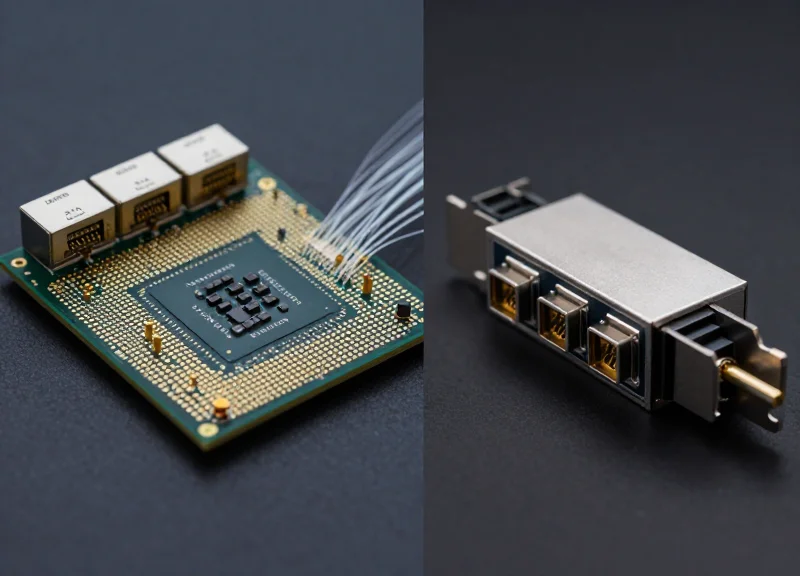
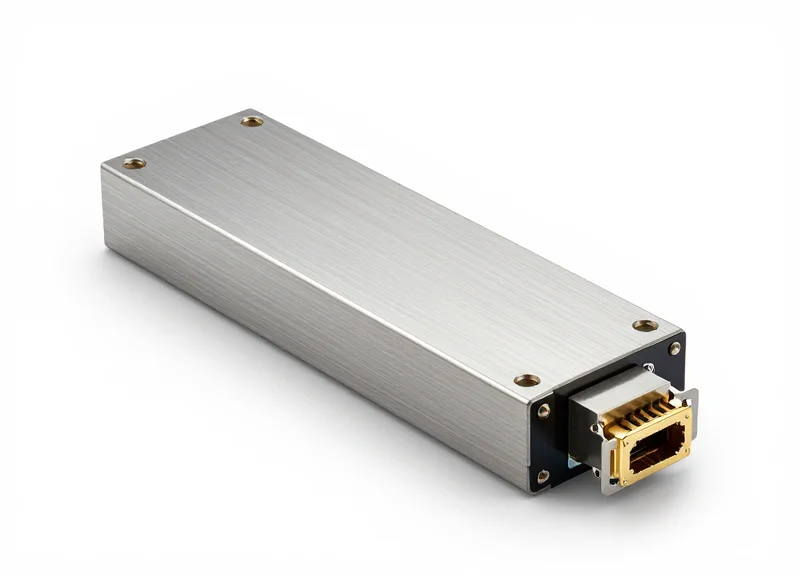
The 200G QSFP56 SR4 transceiver is the cornerstone of modern high-density interconnects, designed to meet the skyrocketing bandwidth demands of AI, cloud computing, and hyperscale data centers. By utilizing the Quad Small Form-factor Pluggable 56 (QSFP56) design, this module delivers an aggregate 200Gbps throughput using four parallel lanes of 50Gbps each. Unlike legacy 100G systems, the SR4 (Short Range 4-lane) configuration utilizes PAM4 modulation to double data density without increasing the physical footprint, making it the most efficient solution for short-reach applications over multi-mode fiber (MMF).
The Engineering Behind QSFP56 and PAM4 Signaling
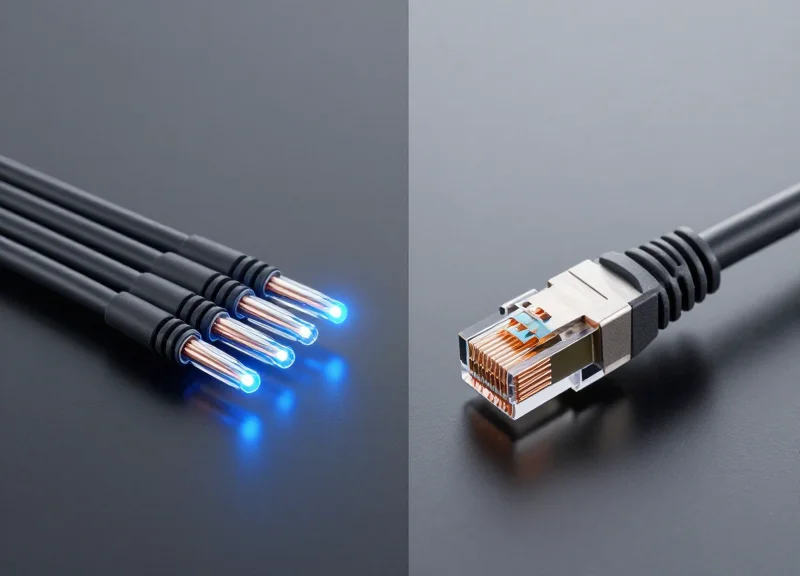
The transition from 100G to 200G was made possible by shifting from NRZ (Non-Return to Zero) to PAM4 (Pulse Amplitude Modulation 4-level). While NRZ uses two signal levels to represent a single bit, PAM4 uses four levels, allowing it to transmit two bits per symbol. This innovation allows 200G QSFP56 SR4 modules to operate at a baud rate that remains manageable for existing optical components while effectively doubling the bit rate. For wholesale buyers, this means significantly higher port density and lower cost-per-gigabit when compared to older standards.
Technical Specifications at a Glance
| Parameter | Details |
|---|---|
| Form Factor | QSFP56 |
| Wavelength | 850nm (VCSEL) |
| Modulation | 50G PAM4 |
| Max Distance | 70m (OM3) / 100m (OM4/OM5) |
| Interface | MPO-12/MTP-12 Connector |
| Power Consumption | < 5W |
Why SR4 is Essential for 2026 Deployments
- Optimized Short-Reach Efficiency
The SR4 standard is purpose-built for distances under 100 meters, which covers the majority of top-of-rack (ToR) and leaf-spine links in the data center. - Fiber Infrastructure Reuse
Because it uses the MPO-12 connector, 200G QSFP56 SR4 allows operators to upgrade to 200G speeds using existing OM3 or OM4 cabling plants. - Lower Power Envelope
Modern QSFP56 designs focus on thermal management, offering better performance-per-watt than early-generation 200G implementations.
Frequently Asked Questions
- Is QSFP56 SR4 backwards compatible with QSFP28?
While the physical form factor is the same size, QSFP28 uses NRZ modulation and QSFP56 uses PAM4. Compatibility depends on the switch's ability to support both modulation types on the specific port. - What fiber type is recommended for 200G SR4?
OM4 or OM5 multi-mode fiber is recommended to achieve the full 100-meter reach with optimal signal integrity. - Can I break out a 200G SR4 port?
Yes, using an MPO to 4x LC breakout cable, a 200G QSFP56 SR4 port can be split into 4x 50G links, provided the hardware supports breakout mode.
Technical Specifications and Performance Benchmarks

Technical Specifications and Performance Benchmarks
The 200G QSFP56 SR4 transceiver represents a significant leap in data density, utilizing four 50Gbps lanes modulated by 4-level Pulse Amplitude Modulation (PAM4) to achieve a composite 200Gbps throughput. These modules are specifically engineered for ultra-low latency and high-performance computing (HPC) environments where power efficiency and thermal management are critical for high-density wholesale deployments.
| Parameter | Specification |
|---|---|
| Wavelength | 850nm |
| Modulation | PAM4 |
| Connector Type | MPO-12 (PC) |
| Maximum Distance | 70m (OM3) / 100m (OM4/OM5) |
| Power Consumption | < 5W (Typical) |
| Operating Temperature | 0°C to 70°C (Commercial) |
| Digital Diagnostics | DDM/DOM Supported |
The Engineering of 850nm VCSEL and MPO-12 Connectivity
At the heart of the 200G QSFP56 SR4 is the 850nm Vertical-Cavity Surface-Emitting Laser (VCSEL) array. By leveraging four parallel channels, the SR4 architecture ensures reliable data transmission over multi-mode fiber (MMF). The use of the MPO-12 connector is pivotal, utilizing 8 of the 12 available fibers—4 for transmit and 4 for receive—to facilitate full-duplex 200G communication. This design is optimized for 'short-range' (SR) applications, typically within the same rack or adjacent rows in a data center.
Performance FAQ & Reliability Metrics
- Why is PAM4 necessary for 200G SR4 modules?
PAM4 doubles the bit rate per symbol compared to traditional NRZ modulation. This allows the module to reach 50Gbps per lane without requiring 200GHz of bandwidth, though it necessitates Forward Error Correction (FEC) to manage signal-to-noise ratios. - What is the typical power consumption for bulk deployments?
Standard 200G QSFP56 SR4 modules consume less than 5 watts. In large-scale wholesale deployments, this efficiency is vital for reducing total cost of ownership (TCO) by lowering cooling requirements and power delivery infrastructure costs. - How does FEC impact the Bit Error Rate (BER)?
The IEEE 802.3cd standard defines a Pre-FEC BER limit of 2.4E-4. With the integration of host-side FEC, the post-correction BER typically reaches 1E-12 or better, ensuring carrier-grade reliability.
When sourcing these modules wholesale, it is critical to verify compatibility with existing switch silicon (such as Broadcom Tomahawk series) to ensure that the PAM4 signal integrity is maintained across the backplane and the optical interface.
The Strategic Advantages of Wholesale Procurement in 2026
The Strategic Advantages of Wholesale Procurement in 2026
In the current fiscal climate, wholesale procurement of 200G QSFP56 SR4 modules serves as a critical hedge against inflation and supply chain instability. By moving away from transactional, small-batch purchasing, network architects can lock in lower unit costs and guarantee the availability of high-performance optics necessary for PAM4-based interconnects, ensuring that large-scale infrastructure upgrades are both financially viable and shielded from global market fluctuations.
Economies of Scale and Unit Price Compression
The primary driver for wholesale acquisition is the dramatic reduction in price per port. In 2026, as 200G technology matures, manufacturers offer tiered pricing models that reward volume commitments. These savings extend beyond the hardware itself, encompassing consolidated shipping fees and reduced administrative overhead associated with managing fewer, larger purchase orders.
| Procurement Metric | Retail / Spot Market | Wholesale / Bulk (2026) |
|---|---|---|
| Unit Pricing | Standard MSRP | Tiered Volume Discounts |
| Inventory Risk | High (Stock-out potential) | Low (Reserved allocation) |
| Lead Times | Unpredictable | Priority Scheduling |
| Technical Support | Standard Queue | Dedicated Engineering Contact |
Inventory Stability and Technical Homogeneity
Bulk purchasing allows organizations to maintain 'technical homogeneity' across their network fabric. When 200G QSFP56 SR4 modules are sourced in a single wholesale lot, they typically share identical firmware revisions and hardware batches. This uniformity is vital for mitigating erratic link behavior and simplifying the troubleshooting process in high-density environments where thousands of 850nm VCSEL channels must operate in perfect synchronization.
Wholesale Procurement FAQ
- What is the typical Minimum Order Quantity (MOQ) for wholesale 200G pricing?
While it varies by provider, wholesale advantages usually begin at 50 to 100 units, with the most aggressive price breaks occurring at the 500+ unit threshold. - Can wholesale orders be customized for multi-vendor environments?
Yes. Custom wholesale quotes often include multi-coding services, allowing a single bulk order to be partitioned and programmed for compatibility with Cisco, Arista, and Mellanox switches simultaneously. - How does bulk buying impact the project timeline?
Wholesale procurement significantly reduces project 'jitter' by securing the entire bill of materials upfront, preventing mid-deployment delays caused by sudden component shortages.
Market Pricing Trends for 200G Optical Modules

Current Market Pricing Landscape for 200G QSFP56 SR4
The 2026 fiscal year marks a significant inflection point for 200G QSFP56 SR4 optical modules, as market pricing shifts from early-adoption premiums to volume-driven stabilization. Currently, the price per gigabit for 200G solutions is converging with mature 100G technology, driven by a combination of optimized 7nm DSP (Digital Signal Processor) manufacturing and higher yields in 850nm VCSEL (Vertical-Cavity Surface-Emitting Laser) production. For wholesale buyers, this translates to a landscape where large-scale 200G deployments offer a superior return on investment (ROI) compared to maintaining legacy 100G systems, particularly when factoring in power efficiency and rack density.
Comparative Analysis: Bulk vs. Retail Pricing Tiers
| Procurement Volume | Estimated Unit Price Range (2026) | Price Variance (%) | Lead Time Expectations |
|---|---|---|---|
| Small Batch (1-10 units) | $350 - $450 | Baseline | Immediate / Stock |
| Mid-Tier Wholesale (50-200 units) | $280 - $340 | -20% to -25% | 1 - 2 Weeks |
| Enterprise Bulk (500+ units) | Custom Quote Required | -35% or more | 4 - 6 Weeks (Factory Direct) |
Key Drivers of Price Erosion in 2026
Several macroeconomic and technical factors are exerting downward pressure on 200G pricing. Firstly, the rapid scaling of 400G and 800G technologies has forced 200G into a more 'commodity' status, incentivizing manufacturers to lower margins to maintain high production volumes. Secondly, the diversification of the supply chain—with more third-party MSA (Multi-Source Agreement) compliant vendors entering the market—has broken the pricing monopoly previously held by Tier-1 OEM brands. This competition allows procurement officers to leverage multi-vendor strategies to secure more aggressive custom quotes.
Wholesale Procurement FAQ
- How do custom configurations affect wholesale pricing?
Requests for specialized EEPROM coding for specific switch compatibility or unique labeling can add a nominal fee (usually 2-5%) to small orders, but these costs are typically waived in wholesale contracts exceeding 100 units. - Is there a seasonal trend for 200G optical module pricing?
Historically, pricing is most competitive in Q1 and late Q3 as manufacturers clear inventory or push to meet annual sales targets. Securing quotes during these windows can often yield an additional 5% discount. - Does the choice of MPO cable affect the total cost of ownership?
Yes. While the module is the primary expense, bundling MPO-12 breakout cables with a wholesale module order frequently results in a 10-15% reduction in overall interconnect costs compared to purchasing components separately.
In conclusion, the strategy for 2026 involves moving beyond transactional purchasing. By utilizing custom quotes and wholesale volume commitments, organizations can lock in current low rates against potential second-half supply chain fluctuations, ensuring that 200G remains a cost-effective pillar of their network architecture.
Customizing Your Network: Ubytelink’s OEM and ODM Capabilities

Customizing Your Network: Ubytelink’s OEM and ODM Capabilities
Ubytelink’s OEM and ODM services transform standard 200G QSFP56 SR4 modules into tailor-made assets that align with proprietary network architectures and branding requirements. By leveraging in-house engineering and advanced manufacturing, we provide wholesale buyers with the flexibility to define technical specifications, from specialized EEPROM coding for multi-vendor compatibility to bespoke physical branding. This level of customization ensures that high-speed interconnects perform optimally within specific hardware ecosystems while maintaining brand consistency for service providers and system integrators.
Firmware Coding and Multi-Vendor Interoperability
The primary challenge in deploying 200G optics is ensuring compatibility across diverse switch platforms like Cisco, Arista, and Juniper. Ubytelink addresses this through precision firmware tuning. We can program the module’s EEPROM with specific vendor codes and DOM (Digital Optical Monitoring) parameters, ensuring seamless 'plug-and-play' functionality. This prevents system rejection and link-up errors, which are common when using generic modules in high-security or proprietary environments.
Hardware Tuning and Performance Optimization
Beyond software, our ODM capabilities extend to physical and electronic performance tuning. For clients with unique thermal constraints or specific signal integrity requirements, we can adjust laser driver settings or select specific VCSEL components to enhance reliability. This is particularly beneficial for wholesale clients building edge computing nodes or specialized high-frequency trading (HFT) platforms where every millisecond of latency and every watt of power consumption matters.
| Feature | OEM Capabilities | ODM Capabilities |
|---|---|---|
| Branding | Custom labeling, laser etching, and unique packaging. | Full white-label design and custom enclosures. |
| Firmware | Compatibility coding for 100+ switch brands. | Custom protocol support and unique DOM thresholds. |
| Hardware | Standard QSFP56 form factor with tested components. | Modified PCB layouts or specialized optical components. |
| Lead Time | Fast turnaround for volume orders (2-4 weeks). | Variable based on engineering requirements. |
Frequently Asked Questions: Custom 200G Solutions
- What is the Minimum Order Quantity (MOQ) for custom labeling?
For standard OEM labeling and custom serial numbering, the MOQ typically begins at 50 units, making it accessible for mid-sized infrastructure projects. - Can Ubytelink provide custom firmware for proprietary switch OS?
Yes, our engineering team can analyze specific system requirements and provide custom-coded samples for validation before proceeding with bulk production. - Are custom-branded modules still covered by the standard warranty?
Absolutely. All OEM and ODM 200G QSFP56 SR4 modules retain our full lifetime warranty and technical support, regardless of the branding or coding applied.
Compatibility and Interoperability Testing Protocols
Ensuring Seamless Interoperability in Multi-Vendor Environments
When sourcing 200G QSFP56 SR4 modules wholesale, the primary technical challenge is ensuring the transceivers are recognized and perform optimally across a heterogeneous network infrastructure. True interoperability is not merely a matter of physical connection; it involves complex signal tuning and specific firmware handshakes that allow a module to communicate with different switch operating systems without triggering 'unsupported transceiver' errors or link instabilities.
Key Performance Indicators for Compatibility Testing
| Test Category | Target Metric | Significance for 200G SR4 |
|---|---|---|
| Bit Error Rate (BER) | < 1x10^-12 (Post-FEC) | Ensures reliable data transmission across all four 50Gbps PAM4 lanes. |
| I2C Interface Stability | Read/Write Verification | Guarantees the host switch can accurately monitor DDM/DOM data. |
| Signal Integrity | Eye Diagram Mask Compliance | Confirms optical signal clarity and reduces jitter at high frequencies. |
| Thermal Stress Testing | 0°C to 70°C (Standard) | Prevents performance degradation in high-density data center racks. |
The Role of Custom EEPROM Coding and Firmware
Wholesale 200G modules often require customized EEPROM (Electrically Erasable Programmable Read-Only Memory) coding to bypass manufacturer lockdowns and proprietary software barriers. At Ubytelink, we provide specific vendor-coded firmware that mimics the original equipment manufacturer's ID, ensuring plug-and-play functionality for Cisco Nexus, Arista 7000 series, and NVIDIA/Mellanox Spectrum switches. This custom coding includes precise mapping of the Digital Diagnostic Monitoring (DDM) interface, allowing network administrators to monitor real-time temperature, voltage, and optical power through their native management consoles without compatibility friction.
FAQ: Interoperability and Reliability
- What happens if a module is not coded for my specific switch brand?
The switch may either disable the port entirely, display a warning message, or limit the performance of the link. Proper EEPROM coding eliminates these risks and ensures the OS treats the module as an 'authorized' transceiver. - Are generic 200G QSFP56 SR4 modules safe for high-performance computing (HPC)?
While generic modules use standard hardware components, they may lack the specific firmware tuning needed for low-latency HPC environments. We recommend vendor-specific coding for clusters using InfiniBand or specialized Ethernet protocols. - Can firmware be updated after a wholesale purchase?
Yes, wholesale buyers can work with providers like Ubytelink to re-code or update firmware using field-programming tools if the hardware needs to be repurposed for a different switch vendor in the future.
Quality Assurance: Why EEAT-Compliant Sourcing Matters
The Critical Role of Quality Assurance in 200G Networking
In the high-stakes environment of 200G networking, quality assurance is the difference between a resilient infrastructure and recurring downtime. Sourcing QSFP56 SR4 modules at wholesale prices requires a vendor who prioritizes EEAT-compliant (Experience, Expertise, Authoritativeness, and Trustworthiness) manufacturing, where every unit undergoes rigorous validation to handle the complex PAM4 signaling required for 50G-per-lane throughput. Without these checks, the inherent sensitivity of high-frequency optics can lead to signal degradation that standard network monitors might miss until a full system failure occurs.
Rigorous Testing Phases for Premium Modules
A premium 200G module is defined by its ability to maintain performance under stress. Thermal cycling tests the mechanical and optical integrity of the TOSA/ROSA components by fluctuating temperatures across extreme ranges, ensuring the laser remains on-frequency even as the data center heat fluctuates. Furthermore, Signal Integrity (SI) testing utilizes eye-pattern analysis to verify that the PAM4 signals—which utilize four voltage levels—are clearly distinguishable, minimizing the reliance on Forward Error Correction (FEC) and reducing overall latency.
| Test Type | Description | Standard Requirement |
|---|---|---|
| Thermal Cycling | Accelerated aging through temperature fluctuations (-40°C to +85°C). | Stable performance with no physical or optical degradation. |
| Bit Error Rate (BER) | Measuring the ratio of errored bits to total transmitted bits. | Pre-FEC BER < 2.4E-4 per IEEE 802.3cd. |
| Signal Integrity | Eye diagram analysis using high-speed oscilloscopes. | Clear PAM4 eye opening with minimal jitter and noise. |
FAQ: Quality Control in Bulk Sourcing
- What is BER testing?
It measures the accuracy of data transmission; premium modules ensure a low pre-FEC error rate to prevent the system from dropping links. - Why is thermal cycling critical?
High-density 200G environments generate significant heat; cycling ensures the internal laser and PCB components won't fail during seasonal or load-based temperature shifts. - How does sourcing impact TCO?
EEAT-compliant sourcing reduces Total Cost of Ownership by minimizing RMAs and preventing expensive downtime caused by subpar generic optics.
Future-Proofing Your Data Center with 200G Technology

Future-Proofing Your Data Center with 200G Technology
Adopting 200G QSFP56 SR4 technology represents a critical strategic shift for data centers aiming to balance immediate bandwidth demands with long-term infrastructure investment. By utilizing PAM4 (Pulse Amplitude Modulation 4-level), 200G modules double the data rate of legacy 100G solutions within the same physical footprint. This allows operators to leverage existing MTP/MPO fiber cabling while preparing the network fabric for the eventual transition to 400G and 800G, ensuring that the hardware deployed today remains relevant as traffic volumes escalate. As wholesale prices for 200G modules continue to stabilize, they offer the most pragmatic path for scaling without the immediate complexity of higher-wattage 400G systems.
The Evolutionary Link: From 100G to 400G
The jump from 100G to 200G is more than just a speed increase; it is an architectural upgrade. While 100G QSFP28 modules largely rely on NRZ modulation, 200G QSFP56 introduces PAM4, which is the foundational signaling method for 400G and 800G Ethernet. By deploying 200G today, organizations can normalize their signal integrity testing and thermal management protocols for PAM4 environments, significantly reducing the learning curve for future higher-density upgrades.
| Parameter | 100G QSFP28 SR4 | 200G QSFP56 SR4 |
|---|---|---|
| Modulation | NRZ | PAM4 |
| Data Rate per Lane | 25 Gbps | 50 Gbps |
| Electrical Interface | 4x 25G NRZ | 4x 50G PAM4 |
| Cabling Support | MPO-12 (OM3/OM4) | MPO-12 (OM3/OM4) |
| Forward Error Correction | Optional/KR4 | Mandatory (RS-FEC) |
Longevity and Scalability FAQs
- Will 200G QSFP56 remain relevant for the next 5 years?
Yes. 200G is established as the primary mid-range standard for enterprise data centers and edge computing where 400G power consumption and costs are still prohibitive. - How does 200G support 800G roadmaps?
The 50G-per-lane architecture defined in 200G QSFP56 is the precursor to the 100G-per-lane systems used in 800G. Mastering 50G PAM4 optics ensures your infrastructure is ready for the next iteration of ASICs. - Can I use existing fiber plants for 200G?
Absolutely. 200G QSFP56 SR4 uses the same MPO-12 connectors as 100G SR4, meaning no costly fiber rip-and-replace is required to double your bandwidth.
For wholesale buyers, securing 200G QSFP56 SR4 inventory in 2026 is a hedge against the rising costs of ultra-high-speed optics. It provides the necessary performance overhead to handle AI and machine learning workloads while maintaining a power-to-bit ratio that is significantly more efficient than legacy 100G hardware. By standardizing on this intermediate step, network architects ensure a smooth, multi-generational transition toward a fully 800G-capable infrastructure.
How to Secure the Best Quote for Bulk 200G QSFP56 SR4
How to Secure the Best Quote for Bulk 200G QSFP56 SR4
Securing the most competitive wholesale price for 200G QSFP56 SR4 modules requires a combination of technical transparency and strategic timing. To receive an aggressive quote, buyers must move beyond generic inquiries and provide suppliers with granular project details that reduce vendor risk and allow for optimized production scheduling. By clearly defining compatibility requirements, testing protocols, and delivery cadences, procurement teams can leverage their scale to unlock significant cost savings compared to off-the-shelf pricing.
Critical Information for Your RFQ
When submitting a Request for Quote (RFQ), the more information you provide, the less 'buffer' a supplier needs to build into their pricing. Use the following table to ensure your inquiry contains the necessary data points to trigger a top-tier discount.
| Data Point | Significance | Impact on Quote |
|---|---|---|
| Total Order Volume | Determines manufacturing scale and raw material procurement. | High: Triggers volume-based discount tiers. |
| Host Compatibility | Specifies EEPROM coding for Cisco, Arista, Mellanox, etc. | Critical: Avoids costly post-purchase RMAs and support issues. |
| Delivery Schedule | Distinguishes between a single drop-ship or staggered roll-out. | Medium: Affects inventory holding costs and logistics pricing. |
| Testing Documentation | Defines the level of BER and interoperability reporting required. | Medium: High-spec testing adds value but requires labor hours. |
Strategic Procurement Steps
- Consolidate Your Needs
Combine requirements for 200G SR4 modules with other optics like AOCs or DACs to increase the total contract value and strengthen your negotiating position. - Inquire About Tiered Pricing
Always ask for pricing at volume breaks (e.g., 50, 100, 500, and 1000 units) to identify the 'sweet spot' where the price per unit drops significantly. - Request a Technical Evaluation Sample
For large-scale deployments, request a sample for in-lab validation. Suppliers who are confident in their compatibility are more likely to offer better terms on the final bulk order. - Verify Total Landed Cost
Ensure the quote specifies Incoterms (like DDP or EXW). A lower unit price can be offset by high shipping and duty fees if not negotiated upfront.
FAQ: Wholesale 200G QSFP56 Procurement
- Do lead times significantly affect the price?
Yes. Urgent air-freight orders generally carry a premium. Planning 4-6 weeks in advance allows for sea or ground logistics and more favorable production windows. - Can I get a custom quote for specific coding?
Absolutely. Wholesale suppliers specialize in multi-vendor coding, allowing the same 200G SR4 hardware to work across different switch brands within the same data center. - What is the typical warranty for bulk 200G optics?
Premium wholesale vendors typically offer a 3-year to 5-year replacement warranty, which should be clearly stated in your custom quote.
Scaling your network capacity shouldn't be a bottleneck for your business growth. By choosing Ubytelink for your 200G QSFP56 SR4 wholesale needs, you gain access to industry-leading quality, flexible OEM/ODM options, and the most competitive pricing in the 2026 market. Ready to optimize your infrastructure? Contact our specialist team today for a custom quote and take the first step toward a faster, more reliable network.