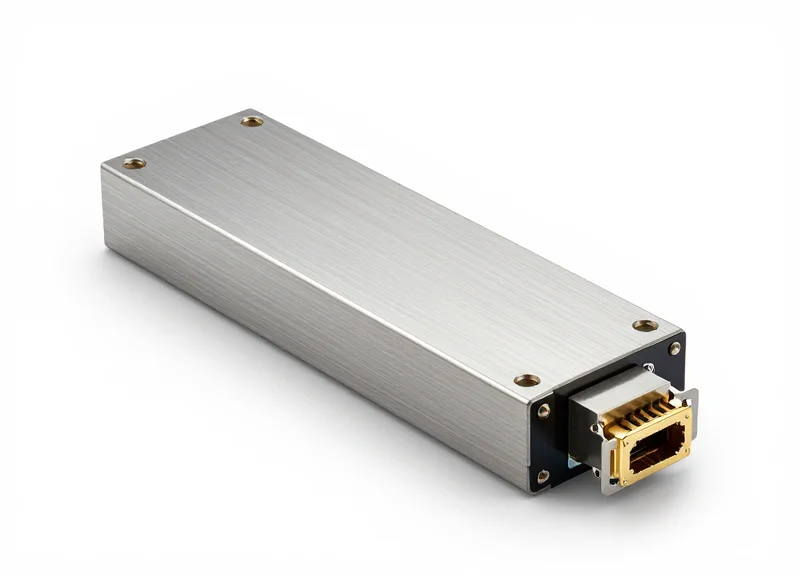
As modern data centers and service providers face unprecedented demand for bandwidth, the transition to 100G and 400G via Single Lambda technology has become a strategic necessity. This guide provides a comprehensive overview of why Single Lambda is the superior choice for network scaling and how bulk procurement from Ubytelink can significantly reduce your total cost of ownership while ensuring enterprise-grade reliability.
Understanding Single Lambda Technology: The Architecture of Efficiency

At its core, Single Lambda technology represents a fundamental shift in optical physics, utilizing advanced PAM4 (4-Level Pulse Amplitude Modulation) to transmit 100Gbps or 400Gbps over a single wavelength rather than multiplexing multiple lower-speed lanes. This architecture eliminates the need for complex optical multiplexers and demultiplexers within the transceiver, leading to higher reliability, lower latency, and drastically reduced power consumption in hyperscale data center environments.
Comparing Traditional Multi-Lane vs. Single Lambda Architectures
| Feature | Legacy Multi-Lane (4x25G) | Single Lambda (1x100G) |
|---|---|---|
| Optical Components | 4 Lasers / 4 Receivers | 1 Laser / 1 Receiver |
| Modulation Type | NRZ (Non-Return to Zero) | PAM4 |
| Power Efficiency | Standard Draw | 30% Reduction per Gigabit |
| Scalability Potential | Complex 400G (16 lanes) | Simplified 400G (4 lanes) |
Operational Advantages for Enterprise Bulk Deployment
For wholesale purchasers, the shift to Single Lambda is an economic necessity for 2026 infrastructure. By streamlining the internal optical engine, manufacturers can achieve higher production yields and lower material costs per unit. When deployed at scale, the reduction in power draw translates to significant annual savings on cooling and electricity, making Single Lambda the preferred architecture for sustainable high-density networking.
- Why is Single Lambda more cost-effective for 400G?
By using four 100G lanes instead of sixteen 25G lanes, 400G Single Lambda modules reduce the bill of materials and improve thermal management. - How does it improve network reliability?
Fewer active components, such as lasers and optical splitters, mean fewer potential points of failure, resulting in a higher Mean Time Between Failures (MTBF). - Is Single Lambda compatible with existing fiber?
Yes, Single Lambda 100G/400G solutions are designed to work over standard Single-Mode Fiber (SMF), maximizing existing cable plant investments.
Why 100G and 400G Single Lambda is the New Industry Standard

The industry-wide move toward single lambda 100G and 400G transceivers is primarily driven by the need for simplified network architectures that can support the massive data throughput requirements of modern AI and cloud computing. By utilizing advanced Digital Signal Processing (DSP) and PAM4 modulation, these modules achieve 100Gbps or 400Gbps on a single optical wavelength, effectively replacing the multi-lane systems that previously complicated data center fiber management and power budgets.
The Strategic Shift to DR1, FR1, and DR4 Standards
The adoption of the IEEE 802.3bs and 802.3cd standards has formalized the path for single-wavelength transmission. DR1 (Data Center Reach, 500m) and FR1 (Fiber Reach, 2km) are the foundational blocks for 100G, while DR4 leverages four parallel single-lambda streams to achieve 400G. This convergence on a single-lane electrical-to-optical mapping eliminates the need for expensive optical multiplexing and de-multiplexing components, reducing the overall Bill of Materials (BOM) for equipment manufacturers and lowering the barrier for bulk wholesale acquisition.
| Feature | Legacy Multi-Lane (SR4/LR4) | Single Lambda (DR1/FR1) |
|---|---|---|
| Wavelengths | 4 x 25G | 1 x 100G |
| Power Consumption | Higher (Multiple Lasers) | Lower (Single Laser) |
| Component Count | Complex (Mux/Demux required) | Simplified Architecture |
| Latency | Higher (Skew Compensation) | Ultra-Low |
| Cost at Scale | Increasing | Declining (Volume Optimized) |
Efficiency and Power Consumption: The Hyperscale Driver
For hyperscalers like Google, Meta, and AWS, power efficiency is a critical metric for operational scalability. Single lambda modules consume significantly less power per gigabit than their predecessors. By reducing the number of lasers and simplifying the optical assembly, these modules minimize thermal dissipation, allowing for higher port density on switches and routers without exceeding the cooling capacities of the rack. This makes them the ideal choice for massive 2026 upgrades where energy costs are a primary concern.
- How does single lambda technology impact wholesale procurement?
Wholesale buyers benefit from a more streamlined supply chain and higher yield rates during manufacturing, which leads to lower unit costs when purchasing in bulk for 2026 deployments. - Are DR1 and FR1 modules backward compatible?
While single lambda modules require PAM4 support, they are designed to integrate seamlessly into modern leaf-spine architectures that utilize 100G/400G switching fabrics. - What is the primary benefit of DR4 for 400G networks?
DR4 allows for easy breakout from a 400G port to four 100G DR1 ports, providing maximum flexibility for data center interconnects and top-of-rack connectivity.
The Financial Advantage: Wholesale Pricing vs. Retail Sourcing

The financial advantage of wholesale sourcing for 100G and 400G Single Lambda modules lies in the drastic reduction of the cost-per-gigabit through direct-to-manufacturer or primary distributor relationships. By bypassing the retail layer, data center operators can capture up to 40% in capital expenditure savings, effectively decoupling bandwidth growth from linear budget increases. Wholesale procurement allows for tiered pricing structures where the unit cost decreases as the volume of transceivers increases, providing a predictable roadmap for massive network expansions in 2026.
Economic Comparison: Retail vs. Wholesale Procurement
| Feature | Retail Sourcing | Wholesale/Custom Quotes |
|---|---|---|
| Unit Pricing | Standard List Price (Fixed) | Tiered/Volume-Based (Negotiable) |
| Typical Markup | 30% - 70% above cost | 5% - 15% above production |
| Supply Priority | General Availability | Allocated/Reserved Inventory |
| Compatibility Services | Standard/Off-the-shelf | Custom Firmware Coding |
| Payment Terms | Immediate/Standard Credit | Flexible/Project-Based Milestones |
Eliminating the Middleman Tax in 400G Infrastructure
Traditional hardware procurement often involves multiple layers of resellers, each adding overhead for logistics, marketing, and profit. In the context of Single Lambda 400G technology, where the optics represent a significant portion of the total port cost, these markups become a substantial 'middleman tax.' Wholesale sourcing provides a direct line to the supply chain, ensuring that the premium paid for high-performance DR4 or FR4 modules is reinvested into hardware quality rather than distribution overhead. This is particularly critical for hyperscale deployments where even a $50 difference per module can translate into millions of dollars in savings across a full fabric upgrade.
Bulk Pricing Incentives for 2026 Projects
For 2026, the market for 100G and 400G Single Lambda is characterized by high demand but stabilizing yields. Wholesale partners offer custom quotes that include price protection clauses and scheduled releases. This allows infrastructure managers to lock in current rates against potential semiconductor shortages or inflationary pressures, ensuring that long-term projects remain within budget while maintaining a steady flow of necessary components.
- What is the minimum volume for a custom wholesale quote?
While it varies by provider, custom wholesale pricing usually triggers at 50-100 units for 400G modules and 200+ units for 100G Single Lambda optics. - Does wholesale sourcing impact product warranty or support?
No. In fact, wholesale contracts often include direct access to senior engineering support and prioritized RMA (Return Merchandise Authorization) processes compared to retail channels. - How does bulk purchasing affect transceiver testing and validation?
Wholesale orders typically allow for batch-consistent manufacturing, meaning all modules in a shipment share the same hardware revision and firmware, simplifying the validation process in large-scale environments.
Custom OEM and ODM Solutions: Tailoring Optics to Your Needs
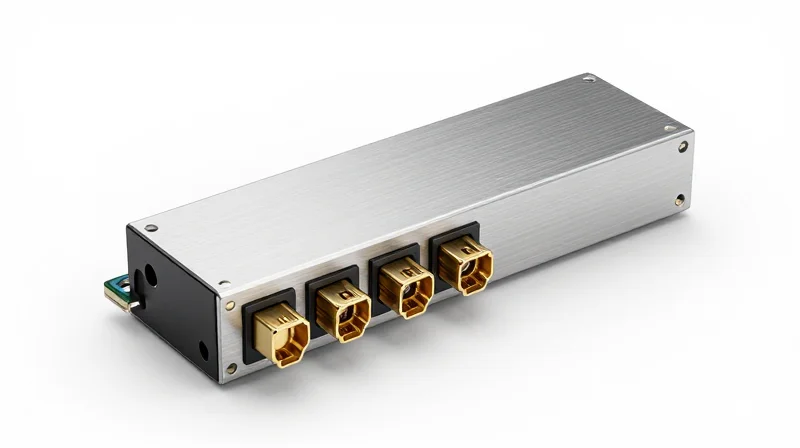
Custom OEM and ODM solutions for Single Lambda 100G and 400G optics move beyond off-the-shelf limitations by providing tailored firmware, specialized physical designs, and hardware configurations that meet unique network requirements. For organizations looking to buy Single Lambda 100G/400G wholesale, these services eliminate vendor lock-in and allow for the integration of high-performance optics into diverse, multi-vendor environments with 100% compatibility.
Breaking Vendor Lock-in with Custom Firmware Coding
One of the primary advantages of an ODM (Original Design Manufacturer) approach is the ability to write custom firmware for 100G-DR1/FR1 and 400G-DR4 modules. Most major switch manufacturers utilize proprietary 'fingerprints' in their software to restrict third-party optics. Ubytelink’s custom coding services allow wholesale buyers to specify the host equipment—whether it be Cisco, Arista, Juniper, or NVIDIA/Mellanox—ensuring that the Single Lambda modules are recognized instantly without error messages or port-disabling issues.
OEM Branding and Physical Customization
For system integrators and large-scale cloud providers, branding is essential for inventory management and market positioning. OEM services provide private labeling options, including custom shell laser engraving, specialized pull-tab colors for easy identification in high-density racks (e.g., color-coding by speed or reach), and bespoke packaging. This ensures that the hardware aligns with the client's corporate identity and operational standards.
| Feature | Standard Wholesale Optics | Custom OEM/ODM Solutions |
|---|---|---|
| Compatibility | Generic / Limited | Multi-vendor (Cisco, Arista, etc.) |
| Firmware | Fixed Standard | Customizable EEPROM / Coding |
| Labeling | Manufacturer Brand | Private Label / White Label |
| Hardware | Off-the-shelf | Custom Heat Sinks / Pull-tabs |
| Lead Times | Immediate | Project-based |
Common Questions Regarding Custom Solutions
- Can I request custom firmware for legacy equipment?
Yes. ODM services specialize in creating firmware bridges that allow newer Single Lambda 100G/400G modules to communicate effectively with older legacy ports that may have specific timing or power requirements. - Is there a minimum order quantity (MOQ) for custom labeling?
While standard wholesale orders have lower thresholds, custom OEM labeling usually requires a specific volume to offset the tooling and setup costs. Contact our sales team for custom quotes. - How does custom coding affect the warranty?
Professional ODM solutions include a full warranty that covers the custom coding. If a switch OS update breaks compatibility, revised firmware can typically be provided to maintain uptime.
By choosing to buy Single Lambda 100G/400G wholesale with a focus on custom OEM/ODM solutions, enterprises gain more than just a lower price point; they acquire a flexible hardware strategy that adapts to the evolving demands of 2026 and beyond.
Compatibility and Quality Assurance in Bulk Procurement

Ensuring 100% Interoperability Across Multi-Vendor Environments
When scaling infrastructure with Single Lambda 100G/400G Wholesale optics, the primary technical hurdle is ensuring that third-party modules behave identically to original equipment manufacturer (OEM) parts. Because these high-speed transceivers utilize complex Pulse Amplitude Modulation (PAM4) and sophisticated Digital Signal Processors (DSPs), the firmware must be meticulously coded to match the specific expectations of host switches from leaders like Cisco, Arista, and Juniper. Compatibility is not merely about physical fit; it is about the digital handshake that occurs between the module's EEPROM and the switch's operating system, ensuring that DOM (Digital Optical Monitoring) data is accurate and that the link is established without error flags.
Rigorous Quality Control and EEAT-Compliant Testing
To maintain the highest standards of reliability, every batch of 100G/400G optics undergoes a multi-phase validation process. This includes Bit Error Rate (BER) testing to ensure signal integrity across the fiber span and eye diagram analysis to verify the optical output power and extinction ratio. Furthermore, temperature cycling tests are conducted to simulate the thermal stress of high-density data center environments, ensuring that the components maintain peak performance even under maximum load.
| Test Parameter | Quality Standard | Significance |
|---|---|---|
| Bit Error Rate (BER) | < 1E-12 (Pre-FEC) / < 1E-15 (Post-FEC) | Ensures data integrity and minimizes packet loss. |
| Eye Diagram Analysis | IEEE 802.3bs/802.3cd Compliant | Verifies optical signal clarity and timing. |
| Temperature Stability | 0°C to 70°C (Commercial Grade) | Guarantees performance in varied data center climates. |
| Firmware Validation | Vendor-Specific Coding (Cisco, Arista, etc.) | Ensures 100% plug-and-play interoperability. |
Bulk Procurement Quality FAQ
- How is 100% compatibility guaranteed for different switch vendors?
Each transceiver is programmed with vendor-specific firmware and tested on the actual target hardware (e.g., Nexus, Catalyst, or Arista 7000 series) to verify that the OS recognizes the module correctly. - What is the failure rate for wholesale 100G/400G optics?
Through rigorous burn-in and automated testing protocols, the industry-leading failure rate for premium wholesale optics is typically maintained below 0.1%. - Can firmware be updated after the bulk purchase?
Yes, most modern single lambda optics allow for field-programmable firmware updates via specialized coding boxes to adapt to future OS updates from switch vendors.
By prioritizing these quality assurance measures, organizations can confidently execute bulk pricing strategies for 2026 without compromising on the stability or longevity of their core network infrastructure.
Supply Chain Resilience: How Ubytelink Shortens Lead Times
Shortening Lead Times: The Ubytelink Logistics Advantage
In the high-stakes environment of data center expansion and 5G rollouts, lead time is often the deciding factor between a successful launch and a costly delay. Ubytelink addresses this by bypassing traditional distribution bottlenecks through a vertically integrated supply chain. By maintaining direct control over manufacturing schedules and component sourcing, we can fulfill bulk orders for Single Lambda 100G and 400G optics in a fraction of the time required by standard vendors, often reducing wait times from months to mere days for in-stock inventory.
Strategic Inventory and Buffer Stocking
The volatility of the semiconductor and optical component market in 2026 requires a proactive approach to inventory. Ubytelink utilizes predictive analytics to maintain significant buffer stocks of high-demand modules, specifically 100G-DR1/FR1 and 400G-DR4/FR4. This ensures that even when global demand spikes or raw material shortages occur, our wholesale partners receive their allocations without disruption.
| Procurement Factor | Traditional Distributor | Ubytelink Wholesale |
|---|---|---|
| Typical Lead Time | 8 to 16 Weeks | 3 to 7 Business Days (Stocked) |
| Component Sourcing | Third-party dependent | Direct Tier-1 Partnerships |
| Logistics Model | Standard Multi-hub | Expedited Global Direct |
| Order Prioritization | First-come, first-served | Reserved Capacity for Bulk Contracts |
Mitigating Global Logistics Risks
Ubytelink’s supply chain resilience is further bolstered by our diversified logistics network. We operate multiple shipping hubs strategically located near major international transit points. This geographic diversity allows us to reroute shipments in response to regional geopolitical issues or port congestion, ensuring that 100G and 400G wholesale shipments reach their destination on schedule, regardless of external market pressures.
Supply Chain & Logistics FAQ
- How does Ubytelink ensure availability during peak demand?
We utilize 'Forward Stocking Locations' (FSLs) and maintain long-term supply agreements with laser diode manufacturers to guarantee a consistent flow of materials for our Single Lambda production lines. - Can wholesale orders be split-shipped to multiple global sites?
Yes. We offer coordinated multi-site delivery services, allowing enterprises to purchase in bulk to secure pricing while distributing the hardware across various data centers according to their deployment timeline. - What happens if a project timeline shifts suddenly?
Our flexible warehouse management allows for deferred shipping or expedited processing to align with real-world project adjustments, helping customers avoid on-site storage costs or installation delays.
The Roadmap to 800G: Future-Proofing with a Strategic Partner

Building a Technical Bridge to 800G and Beyond
Future-proofing a network requires more than just acquiring high-capacity hardware; it involves selecting a technology path that aligns with long-term global standards. The shift to Single Lambda 100G was a pivotal moment in optical engineering, as it established the 100G-per-wavelength (PAM4) modulation that serves as the fundamental building block for both current 400G (4x100G) and upcoming 800G (8x100G) architectures. By sourcing wholesale 100G/400G optics from a strategic partner like Ubytelink, organizations ensure their current infrastructure is compatible with the 112G SerDes technology required for the next generation of high-density networking, avoiding costly legacy hardware lock-in.
| Technology Generation | Per-Lane Rate | Total Throughput | Primary Form Factors |
|---|---|---|---|
| Current Standard | 100G (PAM4) | 100G / 400G | QSFP28 / QSFP-DD |
| Emerging Standard | 100G (PAM4) | 800G | OSFP / QSFP-DD800 |
| Next-Gen Frontier | 200G (PAM4) | 1.6T | OSFP / OSFP-XD |
The Strategic Advantages of Wholesale Continuity
Scaling to 800G introduces significant power consumption and thermal management challenges that cannot be solved through ad-hoc purchasing. A strategic wholesale partner mitigates these risks by providing early access to engineering samples and ensuring that the electrical-to-optical components used in bulk 100G/400G orders are manufactured using modern, low-power DSPs. This technical continuity minimizes the 'forklift upgrade' burden when moving from current single lambda solutions to high-density multi-lane 800G configurations.
- Early Access to R&D
Partners receive beta access to next-generation transceivers for lab testing before mass-market release, ensuring Day-1 readiness. - Supply Chain Prediction
Wholesale agreements allow for 'buffer' stock of current 400G modules while transitioning to 800G, preventing project delays during market shifts. - Custom Firmware Roadmap
Strategic partners provide ongoing firmware updates to ensure current 100G/400G optics remain compatible with the OS versions of 800G-capable switches from Arista, Cisco, and Juniper.
Roadmap FAQ: Transitioning to 800G
- Will my current single lambda 100G optics work in 800G systems?
Most 800G switches are backward compatible with 100G/400G modules using breakout cables or port-channel configurations, provided the host SerDes can down-rate to 100G PAM4. - Why invest in 400G wholesale now instead of waiting for 800G?
400G single lambda is currently at its optimal price-per-bit point and provides the most mature ecosystem for high-density 12.8T and 25.6T switching silicon. - How does Ubytelink support the 800G transition?
Ubytelink provides technical validation and bulk procurement pipelines that ensure your current transceiver investments are technically aligned with the physical layer requirements of tomorrow's 800G and 1.6T standards.
How to Request a Professional Wholesale Quote for 2026
To request a professional wholesale quote for 100G/400G optics in 2026, you must provide a detailed breakdown of your technical environment, specific form factors, projected volume, and compatibility requirements to allow vendors like Ubytelink to calculate tiered pricing and lead times accurately.
The Essential Quote Checklist for High-Bandwidth Optics
A vague request often leads to conservative pricing and slower response times. To streamline the process and access the most aggressive wholesale rates, ensure your Request for Quote (RFQ) includes the following data points.
| Parameter | Required Detail | Why It Matters |
|---|---|---|
| Form Factor | QSFP28, QSFP-DD, OSFP | Determines hardware compatibility and physical port density. |
| Optical Reach | SR, DR1, FR1, LR1 (500m to 10km) | Impacts the internal laser technology and component cost. |
| Volume Forecast | Annual or per-project unit count | Allows the vendor to apply bulk manufacturing discounts (MOQ). |
| Host Compatibility | Cisco, Arista, Juniper, NVIDIA/Mellanox | Ensures the firmware is correctly coded to avoid port lockouts. |
| Delivery Timeline | Immediate stock vs. scheduled rollout | Affects logistics costs and inventory reservation priorities. |
Understanding Tiered Pricing and Commitments
Wholesale pricing is rarely static. Most 2026 contracts are structured around tiered volume. For instance, a quote for 500 units of 400G DR4 will yield a significantly lower per-unit cost than an order for 50 units. If your project is multi-phased, share your total 12-month projected volume; providers can often offer 'Blanket Purchase Agreements' that lock in the high-volume rate even if you take delivery in smaller monthly batches.
Step-by-Step Guide to the RFQ Process
- Step 1: Technical Specification Finalization
Confirm whether your network requires Single Lambda (PAM4) optics or traditional multi-lane solutions to ensure interoperability with existing fiber plants. - Step 2: Submission of RFQ Documentation
Submit your requirements through a formal channel. Include specific SKU requirements or equivalent performance standards (e.g., MSA compliance). - Step 3: Sample Request for Interoperability Testing
For large-scale rollouts, request a test sample to validate compatibility in your specific lab environment before finalizing the bulk purchase. - Step 4: Commercial Negotiation and SLA Review
Review the quoted lead times and warranty terms. Wholesale quotes should clearly define the Return Merchandise Authorization (RMA) process.
Wholesale Quoting FAQs
- Can I get a discount for ordering a mix of 100G and 400G?
Yes. Most wholesale providers look at the 'Total Contract Value' (TCV). Bundling different optics types can help you reach the spending thresholds required for the next pricing tier. - How long are wholesale quotes valid in 2026?
Due to fluctuations in the semiconductor supply chain, most quotes are valid for 15 to 30 days. It is advisable to move quickly once a favorable rate is secured. - Do you offer custom labeling for wholesale orders?
Professional providers like Ubytelink offer OEM/white-labeling services for bulk orders, allowing your optics to match your company's branding and internal inventory tracking.
Navigating the complexities of high-speed optical procurement requires a partner with deep technical expertise and a robust global supply chain. By choosing Ubytelink for your Single Lambda 100G and 400G needs, you gain access to factory-direct pricing, custom engineering, and world-class support. Contact our sales team today to request a custom quote and begin scaling your network infrastructure for the future.