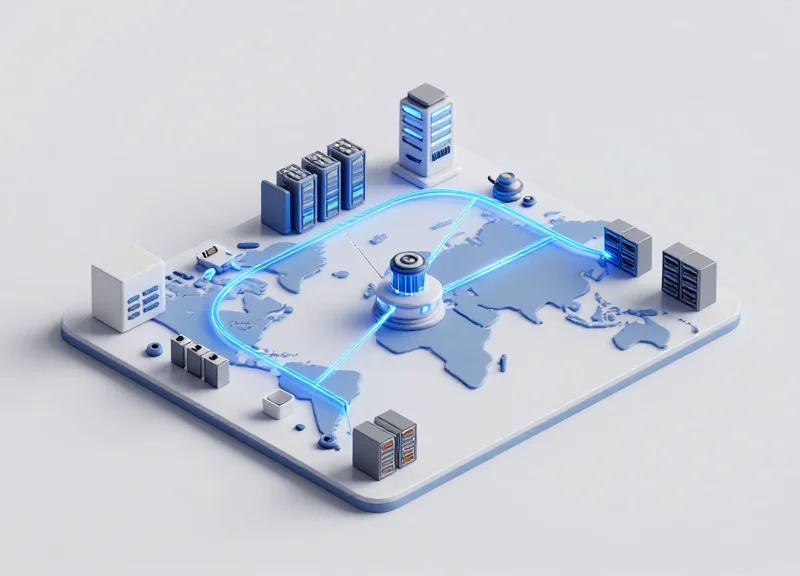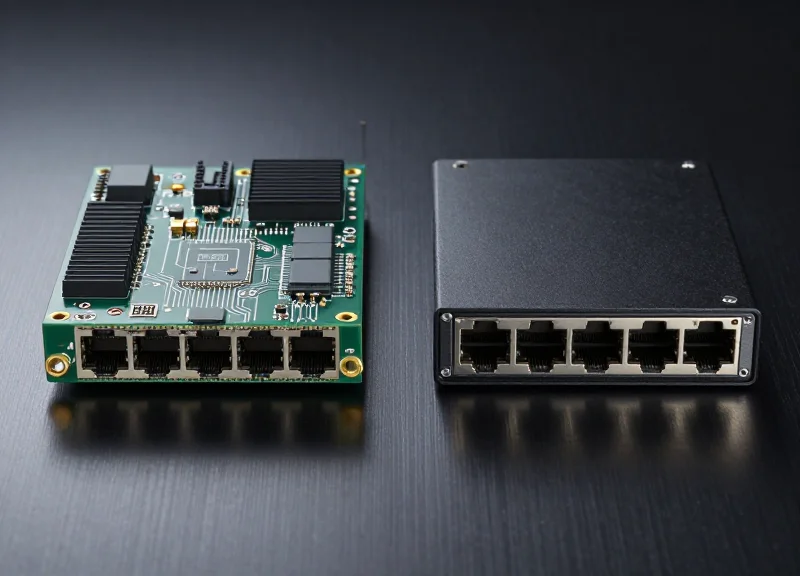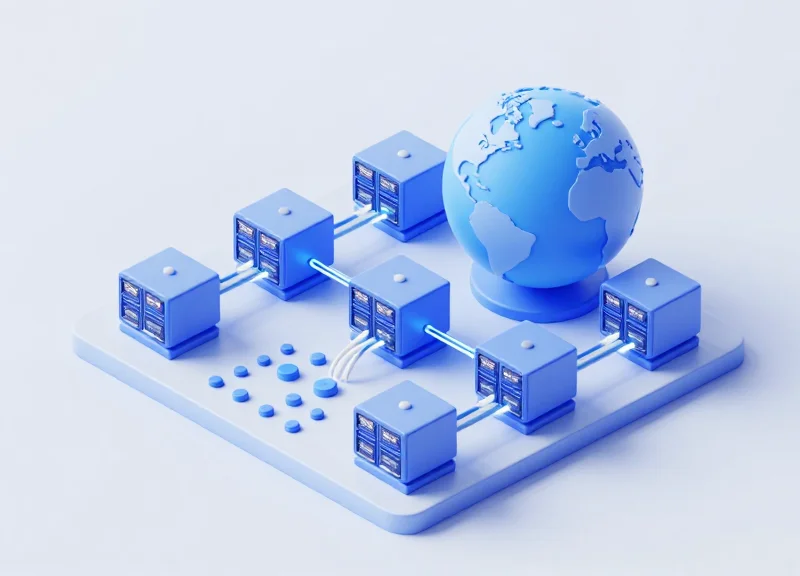
In the high-stakes world of healthcare, network failure isn't just a technical glitch—it's a patient safety risk. As hospitals transition to real-time digital twins and remote robotic surgery, the gap between 'standard' enterprise networking and dedicated healthcare infrastructure has widened. This article breaks down the technical and financial benchmarks that distinguish true clinical-grade stability from traditional alternatives.
The Evolution of Mission-Critical Connectivity in Healthcare

From Paper Trails to High-Frequency Data Flows
The paradigm of healthcare data has shifted fundamentally: connectivity is no longer an administrative convenience but a clinical prerequisite. Where networks once primarily supported asynchronous tasks like billing and electronic health records (EHR) updates, they now serve as the central nervous system for real-time robotic surgery, continuous patient monitoring, and AI-driven diagnostic tools that require sub-millisecond latency and absolute stability.
Comparative Requirements: Legacy vs. Modern Healthcare Connectivity
| Feature | Legacy (Administrative Era) | Modern (Clinical Era) |
|---|---|---|
| Primary Goal | Record keeping and billing | Real-time clinical intervention |
| Network Demand | Burst-heavy, high-latency tolerance | Ultra-low latency, low jitter |
| Stability Metric | Standard Uptime (99.9%) | High Availability (99.999% or 'Five Nines') |
| Impact of Outage | Operational delay/Backlog | Direct risk to patient safety |
This evolution demands a move away from 'best-effort' public internet or standard VPN solutions toward deterministic network architectures. As clinicians rely more on remote telemetry and cloud-based imaging, the cost of jitter or packet loss is measured not in lost productivity, but in clinical outcomes. Stability is now the benchmark against which all network alternatives must be measured, necessitating a shift toward dedicated circuits and software-defined architectures.
Core Concerns in Connectivity Evolution
- Why is 'best-effort' connectivity no longer sufficient?
Modern clinical applications like tele-ICU and remote robotics cannot handle the unpredictability of public internet routing, which is prone to congestion and sudden path changes. - What defines mission-critical stability in this context?
It is defined by consistent latency and zero-failover pathways that ensure data reaches the clinician without interruption or degradation during a procedure. - How does network stability impact AI adoption?
AI-driven diagnostics require massive, stable data streams to process information in real-time; any network instability results in delayed or inaccurate medical insights.
Latency Benchmarks: Real-Time Patient Monitoring vs. Standard Throughput
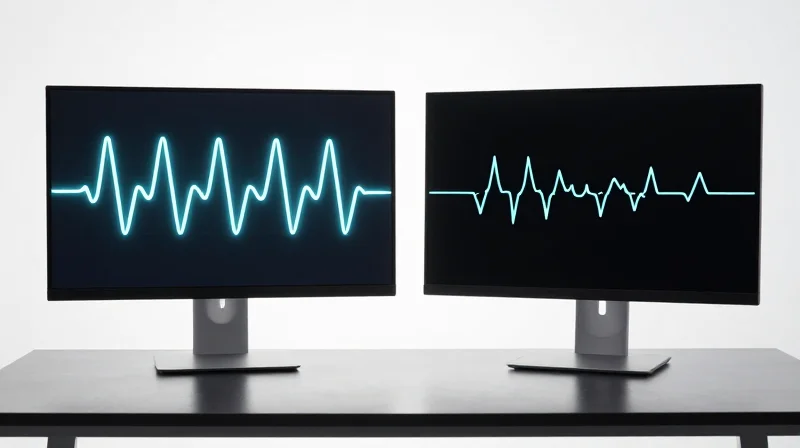
Latency Benchmarks: Real-Time Patient Monitoring vs. Standard Throughput
The fundamental difference between healthcare-grade network stability and standard alternatives lies in deterministic performance; while standard office networks focus on 'best-effort' throughput for bulk data, clinical environments require micro-latency environments where jitter and packet delay variations are strictly controlled to prevent telemetry dropouts. For instance, a cardiac monitor transmitting a waveform requires consistent sub-50ms latency to ensure that life-threatening arrhythmias are detected and alarmed in real-time, whereas a standard cloud-based EHR update can tolerate delays of several seconds without impacting patient safety.
| Data Category | Target Latency | Jitter Tolerance | Reliability Requirement |
|---|---|---|---|
| Standard Office Data (Email, Web) | < 150ms | High | Moderate |
| PACS Imaging Retrieval | < 100ms | Medium | High (TCP Integrity) |
| ICU Telemetry/Waveforms | < 20ms | Extremely Low | Ultra-High (Mission Critical) |
| Robotic/Remote Surgery | < 5ms | Zero | Absolute (Safety Critical) |
The Telemetry Gap: Why Standard Protocols Fail
Standard network alternatives often rely on heavy packet buffering to maintain high throughput for large files. While this works for video streaming or administrative tasks, it is disastrous for patient monitoring. When a network buffers telemetry data, it creates 'micro-bursts' of latency that can cause a monitor to show a flatline or a 'signal loss' message. In a clinical setting, this triggers a false alarm, leading to 'alarm fatigue' among nursing staff and potentially masking genuine cardiac events.
Medical Imaging and the Throughput-Latency Paradox
High-resolution medical imaging, such as 3D CT scans, presents a unique challenge: the need for massive throughput combined with high stability. Unlike a standard file download, clinicians often review these images via remote rendering or streaming. If the network experiences instability, the image manipulation becomes laggy, hindering a radiologist's ability to navigate through slices quickly. A dedicated healthcare data network manages this by prioritizing medical imaging traffic through Quality of Service (QoS) tagging, ensuring that a large file transfer in the billing department does not throttle an urgent diagnostic review.
- Why is jitter more dangerous than latency in healthcare?
Jitter, or the variation in packet arrival times, disrupts the continuous stream of real-time waveforms. In patient monitoring, inconsistent data delivery can cause monitoring software to misinterpret cardiac rhythms, leading to dangerous diagnostic errors. - Can standard SD-WAN solve healthcare latency issues?
While standard SD-WAN improves general connectivity, it often lacks the granular application-layer awareness required to distinguish between a critical physiologic alarm and a standard background update, necessitating specialized healthcare-optimized configurations. - What is the cost of network instability in clinical terms?
Beyond financial loss, instability results in 'technical downtime' where clinical workflows revert to manual processes, increasing the risk of medication errors and delayed interventions.
Network Stability and Packet Loss: The 'Always-On' Clinical Requirement
The Clinical Imperative for Deterministic Network Performance
In a high-density medical environment, network stability is not a convenience—it is a clinical requirement. While standard TCP/IP stacks prioritize data integrity through retransmission, the resulting latency spikes (jitter) can render real-time patient data, such as EKG telemetry or robotic surgical feedback, dangerously inaccurate. Clinical-grade networks must move beyond 'best-effort' delivery toward deterministic architectures that guarantee packet delivery windows, ensuring that life-critical information is available exactly when needed without the overhead of traditional error-correction cycles.
Stability Comparison: Standard TCP/IP vs. Clinical SD-WAN & Specialized Protocols
| Feature | Standard TCP/IP Stack | Clinical-Grade SDN/Specialized Protocols |
|---|---|---|
| Packet Loss Handling | Reactive: Retransmission via ACK/NACK | Proactive: Forward Error Correction (FEC) & Packet Duplication |
| Jitter Management | Variable; dependent on buffer depth | Fixed; deterministic scheduling and jitter buffers |
| Congestion Control | Packet dropping (Tail Drop) | Traffic Shaping & Per-Packet Prioritization (L7) |
| Clinical Impact | Delayed telemetry alarms; image artifacts | Real-time waveform continuity; synchronized imaging |
The High Cost of 'Invisible' Packet Loss
Packet loss in a healthcare setting often manifests as 'micro-outages' that may not trigger a system-wide alert but can compromise diagnostic quality. For instance, in Digital Imaging and Communications in Medicine (DICOM) transfers, even a 0.1% loss rate can cause significant handshake delays, forcing radiologists to wait for studies to re-assemble. In live environments like Intensive Care Units (ICUs), packet loss leads to 'alarm fatigue' when sensors lose synchronization with central stations, triggering false disconnect alerts that desensitize staff to genuine emergencies.
Optimizing for High-Density Clinical Environments
As the number of IoMT (Internet of Medical Things) devices increases, the noise-to-signal ratio on standard Wi-Fi and Ethernet backbones degrades. Implementing Medical Body Area Networks (MBANs) and dedicated medical-grade wireless utility (WMTS) allows facilities to offload critical telemetry from the congested general-purpose network. This separation is essential for maintaining the 'Always-On' requirement, ensuring that guest Wi-Fi traffic or administrative updates never compete for bandwidth with physiological monitoring data.
FAQ: Network Stability in Critical Care
- Why is 99.9% uptime insufficient for healthcare telemetry?
While 'three nines' is standard for enterprise IT, the resulting 8.77 hours of annual downtime can occur in micro-bursts. If those bursts coincide with a cardiac event, critical waveform data is lost, directly impacting patient outcomes. - How does Forward Error Correction (FEC) improve clinical stability?
FEC sends redundant data bits, allowing the receiving end to reconstruct lost packets without requesting a retransmission, thereby maintaining low latency for real-time applications. - Does 5G solve the packet loss issue in hospitals?
Private 5G slices offer better prioritization than standard Wi-Fi, but they still require careful integration with local healthcare protocols to ensure end-to-end stability across the internal hospital infrastructure.
Power Consumption Analysis: Green IT Strategies for Modern Hospitals
The Intersection of Network Stability and Energy Sustainability
Modern hospitals can significantly reduce their energy footprint by transitioning from legacy, 'always-on' hardware to energy-proportional network architectures that scale power consumption based on real-time data demand. Stable, high-performance networks minimize the need for data retransmissions caused by packet loss, directly reducing the compute cycles required by servers and switches, which translates to lower thermal output and reduced cooling requirements in clinical data centers.
Hardware Efficiency: Comparing Traditional vs. Green Networking
The choice between standard enterprise networking and healthcare-optimized 'Green IT' solutions has direct implications for a facility's long-term utility expenditures. Below is a comparison of typical power metrics for network infrastructure in a mid-sized clinical environment.
| Network Component | Legacy Architecture (Avg Watts) | Green IT/SDN Solutions (Avg Watts) | Efficiency Gain |
|---|---|---|---|
| Core Switch (24-Port) | 150W - 200W | 85W - 110W | ~45% |
| Access Point (High Density) | 25W (Fixed) | 12W (Variable/PoE+) | ~52% |
| Data Routing Latency Overhead | High (Heat Inducing) | Low (Optimized Pathing) | Significant |
| Idle Power Consumption | ~80% of Max | ~20% of Max | ~60% |
Optimized Routing and Thermal Management
Data routing efficiency is a hidden driver of power consumption. When a network experiences instability or suboptimal pathing, packets are often routed through multiple unnecessary hops, increasing the workload on every intermediate device. By utilizing Software-Defined Networking (SDN) to prioritize critical clinical traffic—such as real-time telemetry—hospitals can ensure that non-essential data takes the most energy-efficient path. This 'traffic grooming' prevents hardware hotspots and extends the lifespan of sensitive medical hardware by maintaining lower operational temperatures.
- How does network stability impact a hospital's electricity bill?
Unstable networks trigger frequent packet re-transmissions. This keeps network interfaces and CPUs in high-power states. A stable network allows components to enter low-power idle modes more frequently, reducing kilowatt-hour consumption. - What is the role of Power over Ethernet (PoE) in Green IT?
Advanced PoE+ management allows IT administrators to schedule power-down cycles for non-critical devices (like administrative tablets or VoIP phones) during off-peak hours, ensuring energy is only used when and where it is needed. - Does 'Green' hardware compromise clinical data speeds?
No. Modern energy-efficient switches use faster silicon processes that provide higher throughput per watt than legacy systems, meaning stability and speed are actually improved alongside efficiency.
Ultimately, the shift toward Green IT in healthcare is not merely an environmental choice but a fiscal one. Reducing the energy requirements of the 24/7 data network directly impacts the Total Cost of Ownership (TCO) by lowering utility costs and decreasing the load on expensive Uninterruptible Power Supply (UPS) systems and emergency backup generators.
Total Cost of Ownership (TCO): Moving Beyond the Initial Capex
The Total Cost of Ownership (TCO) for healthcare data networks is often misunderstood because organizations focus disproportionately on the initial Capital Expenditure (Capex). However, in a 24/7 clinical environment, the true cost of a network is determined by its long-term Operational Expenditure (OpEx), including maintenance labor, energy consumption, and the indirect costs of system instability. While specialized, high-stability networks command a premium upfront, they consistently outperform lower-cost alternatives by reducing the frequency of hardware failures and eliminating the hidden productivity drains caused by packet loss and latency in critical medical imaging and telemetry workflows.
Capex vs. OpEx: The Hidden Financial Drivers
When comparing specialized healthcare infrastructure to standard enterprise-grade hardware, the 'iceberg model' of TCO becomes apparent. The visible tip is the purchase price, but beneath the surface lie the recurring costs of network management, software licensing, and troubleshooting. Specialized networks often feature 'zero-touch' provisioning and more robust physical components designed for high-density medical environments, which significantly extends the hardware refresh cycle from the typical three-to-five years to seven or even ten years.
| Cost Factor | Standard Enterprise Stack | Specialized Healthcare Network |
|---|---|---|
| Initial Capex | Lower (Baseline) | Higher (1.5x - 2.2x) |
| Maintenance Labor | High (Frequent patching/reboots) | Low (Predictive analytics/Stability) |
| Typical Refresh Cycle | 3-5 Years | 7-10 Years |
| Downtime Risk | Moderate to High | Near-Zero (Clinical Grade) |
| Energy Efficiency | Standard Components | Optimized for 24/7 Clinical Load |
Quantifying the Cost of Network Instability
In healthcare, network instability is not merely an IT inconvenience; it is a financial and clinical liability. For a mid-sized hospital, a single hour of network downtime can cost upwards of $10,000 to $50,000 in lost procedural revenue and staff idle time. Specialized networks mitigate these risks through redundant architectures and deterministic data routing that prevents the 'jitter' commonly seen in standard TCP/IP stacks during peak loads. By ensuring that PACS (Picture Archiving and Communication Systems) and telemetry data always have priority, these networks prevent the micro-delays that lead to physician burnout and diagnostic bottlenecks.
Energy Footprint and Sustainability
Modern healthcare-specific networking hardware is increasingly designed with Green IT principles. By utilizing more efficient ASIC (Application-Specific Integrated Circuit) designs and intelligent power management that scales based on clinical activity, these systems can reduce the annual energy bill of a hospital's data center by 15-20%. Over a ten-year lifespan, these utility savings, combined with reduced cooling requirements, can offset a significant portion of the initial price delta.
- How does specialized hardware reduce IT labor costs?
Specialized systems often include advanced telemetry and AI-driven monitoring that identifies potential failures before they occur, allowing for scheduled maintenance rather than emergency 'fire-fighting' interventions. - What is the typical ROI period for a clinical-grade network?
Most healthcare organizations see a return on investment within 18 to 24 months, driven primarily by reduced downtime and lower annual maintenance contract costs compared to multi-vendor legacy stacks. - Does higher stability impact medical compliance?
Yes. Consistent network performance simplifies compliance with HIPAA and other regulatory standards by ensuring that data encryption and audit logging do not cause performance degradation during critical clinical workflows.
Architectural Showdown: Dedicated Medical Clouds vs. SD-WAN Alternatives

Architectural Showdown: Dedicated Medical Clouds vs. SD-WAN Alternatives
Choosing between a dedicated medical cloud and an SD-WAN alternative is a choice between deterministic performance and adaptive flexibility; while SD-WAN optimizes existing public internet paths, dedicated medical clouds offer a controlled, private infrastructure specifically tuned for the zero-latency requirements of modern clinical workflows. The decision fundamentally impacts how a facility handles high-bandwidth medical imaging and real-time telemetry.
The Virtual Overlay vs. The Private Underlay
SD-WAN acts as an intelligent virtual overlay, aggregating various connection types like broadband, LTE, and MPLS to create a resilient path for data. However, it remains susceptible to the inherent 'noise' of the public internet. Dedicated medical clouds, conversely, provide a specialized underlay where the physical and logical paths are isolated. This isolation ensures that clinical traffic never competes with general consumer traffic, providing a baseline of stability that software-defined logic alone cannot replicate.
| Feature | Dedicated Medical Cloud | SD-WAN Alternatives |
|---|---|---|
| Traffic Prioritization | Hardware-level QoS for medical protocols | Software-defined packet steering |
| Security Model | Private, air-gapped or VPC-isolated | Encryption over public/private tunnels |
| Latency Guarantee | Predictable, low-latency backbones | Best-effort based on link quality |
| Deployment Cost | Higher initial Capex/OpEx | Lower cost, utilizes existing ISP links |
| Regulatory Compliance | Built-in HIPAA/HITECH controls | Requires third-party configuration |
Performance Metrics in Clinical Environments
In high-density medical environments, packet loss of even 1% can result in corrupted imaging files or delayed patient monitor alerts. SD-WAN uses Forward Error Correction (FEC) to mask these issues, but this adds computational overhead. Dedicated medical clouds eliminate the source of the packet loss by maintaining strict control over the routing hop count and the quality of the fiber interconnects. For facilities prioritizing surgical-grade reliability, the dedicated approach remains the gold standard.
- Is SD-WAN sufficient for rural healthcare?
Yes, SD-WAN is often the most cost-effective way to bring stability to rural clinics where dedicated fiber is unavailable, as it can bond multiple low-cost links into a single reliable pipe. - Which architecture is more secure for PHI?
Dedicated medical clouds generally offer a smaller attack surface by bypassing the public internet entirely, whereas SD-WAN relies heavily on the strength of its encryption protocols to protect data in transit. - Can the two architectures coexist?
Absolutely. Many modern hospitals use a hybrid approach: a dedicated cloud for critical life-safety systems and SD-WAN for administrative and guest traffic.
Compliance and Security: Stability as a Pre-requisite for HIPAA

The Compliance Gap: How Instability Jeopardizes HIPAA
Network stability serves as the foundational layer for HIPAA compliance because security protocols are only as effective as the infrastructure supporting them. When a network fluctuates or fails, the transition to backup systems or manual processes often results in 'compliance shadows'—moments where data encryption may be bypassed, audit trails are interrupted, or data integrity is compromised during packet loss. In the eyes of the Department of Health and Human Services (HHS), the availability of Protected Health Information (PHI) is a core pillar of the Security Rule; therefore, persistent instability is not merely an IT issue but a direct violation of the mandate to ensure the reliable accessibility of patient data.
Security Risks During Network Transitions
Many security vulnerabilities emerge during the failover period when a primary medical network switches to a secondary alternative, such as a public internet-based SD-WAN. During these seconds or minutes of transition, session persistence may break, potentially exposing unencrypted data or allowing for man-in-the-middle attacks if the backup path lacks the same rigorous security configurations as the primary dedicated line. Furthermore, network instability often triggers high volumes of false-positive security alerts, leading to alert fatigue among IT staff and allowing genuine threats to slip through unnoticed during the noise of re-connection events.
| Security Feature | Stable Dedicated Infrastructure | Unstable/Public Alternatives |
|---|---|---|
| Encryption Consistency | End-to-end hardware-level encryption with no session drops. | Frequent re-handshaking during outages increases exposure risk. |
| Audit Logging | Continuous, centralized logging with time-sync accuracy. | Log fragmentation occurs during intermittent connectivity loss. |
| Data Integrity | Zero packet loss ensures full file transmission. | Packet drops can lead to corrupted medical images or records. |
| Availability (HIPAA) | 99.999% uptime ensures PHI is always accessible. | Varied latency and downtime risk 'Availability' violations. |
Stability and Compliance FAQs
- Does a network outage count as a HIPAA breach?
While an outage itself may not be a privacy breach, if the instability leads to the corruption of PHI or prevents access during critical care, it can result in significant fines and corrective action plans for violating the HIPAA Security Rule's 'Availability' requirement. - How does jitter affect data security?
High jitter can disrupt the synchronization required for complex encryption protocols. If the network cannot maintain a steady flow, secure tunnels may collapse, forcing traffic through less secure secondary routes or causing data re-transmissions that are easier to intercept. - Is a dedicated network worth the cost for compliance?
From a TCO perspective, the cost of a single HIPAA violation—which can reach millions of dollars in penalties and reputational damage—far outweighs the premium paid for a stable, dedicated medical-grade network that guarantees uptime and consistent security posture.
Future-Proofing Healthcare IT: Edge Computing and AI Readiness

Future-Proofing Healthcare IT: Edge Computing and AI Readiness
The selection of a healthcare data network is a strategic decision that directly dictates a facility's ability to implement next-generation AI and edge computing technologies. While lower-cost alternatives like generic SD-WAN might suffice for basic administrative tasks, they often lack the deterministic latency and high-throughput stability required to support real-time AI inference at the clinical edge. A stable, specialized network ensures that data-heavy modalities—such as 3D pathology or robotic surgery tele-mentoring—can operate without the risk of packet loss or jitter that compromises patient safety and diagnostic accuracy.
The Shift from Centralized Cloud to the Clinical Edge
Edge computing moves data processing away from distant cloud servers and directly into the hospital environment, reducing the physical distance data must travel. This shift is essential for AI applications that require immediate feedback. However, edge readiness is not just about local hardware; it requires a network infrastructure capable of managing high-bandwidth bursts between edge nodes and core clinical systems. Specialized medical networks provide the dedicated bandwidth 'lanes' necessary to ensure that an AI algorithm's demand for data does not interfere with other critical hospital operations.
| Metric | Legacy/Alternative Networks | Specialized AI-Ready Networks |
|---|---|---|
| Processing Latency | High/Variable (100ms+) | Ultra-Low/Deterministic (<10ms) |
| Bandwidth Allocation | Shared/Best-effort | Dedicated/QoS Prioritized |
| AI Scalability | Limited by congestion | Highly Scalable for Large Datasets |
| Operational Risk | High (Network bottleneck) | Low (Optimized for Edge Flow) |
Avoiding Technical Debt in AI Deployment
Many healthcare organizations fall into the trap of choosing infrastructure based on the lowest initial price point, only to encounter massive 'technical debt' when deploying AI tools. Retrofitting a network to support the high-resolution data streams required for deep learning is often more expensive than investing in a stable, scalable standard from the outset. By prioritizing network stability, IT leaders ensure their infrastructure is an enabler of innovation rather than a bottleneck that requires frequent, costly overhauls as clinical requirements evolve.
Common Concerns Regarding AI Network Readiness
- Why can't standard business internet support medical AI?
Standard internet lacks the Quality of Service (QoS) guarantees required for medical AI. In a clinical setting, an AI-driven stroke detection alert must take precedence over a background software update; specialized networks enforce this prioritization. - Does edge computing eliminate the need for high-speed external networks?
No. While edge computing processes data locally, the results and the data itself must often be synced with Electronic Health Records (EHR) and central research databases, requiring a stable and high-speed external backbone. - What is the long-term cost benefit of an AI-ready network?
The cost benefit lies in reduced downtime, faster diagnostic turnaround times, and the avoidance of expensive network-wide upgrades every time a new AI tool is introduced to the clinical workflow.
Selecting the right network infrastructure is a strategic business decision that impacts both the balance sheet and patient care quality. While standard alternatives may seem cost-effective initially, the stability and efficiency of dedicated healthcare networks provide superior long-term value. Contact our infrastructure specialists today for a comprehensive network audit and TCO projection.