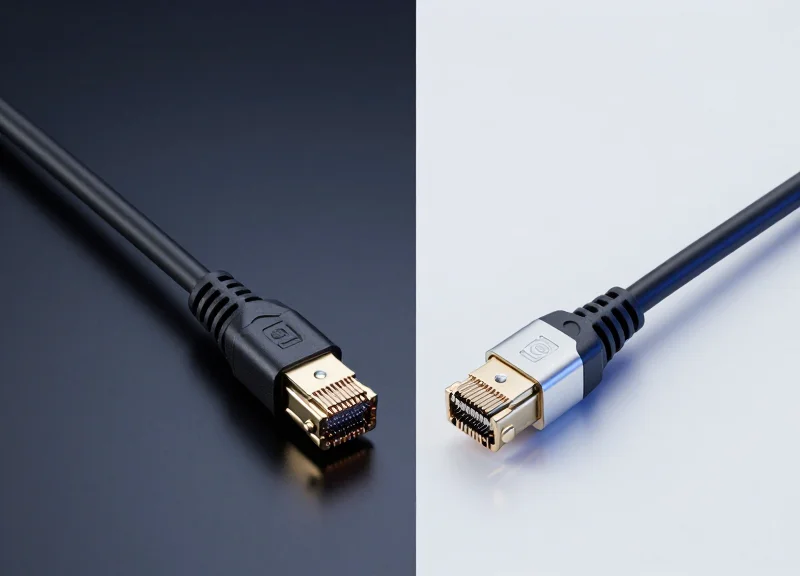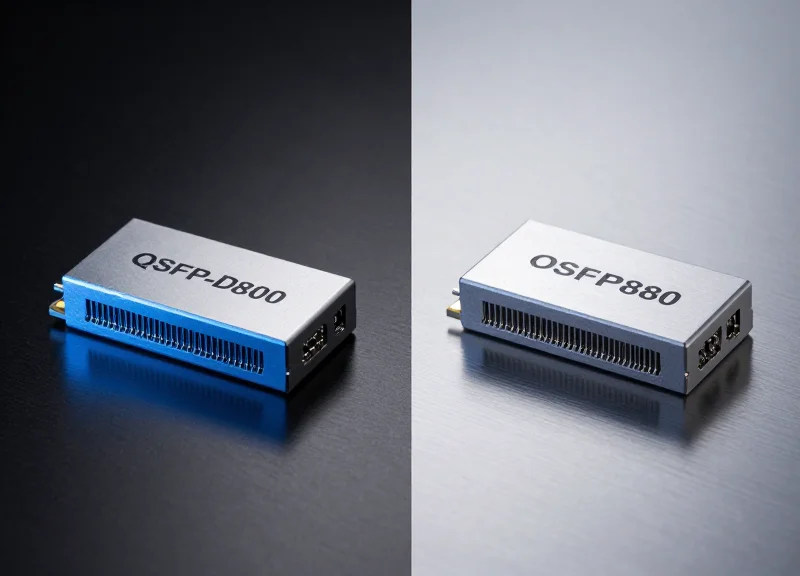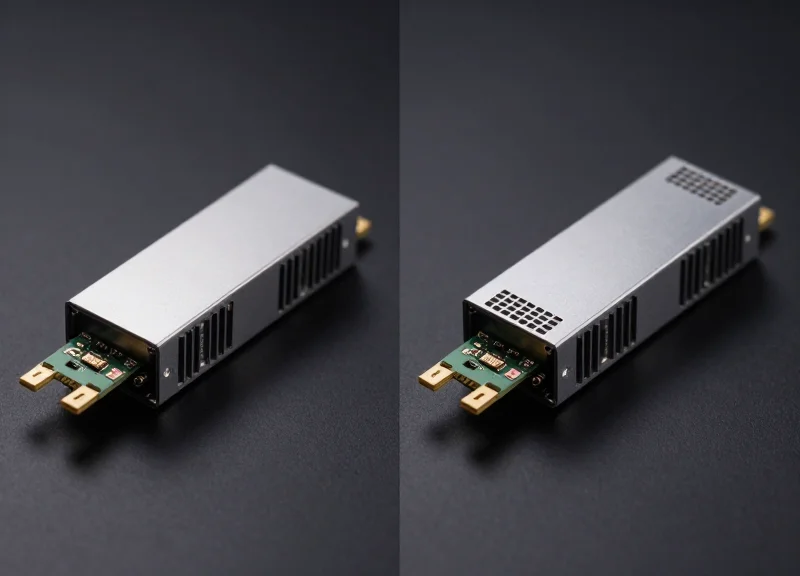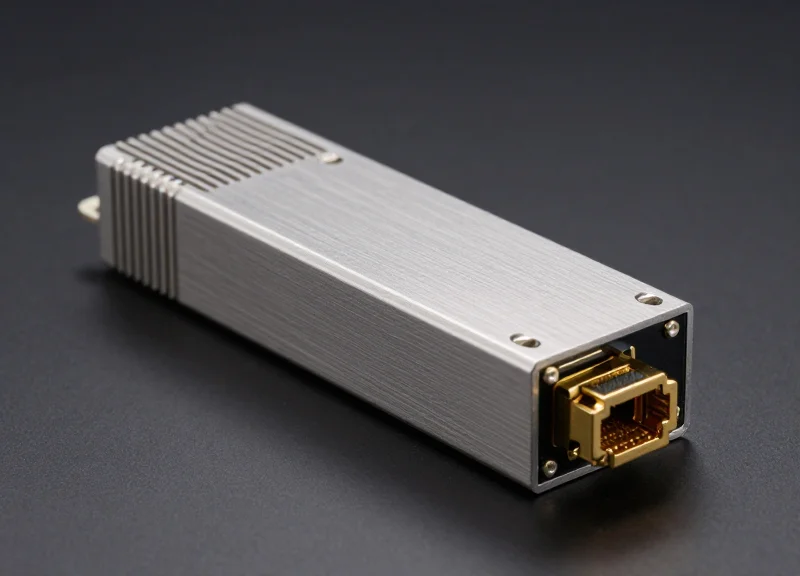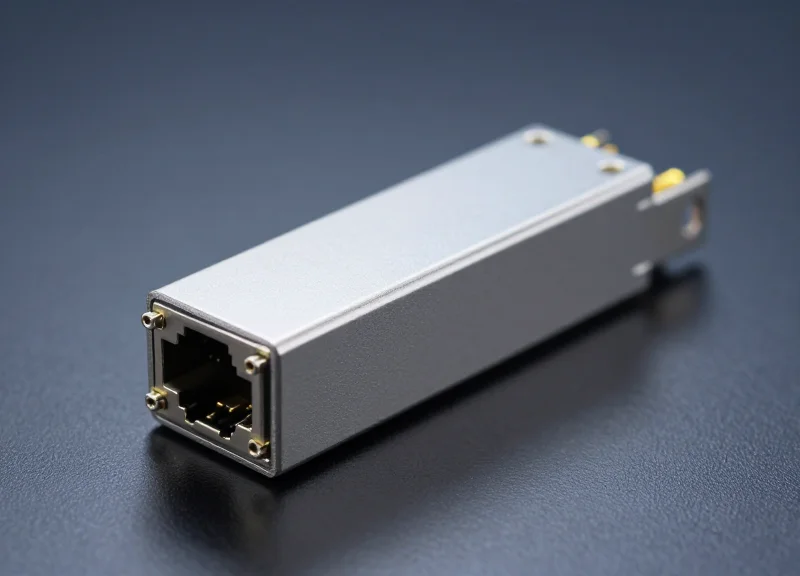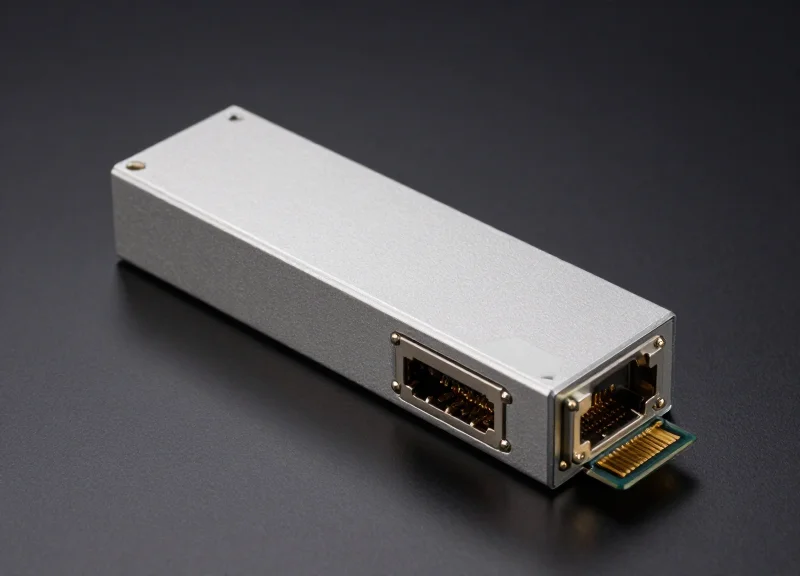
In an era defined by hyperscale data centers and the rapid expansion of 5G, the integrity of a network is only as strong as its optical foundation. Ubytelink bridges the gap between generic hardware and high-performance, custom-engineered optics, providing the reliability required for the world’s most demanding mission-critical infrastructures.
The Strategic Importance of Quality Optics in Modern Infrastructure

The Foundation of Connectivity: Why Optics Matter
Quality optics are the linchpin of modern communication, providing the essential bridge between physical hardware and the high-speed data streams that drive global enterprises. In an era where data centers, 5G networks, and cloud computing demand near-zero latency, the optical transceiver is no longer a mere peripheral; it is a strategic asset that determines the reliability and throughput of the entire network architecture. Substandard optics act as bottlenecks, compromising the integrity of the physical layer and rendering expensive switching infrastructure inefficient.
The Hidden Costs of Low-Quality Components
While the initial lower price point of generic or low-quality optical components may seem attractive, the long-term operational risks are significant. These components frequently suffer from poor thermal management and inconsistent laser calibration, leading to intermittent failures that are notoriously difficult to diagnose. When a single transceiver fails in a mission-critical link, the resulting downtime can cost organizations thousands of dollars per minute, far exceeding any savings gained during procurement.
| Feature | Premium OEM/ODM Optics | Low-Quality Generic Optics |
|---|---|---|
| MTBF (Mean Time Between Failure) | Standardized 100,000+ hours | Unpredictable, often <20,000 hours |
| Signal Integrity | Low bit-error rate (BER) | High jitter and signal degradation |
| Power Consumption | Optimized for thermal efficiency | High heat dissipation, inefficient |
| Compatibility | Firmware-matched to hardware | Generic coding, frequent link errors |
Strategic Advantages of Ubytelink Quality Standards
Ubytelink OEM/ODM services prioritize the rigorous validation required for global network deployments. By adhering to strict Multi-Source Agreement (MSA) standards and implementing multi-stage testing, we ensure that every module provides seamless interoperability. This level of quality control is essential for preventing the 'silent' packet loss that often plagues networks utilizing unverified optical solutions.
- How does quality optics impact Total Cost of Ownership (TCO)?
Premium optics reduce TCO by minimizing replacement cycles, lowering maintenance labor costs, and preventing expensive network outages. - Why is thermal management critical in high-speed transceivers?
As speeds reach 400G and 800G, heat becomes a major failure point; high-quality optics use superior materials to ensure stable performance under high-density loads. - Can low-quality optics damage existing hardware?
Yes, poorly manufactured modules can cause electrical surges or physical port damage, potentially voiding the warranty of expensive switches and routers.
Ubytelink’s OEM Philosophy: Precision Engineering Meets Global Scale

Ubytelink’s OEM Philosophy: Precision Engineering Meets Global Scale
At the heart of Ubytelink’s OEM/ODM services lies the conviction that mass production should never necessitate a compromise in technical integrity. We believe that global scale is only as valuable as the precision of the individual component; therefore, our philosophy centers on a 'Quality-First' framework where every transceiver, cable, and splitter is engineered to exceed industry standards before entering the production line. By bridging the gap between bespoke engineering and industrial-scale manufacturing, Ubytelink ensures that service providers do not have to choose between customized performance and high-volume availability.
The Convergence of R&D and Industrial Execution
Our approach is defined by a rigorous feedback loop between our R&D labs and our manufacturing facilities. Unlike traditional white-label providers that rely on generic templates, Ubytelink invests heavily in the underlying architecture of optical components. This allows us to maintain tight tolerances and ensure thermal stability and signal integrity even in the most demanding data center environments. By controlling the entire lifecycle—from the selection of premium chipsets to final stress testing—we provide a level of reliability that generic alternatives simply cannot replicate.
| Operational Metric | Standard OEM Providers | Ubytelink Precision OEM |
|---|---|---|
| Design Customization | Limited to branding and packaging | Full architectural and firmware tailoring |
| Quality Control | Batch-based statistical sampling | Unit-level rigorous automated testing |
| Component Sourcing | Generic, multi-vendor chips | Tier-1 premium chipset partnerships |
| Scalability | Volume focused, quality fluctuates | Scalable output with zero-defect focus |
Strategic Advantages for Global Networks
For global enterprises, the Ubytelink philosophy translates into lower Total Cost of Ownership (TCO). By reducing the failure rate of optical links, we minimize the high costs associated with maintenance and network downtime. Our global logistics network further complements our manufacturing prowess, ensuring that precision-engineered components reach their destination exactly when needed, maintaining the continuity of digital infrastructure projects worldwide.
- How does Ubytelink ensure consistency across high-volume orders?
We utilize advanced robotic assembly and automated optical testing (AOT) systems that perform real-time verification of every unit, ensuring that the millionth module performs exactly like the first prototype. - Can Ubytelink accommodate unique architectural requirements?
Yes, our ODM services include deep-level firmware customization and hardware adjustments to ensure 100% compatibility with proprietary network ecosystems. - What standards does Ubytelink adhere to during manufacturing?
Our facilities are ISO 9001:2015 certified, and all products comply with MSA, CE, FCC, and RoHS standards, ensuring safety and performance across all jurisdictions.
The ODM Advantage: Custom Solutions Tailored to Your Architecture

The Original Design Manufacturing (ODM) advantage lies in the ability to move beyond standard specifications, offering a collaborative engineering path where hardware and software are built specifically for a client's proprietary architecture. Ubytelink transforms complex connectivity challenges into high-performance optical reality through integrated R&D and precision manufacturing, ensuring that every transceiver is an optimized component of the broader ecosystem.
Precision Engineering: From R&D to PCB Design
Our ODM process begins at the foundational level of Research and Development. Unlike standard off-the-shelf products, our custom solutions involve deep-dive analysis of signal integrity and thermal management within specific chassis environments. Our engineers utilize advanced PCB layout techniques to minimize electromagnetic interference (EMI) and optimize power consumption, which is critical for next-generation 400G and 800G deployments.
Bespoke Firmware and Protocol Optimization
Hardware is only half of the equation; the intelligence of the optical module resides in its firmware. Ubytelink’s ODM services include the development of bespoke firmware tailored to specialized network protocols or proprietary switching logic. This ensures seamless interoperability with hardware from various vendors while allowing for custom monitoring features and diagnostic capabilities that are not available in standard modules.
| Service Feature | Standard OEM Production | Ubytelink ODM Customization |
|---|---|---|
| Design Ownership | Pre-existing blueprints | Full R&D Collaboration |
| PCB Layout | Fixed Standards | Custom/Optimized for Form Factor |
| Firmware Logic | Generic/Standardized | Bespoke/Vendor-Specific |
| Protocol Support | Standard Industry Protocols | Specialized & Legacy Protocols |
| Thermal Tuning | Standard Cooling Specs | Environment-Specific Tuning |
ODM Capability FAQ
- Does Ubytelink support custom form factors?
Yes, our ODM services extend to designing non-standard form factors or modifying existing ones (like QSFP-DD or OSFP) to fit specialized hardware constraints. - How is intellectual property handled during the ODM process?
We operate under strict confidentiality agreements, ensuring that any proprietary designs or firmware logic developed for your project remain your exclusive intellectual property. - Can you optimize modules for specific environmental conditions?
Absolutely. We can engineer modules with industrial-grade components and custom thermal dissipation designs for extreme temperature or high-vibration environments.
By choosing Ubytelink’s ODM services, organizations gain a strategic partner capable of translating complex architectural needs into scalable, reliable, and high-performance optical hardware.
Rigorous Testing Protocols: Ensuring Mission-Critical Reliability
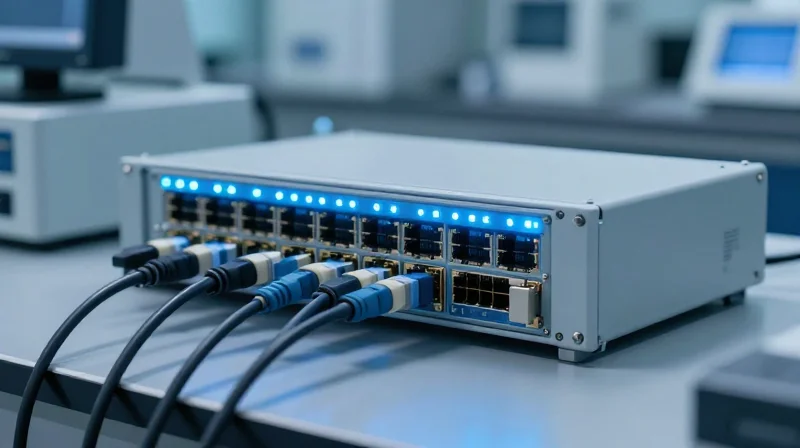
At Ubytelink, reliability is not a post-production check but a foundational element of the engineering process. Our rigorous testing protocols simulate the most extreme real-world conditions to prevent downtime and signal degradation before hardware ever reaches a client's data center. By integrating advanced signal integrity analysis with environmental stress testing, we provide mission-critical assurance for global telecommunications and enterprise architectures.
Environmental Endurance: Beyond Standard Temperature Cycling
Optical components are highly sensitive to thermal fluctuations which can cause laser wavelength drift or physical expansion in delicate lens assemblies. Ubytelink subjects all OEM/ODM optics to 'burn-in' cycles and accelerated aging tests. While standard commercial optics are often tested at basic ambient levels, our premium modules undergo industrial-grade temperature cycling ranging from -40°C to +85°C. This ensures that the internal components maintain structural integrity and optical alignment despite the high-heat environments typical of dense 400G and 800G switch clusters.
Signal Integrity and Optical Performance Verification
Ensuring a clean signal is paramount for high-bandwidth applications where the margin for error is near zero. We utilize industry-leading oscilloscopes and Bit Error Rate Testers (BERT) to validate the electrical-to-optical conversion process. Our engineers analyze eye diagrams to ensure sufficient mask margins, low jitter, and high extinction ratios. This level of scrutiny guarantees that every module delivered provides the low-latency performance required for AI training clusters and high-frequency trading networks.
| Test Parameter | Standard Generic Requirement | Ubytelink OEM/ODM Standard |
|---|---|---|
| Temperature Range | 0°C to 70°C (Commercial) | -40°C to +85°C (Industrial) |
| Bit Error Rate (BER) | 10^-12 | 10^-15 or better |
| Aging Test Duration | 24 Hours (Random Sample) | 168 Hours (100% of Units) |
| Firmware Verification | Basic EEPROM Write | Full Multi-Protocol Handshake Check |
Multi-Vendor Interoperability and Platform Validation
A significant challenge in global networking is 'vendor lock-in' and firmware incompatibility. Ubytelink solves this through our comprehensive compatibility lab, housing over 100 distinct switch and router platforms from major vendors like Cisco, Arista, Juniper, and Nokia. Each ODM solution is tested for digital diagnostic monitoring (DDM/DOM) accuracy and protocol compliance. This ensures that when our modules are deployed in a heterogeneous network environment, they are recognized immediately without triggering port errors or performance throttling.
Testing Protocols FAQ
- Does Ubytelink test every unit or just samples?
We perform 100% individual testing on every module produced, rather than batch sampling, to ensure zero-defect delivery across all global shipments. - How is Mean Time Between Failures (MTBF) calculated?
Our MTBF is calculated based on real-world telemetry data and accelerated life testing (ALT), consistently exceeding 500,000 hours for our core transceiver lines. - Are custom firmware versions tested for regression?
Yes, our ODM services include automated regression testing for all bespoke firmware versions to ensure stability across software updates from the host equipment manufacturers.
Comprehensive Product Range: From 10G to 800G and Beyond
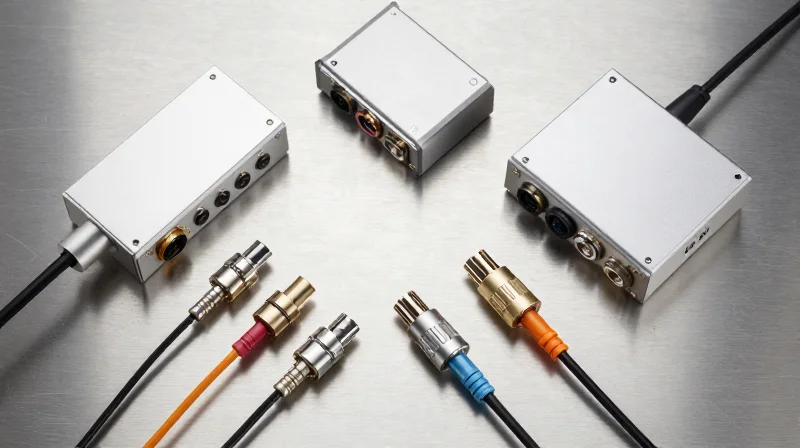
The modern networking landscape requires a multi-tiered approach to connectivity, where high-speed throughput must be balanced with power efficiency and cost-effectiveness. Ubytelink’s OEM/ODM services address this complexity by offering a comprehensive product roadmap that spans from 10G legacy support to the frontier of 800G and 1.6T development. By controlling the entire manufacturing cycle, we ensure that every module—regardless of its speed—adheres to the same premium quality standards required for mission-critical global infrastructure.
The Core Portfolio: From Enterprise to Hyperscale
Our product range is designed to scale with your architecture. We provide a full suite of form factors including SFP+, SFP28, QSFP28, QSFP56, and the latest QSFP-DD modules. For enterprise and edge computing, our 10G and 25G solutions offer industry-leading MTBF (Mean Time Between Failures). For high-performance computing (HPC) and cloud environments, our 400G and 800G modules utilize advanced PAM4 modulation and Silicon Photonics to maximize data density while minimizing thermal output.
| Form Factor | Data Rates | Modulation | Primary Use Case |
|---|---|---|---|
| SFP+ / SFP28 | 10G - 25G | NRZ | Enterprise Switching, 5G Fronthaul |
| QSFP28 / QSFP56 | 100G - 200G | NRZ / PAM4 | Data Center Interconnects (DCI) |
| QSFP-DD / OSFP | 400G - 800G | PAM4 | AI Clusters, Hyperscale Spine-Leaf |
| CPO / Future Tech | 1.6T+ | Co-Packaged | Next-Gen Terabit Networking |
Specialized Solutions and Custom Wavelengths
Beyond standard speeds, Ubytelink specializes in Wavelength Division Multiplexing (WDM) technologies. Our OEM services include the production of CWDM, DWDM, and Bidi modules that allow service providers to maximize their existing fiber plant. Whether you require extended-reach ER4/ZR4 optics or industrial-temperature (I-Temp) rated modules for harsh outdoor environments, our engineering team can customize the optical components and firmware to meet your specific link budget requirements.
Frequently Asked Questions About Our Product Range
- Can Ubytelink customize optics for third-party compatibility?
Yes. Our ODM process includes bespoke EEPROM coding and firmware optimization to ensure 100% compatibility with major OEM switch and router vendors, eliminating lock-in and reducing TCO. - Are 800G modules currently available for volume production?
Absolutely. We have stabilized our 800G QSFP-DD and OSFP production lines, utilizing high-precision automated assembly to support large-scale rollouts for AI and cloud service providers. - Do you support custom link lengths for specialized fiber spans?
We do. Our engineering team can fine-tune TOSA/ROSA components to achieve specific distance requirements, ranging from 100m over multi-mode to 80km+ over single-mode fiber.
Solving the Compatibility Challenge in Multi-Vendor Environments
In a modern data center or enterprise environment, hardware homogeneity is rare. Ubytelink OEM/ODM services neutralize the risk of vendor lock-in by utilizing advanced firmware engineering to ensure that our optical modules are recognized as native components by switches from Cisco, Arista, Juniper, and other industry leaders. This interoperability allows network architects to scale infrastructure based on performance requirements rather than proprietary constraints, ensuring that the network layer remains agile and cost-effective.
The Architecture of Universal Interoperability
Our approach to compatibility goes beyond basic connectivity; it involves sophisticated EEPROM (Electrically Erasable Programmable Read-Only Memory) coding that mimics the specific identification strings and checksums required by host devices. By maintaining an extensive database of proprietary algorithms and protocol implementations, Ubytelink ensures that critical features like Digital Optical Monitoring (DOM) function perfectly across diverse platforms, providing real-time diagnostic data regardless of the vendor ecosystem.
| Feature | Ubytelink Compatible Optics | OEM Proprietary Optics |
|---|---|---|
| Interoperability | Multi-vendor support via custom firmware | Restricted to single-brand ecosystem |
| Cost Efficiency | Significant reduction in CAPEX (up to 70%) | Premium pricing for brand validation |
| Availability | Global stock for all form factors | Subject to vendor-specific supply chains |
| Diagnostics (DOM/DDM) | Full support across all platforms | Full support within brand |
Addressing Compatibility Concerns
- Does using Ubytelink optics void my switch warranty?
No. Regulations such as the Magnuson-Moss Warranty Act protect users, stating that a manufacturer cannot void a warranty for using third-party components unless those components are proven to have caused direct damage. - How does Ubytelink handle OEM firmware updates?
We continuously monitor OEM software releases. If a vendor update introduces a new handshake protocol, we update our coding sequences and can provide re-programming tools to maintain seamless service. - Can one module work in different switch brands?
Yes. Through our multi-coding service, we can configure a single transceiver to be compatible with multiple host environments, which significantly simplifies inventory management for hybrid networks.
By eliminating the software barriers erected by traditional hardware manufacturers, Ubytelink empowers organizations to build truly open networking environments. Our rigorous multi-platform compatibility checks ensure that every module delivered performs with the same reliability as an OEM original, but with the flexibility required by today's global networks.
Supply Chain Resilience: Navigating Global Logistics with Ubytelink

Ubytelink navigates the complexities of global logistics by integrating a high-visibility supply chain model that prioritizes risk diversification and strategic buffer stocking. By maintaining deep relationships with Tier-1 component manufacturers and leveraging a geographically distributed production footprint, we insulate our partners from the sudden lead-time spikes and material shortages that frequently disrupt the high-speed optics market.
Strategic Mitigation of Global Disruptions
The optical networking industry is particularly sensitive to fluctuations in semiconductor availability and rare-earth material costs. Ubytelink’s OEM/ODM services incorporate a proactive procurement strategy, securing long-term allocations for critical components such as EML lasers and advanced DSP chipsets. This foresight allows us to offer stability even when the broader market faces supply constraints.
| Supply Chain Factor | Traditional Sourcing Model | Ubytelink Resilient Framework |
|---|---|---|
| Supplier Diversity | Single-source dependency | Multi-regional redundant sourcing |
| Inventory Strategy | Just-in-Time (JIT) only | Strategic buffer with safety stocks |
| Lead Times | 16–24 weeks during shortages | Consistent 4–8 week windows |
| Logistics Control | Third-party reliant | Direct integration with global carriers |
Optimizing Delivery through Intelligent Logistics
Beyond component sourcing, Ubytelink optimizes the 'final mile' of the supply chain. Our logistics teams specialize in navigating international trade compliance, customs brokerage, and multi-modal transport. This ensures that whether a client requires high-volume 100G QSFP28 modules or specialized 800G solutions, the transition from our manufacturing floor to their data center is seamless and predictable.
- How does Ubytelink maintain lead times during component shortages?
We utilize pre-allocated component pipelines and maintain safety stocks of critical raw materials, allowing us to start production immediately even when market availability is low. - Can Ubytelink support localized warehousing for global clients?
Yes, we offer strategic inventory positioning near major global hubs to reduce transit times and mitigate the impact of international shipping delays. - What measures are in place to handle customs and trade barriers?
Our in-house compliance experts ensure all documentation meets regional regulatory standards, minimizing customs hold-ups and avoiding unnecessary tariff-related delays.
Sustainability and Future-Proofing Your Optical Network
Sustainability and Future-Proofing Your Optical Network
As global data consumption surges, the environmental impact of network infrastructure has moved from a secondary concern to a primary strategic priority. Ubytelink addresses this through green-focused OEM/ODM services, delivering optical solutions that minimize power consumption and heat dissipation without compromising the high-speed performance required for modern AI and cloud environments. Future-proofing your network involves a dual approach: adopting technologies that reduce the total cost of ownership (TCO) through energy efficiency and ensuring hardware is ready for the inevitable shift toward 800G and 1.6T architectures.
Green Manufacturing and Low-Power Optics
Ubytelink utilizes advanced Silicon Photonics and Linear Drive Pluggable Optics (LPO) to significantly lower the power envelope of high-speed transceivers. By reducing the number of electronic components and simplifying the signal path, our modules produce less heat, which in turn reduces the cooling requirements of the entire data center. This lean architectural approach is essential for scaling to massive port densities where thermal management is the primary bottleneck.
| Feature | Standard Legacy Optics | Ubytelink Green-Tech Solutions |
|---|---|---|
| Power Consumption (400G) | 10W - 12W per module | 7W - 9W per module (LPO/SiPh) |
| Thermal Dissipation | High; requires aggressive cooling | Low; optimized for passive/reduced airflow |
| Manufacturing Process | Standard high-carbon footprint | RoHS compliant & waste-minimized |
| Lifecycle Longevity | 3-5 years average | Extended through high-grade components |
Strategies for Long-Term Network Viability
Future-proofing is built into the Ubytelink OEM roadmap through rigorous R&D in next-generation form factors like QSFP-DD800 and OSFP. By designing modules that are backward compatible yet capable of supporting upcoming bandwidth jumps, we ensure that enterprise and service provider investments remain protected against rapid technology cycles. Our ODM services allow clients to specify custom power profiles and firmware features that align with specific sustainability targets.
- How does low-power optics affect OPEX?
Lower power consumption directly reduces electricity bills and the energy required for HVAC systems, often resulting in a 20-30% reduction in transceiver-related operational expenses. - What is the role of Silicon Photonics in sustainability?
Silicon Photonics integrates laser and electronic components on a single silicon chip, reducing complexity, improving reliability, and lowering the energy needed for signal transmission. - Can Ubytelink modules meet ESG compliance standards?
Yes, our manufacturing facilities and products adhere to strict RoHS and REACH standards, supporting the environmental, social, and governance (ESG) goals of global organizations.
Selecting the right manufacturing partner is the most critical decision for maintaining a stable and scalable network. Ubytelink’s OEM/ODM services provide the engineering depth and manufacturing rigor needed to power the next generation of global connectivity. Contact our technical sales team today to discuss your custom optics requirements.