As global data consumption skyrockets, the backbone of the internet must evolve. ISP Network Optimization is no longer just about adding more fiber; it is about the intelligent orchestration of hardware and software to ensure maximum throughput and minimum latency. In this deep dive, we examine the engineering principles that keep modern high-speed networks running at peak performance.
The Fundamentals of Modern ISP Architecture
Understanding the Three-Tier Hierarchical Model
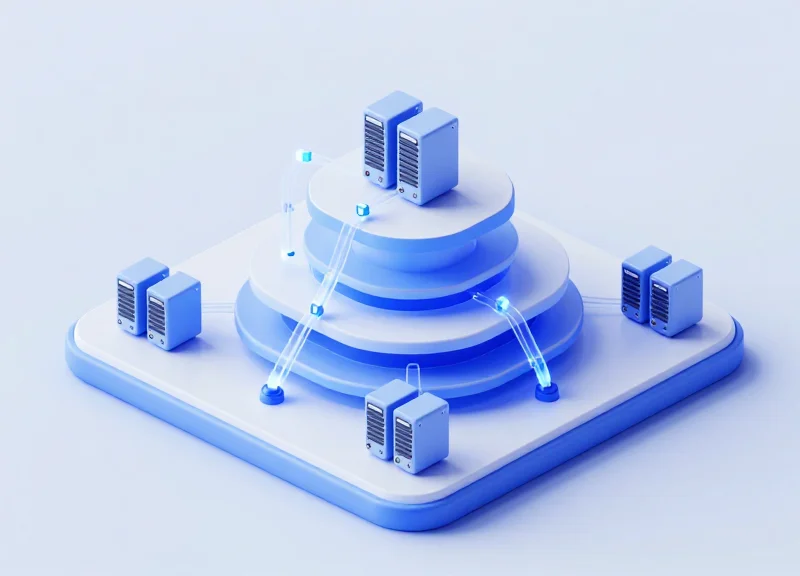
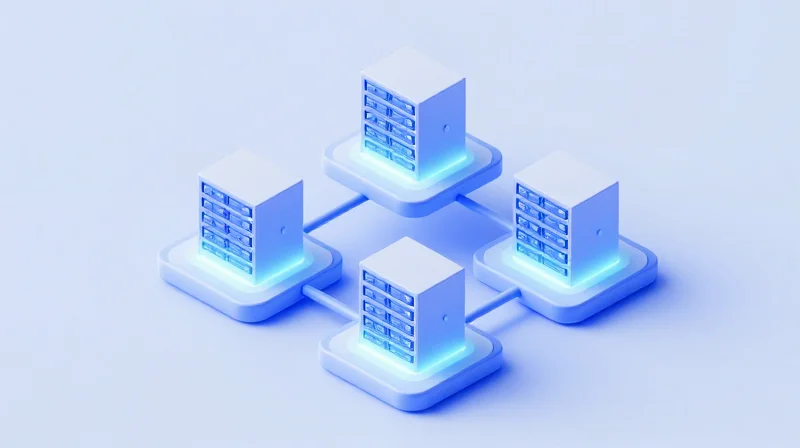
Modern ISP architecture is built upon a deterministic three-tier model—Core, Distribution, and Access—designed to manage massive traffic volumes while maintaining high availability and low latency. This modular approach allows service providers to scale specific segments of the network without disrupting the entire infrastructure, transitioning from legacy copper systems to high-performance, optical-first environments that prioritize packet efficiency and path redundancy.
The Core Layer: The High-Speed Backbone
The core layer functions as the network's high-speed backbone, responsible for transporting large blocks of data between geographically dispersed points. In a modern optical environment, this layer utilizes Dense Wavelength Division Multiplexing (DWDM) and high-capacity Multiprotocol Label Switching (MPLS) routers to ensure minimal packet manipulation and maximum throughput. Its primary goal is reliability and speed, often featuring mesh topologies to prevent single points of failure.
The Distribution and Access Layers
The distribution layer acts as the intermediary, aggregating traffic from multiple access points and applying routing policies, Quality of Service (QoS) tagging, and security protocols. Below it, the access layer—now predominantly Fiber-to-the-Home (FTTH) using GPON or XGS-PON technologies—connects directly to the end-user's Customer Premises Equipment (CPE). This layer is where bandwidth is physically delivered and traffic shaping begins.
| Layer | Primary Function | Key Technologies |
|---|---|---|
| Core | High-capacity packet switching and regional transport | IP/MPLS, DWDM, Terabit Routers |
| Distribution | Traffic aggregation and policy enforcement | Carrier Ethernet, BNG (Broadband Network Gateway) |
| Access | End-user delivery and local connectivity | GPON, XGS-PON, OLT, ONT |
- Why is a hierarchical design necessary for modern ISPs?
It simplifies network management, improves fault isolation by containing issues within specific layers, and enables granular scalability across different geographic regions. - How does an optical-first design benefit the access layer?
Optical-first designs replace traditional copper with fiber, significantly increasing symmetrical bandwidth, reducing electromagnetic interference, and lowering maintenance costs.
Maximizing Throughput with DWDM and Optical Layer Optimization

Maximizing Throughput with DWDM and Optical Layer Optimization
ISP network optimization at the physical layer is primarily a challenge of maximizing the bit-per-second capacity of existing fiber-optic strands. Through Dense Wavelength Division Multiplexing (DWDM), service providers can multiplex dozens of separate data channels onto a single fiber pair by using different wavelengths (colors) of laser light. By optimizing the optical layer, ISPs can scale their core capacity from 10 Gbps per channel to 400G, 800G, and even 1.2T per wavelength, effectively delaying the need for expensive new fiber builds while reducing the cost-per-bit of transported data.
The Role of Coherent Optics in Spectral Efficiency
Modern optimization relies heavily on coherent optical technology. Unlike traditional 'on-off keying' (NRZ), coherent optics use advanced modulation formats such as Quadrature Amplitude Modulation (QAM) and Phase Shift Keying (PSK) to encode more bits into every symbol. This is coupled with high-speed Digital Signal Processors (DSPs) that provide electronic compensation for Chromatic Dispersion (CD) and Polarization Mode Dispersion (PMD). These advancements allow ISPs to push higher throughput over thousands of kilometers without the need for periodic signal regeneration, which is a critical factor in long-haul network efficiency.
| Technology Type | Typical Capacity | Max Reach (Unregenerated) | Optimization Benefit |
|---|---|---|---|
| Standard NRZ (10G) | 10 Gbps | ~80 km | Low cost for short-haul access layers. |
| Coherent 100G/200G | 100-200 Gbps | 2,000+ km | Standardized long-haul efficiency. |
| High-Baud Coherent (800G+) | 800 Gbps - 1.2 Tbps | < 500 km | Maximum density for data center interconnects (DCI). |
Dynamic Wavelength Routing and ROADMs
Optimization is not merely about raw speed; it is also about agility. The implementation of Reconfigurable Optical Add-Drop Multiplexers (ROADMs) allows ISPs to steer wavelengths across the network via software control rather than manual patching. Using Colorless, Directionless, and Contentionless (CDC) architectures, network engineers can dynamically re-route traffic to bypass fiber cuts or alleviate congestion. This programmable optical layer ensures that the underlying transport infrastructure can adapt to shifting traffic patterns between the core and the edge in real-time.
Optical Layer FAQ
- How does DWDM differ from CWDM in ISP environments?
CWDM (Coarse WDM) uses wider channel spacing and is generally limited to 18 channels over short distances. DWDM uses much tighter spacing (50GHz or 100GHz grids), allowing for up to 80-96 channels and is designed for long-haul transmission through optical amplification. - Why is spectral efficiency important for network optimization?
Spectral efficiency measures how much data can be transmitted over a given frequency bandwidth (bits/s/Hz). Higher spectral efficiency allows ISPs to squeeze more total capacity out of the limited C-band and L-band spectrum available in fiber optics. - What is the impact of Shannon's Limit on optical optimization?
Shannon's Limit defines the maximum theoretical rate at which information can be transmitted over a noisy channel. As ISPs approach this limit, optimization focuses on probabilistic constellation shaping (PCS) to fine-tune the modulation to the specific signal-to-noise ratio of a fiber span.
Advanced Traffic Engineering: Beyond Standard BGP
Advanced Traffic Engineering (TE) is the process of steering traffic across an ISP's backbone based on real-time network conditions rather than static destination-based tables, utilizing technologies like Segment Routing (SR) and MPLS-TE to minimize congestion and latency. While standard Border Gateway Protocol (BGP) typically follows the 'shortest path' metric, advanced TE allows operators to load-balance traffic across underutilized links and reserve bandwidth for high-priority services.
The Limitations of Destination-Based Routing
Traditional IP routing is essentially 'hop-by-hop' and destination-oriented. Each router makes an independent decision based on the shortest path to a prefix, often leading to a phenomenon known as 'hot-potato routing.' In this scenario, traffic is dumped onto the nearest exit point as quickly as possible, frequently causing specific backbone links to become saturated while alternative, slightly longer paths remain idle. This lack of global visibility is the primary driver for adopting more sophisticated TE mechanisms.
Segment Routing (SR): The Modern Standard
Segment Routing represents a paradigm shift by moving the intelligence of the path calculation to the source node. Instead of routers in the core maintaining complex state information for every possible tunnel, the ingress router prepends a 'segment list' to the packet header. This list dictates the exact path the packet must take through the network. SR-MPLS leverages the existing MPLS data plane, while SRv6 uses IPv6 extension headers, both allowing for highly scalable, policy-driven traffic steering without the overhead of legacy protocols.
| Feature | Standard BGP | MPLS-TE (RSVP) | Segment Routing (SR) |
|---|---|---|---|
| Path Selection | Shortest AS-Path | Constrained Path (CSPF) | Source-defined Policy |
| State in Core | Minimal | High (Per-tunnel) | None (Stateless) |
| Congestion Aware | No | Yes | Yes |
| Complexity | Low | High | Medium |
Dynamic Steering and Path Computation Elements (PCE)
To achieve true optimization, ISPs often deploy a Path Computation Element (PCE) within an SDN (Software-Defined Networking) architecture. The PCE maintains a global view of the network topology and link utilization. When a specific link exceeds a predefined threshold (e.g., 70% utilization), the PCE can dynamically recompute paths for specific traffic classes and push those instructions to the routers via Segment Routing. This 'closed-loop' automation ensures that latency-sensitive traffic, such as gaming or video conferencing, is automatically shifted to the lowest-latency path available.
Common Traffic Engineering Queries
- What is the primary benefit of SRv6 over SR-MPLS?
SRv6 eliminates the need for MPLS labels entirely by using standard IPv6 addresses as segments, simplifying the protocol stack and enabling better integration with application-layer metadata. - How does Traffic Engineering reduce end-to-end latency?
By bypassing congested peering points and utilizing 'Tactical TE' to steer traffic over fiber spans with lower measured RTT (Round Trip Time), even if they are geographically longer. - Can BGP and Segment Routing coexist?
Yes, ISPs typically use BGP for inter-domain reachability and Segment Routing for intra-domain path optimization within their own backbone.
The Strategic Importance of Peering and IXPs
The Role of Interconnectivity in ISP Optimization
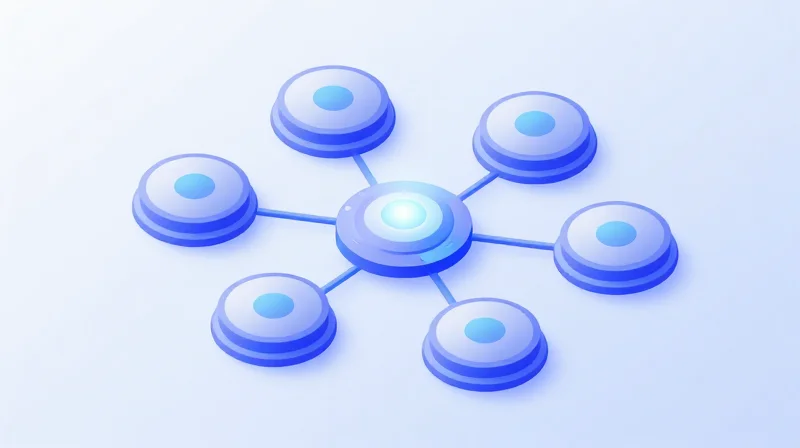
Peering and Internet Exchange Points (IXPs) represent a move away from hierarchical IP transit toward a distributed, flat network topology. By exchanging traffic directly with other Autonomous Systems (AS) instead of routing through an upstream provider, ISPs minimize the physical and logical distance data must travel. This optimization technique effectively 'short-circuits' the global internet fabric, allowing packets to bypass congested transit hubs and reducing the total number of router hops, which is the primary driver of end-to-end latency and jitter.
Peering vs. IP Transit: Performance and Cost Dynamics
| Metric | IP Transit | Peering (IXP/PNI) |
|---|---|---|
| Cost Structure | Metered (95th Percentile) - Expensive | Fixed Port Fees - Cost-efficient at scale |
| AS-PATH Length | Typically longer (3+ hops) | Shortest possible (1 hop) |
| Traffic Control | Limited to BGP communities | High granularity via direct sessions |
| Latency | Variable based on provider routing | Deterministic and minimal |
Technical Advantages: Reducing Hop Counts and Tromboning
The most significant technical gain from IXP participation is the elimination of 'tromboning,' where traffic between two local networks is forced to travel to a distant regional hub and back. By establishing a Presence (PoP) at a local IXP, an ISP can peer with Content Delivery Networks (CDNs), cloud providers, and other local ISPs. This results in an AS-PATH length of one, the theoretical limit for BGP optimization. Furthermore, direct interconnects allow for more stable BGP sessions, as they are less susceptible to the route flapping and convergence delays often seen in complex upstream transit paths.
Private Network Interconnects (PNI) vs. Public Peering
While public peering at an IXP allows an ISP to reach hundreds of networks through a single shared switching fabric, high-traffic destinations often require Private Network Interconnects (PNI). A PNI is a dedicated physical cross-connect between two routers. From an optimization standpoint, PNIs are used for the 'heavy hitters'—such as Netflix, Google, or Akamai—to ensure that massive traffic volumes do not saturate shared IXP ports, providing a dedicated, uncongested 'express lane' for the most demanding data streams.
Strategic Interconnection FAQs
- How does peering reduce the 95th percentile billing?
By offloading traffic to free or low-cost peering ports, an ISP reduces the volume of traffic crossing its paid transit interfaces, lowering the peak usage levels that determine monthly transit costs. - Does peering improve network redundancy?
Yes. IXPs provide a diverse fabric of hundreds of potential paths. If a primary transit provider fails, peered routes remain active, ensuring that localized or cached content remains accessible to users. - What is the impact on BGP convergence?
Local peering typically results in faster convergence because the BGP neighbors are physically closer and have fewer intermediate devices, leading to quicker route propagation during topology changes.
SDN and NFV: Bringing Programmability to the Edge

Software-Defined Networking (SDN) and Network Functions Virtualization (NFV) represent a paradigm shift in ISP network optimization by decoupling the control logic from the underlying physical infrastructure. This separation allows operators to programmatically steer traffic, deploy network services as virtual instances on commodity hardware, and scale resources on-demand without the manual overhead of physical hardware replacement. By pushing these capabilities to the edge of the network—closer to the end-user—ISPs can significantly reduce latency and tailor service delivery to specific regional demands.
Architectural Agility: Decoupling the Control Plane
In traditional ISP architectures, the 'intelligence' of a router or switch is embedded within the device itself, leading to a fragmented network that is difficult to manage at scale. SDN centralizes this intelligence into a controller, providing a holistic view of the entire topology. This allows for dynamic traffic engineering; for instance, if a specific edge node experiences a surge in demand, the SDN controller can automatically reroute traffic via less congested paths or spin up additional virtualized capacity. NFV complements this by replacing dedicated appliances—such as firewalls, BroadBand Remote Access Servers (BRAS), and load balancers—with Virtual Network Functions (VNFs) that run on standard x86 servers.
| Feature | Legacy Hardware Model | SDN/NFV Approach |
|---|---|---|
| Provisioning | Manual, on-site hardware install | Automated, zero-touch software deployment |
| Scalability | Vertical (buy bigger boxes) | Horizontal (elastic virtual instances) |
| Traffic Steering | Static, protocol-dependent (OSPF/BGP) | Dynamic, centralized control via software |
| CAPEX/OPEX | High cost for proprietary hardware | Lower cost through commodity servers and automation |
Programmable Edge and Multi-access Edge Computing (MEC)
The integration of SDN/NFV at the edge—often referred to as Multi-access Edge Computing (MEC)—is critical for high-performance applications like 5G, VR, and industrial IoT. By virtualizing the Edge Router or Provider Edge (PE) functions, ISPs can process data locally rather than backhauling it to a central data center. This localized programmability means that network slices can be created for specific customers or applications, ensuring that critical traffic receives the necessary bandwidth and latency guarantees through automated policy enforcement.
Optimizing Through Automation and FAQs
- How does SDN help in reducing ISP network congestion?
SDN provides global visibility of the network state, allowing for real-time traffic redirection based on current load, rather than relying on static routing tables which may lead to sub-optimal paths. - What is the primary benefit of NFV for an ISP's operational efficiency?
NFV allows ISPs to deploy network services (like VPNs or firewalls) in minutes as software instances, whereas traditional methods required shipping and installing physical appliances at the customer premises. - Does virtualizing network functions impact performance?
While there was historically a performance gap, modern technologies like DPDK (Data Plane Development Kit) and SR-IOV allow virtualized functions to achieve near-line-rate performance on commodity hardware. - What role does automation play in this architecture?
Automation is the orchestrator that links SDN and NFV; it monitors network health and automatically triggers the instantiation of new VNFs or adjusts routing parameters to maintain SLAs without human intervention.
Quality of Service (QoS) in a High-Bandwidth World
Quality of Service (QoS) in a High-Bandwidth World
In the modern landscape of ISP network optimization, the availability of multi-gigabit bandwidth does not eliminate the need for intelligent traffic management. Even on high-capacity links, congestion points—often at the network edge or peering interfaces—can cause micro-bursts that lead to packet loss and jitter. QoS frameworks allow ISPs to move beyond a 'best-effort' delivery model, categorizing traffic based on its sensitivity to delay and ensuring that mission-critical applications like Voice over IP (VoIP), video conferencing, and competitive gaming receive preferential treatment through the network fabric.
The Mechanics of Packet Prioritization
Packet prioritization relies on Differentiated Services Code Point (DSCP) markings and Class of Service (CoS) bits to identify the nature of data flows. When a router receives a packet, it inspects these headers and assigns the packet to a specific hardware queue. Real-time traffic is typically mapped to an 'Expedited Forwarding' (EF) queue, which is processed with high priority, while background data is relegated to 'Best Effort' (BE) or 'Lower than Best Effort' (LBE) queues. This ensures that a large software update does not impact the stability of a concurrent SIP session or a low-latency gaming stream.
| Algorithm | Primary Mechanism | Ideal Application |
|---|---|---|
| Strict Priority (SP) | Processes high-priority queues first until empty | Emergency services and VoIP signals |
| Weighted Fair Queuing (WFQ) | Allocates bandwidth based on weight to prevent starvation | General mixed-media traffic |
| FQ-CoDel | Combines fair queuing with delay control to mitigate bufferbloat | Consumer broadband with high interactive usage |
| Low Latency Queuing (LLQ) | Adds a strict priority queue to Class-Based Weighted Fair Queuing | Enterprise-grade video and voice over WAN |
Advanced Queue Management (AQM) and Jitter Mitigation
One of the primary challenges in high-bandwidth networks is 'bufferbloat,' where oversized buffers in networking equipment cause excessive latency as packets sit in line. ISPs employ Active Queue Management (AQM) techniques such as Controlled Delay (CoDel) or Random Early Detection (RED) to manage these buffers dynamically. By dropping packets early when congestion is detected, these algorithms signal TCP-based applications to reduce their transmission rate, effectively keeping the 'standing queue' small and ensuring that jitter-sensitive packets can pass through the node with minimal variance in arrival time.
- Why is QoS necessary if I have a 1Gbps connection?
Bandwidth is the width of the pipe, but congestion often occurs at the entry and exit points (peering and last-mile). QoS manages the order of traffic during these momentary bottlenecks to prevent lag. - How does ISP optimization handle encrypted traffic?
While the payload is encrypted, ISPs use Deep Packet Inspection (DPI) or metadata analysis to identify traffic patterns (e.g., small, frequent packets typical of gaming) and apply the correct QoS profile. - What is the impact of QoS on jitter?
QoS reduces jitter by ensuring that real-time packets are not stuck behind large 'jumbo frames' or bulk data bursts, maintaining a consistent interval between packet arrivals.
Real-Time Telemetry and Predictive Analytics

The Shift from SNMP to Streaming Telemetry
Modern ISP network optimization relies on the shift from legacy polling-based protocols like SNMP to push-based streaming telemetry. While SNMP operates on a 'pull' model—requesting data at set intervals—streaming telemetry continuously pushes granular performance metrics from network devices to a collector in near real-time. This allows engineers to identify micro-bursts and transient congestion events that traditional 5-minute polling cycles would miss entirely.
| Feature | Legacy SNMP (Pull) | Streaming Telemetry (Push) | ||||||
|---|---|---|---|---|---|---|---|---|
| Data Retrieval | Periodic polling by NMS | Continuous data stream from device | ||||||
| Granularity | Minutes (Low resolution) | Milliseconds (High resolution) | CPU Impact | Higher (Processing overhead per poll) | Lower (Optimized for performance) | Optimization Use | Post-event analysis | Real-time automated traffic engineering |
Harnessing AI for Predictive Maintenance
Predictive analytics utilizes Machine Learning (ML) algorithms to analyze historical telemetry data and identify patterns preceding a link failure or hardware degradation. By correlating metrics such as optical signal-to-noise ratios (OSNR) and CRC error rates, ISPs can predict optical fiber degradation or line card failure before it impacts subscriber services. This enables 'self-healing' networks where traffic is rerouted automatically using Segment Routing (SR) or RSVP-TE based on predicted, rather than just observed, congestion.
Implementation Workflow for Real-Time Analytics
- Data Acquisition
Establish gRPC, NetConf, or Google Protocol Buffers (GPB) streams from edge and core routers. - Data Normalization
Process raw telemetry through a pipeline like Kafka or Logstash to standardize disparate data formats. - AI Model Inference
Apply ML models to detect anomalies and forecast capacity requirements based on growth trends. - Automated Remediation
Trigger SDN controllers to adjust BGP communities or MPLS paths to mitigate predicted bottlenecks.
Predictive Analytics FAQ
- How does streaming telemetry improve MTTR?
By providing immediate alerts on performance deviations, telemetry allows NOC teams to pinpoint the root cause of an issue instantly, significantly reducing the Mean Time To Repair (MTTR). - Can predictive analytics prevent all outages?
While it cannot prevent physical cuts (e.g., fiber cuts), it can predict hardware wear-out and software memory leaks, allowing for scheduled maintenance instead of emergency repairs. - What is the role of Big Data in ISP optimization?
Big Data platforms store years of telemetry data, enabling ISPs to perform long-term capacity planning and understand seasonal traffic shifts with high precision.
Security as a Performance Metric: DDoS Mitigation
Security as a Performance Metric: DDoS Mitigation
In modern ISP architecture, security is no longer a separate silo but a fundamental performance metric; a network is not optimized if its capacity is consumed by malicious traffic or if legitimate users suffer high latency during a volumetric attack. Effective optimization requires integrating security protocols directly into the routing fabric, ensuring that mitigation occurs at the edge to preserve core bandwidth and maintain service-level agreements (SLAs).
Automated BGP Flowspec for Granular Filtering
Border Gateway Protocol (BGP) Flowspec (RFC 5575) is a transformative tool for ISP optimization. It allows operators to propagate granular traffic filtering rules—based on source, destination, protocol, or even packet length—across the entire network in seconds. Unlike traditional Blackhole routing, which drops all traffic to a targeted IP, Flowspec enables surgical precision, discarding only the attack traffic while allowing legitimate user requests to pass through unaffected.
High-Capacity Scrubbing Centers
When attacks exceed the local filtering capabilities of edge routers, ISPs utilize high-capacity scrubbing centers. Traffic is redirected via BGP updates to these centralized facilities, where Deep Packet Inspection (DPI) and heuristic analysis separate 'dirty' traffic from 'clean' traffic. The cleaned traffic is then injected back into the network via GRE tunnels or MPLS paths, ensuring that the customer's origin server remains operational and responsive even under multi-terabit assault.
| Feature | Traditional RTBH Mitigation | Modern Flowspec & Scrubbing |
|---|---|---|
| Granularity | All-or-nothing (Destination IP) | Surgical (L3/L4 parameters) |
| Traffic Impact | Total service outage for target | Zero or minimal impact on users |
| Automation | Manual or script-based | API-driven and telemetry-integrated |
| Latency | Negligible (traffic dropped) | Low (optimized re-injection paths) |
Key Considerations for Secure Optimization
- How does DDoS mitigation improve general latency?
By offloading malicious traffic at the peering edge, ISPs prevent congestion on internal backbone links, ensuring that CPU cycles on routers and buffer space on interfaces are reserved for legitimate, revenue-generating traffic. - What is the role of telemetry in this context?
Streaming telemetry provides the real-time visibility needed to trigger mitigation. When NetFlow or IPFIX data indicates a spike in specific traffic patterns, automated systems can deploy Flowspec rules before the congestion impacts regional performance. - Is scrubbing always the best option?
Not necessarily. While scrubbing is effective for complex attacks, it can introduce slight latency. ISP optimization focuses on resolving what is possible at the edge via Flowspec first, reserving scrubbing for massive volumetric or sophisticated application-layer threats.
Future-Proofing: Transitioning to 400G and 800G Ethernet
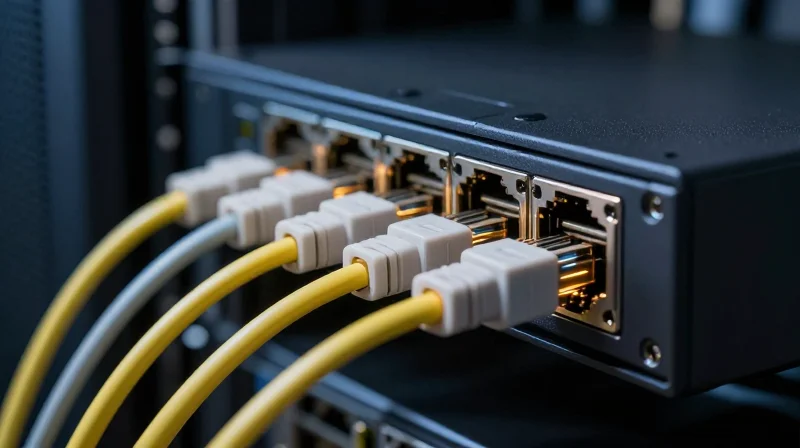
The Shift to Ultra-High-Speed Ethernet: 400G and 800G Architecture
In the context of ISP network optimization, transitioning to 400G and 800G Ethernet represents a fundamental shift in how backbones manage massive data throughput while maintaining a sustainable cost-per-bit. This migration is not merely a speed upgrade; it involves a complete re-engineering of the physical and link layers, utilizing advanced modulation like PAM4 (Pulse Amplitude Modulation 4-level) and high-speed SerDes (Serializer/Deserializer) technology to double or quadruple capacity within existing rack footprints.
Transceiver Evolution and Physical Layer Constraints
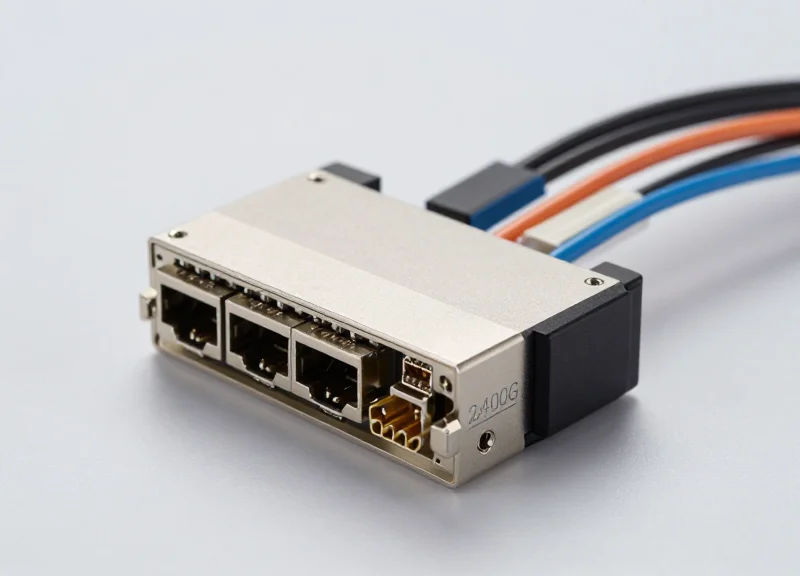
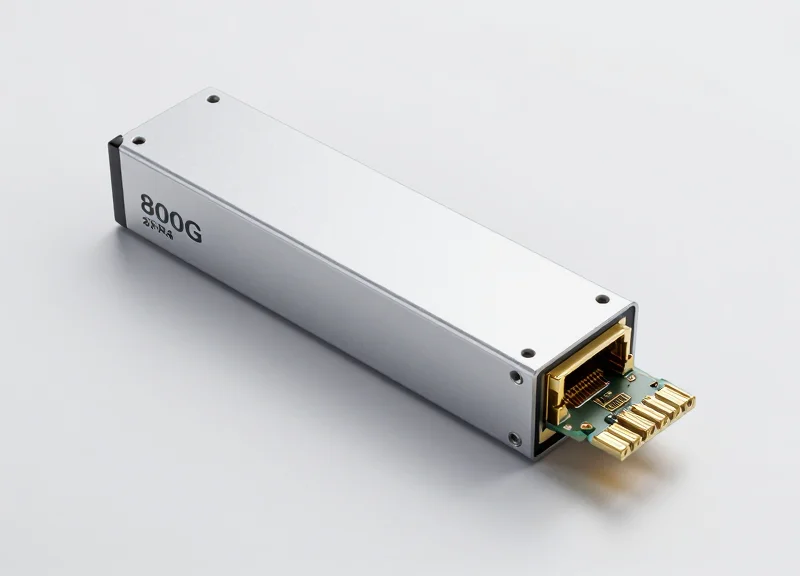
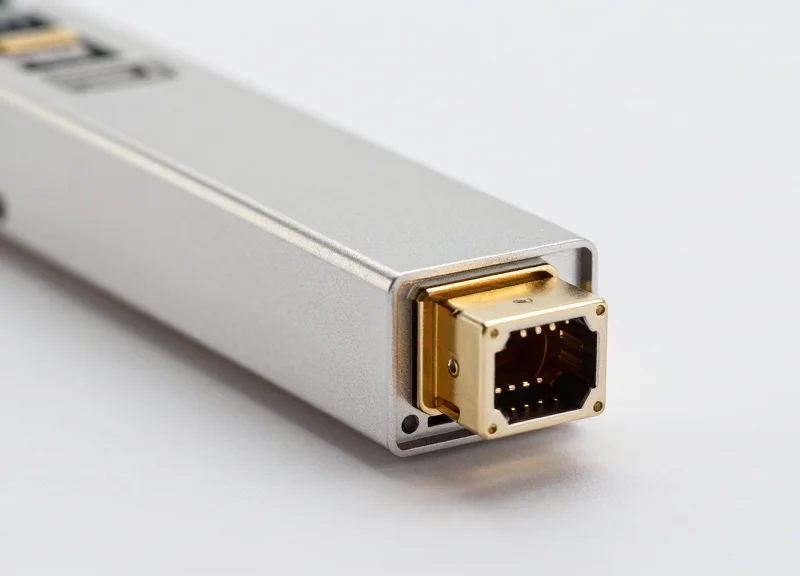
The adoption of QSFP-DD (Double Density) and OSFP (Octal Small Form Factor Pluggable) modules is central to this transition. While 400G has reached maturity in core deployments, 800G is pushing the boundaries of 112G SerDes lanes. These advancements allow ISPs to achieve higher port density, but they introduce significant signal integrity challenges and necessitate shorter copper traces or increased reliance on Active Electrical Cables (AECs) and Co-Packaged Optics (CPO).
| Feature | 100G (Standard) | 400G (Current) | 800G (Emerging) |
|---|---|---|---|
| Modulation | NRZ | PAM4 | PAM4 / Coherent |
| Typical Form Factor | QSFP28 | QSFP-DD / OSFP | OSFP / OSFP1600 |
| Power Per Port | ~3.5W - 5W | ~12W - 14W | ~25W - 30W |
| Lane Speed | 25G SerDes | 56G / 112G SerDes | 112G / 224G SerDes |
Thermal and Power Management Challenges
As ISPs densify their infrastructure, thermal dissipation becomes a primary bottleneck for optimization. An 800G OSFP module can consume up to 30 watts, meaning a fully loaded 1RU switch could generate over 1kW of heat from optics alone. Effective optimization requires upgrading cooling systems to liquid cooling or advanced air-flow designs and implementing AI-driven power management to shut down unused lanes or lower voltage during off-peak hours.
Roadmap for Backbone Migration
- Audit Existing Fiber Plant
Ensure existing G.652 or G.655 fiber can support PAM4 signal requirements and evaluate the need for Raman amplification. - Incremental Core Upgrades
Deploy 400G ZR/ZR+ coherent optics on existing DWDM systems to bridge long-haul distances without expensive OEO regenerators. - Aggregation Layer Optimization
Transition leaf-spine architectures to 400G to eliminate oversubscription ratios created by 100G uplinks. - Pilot 800G Testing
Validate 800G interoperability in the data center interconnect (DCI) space before moving to the wider edge.
FAQ: Future-Proofing Ethernet Infrastructures
- Is 800G backward compatible with 400G?
Most 800G ports use breakout cables (e.g., 2x400G) or backward-compatible cages like QSFP-DD, though power and cooling must be verified. - What is the main driver for moving to 800G?
The explosion of AI/ML traffic and 5G backhaul demands requires the 2x density increase that 800G provides over 400G. - How does 400G ZR impact cost?
It eliminates the need for standalone transponders by plugging coherent optics directly into routers, drastically reducing CAPEX and rack space.
ISP Network Optimization is a multidisciplinary challenge that merges physical layer physics with complex software logic. By mastering these technical domains, providers can offer the reliability and speed demanded by the next generation of digital services. To learn more about optimizing your specific network architecture, contact our senior engineering team for a consultation.