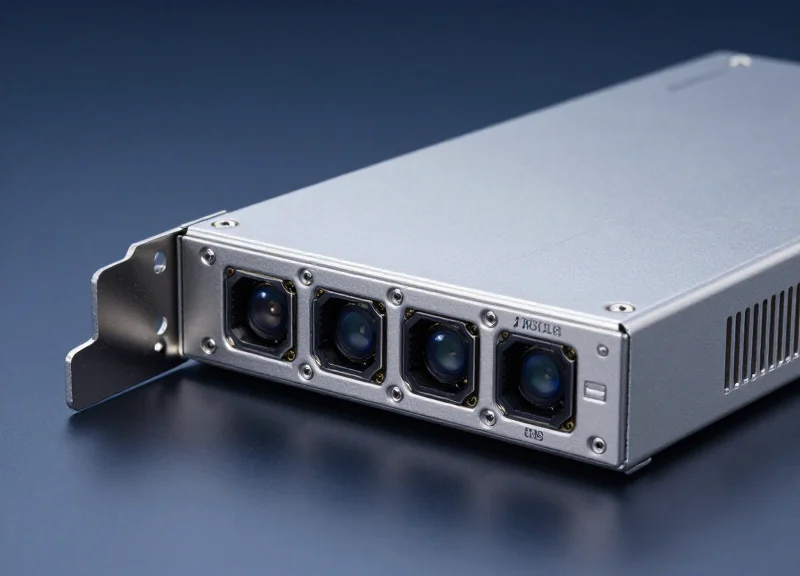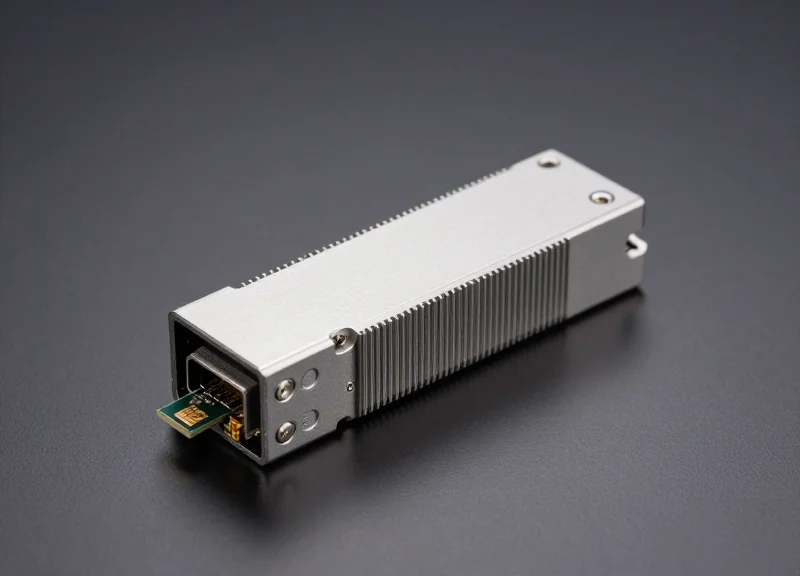
As the demand for bandwidth skyrockets, data center operators face a dual challenge: increasing capacity while drastically reducing power consumption and latency. Traditional DSP-based 800G modules are reaching their thermal and economic limits. Enter 800G LPO (Linear-drive Pluggable Optics) technology—a disruptive innovation that streamlines signal processing to deliver unprecedented efficiency. Ubytelink stands at the forefront of this shift, providing the wholesale infrastructure and custom manufacturing expertise needed to fuel the next generation of high-speed networking.
What is 800G LPO Technology?
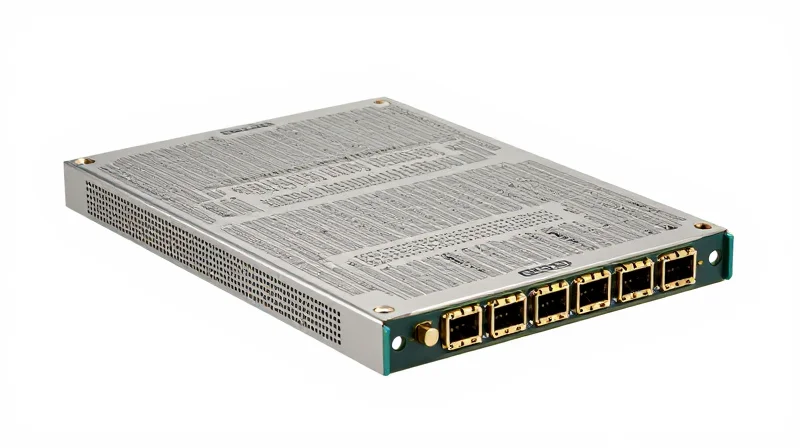
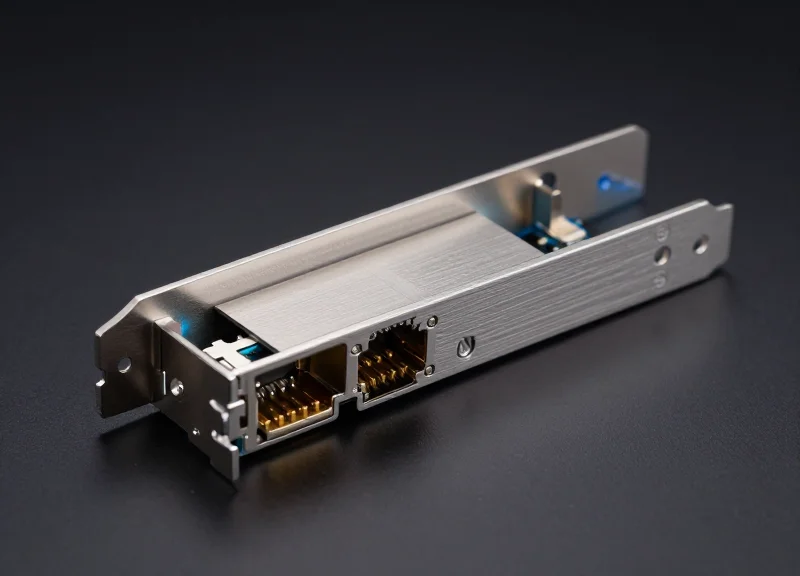
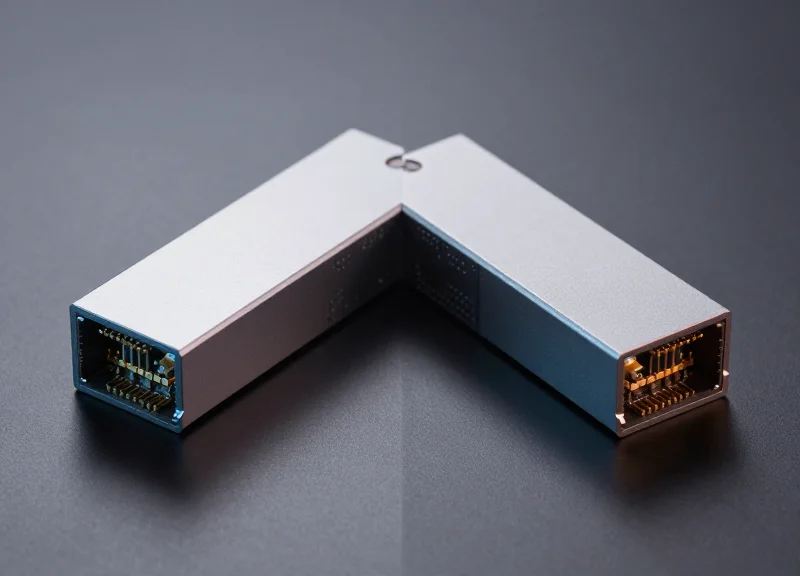
800G LPO technology represents a fundamental architectural shift in optical communications, specifically designed to meet the extreme demands of AI and machine learning workloads. By removing the Digital Signal Processor (DSP) from the transceiver and relying on a direct linear-drive mechanism, these modules achieve significantly lower power draw and near-zero latency. Unlike traditional retimed optics, LPO utilizes the advanced equalization capabilities of the host ASIC—such as those found in high-end switches and routers—to maintain signal integrity, making it a highly efficient alternative for short-reach and intra-data center connections.
The Engineering Behind DSP-Free Architecture
In a conventional 800G transceiver, the DSP is the most power-hungry component, responsible for regenerating and cleaning the electrical signals before they are converted to optical ones. 800G LPO technology bypasses this step. Instead, it uses high-linearity drivers and trans-impedance amplifiers (TIAs) to transmit the signal in its analog form. This 'linear drive' approach effectively shifts the signal processing burden to the host switch, which is already equipped with the necessary SerDes (Serializer/Deserializer) power. The result is a simplified hardware design that generates far less heat and requires less complex thermal management systems.
| Feature | Traditional 800G (with DSP) | 800G LPO (Linear Drive) |
|---|---|---|
| Power Consumption | ~16W - 18W | ~8W - 10W |
| Latency | Microseconds (due to DSP) | Nanoseconds (near-zero) |
| Heat Dissipation | High | Significantly Lower |
| Component Cost | High (DSP is expensive) | Reduced (No DSP chip) |
Frequently Asked Questions About 800G LPO
- Why is power reduction so critical for 800G LPO?
As data centers scale to thousands of 800G ports for AI training, the cumulative power savings of 50% per module translates into megawatts of electricity saved and reduced cooling infrastructure requirements. - Does LPO work with any 800G switch?
LPO requires a host port with strong equalization capabilities. While not universal, most modern high-radix switches designed for 2026 deployments are being built with LPO compatibility in mind. - What are the typical use cases for LPO?
LPO is ideal for 'east-west' traffic within the data center, specifically connecting leaf-and-spine switches or linking GPU clusters where low latency is vital for parallel processing.
LPO vs. Conventional DSP Optics: A Comparative Analysis
LPO vs. Conventional DSP Optics: A Comparative Analysis
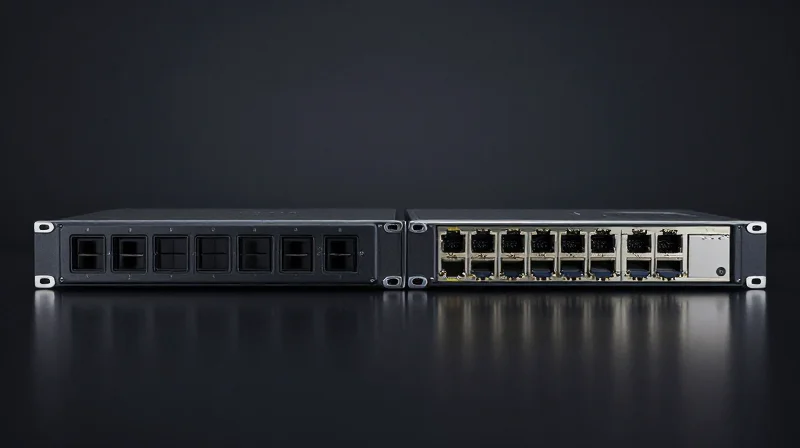
The primary differentiator between 800G LPO and conventional DSP-based optics is the elimination of the power-intensive Digital Signal Processor (DSP) chip within the transceiver module. By utilizing a linear-drive architecture that shifts the burden of signal equalization to the host ASIC (Application-Specific Integrated Circuit), LPO modules achieve approximately 50% lower power consumption and significantly reduced latency compared to standard 800G modules, making them ideal for high-density AI and machine learning workloads.
Key Performance Indicators: LPO vs. Standard DSP
| Feature | 800G LPO (Linear Drive) | 800G DSP-Based (Standard) |
|---|---|---|
| Power Consumption | <8W (Typical) | 14W - 16W (Typical) |
| Transmission Latency | Nanosecond Scale (Near-zero) | Microsecond Scale (Processing delay) |
| Complexity & BOM | Lower (No DSP chip) | Higher (DSP + complex thermal cooling) |
| Primary Use Case | AI Clusters & Short-Reach (SR8/DR8) | Long-Haul & Metro (LR/ER/ZR) |
| Reliability (MTBF) | Higher (Simplified analog path) | Standard (Heat-sensitive components) |
Efficiency and Thermal Management in 800G Networks
For wholesale buyers and data center operators, thermal management is a critical factor in Total Cost of Ownership (TCO). Conventional 800G DSP optics generate substantial heat, requiring aggressive cooling solutions that consume additional energy. LPO technology addresses this by maintaining a lower thermal profile. Because LPO modules do not perform power-hungry digital signal processing locally, they allow for higher port density on the switch without exceeding thermal safety limits, which is vital for the 2026 push toward 51.2T and 102.4T switching fabrics.
Common Procurement Questions
- Can 800G LPO be used for long-distance links?
Generally, no. LPO is optimized for short-reach interconnects (typically up to 500m) because the host SerDes must compensate for the entire link's signal degradation. For long-haul or metro distances, DSP-based optics remain the industry standard. - Does 800G LPO require specific switch hardware?
Yes, LPO is a 'host-dependent' technology. Wholesale purchasers must ensure their switches feature high-performance SerDes and firmware capable of supporting linear-drive signal paths to maintain signal integrity. - How does the removal of the DSP affect bulk pricing?
The absence of the DSP chip—one of the most expensive components in a transceiver—significantly reduces the Bill of Materials (BOM). This translates to lower per-unit costs for bulk orders compared to standard 800G transceivers.
The Power Efficiency Advantage: Slashing Data Center OpEx

The Power Efficiency Advantage: Slashing Data Center OpEx
The transition to 800G Linear-drive Pluggable Optics (LPO) represents a fundamental shift in data center economics, primarily through the elimination of the power-hungry Digital Signal Processor (DSP). By removing this component and relying on the host ASIC for signal compensation, LPO modules reduce the power draw of an 800G link from approximately 16-18 Watts to just 8-10 Watts. This nearly 50% reduction in energy usage allows data center operators to drastically cut their utility bills and lower their carbon footprint, making it a critical technology for meeting ESG (Environmental, Social, and Governance) targets in 2026.
Comparative Power Profiles: Standard vs. LPO
| Feature | Conventional 800G DSP Optics | 800G LPO Technology | OpEx Impact |
|---|---|---|---|
| Typical Power Draw | 16W - 19W per module | 8W - 10W per module | Up to 50% Savings |
| Heat Dissipation | High (Requires robust cooling) | Low (Minimal thermal load) | Reduced HVAC Costs |
| Latency | 100ns+ (DSP Processing) | < 1ns (Linear Drive) | Improved Performance |
| Rack Density | Limited by thermal ceiling | High density supported | Greater Capacity/Sq Ft |
Thermal Management and Infrastructure Longevity
Lower power consumption does more than just reduce electricity costs; it fundamentally changes the thermal profile of the networking rack. DSP-based modules generate intense localized heat, often necessitating specialized cooling infrastructure and limiting the number of active ports in high-density environments. 800G LPO modules operate at significantly lower temperatures, reducing the strain on the data center's HVAC systems. This cooler operation extends the lifespan of adjacent hardware components and allows for higher port densities, enabling operators to maximize their existing floor space without upgrading expensive cooling plants.
- How much can a wholesale LPO deployment save annually?
In a large-scale deployment of 10,000 links, switching from standard 800G to LPO can save over 80,000 Watts of continuous power. At average commercial rates, this can equate to hundreds of thousands of dollars in annual energy savings alone. - Does the removal of the DSP affect reliability?
Paradoxically, LPO can be more reliable in the long term because there is no DSP chip to fail. Since heat is the primary enemy of optical components, the lower operating temperatures of LPO often result in a longer Mean Time Between Failures (MTBF). - Is LPO compatible with existing 800G switches?
LPO requires high-quality SerDes on the host ASIC side. Most modern 51.2T and newer switches are designed with the signal integrity needed to support LPO deployments effectively.
When sourcing 800G LPO technology wholesale, the return on investment (ROI) is realized through both lower initial bulk pricing and the immediate reduction in operational overhead. For hyperscalers and enterprises scaling their AI clusters, LPO represents the most cost-effective path to 800G networking in 2026.
Ultra-Low Latency for AI and HPC Workloads

800G Linear-drive Pluggable Optics (LPO) provide a near-zero latency path for data transmission by eliminating the digital signal reconstruction time typical of conventional Digital Signal Processors (DSPs). In AI and High-Performance Computing (HPC) environments, where parallel processing requires frequent, high-speed communication between thousands of nodes, this reduction in nanosecond delay is a critical performance multiplier that improves overall system throughput.
The Impact of Analog Signal Paths on AI Synchronization
Conventional 800G transceivers rely on a DSP to re-time, equalize, and compensate for signal degradation through digital algorithms. While effective for long-reach connectivity, this process introduces a delay of approximately 100ns to 150ns per module. LPO modules replace this complex digital stage with high-linearity analog components, shifting the equalization burden to the host-side switch SerDes. This architectural shift reduces the module's internal latency to the picosecond range—essentially the physical speed of light through the circuitry.
| Feature | Conventional 800G (DSP-Based) | 800G LPO (Linear-Drive) |
|---|---|---|
| Processing Delay | ~100ns - 150ns | <10ps (Negligible) |
| Signal Processing | Digital Reconstruction/Retiming | Pure Linear Analog |
| Power-to-Latency Ratio | High Power / High Latency | Ultra-Low Power / Low Latency |
| AI Workload Fit | General Data Center/Cloud | Latency-Sensitive AI/HPC Training |
Solving the Tail Latency Problem in LLM Training
During Large Language Model (LLM) training, GPUs must frequently synchronize gradients across the network in 'All-Reduce' operations. If even a single link experiences jitter or high latency—often referred to as 'tail latency'—the entire GPU cluster must wait, stalling the training process. By integrating 800G LPO wholesale solutions into the fabric, operators can minimize these synchronization windows, leading to higher GPU utilization rates and faster model convergence cycles.
- Why is latency more critical for AI than standard cloud traffic?
AI workloads rely on 'all-to-all' communication patterns where every processor depends on timely updates from others; standard cloud traffic is typically more tolerant of the micro-delays caused by digital retiming. - Does the lack of a DSP affect signal reach in AI clusters?
While LPO has a shorter reach than DSP-based optics, it is perfectly suited for the 50-100 meter distances found within modern AI server racks and pods. - How does LPO improve ROI for wholesale buyers?
Beyond lower hardware costs, the reduction in training time translates directly to lower operational expenses and faster time-to-market for AI products.
For enterprise architects and wholesale buyers planning 2026 infrastructure, LPO represents a strategic shift from generic bandwidth to application-specific optimization. By prioritizing the ultra-low latency of analog signal paths, organizations can ensure their AI clusters operate at the absolute peak of theoretical performance.
Wholesale Procurement: Navigating 2026 Market Trends
Procuring 800G Linear Pluggable Optics (LPO) at a wholesale level in 2026 requires a strategic understanding of how the removal of the DSP (Digital Signal Processor) impacts both manufacturing costs and supply chain lead times. As data center operators shift toward power-efficient, low-latency interconnects for AI training clusters, bulk procurement serves as the primary mechanism to stabilize costs and ensure hardware interoperability across massive deployments.
Market Dynamics: Why Bulk Sourcing is Critical in 2026
The manufacturing landscape for LPO modules has matured rapidly. Unlike traditional transceivers where the DSP accounts for a significant portion of the bill of materials (BOM), LPO modules rely heavily on high-quality analog components and laser drivers. This shift means that wholesale buyers are no longer just purchasing hardware; they are securing capacity for specialized silicon and high-precision assembly. In 2026, securing a bulk contract protects against the 'AI premium' often found in the retail spot market.
Wholesale vs. Retail Procurement Comparison
| Feature | Retail/Small Batch | Wholesale/Bulk (500+ Units) |
|---|---|---|
| Pricing Structure | Fixed Manufacturer MSRP | Tiered Discounts (15-30% reduction) |
| Technical Customization | Standard Firmware Only | Custom EEPROM/Switch Compatibility Coding |
| Supply Priority | Subject to Stock Availability | Allocated Production Slots & Buffer Stock |
| Validation Support | Generic Datasheets | Project-Specific Lab Interoperability Reports |
Leveraging Custom Quotes for Optimized Infrastructure
Generic quotes often fail to account for the specific signal integrity requirements of different host platforms. When requesting a custom wholesale quote for 800G LPO technology, buyers should focus on technical specifications that go beyond price. This includes specifying the host-side SerDes characteristics and the intended reach (typically up to 100m for LPO). Custom quotes allow for the inclusion of specialized QA testing, ensuring that every unit in a 1,000-unit shipment maintains the stringent bit-error rate (BER) targets required for high-performance computing (HPC).
Common Wholesale Procurement Inquiries
- What is the typical lead time for bulk 800G LPO orders in 2026?
While stock for small quantities is often immediate, wholesale orders of 500+ units typically carry a 4-to-8 week lead time depending on component availability and customization requirements. - How does bulk pricing scale with volume?
Pricing typically follows a tiered structure with significant breaks at 100, 500, and 1,000 units, reflecting the manufacturing efficiencies of longer production runs. - Is interoperability testing included in custom wholesale quotes?
Yes, reputable wholesale vendors include multi-vendor testing (e.g., Arista, NVIDIA, and Cisco compatibility) as part of the custom quote to ensure seamless integration into existing fabrics.
Custom OEM/ODM Solutions with Ubytelink

When you buy 800G LPO technology wholesale for 2026 projects, standard off-the-shelf modules may not always align with the specific SERDES settings of your networking hardware. Ubytelink bridges this gap through dedicated OEM/ODM services, allowing for deep technical customization that optimizes signal integrity and power efficiency for specialized high-performance computing (HPC) and AI clusters.
Tailored Firmware and Host-Side Interoperability
Because LPO modules lack an internal DSP, the performance of the link depends heavily on the interaction between the host switch's SERDES and the optical components. Ubytelink’s engineering team specializes in custom firmware development to ensure that our 800G LPO modules are pre-configured for specific switch architectures, including those from NVIDIA, Arista, and Cisco. This reduces deployment time and eliminates the 'trial and error' phase typically associated with linear drive adoption.
Custom Hardware Design and Form Factors
Beyond internal software, Ubytelink offers physical hardware adaptations. Whether your infrastructure requires specific heat sink designs for enhanced thermal management in liquid-cooled racks or unique pull-tab lengths for high-density OSFP/QSFP-DD environments, our ODM pipeline is designed for flexibility.
| Feature | Standard 800G LPO | Ubytelink OEM/ODM Solution |
|---|---|---|
| Firmware | Generic IEEE Standard | Vendor-Specific SERDES Tuning |
| Compatibility | Broad but Untested | Pre-Validated for Target Hardware |
| Physical Branding | Standard Manufacturer Label | Private Labeling & Custom Packaging |
| Thermal Design | Fixed Heat Sink | Custom Fin Designs for Air/Liquid Cooling |
The Wholesale Customization Process
- Requirement Analysis
We evaluate your host switch models, port density, and reach requirements (SR8, DR8, etc.). - Engineering Prototype
Development of a custom firmware profile or hardware sample for initial lab testing. - Validation & Interop Testing
Rigorous testing to ensure Bit Error Rate (BER) targets are met without DSP assistance. - Bulk Production
Full-scale manufacturing with consistent quality control and private labeling options.
Frequently Asked Questions: Custom LPO Orders
- What is the Minimum Order Quantity (MOQ) for custom 800G LPO firmware?
Customized firmware solutions typically require a minimum wholesale volume, though we offer small-batch samples for initial technical validation. - Can Ubytelink match the branding of our existing infrastructure?
Yes, our OEM services include custom labeling, shell colors, and packaging to match your corporate identity or product line. - How does customization affect lead times in 2026?
While custom engineering adds an initial validation phase, our integrated supply chain ensures that bulk production timelines remain competitive with market standards.
Ensuring Interoperability with Major Switch Platforms
Interoperability for 800G Linear Drive Pluggable Optics (LPO) is defined by the synergy between the optical module and the host switch's SerDes (Serializer/Deserializer). Unlike traditional retimed modules that use an internal DSP to clean signals, LPO modules rely entirely on the switch ASIC for Continuous Time Linear Equalization (CTLE) and Feed-Forward Equalization (FFE). For enterprises looking to buy 800G LPO technology wholesale in 2026, verifying that your specific switch silicon—such as Broadcom Tomahawk 5 or Nvidia Spectrum-4—possesses the advanced compensation algorithms necessary to maintain signal integrity over the optical link is the most critical step in procurement.
Host-Side Compensation: The Key to Linear Drive Success
Because LPO modules eliminate the power-hungry DSP, the 'linear' signal passing through the module remains susceptible to noise and jitter. Interoperability is achieved when the host switch's ASIC can successfully compensate for these impairments. Leading manufacturers have introduced 'Linear Drive' specifications that define the electrical-to-optical interface requirements, ensuring that the TX and RX paths are tuned to handle the high-speed 112G-per-lane signaling required for 800G throughput.
Platform Compatibility Comparison
| Switch ASIC Family | LPO Compatibility Status | Required Features for LPO |
|---|---|---|
| Broadcom Tomahawk 5 | Native Support | Enhanced CTLE & VSR-compliant SerDes |
| Nvidia Spectrum-4 | Validated | Adaptive Link Training for Linear Interfaces |
| Cisco Silicon One (G100/G200) | High Compatibility | Programmable DSP-offload profiles |
| Marvell Teralynx 10 | Supported | Low-latency linear path optimization |
Common Interoperability Challenges and Solutions
- Does 800G LPO work with all 112G SerDes switches?
Not necessarily. While many 112G SerDes can technically drive LPO, only those with specifically tuned firmware and equalization headroom can maintain the required Bit Error Rate (BER) without a DSP. - How does firmware impact multi-vendor interoperability?
Firmware must be optimized to recognize the LPO module's ID and bypass the standard retiming initialization sequence, allowing the ASIC to directly manage the linear signal. - Can I mix LPO and DSP-based modules in the same switch?
Yes, provided the switch OS allows port-by-port configuration of SerDes parameters to accommodate both linear and retimed electrical interfaces. - What is the impact of fiber length on interoperability?
As fiber length increases, the signal degradation becomes harder for the host ASIC to fix. Most interoperable LPO solutions are currently validated for reaches up to 500m (DR8) or 2km (FR8).
Strategic Sourcing for Heterogeneous Networks
When requesting custom quotes for bulk 800G LPO orders, it is vital to provide your supplier with the specific hardware revisions and software versions of your switching fabric. Ubytelink’s engineering team specializes in pre-validating LPO modules against the latest Broadcom and Nvidia reference designs to ensure that wholesale buyers receive 'plug-and-play' performance across their entire data center footprint, mitigating the risks of link instability in high-radix AI clusters.
Quality Assurance and Compliance in LPO Manufacturing
Quality Assurance and Compliance in LPO Manufacturing
Ensuring reliability in 800G LPO (Linear Drive Pluggable Optics) requires a shift in manufacturing philosophy because these modules omit the internal Clock and Data Recovery (CDR) chips found in traditional DSP-based optics. At Ubytelink, quality assurance is centered on verifying that the analog signal path remains pristine from the host ASIC to the optical interface. Because LPO relies on the host switch for equalization, manufacturing must adhere to incredibly tight tolerances for signal-to-noise ratios and jitter to prevent data loss across the network link.
Ubytelink's Testing Standards for LPO Reliability
Every wholesale order undergoes a multi-stage validation process. This includes automated optical inspection (AOI), high-temperature soak testing, and real-world traffic simulation on Tier-1 switch platforms. Since 800G LPO is sensitive to host-side compensation, our engineers conduct extensive 'Golden Card' testing to ensure that the linear drivers effectively translate the host's electrical signals into optical pulses without adding significant noise.
| QA Parameter | Standard DSP 800G | Ubytelink 800G LPO |
|---|---|---|
| CDR Validation | Internal DSP-based | Host-dependent Linear Drive |
| Latency Testing | ~100ns + DSP processing | <1ns (Near-zero latency) |
| Thermal Stress | Moderate tolerance | High (Requires strict heat dissipation) |
| Signal Integrity | DSP Compensated | Direct Analog Path Verification |
| Power Consumption | 14W - 18W per module | 8W - 10W per module |
Compliance and Industry Certifications
Ubytelink LPO products are manufactured in ISO 9001:2015 certified facilities and comply with the latest OIF (Optical Internetworking Forum) CEI-112G-VSR standards. We ensure full compliance with RoHS, CE, and FCC requirements to meet global environmental and safety regulations. Furthermore, our modules are tested for MSA (Multi-Source Agreement) compliance to guarantee that bulk purchases integrate seamlessly with existing 800G infrastructure from brands like Nvidia, Arista, and Cisco.
FAQ: Ensuring LPO Long-Term Stability
- How does Ubytelink guarantee interoperability without a DSP?
We use high-linearity TI and Macom drivers that are pre-validated against the SerDes profiles of major 51.2T and 102.4T switches, ensuring the host-side compensation is sufficient for stable links. - What is the failure rate of LPO compared to traditional optics?
Due to the lower component count and lack of a high-heat DSP chip, LPO modules typically exhibit a higher Mean Time Between Failures (MTBF) than traditional 800G DSP modules. - Are there specific environmental requirements for LPO deployment?
LPO modules are more sensitive to signal path length on the PCB; therefore, we provide custom firmware tuning to account for specific trace lengths in your hardware environment.
Navigating the transition to 800G requires more than just hardware; it requires a strategic partnership with an industry leader. 800G LPO technology represents the future of sustainable, high-speed connectivity, offering the perfect balance of performance and cost-efficiency. Ubytelink is ready to help you scale with the best wholesale pricing and comprehensive OEM/ODM support in the market. Don't let power constraints hold back your growth—contact Ubytelink today for a custom quote and start building a more efficient network.