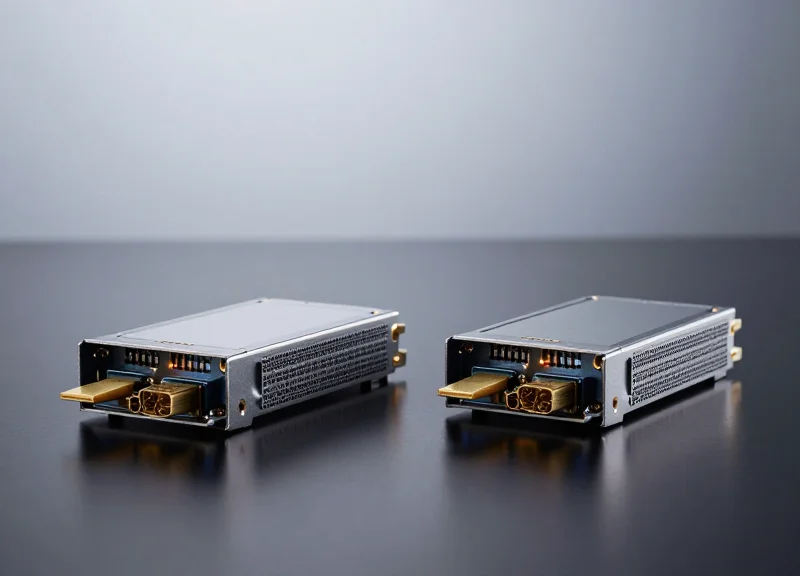
As data centers and enterprise networks scale, the choice of 100G connectivity for 10km spans becomes a critical decision for architects. This article provides a veteran engineer's perspective on the 100G LR4 standard, weighing it against emerging alternatives to help you optimize for performance, energy efficiency, and long-term budget.
The Anatomy of 100G LR4: Why it Became the Industry Standard
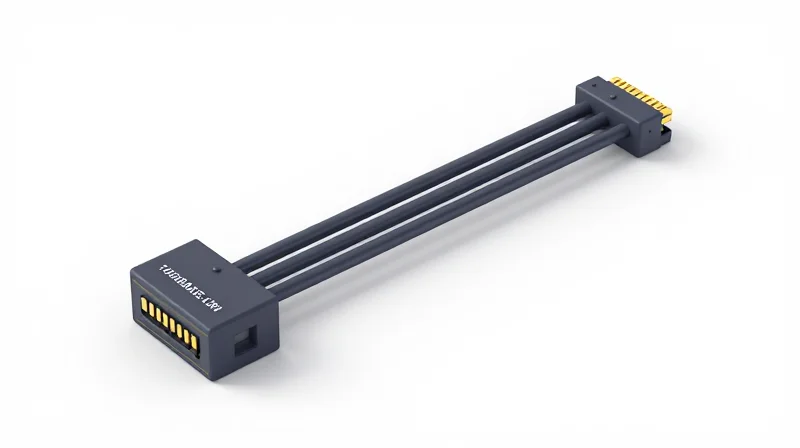
The Architecture of 100GBASE-LR4
The 100GBASE-LR4 standard, as defined by IEEE 802.3ba, is the first globally recognized specification for 100 Gigabit Ethernet over 10km of single-mode fiber. It functions by multiplexing four distinct optical wavelengths into a single fiber pair, with each lane operating at a line rate of 25.78 Gbps. This four-lane approach allowed the industry to achieve 100G speeds using established 25G electrical and optical components, providing a scalable and reliable bridge between legacy 10G networks and modern high-capacity data centers.
| Wavelength Lane | Center Wavelength | Wavelength Range |
|---|---|---|
| L0 | 1295.56 nm | 1294.53 to 1296.59 nm |
| L1 | 1300.05 nm | 1299.02 to 1301.09 nm |
| L2 | 1304.58 nm | 1303.54 to 1305.63 nm |
| L3 | 1309.14 nm | 1308.09 to 1310.19 nm |
The Technical Advantage of LAN-WDM
Unlike shorter-reach standards that utilize CWDM grids with 20nm spacing, 100G LR4 employs the LAN-WDM grid with much tighter 4.5nm spacing. These wavelengths are strategically placed within the O-band (1310nm window), where chromatic dispersion is at its lowest in standard G.652 single-mode fiber. By operating near the zero-dispersion point, LR4 ensures that signal pulses do not spread significantly over the 10km span, maintaining high signal integrity without the mandatory requirement for host-side Forward Error Correction (FEC) in many early implementations.
Common Questions Regarding 100G LR4
- Why was the 10km reach standardized?
The 10km specification was designed to cover the majority of metropolitan area network (MAN) spans and large-scale data center interconnect (DCI) requirements that exceeded the 2km limit of early multi-mode or PSM4 solutions. - Can 100G LR4 operate over multi-mode fiber?
No, 100G LR4 is strictly designed for single-mode fiber (SMF). Attempting to use multi-mode fiber would result in extreme modal dispersion, making the link non-functional over any significant distance. - Does 100G LR4 support breakout configurations?
Standard 100GBASE-LR4 does not typically support breakout to 4x25G because it uses WDM to combine signals onto one fiber, unlike PSM4 which uses separate fibers for each lane.
Comparing the Field: CWDM4, PSM4, and Single-Lambda 100G
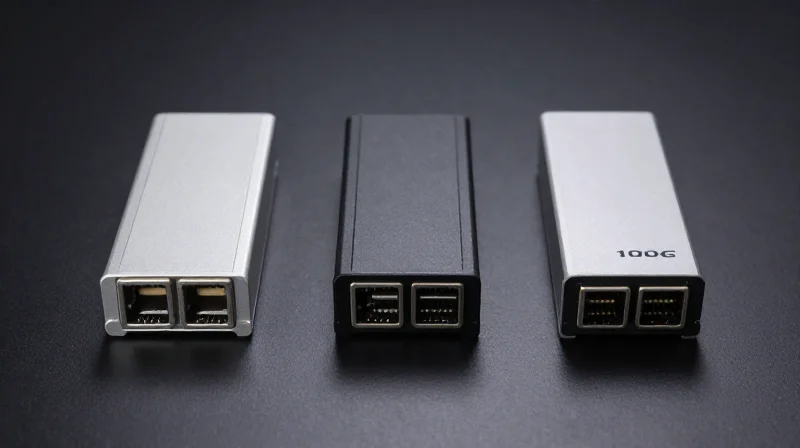
Comparing the Field: CWDM4, PSM4, and Single-Lambda 100G
While the 100G LR4 standard is optimized for 10km reach, the high cost of its four EML lasers and complex optical mux/demux components led to the development of alternative standards. Technologies like CWDM4 and PSM4 prioritize cost-efficiency for shorter distances, while Single-Lambda 100G (using PAM4 modulation) represents the modern evolution of the 100G ecosystem, aiming to replace legacy NRZ-based systems with simpler, more scalable hardware.
Architecture and Media Requirements
The primary differentiators between these standards are the number of fiber strands required and the modulation technique used to transmit data. PSM4 uses a parallel approach, requiring eight strands of single-mode fiber (4 transmit, 4 receive), which increases cabling complexity but lowers transceiver costs. In contrast, CWDM4 and LR4 both use Wavelength Division Multiplexing (WDM) to operate over a single pair of fibers, though they differ significantly in their reach and laser requirements.
| Standard | Reach | Modulation | Fiber Strands | Common Application |
|---|---|---|---|---|
| 100G LR4 | 10km | 4x25G NRZ | 2 (Duplex SMF) | Campus/Metropolitan Links |
| CWDM4 | 2km | 4x25G NRZ | 2 (Duplex SMF) | Data Center Interconnect (DCI) |
| PSM4 | 500m | 4x25G NRZ | 8 (Parallel SMF) | Intra-rack/High-density Switching |
| 100G-LR1 | 10km | 1x100G PAM4 | 2 (Duplex SMF) | Next-gen Edge and Carrier Networks |
The Rise of Single-Lambda (PAM4)
Single-Lambda 100G (specifically the 100G-LR1 standard) is the most formidable modern alternative to legacy 100G LR4. By using 4-level Pulse Amplitude Modulation (PAM4), it achieves 100Gbps on a single wavelength. This reduces the component count from four lasers to one, drastically lowering the Mean Time Between Failures (MTBF) and power consumption. For operators planning for a 400G future, Single-Lambda 100G is often the preferred choice because it aligns with the 100G-per-lane signaling used in 400G (4x100G) architectures.
- Is CWDM4 compatible with LR4?
No. While both use four wavelengths over duplex fiber, they use different wavelength grids and the LR4 power budget is too high for CWDM4 receivers, risking damage without attenuation. - When should I choose PSM4 over LR4?
PSM4 is ideal for short-range data center applications (under 500m) where MPO cabling is already present and transceiver budget is the primary concern. - Does Single-Lambda 100G support 10km?
Yes, the 100G-LR1 specification is specifically designed to provide a 10km reach over standard single-mode fiber, matching the distance of traditional LR4.
Latency Performance: Real-World Impacts on High-Frequency Apps

Latency Performance: Real-World Impacts on High-Frequency Apps
The primary latency advantage of 100G LR4 over newer alternatives like Single-Lambda 100G lies in its reliance on Non-Return-to-Zero (NRZ) modulation. Because LR4 splits the 100G signal into four 25G lanes, it avoids the complex Digital Signal Processing (DSP) and heavy Forward Error Correction (FEC) required by PAM4-based modules. In environments where microseconds dictate profitability—such as high-frequency trading (HFT)—the 'analog' nature of the LR4 signal path provides a deterministic speed advantage that more modern, computationally intensive modules cannot match.
The DSP and FEC Latency Penalty
In the transition to Single-Lambda 100G and 400G technologies, the industry moved toward PAM4 modulation to increase data density. While efficient, PAM4 is highly sensitive to noise and dispersion, necessitating a Digital Signal Processor (DSP) within the transceiver to recover the signal. This processing cycle, combined with mandatory Forward Error Correction (FEC) algorithms like RS-FEC (Reed-Solomon), introduces a serialized delay. For 100G LR4, the use of four discrete 25G NRZ lanes allows for an 'FEC-free' or low-latency FEC operation over its 10km reach, significantly reducing the 'time-of-flight' for data packets.
| Module Type | Modulation | DSP Requirement | Typical Latency Impact |
|---|---|---|---|
| 100G LR4 | NRZ (4x25G) | None/Minimal | Lowest (Nanoseconds) |
| 100G CWDM4 | NRZ (4x25G) | None | Very Low |
| Single-Lambda 100G | PAM4 (1x100G) | Required | Moderate (DSP Cycles) |
| 100G PAM4 (DWDM) | PAM4 | High | Highest (DSP + Strong FEC) |
Strategic Implications for Financial Data Centers
For financial data centers and algorithmic trading hubs, the choice between 100G LR4 and Single-Lambda alternatives is not merely a cost calculation but a performance mandate. While Single-Lambda modules reduce the bill of materials by using fewer lasers, the trade-off is a latency 'tax' imposed by the DSP. This delay, though seemingly small (often ranging from 10ns to over 100ns depending on the implementation), is cumulative across every switch hop in a leaf-spine architecture. Consequently, LR4 remains the gold standard for latency-sensitive backbones where speed-to-market is the primary KPI.
- Why does 100G LR4 have lower latency than 100G DR1?
LR4 uses NRZ modulation which is simpler to decode. DR1 uses PAM4, which requires a DSP to handle signal integrity, adding processing time. - Does FEC always increase latency?
Yes. Forward Error Correction requires buffering bits to perform mathematical checks; the stronger the FEC (like those used in PAM4), the higher the latency. - Is the latency difference noticeable in standard enterprise apps?
Generally no. For standard web traffic or storage, the nanosecond difference is negligible. It only becomes critical in HFT, AI clusters, and real-time industrial automation.
Power Consumption and Thermal Management in the Data Center

Power Consumption and Thermal Management in the Data Center
100G LR4 transceivers typically consume significantly more power than modern alternatives, with average wattage ranging from 3.5W to 4.5W per module compared to the 2.5W to 3.5W seen in Single-Lambda solutions. This delta is primarily driven by the hardware complexity of the LR4 architecture, which requires four discrete lasers, four drivers, and an internal optical multiplexer/demultiplexer, all of which contribute to a higher thermal footprint.
The Efficiency Gap: Multichannel vs. Single-Lambda
The architectural differences between LR4 and newer standards like 100G-FR or 100G-LR1 (Single-Lambda) create a divergence in operational efficiency. LR4 utilizes four lanes of 25Gbps NRZ signals, requiring four separate DML (Distributed Feedback) or EML (Electro-absorption Modulated) lasers to operate simultaneously. Each laser and its associated circuitry generate heat. Conversely, Single-Lambda solutions utilize a single laser with PAM4 modulation, drastically reducing the component count and the total power draw despite the inclusion of a DSP for signal processing.
| Module Standard | Typical Power (W) | Architecture | Thermal Density |
|---|---|---|---|
| 100G LR4 | 3.5W - 4.5W | 4x 25G NRZ (LAN-WDM) | High |
| 100G CWDM4 | 3.5W | 4x 25G NRZ (CWDM) | Medium |
| 100G DR1/FR1/LR1 | 2.5W - 3.5W | 1x 100G PAM4 | Low |
| 100G PSM4 | 3.5W | 4x 25G NRZ (Parallel) | Medium |
Operational Impacts on Cooling and Density
In a fully populated 32-port or 48-port 100G switch, the difference between 3.5W and 4.5W per optic is substantial. A switch loaded with LR4 modules can generate up to 50W of additional heat compared to one using Single-Lambda optics. This increased thermal load puts pressure on data center HVAC systems and forces internal fans to run at higher RPMs, increasing noise levels and secondary energy consumption. For high-density leaf-spine architectures, choosing lower-power optics is critical to preventing thermal throttling and extending the Mean Time Between Failures (MTBF) of the switch hardware.
- How does power consumption affect OpEx?
Higher wattage per module increases direct electricity costs and cooling overhead, often calculated at a 1:1 ratio—every watt consumed by an optic requires nearly a watt of cooling energy. - Are LR4 modules more prone to overheating?
Yes, because they contain more active components (four lasers) in the same QSFP28 form factor, they have a higher internal heat density, which can lead to failure if airflow is restricted. - Does the DSP in Single-Lambda optics negate power savings?
No. While the DSP does consume power for PAM4 processing, modern 7nm and 5nm DSP chipsets are highly efficient, and the elimination of three lasers results in a net power reduction compared to LR4.
Link Budget and Sensitivity: Ensuring 10km Reliability
The 100G LR4 standard remains the gold standard for 10km reliability because it offers a robust optical power budget that accommodates the signal degradation common in real-world fiber plants, such as aging glass and multiple patch panel transitions. While newer Single-Lambda 100G modules are gaining ground, LR4’s reliance on four 25G NRZ lanes provides a more forgiving sensitivity profile compared to the high-order modulation required for PAM4-based alternatives.
The Anatomy of the 10km Link Budget
A link budget is the accounting of all gains and losses from the transmitter to the receiver. For a 10km run, the IEEE 802.3ba standard for 100GBASE-LR4 specifies a budget that accounts for fiber attenuation (roughly 0.35 dB/km at 1310nm), connector losses, and a safety margin. The primary advantage of LR4 is its use of the LAN-WDM wavelength grid, which minimizes chromatic dispersion, allowing the receiver to maintain high sensitivity even at the end of a maximum-distance span.
| Parameter | 100G LR4 (NRZ) | 100G LR (Single-Lambda PAM4) | 100G FR (Single-Lambda PAM4) |
|---|---|---|---|
| Max Distance | 10 km | 10 km | 2 km |
| Typical Tx Power (Avg) | -4.3 to +4.5 dBm | -1.4 to +4.5 dBm | -2.4 to +4.0 dBm |
| Receiver Sensitivity | -10.6 dBm | -7.7 dBm | -6.4 dBm |
| Available Loss Budget | ~6.3 dB | ~6.3 dB | ~4.0 dB |
Receiver Sensitivity: NRZ vs. PAM4
The critical differentiator in reliability is receiver sensitivity. 100G LR4 uses four discrete 25.78 Gbps lanes using NRZ (Non-Return to Zero) modulation. NRZ has a high Signal-to-Noise Ratio (SNR) because the receiver only needs to distinguish between two power levels. In contrast, Single-Lambda 100G uses PAM4 (Pulse Amplitude Modulation), which packs four levels into a single symbol. This significantly reduces the 'eye opening' at the receiver, making the module more susceptible to bit errors if the fiber path has high attenuation or reflection.
Reliability in Brownfield Fiber Plants
In 'brownfield' environments—older data centers or metro links with multiple splices and aged connectors—the cumulative loss can exceed the theoretical 0.35 dB/km. LR4 modules often utilize high-performance PIN receivers or even APDs (Avalanche Photodiodes) in specialized extended-reach versions to provide extra margin. This makes LR4 a safer 'set and forget' choice for engineers dealing with uncertain fiber quality.
- How does the BER (Bit Error Rate) compare?
LR4 typically operates at a lower pre-FEC BER because NRZ is inherently more robust. Single-Lambda solutions rely heavily on Forward Error Correction (FEC) to maintain a reliable link. - Can I use 100G LR4 on fiber longer than 10km?
While rated for 10km, high-quality LR4 modules can often push 12-15km on low-loss G.652 fiber, provided the optical power budget margin is maintained. - Does temperature affect sensitivity?
Yes, thermal noise in the receiver increases with temperature. 100G LR4's internal TOSA/ROSA components are designed with cooled EML lasers to stabilize wavelengths and maintain sensitivity across operating ranges.
Total Cost of Ownership (TCO): Beyond the Initial Purchase

Determining the true value of a 100G optical deployment necessitates looking beyond the unit price of the transceiver to account for the cumulative impact of power draw, cooling requirements, and the lifecycle of existing cabling infrastructure. While 100G LR4 has historically been the standard for 10km reaches, the emergence of single-lambda alternatives presents a shift in the TCO equation, particularly where power efficiency and port density are prioritized.
CAPEX vs. OPEX: The Initial Investment and Operational Reality
The Capital Expenditure (CAPEX) for 100G LR4 modules has stabilized significantly as the technology matured, making it a predictable choice for legacy systems. However, Operational Expenditure (OPEX) often tells a different story. Traditional LR4 modules utilize four lasers (4x25G), which inherently consume more power than newer single-laser (1x100G) designs. Over a five-year lifecycle, the higher wattage of LR4 can lead to substantial increases in utility costs and thermal management demands within high-density data centers.
| Metric | 100G LR4 (Standard) | 100G Single-Lambda (LR1/FR1) | 100G CWDM4 (2km Alternative) |
|---|---|---|---|
| Average Power Consumption | 3.5W - 4.5W | 2.5W - 3.5W | 3.5W |
| Typical Initial Cost | Moderate (Mature Market) | Low to Moderate | Low |
| Cabling Requirement | Duplex SMF (LC) | Duplex SMF (LC) | Duplex SMF (LC) |
| Estimated 5-Year Energy Cost | Higher | Lowest | Moderate |
Infrastructure Integration and Cooling Costs
One of the most overlooked aspects of TCO is the heat dissipation requirement. A rack filled with 100G LR4 modules generates significantly more BTU (British Thermal Units) than one utilizing single-lambda optics. This forces cooling systems to work harder, increasing the 'PUE' (Power Usage Effectiveness) ratio of the facility. For organizations operating thousands of links, a 1-watt savings per module translates into kilowatts of total power reduction, directly impacting the bottom line.
Cabling and Connector Longevity
Both 100G LR4 and its primary 10km competitors utilize standard Duplex LC single-mode fiber (SMF). This is advantageous for TCO because it allows for a 'rip and replace' upgrade path without installing new patch panels or trunk cables. However, if moving toward 400G breakout architectures in the future, the choice between LR4 and single-lambda becomes critical, as single-lambda optics (PAM4) are more naturally aligned with next-generation modulation schemes, potentially extending the relevance of the initial hardware purchase.
- Does 100G LR4 require special patch cables?
No, it uses standard OS2 single-mode fiber with LC connectors, which are the most common and cost-effective SMF cables available. - How does power consumption affect long-term ROI?
Lower power modules (like single-lambda) reduce both direct electricity costs and the load on data center cooling systems, leading to a lower total cost over the product's lifespan. - Is LR4 still viable for new 10km deployments?
Yes, it remains viable due to its widespread compatibility with legacy NRZ-based equipment, though single-lambda is often preferred for newer PAM4-based platforms.
Interoperability and Ecosystem Maturity
Interoperability and Ecosystem Maturity
The 100G LR4 standard represents the most mature and reliable ecosystem for 10km optical networking, offering seamless interoperability across nearly all major hardware vendors due to its adherence to the long-standing IEEE 802.3ba standard. While newer single-lambda solutions are gaining market share, LR4 remains the benchmark for multi-vendor environments where plug-and-play reliability is prioritized over the lower power consumption of emerging PAM4 technologies.
Supply Chain Stability and Vendor Diversity
Because 100G LR4 has been the industry standard for a decade, its supply chain is highly resilient. Multiple tiers of manufacturers—ranging from Tier-1 networking giants to specialized third-party optical houses—produce LR4 modules. This saturation ensures that lead times are generally shorter and price volatility is lower compared to 100G FR1 or DR1 modules, which still rely on a more limited pool of high-performance DSP (Digital Signal Processor) suppliers.
| Feature | 100G LR4 | 100G Single-Lambda (FR1/DR1) | 100G CWDM4 |
|---|---|---|---|
| Standardization | IEEE 802.3ba (Highly Stable) | IEEE 802.3cu (Mature/Emerging) | MSA-based (Multi-Source Agreement) |
| Vendor Choice | Extremely Broad | Expanding | Broad |
| Interoperability | Native NRZ Compatibility | Requires Gearbox/PAM4 Support | NRZ Compatibility |
| Ecosystem Age | 10+ Years | ~3-4 Years | ~7-8 Years |
The Gearbox Challenge: Integrating Old and New
One of the primary ecosystem advantages of LR4 is its 4x25G NRZ electrical interface, which matches the native lane speeds of most 100G switch ASICs. Single-lambda alternatives require a 'gearbox' to translate 4x25G NRZ signals into a single 100G PAM4 signal. This additional layer of complexity can lead to minor interoperability quirks between older line cards and newer optics, a risk that is virtually non-existent with LR4.
Ecosystem and Compatibility FAQ
- Can 100G LR4 talk to 100G FR1?
No. They use different modulation techniques (NRZ vs. PAM4) and different wavelength schemes (4 wavelengths vs. 1 wavelength), making them optically incompatible. - Is LR4 support universal on older switches?
Yes, almost every switch produced in the last 8 years that supports 100G QSFP28 ports includes native support for LR4, making it the safest bet for legacy upgrades. - Does vendor lock-in affect LR4 optics?
Rarely. Due to the maturity of the standard, third-party coding for LR4 is highly perfected, allowing users to bypass OEM restrictions easily compared to newer, more complex DSP-based optics.
Future-Proofing: Transitioning from 100G to 400G and 800G

Future-Proofing Your 10km Network Strategy
Transitioning from 100G to higher-speed standards like 400G and 800G is not merely a hardware swap; it is a fundamental shift in signaling technology that favors PAM4-based architectures over legacy NRZ designs. While 100G LR4 remains the industry standard for 10km reaches due to its maturity and use of Non-Return-to-Zero (NRZ) modulation, it creates a technical divergence from the roadmap of next-generation networking. Choosing the right 100G technology today determines whether your future upgrade involves a simple modular replacement or a more complex infrastructure overhaul involving 'gearbox' components to reconcile differing signaling rates and lane counts.
The 100G Single Lambda Advantage
Unlike 100G LR4, which utilizes four distinct optical wavelengths at 25Gbps each, newer alternatives like 100G-DR, FR, and LR (Single Lambda) use a single 100Gbps PAM4 lane. This alignment is critical because 400G (4x100G) and 800G (8x100G) standards are built natively upon this 100G-per-lane architecture. Organizations that adopt Single Lambda 100G modules today align their physical layer with the logic of 400G/800G switches, enabling the use of breakout cables to connect a single high-speed port to multiple 100G nodes without complex signal conversion.
| 100G Standard | Modulation | Optical Lanes | Migration Path to 400G/800G |
|---|---|---|---|
| 100G LR4 | NRZ | 4 x 25Gbps | Complex (Requires Gearbox/Translation) |
| 100G Single Lambda | PAM4 | 1 x 100Gbps | Direct (Native Breakout Support) |
| 400G LR4-10 | PAM4 | 4 x 100Gbps | N/A (Current Generation) |
Bridging the Gap: Gearboxes and Latency
When a network operator attempts to connect a legacy 100G LR4 module to a newer 400G or 800G platform, a hardware translation layer known as a 'gearbox' is often required. This chip converts between the four 25G NRZ lanes of the LR4 module and the 100G PAM4 lanes used by the switch ASIC. This process introduces several disadvantages: it increases power consumption per port, generates more heat within the chassis, and adds incremental latency to the link. By contrast, a PAM4-native 100G deployment eliminates these translation steps, significantly reducing the Total Cost of Ownership (TCO) as the network scales.
- Can 100G LR4 modules be used in 400G QSFP-DD ports?
Yes, most QSFP-DD ports are backward compatible with QSFP28 LR4 modules, but they will operate in a legacy mode that cannot be natively combined or broken out into 400G streams without external equipment. - Why is PAM4 preferred for 800G?
PAM4 doubles the data rate per baud compared to NRZ, allowing 800G to be achieved via 8 lanes of 100G, which is currently the most efficient way to maximize bandwidth on modern silicon. - Should I choose LR4 or Single Lambda for a new 10km link?
If you are connecting to legacy switches, LR4 is the safest choice. For greenfield deployments intended to last 5+ years, Single Lambda (100G-LR) offers a much cleaner path to 400G and 800G.
Conclusion: Choosing the Right Module for Your Use Case
Choosing the right 100G module for 10km applications is no longer a simple default to LR4; it involves a strategic evaluation of fiber density, power constraints, and future-proofing needs. While 100G-LR4 remains the most mature and widely interoperable choice for long-reach enterprise and service provider networks, alternatives like Single-Lambda 100G-LR1 or high-density CWDM4 solutions offer distinct advantages in modern hyperscale data centers where power efficiency and 400G/800G breakout capabilities are paramount.
Scenario-Based Selection Criteria
To determine the best fit, operators must distinguish between 'Greenfield' sites (new builds) and 'Brownfield' sites (existing infrastructure). Greenfield projects have the luxury of selecting the most efficient, modern technology, whereas Brownfield projects are often constrained by the need to maintain optical consistency with established patch panels and legacy hardware.
| Use Case | Recommended Module | Primary Advantage | Key Trade-off |
|---|---|---|---|
| Legacy Brownfield 10km | 100G-LR4 | Universal compatibility with existing duplex SMF infrastructure. | Higher power consumption and complexity. |
| Greenfield Data Center | 100G-LR1 (Single Lambda) | Lowest power and seamless 400G/800G breakout path. | Requires newer host silicon supporting PAM4. |
| Fiber-Rich Short Reach (<2km) | 100G-PSM4 | Lowest per-module cost. | Extremely high fiber consumption (8 fibers per link). |
| Enterprise Campus Backbone | 100G-CWDM4 / 4WDM-10 | Balance of cost and reach for mid-range spans. | Limited interoperability with traditional LR4. |
Final Recommendations for Network Architects
For service providers managing expansive metro networks, 100G-LR4 remains the safest investment due to its robust link budget and widespread ecosystem support. However, for cloud operators and enterprises planning a rapid transition to 400G, Single-Lambda 100G (LR1/FR1) is the superior choice. It reduces the component count within the module, lowering the failure rate and decreasing power consumption by up to 25%, while allowing 100G ports to interface directly with 400G ports via breakout cables.
Quick Selection FAQ
- Can I connect a 100G-LR4 module to a 100G-LR1 module?
No. LR4 uses four wavelengths (WDM) with NRZ modulation, while LR1 uses a single wavelength with PAM4 modulation. They are optically incompatible. - When should I prioritize LR4 over cheaper alternatives?
Prioritize LR4 when you need to guarantee 10km reach over aged fiber plants or when connecting to legacy switches that do not support PAM4 signaling. - Is power consumption a major factor in module selection?
Yes. In high-density deployments, the lower power draw of Single-Lambda 100G modules can significantly reduce cooling costs and extend the life of the network equipment.
Navigating the complexities of 100G optics requires balancing immediate technical requirements with long-term financial goals. Whether you prioritize the proven reliability of LR4 or the efficiency of Single-Lambda, ensure your choice aligns with your specific network architecture. For a tailored consultation or a quote on high-performance 100G modules, contact our technical sales team today.