As data centers transition to 400G networking, the pressure to maintain low latency while managing skyrocketing infrastructure costs has never been higher. High-speed Direct Attach Copper (DAC) cables offer the most reliable and budget-friendly solution for short-reach interconnects. In this guide, we explore how sourcing 400G DACs at wholesale rates can transform your network's ROI.
The Rise of 400G: Why DAC is the Standard for Data Center Interconnects

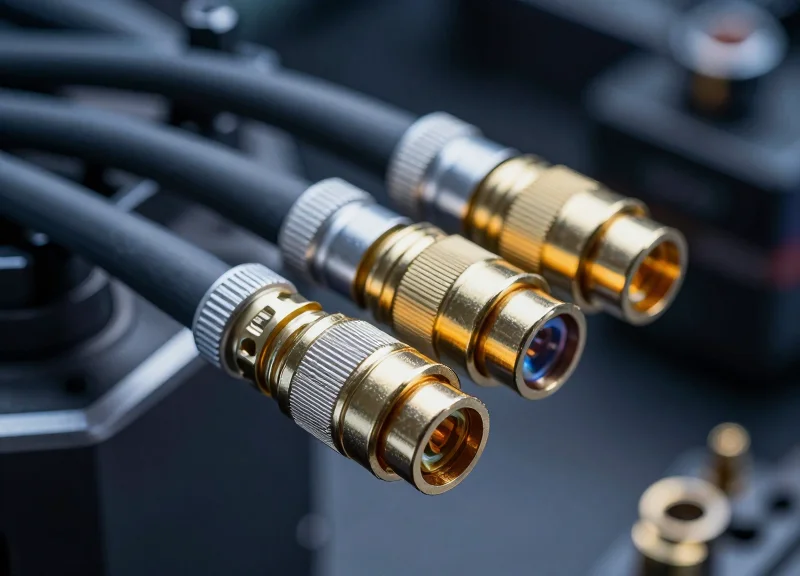
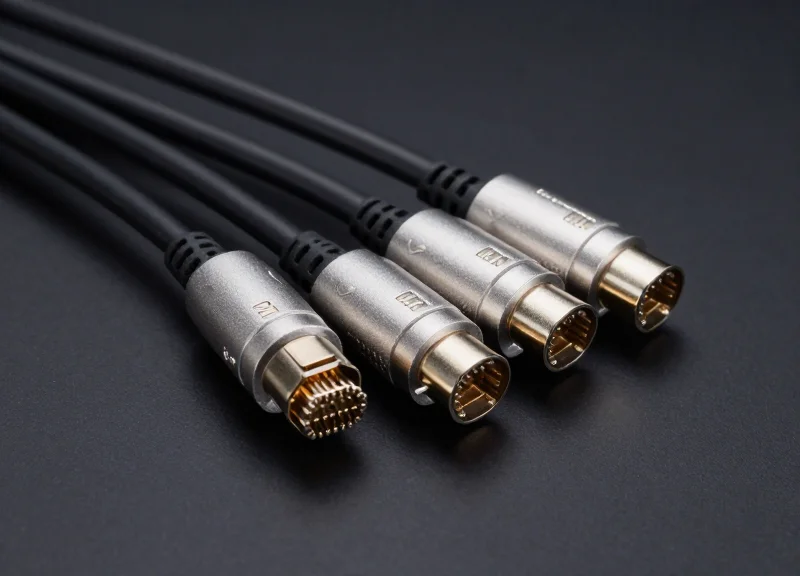
As data centers transition to 400G architectures to handle exponential traffic growth, Direct Attach Copper (DAC) cables have emerged as the definitive standard for short-reach connectivity. By leveraging high-speed twinaxial copper cabling, 400G DACs provide a seamless, plug-and-play solution for Top-of-Rack (ToR) switching, linking servers and storage arrays to the network spine with virtually zero latency and minimal power consumption.
The Economic and Technical Edge of DAC Technology
The primary driver behind the adoption of 400G DAC is its superior Total Cost of Ownership (TCO). Unlike optical solutions that require expensive lasers and complex internal components, DACs use passive copper conductors. This structural simplicity not only reduces the unit price significantly but also enhances reliability by eliminating active electronic components that could fail in high-heat environments.
| Feature | 400G Passive DAC | 400G AOC (Active Optical) | 400G Transceivers + Fiber |
|---|---|---|---|
| Max Distance | 0.5m - 3m | Up to 30m | Up to 10km+ |
| Power Consumption | Near Zero (<0.1W) | Approx. 2W - 5W | Approx. 10W - 12W |
| Latency | Lowest (Passive) | Low | Medium |
| Relative Cost | Lowest ($) | Medium ($$) | Highest ($$$$) |
Form Factors: QSFP-DD and OSFP
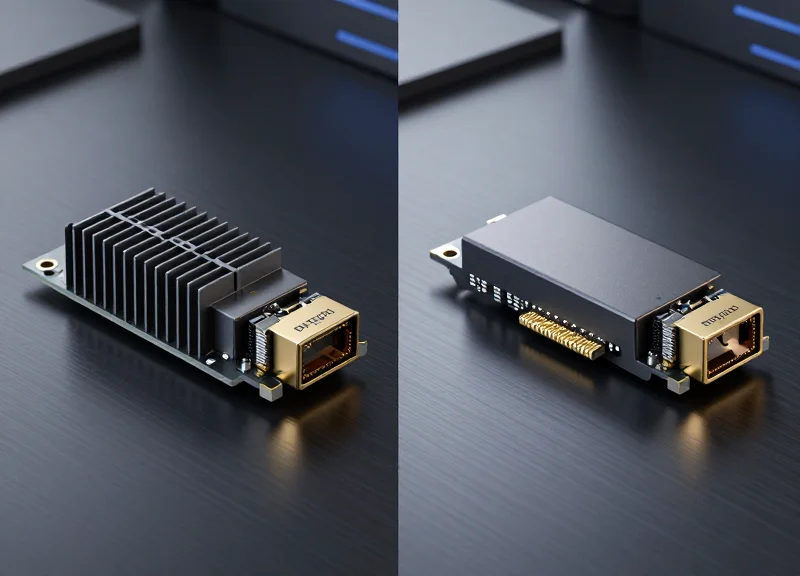
Modern 400G deployments primarily utilize two form factors: QSFP-DD (Quad Small Form-factor Pluggable Double Density) and OSFP (Octal Small Form-factor Pluggable). QSFP-DD is favored for its backward compatibility with legacy QSFP ports, while OSFP is designed with integrated heat sinks to support higher thermal loads. For wholesale buyers, ensuring the correct DAC form factor is critical for port density and cooling efficiency in the rack.
Key Benefits for Data Center Operators
- Energy Efficiency
Passive DACs do not require power to operate, significantly reducing the cooling requirements and electricity bills of large-scale facilities. - Reduced Latency
The lack of O-E-O (Optical-to-Electrical-to-Optical) conversion ensures the fastest possible signal transmission between adjacent hardware. - Bulk Deployment Scalability
Wholesale acquisition of DACs allows for rapid scaling of server rows at a fraction of the cost of fiber-based optics.
Frequently Asked Questions
- What is the maximum length for a passive 400G DAC?
Due to signal attenuation at 400Gbps, passive copper cables are generally limited to 2.5 to 3 meters. Beyond this range, Active Copper (ACC) or Active Optical (AOC) cables are required. - Can I use 400G DACs for breakout applications?
Yes, 400G DACs are frequently used in breakout configurations, such as 400G to 4x100G or 400G to 2x200G, to connect a single high-speed switch port to multiple servers. - Are 400G DACs compatible across different hardware brands?
While physical standards are universal, many vendors use proprietary coding. Wholesale buyers should request custom-coded DACs to ensure compatibility with Cisco, Arista, Juniper, or Mellanox equipment.
DAC vs. AOC vs. Optical Transceivers: Comparative Analysis
DAC vs. AOC vs. Optical Transceivers: Comparative Analysis
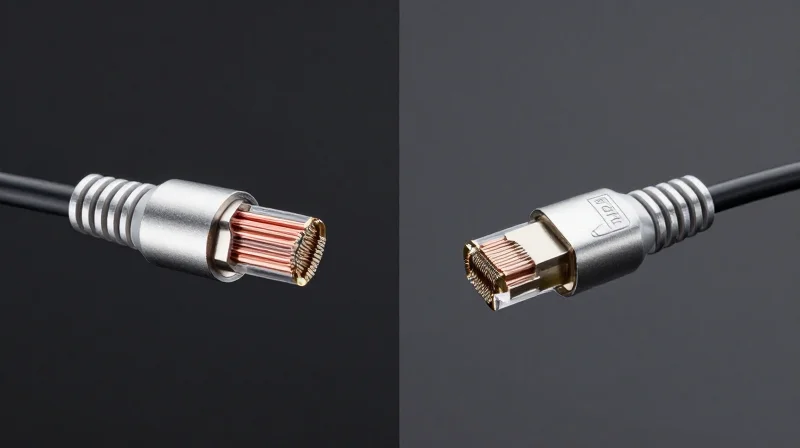
Choosing between 400G Direct Attach Cables (DAC), Active Optical Cables (AOC), and Optical Transceivers depends primarily on link distance, power budget, and total cost of ownership. For reaches under 7 meters, the 400G DAC is the undisputed industry standard due to its near-zero power consumption and significantly lower price point compared to fiber-based alternatives. While AOCs provide more flexibility for reaches up to 100 meters and transceivers handle long-haul connectivity, the DAC's passive copper design offers the most robust and cost-effective solution for high-density 400G Top-of-Rack (ToR) deployments.
Power Consumption and Thermal Management
In 400G environments, thermal management is a critical operational challenge. Passive 400G DACs do not contain active electrical components for signal amplification, resulting in a power draw of less than 0.1W per link. In contrast, 400G transceivers can consume upwards of 12W to 14W per module. When scaling to hundreds of ports in a wholesale environment, opting for DACs significantly reduces the heat load on the chassis, allowing for lower cooling costs and higher hardware reliability.
| Feature | 400G DAC (Copper) | 400G AOC (Fiber) | 400G Transceiver + Cable |
|---|---|---|---|
| Maximum Reach | Up to 7 Meters | Up to 100 Meters | 100m to 10km+ |
| Power Consumption | Negligible (<0.1W) | Approx. 2W - 5W per end | Approx. 10W - 14W per end |
| Latency | Lowest (Direct Copper) | Low | Moderate |
| Bending Radius | Stiff (Larger Radius) | Flexible (Small Radius) | Very Flexible |
| Wholesale Cost | Lowest | Medium | Highest |
Cost-Per-Port and Wholesale Scalability
When budgeting for 2026 infrastructure upgrades, the cost-per-port is the most influential metric. Wholesale 400G DAC procurement offers the lowest entry price for 400G networking because it eliminates the need for expensive lasers and optical sub-assemblies. For large-scale data centers, purchasing custom-length DACs in bulk ensures that cable management is optimized without the added expense of transceiver modules and separate patch cords, maximizing the ROI of QSFP-DD and OSFP switch hardware.
FAQ: Choosing the Right 400G Solution
- When should I choose 400G DAC over AOC for wholesale procurement?
Choose DACs for all connections within 7 meters, such as server-to-switch links in the same rack, to minimize both latency and capital expenditure. - How do 400G transceivers impact data center cooling?
High-speed transceivers generate substantial heat; replacing them with passive DACs for short reaches reduces the thermal load on the switch, lowering the overall cooling demand. - Is 400G DAC compatible with all QSFP-DD and OSFP ports?
Yes, 400G DACs are built to MSA standards, though wholesale buyers should request custom EEPROM coding to ensure seamless compatibility with specific OEM vendors like Cisco, Arista, or Juniper.
Passive vs. Active DACs: Which One Does Your Network Need?
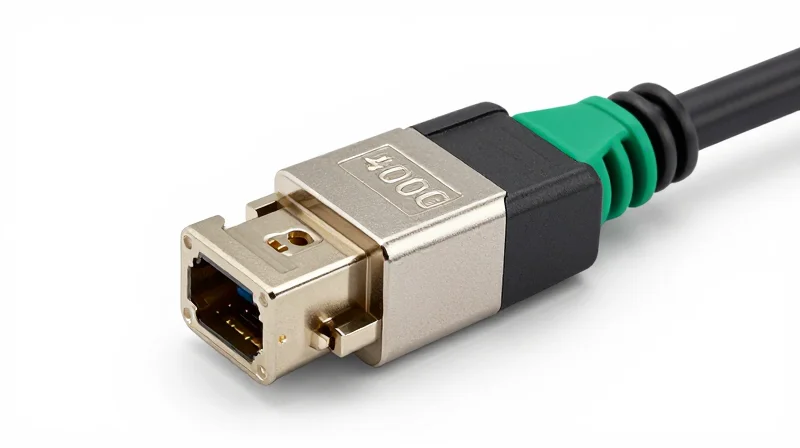
Passive vs. Active DACs: Which One Does Your Network Need?
The decision between passive and active copper solutions hinges on the 'loss budget' of your 400G PAM4 signal; for links under 3 meters, passive DACs provide the most energy-efficient path, while Active Copper Cables (ACC) are necessary for longer rack-to-rack spans where signal re-conditioning is required to prevent data corruption.
Passive 400G DAC: The Zero-Power Short-Reach Standard
Passive Direct Attach Copper cables are the workhorses of the modern data center, specifically designed for intra-rack connections. They contain no active electronic components for signal amplification, meaning they operate with near-zero power consumption. However, because they rely entirely on the host switch's SerDes (Serializer/Deserializer) to manage signal integrity via Electronic Dispersion Compensation (EDC), their reach is physically limited. At 400G speeds using PAM4 signaling, the high-frequency attenuation in copper is significant, typically restricting passive DACs to a maximum length of 2.5 to 3 meters.
Active Copper Cables (ACC): Bridging the Distance Gap
Active Copper Cables (ACC) integrate linear drivers and signal re-conditioning integrated circuits (ICs) within the connector housing. Unlike Active Optical Cables (AOC) which convert electrical signals to light, ACCs maintain the signal in the copper domain but 'boost' it to overcome the insertion loss inherent in longer cables. This engineering allows ACCs to extend 400G reach up to 7 meters. They are the ideal middle-ground for adjacent-rack interconnects where passive copper fails due to distance, but fiber-based AOCs are deemed too expensive or power-intensive.
| Feature | Passive 400G DAC | Active Copper Cable (ACC) |
|---|---|---|
| Max Transmission Distance | Up to 3 Meters | Up to 7 Meters |
| Power Consumption | Negligible (0W) | ~0.5W to 1.5W per end |
| Signal Re-conditioning | None (Host-dependent) | Integrated Linear Equalization |
| Latency | Lowest (Ultra-low) | Very Low (Slight IC delay) |
| Wholesale Cost | Lowest Cost-per-Port | Moderate Cost |
Implementation FAQ
- Can I use a passive 400G DAC for a 5-meter run?
No. At 400G speeds, signal attenuation over 5 meters of passive copper exceeds the Bit Error Rate (BER) thresholds of standard QSFP-DD/OSFP ports, leading to link instability or failure. - Do ACCs require special switch configuration?
Generally, no. ACCs are designed to be plug-and-play, as the signal conditioning is handled internally by the cable's firmware and hardware, making them transparent to the host OS. - When should I choose ACC over AOC?
Choose ACC when the distance is between 3 and 7 meters and you want to minimize both the purchase price and the operational electricity costs compared to optical transceivers.
Overcoming the Compatibility Barrier in Wholesale Procurement
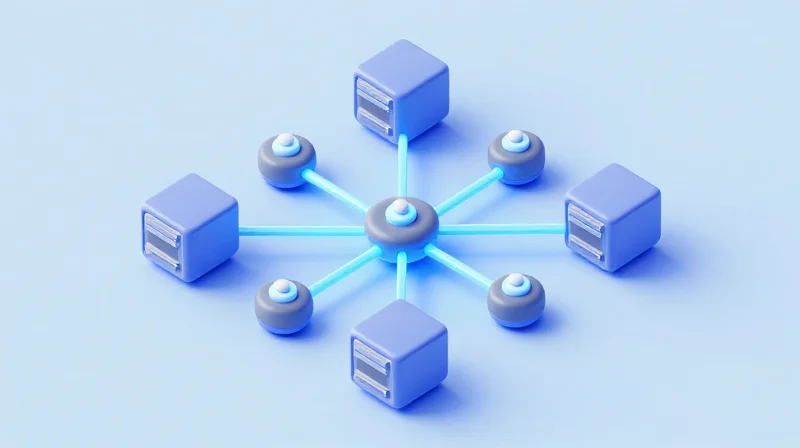
Navigating the compatibility barrier in 400G DAC procurement requires a shift from proprietary brand reliance to high-spec, multi-coded solutions that guarantee interoperability across diverse hardware environments. By leveraging third-party DACs that utilize high-grade internal EEPROM programming, data centers can maintain peak performance while avoiding the 'vendor tax' associated with OEM-branded cables.
Decoding the EEPROM: The Key to Interoperability
At the heart of the compatibility issue is the cable's EEPROM chip, which contains vital data such as the manufacturer name, serial number, and part number. Most major networking brands, including Cisco, Arista, and Juniper, use a specific handshake protocol that verifies this data before the port is enabled. Wholesale cables that solve this barrier are meticulously programmed to mimic these signatures, ensuring the switch recognizes the DAC as a trusted component without the need for 'service unsupported-transceiver' commands.
Comparison: OEM vs. High-Performance Wholesale 400G DACs
| Feature | OEM Branded DAC | Qualified Wholesale DAC |
|---|---|---|
| Compatibility | Locked to specific brand | Multi-coded (Cisco, Arista, etc.) |
| Pricing | High (Premium Brand Markup) | Wholesale Direct Pricing |
| Testing | Internal OEM lab | Cross-platform interop testing |
| Warranty Support | Limited to OEM hardware | Full replacement warranty |
Ensuring Performance Across Top Network Brands
When procuring 400G DACs in bulk, it is essential to verify that the supplier conducts real-environment testing. This involves validating the OSFP or QSFP-DD form factors against a matrix of major switches from Mellanox (NVIDIA), Arista, and Cisco to ensure zero bit-error rate (BER) and full link stability in high-density environments.
FAQ: Navigating Wholesale Compatibility Challenges
- Will using wholesale DACs void my switch warranty?
No. Under the Magnuson-Moss Warranty Act and similar international trade laws, a manufacturer cannot void a hardware warranty simply for using third-party peripherals unless it is proven that the peripheral itself caused the damage. - Can a single cable support two different brands on each end?
Yes. This is known as a dual-coded or multi-coded cable. A 400G DAC can be coded for Cisco on the switch end and Mellanox on the server or NIC end to ensure a perfect handshake across both ports. - How do I ensure the DACs will work with future firmware updates?
Leading wholesale providers use field-programmable chips, allowing cables to be updated or recoded if a manufacturer releases a firmware update that changes the transceiver validation process.
The Economics of Bulk Pricing: Reducing Your Total Cost of Ownership (TCO)

The Economics of Bulk Pricing: Reducing Your Total Cost of Ownership (TCO)
Purchasing 400G DAC cables wholesale fundamentally alters the financial trajectory of data center expansion by shifting the focus from per-unit cost to holistic lifecycle value. By leveraging bulk pricing strategies, organizations can achieve a 30-50% reduction in initial capital expenditure (CapEx) compared to retail list prices, while simultaneously streamlining procurement cycles and reducing the administrative 'soft costs' associated with managing multiple fragmented orders.
Quantifying the Savings: Wholesale vs. Retail Procurement
The Total Cost of Ownership (TCO) extends beyond the invoice price of the cable itself. It encompasses procurement labor, logistics, failure rates, and the cost of network downtime. Wholesale procurement allows for standardized batch testing, ensuring that thousands of cables share consistent signal integrity profiles, which significantly reduces the time spent on troubleshooting during high-density deployments.
| Economic Factor | Retail/Ad-hoc Purchasing | Wholesale/Bulk Procurement |
|---|---|---|
| Unit Acquisition Cost | High (MSRP/Standard List) | Tiered Discounts (25%+ Savings) |
| Logistics & Shipping | Multiple per-order fees | Consolidated freight / Free shipping |
| Technical Consistency | Variable manufacturing batches | Unified production batches |
| Administrative Overhead | High (Multiple POs/Invoices) | Low (Single contract/Custom quote) |
| Lead Time Stability | Unpredictable market stock | Prioritized production slots |
Volume Discount Tiers and Strategic Logistics
In 2026, wholesale vendors typically offer pricing tiers based on quantity or total project value. For 400G applications, where the volume of interconnects can reach thousands per row, moving from a standard discount tier to a custom 'project-based' quote can unlock additional value, such as customized labeling, pre-bundled packaging, and staggered delivery schedules that align with site readiness, further reducing on-site labor costs.
- How do custom quotes impact long-term maintenance?
Custom quotes for bulk orders often include dedicated support channels and simplified RMA processes. By sourcing from a single wholesale partner, you ensure that replacement parts match the original specifications exactly, maintaining signal integrity across the fabric. - What is the typical threshold for wholesale pricing on 400G DACs?
While it varies by vendor, wholesale advantages usually begin at 50 units, with significantly deeper discounting and customization options becoming available at the 200+ unit threshold for high-speed interconnects. - Can wholesale pricing be locked in for phased deployments?
Yes, many wholesale agreements for 2026 allow for 'blanket purchase orders,' where the bulk price is locked in for a specified period (e.g., 12 months), protecting the buyer from market fluctuations while allowing for just-in-time delivery.
Custom OEM/ODM Solutions: Tailoring 400G Cables to Your Specs
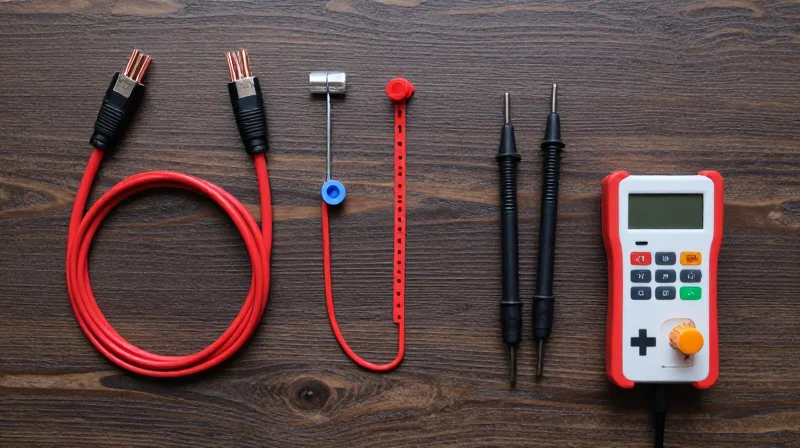
Custom OEM/ODM Solutions: Tailoring 400G Cables to Your Specs
Custom OEM/ODM 400G DAC solutions empower network architects to move beyond the constraints of 'off-the-shelf' inventory, providing bespoke cable lengths, tailored EEPROM coding for multi-vendor environments, and specialized physical attributes like LSZH jackets or reinforced shielding. By aligning cable specifications with exact rack dimensions and hardware requirements, organizations can eliminate the signal degradation and cable management headaches associated with excessive slack or incompatible firmware.
The Advantages of Precision Engineering in High-Density Racks
In 400G deployments, every centimeter matters. Standard cable lengths often lead to 'spaghetti cabling,' which obstructs airflow and complicates maintenance. Custom length options (e.g., 0.75m or 1.25m) ensure that the DAC bridges the gap between switches and servers with surgical precision. Furthermore, OEM services allow for specialized labeling—including laser-etched barcodes and color-coded pull tabs—which accelerates troubleshooting in massive hyperscale environments.
| Feature | Standard Wholesale Cables | Custom OEM/ODM Solutions |
|---|---|---|
| Length Options | Fixed (0.5m, 1m, 2m, etc.) | Bespoke (Precision to the centimeter) |
| EEPROM Coding | Generic or Single-Vendor | Multi-Vendor Dual-Coding (e.g., Cisco to Arista) |
| Jacket/Shielding | Standard PVC/LSZH | Enhanced EMI Shielding / Plenum-Rated |
| Branding | Manufacturer Label | Private Labeling / Custom Barcoding |
| Pull-Tab Style | Standard Blue/Black | Color-Coded for Port Mapping |
Addressing Unique Technical Requirements
Beyond physical dimensions, ODM solutions address technical edge cases such as high-EMI (Electromagnetic Interference) environments. Tailored shielding options can be integrated to protect signal integrity in industrial or crowded colocation spaces. For resellers and system integrators, private labeling and custom packaging ensure that the 400G DACs arrive 'plug-and-play' ready, fully branded with the integrator’s own serial number sequences for seamless asset tracking.
- Can custom 400G cables be coded for two different brands at each end?
Yes. Custom OEM services specialize in 'dual-coding,' allowing one end of the 400G DAC to be compatible with a Cisco switch while the other end is coded for a Mellanox or Arista NIC. - What is the typical lead time for custom length orders?
While standard cables are often in stock, custom OEM orders typically involve a 2-4 week lead time depending on the complexity of the EEPROM coding and physical shielding requirements. - Is there a Minimum Order Quantity (MOQ) for custom labeling?
Most wholesale providers require a modest MOQ for custom laser-etching or specialized pull-tab colors, often starting at 50 to 100 units to offset setup costs. - Do custom cables undergo the same testing as standard ones?
Reputable OEM providers subject custom cables to the same rigorous BERT (Bit Error Rate Test) and TDR (Time Domain Reflectometry) testing as standard products to ensure 400G line-rate performance.
Rigorous Quality Assurance: Ensuring Zero-Failure Deployments
Achieving zero-failure deployments in 400G environments requires a rigorous Quality Assurance (QA) framework that moves beyond simple continuity checks to deep-layer signal analysis. Because 400G DACs operate at extremely high frequencies where physical tolerances are microscopic, even a minor impedance mismatch can lead to catastrophic packet loss; therefore, high-speed wholesale cables must undergo 100% factory testing using Vector Network Analyzers (VNAs) and high-bandwidth oscilloscopes to guarantee compliance with IEEE 802.3ck and OIF-CEI-112G standards.
Core Metrics for Signal Integrity and Reliability
To maintain carrier-grade performance, every 400G DAC must pass a battery of tests designed to simulate the electrical stresses of a fully populated rack. These tests measure the 'health' of the signal as it traverses the copper medium, focusing on minimizing noise and maximizing the opening of the PAM4 (Pulse Amplitude Modulation 4-level) eye diagram.
| Test Parameter | Target Specification | Impact on Performance |
|---|---|---|
| Bit Error Rate (BER) | < 1E-15 (Post-FEC) | Prevents packet retransmissions and latency spikes. |
| Insertion Loss (S21) | IEEE 802.3ck Limits | Ensures signal strength remains viable over length. |
| Differential Impedance | 100Ω ± 5% | Reduces signal reflections and internal crosstalk. |
| Eye Diagram Analysis | PAM4 Linearity > 0.9 | Guarantees the receiver can distinguish signal levels. |
The Importance of Bit Error Rate (BER) Testing
While 400G networking utilizes Forward Error Correction (FEC) to repair minor data corruptions, relying too heavily on FEC can lead to increased processing latency. Rigorous QA protocols test the 'Raw BER' of the cable. A high-quality wholesale 400G DAC should exhibit a raw BER significantly better than the standard threshold, ensuring that the switch's ASIC does not have to work overtime to correct errors, which effectively lowers the power consumption and heat generation of the entire network fabric.
Mechanical and Environmental Stress Testing
Electrical performance is only half of the equation. Bulk 400G DACs must also survive the physical rigors of data center installation. This involves bend-radius fatigue testing, connector pull-strength validation, and thermal cycling. Validating that a cable can maintain its 400G throughput at an ambient temperature of 70°C is vital for deployments in high-density AI clusters where heat dissipation is a constant challenge.
- How is 400G interoperability verified?
Through comprehensive EEPROM coding validation and physical link-up tests across a multi-vendor test bed including Cisco, Arista, and NVIDIA/Mellanox switches. - What is the role of TDR in QA?
Time Domain Reflectometry (TDR) is used to map the impedance profile of the cable assembly to identify and eliminate structural defects in the copper core. - Do wholesale cables undergo individual testing?
Yes, for 400G speeds, batch testing is insufficient; each individual cable is typically serialized and tested to ensure it meets the specific performance data provided in its test report.
Sourcing Strategies for 2026: Navigating the Supply Chain
Successfully sourcing 400G DAC high-speed cables wholesale in 2026 requires a shift from transactional purchasing to strategic supply chain management, where technical reliability and logistics resilience are as critical as the price per unit. As data centers scale toward 800G, the ability to secure consistent, high-quality copper interconnects hinges on identifying partners who provide transparent manufacturing timelines and rigorous signal integrity validation.
Vetting Manufacturers for 400G Reliability
When evaluating wholesale partners for 400G DACs, technical auditing is paramount. Beyond standard ISO certifications, procurement teams should demand proof of Bit Error Rate (BER) testing below 1E-15 and Signal Integrity (SI) reports that confirm compliance with IEEE 802.3cd and 802.3ck standards. A reliable vendor must demonstrate the ability to maintain uniform impedance across bulk batches to prevent link flapping in high-density environments.
Wholesale Channel Comparison: Direct vs. Distribution
| Sourcing Channel | Lead Time | Cost Efficiency | Technical Support | Customization |
|---|---|---|---|---|
| Direct Manufacturer | 8–12 Weeks | Highest (Bulk Discounts) | Deep Technical Access | Full (Length, AWG, Labels) |
| Global Distributor | 1–3 Weeks | Moderate | General Sales Support | Limited to Stocked SKUs |
| Specialized OEM/ODM | 6–10 Weeks | High | Project-Specific | High (Tailored Shielding) |
Managing Lead Times and Volatility
In 2026, the primary risk in the 400G market is the fluctuation of raw material costs, particularly high-grade copper and specialized jacket polymers. To mitigate this, enterprise buyers are increasingly utilizing 'rolling forecasts' and 'blanket purchase orders.' By committing to a total annual volume while scheduling staggered delivery dates, organizations can lock in bulk pricing while ensuring a steady flow of inventory that matches their deployment phases.
The 800G Transition: Future-Proofing Wholesale Buys
Smart sourcing involves looking two years ahead. When negotiating custom quotes for 400G DACs, inquire about the vendor's 800G roadmap. Manufacturers already producing 112G PAM4-ready copper interconnects are better positioned to support your next-generation upgrades. Prioritizing vendors who use high-quality, low-loss twinax cable today ensures that your physical layer architecture remains compatible with upcoming switch silicon advancements.
Frequently Asked Questions: 400G Wholesale Logistics
- How can I avoid vendor lock-in when buying bulk 400G DACs?
Ensure your cables are MSA (Multi-Source Agreement) compliant and request third-party compatibility testing for major switch brands (Arista, Cisco, NVIDIA) to maintain hardware flexibility. - What is the benefit of DDP (Delivered Duty Paid) shipping in wholesale?
DDP shifts the responsibility of customs, duties, and risks to the seller, providing price certainty and simplifying international logistics for large-scale data center rollouts. - What is the recommended buffer stock for 400G deployments?
For mission-critical data centers, maintaining a 5% to 10% on-site buffer of common lengths (1m, 1.5m, 2m) is standard to account for immediate failure replacement or unexpected rack expansions.
Navigating the complexities of 400G migration requires a partner that understands both the technical and financial requirements of modern networking. By opting for high-performance DACs and leveraging wholesale procurement, you can achieve superior network density and reliability. Ready to optimize your infrastructure? Contact Ubytelink today for a customized quote and expert consultation on our 400G DAC and OEM/ODM solutions.