As 5G deployments transition from early-stage trials to global scaling, the fronthaul network has emerged as a primary theater for innovation and cost optimization. The shift from Common Public Radio Interface (CPRI) to enhanced CPRI (eCPRI) represents more than just a speed upgrade; it is a fundamental architectural pivot necessary to meet the stringent latency, bandwidth, and efficiency demands of 5G New Radio (NR). This guide breaks down how these protocols stack up against traditional standards and emerging alternatives to help network architects make data-driven decisions.
The Evolution of Fronthaul: From CPRI to eCPRI
The transition from CPRI to eCPRI is not merely a version update but a complete architectural paradigm shift. While 4G relied on the Common Public Radio Interface (CPRI) to transport digitized RF signals via constant bit-rate streams, 5G's enhanced Common Public Radio Interface (eCPRI) introduces packet-based transport and flexible functional splits. This shift allows operators to reduce bandwidth requirements on the fronthaul link by moving specific physical layer processing into the Radio Unit (RU), effectively solving the scalability bottleneck of traditional fiber connections that would otherwise be overwhelmed by 5G's massive data throughput.
The CPRI Legacy: Synchronous Rigidity in 4G
In 4G LTE architectures, CPRI served as the primary interface between the Baseband Unit (BBU) and the Remote Radio Head (RRH). It was designed as a point-to-point synchronous protocol, meaning the bandwidth consumed was strictly proportional to the number of antennas and the sampling rate, regardless of whether any users were actually transmitting data. While efficient for 2x2 or 4x4 MIMO configurations, this 'always-on' high-bandwidth requirement becomes a physical impossibility for 5G Massive MIMO (e.g., 64T64R), where a single site would require nearly 200 Gbps of fronthaul capacity under traditional CPRI.
Enter eCPRI: The Packet-Based 5G Revolution
To address the explosion of data in 5G, the eCPRI standard was developed to run over standard Ethernet or IP transport layers. Unlike its predecessor, eCPRI is asynchronous and traffic-dependent, allowing for statistical multiplexing and the sharing of fronthaul resources across multiple nodes. By shifting the 'split' point—specifically moving the FFT (Fast Fourier Transform) and resource mapping to the Radio Unit—eCPRI reduces the data rate on the fronthaul interface by a factor of 10 or more compared to legacy CPRI implementations.
| Feature | CPRI (4G/LTE) | eCPRI (5G) |
|---|---|---|
| Transport Protocol | Synchronous Bit-stream (L1/L2) | Packet-based (Ethernet/IP) |
| Bandwidth Efficiency | Low (Constant Bit Rate) | High (Traffic-dependent) |
| Scalability | Limited by antenna count | Highly scalable via Functional Splits |
| Typical Split Point | RF Layer only | Split 7.2x (Lower L1/High L1) |
| Medium | Dedicated Fiber | Shared Fiber/Ethernet Switches |
The Role of Functional Splits (Split 7.2x)
The evolution to eCPRI is synonymous with the implementation of the O-RAN Alliance Split 7.2x. This specific functional split defines exactly which radio processing tasks stay at the Centralized Unit/Distributed Unit (CU/DU) and which move to the Radio Unit (RU). By processing the digital beamforming and frequency domain conversions at the RU, eCPRI ensures that the fronthaul link only carries the necessary user-plane data, making it feasible to deploy 5G over existing 10G or 25G Ethernet infrastructure rather than requiring a total fiber overhaul.
- Can CPRI be used for 5G deployments?
While technically possible for low-bandwidth 5G small cells, it is economically unfeasible for Massive MIMO due to the extreme fiber density required to support constant bit-rate streams. - Does eCPRI require specialized hardware?
eCPRI is designed to run on standard COTS (Commercial Off-The-Shelf) Ethernet switches, though specialized timing (PTP/SyncE) is required to maintain the strict synchronization needed for radio performance. - What is the primary cost benefit of eCPRI?
The primary benefit is the reduction in 'Dark Fiber' leasing costs, as multiple radio units can share a single high-speed Ethernet trunk via statistical multiplexing.
Technical Deep Dive: CPRI vs. eCPRI Architecture
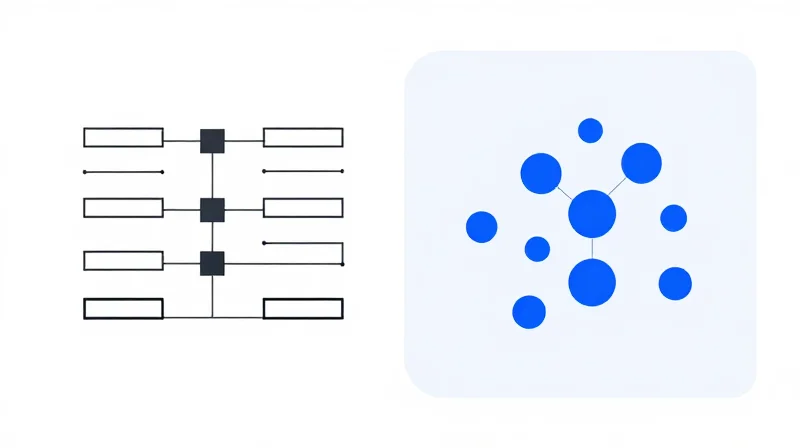
Physical and Data Link Layer Distinctions
The transition from CPRI to eCPRI represents a fundamental shift from a constant-bit-rate (CBR) synchronous protocol to a flexible, packet-switched architecture designed to scale with 5G's massive throughput demands. While CPRI relies on a rigid point-to-point mapping of IQ data onto a synchronous frame, eCPRI utilizes the ubiquitous Ethernet physical layer, allowing for statistical multiplexing and significantly improved transport efficiency through functional splitting. This shift enables operators to move away from expensive, proprietary dedicated fiber links toward more cost-effective, shared packet-based infrastructures.
Synchronous Bit-Streams vs. Packet-Switched Ethernet
CPRI was designed for the 4G era, where the Radio Equipment Controller (REC) and Radio Equipment (RE) communicated via a dedicated fiber link. It uses a time-division multiplexing (TDM) approach, meaning the bandwidth is consumed regardless of whether user data is being transmitted. In contrast, eCPRI encapsulates radio data into standard Ethernet frames or IP packets. This allows the fronthaul to share the same physical infrastructure as other network traffic, enabling the use of standard commercial-off-the-shelf (COTS) switches and routers, which reduces capital expenditure and increases network flexibility.
| Technical Feature | CPRI (Legacy) | eCPRI (5G) |
|---|---|---|
| OSI Layer focus | Physical Layer (Layer 1) | Data Link / Network Layer (Layer 2/3) |
| Transport Medium | Dedicated Fiber (Point-to-Point) | Ethernet, IP, or Dark Fiber |
| Bandwidth Allocation | Fixed / Constant Bit Rate | Dynamic / Statistical Multiplexing |
| Synchronization | Synchronous via Physical Link | Packet-based (PTP/IEEE 1588v2) |
| Efficiency | Low (High overhead for IQ data) | High (Functional split optimization) |
The Role of Functional Splits in eCPRI Architecture
The core innovation of eCPRI lies in its support for different functional splits within the physical layer (PHY). By moving specific processing functions from the Baseband Unit (BBU) to the Radio Unit (RU)—specifically the O-RAN favored Split Option 7-2x—eCPRI reduces the required fronthaul bandwidth. This shift enables the transport of frequency-domain data instead of raw time-domain IQ samples. Consequently, 5G networks can handle 100MHz+ carriers and massive MIMO antenna arrays without requiring a proportional, unsustainable increase in fiber capacity.
Architecture FAQ
- Does eCPRI require more complex synchronization than CPRI?
Yes. Because eCPRI is asynchronous and packet-based, it requires robust external synchronization mechanisms like Precision Time Protocol (PTP/IEEE 1588v2) and Synchronous Ethernet (SyncE) to maintain the strict timing required for 5G radio frames. - Can eCPRI run over existing CPRI fiber?
Yes, eCPRI can be deployed over existing fiber assets, but it requires Ethernet-compatible optics and switches rather than the dedicated bit-stream transceivers used in traditional CPRI setups. - What is the primary benefit of the eCPRI packet header?
The eCPRI header allows for message type identification and prioritization, which is essential for multiplexing different types of traffic (control, data, and management) over a single physical link without compromising latency.
Latency Benchmarks: Meeting the URLLC Mandate

Latency Benchmarks: Meeting the URLLC Mandate
Meeting the Ultra-Reliable Low-Latency Communications (URLLC) mandate requires a fundamental shift in how fronthaul transport handles data; while legacy CPRI relied on a rigid, synchronous bit-stream, eCPRI leverages a flexible packet-based approach that achieves sub-millisecond latency through efficient functional splits and prioritized Ethernet framing. By moving certain Physical Layer (PHY) functions to the Radio Unit, eCPRI significantly reduces the volume of time-critical data, ensuring that the fronthaul segment consumes no more than 100 to 250 microseconds of the total 1ms 5G latency budget.
CPRI vs. eCPRI: Deterministic Jitter and Throughput
In legacy 4G deployments, CPRI provided a virtually jitter-free environment because it utilized Time-Division Multiplexing (TDM) over point-to-point fiber. However, this deterministic nature came at the cost of extreme bandwidth waste, as the link remained fully occupied even when no user data was being transmitted. eCPRI introduces statistical multiplexing, which allows the network to handle 5G's massive throughput by only sending active traffic. The challenge lies in managing the 'packet jitter' inherent in Ethernet, which is addressed using Time-Sensitive Networking (TSN) standards like IEEE 802.1CM.
| Performance Metric | Legacy CPRI (Option 7) | eCPRI (Split 7.2x) | URLLC Requirement |
|---|---|---|---|
| Transport Mechanism | Synchronous TDM | Asynchronous Packet (Ethernet) | Ultra-Low Latency Packet |
| Typical Fronthaul Latency | < 5 µs | 100 - 250 µs | < 1 ms (End-to-End) |
| Bandwidth Efficiency | Low (Constant Bit Rate) | High (Variable/Traffic-based) | High Availability |
| Synchronization Needs | High (Physical Layer) | Very High (IEEE 1588/PTP) | Strict Phase/Frequency Sync |
TSN and Packet Prioritization Strategies
To prevent best-effort backhaul traffic from interfering with critical radio frames, 5G fronthaul networks implement IEEE 802.1Qbu (Frame Preemption) and 802.1bv (Time-Aware Shaper). These mechanisms allow an eCPRI radio frame to 'interrupt' lower-priority data mid-transmission, ensuring that the most time-sensitive IQ data reaches the Distributed Unit without waiting for large background packets to clear the buffer. This hardware-level prioritization is what allows eCPRI to match the reliability of CPRI while utilizing standard Ethernet hardware.
- Does eCPRI increase latency compared to CPRI?
Technically, yes, the move from TDM to packet switching adds a small amount of processing delay (serialization and buffering), but this is offset by the efficiency gains and remains well within the URLLC budget. - How does the functional split affect latency?
The 7.2x split used in eCPRI processes the FFT/iFFT at the Radio Unit, which reduces the throughput and latency sensitivity compared to the 'everything-to-the-cloud' approach of legacy CPRI. - Can URLLC survive on standard Ethernet?
Not on standard 'best-effort' Ethernet. It requires 'Carrier Grade' Ethernet or TSN-enabled switching to guarantee the latency and jitter bounds required for 5G mission-critical applications.
In conclusion, while CPRI offers the lowest theoretical latency due to its simplistic design, eCPRI is the only architecture capable of scaling to 5G's performance demands. Through the use of TSN and intelligent functional splits, eCPRI successfully bridges the gap between the flexibility of Ethernet and the stringent timing requirements of the URLLC mandate.
Bandwidth Efficiency and Compression Techniques

Bandwidth Efficiency and Compression Techniques
The transition from CPRI to eCPRI represents a paradigm shift from a constant bit-rate (CBR) model to a packet-based, traffic-dependent transport mechanism. While CPRI requires a dedicated, fixed bandwidth to transport raw IQ samples regardless of actual cell load, eCPRI utilizes internal functional splits and Ethernet-based transport to reduce fronthaul capacity requirements by up to 90%, enabling operators to support massive MIMO and high-frequency 5G NR bands without a linear increase in fiber infrastructure costs.
The 10x Efficiency Factor: Functional Splits and IQ Compression
The core of eCPRI’s efficiency lies in the 'Split 7-2x' architecture. In legacy CPRI (Split 8), the transport network carries raw, uncompressed radio samples, which scales aggressively with antenna count and channel bandwidth. For a 100MHz 64T64R Massive MIMO array, CPRI would require hundreds of Gbps, which is physically and economically unfeasible. eCPRI solves this by moving the Resource Element Mapper and FFT/IFFT functions into the Radio Unit (RU), transmitting only the necessary data. This approach, combined with advanced IQ compression techniques like block-scaling and non-linear quantization, allows a 100Gbps link to support multiple 5G cells that would have required over 1Tbps under the CPRI standard.
| Feature | Legacy CPRI (Split 8) | eCPRI (Split 7-2x) |
|---|---|---|
| Traffic Type | Constant Bit-Rate (CBR) | Variable/Packet-Based |
| Bandwidth Scaling | Linear with Antennas/BW | Proportional to User Traffic |
| Typical 5G 100MHz Link | ~150 - 200 Gbps | ~10 - 25 Gbps |
| Efficiency Mechanism | None (Rigid TDM) | Compression & Statistical Muxing |
| Fiber Utilization | Extremely High | Optimized (10x reduction) |
Statistical Multiplexing and Packet Switching Advantages
Beyond bit-rate reduction, eCPRI leverages the inherent advantages of Ethernet packet switching. Because eCPRI traffic is bursty and follows actual subscriber usage, multiple Radio Units can share a single high-speed fiber link through statistical multiplexing. If one sector is idle, its assigned bandwidth can be dynamically utilized by another high-traffic sector. This flexibility is impossible in CPRI's circuit-switched environment, where capacity is 'locked' even when no data is being transmitted. This shift allows for the use of standard, off-the-shelf networking hardware, significantly lowering the total cost of ownership (TCO) for the fronthaul network.
- How does eCPRI handle the increased processing load at the Radio Unit?
By integrating PHY-layer functions into the RU, eCPRI requires more powerful SoCs or FPGAs at the tower top, but this cost is offset by the massive savings in fiber cabling and transport equipment. - Does IQ compression degrade signal quality?
Modern 5G compression algorithms are designed to be 'near-lossless,' ensuring that the Error Vector Magnitude (EVM) remains within 3GPP specifications while achieving significant bandwidth savings. - Can eCPRI run over existing CPRI fiber?
Yes, eCPRI can utilize the same physical dark fiber, but it requires packet-switching hardware (like Fronthaul Gateways) to manage the Ethernet-based traffic flow effectively.
Power Consumption Profiles: Operational Efficiency
Power Consumption Profiles: Operational Efficiency
The transition from CPRI to eCPRI represents a fundamental shift from constant, peak-load power consumption to a dynamic, traffic-aware energy profile. While legacy CPRI requires the fronthaul link and processing components to remain fully active regardless of actual user traffic, eCPRI leverages packet-based transport and the O-RAN 7-2x split to enable sophisticated sleep modes and load-dependent power scaling. This efficiency is critical for 5G deployments where the density of small cells and Massive MIMO arrays would otherwise lead to unsustainable OPEX due to electricity costs.
The RU/DU Power Distribution Shift
By moving a portion of the Physical Layer (L1) processing from the DU to the RU—specifically in the 7-2x split—eCPRI increases the computational burden on the Radio Unit. This results in a higher baseline power requirement for the RU hardware compared to a 'dumb' CPRI-based RU. However, this localized processing significantly reduces the volume of data that must be transmitted over the fiber, allowing the DU to handle more sectors with less aggregate power, ultimately improving the system-wide performance-per-watt ratio.
| Parameter | Legacy CPRI (Option 8) | eCPRI (Split 7-2x) | Proprietary Alternatives |
|---|---|---|---|
| Idle Power State | High (Constant Bit Rate) | Low (Packet-based gating) | Variable (Proprietary) |
| RU Processing Load | Minimal (Low Power RU) | Moderate (High Power RU) | Moderate to High |
| DU Efficiency | Low (One-to-one mapping) | High (Resource Pooling) | High (Optimized Silos) |
| Energy Scaling | Static | Dynamic (Traffic-Aware) | Semi-Dynamic |
Optimization Strategies and Alternative Protocols
Alternative fronthaul protocols, such as RoE (Radio over Ethernet) and various proprietary low-PHY splits, attempt to balance the 'thin' RU benefits of CPRI with the bandwidth efficiency of eCPRI. However, eCPRI remains the industry standard for power efficiency due to its native support for advanced features like beamforming weight calculation within the RU, which prevents the massive power spikes associated with transmitting raw IQ data over the fronthaul interface during peak loads.
- Does eCPRI always consume less power than CPRI?
Not at the RU level. The RU in an eCPRI setup often consumes more power due to additional L1 processing, but the overall network efficiency is higher because the fronthaul bandwidth is used much more effectively. - How does traffic load affect eCPRI power consumption?
Unlike CPRI, which draws near-constant power, eCPRI power consumption scales with traffic. During low-traffic periods, the DU and transport network can enter power-saving states. - What is the impact of Massive MIMO on these profiles?
In Massive MIMO, CPRI becomes prohibitively power-hungry due to the sheer volume of IQ data. eCPRI is essential here to keep power consumption manageable by compressing and localizing data processing.
Total Cost of Ownership (TCO) Analysis
Total Cost of Ownership (TCO) Analysis
The Total Cost of Ownership (TCO) for 5G fronthaul favors eCPRI significantly, offering an estimated 30% to 50% reduction in overall expenditure compared to traditional CPRI in dense 5G NR deployments. This financial advantage is primarily driven by eCPRI’s ability to utilize packet-based Ethernet infrastructure, which drastically lowers the cost per bit and enables the use of standardized, off-the-shelf networking components rather than proprietary fiber-to-the-antenna (FTTA) solutions.
CAPEX: Fiber Density and Hardware Procurement
In a CPRI-based architecture, fiber cabling represents a massive capital outlay because the protocol requires a dedicated, point-to-point link for every radio sector. As 5G demands massive MIMO and wider bandwidths, the fiber count for CPRI becomes unsustainable. eCPRI addresses this by supporting statistical multiplexing, allowing multiple Radio Units (RUs) to share a single high-capacity fiber link via Ethernet switching.
| Cost Component | Legacy CPRI | eCPRI (5G) |
|---|---|---|
| Fiber Infrastructure | Very High: Dedicated fiber per RU/sector | Low: Shared fiber via packet switching |
| Networking Hardware | Proprietary fronthaul mux/demux | Standardized Ethernet switches (Whitebox) |
| Transceiver Requirements | High count of low-speed SFPs | Fewer, high-speed (25G/100G) QSFP/SFP+ |
| Installation Labor | Complex: Massive cabling and trunking | Simplified: Standardized Ethernet topology |
OPEX: Power, Maintenance, and Scalability
Operating expenses for eCPRI are optimized through centralized management and improved power efficiency. By shifting parts of the Physical Layer processing from the Baseband Unit (BBU) to the RU (Functional Split 7.2x), operators can consolidate processing power in Centralized-RAN (C-RAN) hubs. This reduces the footprint and cooling requirements at the cell site, though it does introduce a need for more precise (and potentially more costly) synchronization management using PTP (Precision Time Protocol).
Strategic Financial FAQs
- Why is eCPRI considered more future-proof for 5G budgets?
eCPRI allows for software-defined upgrades and supports multi-vendor interoperability (Open RAN), preventing vendor lock-in and reducing the cost of future capacity expansions. - Does the complexity of eCPRI increase maintenance costs?
While it requires more advanced network monitoring tools, the ability to manage the fronthaul as a standard IP/Ethernet network allows operators to use existing IT maintenance workflows, lowering specialized labor costs. - How does 5G densification impact the TCO gap?
As the number of small cells increases, the cost gap widens; eCPRI’s support for hub-and-spoke and tree topologies makes it significantly cheaper to deploy in urban areas compared to CPRI’s rigid architecture.
Alternative Standards: RoE and the O-RAN 7.2x Split
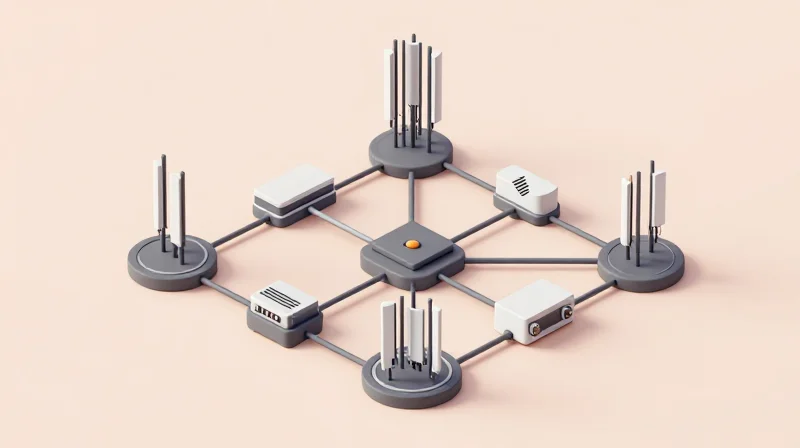
Beyond the core CPRI and eCPRI protocols, the industry is increasingly gravitating toward the O-RAN Alliance's 7.2x functional split and the IEEE 1914.3 Radio over Ethernet (RoE) standard to escape vendor lock-in. While eCPRI provides the technical foundation for high-efficiency 5G transport, the O-RAN 7.2x split refines this by standardizing the interface between the Radio Unit (O-RU) and Distributed Unit (O-DU), effectively balancing computational load and fronthaul throughput. Meanwhile, RoE serves as a bridging technology, encapsulating legacy CPRI data into Ethernet frames to simplify the transition to packet-switched networks.
The O-RAN 7.2x Split: Defining Open Fronthaul
The O-RAN 7.2x split is currently the most widely adopted open fronthaul architecture. By placing the Low-PHY functions (such as FFT/iFFT and CP removal) in the O-RU and the High-PHY functions in the O-DU, it achieves a 'sweet spot' in functional partitioning. This specific division point significantly reduces the bit rate on the fronthaul link compared to traditional Option 8 (CPRI) splits while keeping the RU design relatively simple. Most importantly, it provides a standardized specification that ensures a DU from one vendor can communicate with an RU from another, which is a major departure from the often proprietary extensions found in standard eCPRI deployments.
IEEE 1914.3: Radio over Ethernet (RoE)
The IEEE 1914.3 standard, or RoE, provides a robust mechanism for encapsulating digitized radio data—specifically IQ samples or full CPRI frames—directly into Ethernet frames. Unlike eCPRI, which is a protocol designed for packet-native radios, RoE is primarily utilized to transport legacy radio traffic over a modern Ethernet-based transport network. This allows mobile operators to leverage common off-the-shelf (COTS) switching hardware to support both legacy 4G and modern 5G traffic simultaneously, effectively reducing the need for maintained, dedicated transport silos.
| Feature | O-RAN 7.2x Split | IEEE 1914.3 (RoE) | Standard eCPRI |
|---|---|---|---|
| Primary Focus | Multi-vendor Interoperability | Legacy Data Encapsulation | High-Performance Efficiency |
| Split Point | Option 7.2 (PHY-PHY) | Typically Option 8 (IQ) | Flexible (Option 7 variants) |
| Bandwidth Efficiency | High (User-plane only) | Low (Fixed bit rate) | High (Compression support) |
| Vendor Lock-in | Very Low (Open Standard) | Low (Transport Layer) | Medium/High (Proprietary APIs) |
Implementation FAQ
- Why is the 7.2x split preferred over other O-RAN options?
It offers the best compromise between Radio Unit complexity and fronthaul fiber capacity, enabling massive MIMO without requiring astronomical bandwidth. - Can RoE and eCPRI coexist on the same network?
Yes. Modern Fronthaul Gateway (FHG) devices can encapsulate legacy CPRI into RoE frames and multiplex them alongside native eCPRI traffic over a unified 100G or 250G Ethernet link. - Does O-RAN 7.2x require specific hardware?
It requires O-RUs and O-DUs that support the O-RAN Alliance's C/U/S/M-plane specifications, which are increasingly standard in the 5G ecosystem.
Integration and Interoperability Challenges
The Interoperability Gap: Moving Beyond Proprietary Silos
The shift from CPRI to eCPRI and O-RAN alternatives is fundamentally a move from closed, single-vendor hardware loops to open, software-defined ecosystems. While CPRI mandated a strict point-to-point connection where the Radio Unit (RU) and Baseband Unit (BBU) were almost always from the same manufacturer, eCPRI and Open RAN specifications aim to break this lock-in. However, the reality of integration is fraught with challenges, particularly regarding the interpretation of 'optional' parameters within the eCPRI specification and the strict synchronization requirements of the 5G New Radio (NR) physical layer. Transitioning to these protocols requires not just a change in cabling, but a complete overhaul of how timing, management, and control planes are orchestrated across different hardware vendors.
Protocol Maturity and Ecosystem Lock-in
Historically, CPRI allowed vendors to embed proprietary management and control data within the bitstream, making it virtually impossible to mix RUs and BBUs from different suppliers. eCPRI attempts to solve this by moving to Ethernet-based transport, but 'vendor-specific' headers still persist in many early commercial implementations. This necessitates complex 'glue' software or specific middleware to ensure that a Distributed Unit (DU) from one vendor can effectively command a Radio Unit from another without performance degradation or timing slippage. Operators must navigate the fine line between the plug-and-play simplicity of proprietary CPRI and the flexibility of eCPRI, which often requires significant local integration efforts.
| Interoperability Factor | Legacy CPRI | Standard eCPRI | O-RAN 7.2x |
|---|---|---|---|
| Vendor Neutrality | Very Low (Proprietary) | Moderate (Evolving) | High (Open Standard) |
| Management Interface | Vendor-Specific | Semi-Standardized | Standardized (Netconf/YANG) |
| Integration Complexity | Low (Single Vendor) | High (Multi-Vendor) | Moderate to High |
| Lock-in Risk | High | Medium | Low |
Timing and Synchronization Hurdles
One of the most critical integration hurdles is the transition from the synchronous nature of CPRI to the asynchronous, packet-based nature of eCPRI. CPRI carries the clock signal within the physical layer bitstream. In contrast, eCPRI relies on Precision Time Protocol (PTP/IEEE 1588v2) and Synchronous Ethernet (SyncE). Ensuring sub-microsecond timing accuracy across a multi-vendor network requires meticulous configuration of boundary clocks. If the DU and RU interpret the PTP profile differently, the resulting jitter can cause massive drops in throughput or total cell site failure, highlighting that interoperability is as much about timing as it is about data.
- Can eCPRI hardware always work with O-RAN software?
No, because eCPRI is a transport protocol while O-RAN defines specific functional splits; both must be aligned for full compatibility. - What is the primary risk of multi-vendor integration?
Increased latency and synchronization errors during the management-plane negotiation phase are common when mixing vendors. - Does O-RAN eliminate vendor lock-in entirely?
It significantly reduces it by standardizing interfaces, though hardware-specific optimizations can still create minor dependencies.
Future-Proofing Your Infrastructure

Strategies for a Scalable Infrastructure Migration
Infrastructure future-proofing is achieved by transitioning from the rigid, 'dark fiber' point-to-point architecture of legacy CPRI to a converged, packet-switched Ethernet fronthaul. By adopting eCPRI and O-RAN 7.2x specifications, operators can decouple the transport layer from specific radio hardware, allowing for seamless capacity upgrades via software-defined networking (SDN) and high-speed Ethernet interfaces (100G/400G) without the need for extensive physical re-cabling as spectral demands increase.
Evolutionary Path: From 5G eCPRI to 6G Requirements
As the industry prepares for 6G, transport networks must evolve to handle peak data rates likely exceeding 100 Gbps and end-to-end latencies in the sub-millisecond range. This progression necessitates the integration of Time-Sensitive Networking (TSN) and sophisticated synchronization protocols to ensure phase alignment across hyper-dense, disaggregated cell sites.
| Parameter | Legacy CPRI (4G) | eCPRI/O-RAN (5G) | Next-Gen Transport (6G) |
|---|---|---|---|
| Transport Protocol | Constant Bit Rate (CBR) | Ethernet / IP / RoE | Deterministic Ethernet / TSN |
| Typical Bandwidth | Up to 10 Gbps | 25 Gbps - 100 Gbps | 400 Gbps - 1 Tbps |
| Network Topology | Point-to-Point / Star | Mesh / Converged | AI-Optimized / Cloud-Native |
| Timing Accuracy | High (Frequency Sync) | Very High (Phase/Time) | Ultra-High (Nanosecond Phase) |
Future-Proofing FAQ
- How can I migrate from CPRI to eCPRI without a total 'rip-and-replace'?
Operators can utilize Radio-over-Ethernet (RoE) gateways to encapsulate legacy CPRI frames into Ethernet packets. This allows existing Remote Radio Units (RRUs) to coexist with new eCPRI-based equipment over a unified, shared packet transport network. - Does moving to eCPRI require new fiber optic installations?
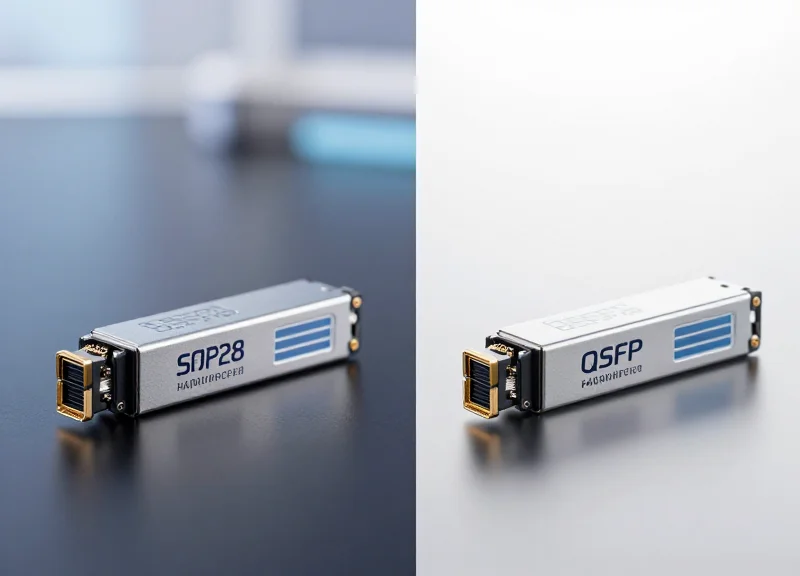
In most cases, the physical fiber remains viable; however, the transition to 25G or 100G eCPRI requires upgrading optical transceivers (SFP28/QSFP28) and ensuring the fiber plant is clean and capable of supporting higher-speed, lower-latency optical requirements. - Why is synchronization critical for 6G readiness?
6G will rely on massive MIMO and Coordinated Multipoint (CoMP) at an unprecedented scale. These technologies demand nanosecond-level timing accuracy that can only be sustained by PTP-aware (G.8275.1) network elements within the transport path.
Selecting the right fronthaul protocol is a balancing act between immediate performance needs and long-term financial sustainability. While legacy CPRI remains viable for low-density areas, eCPRI is the clear winner for high-capacity 5G urban deployments and O-RAN initiatives. To ensure your network is ready for the next decade of connectivity, start by auditing your current fiber capacity and latency margins. Contact our infrastructure experts today for a personalized TCO roadmap for your 5G transition.