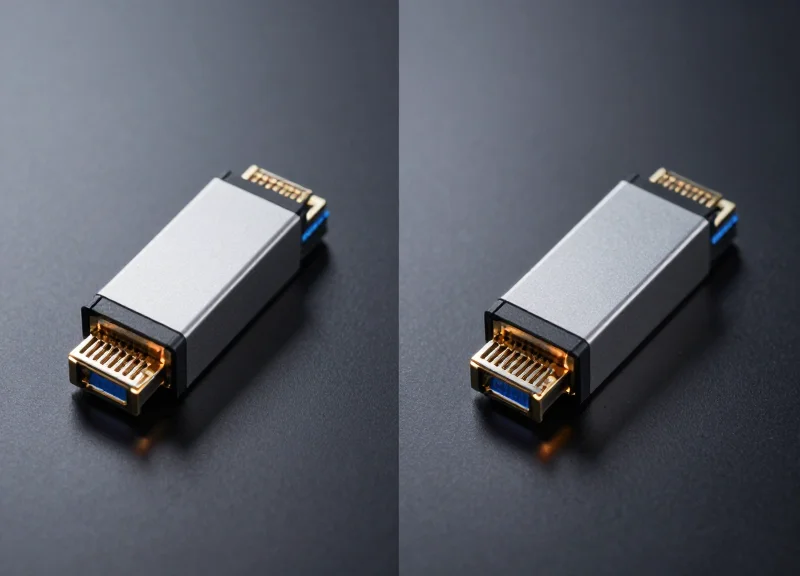
In the rapidly evolving landscape of high-density data centers and metro networks, selecting the right optical transceiver is no longer just a technical checkbox—it is a strategic financial decision. This article provides a comprehensive comparison of Fixed-Wavelength DWDM SFP+ modules against industry alternatives, addressing the critical trade-offs between performance and cost.
Technical Foundations of Fixed-Wavelength DWDM SFP+

Understanding the Architecture of Fixed-Wavelength DWDM SFP+
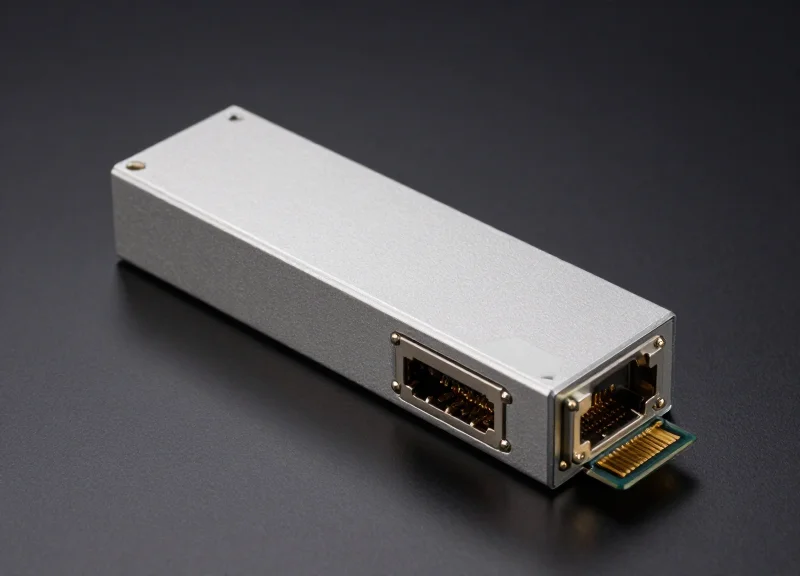
Fixed-Wavelength Dense Wavelength Division Multiplexing (DWDM) SFP+ transceivers are specialized optical modules designed to transmit data over a single, specific wavelength within the ITU-T C-Band grid. Unlike standard gray optics or tunable variants, these modules utilize a stabilized Distributed Feedback (DFB) or Electro-Absorption Modulated Laser (EML) to maintain a precise frequency, typically with 100GHz or 50GHz spacing. This precision allows network operators to multiplex up to 80 or 96 channels onto a single fiber pair, drastically increasing bandwidth density without deploying additional physical cabling.
Core Components and Wavelength Stability
The reliability of fixed-wavelength modules stems from their internal temperature management systems. Because DWDM channels are spaced as closely as 0.4nm to 0.8nm, even minor thermal fluctuations can cause wavelength drift, leading to inter-channel interference known as crosstalk. To prevent this, fixed DWDM SFP+ modules incorporate internal Thermo-Electric Cooler (TEC) technology to lock the laser to its assigned ITU channel regardless of ambient temperature changes within the data center environment.
| Feature | Fixed-Wavelength DWDM SFP+ | Standard (Gray) SFP+ |
|---|---|---|
| Wavelength | Specific ITU Channel (e.g., 1550.12nm) | Wide-band (850nm, 1310nm, or 1550nm) |
| Multiplexing Capability | Up to 96 Channels per Fiber | 1 Channel per Fiber |
| Typical Reach | 40km to 100km (ER/ZR) | 300m to 40km |
| Thermal Management | Integrated TEC Cooling | Passive Cooling (Standard) |
The Role of the ITU-T Grid in Network Design
Fixed-wavelength modules serve as the deterministic building blocks of passive DWDM networks. By utilizing Optical Add-Drop Multiplexers (OADMs) or Mux/Demux units, engineers can assign specific SFP+ modules to dedicated ports on the multiplexer. This hardware-based mapping ensures predictable performance and simplifies troubleshooting, as each data stream is physically isolated to a discrete frequency, allowing for massive aggregate throughput over existing infrastructure.
- Why is wavelength locking important?
It prevents spectral overlap with adjacent channels in high-density DWDM environments, ensuring signal integrity over long distances. - Can a fixed-wavelength module be repurposed for a different channel?
No, the hardware is physically set to a specific frequency during manufacturing; changing channels requires replacing the module. - How does the power budget differ from standard SFP+?
DWDM modules typically require higher power budgets due to the active cooling components (TEC) required to maintain wavelength stability.
The Primary Alternatives: Tunable SFP+ and CWDM
The Primary Alternatives: Tunable SFP+ and CWDM
While fixed-wavelength DWDM SFP+ modules remain the benchmark for high-capacity fiber utilization, the market has split into two distinct alternative paths: Tunable SFP+ for those prioritizing operational agility, and CWDM for those seeking the lowest possible cost for shorter-range links. Tunable optics allow a single module to cover the entire C-band spectrum, drastically simplifying inventory, while CWDM utilizes wider channel spacing to eliminate the need for expensive cooling and high-precision filters.
Tunable SFP+: The End of Sparing Complexity
The primary drawback of fixed-wavelength optics is the requirement to stock a unique part for every specific channel in use. Tunable SFP+ transceivers solve this by incorporating an integrated laser assembly that can be software-configured to any frequency on the 50GHz or 100GHz ITU grid. This 'universal' nature means network operators can carry a single spare part to replace any failed fixed-wavelength module in the field. Although the initial price per unit is significantly higher than fixed-wavelength counterparts, the total cost of ownership (TCO) is often lower due to reduced logistics and emergency stocking requirements.
CWDM: Economics of the Access Network
Coarse Wavelength Division Multiplexing (CWDM) provides an alternative for scenarios where the extreme density of DWDM (up to 96 channels) is unnecessary. CWDM uses a 20nm channel spacing, which is far more forgiving than the 0.8nm spacing of DWDM. This tolerance allows manufacturers to use uncooled lasers (no Thermo-Electric Cooler/TEC), which significantly lowers power consumption and component costs. However, because the wavelengths are spread so wide, they cannot be amplified by standard Erbium-Doped Fiber Amplifiers (EDFAs), effectively limiting CWDM to metro-access distances of roughly 80km.
| Feature | Fixed DWDM SFP+ | Tunable SFP+ | CWDM SFP+ |
|---|---|---|---|
| Spectral Efficiency | High (0.8nm spacing) | High (0.8nm spacing) | Low (20nm spacing) |
| Inventory Management | Difficult (40+ SKUs) | Simplified (1 SKU) | Moderate (8-18 SKUs) |
| Amplification Support | Yes (EDFA) | Yes (EDFA) | No |
| Power Consumption | Moderate (~1.5W) | High (~2.0W - 2.5W) | Low (<1.0W) |
| Typical Reach | 80km - 1000km+ | 80km - 1000km+ | Up to 80km |
Common Strategic Questions
- Can I mix fixed-wavelength and tunable modules in the same MUX?
Yes. As long as the tunable module is set to the specific ITU channel that corresponds to the fixed port on your multiplexer, they are fully compatible and can coexist on the same fiber link. - When is CWDM a better choice than DWDM?
CWDM is ideal for enterprise or campus backbones where fiber runs are under 80km and the total bandwidth requirement doesn't exceed 18 channels. It is significantly cheaper than any DWDM solution. - What is the primary risk of adopting Tunable SFP+?
Beyond higher unit cost, tunable optics have slightly higher power and heat profiles. Ensure your switch or router can provide the necessary wattage to the SFP+ slots to prevent overheating or power-cycling.
Latency Benchmarks: Why Every Nanosecond Counts
Fixed-wavelength DWDM SFP+ modules offer a distinct latency advantage in high-performance computing and financial environments because they eliminate the internal electronic overhead and firmware-driven stabilization required by tunable lasers. By utilizing a laser diode preset to a specific ITU grid frequency, these modules bypass the continuous wavelength-locking and thermal-tuning cycles that can introduce micro-fluctuations in signal propagation time, ensuring a deterministic and predictable data path.
Internal Processing and Signal Path Predictability
The primary differentiator in latency between fixed and tunable DWDM optics lies in the Internal Tunable Laser Assembly (ITLA). Tunable modules require a sophisticated digital signal processor (DSP) and a control loop to maintain wavelength accuracy. This complexity introduces a minute but measurable delay in signal transmission. In contrast, fixed-wavelength modules feature a simplified electrical-to-optical (E-O) conversion path. Because the laser does not need to adjust its cavity length or temperature to 'hunt' for a specific frequency, the time from the electrical pulse entering the module to the optical pulse exiting the fiber is significantly more consistent.
Comparative Performance Metrics
| Module Type | Signal Processing Profile | Jitter Susceptibility | Latency Consistency |
|---|---|---|---|
| Fixed-Wavelength DWDM SFP+ | Ultra-low (Deterministic) | Minimal | Highest |
| Tunable DWDM SFP+ | Moderate (Firmware-managed) | Low to Moderate | Variable |
| Standard CWDM SFP+ | Low (Simplified) | Minimal | High |
| Standard SFP+ (SR/LR) | Minimal | Negligible | Absolute |
Impact on High-Frequency Trading (HFT)
In the world of HFT, where every nanosecond translates into financial gain or loss, the predictability of a fixed-wavelength module is invaluable. While the absolute difference in transmission speed over the fiber is dictated by the speed of light, the 'jitter'—or variation in latency—introduced by tunable optics can disrupt the synchronization of trade execution algorithms. Fixed-wavelength DWDM solutions provide the stability required to maintain tight synchronization across geographically distributed data centers.
Latency & Reliability FAQ
- Does wavelength tuning happen during data transmission?
Wavelength locking is a continuous process in tunable modules. While the major 'tuning' happens at startup, the control loop constantly monitors and adjusts the laser, which can create subtle variations in power and timing not found in fixed units. - Is the latency difference noticeable in standard enterprise apps?
For standard office applications or web traffic, the nanosecond-scale difference is negligible. However, for 5G fronthaul, real-time industrial IoT, and financial services, these differences accumulate across multiple hops. - How does distance affect the latency of fixed DWDM?
Propagation delay (approx. 5 microseconds per kilometer) remains the same regardless of the module type, but fixed-wavelength modules ensure that the 'entrance and exit' time through the transceiver remains constant over time.
Power Consumption Analysis: Thermal Efficiency at Scale

Power Consumption Analysis: Thermal Efficiency at Scale
Fixed-wavelength DWDM SFP+ modules provide a critical advantage in power efficiency, typically consuming 30% to 50% less energy than tunable alternatives, which translates directly into lower heat dissipation and reduced cooling requirements for high-density network cores.
The Energy Profile of Fixed vs. Tunable Lasers
The primary driver behind the wattage gap is the internal architecture of the optical assembly. Tunable SFP+ modules utilize complex components such as integrated heaters and Thermoelectric Coolers (TEC) to precisely manipulate and lock the laser's wavelength across the C-band. These components must remain active to prevent frequency drift, leading to a constant and higher power draw. In contrast, fixed-wavelength modules use a static laser diode optimized for a single frequency, requiring significantly less sophisticated thermal management and power-hungry control circuitry.
| Module Type | Typical Power Draw (Watts) | Max Power Rating (Watts) | Thermal Impact |
|---|---|---|---|
| Fixed-Wavelength DWDM SFP+ | 1.0W - 1.2W | 1.5W | Low / Predictable |
| Tunable DWDM SFP+ | 1.8W - 2.3W | 2.5W | High / Variable |
| Standard CWDM SFP+ | 0.8W - 1.1W | 1.2W | Very Low |
Operational Expenditure and Cooling Constraints
At the scale of a single switch, the difference might seem negligible. However, in a fully populated 48-port leaf or spine switch, the cumulative effect is profound. Using fixed-wavelength modules can save approximately 50 Watts per switch compared to tunable modules. In a data center with hundreds of switches, this reduction decreases the load on the facility's CRAC (Computer Room Air Conditioning) units, lowers the PUE (Power Usage Effectiveness) ratio, and allows for higher rack density without exceeding thermal thresholds.
Power Management FAQ
- Does higher power consumption in tunable modules indicate better performance?
No. The additional power is strictly used for wavelength tuning and stabilization mechanisms. It does not improve signal reach, throughput, or bit-error rates compared to fixed-wavelength equivalents. - How does heat impact the lifespan of the SFP+ module?
Lower operating temperatures generally correlate with higher Mean Time Between Failures (MTBF). Fixed-wavelength modules, running cooler, often exhibit greater long-term reliability in high-density environments. - Can fixed-wavelength modules help in green data center initiatives?
Yes. By reducing both direct electrical consumption and the energy required for heat extraction, fixed-wavelength DWDM optics support lower carbon footprints and sustainable infrastructure goals.
Total Cost of Ownership (TCO): CAPEX vs. OPEX
Calculating the Total Cost of Ownership (TCO) reveals a fundamental trade-off: fixed-wavelength DWDM SFP+ modules minimize initial capital expenditure (CAPEX) due to their simpler manufacturing, while tunable alternatives offer significant operational expenditure (OPEX) savings through reduced inventory complexity and simplified logistics. For large-scale, static deployments, the lower unit cost of fixed optics often outweighs the management overhead, whereas dynamic or remote networks typically find better value in the flexibility of tunable solutions.
CAPEX Analysis: The Hardware Cost Differential
Capital expenditure is the primary driver for choosing fixed-wavelength DWDM SFP+ modules. Because fixed optics do not require the complex integrated tunable lasers and control electronics found in tunable modules, they are significantly less expensive to produce and purchase.
| Cost Factor | Fixed-Wavelength SFP+ | Tunable SFP+ |
|---|---|---|
| Unit Purchase Price | Low ($150 - $300 range) | High ($600 - $1,200 range) |
| Sparing Cost (Small Site) | High (Requires 40+ unique spares) | Low (One SKU fits all) |
| Hardware Complexity | Simple, passive-cooled designs | Complex, active wavelength control |
OPEX Analysis: Inventory and Labor Logistics
While fixed modules win on unit price, they introduce significant operational friction. Maintaining a 40-channel DWDM network with fixed optics requires keeping a spare for every specific wavelength, bloating inventory costs and increasing the risk of 'wrong-part' errors during emergency repairs.
- Inventory Management
Fixed optics require 40-80 different SKUs to cover the C-band, leading to higher warehouse costs and more complex procurement cycles. - Technician Efficiency
Using tunable optics allows a field technician to carry a single spare that works for any port, reducing the number of truck rolls and 'Mean Time to Repair' (MTTR). - Network Planning
Fixed-wavelength systems require meticulous documentation and port-labeling to ensure the correct module is inserted, increasing the likelihood of human error during scaling.
The Financial Decision Matrix
To determine the most cost-effective path, operators must look beyond the sticker price. The following table summarizes the TCO favorability based on specific network characteristics.
| Scenario | Preferred Choice | Economic Rationale |
|---|---|---|
| High-Density Data Center Interconnect | Fixed-Wavelength | Massive volume savings outweigh sparing logistics in a controlled environment. |
| Remote Edge / Service Provider Access | Tunable SFP+ | High cost of technician truck rolls makes 'one-SKU' sparing far cheaper over 5 years. |
| Legacy Passive CWDM Migration | Fixed-Wavelength | Maintains low-cost structure while maximizing existing fiber capacity. |
Frequently Asked TCO Questions
- At what scale does the OPEX of fixed optics exceed their CAPEX savings?
Typically, once a network exceeds 3-5 geographic sites with diverse wavelength needs, the inventory holding costs and risk of downtime from missing specific fixed spares negate the initial 50% discount on hardware. - Does power consumption impact the OPEX significantly?
Yes. Fixed optics generally consume 0.5W to 1W less than tunable optics. In a fully loaded 48-port switch, this can save significant electricity and cooling costs over a 24/7/365 operational cycle.
Sparing Strategies and Inventory Management

Sparing Strategies and Inventory Management
Effective inventory management for DWDM networks requires balancing the lower acquisition cost of fixed-wavelength SFP+ modules against the significant operational overhead of maintaining a comprehensive spare parts kit for 40 or more unique ITU channels. While fixed-wavelength optics are cheaper per unit, the necessity of stocking every specific wavelength used in the network to prevent extended downtime creates a logistical burden that often outweighs the initial CAPEX savings.
The High Cost of SKU Proliferation
Managing fixed-wavelength DWDM optics involves a high degree of complexity due to SKU proliferation. In a typical C-Band 100GHz grid, there are over 40 distinct channels. If an operator utilizes all channels, they must technically stock 40 different replacement parts. This creates 'stranded capital,' where expensive inventory sits on shelves for years because a specific channel failed less frequently than others, whereas a tunable SFP+ can be programmed on-site to replace any failed fixed module regardless of its frequency.
| Inventory Factor | Fixed-Wavelength SFP+ | Tunable SFP+ Alternatives |
|---|---|---|
| SKU Count | 40+ Unique Part Numbers | 1 Universal Part Number |
| Stocking Logic | Channel-Specific (Must match exactly) | Agnostic (One size fits all) |
| Storage Space | High (Requires multi-bin tracking) | Minimal (Single bin) |
| Logistical Risk | High (Risk of wrong channel dispatch) | Near Zero (Self-contained versatility) |
Optimizing Total Cost of Ownership (TCO)
When calculating TCO, operators must factor in the warehouse costs, procurement labor, and the risk of 'Out of Stock' events for specific channels. Tunable SFP+ modules serve as an insurance policy. Even if an operator prefers fixed optics for the main deployment to save on thermal and power budgets, keeping tunable modules as universal spares is often the most cost-effective strategy for emergency restoration.
- How does sparing affect Mean Time to Repair (MTTR)?
Tunable spares significantly reduce MTTR because technicians do not need to verify specific channel availability before heading to a site; one spare covers any failure. - Is it financially viable to mix fixed and tunable optics?
Yes, many Tier-2 providers use fixed-wavelength optics for initial builds and stock tunable optics for replacements to simplify long-term maintenance logistics. - What are the risks of 'wrong-channel' dispatches?
In fixed-wavelength environments, a technician may accidentally bring the wrong SKU to a remote site, leading to a failed repair window and doubled operational expenses for a second trip.
Network Reliability and Mean Time Between Failure (MTBF)
Network Reliability and Mean Time Between Failure (MTBF)
In high-density optical networking, reliability is inversely proportional to component complexity; fixed-wavelength DWDM SFP+ modules consistently demonstrate higher Mean Time Between Failure (MTBF) ratings than tunable alternatives due to their lack of intricate mechanical and thermal tuning mechanisms. While tunable optics offer operational flexibility, the inclusion of integrated micro-heaters, wavelength lockers, and complex control firmware introduces additional points of failure that are absent in the more streamlined fixed-laser architecture.
Comparative Reliability Metrics
When comparing these technologies, engineers must look beyond the initial CAPEX and consider the 'reliability tax' associated with complex optical assemblies. Fixed-wavelength modules utilize a standard Distributed Feedback (DFB) or Electro-absorption Modulated Laser (EML) set to a specific frequency at the factory. This stability reduces the strain on the Internal Thermo-Electric Cooler (TEC) and simplifies the module's circuitry.
| Feature | Fixed-Wavelength DWDM | Tunable DWDM | Standard CWDM |
|---|---|---|---|
| Average MTBF (Hours) | 2.5M - 4M+ | 1.5M - 2M | 3M - 5M |
| Failure Points | Laser Diode, Driver IC | Wavelength Locker, Heater, Firmware | Laser Diode, Passive Filter |
| Thermal Stress | Low/Moderate | High (Active Tuning) | Very Low |
| Complexity | Low | Very High | Low |
The Risk of Wavelength Drift and Firmware Logic
A critical differentiator in network uptime is the risk of wavelength drift. Tunable modules rely on a 'wavelength locker'—an optical feedback loop—to ensure the laser stays on the ITU grid. If the locker or the control logic fails, the module may drift into adjacent channels, causing signal interference across multiple ports. Fixed-wavelength modules, by contrast, are physically locked to their frequency via the grating structure of the laser chip, making catastrophic drift significantly less likely.
- Does the age of the module impact fixed vs. tunable reliability differently?
Yes. Tunable optics often experience more rapid degradation of the tuning elements over time due to constant thermal cycling, whereas fixed-wavelength modules typically follow a standard semiconductor bathtub curve with very long stable operating periods. - Is a lower MTBF for tunable modules a dealbreaker for carrier-grade networks?
Not necessarily. Carriers often trade lower MTBF for the ability to carry a single spare part (inventory efficiency), though they compensate by using 1+1 hardware redundancy to mitigate the higher failure risk. - How does power consumption correlate to reliability in this context?
Lower power consumption in fixed-wavelength modules results in less internal heat generation. Excess heat is the primary catalyst for laser diode degradation, meaning cooler-running fixed modules generally have longer service lives.
Ideal Use Cases: When to Choose Fixed Over Tunable

Strategic Selection: Prioritizing Cost-per-Link and Stability
While tunable optics offer undeniable operational flexibility, fixed-wavelength DWDM SFP+ modules remain the gold standard for high-volume, static deployments where capital expenditure (CapEx) must be minimized. The decision to choose fixed over tunable hinges on the scale of the deployment and the frequency of network reconfigurations. In environments where wavelengths are assigned once and rarely changed, the price premium of tunable lasers—often 2 to 4 times higher than fixed optics—becomes difficult to justify.
Edge Computing and Rural Broadband Access
For edge computing sites and rural broadband initiatives, budget constraints are often the primary project driver. Fixed-wavelength modules are ideal here because these links typically connect a remote site directly to a central office with a dedicated path. Since these locations are seldom 're-homed' to different DWDM channels, the simplicity of a fixed-laser design ensures lower per-node costs and higher reliability in the often-harsh environments of unconditioned cabinets.
Campus and Enterprise Backbones
In campus environments where the fiber plant is privately owned and distances are relatively short (under 80km), fixed-wavelength optics provide a robust solution for interconnecting buildings. IT departments with predictable growth patterns can pre-allocate specific DWDM channels for different departments or buildings, leveraging the lower cost of fixed modules to stay within annual budget cycles while still achieving massive capacity upgrades.
| Deployment Scenario | Primary Requirement | Recommended Optic Type | Economic Rationale |
|---|---|---|---|
| Greenfield Metro Access | Low Initial CapEx | Fixed-Wavelength | Reduces startup costs by up to 60%. |
| Dynamic Core Mesh | Operational Agility | Tunable | Offsets labor costs of manual swaps. |
| Point-to-Point Enterprise | High Reliability | Fixed-Wavelength | Simpler hardware has fewer failure points. |
| Large Data Center Interconnect | Inventory Efficiency | Tunable | Single SKU simplifies massive sparing needs. |
High-Density Static Metro Links
In high-density metro access rings where hundreds of fixed connections are established to serve residential or business multi-dwelling units (MDUs), the cost savings of fixed optics scale linearly. When deploying 40 or 80 channels across multiple rings, the aggregate savings can reach tens of thousands of dollars. In these scenarios, the technical overhead of managing a fixed-wavelength inventory is offset by the massive reduction in procurement costs.
- Can I mix fixed and tunable modules in the same DWDM system?
Yes. It is common to use fixed modules for the primary, static links while keeping a small stock of tunable modules as 'emergency spares' that can fill any channel gap temporarily. - When is fixed-wavelength a bad idea?
Avoid fixed optics if your network requires frequent remote wavelength reconfigurations via ROADMs, as fixed modules require a physical site visit to change the channel. - Is there a performance difference between the two?
Generally, no. Both fixed and tunable DWDM SFP+ modules adhere to the same MSA standards and offer similar reach and bit-error rate (BER) performance at 10G speeds.
Choosing the right transceiver involves balancing immediate hardware costs with long-term operational agility. While Fixed-Wavelength DWDM SFP+ modules offer superior power and cost profiles for static deployments, the scale of your network ultimately dictates the winner. Contact our engineering team today for a customized network audit and TCO projection.