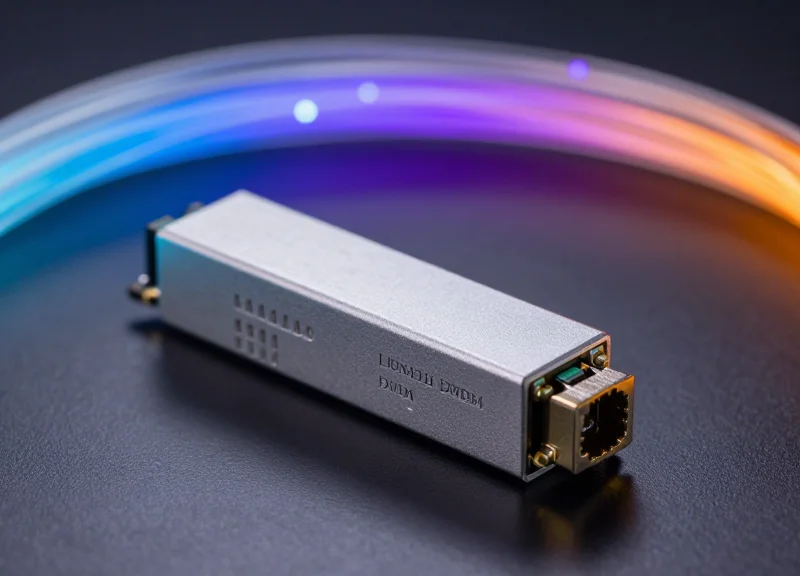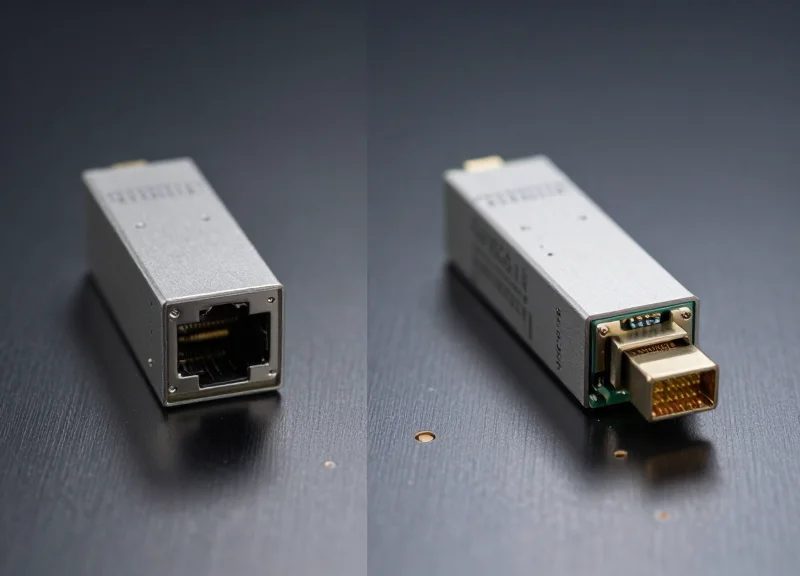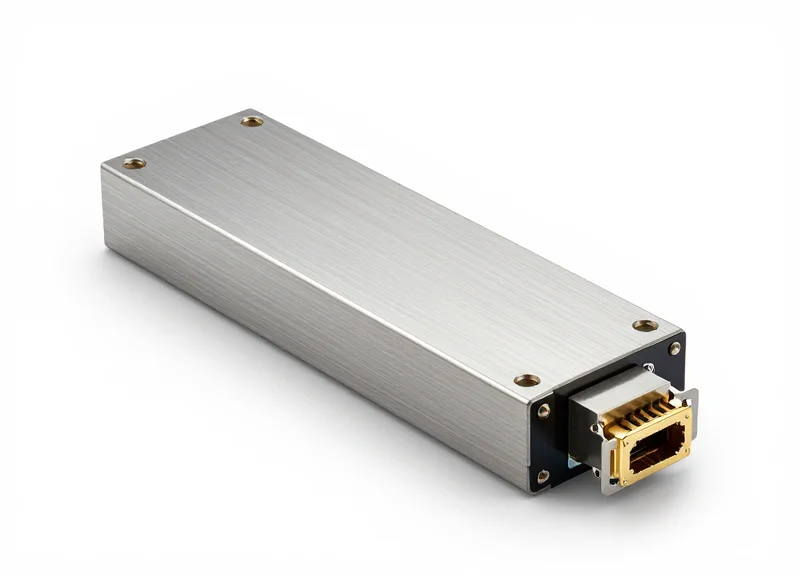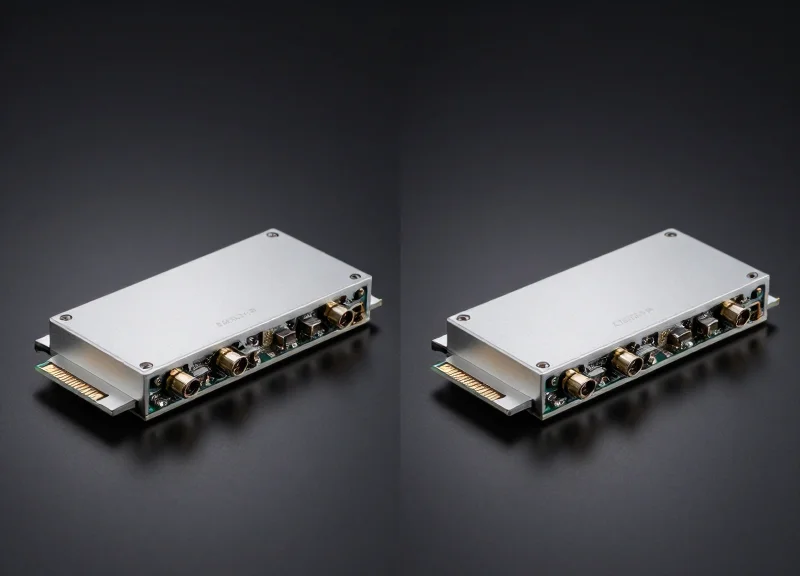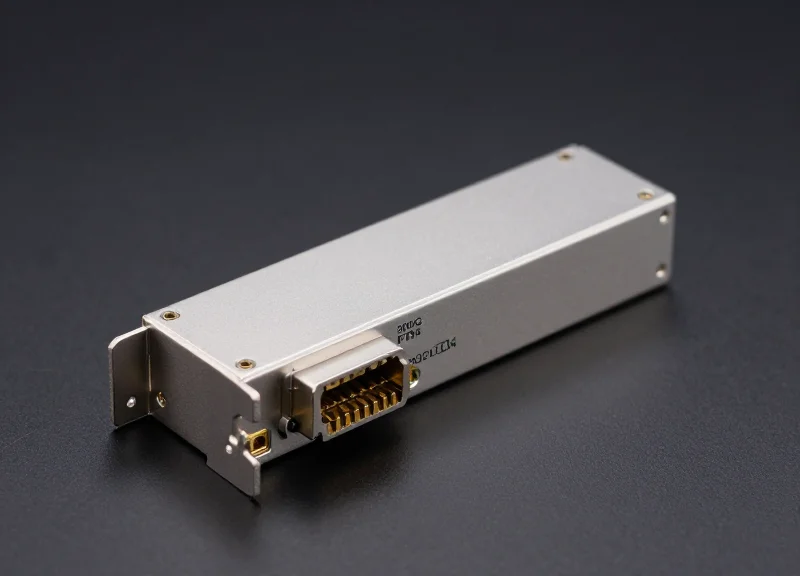
In an era where downtime is not an option, the backbone of global data centers relies on optical solutions that balance extreme speed with unwavering stability. Ubytelink's 200G FR4 transceivers represent the pinnacle of this balance, offering a robust path for enterprises to scale their bandwidth without compromising on reliability. This article delves into the engineering precision that makes Ubytelink the preferred choice for high-stakes network environments.
The Strategic Importance of 200G FR4 in Modern Data Centers

The Strategic Importance of 200G FR4 in Modern Data Centers
200G FR4 technology serves as the critical architectural bridge for modern data centers, offering a sophisticated balance between legacy 100G systems and the high-intensity requirements of 400G and 800G networks. By utilizing the QSFP56 form factor and 4-lane PAM4 modulation, 200G FR4 allows operators to double their network capacity without the exponential increase in power consumption or thermal management complexity typically associated with first-generation 400G deployments. It is the optimal solution for hyperscalers and enterprise environments that require immediate bandwidth expansion within a predictable budget and power envelope.
Balancing Density and Distance with 200G FR4
The Ubytelink 200G FR4 module is specifically engineered for 2km reaches over single-mode fiber (SMF), utilizing four CWDM wavelengths. This distance coverage is vital for large-scale leaf-spine architectures where data must travel between different halls or floors within a facility. Unlike Multi-Mode Fiber (MMF) solutions which face physical distance limitations, or 400G solutions which may suffer from higher latency due to more complex FEC (Forward Error Correction) requirements, 200G FR4 provides a stable, low-latency path for high-frequency trading, real-time AI processing, and massive cloud storage synchronization.
| Feature | 100G CWDM4 | 200G FR4 | 400G DR4/FR4 |
|---|---|---|---|
| Modulation | NRZ | PAM4 | PAM4 |
| Form Factor | QSFP28 | QSFP56 | QSFP-DD |
| Power Efficiency | High | Optimized | Variable/High |
| Transmission Distance | 2km | 2km | 500m - 2km |
| Ideal Use Case | Legacy Legacy Upgrades | High-Density Growth | Next-Gen Hyperscale |
Implementation Considerations and Common Queries
- Is 200G FR4 backward compatible with 100G infrastructure?
While the QSFP56 form factor is physically compatible with QSFP-DD ports, 200G FR4 uses PAM4 modulation which differs from the NRZ used in standard 100G CWDM4. However, many modern switches support multi-rate configurations that allow for seamless integration into existing 100G environments via breakout cables or rate-matching. - Why choose 200G FR4 over a 400G breakout solution?
200G FR4 is often preferred when power budgets are tight or when the existing switch silicon is optimized for 50G SerDes lanes. It provides a more granular upgrade path, reducing the risk of stranded bandwidth and lowering the initial capital expenditure compared to a full 400G migration. - How does 200G FR4 improve data center sustainability?
By delivering 200G of throughput in a single optical module with optimized power draw, Ubytelink solutions reduce the total power per bit. This leads to lower electricity costs and reduced cooling requirements, directly contributing to a lower Carbon Usage Effectiveness (CUE) for the data center.
Anatomy of Excellence: The Technical Specs of Ubytelink 200G FR4
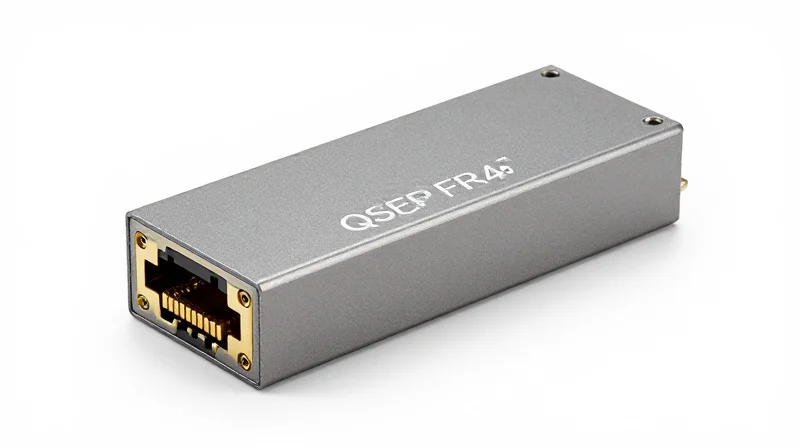
Ubytelink 200G FR4 transceivers represent a pinnacle of optical engineering, combining the compact QSFP56 form factor with advanced 4-lane PAM4 modulation to facilitate 200Gbps connectivity over standard single-mode fiber (SMF) for distances up to 2km. By integrating sophisticated Digital Signal Processing (DSP) and high-linearity lasers, these solutions ensure seamless data flow in hyperscale environments.
The QSFP56 Standard: Compact Power
The Quad Small Form-factor Pluggable 56 (QSFP56) design allows Ubytelink to provide high-density port configurations in standard rack switches. By utilizing a 4x50G electrical interface, these modules maintain physical compatibility with existing QSFP cages while delivering a 100% increase in bandwidth density compared to legacy QSFP28 modules. This evolution is critical for operators looking to scale up without undergoing massive hardware overhauls.
Advanced PAM4 Modulation and DSP Integration
Central to the efficiency of Ubytelink's FR4 solutions is the use of 4-level Pulse Amplitude Modulation (PAM4). Unlike traditional NRZ (Non-Return-to-Zero) signaling, PAM4 transmits two bits per signal level, allowing the module to reach a 50Gbps per-lane data rate at a lower baud rate. This reduction in the required bandwidth for the electrical signal minimizes dispersion and crosstalk, while the internal DSP compensates for transmission impairments to maintain a stable Bit Error Rate (BER).
Optical Specifications and CWDM Grid
| Parameter | Technical Specification |
|---|---|
| Wavelengths | 1271, 1291, 1311, 1331 nm (CWDM4 Grid) |
| Max Transmission Distance | 2km over G.652 SMF |
| Data Rate per Lane | 53.125 Gbps (PAM4) |
| Total Throughput | 212.5 Gbps |
| Connector Type | LC Duplex |
| Typical Power Consumption | <5.5W |
Implementation and Technical Support
- What is the primary advantage of the CWDM4 grid in these modules?
The CWDM4 grid allows four separate 50G channels to be multiplexed onto a single pair of single-mode fibers, significantly reducing the cost of fiber cabling and optimizing existing fiber plant utilization. - Is Forward Error Correction (FEC) required for Ubytelink 200G FR4?
Yes, these modules are designed to work with KP4 FEC on the host equipment side to ensure reliable data transmission across the 2km reach. - How does Ubytelink manage thermal performance in such a small form factor?
Ubytelink utilizes high-efficiency EML lasers and optimized housing materials to keep power consumption below 5.5W, ensuring the modules remain within thermal operating limits even in high-density switch configurations.
Reliability Engineering for Mission-Critical Infrastructure
Reliability Engineering for Mission-Critical Infrastructure
In mission-critical global networks, the transition to 200G FR4 requires a level of reliability where downtime is measured in seconds per year, necessitating a 'zero-failure' engineering philosophy. Ubytelink addresses this requirement by integrating premium-grade semiconductors and implementing a rigorous multi-stage validation process that ensures consistent performance across diverse environmental conditions and high-density deployments.
Semiconductor Selection and Tier-1 Component Sourcing
The integrity of a 200G FR4 module is fundamentally defined by its internal components. While many market alternatives utilize lower-cost components to meet aggressive price points, Ubytelink exclusively sources Tier-1 Digital Signal Processors (DSPs) and high-linearity Electro-absorption Modulated Lasers (EML). This selective sourcing strategy is critical for maintaining signal integrity over the 2km reach specified by the FR4 standard, effectively minimizing pre-FEC (Forward Error Correction) bit error rates and reducing the latency overhead on the host switch.
| Reliability Metric | Generic 200G FR4 Modules | Ubytelink Premium 200G FR4 |
|---|---|---|
| Laser Source | Standard DML or Generic EML | High-Stability Tier-1 EML |
| DSP Technology | Legacy 16nm or Generic Nodes | Advanced Low-Power 7nm/5nm DSP |
| Mean Time Between Failures (MTBF) | 2,000,000 - 5,000,000 Hours | Exceeding 10,000,000 Hours |
| Testing Methodology | Batch Sample Testing | 100% Unit Thermal Burn-in |
Validation Protocols for Global Deployment
Ubytelink employs a 'Total Quality' engineering approach that extends beyond the assembly line. Each 200G FR4 module undergoes exhaustive environmental stress screening, including High-Temperature Operation Life (HTOL) testing and rapid thermal cycling. This ensures that the CWDM optical engines maintain precise wavelength stability and power consistency even in the high-density, high-heat environments typical of modern hyperscale data centers. By simulating the harshest possible operating conditions, Ubytelink guarantees that its hardware can withstand the rigors of global network traffic spikes without performance degradation.
- How does Ubytelink ensure compatibility across diverse switch vendors?
Each module is flashed with vendor-specific EEPROM code and validated in a multi-vendor lab environment to ensure seamless interoperability with major global network hardware brands. - What measures are taken to mitigate 'silent' failures?
We implement advanced Digital Optical Monitoring (DOM) features that provide real-time telemetry on laser bias current, temperature, and supply voltage, allowing for predictive maintenance before a hardware failure occurs.
Optimizing Power Consumption and Thermal Management

The Strategic Importance of Power Efficiency in 200G Networks
In modern hyperscale data centers, power consumption is no longer just a utility cost; it is a critical constraint on port density and hardware longevity. Ubytelink’s 200G FR4 solutions are engineered to deliver maximum throughput with a significantly lower power envelope than industry standards, directly translating to reduced Total Cost of Ownership (TCO) and enhanced thermal reliability in high-density environments. By minimizing the energy overhead per gigabit of data, these modules allow network architects to maximize rack capacity without exceeding the thermal limits of their existing cooling infrastructure.
Architectural Innovations for Reduced Wattage
At the core of Ubytelink’s efficiency is the integration of advanced 7nm Digital Signal Processors (DSP) and high-performance EML (Electro-absorption Modulated Laser) transmitters. By optimizing the PAM4 signal processing chain, these modules minimize the energy required for error correction and optical modulation. This precision engineering reduces the internal heat generation that typically plagues high-speed transceivers during sustained workloads.
| Performance Metric | Ubytelink 200G FR4 | Industry Standard |
|---|---|---|
| Max Power Consumption | < 5.0W | 5.5W - 6.0W |
| Operating Temperature Range | 0°C to 70°C (Commercial) | 0°C to 70°C |
| Typical Power Draw | 4.2W | 5.2W |
| Heat Dissipation Efficiency | High (Optimized Housing) | Standard |
Mitigating Thermal Stress in High-Density Racks
Heat is the primary catalyst for optical component degradation. Ubytelink addresses thermal stress through a dual-strategy approach: reducing heat generation at the semiconductor level and utilizing high-conductivity metallic housing. This design facilitates rapid heat transfer from the internal components to the ambient air stream of the switch chassis, maintaining stable wavelengths and preventing the 'thermal runaway' scenarios often seen in fully populated 200G leaf-and-spine architectures.
- How does lower power consumption impact rack density?
By reducing the thermal load per port, operators can populate switches to maximum capacity without triggering thermal throttling or requiring expensive, specialized cooling infrastructure such as liquid-to-chip systems. - Does low power affect the reach of the 200G FR4 link?
No. Ubytelink achieves its 2km reach by improving electrical-to-optical conversion efficiency and signal-to-noise ratios rather than simply increasing raw power output, ensuring performance remains uncompromised. - What is the long-term benefit for global green initiatives?
Lower wattage across thousands of ports results in a measurable reduction in a data center's carbon footprint and significantly improves the Power Usage Effectiveness (PUE) rating of the facility.
Seamless Interoperability: Meeting Global Standards
Ubytelink 200G FR4 modules provide unconditional interoperability by strictly following industry-defined physical and electrical specifications, allowing for immediate plug-and-play deployment across diverse vendor ecosystems including Cisco, Arista, Juniper, and Mellanox. This seamless integration is achieved by harmonizing the optical transceivers with both the IEEE 802.3bs Ethernet standards and the Common Management Interface Specification (CMIS), ensuring that software and hardware layers communicate without friction.
Rigorous Compliance with IEEE 802.3bs and MSA Guidelines
The engineering foundation of Ubytelink’s 200G FR4 solutions is built upon the IEEE 802.3bs task force standards, which define the 200GBASE-FR4 physical layer over single-mode fiber. By adhering to these benchmarks, Ubytelink guarantees that its modules maintain specific Transmitter and Dispersion Eye Closure Quaternary (TDECQ) values, which are critical for maintaining signal integrity over 2km reaches. Furthermore, the use of the QSFP56 form factor, as governed by the Multi-Source Agreement (MSA), ensures that the mechanical dimensions and electrical pin-outs are identical to industry expectations, preventing physical installation issues in high-density rack environments.
| Standard / Specification | Focus Area | Ubytelink Implementation Support |
|---|---|---|
| IEEE 802.3bs | 200GBASE-FR4 Physical Layer | Full adherence to optical signaling and FEC requirements |
| QSFP56 MSA | Mechanical & Electrical Interface | Standardized form factor for universal cage compatibility |
| CMIS 4.0 or Higher | Management Interface | Advanced diagnostics and monitoring across vendor platforms |
| CE / RoHS / FCC | Regulatory & Safety | Global certifications for international deployment |
Cross-Vendor Integration and EEPROM Customization
One of the primary challenges in global networking is 'vendor lock-in,' where proprietary software prevents the use of third-party optics. Ubytelink addresses this through a sophisticated EEPROM coding process that allows the modules to be recognized natively by the host operating systems of major switch manufacturers. By providing localized support for diverse CLI environments, Ubytelink ensures that Digital Optical Monitoring (DOM) data is accurately reported, allowing network administrators to monitor temperature, voltage, and bias current through their existing management consoles without needing proprietary middleware.
Interoperability FAQ
- Are Ubytelink 200G FR4 modules compatible with 400G systems?
Yes, Ubytelink 200G FR4 modules can be utilized in 400G breakout applications (e.g., 2x200G) or within native 200G QSFP56 ports found on newer high-radix switches, provided the host supports the QSFP56 interface. - How does Ubytelink handle firmware updates for different vendors?
Ubytelink modules utilize a flexible firmware architecture that can be tuned to specific host requirements during the manufacturing process, ensuring that the I2C communication protocol matches the host's expectations. - What is the impact of MSA compliance on network maintenance?
MSA compliance ensures that if a module needs replacement, any other MSA-compliant transceiver can be used as a substitute, though Ubytelink provides optimized performance profiles that often exceed basic MSA requirements for better link margins.
Rigorous Testing Protocols: The Ubytelink Quality Shield

The Ubytelink Quality Shield: Defining 200G Reliability
At Ubytelink, reliability is not an afterthought but a foundational requirement. Every 200G QSFP56 FR4 transceiver undergoes a rigorous 'Quality Shield' battery of tests that transcends industry standards to ensure zero-defect delivery. This multi-stage protocol combines high-precision automated diagnostics with extreme environmental simulations, guaranteeing that each module can withstand the demanding workloads of modern hyperscale data centers and global telecommunications networks.
Automated Test Environment (ATE) and Precision Calibration
Ubytelink utilizes a proprietary Automated Test Environment to benchmark performance metrics with surgical precision. This system evaluates critical parameters including transmitter extinction ratio, OMA (Optical Modulation Amplitude), and TDECQ (Transmitter and Dispersion Eye Closure for PAM4). By automating these measurements, we eliminate the variability of manual testing and ensure that every 200G FR4 module meets strict IEEE 802.3bs compliance before leaving the facility.
Environmental Stress Screening (ESS)
To simulate the lifecycle of a module in a high-density rack, Ubytelink employs Environmental Stress Screening (ESS). This involves cycling modules through temperature extremes—from cold starts to high-heat saturation—while monitoring signal integrity in real-time. This process identifies latent component defects that might otherwise surface after months of operation, effectively eliminating 'infant mortality' risks before the hardware ever reaches a customer site.
| Test Parameter | Standard Industry Requirement | Ubytelink Quality Shield Protocol |
|---|---|---|
| Bit Error Rate (BER) | 1E-5 (Pre-FEC Standard) | 1E-12 (Post-FEC Rigorous Validation) |
| Thermal Cycling | Standard Industrial Range | Extended Stress Burn-in (72+ hours) |
| Jitter Analysis | Basic Compliance | Deep-Dive Spectral Decomposition |
| Interoperability | Sample Tested | 100% Verified Across Major Vendor Platforms |
Real-World Link Simulation and Interoperability
Beyond component-level diagnostics, Ubytelink performs full-link simulations. We replicate real-world scenarios using various fiber lengths and patch panels to ensure the 200G FR4 modules maintain performance over the full 2km reach. This includes testing against an extensive library of top-tier switch and router interfaces, confirming that our 'Quality Shield' extends to seamless physical and software interoperability in diverse network ecosystems.
Quality Assurance FAQ
- Does Ubytelink test every module individually?
Yes, Ubytelink performs 100% testing on every single unit produced, rather than relying on statistical batch sampling, to ensure every module meets our premium quality standards. - What is the duration of the burn-in test?
Each 200G FR4 module undergoes a minimum 48 to 72-hour continuous burn-in at maximum rated operating temperatures to guarantee long-term thermal stability. - How is PAM4 signal quality verified?
We use high-bandwidth sampling oscilloscopes to perform TDECQ analysis, ensuring the PAM4 eyes are sufficiently wide and clear to support low-latency, error-free transmission.
Future-Proofing Infrastructure with Ubytelink Solutions

Future-proofing a global network requires more than just meeting today's bandwidth demands; it necessitates a strategic selection of hardware that aligns with the long-term evolution of silicon photonics and switch architectures. Ubytelink 200G FR4 solutions act as a foundation for this transition by utilizing PAM4 (Pulse Amplitude Modulation 4-level) signaling and standard LC duplex connectors, allowing operators to scale capacity without undergoing expensive 'rip-and-replace' cycles of their existing single-mode fiber (SMF) infrastructure.
Bridging the Gap to 400G and 800G Architectures
The 200G FR4 standard is uniquely positioned because it shares the same underlying technology—CWDM4 lane spacing and 50G-per-lane electrical interfaces—found in early-generation 400G ecosystems. This technical synergy means that data centers deploying Ubytelink 200G modules today are essentially standardizing their cabling and cooling strategies for the next decade of high-speed interconnectivity.
| Feature | 200G FR4 (Ubytelink) | 400G FR4 Evolution | 800G FR4 Transition |
|---|---|---|---|
| Lane Rate | 50G PAM4 | 100G PAM4 | 100G/200G PAM4 |
| Cabling Type | Duplex SMF (LC) | Duplex SMF (LC) | Duplex SMF (LC/MPO) |
| Reach | Up to 2km | Up to 2km | Up to 2km |
| Power Efficiency | Low (<7W) | Optimized (<10W) | Ultra-High Density |
Investment Protection through Interoperability
Ubytelink's commitment to MSA (Multi-Source Agreement) standards ensures that your 200G infrastructure remains agnostic. As your network grows, these modules will continue to communicate effectively with legacy 100G systems and upcoming 400G aggregation points, preventing vendor lock-in and allowing for a phased migration strategy that manages capital expenditure (CAPEX) more effectively.
- How does 200G FR4 protect my fiber plant investment?
By using standard LC duplex single-mode fiber, 200G FR4 allows you to reuse existing cable runs for future 400G and 800G upgrades, avoiding the need for expensive multi-fiber ribbon cable installations. - Can Ubytelink 200G FR4 modules operate with 400G switches?
Yes, many modern 400G switches support breakout or backward compatibility modes that allow Ubytelink 200G modules to integrate seamlessly into higher-speed switch fabrics. - What makes Ubytelink specifically 'future-proof'?
Ubytelink utilizes high-grade EML lasers and advanced DSPs that meet the signal integrity requirements for high-density environments, ensuring stability as ambient rack temperatures increase with higher-speed hardware.
Global Logistics and Technical Support for Enterprise Clients
Global Logistics and Technical Support for Enterprise Clients
For large-scale data centers and telecommunications providers, the hardware is only one piece of the puzzle; the speed of delivery and the availability of expert guidance are equally critical. Ubytelink bridges this gap by integrating a sophisticated logistics infrastructure with a hands-on technical support team, ensuring that 200G FR4 modules reach their destination on time and operate at peak performance from day one.
Optimized Global Distribution Channels
Ubytelink maintains a network of strategic distribution centers across North America, Europe, and Asia-Pacific. This geographical diversity minimizes lead times and mitigates the risks associated with global supply chain disruptions. By leveraging real-time inventory tracking and prioritized shipping lanes, Ubytelink provides enterprise clients with the predictability required for large-scale infrastructure upgrades and rapid capacity expansion.
| Service Feature | Standard Fulfillment | Enterprise Premium Support |
|---|---|---|
| Shipping Priority | Standard Ground/Sea | Expedited Air / Next-Day Delivery |
| Technical Access | Online Portal / Email | 24/7 Dedicated Account Engineer |
| Inventory Reservation | First-Come, First-Served | Dedicated Buffer Stock for Key Projects |
| RMA Processing | Standard 10-14 Days | Advanced Replacement (NBD) |
Expert Technical Lifecycle Support
Technical support at Ubytelink is designed as a proactive partnership rather than a reactive service. Our engineering teams assist clients throughout the entire lifecycle of a 200G FR4 deployment. This includes initial link budget calculations to ensure signal integrity over 2km spans, compatibility verification with multi-vendor switch environments, and real-time troubleshooting during the critical commissioning phase of the network.
- What is the standard lead time for bulk 200G FR4 orders?
Standard lead times typically range from 3 to 7 business days for stocked items, supported by our regional hubs that maintain local inventory for immediate dispatch. - Does Ubytelink provide assistance with link tuning?
Yes, our technical experts provide guidance on fine-tuning FEC settings and optimizing optical power levels to ensure 200G FR4 modules perform reliably within specific enterprise fiber plants. - How are hardware failures handled for mission-critical links?
Enterprise clients have access to an Advanced Replacement program, where a replacement unit is shipped immediately upon a reported issue, often arriving before the original unit is returned for analysis.
Ubytelink 200G FR4 solutions are more than just hardware; they are a commitment to the stability of the global digital economy. By choosing Ubytelink, network architects ensure their infrastructure is ready for tomorrow's challenges today. Contact our engineering team for a consultation or request a quote to elevate your network reliability.